The 10 Best Flowering Vines For Oregon Trellises And Pergolas
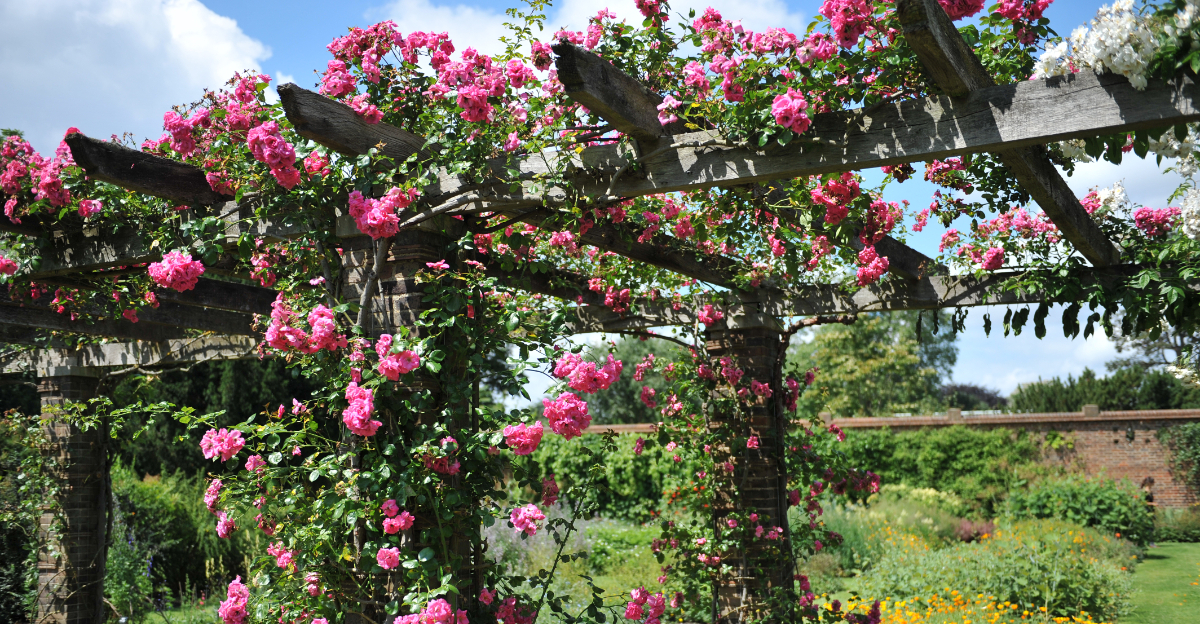
There is something a little magical about a trellis or pergola covered in flowers. It can make an ordinary yard feel more charming, more inviting, and a whole lot more alive.
In Oregon, that kind of vertical color goes a long way, especially when you want to dress up a fence, frame a patio, or turn a plain garden structure into the star of the show.
Of course, not every vine is ready for Oregon’s mix of rain, cool stretches, and shifting seasons.
The best ones need to be beautiful, reliable, and happy to climb without turning into a constant maintenance project. Luckily, plenty of flowering vines are more than up for the job.
Some bring big romantic blooms, some attract hummingbirds and pollinators, and some cover a structure so well they practically create a whole new garden room.
With the right pick, your trellis or pergola can go from simple to stunning in one growing season.
1. Clematis
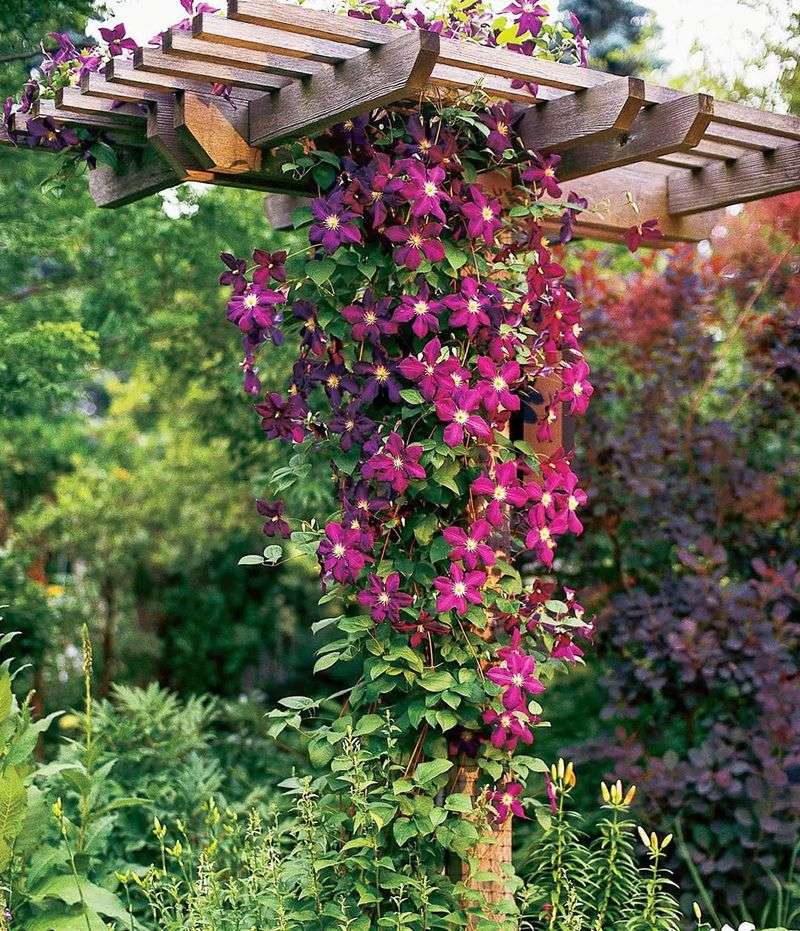
Often called the “Queen of Climbers,” clematis has earned its royal nickname for good reason. Few vines can match its stunning variety of flower shapes, colors, and bloom times.
You can find clematis flowers in deep purple, soft pink, bright white, and even bi-colored varieties.
In Oregon, clematis thrives beautifully thanks to the mild, moist climate. It blooms from late spring through early fall, giving you months of gorgeous color on your trellis or pergola.
Plant it where the foliage gets full sun but the roots stay cool and shaded.
A simple trick is to place flat stones or a layer of mulch around the base to keep the roots comfortable. Clematis grows by wrapping its leaf stems around supports, so a trellis with thin wires or slats works best.
Most varieties grow between 6 and 12 feet tall.
Pruning is important but can feel confusing at first. Different clematis groups require pruning at different times of year.
Once you learn your variety’s needs, maintenance becomes simple and rewarding. Oregon gardeners absolutely love this vine for its long-lasting beauty and incredible range of flower styles.
2. Evergreen Clematis
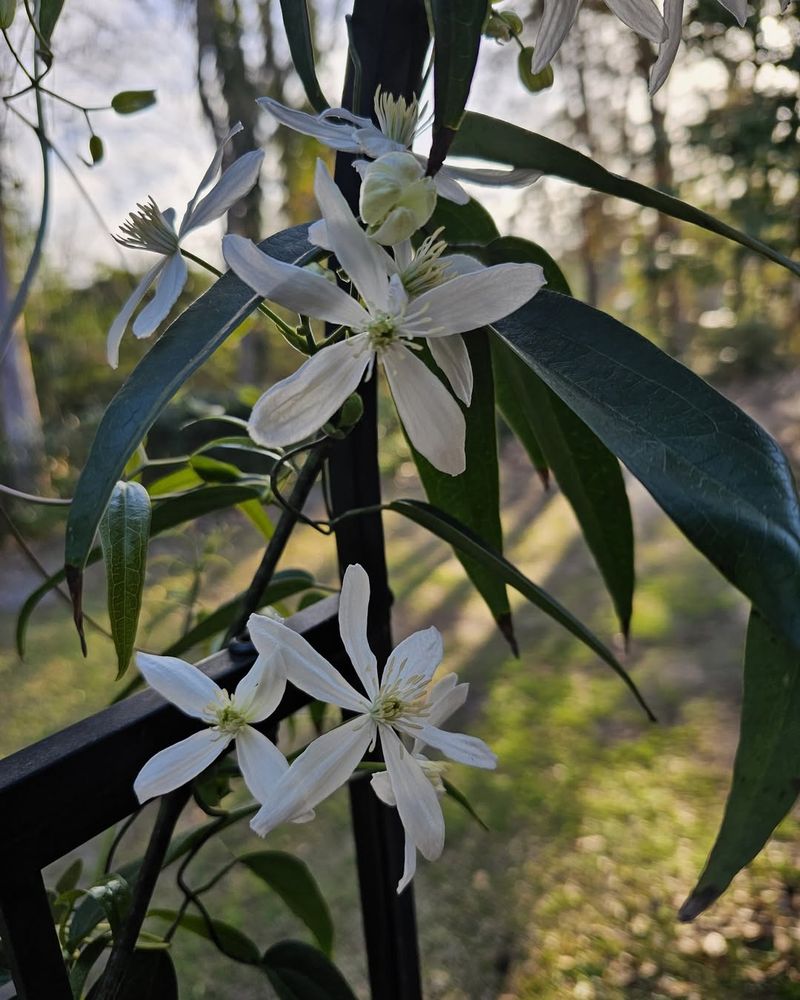
Most people think of clematis as a vine that goes dormant in winter, but the evergreen clematis breaks that rule entirely. This special variety keeps its glossy green leaves year-round, making it a fantastic choice for Oregon gardens where winter curb appeal really matters.
Evergreen clematis, sometimes called Clematis armandii, bursts into bloom in early spring with clusters of small, creamy white flowers that smell absolutely wonderful.
The fragrance is light, sweet, and vanilla-like, and it drifts through the air on warm Oregon afternoons in a way that stops people in their tracks.
It grows vigorously and can reach up to 20 feet or more, so your pergola needs to be sturdy enough to handle its weight. Regular pruning right after blooming keeps it tidy and prevents it from becoming too heavy.
Without trimming, it can get quite wild.
Plant evergreen clematis in a sheltered spot with good sun exposure. Oregon’s western valleys are especially well-suited for this vine.
It prefers well-drained soil and benefits from a generous layer of compost each spring. Once established, it is surprisingly tough and reliable for Pacific Northwest gardeners.
3. Honeysuckle
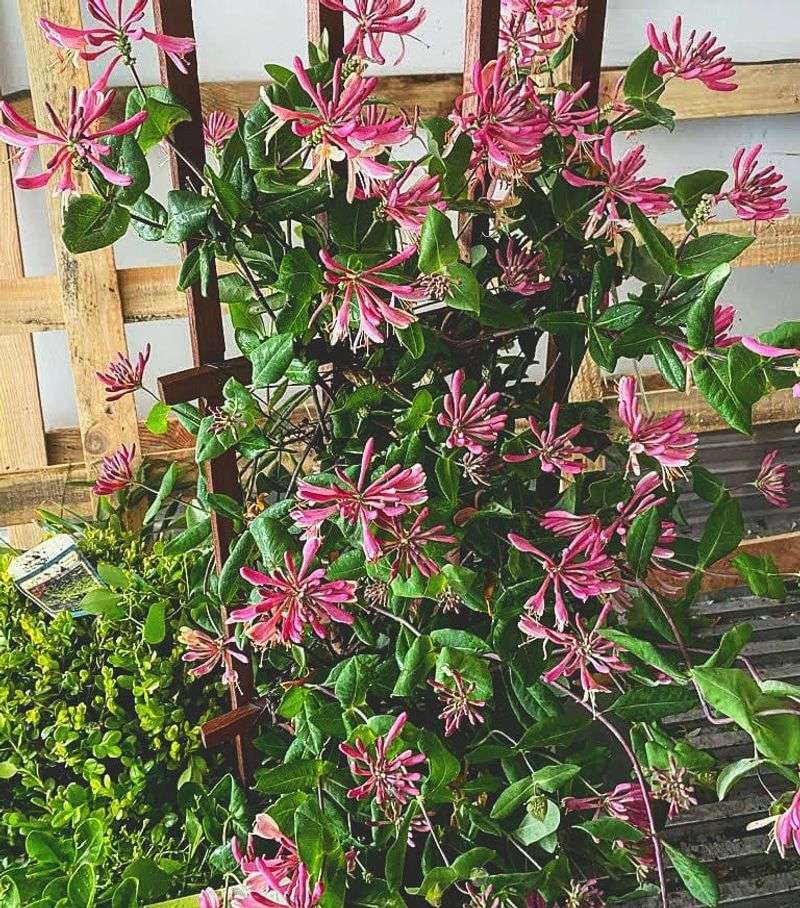
There is something deeply nostalgic about honeysuckle. Many people remember pulling the tiny flowers apart as kids to taste that single drop of sweet nectar.
Growing honeysuckle on your Oregon trellis brings that same joy back, along with a beautiful display of tubular blooms all summer long.
Honeysuckle is incredibly adaptable and grows well across Oregon’s varied climate zones. It loves full sun but tolerates partial shade without much complaint.
The flowers come in shades of yellow, white, pink, and orange, depending on the variety you choose.
One of the biggest perks of growing honeysuckle is the wildlife it attracts. Hummingbirds are absolutely crazy about the nectar-rich blooms, and butterflies visit constantly throughout the season.
If you enjoy watching pollinators in your garden, this vine is a top pick.
Honeysuckle grows quickly and can cover a large trellis within just a couple of seasons. It does need some guidance early on, so weave the young stems through your trellis supports as they grow.
Trim back any overly long shoots in late winter to keep the shape neat. Oregon gardeners appreciate how little fuss this vine requires once it settles in.
4. Jasmine
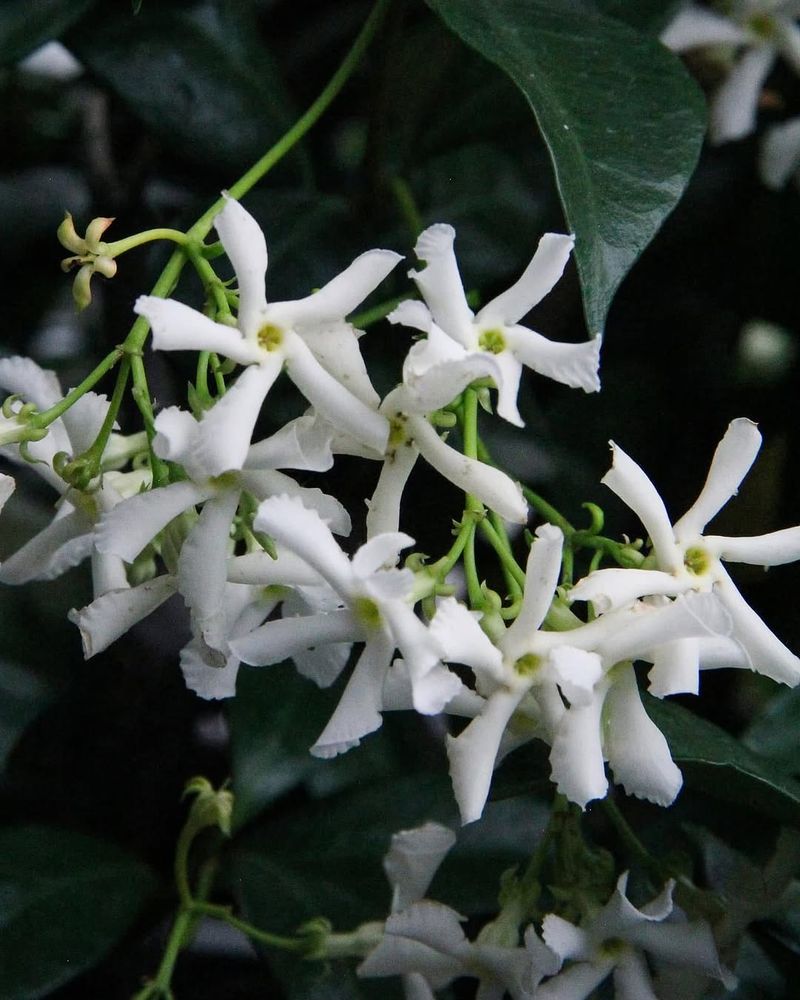
Few plants are as associated with pure, intoxicating fragrance as jasmine. Just a few blooms can fill an entire backyard with a sweet, floral scent that feels luxurious and relaxing.
Growing jasmine on an Oregon pergola turns your outdoor space into a sensory experience.
Star jasmine, also known as Trachelospermum jasminoides, is one of the best varieties for Oregon. It is technically a woody twining vine that produces masses of small, star-shaped white flowers in late spring and early summer.
The glossy, dark green foliage stays attractive even when the plant is not in bloom.
In Oregon’s milder coastal and valley regions, star jasmine performs especially well. It prefers a sunny to partially shaded spot and grows best in well-drained soil with regular watering during dry summer months.
Adding compost to the soil before planting gives it a strong head start.
Star jasmine grows at a moderate pace and typically reaches 15 to 20 feet at maturity. It clings well to trellises and pergola beams with minimal guidance.
Prune lightly after flowering to maintain a clean shape. Oregon homeowners love this vine for its elegant look and unforgettable scent throughout the warm season.
5. Wisteria
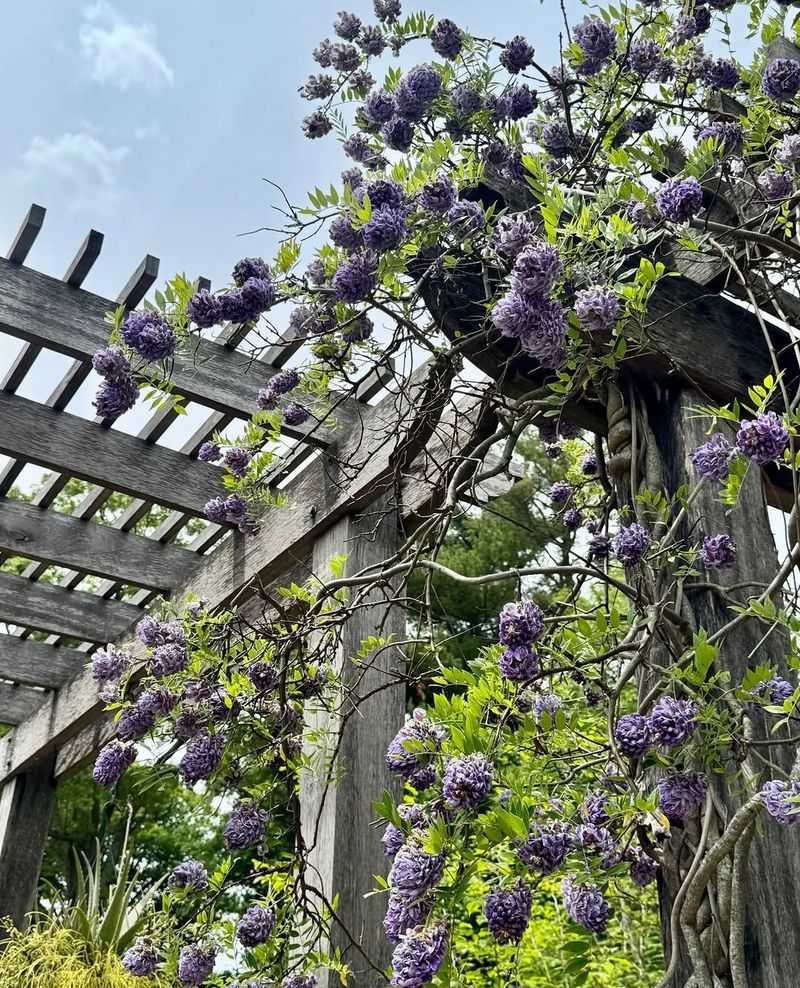
Wisteria is one of those vines that makes people stop their cars just to stare. When it blooms in spring, it produces long, cascading clusters of flowers in shades of purple, lavender, blue, and white that hang like beautiful living curtains from pergolas and trellises.
In Oregon, wisteria grows with impressive enthusiasm. The mild winters and wet springs create excellent conditions for this vine to establish strong roots and produce spectacular blooms. American wisteria is less aggressive and easier to manage.
One thing every Oregon gardener should know is that wisteria needs very sturdy support. The woody stems become thick and heavy over the years, and a flimsy trellis simply will not hold up.
A well-built pergola made from strong timber or metal is the ideal structure for this vine.
Pruning wisteria twice a year keeps it under control and actually encourages better blooming. Cut back the long, whippy shoots in summer and again in late winter.
Wisteria can take a few years to bloom for the first time, but the wait is absolutely worth it. Oregon gardeners who are patient are rewarded with one of the most breathtaking floral displays imaginable.
6. Climbing Rose
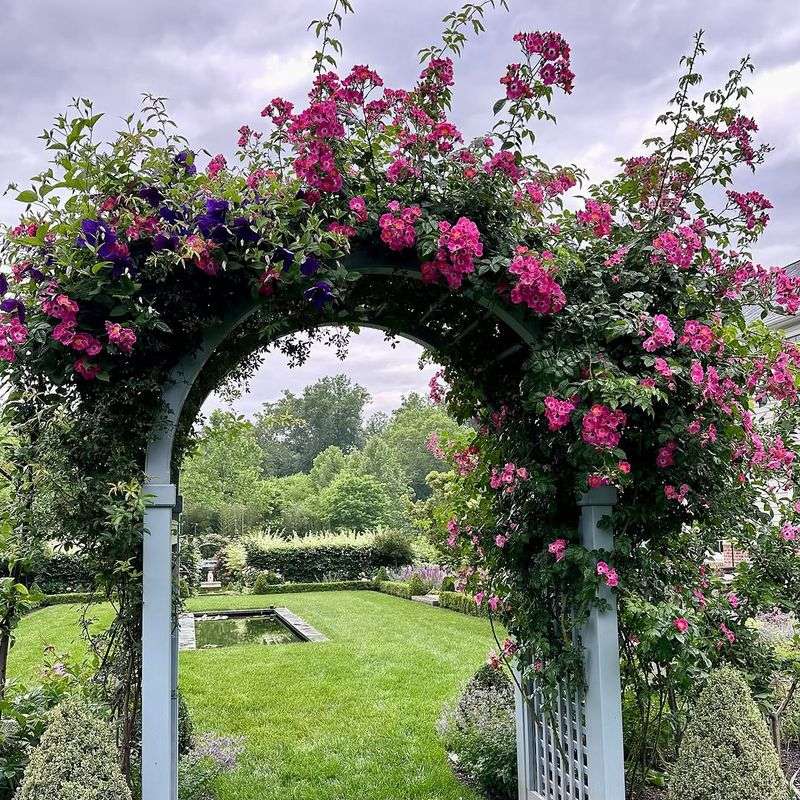
Climbing roses have been gracing gardens for centuries, and there is a very good reason they never go out of style. Their large, velvety blooms and rich fragrance create a classic, romantic look that suits everything from rustic wooden trellises to elegant painted pergolas.
Oregon’s climate is genuinely excellent for growing climbing roses. The wet winters encourage deep root development, and the warm, dry summers bring out the best in the blooms.
Varieties like “New Dawn,” “Don Juan,” and “Zephirine Drouhin” are all well-loved by Oregon rose enthusiasts.
Unlike true vines, climbing roses do not naturally attach themselves to structures. You will need to tie the canes loosely to your trellis or pergola using soft garden ties.
Training the canes horizontally rather than straight up actually encourages more blooms along the entire length of each cane.
Feeding climbing roses with a balanced fertilizer in early spring and again after the first bloom flush keeps them healthy and flowering. Watch for common issues like black spot and aphids, which can appear during Oregon’s wet spring weather.
With regular care, a well-established climbing rose can cover an entire pergola and bloom repeatedly from late spring through fall.
7. Chocolate Vine
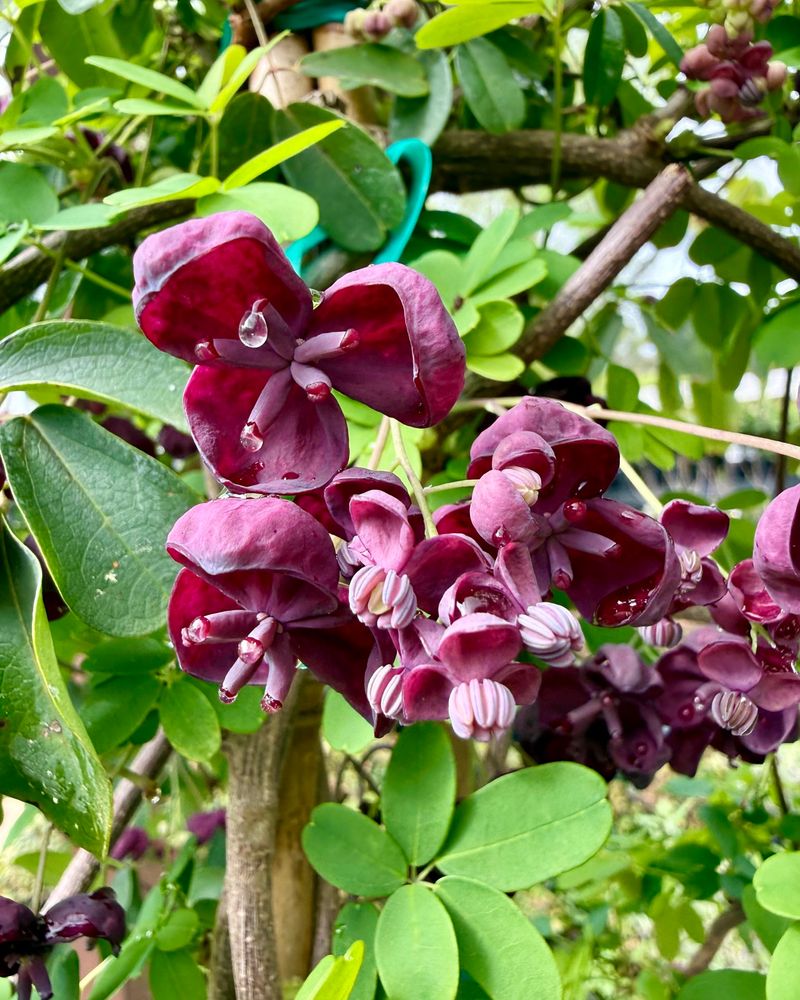
With a name like chocolate vine, curiosity is basically guaranteed. Also known as Akebia quinata, this unusual vine gets its nickname from the faintly chocolate-scented, deep purple flowers it produces in early spring.
It is one of those plants that sparks conversation every single time a visitor notices it.
Chocolate vine is a semi-evergreen climber that holds its attractive, five-leaflet foliage well into winter in Oregon’s mild climate. It grows vigorously and can reach 20 to 30 feet, making it a great choice for covering a large pergola quickly.
The twining stems wrap around supports without needing much help.
One thing to keep in mind is that chocolate vine can spread enthusiastically if left unchecked. In some parts of the Pacific Northwest, it is considered potentially invasive, so regular pruning is a must.
Cutting it back hard in late winter keeps it well-behaved and looking tidy.
Plant chocolate vine in full sun to partial shade with average, well-drained soil. It is quite drought-tolerant once established, which is handy during Oregon’s dry summer months.
The small, egg-shaped purple fruits it sometimes produces are edible and have a mild, sweet flavor. Oregon gardeners who want something truly unique and eye-catching will find this vine hard to resist.
8. Passionflower
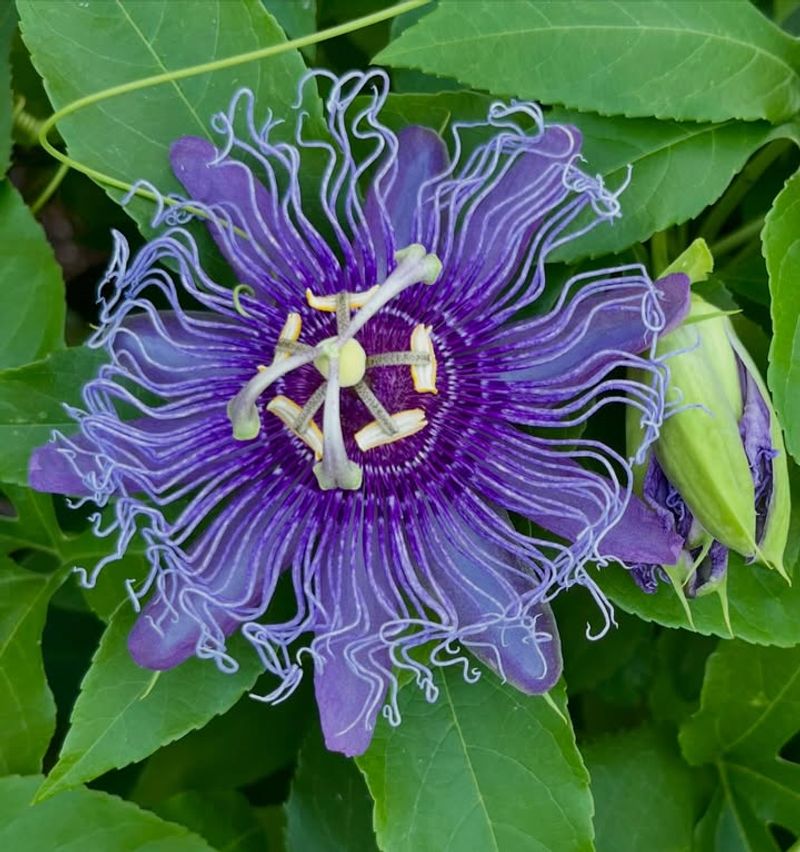
If you have ever seen a passionflower up close, you already understand why it stops people in their tracks. The blooms are unlike anything else in the plant world, featuring a dramatic arrangement of purple, white, and blue petals surrounding a fringed corona that looks almost alien in its beauty.
Passionflower, or Passiflora, is surprisingly hardy in much of Oregon. The variety Passiflora incarnata, sometimes called maypop, can handle cooler winters and comes back reliably each spring in the Willamette Valley and other mild Oregon regions.
It grows quickly and covers a trellis with lush, deeply lobed foliage.
Beyond the flowers, passionflower is also a host plant for several butterfly species, including the Gulf Fritillary. Planting it means you are creating a small habitat right in your own backyard.
The yellow-orange fruits that follow the blooms are edible and can be used to make juice or jelly.
Passionflower grows best in full sun with well-drained soil. It handles Oregon’s summer dry spells reasonably well once established, though a deep watering once a week during heat waves helps it stay lush.
Trim back dead or weak stems in early spring to encourage strong new growth. Oregon gardeners looking for drama and wildlife value will absolutely love this vine.
9. Hydrangea Vine
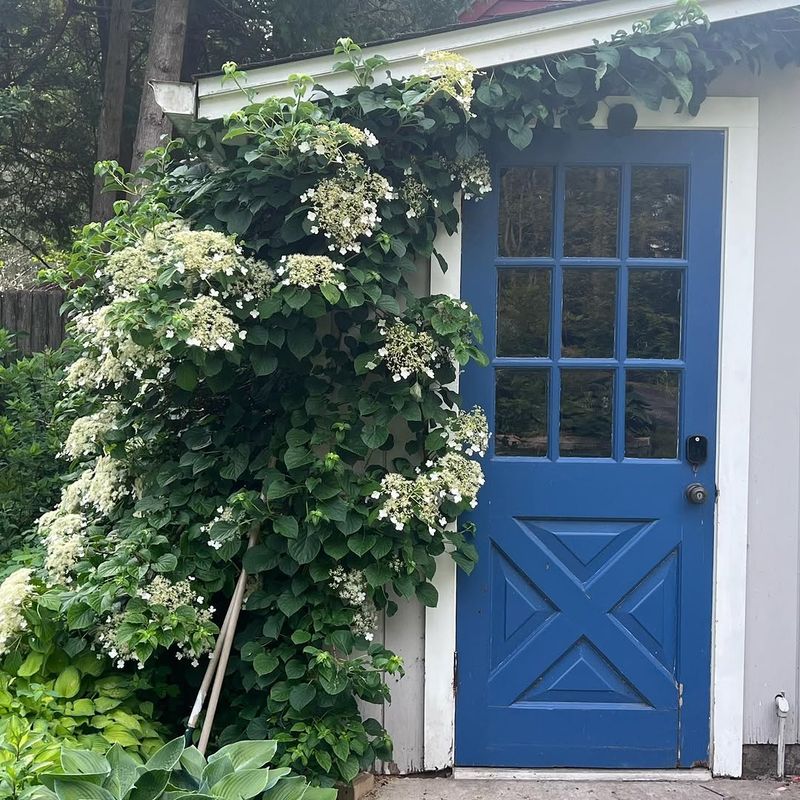
Climbing hydrangea is the ultimate solution for shady Oregon gardens where other flowering vines simply refuse to perform. While most vines demand full sun, this one actually prefers a cooler, shadier spot, making it perfect for north-facing trellises or pergolas tucked under large trees.
Hydrangea anomala petiolaris, the climbing hydrangea, produces gorgeous, flat-topped clusters of white lacecap flowers in early summer. The blooms are delicate and elegant, and they contrast beautifully against the vine’s rich, dark green heart-shaped leaves.
Even after the flowers fade, the peeling reddish-brown bark adds winter interest to your garden structure.
This vine is a slow starter, often spending its first two to three years quietly establishing roots before suddenly taking off with impressive growth. Oregon gardeners sometimes joke that it “sleeps, creeps, and then leaps.” Once it hits its stride, it can climb 30 to 50 feet or more.
Climbing hydrangea attaches itself to surfaces using tiny root-like holdfasts, so it works well on pergola posts and rough-textured trellises. It prefers rich, moist, well-drained soil, which Oregon’s naturally organic-rich ground often provides.
Minimal pruning is needed. Just remove dead or crossing branches in late spring after blooming for a clean and healthy plant.
10. Trumpet Honeysuckle
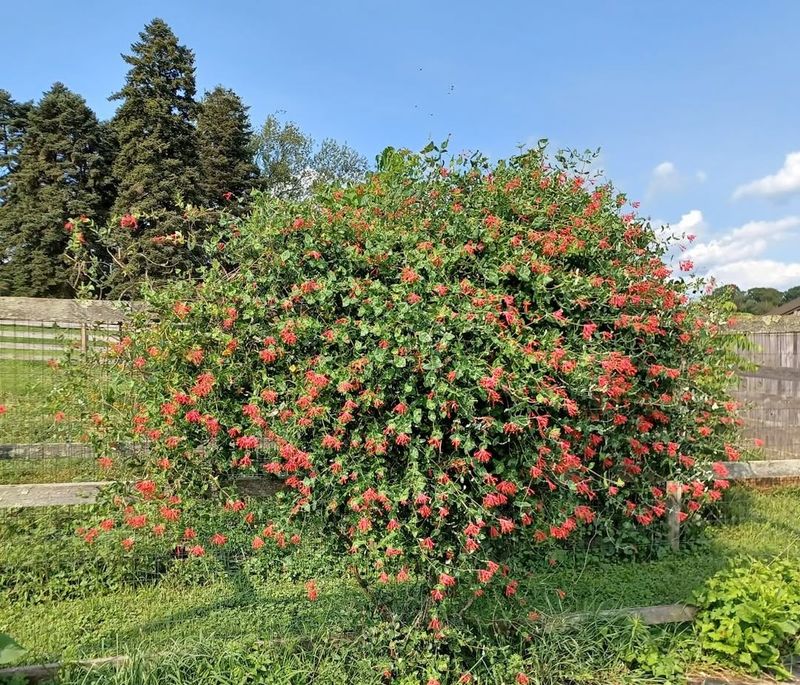
Bright, bold, and absolutely irresistible to hummingbirds, trumpet honeysuckle is one of the most rewarding flowering vines you can grow in Oregon. Unlike its more aggressive relatives, this native North American species plays nicely in the garden without trying to take over everything around it.
Lonicera sempervirens, the trumpet honeysuckle, produces clusters of long, tubular flowers in vivid shades of red, coral, and orange with yellow throats. The blooms appear from late spring all the way through summer and sometimes into fall.
Hummingbirds visit so frequently that having one of these vines near a window feels like having your own private nature show.
In Oregon, trumpet honeysuckle adapts well to a wide range of conditions. It grows happily in full sun to partial shade and tolerates both clay and sandy soils as long as drainage is reasonable.
The semi-evergreen foliage holds through mild Oregon winters, giving the trellis or pergola a finished look year-round.
This vine grows at a moderate pace, typically reaching 10 to 20 feet, which makes it easy to manage on a standard garden trellis or pergola. Prune lightly in late winter to encourage fresh, vigorous growth in spring.
Oregon gardeners who want reliable color and constant hummingbird activity will find trumpet honeysuckle to be one of their best planting decisions.