The 9 Best Herbs To Grow By Your Front Door In Oregon
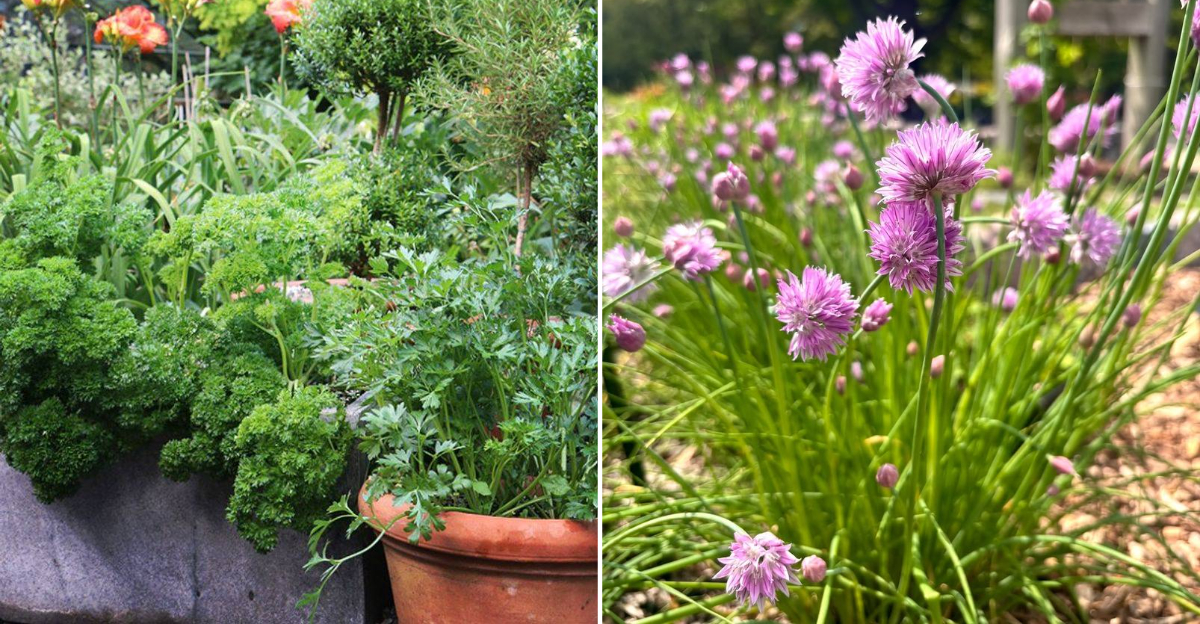
Ever wish your front door had a little extra charm? Planting herbs right by the entrance can turn it into a space that’s both beautiful and useful.
Oregon’s mild, rainy climate makes it easy for many herbs to thrive, even in cooler weather and partial shade.
Herbs at your doorway do more than look pretty, they greet you with fresh scents every time you come home. Snip a few leaves for dinner without trekking to the backyard, and enjoy a touch of greenery that handles the extra foot traffic or tricky light near your door.
Picking the right herbs for Oregon means thinking about rain, cooler temps, and how much sun hits your front step.
Some love moisture, others need well-drained soil, but plenty of options flourish in the Pacific Northwest.
This guide highlights the best herbs for front doors across Oregon. Whether your spot is sunny or shady, you’ll find flavorful, fragrant plants that add personality to your entryway, plus tips to keep them thriving all season long.
1. Rosemary
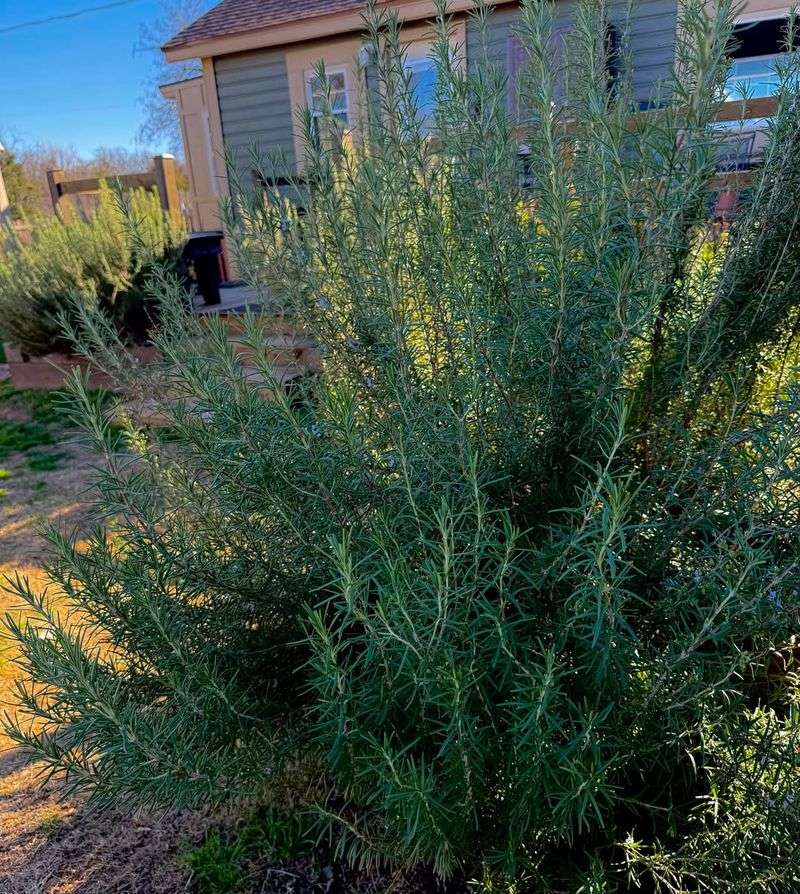
Rosemary stands tall as one of the most reliable herbs for Oregon front doors. This woody perennial loves the Pacific Northwest climate and can handle both rain and occasional dry spells.
Its needle-like leaves release a pine-scented fragrance whenever you brush past, making every entrance feel special.
Most rosemary varieties grow upright, creating a lovely green accent near your doorway. You can also find trailing types that spill beautifully over container edges.
The plant produces small blue, purple, or white flowers in spring and sometimes again in fall. These blooms attract bees and butterflies, adding even more life to your entryway.
Plant rosemary in well-draining soil, as it doesn’t like soggy roots despite Oregon’s rain. A container with drainage holes works perfectly.
Place it where it gets at least four to six hours of sunlight daily. South-facing or west-facing doorways often provide ideal conditions.
Rosemary needs minimal care once established. Water when the top inch of soil feels dry.
Trim stems regularly to keep the plant bushy and to harvest for cooking. This herb works wonderfully in roasted potatoes, breads, and grilled meats.
Its toughness and fragrance make it a front-door favorite across Oregon.
2. Thyme
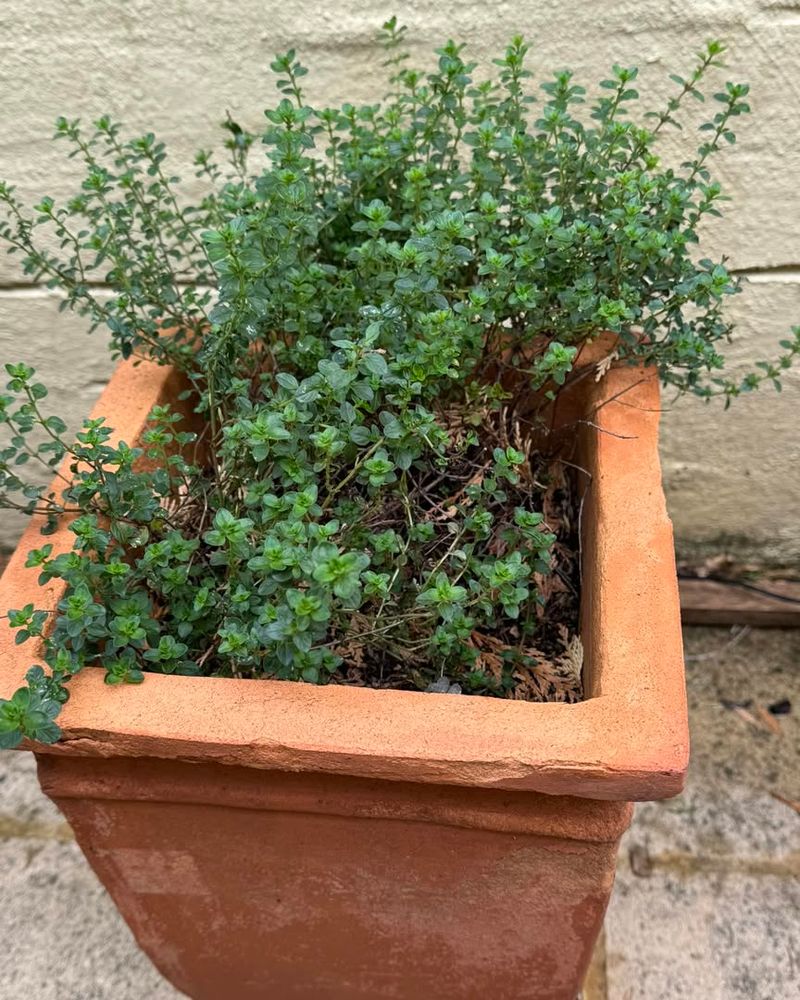
Low-growing and tough, thyme makes a perfect choice for Oregon doorways. This herb forms dense mats of tiny leaves that smell amazing when touched.
Several varieties exist, from lemon thyme with its citrus notes to common thyme with its classic earthy aroma. Each type brings something unique to your entrance.
Thyme handles Oregon’s wet winters better than many herbs. It grows naturally in rocky, well-drained areas, so it adapts well to container life.
The plant stays green year-round in most Oregon zones, providing color even during gray winter months. In late spring, it covers itself with tiny pink, purple, or white flowers that pollinators adore.
Position thyme where it receives good sunlight, though it tolerates partial shade better than rosemary. Use containers with excellent drainage, or plant it in a raised bed near your door.
The soil should dry out slightly between waterings to prevent root problems.
Harvesting thyme is simple. Snip stems as needed for soups, stews, roasted vegetables, and marinades.
Regular trimming keeps the plant compact and encourages new growth. Thyme’s hardy nature and wonderful scent make it ideal for busy households that want fresh herbs without fussy maintenance.
3. Mint
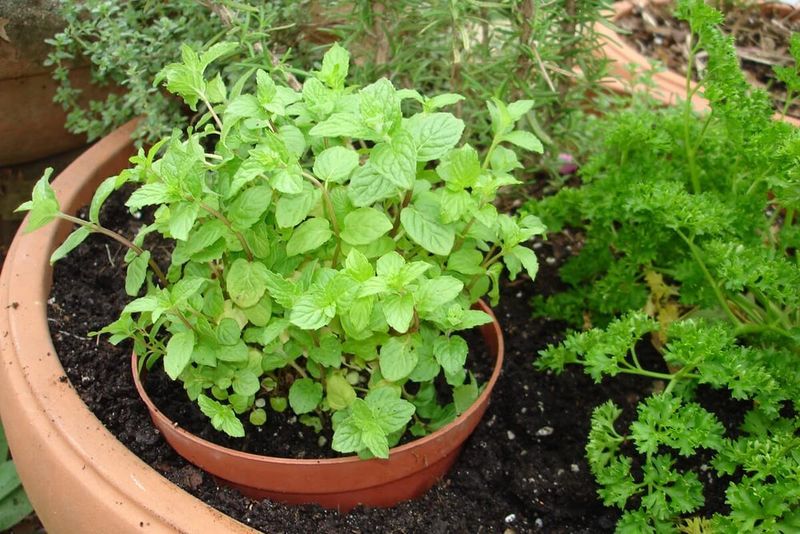
Mint grows like crazy in Oregon’s moist climate, which is both a blessing and a challenge. This herb loves water and shade, making it perfect for north-facing or partially shaded front doors.
The refreshing scent hits you the moment you step near it, and the leaves add bright flavor to drinks, salads, and desserts.
Many mint varieties exist, including peppermint, spearmint, chocolate mint, and apple mint. Each offers a slightly different flavor profile.
The plants grow quickly and spread aggressively through underground runners. For front-door growing, containers are essential to keep mint from taking over your garden beds.
Choose a pot that’s at least 12 inches wide and deep. Mint appreciates consistent moisture, so water regularly, especially during rare Oregon dry spells.
The plant tolerates shade well, thriving in spots where other herbs might struggle. It grows vigorously from spring through fall.
Harvest mint leaves often to encourage bushy growth and prevent flowering, which can make leaves taste bitter. Pinch off flower buds when they appear.
Use fresh mint in mojitos, teas, fruit salads, and lamb dishes. Its vigorous growth means you’ll have plenty to share with neighbors and friends throughout the growing season.
4. Parsley
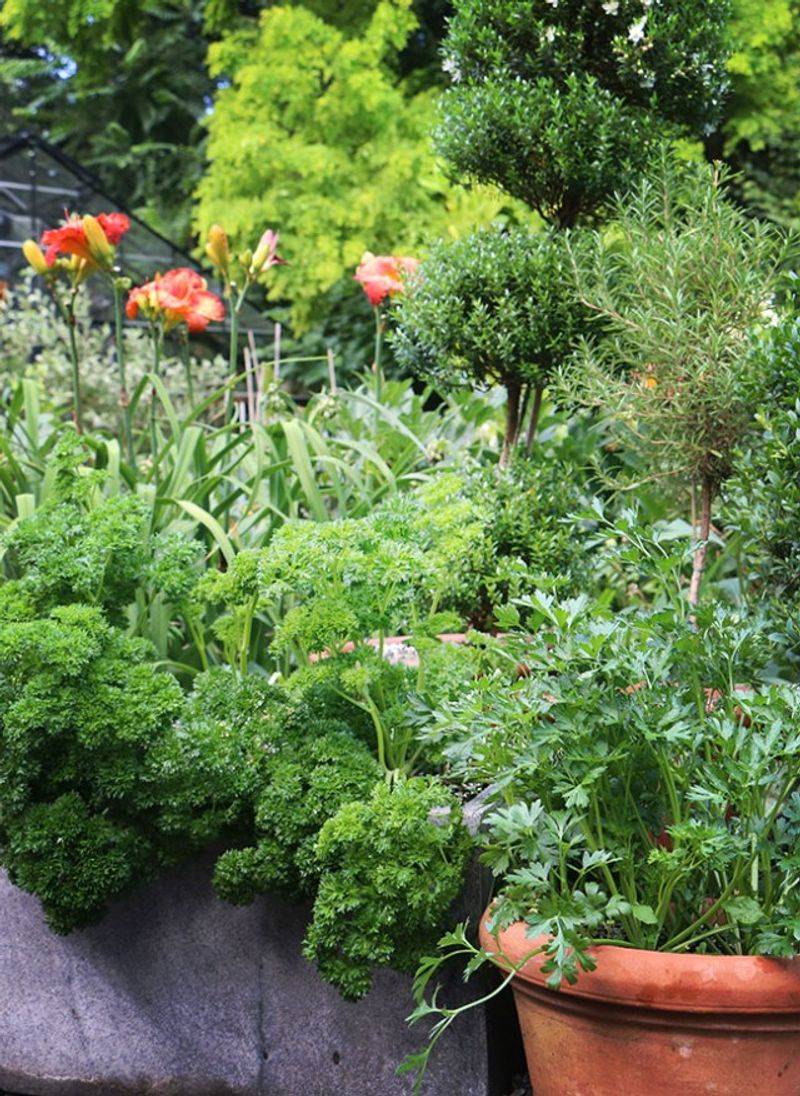
Bright green and cheerful, parsley brings both beauty and utility to Oregon front doors. This biennial herb produces abundant foliage in its first year, making it a reliable addition to your entryway.
Both curly and flat-leaf varieties grow well in Oregon’s climate, though flat-leaf parsley typically offers stronger flavor for cooking.
Parsley appreciates Oregon’s cool, moist conditions. It grows best in partial shade to full sun, making it adaptable to various doorway orientations.
The plant produces a rosette of deeply cut leaves that look attractive even when you’re not harvesting. In its second year, it sends up a flower stalk, but most gardeners replant annually for the best leaf production.
Start with transplants rather than seeds for quicker results at your front door. Plant in rich, well-draining soil and keep it consistently moist.
Parsley tolerates Oregon’s rainy weather well but benefits from a protected spot that shields it from the hardest downpours.
Harvest outer leaves first, allowing the center to continue producing. Parsley works in countless dishes including soups, sauces, salads, and as a fresh garnish.
It’s rich in vitamins and adds a clean, fresh taste to meals. The plant’s reliable growth and versatility make it a staple for Oregon herb gardeners.
5. Chives
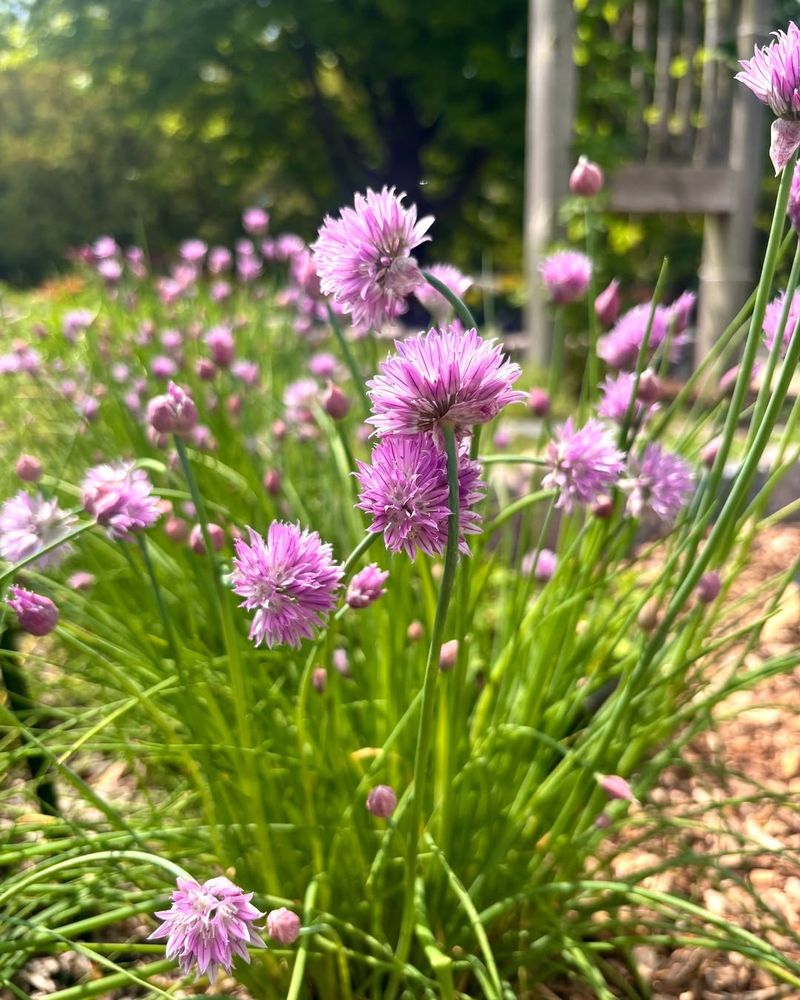
Slender and elegant, chives add vertical interest to front-door plantings. These perennial herbs produce hollow, grass-like leaves with a mild onion flavor.
In late spring, they send up round purple pompom flowers that look stunning and taste delicious too. The blooms attract beneficial insects while adding a pop of color to your entrance.
Chives thrive in Oregon’s climate, returning year after year with minimal care. They handle both sun and partial shade, making them flexible for different door locations.
The plants grow in clumps that gradually expand, creating fuller displays over time. They tolerate wet soil better than many herbs, which suits Oregon’s rainy seasons perfectly.
Plant chives in containers or directly in the ground near your doorway. They prefer rich, moist soil but aren’t overly fussy.
Water regularly during dry periods, though Oregon’s natural rainfall often provides enough moisture. Divide clumps every few years to maintain vigor and create new plants for other spots.
Snip leaves at the base with scissors whenever you need them. They regrow quickly, providing a steady supply throughout the growing season.
Use chives in baked potatoes, omelets, cream cheese, and soups. The flowers make beautiful garnishes and add oniony flavor to salads.
Chives’ easy nature and pretty appearance make them ideal for Oregon front doors.
6. Oregano
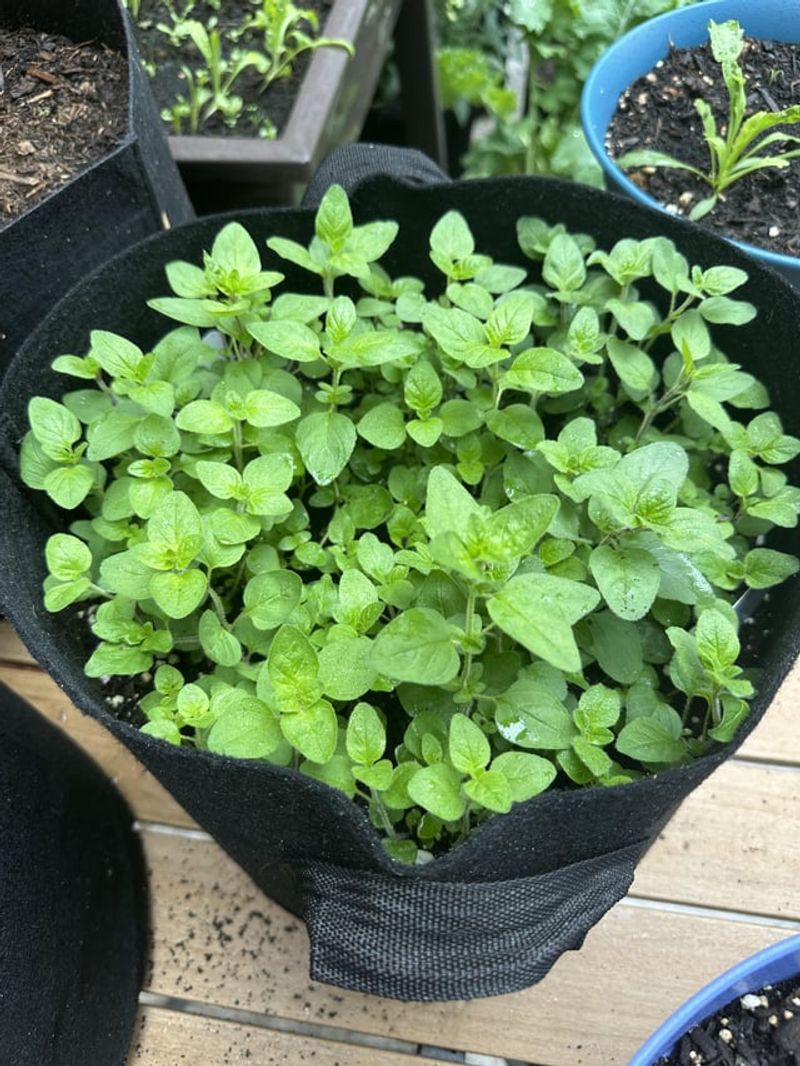
Mediterranean in origin but perfectly happy in Oregon, oregano brings robust flavor to your front door. This low-growing perennial spreads into a fragrant carpet of small leaves.
It handles Oregon’s wet winters surprisingly well, especially when planted in containers with good drainage. The leaves stay flavorful year-round, even in cooler months.
Oregano produces small white or pink flowers in summer that bees love. The plant grows best in full sun but tolerates partial shade near doorways that don’t get all-day light.
Several varieties exist, including Greek oregano with its strong flavor and Italian oregano with a slightly milder taste. Both work beautifully for front-door growing.
Use well-draining soil and containers with drainage holes to prevent waterlogged roots. Oregano doesn’t need rich soil and actually develops stronger flavor in leaner conditions.
Water when the soil surface dries out, but don’t overdo it. The plant’s drought tolerance makes it forgiving if you forget occasional waterings.
Harvest oregano by cutting stems back by about one-third. This encourages bushy growth and prevents the plant from getting leggy.
Use fresh oregano in Italian dishes, Greek salads, marinades, and tomato sauces. Dried oregano is even more concentrated in flavor, so you can preserve your harvest for winter cooking.
7. Sage
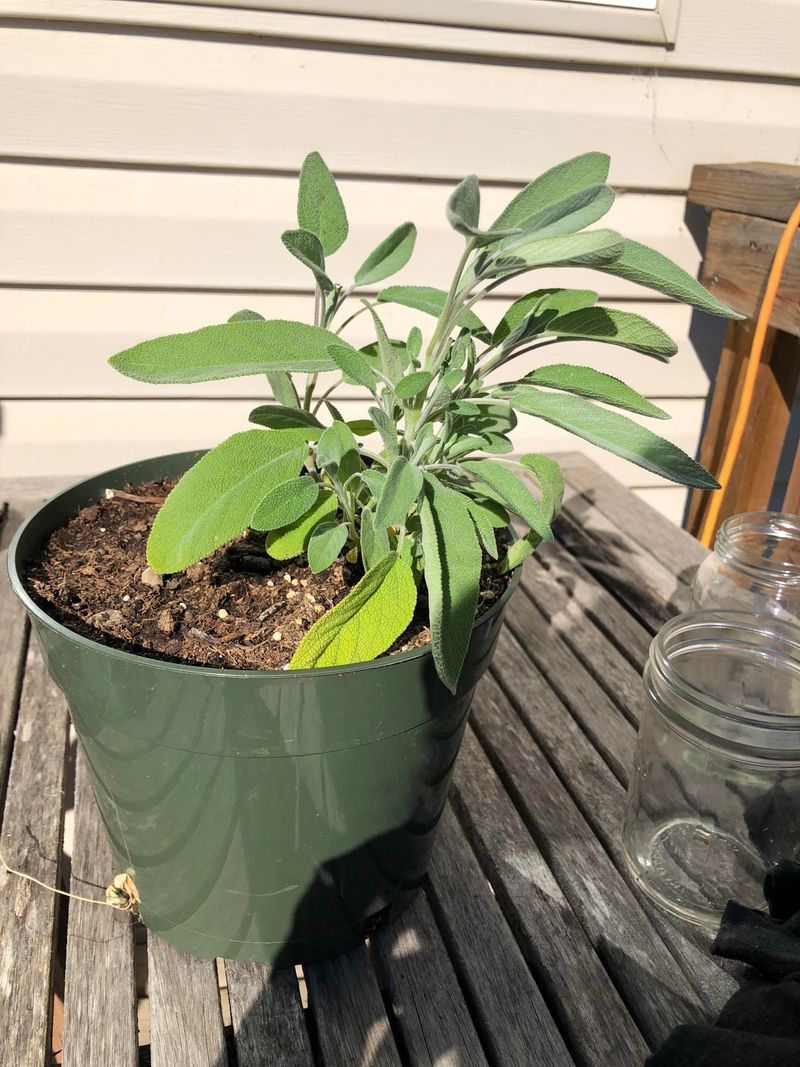
Soft gray-green leaves make sage instantly recognizable and beautiful by front doors. This perennial herb develops into a small shrub over time, creating substantial presence at your entrance.
The fuzzy leaves release a warm, earthy scent when touched, and their silvery color contrasts nicely with darker door colors or surrounding greenery.
Sage adapts well to Oregon’s climate, though it prefers drier conditions than the region naturally provides. Container growing with excellent drainage solves this issue perfectly.
The plant produces spikes of purple-blue flowers in early summer that hummingbirds and bees visit enthusiastically. Several varieties exist, including purple sage, golden sage, and tricolor sage with variegated leaves.
Place sage where it receives at least six hours of sunlight daily. South or west-facing doorways work best.
Use a container that drains well and avoid overwatering, especially during Oregon’s rainy months. Sage tolerates drought better than excess moisture, so err on the dry side between waterings.
Harvest sage leaves as needed for cooking, but avoid taking more than one-third of the plant at once. The herb pairs perfectly with poultry, pork, butternut squash, and brown butter sauces.
It’s also wonderful in stuffing and sausages. Sage’s attractive appearance and culinary versatility make it a worthwhile addition to any Oregon front door.
8. Lavender
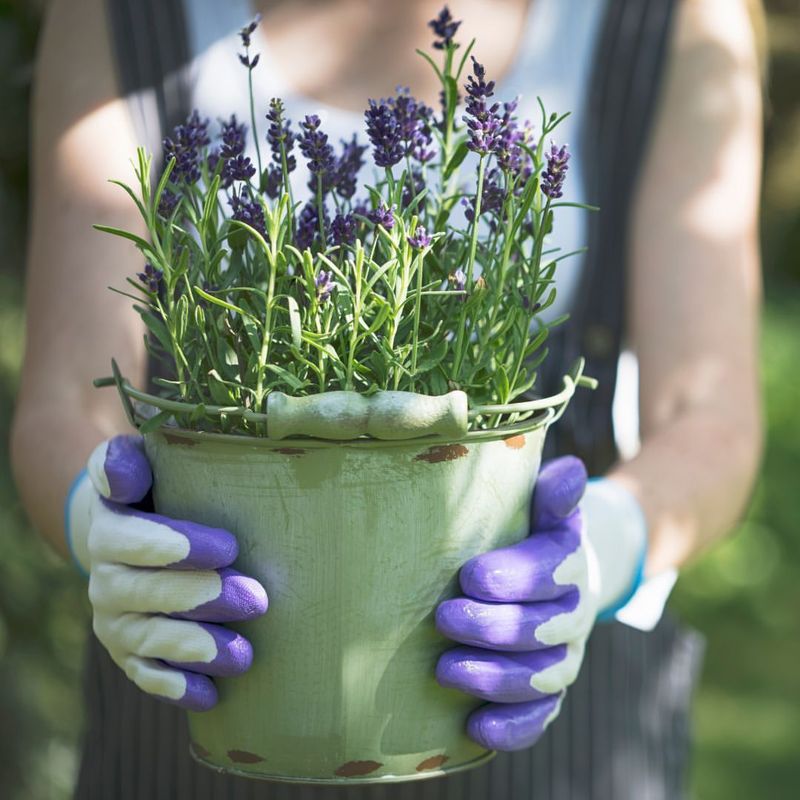
Famous for its calming fragrance, lavender creates a sensory experience every time you approach your front door. This woody perennial produces spikes of purple, pink, or white flowers that smell absolutely divine.
The silvery foliage looks attractive even when the plant isn’t blooming, providing year-round visual interest at your entrance.
English lavender varieties handle Oregon’s climate best, tolerating more moisture than their Mediterranean cousins. The plants prefer full sun and excellent drainage, making containers ideal.
Lavender doesn’t enjoy Oregon’s winter wetness sitting around its roots, so elevate containers slightly or ensure perfect drainage. The payoff is worth the extra attention.
Choose a sunny spot for your lavender, preferably with six to eight hours of direct light. Use sandy, well-draining soil and containers with multiple drainage holes.
Water sparingly, allowing soil to dry between waterings. Overwatering causes more problems than underwatering with this herb.
Prune lavender after flowering to maintain shape and encourage next year’s blooms. Harvest flower spikes when about half the buds have opened for the strongest fragrance.
Use lavender in baking, teas, sachets, and bath products. The flowers dry beautifully, preserving their scent for months.
Lavender’s beauty and fragrance make it a beloved choice for Oregon doorways despite its slightly fussier nature.
9. Bay Laurel
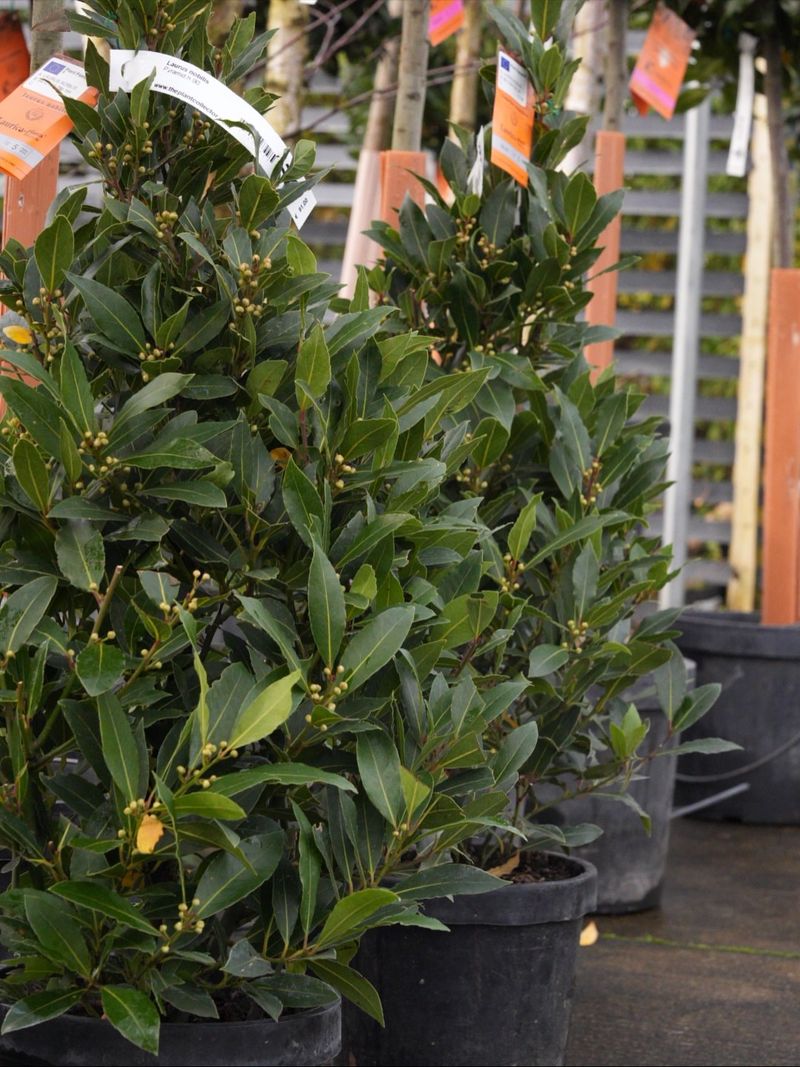
Stately and aromatic, bay laurel brings a touch of elegance to Oregon front doors. This evergreen shrub grows slowly into a handsome specimen that can be shaped into topiary forms or left naturally bushy.
The glossy, dark green leaves release a distinctive fragrance when crushed, and they’re essential for classic cooking.
Bay laurel thrives in Oregon’s mild climate, handling both rain and occasional freezes. It grows well in large containers, making it perfect for flanking doorways or creating a formal entrance.
The plant tolerates partial shade but grows fuller in brighter locations. Its slow growth means it won’t quickly outgrow its space.
Use a large container with good drainage and rich potting soil. Bay laurel appreciates consistent moisture but doesn’t like waterlogged conditions.
Protect the plant from harsh winter winds by placing it near the shelter of your doorway. In coldest areas, move containers to a protected spot during severe freezes.
Harvest individual leaves throughout the year as needed for cooking. Bay leaves are essential in soups, stews, sauces, and braised dishes.
Fresh leaves are stronger than dried, so use them sparingly at first. The plant’s stately appearance and culinary value make it a sophisticated choice for Oregon front doors, especially for those who enjoy cooking and want a long-lived herb.