The 9 Best Herbs To Plant Along Walkways In Oregon Gardens
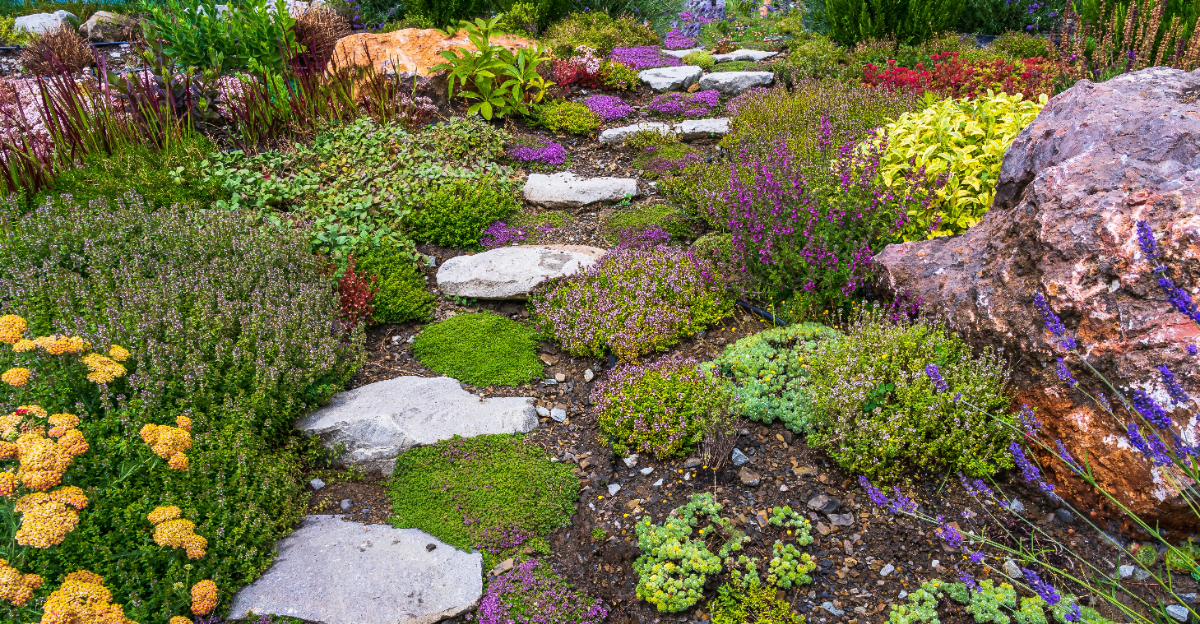
Walkways don’t have to be boring strips of concrete and stone. In Oregon gardens, they can become fragrant, colorful pathways that welcome you every time you step outside.
Planting herbs along walkways adds beauty and function at the same time. Brush past the leaves and the air fills with fresh scent.
Bees hover nearby. Soft textures spill gently over edges.
Many herbs thrive in Oregon’s mild climate and handle foot traffic zones, reflected heat, and changing weather with ease. They also stay compact, making them perfect for borders and tight spaces.
Instead of empty edges or plain gravel, your garden paths can become living features that look good and smell even better. With the right herb choices, every walk through your yard turns into a sensory experience that feels both practical and inviting.
1. Creeping Thyme
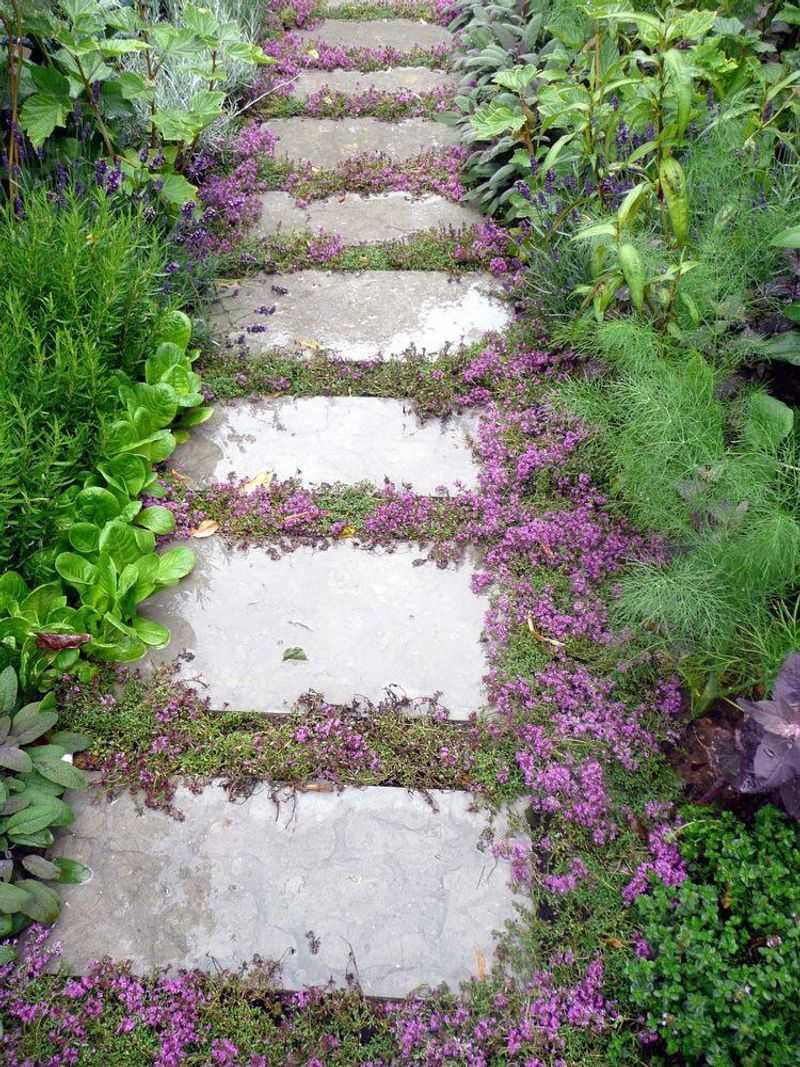
Creeping thyme transforms ordinary walkways into fragrant carpets that smell amazing when you step on them.
This low-growing herb spreads quickly across stones and pavers, filling gaps with tiny leaves that release a pleasant aroma.
Oregon’s climate suits this Mediterranean plant perfectly because it tolerates both wet winters and dry summers once established. The plant grows only two to three inches tall, making it ideal for spaces between stepping stones.
Purple, pink, or white flowers appear in late spring, attracting beneficial pollinets like bees and butterflies to your garden. These blooms add color while the foliage stays green year-round in most Oregon locations.
Creeping thyme needs very little maintenance once it takes root in your walkway. It handles light foot traffic without complaint and actually benefits from occasional trimming or walking, which helps it spread more densely.
The herb also resists most pests and diseases common in Pacific Northwest gardens. You can use the leaves in cooking just like regular thyme, though the flavor is slightly milder.
Plant it in full sun for best results, though it tolerates partial shade in hotter areas. This hardy ground cover works wonderfully along garden paths where you want both beauty and function without constant upkeep.
2. Roman Chamomile
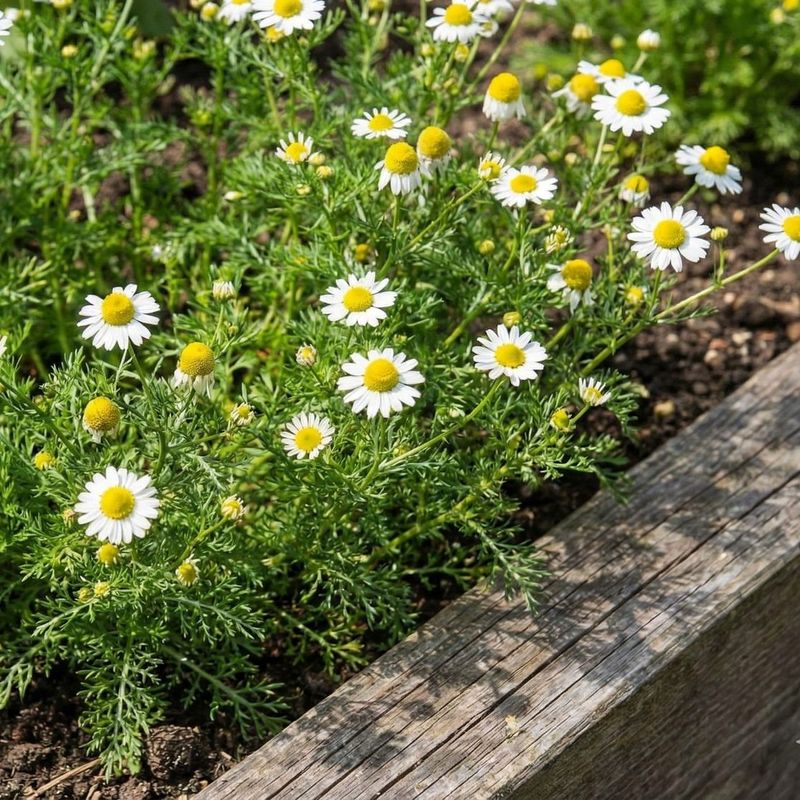
Walking on Roman chamomile releases a sweet apple-like scent that makes every garden stroll delightful.
This perennial herb creates soft, cushiony mats along pathways that feel pleasant underfoot.
Oregon gardeners love it because it thrives in the state’s cool, damp conditions without becoming invasive or requiring special care. The plant produces cheerful white flowers with yellow centers throughout summer months.
These blooms attract pollinators while adding a cottage garden charm to your walkways. Roman chamomile stays low to the ground, typically reaching four to six inches in height, making it perfect for pathway edges.
This herb tolerates light to moderate foot traffic better than many flowering ground covers. The more you walk on it, the more fragrance it releases into your Oregon garden air.
It spreads steadily but not aggressively, filling in spaces between pavers naturally over time. Roman chamomile prefers full sun but adapts to partial shade in warmer garden spots.
The soil should drain well, though the plant handles Oregon’s rainy seasons without problems. You can harvest the flowers for making calming tea, adding practical value to its ornamental appeal along your garden paths.
3. Corsican Mint
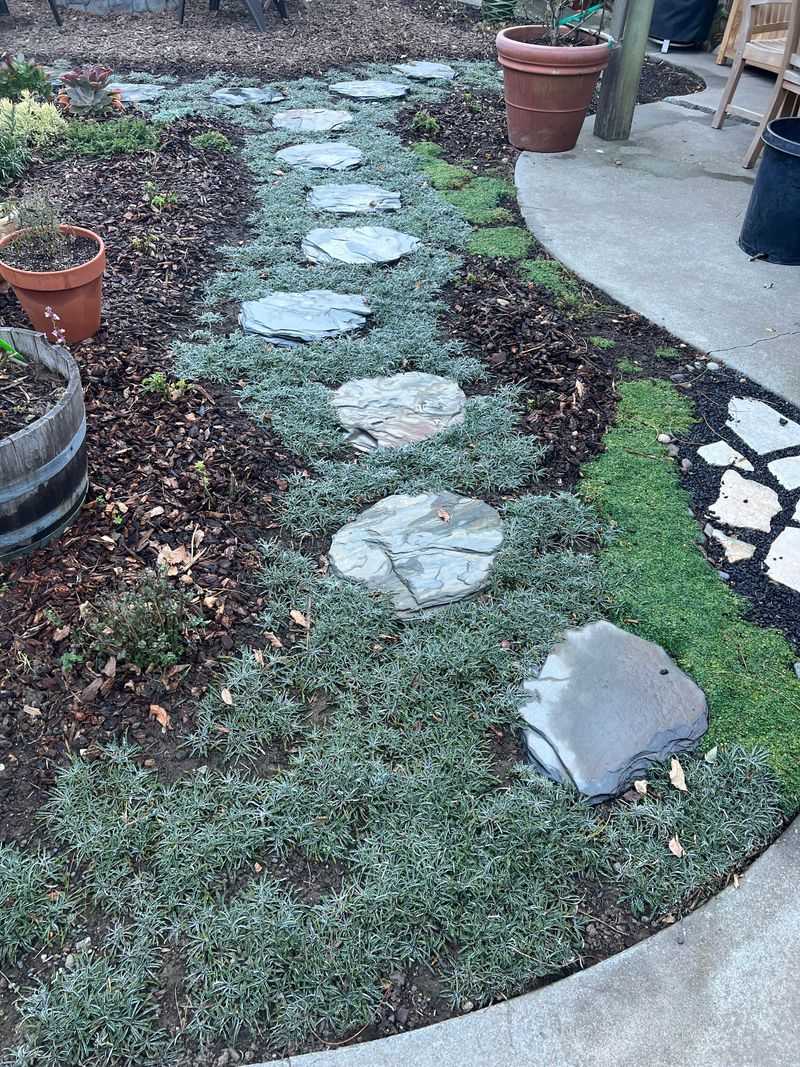
Corsican mint creates the tiniest, most delicate herb carpet you can imagine for Oregon walkways. The leaves are so small they look like green confetti sprinkled between your stepping stones.
Despite its delicate appearance, this mint variety handles light foot traffic remarkably well and releases a strong peppermint scent when touched.
This ground-hugging plant grows less than half an inch tall, making it ideal for tight spaces where taller herbs would look out of place.
Tiny purple flowers appear in summer, though they’re so small you might miss them unless you look closely. The real attraction is the lush green mat that stays vibrant through Oregon’s mild winters.
Corsican mint loves moisture, which makes it perfect for the Pacific Northwest climate. It thrives in partial shade to full sun and actually prefers the cooler temperatures Oregon gardens offer.
The plant spreads quickly once established, weaving between pavers and stones to create a seamless green pathway. You’ll need to keep this mint contained because it can spread into lawn areas if left unchecked.
However, along defined walkways with borders, it behaves beautifully. The intense fragrance makes every walk through your garden a refreshing sensory experience that visitors always remember.
4. Wooly Thyme
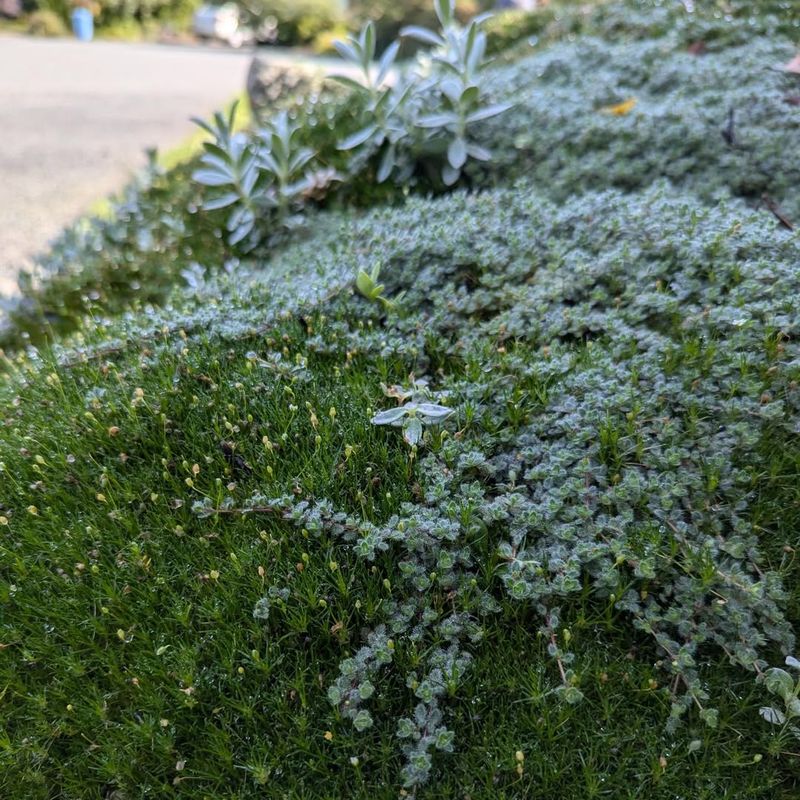
Fuzzy leaves give wooly thyme its name and make it one of the softest herbs you can grow along Oregon pathways.
The gray-green foliage feels almost like velvet when you touch it, creating a textural contrast with other garden plants.
This variety handles foot traffic even better than regular creeping thyme because its dense growth cushions each step. Pink flowers emerge in early summer, though wooly thyme is grown mainly for its attractive foliage rather than blooms.
The plant stays very low, usually under two inches tall, forming thick mats that suppress weeds naturally. Oregon’s climate provides the cool temperatures this Mediterranean native prefers during growing season.
Wooly thyme needs excellent drainage but otherwise requires minimal attention once established in your garden. It tolerates drought better than most ground covers, making it useful for sunny walkway areas that dry out between Oregon’s rainy periods.
The plant also resists deer and rabbits that might damage other pathway plantings. This herb works especially well between flagstones or pavers where you want a soft, living grout.
The fuzzy texture adds visual interest even when the plant isn’t flowering. You can walk on it regularly without causing damage, though it won’t handle heavy constant traffic like a lawn would in high-use areas.
5. Dwarf Oregano
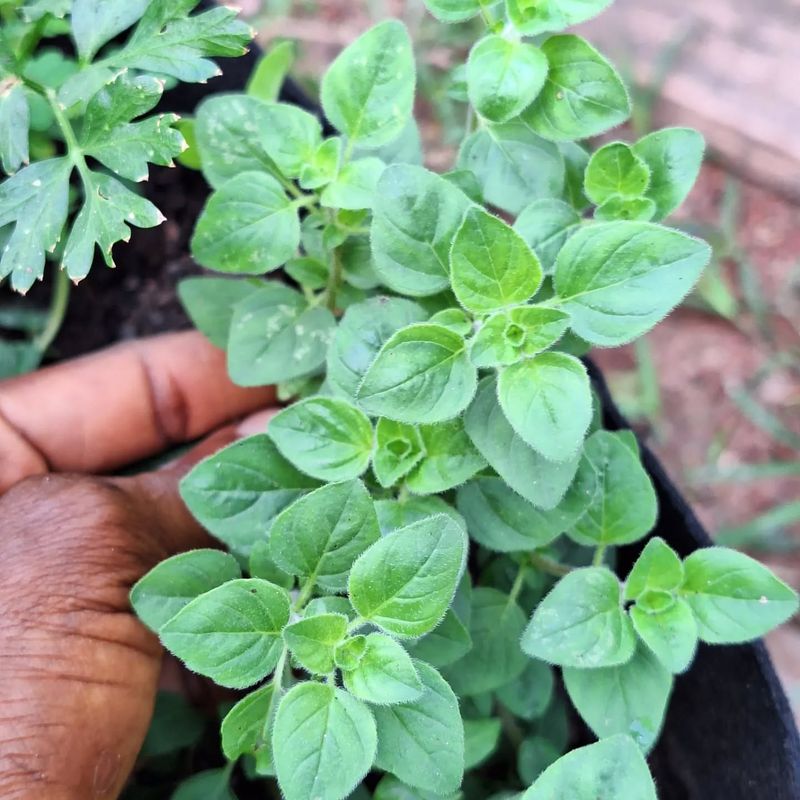
Compact growth makes dwarf oregano perfect for Oregon walkway borders where you want culinary herbs within easy reach.
This variety grows only six to eight inches tall, staying much smaller than regular oregano while offering the same delicious flavor.
The rounded leaves create neat mounds along pathway edges that look tidy without constant trimming. Pink to purple flower clusters appear in midsummer, adding color when many spring bloomers have finished.
These flowers attract butterflies and beneficial insects that help your entire Oregon garden thrive. The foliage stays semi-evergreen in mild winters, providing year-round interest along your paths.
Dwarf oregano handles Oregon’s wet winters better than many Mediterranean herbs because it doesn’t mind occasional dampness. Plant it in full sun for the strongest flavor and most compact growth.
The herb tolerates light foot traffic along pathway edges, though it’s better positioned slightly back from the main walking surface. You can harvest leaves throughout the growing season for fresh cooking or dry them for winter use.
The intense flavor makes this herb valuable beyond its ornamental qualities.
Dwarf oregano also resists most pests and diseases common in Pacific Northwest gardens, requiring very little maintenance once established along your walkways.
6. Sweet Woodruff
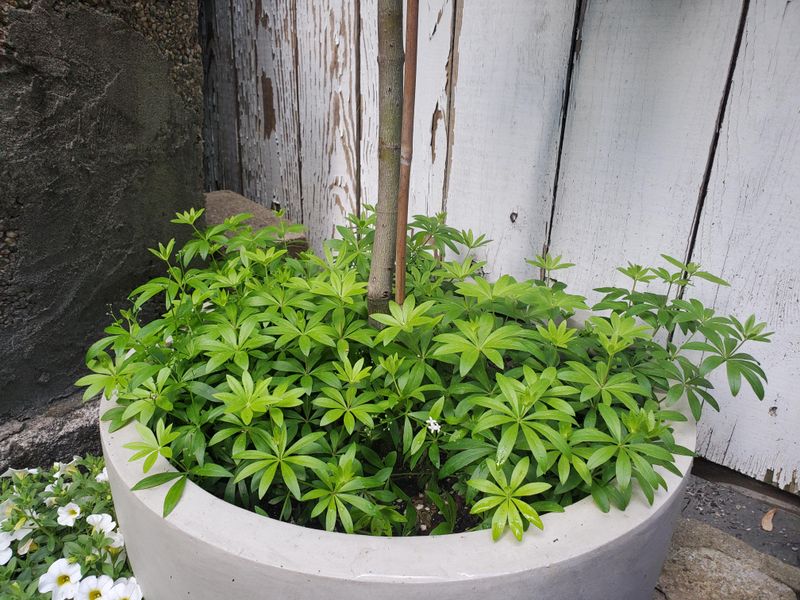
Shade-loving sweet woodruff solves the problem of bare walkway edges under trees where most herbs won’t grow.
This perennial spreads into attractive green carpets that brighten shady Oregon garden paths.
The leaves grow in distinctive whorls around the stems, creating an interesting texture that looks great even without flowers. White star-shaped blooms cover the plant in late spring, creating a magical effect along shaded walkways.
The flowers smell sweetly fragrant, especially in the evening hours when you’re likely to be strolling through your garden. Sweet woodruff stays low, typically reaching six to eight inches in height, making it perfect for pathway borders.
This herb thrives in Oregon’s moist, cool conditions that challenge many other ground covers. It prefers partial to full shade and actually struggles in hot, sunny locations.
The plant spreads steadily through underground runners, filling in spaces between ferns and hostas along woodland-style paths. Sweet woodruff has been used traditionally to flavor beverages, though it should be used sparingly and with proper knowledge.
Most gardeners grow it purely for ornamental value along shady walkways where few other herbs will flourish.
The plant stays green through mild Oregon winters, providing year-round coverage in protected garden areas.
7. Lemon Thyme
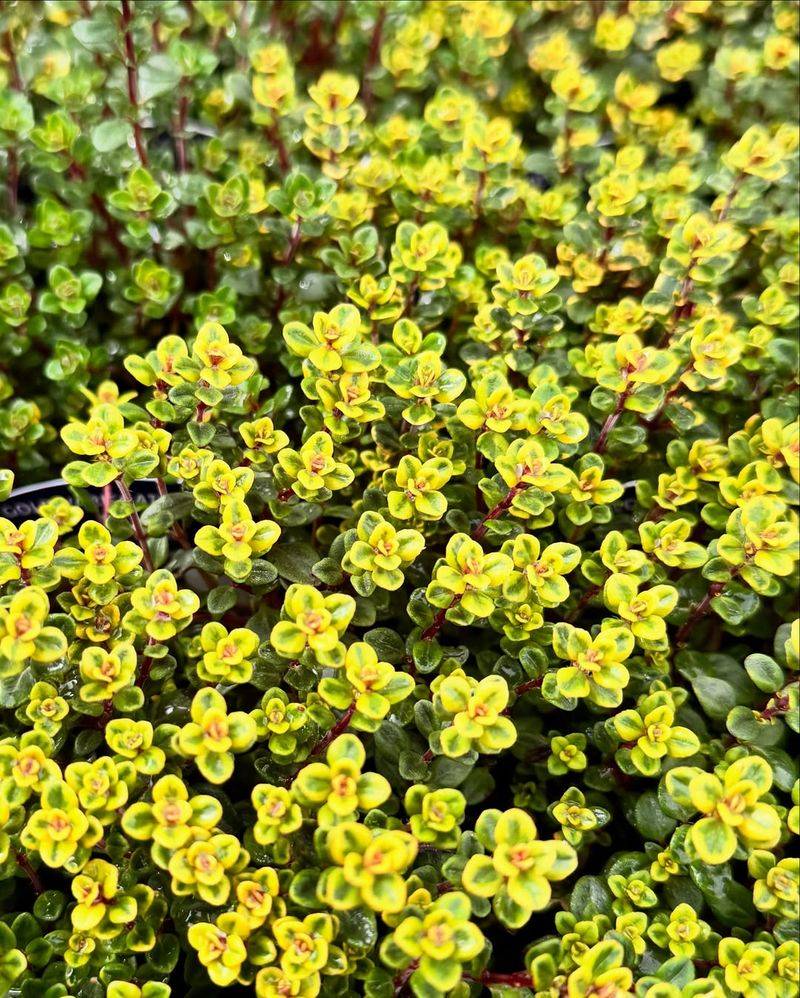
Citrus-scented leaves make lemon thyme a favorite for Oregon walkways where you want fragrance and flavor combined. Every time you brush against this herb, a fresh lemon scent fills the air around your garden path.
The variegated varieties offer golden-edged leaves that brighten walkway borders even when the plant isn’t flowering.
Lavender-pink flowers appear in summer, attracting bees and other beneficial insects to your Oregon garden.
Lemon thyme grows slightly taller than creeping varieties, reaching about eight inches in height, making it ideal for walkway edges rather than between stepping stones. The upright growth habit creates neat borders that define pathway edges clearly.
This herb tolerates Oregon’s wet winters well, especially when planted in locations with good drainage. It prefers full sun but adapts to partial shade in hotter garden spots.
Lemon thyme handles light foot traffic along pathway edges and bounces back quickly if accidentally stepped on during garden maintenance.
The culinary value of lemon thyme makes it especially useful along kitchen garden walkways.
You can harvest sprigs easily while walking to and from your vegetable beds. The lemon flavor works beautifully with fish, chicken, and vegetables, making this both a practical and ornamental addition to Oregon garden paths.
8. Pennyroyal
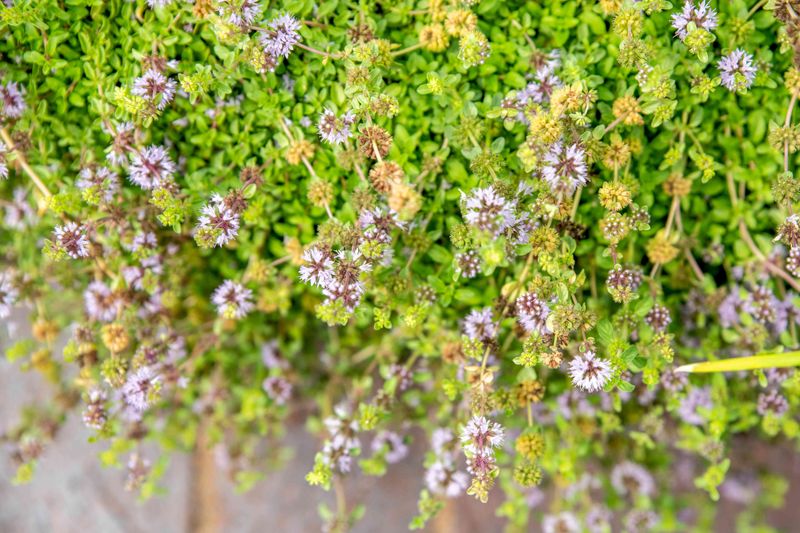
Strong mint fragrance makes pennyroyal noticeable from several feet away along Oregon garden walkways. This low-growing member of the mint family spreads quickly into dense mats that release powerful scent when walked upon.
The small rounded leaves stay green through most of the year in mild Oregon climates, providing consistent pathway coverage. Purple flowers bloom in summer, adding color while attracting pollinators to your garden.
Pennyroyal grows four to six inches tall, creating thick ground cover that suppresses weeds naturally.
The plant thrives in Oregon’s moist conditions and actually prefers damper soil than most herbs, making it perfect for walkways that stay slightly wet.
This herb has traditionally been used as an insect repellent, though it should never be consumed internally. Many Oregon gardeners plant it along walkways specifically for its reputation of discouraging pests.
The strong scent can be overwhelming in confined spaces, so it works best along open garden paths with good air circulation.
Pennyroyal spreads aggressively and needs containment along walkway edges to prevent it from invading other garden areas.
However, when properly managed, it creates beautiful fragrant carpets that handle light foot traffic well. Plant it in full sun to partial shade where its vigorous growth can be an asset rather than a problem.
9. Winter Savory
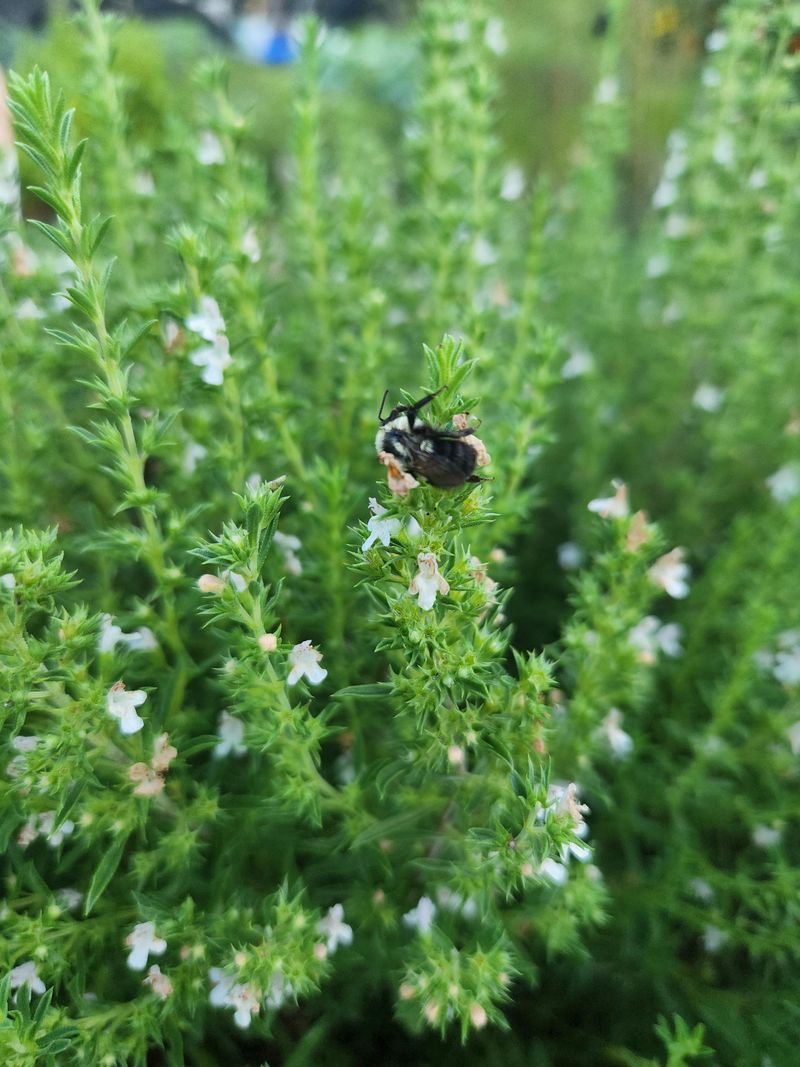
Evergreen foliage makes winter savory valuable for Oregon walkways that need year-round structure and interest. This woody herb forms neat mounds about twelve inches tall along pathway edges, maintaining its shape through all seasons.
The narrow dark green leaves provide texture contrast with broader-leaved plants in your garden design. White to pale pink flowers appear in late summer, extending the blooming season along your walkways when many other herbs have finished flowering.
Winter savory tolerates Oregon’s wet winters exceptionally well because it’s native to Mediterranean regions with similar climate patterns.
The plant actually prefers the cool temperatures that Pacific Northwest gardens offer.
This herb works best positioned slightly back from the main walking surface rather than directly in the path of foot traffic. Its woody stems make it less suitable for walking on than softer ground covers, but perfect for defining walkway borders.
Winter savory also provides excellent culinary value with a peppery flavor similar to thyme. The plant needs full sun and well-drained soil to perform best in Oregon gardens.
Once established, it requires minimal maintenance and resists most pests and diseases.
Winter savory’s compact growth and evergreen nature make it especially valuable for formal walkway designs where you want consistent structure throughout the year.