The Best Native Michigan Shrubs For Small Yards That Need Year-Round Structure
Ever notice how a yard can feel complete in summer, then suddenly empty once winter sets in? That shift is especially noticeable in Michigan, where long months of bare branches and gray skies can leave landscapes looking flat.
Flowers bring color, but their impact is short-lived. What really holds a small yard together is structure.
Shrubs with strong shapes, berries, textured bark, or evergreen foliage keep things visually interesting through every season.
Native options stand out even more, since they’re adapted to Michigan’s cold winters, shifting springs, humid summers, and colorful falls, often performing well without constant attention.
1. New Jersey Tea Stays Compact And Holds Its Shape
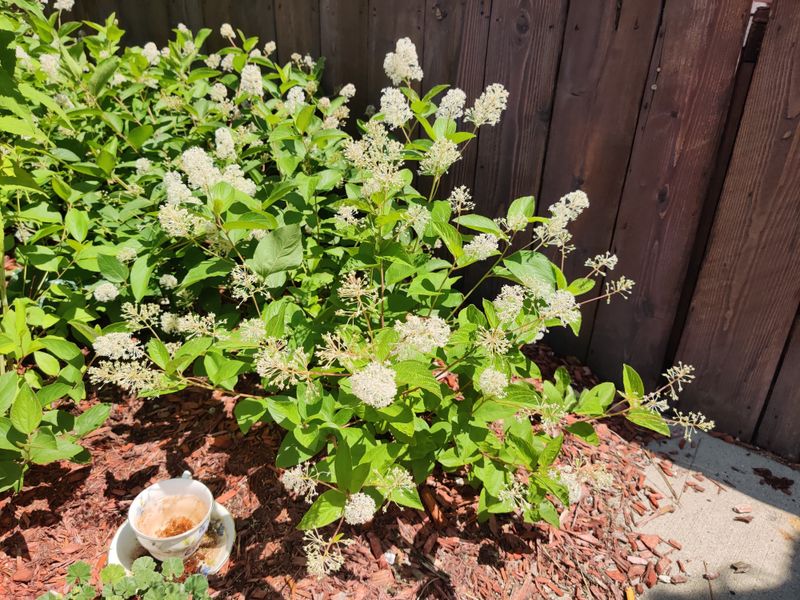
Few small shrubs manage to look tidy without much help, but New Jersey Tea is genuinely one of the better-behaved natives you can plant in a Michigan yard.
Reaching only about two to three feet tall and wide at maturity, it fits naturally into tight spaces without crowding neighboring plants or creeping beyond its boundaries.
That predictable, rounded form makes it reliable for front borders, foundation plantings, or anywhere you need something that stays put.
In early summer, the shrub covers itself in small clusters of white flowers that attract native bees, butterflies, and other beneficial insects. After the blooms fade, the seed capsules add a subtle textural interest that lingers into fall.
Even in winter, the branching structure remains clear and defined, giving the yard a sense of organization when most other plants have gone dormant.
New Jersey Tea grows well in full sun to light shade and handles dry, well-drained soils with ease. It actually performs better in leaner soils than in rich, moist conditions.
Because it fixes nitrogen through root associations, it can improve the soil around it over time. Michigan gardeners dealing with sandy or gravelly ground will find it especially reliable.
Pruning needs are minimal – a light trim every few years keeps it looking sharp without stressing the plant.
2. Black Chokeberry Adds Structure With Berries And Fall Color
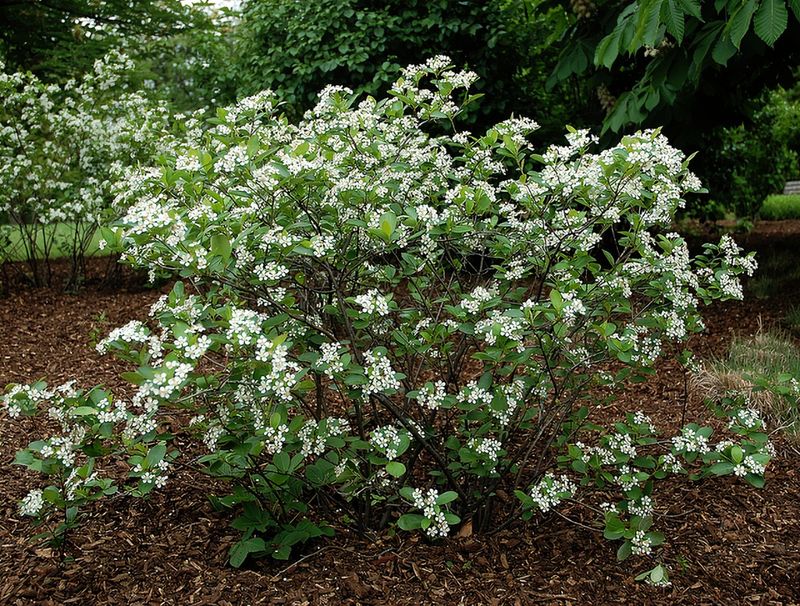
Walk past a Black Chokeberry in October and it is nearly impossible not to stop and stare.
The combination of glossy dark berries clustered along arching branches and leaves turning deep shades of red and orange makes this native shrub one of Michigan’s most visually dramatic fall performers.
That seasonal payoff alone would be worth planting it, but the structural story continues well beyond autumn.
Black Chokeberry typically grows four to five feet tall and spreads gradually through suckering, forming a dense, upright clump with strong visual presence.
In spring, small white flowers emerge before the leaves fully open, offering early-season interest when the yard is still waking up.
Through summer, the dark green, glossy foliage holds its shape cleanly. Winter brings the bare branch structure into focus, and any remaining berries – which birds tend to visit throughout the cold months – add small bursts of color against snow.
This shrub adapts well to Michigan’s variable soils, tolerating wet, clay-heavy spots that challenge many other plants. It also handles full sun and partial shade, giving gardeners flexibility in placement.
Maintenance is straightforward: remove older stems at the base every few years to encourage fresh growth and keep the clump from spreading wider than desired.
For small yards that need multi-season interest without constant upkeep, Black Chokeberry is a genuinely dependable choice.
3. Bush Honeysuckle Fills Space Without Taking Over
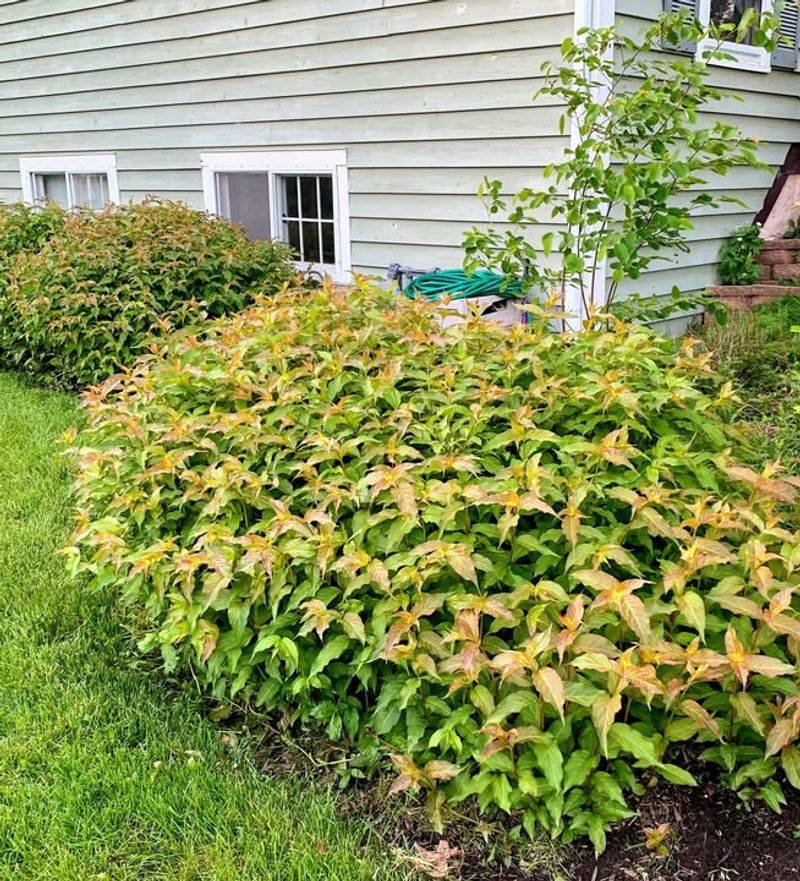
Space is precious in a small yard, and the last thing any gardener wants is a shrub that quietly doubles in size and takes over a bed within a few seasons.
Native Bush Honeysuckle – not to be confused with invasive exotic honeysuckles – earns its place by filling space responsibly.
It spreads slowly through underground stems, forming a low, arching mound that usually stays between two and four feet tall, making it manageable even in compact landscapes.
The yellow tubular flowers that appear in early to midsummer attract hummingbirds and native bees, adding lively movement to the garden during warm months.
After flowering, the foliage often develops reddish or bronzy tones as temperatures cool in fall, providing a secondary display of color that extends seasonal interest.
The branching structure remains visible through winter, lending quiet form to the yard even in the coldest months.
Michigan gardeners will appreciate how well Bush Honeysuckle handles difficult conditions. It tolerates dry soils, slopes, and partial to full shade – making it useful in spots where little else thrives.
Sandy soils common in parts of Michigan are no obstacle for this resilient native. Because it spreads gradually rather than explosively, gardeners can control its footprint with occasional edge trimming.
For shaded corners or dry slopes that need low-maintenance coverage with seasonal appeal, it is a practical and underused option worth considering.
4. Bearberry Forms A Low Evergreen Carpet Year Round
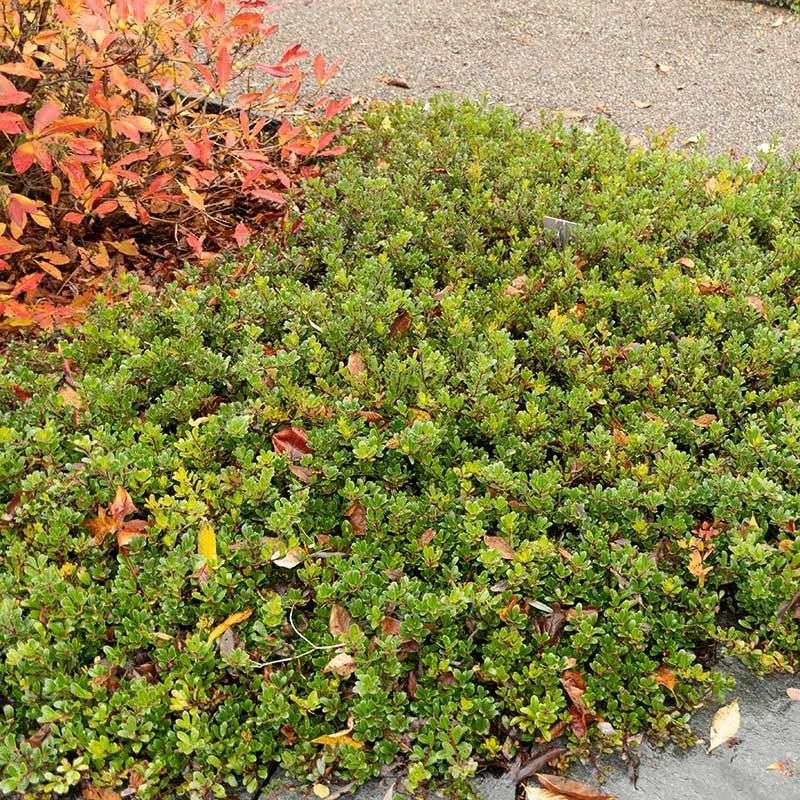
Most shrubs go through a noticeable off-season, dropping their leaves and leaving the yard looking bare. Bearberry refuses to follow that pattern.
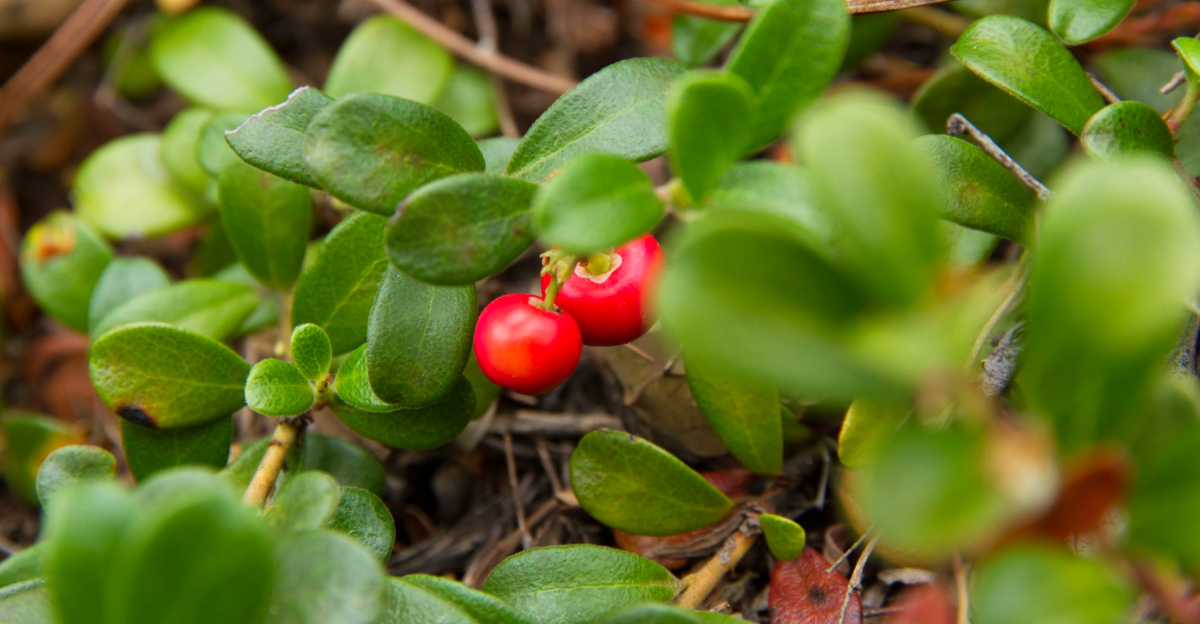
This low-growing, mat-forming native keeps its small, glossy, dark green leaves through every Michigan winter, creating a living carpet of evergreen coverage even when everything else has gone dormant.
That persistent greenery is exactly what small yards need to maintain visual continuity across the seasons.
Bearberry rarely grows more than six to twelve inches tall, making it one of the lowest-profile shrubs available for Michigan landscapes. It spreads horizontally, weaving across the ground in a dense, weed-suppressing layer.
Small pinkish-white flowers appear in spring, followed by bright red berries that persist well into winter and attract birds, including grouse and other wildlife native to Michigan’s forests and lakeshores.
Sandy, acidic, well-drained soils are where Bearberry genuinely thrives – conditions that match large portions of Michigan’s landscape, particularly in the northern Lower Peninsula and Upper Peninsula.
It performs best in full sun and handles drought with impressive resilience once established.
Slopes, rock gardens, and sandy embankments that drain too quickly for most plants are ideal placements.
Foot traffic should be avoided, but in spots where you simply want ground-level structure and year-round color without mowing or frequent watering, Bearberry delivers consistently.
Establishment takes patience, but the long-term results are well worth the wait.
5. Mapleleaf Viburnum Brings Layered Growth To Shady Spots
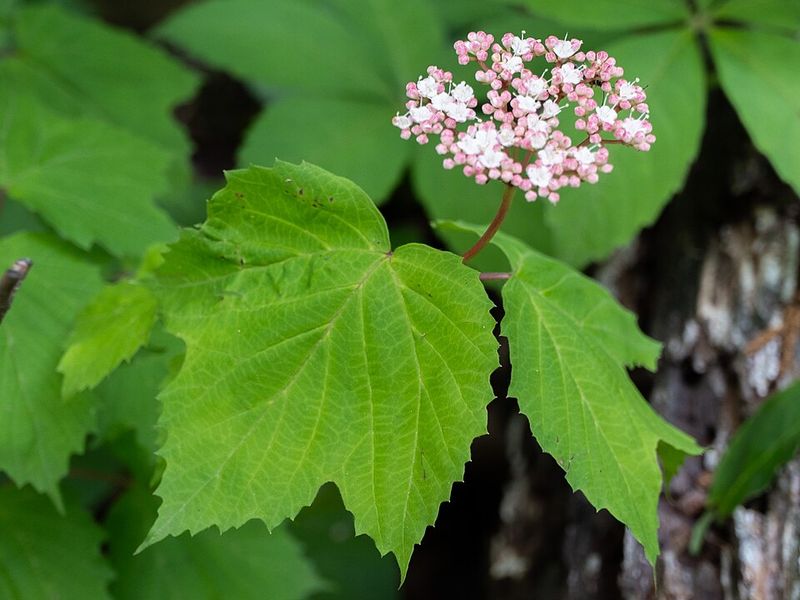
Shady spots in small yards can feel like landscaping problem areas – too dark for most flowering shrubs and too dry under tree canopies for many groundcovers.
Mapleleaf Viburnum handles these conditions with quiet confidence, making it one of the most useful native shrubs for Michigan gardeners dealing with difficult shade.
Its layered horizontal branching fills vertical space naturally, creating a tiered effect that adds visual depth even in low-light areas.
The maple-shaped leaves are attractive through summer, but the real spectacle comes in autumn.
Depending on light exposure and soil conditions, the foliage shifts through shades of pink, rose, burgundy, and soft purple – a color range that feels almost unexpected from a shade shrub.
Flat-topped clusters of creamy white flowers appear in late spring, followed by small dark berries that birds find appealing through fall and into early winter.
Mapleleaf Viburnum typically grows four to six feet tall and spreads gradually through root suckering, eventually forming a loose colony.
That spreading habit works in its favor in small yards where you want a shrub to fill a defined area naturally over time.
Michigan’s native woodlands are where this viburnum originates, so it handles the state’s climate without complaint.
Dry shade – one of the most challenging conditions in any yard – is something this shrub manages better than most alternatives available to Michigan gardeners.
6. Sweetfern Adds Soft Texture In Dry Sunny Areas
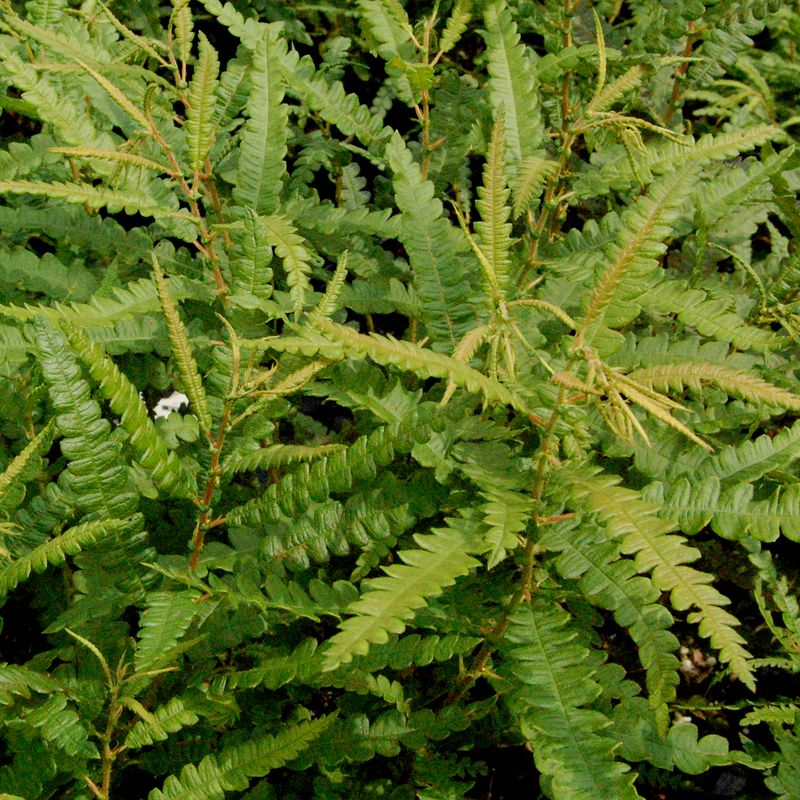
Running your fingers along a Sweetfern stem releases one of the most distinctive aromas in the Michigan landscape – a warm, resinous, almost spicy fragrance that has nothing to do with actual ferns.
Despite the name, Sweetfern is a true native shrub, and it brings a texture to sunny, dry Michigan yards that very few other plants can match.
The deeply lobed, narrow leaves create a feathery, soft appearance that contrasts beautifully with coarser-textured shrubs nearby.
Sweetfern grows two to four feet tall and spreads through underground runners, gradually forming a low, informal thicket. That spreading habit makes it excellent for stabilizing sandy slopes, dry embankments, or areas where erosion is a concern.
In small yards, it works well along sunny edges or in spots with poor, sandy soil where other shrubs struggle to establish.
Michigan’s sandy plains and dry upland areas are natural habitats for this plant, meaning it is exceptionally well-suited to the state’s tougher growing conditions.
There are no showy flowers to speak of, but the catkins that appear in early spring add understated seasonal interest. Through summer, the aromatic foliage holds its color and texture reliably.
In winter, the branching structure and persistent leaf fragments give the planting a naturalistic look that feels intentional rather than neglected.
Sweetfern requires almost no maintenance once established, making it one of the lowest-effort structural shrubs a Michigan gardener can choose.
7. Silky Dogwood Offers Colorful Stems In Winter
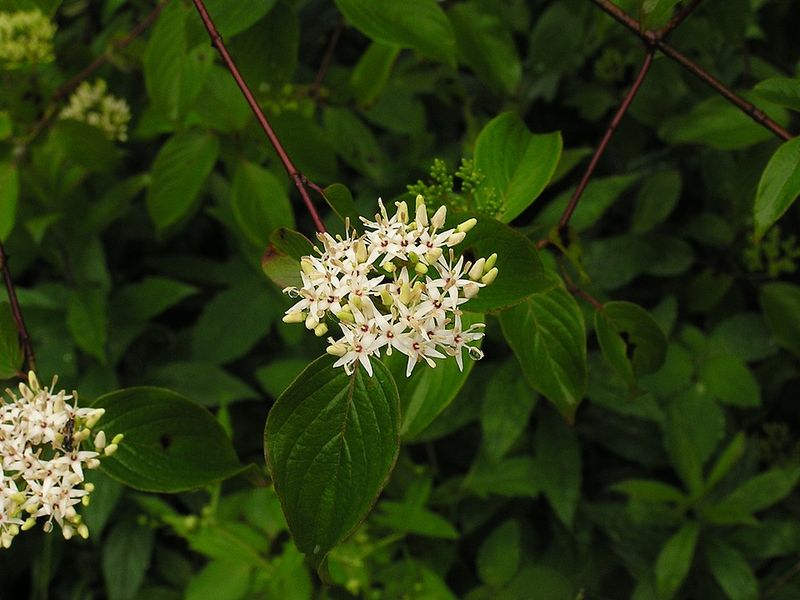
Winter in Michigan has a way of stripping the yard down to its bare bones, and that is exactly when Silky Dogwood earns its place in the landscape.
Once the leaves drop in late fall, the young stems reveal a rich reddish-purple color that stands out clearly against snow or frozen ground.
That winter stem display is genuinely one of the more striking structural features any native Michigan shrub can offer during the coldest and visually quietest months of the year.
Silky Dogwood grows six to ten feet tall and spreads into a rounded, multi-stemmed form with arching branches. In small yards, it works best in a back corner or along a property edge where it has room to develop its natural shape without crowding.
Flat-topped clusters of white flowers appear in late spring and attract pollinators reliably.
Blue-white berries follow in late summer, providing food for birds – including migratory species passing through Michigan – before the foliage turns soft shades of red and purple in fall.
Moist soils and areas near rain gardens, low spots, or stream edges suit this shrub well. It handles wet conditions that would stress many other plants.
To keep stem color vivid, gardeners can remove older stems at the base every two to three years, since younger stems display the most intense color.
For small Michigan yards that need genuine four-season interest, Silky Dogwood offers something meaningful in every month.
8. Ninebark Stands Out With Peeling Bark And Strong Form
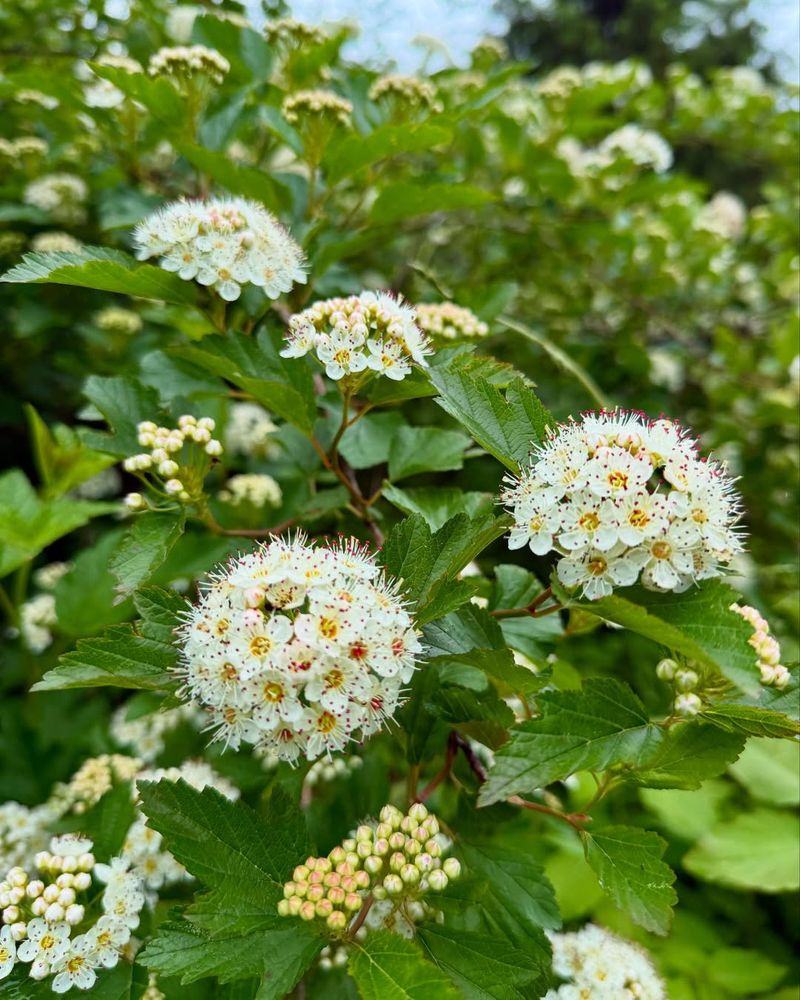
There is something almost architectural about a well-grown Ninebark.
The exfoliating bark – which peels back in thin, papery layers to reveal warm amber and cinnamon tones beneath – gives the plant a sculptural quality that most shrubs simply cannot match.
In a small Michigan yard, that kind of visual detail matters enormously during winter, when bark texture becomes the primary thing the eye has to work with in the landscape.
Compact cultivars of native Ninebark typically grow four to six feet tall and wide, fitting comfortably into smaller spaces.
In early summer, rounded clusters of white to pale pink flowers cover the branches and attract bees and other pollinators.
Reddish seed capsules follow and persist into fall, adding color and texture as the foliage transitions through shades of yellow, orange, and burgundy.
The branching structure remains bold and upright through winter, giving the yard a strong visual anchor even without leaves.
Ninebark adapts well to Michigan’s variable soils, tolerating clay, loam, and moderately dry conditions. Full sun encourages the most compact growth and the best stem color development.
It handles Michigan’s cold winters without any special protection and rarely experiences significant pest or disease issues. Light pruning after flowering helps maintain shape without sacrificing the following season’s bloom.
For gardeners who want a native shrub that genuinely looks interesting in every single month of the Michigan year, Ninebark is among the most rewarding choices available.