The 15 Best Native Plants For Supporting Oregon Songbirds
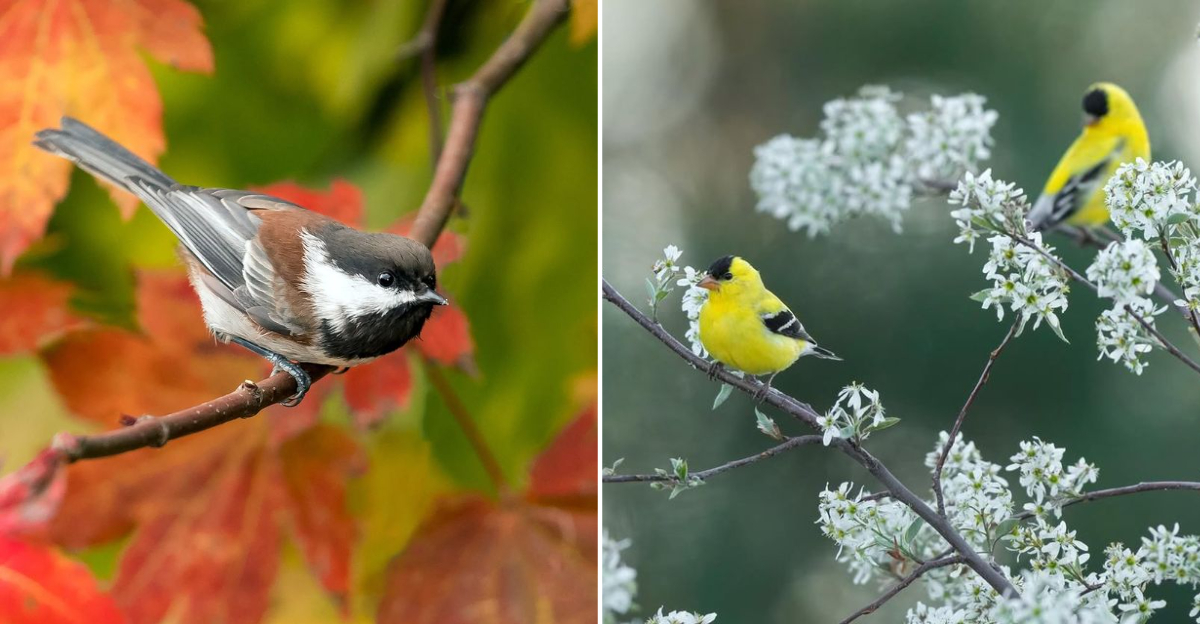
If you love the sound of birdsong drifting through your yard, planting with purpose can make all the difference. Oregon’s songbirds rely on native plants for food, shelter, and safe nesting spots.
When you fill your landscape with species that evolved right alongside them, your garden becomes more than just pretty. It becomes part of a living, breathing ecosystem.
Native plants provide the berries, seeds, nectar, and insects that songbirds need to thrive. They also offer dense cover for protection from predators and unpredictable weather.
While ornamental imports might look nice, they often fall short when it comes to truly supporting local wildlife.
The exciting part is that many of Oregon’s native plants are just as beautiful as they are beneficial. Think vibrant blooms, textured foliage, and colorful berries that light up the seasons.
With the right choices, you can create a yard that feels alive with movement, music, and natural charm all year long.
1. Salmonberry (Rubus spectabilis)
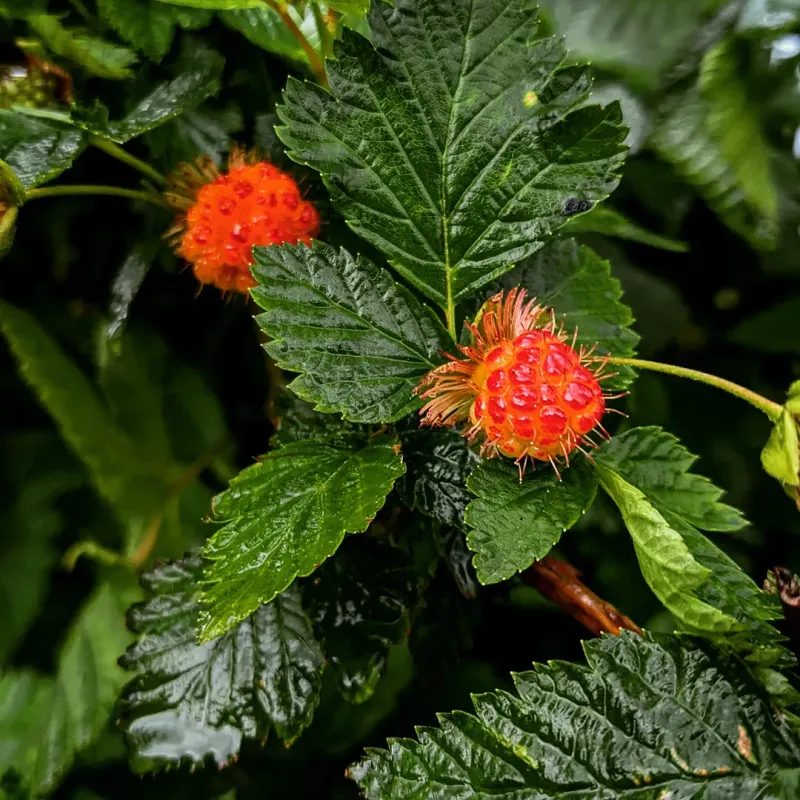
This stunning plant is the taste of spring in Oregon’s forests. Its vivid pink-magenta flowers are among the very first to bloom each year, sometimes appearing as early as February, giving early-returning hummingbirds and other songbirds a desperately needed nectar source after the long winter months.
By late spring and early summer, the flowers give way to soft, juicy berries that range from golden-yellow to deep red. These fruits are eagerly consumed by Swainson’s thrushes, robins, and a variety of other Oregon songbirds.
The Swainson’s thrush in particular has such a strong connection to salmonberry thickets that its arrival in Oregon each spring is often called the salmonberry bird by local naturalists.
Salmonberry thrives in moist, shaded areas and grows naturally along streams, in forest understories, and in coastal zones throughout western Oregon.
It spreads by underground runners and can form large thickets over time, which is actually a bonus for birds looking for dense nesting cover.
In a garden setting, it works best in a naturalistic area where spreading is welcome. Give it moisture and some shade, and it will reward you with flowers, fruit, and bird activity from late winter through early summer, making it one of the most season-spanning native plants available.
2. Red-Flowering Currant (Ribes sanguineum)
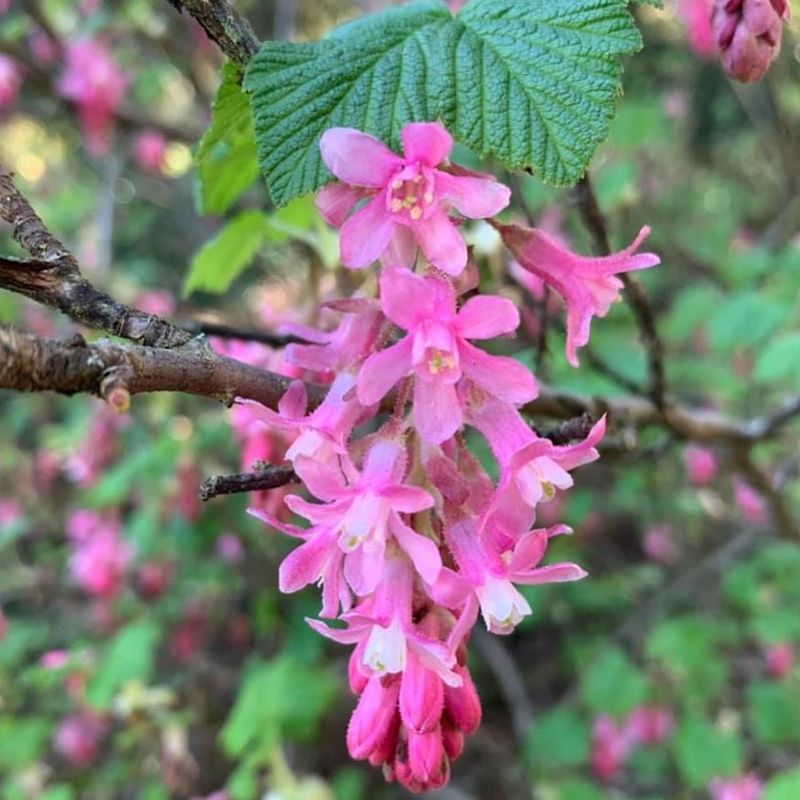
Few plants announce spring in Oregon quite like the Red-Flowering Currant. Its bright pink-red flower clusters burst open just as rufous hummingbirds return from their winter migration, making it one of the most important early-season nectar sources in the Pacific Northwest.
Songbirds love this shrub for more than just its flowers. By late summer, it produces small, dark blue-black berries that attract robins, thrushes, towhees, and finches.
The dense branching structure also provides excellent cover for nesting birds seeking protection from predators.
Growing Red-Flowering Currant in your Oregon yard is surprisingly easy. It thrives in full sun to partial shade and handles dry summers well once established.
Plant it along a fence line or as a hedge to maximize its value for birds. It typically grows six to ten feet tall, giving songbirds plenty of vertical space to perch and forage.
Even gardeners with limited experience will find this native shrub forgiving and rewarding. If you want one plant that delivers color, wildlife value, and low maintenance all at once, this is a fantastic place to start your Oregon native garden.
3. Serviceberry (Amelanchier alnifolia)
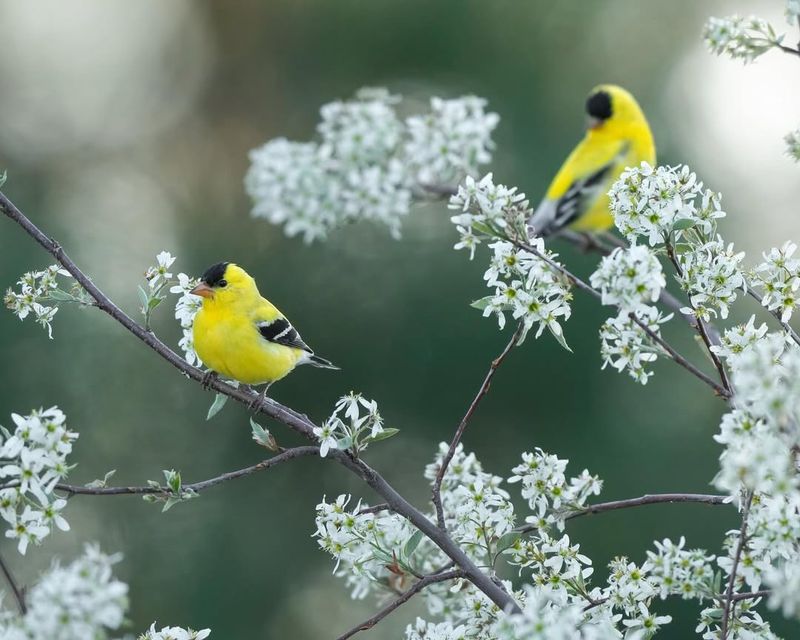
Ask any serious birder in Oregon what plant brings the most bird species to a yard, and serviceberry is almost always near the top of the list.
This multi-season native shrub produces white flowers in early spring and then loads up with sweet, blueberry-like fruits by early summer, drawing in an impressive parade of songbirds.
Cedar waxwings, American robins, Swainson’s thrushes, and western tanagers are just a few of the species that flock to serviceberry when the berries ripen.
The fruit is so popular that a single shrub can attract dozens of birds in just a few days. Gardeners in the Willamette Valley and beyond treasure this plant for exactly that reason.
Serviceberry grows well in a wide range of Oregon conditions, from moist streamside areas to drier upland slopes. It can be grown as a large shrub or pruned into a small tree, giving you flexibility in smaller yards.
Fall color is also stunning, with leaves turning orange and red before dropping. Plant it where you can watch from a window, because the bird activity during berry season is absolutely spectacular and worth every bit of the effort.
4. Oregon Grape (Mahonia aquifolium)
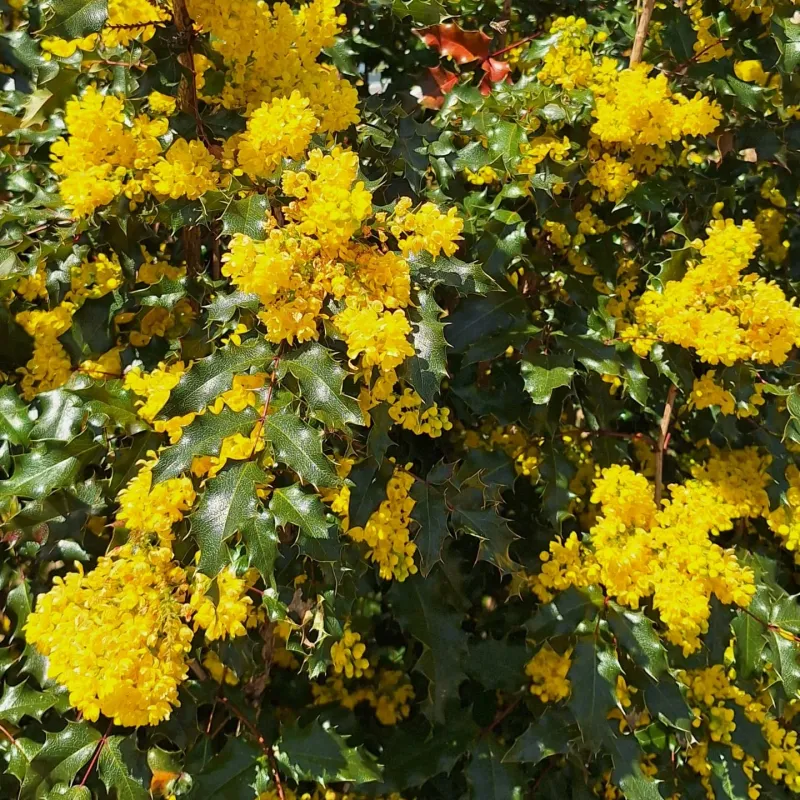
Oregon Grape holds a special place in this state since it is Oregon’s official state flower. Beyond its symbolic status, it is a powerhouse plant for supporting local songbirds throughout the year.
Its bold yellow flower clusters bloom in late winter and early spring, offering nectar when few other plants are active.
By midsummer, the flowers give way to clusters of tart, grape-like berries that turn a deep blue-purple. Robins, waxwings, and thrushes eagerly consume these fruits.
The spiny, evergreen leaves also create dense, protective cover that small songbirds use to hide from hawks and other threats, making it a true year-round refuge.
One of the best things about Oregon Grape is its toughness. It grows happily in shade, making it ideal for planting under trees where other shrubs struggle.
It handles drought well once established and rarely needs much attention after the first year or two. You can find it growing naturally along forest edges throughout western Oregon, which is a good sign that it is perfectly adapted to local conditions.
Whether used as a ground cover, hedge, or accent plant, Oregon Grape earns its spot in any bird-friendly garden across the state.
5. Snowberry (Symphoricarpos albus)
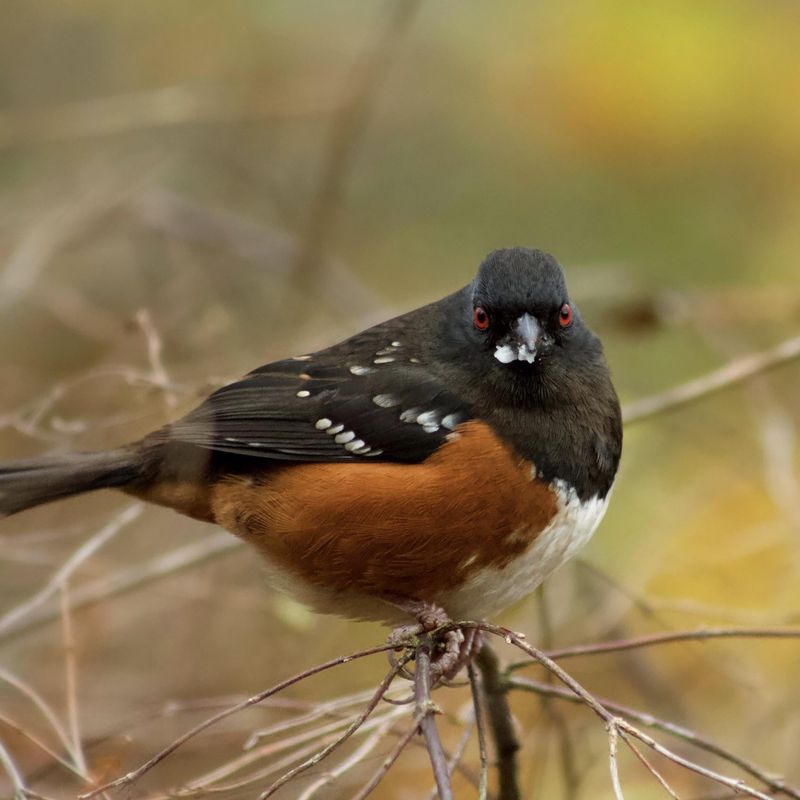
Snowberry might look simple at first glance, but this native Oregon shrub is far more valuable to songbirds than its modest appearance suggests.
The clusters of bright white berries that appear in fall and persist through winter are a critical food source when other fruits have long since disappeared from the landscape.
Hermit thrushes, varied thrushes, and even some sparrow species rely on snowberry during the cold Oregon months.
Because the berries are not particularly sweet, many birds save them for last, which means the shrub keeps providing food well into winter when songbirds need it most. That kind of reliability is genuinely rare in a garden plant.
Snowberry is also remarkably adaptable. It grows in sun or shade, tolerates poor soils, and spreads slowly by root sprouts to form dense thickets that offer excellent nesting and roosting cover.
It works beautifully as a naturalistic hedge or planted along a stream bank where it helps prevent erosion. In Oregon’s wetter regions, it establishes especially quickly.
If you are looking for a low-fuss native shrub that pulls real weight for local wildlife, snowberry deserves a prominent spot in your planting plan from the start.
6. Red Osier Dogwood (Cornus sericea)
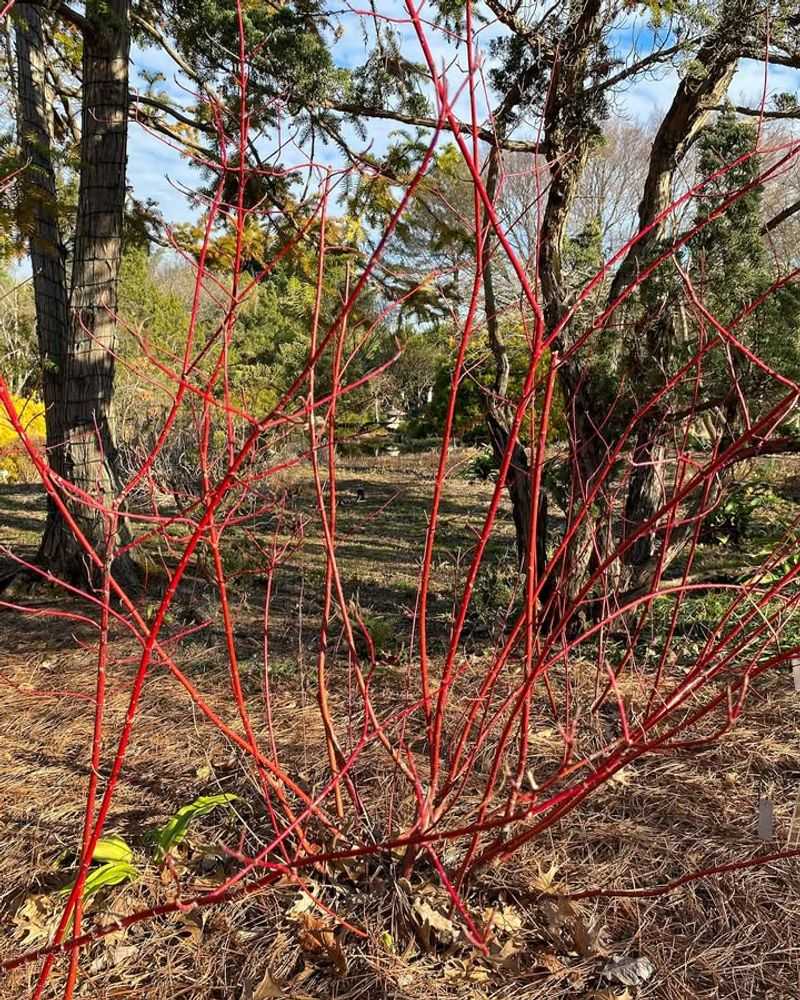
Walk along almost any creek or wetland in Oregon and you will likely spot Red Osier Dogwood’s blazing red stems catching the winter light.
This native shrub is as beautiful as it is functional, offering songbirds an extraordinary combination of food, nesting habitat, and protective cover across every season.
The small white berries that ripen in late summer are a favorite of waxwings, robins, grosbeaks, and flickers. Because the shrub often grows in dense thickets, it creates the kind of layered cover that songbirds love for nesting.
Yellow warblers, common yellowthroats, and song sparrows are regularly found nesting within Red Osier Dogwood stands in western Oregon.
For gardeners near wet areas, this shrub is practically a gift. It thrives in moist to wet soils and is one of the best native plants for stabilizing stream banks and pond edges.
It grows quickly and can handle periodic flooding without complaint. Even in average garden soils with regular watering, it performs beautifully.
The vivid red winter stems add ornamental interest when most other plants look bare, giving your Oregon garden a pop of color exactly when you need it most during the gray winter months.
7. Pacific Ninebark (Physocarpus capitatus)
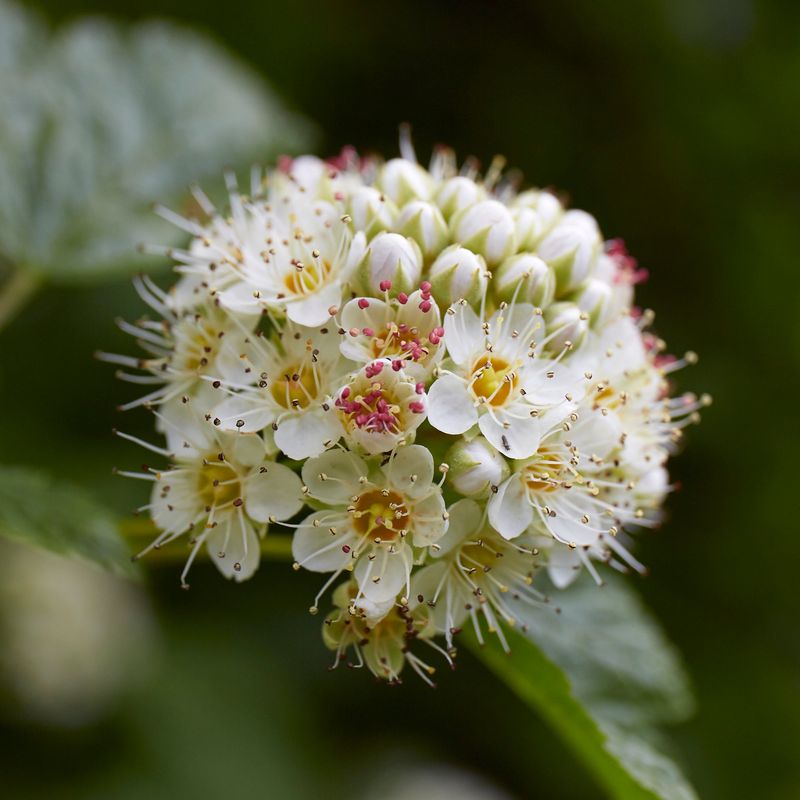
This is one of those native Oregon shrubs that quietly does everything right. Its rounded clusters of tiny white flowers bloom in late spring, drawing in pollinators and insect-feeding songbirds alike.
Then, as summer progresses, the flowers transform into clusters of reddish seed capsules that many birds find irresistible.
Finches, sparrows, and towhees are especially fond of picking through the seed heads. Meanwhile, the dense, arching branches provide superb cover and nesting sites for a variety of Oregon songbirds.
The peeling, multi-layered bark also gives the shrub a distinctive look that stands out in the garden even when it is not in bloom.
Growing Pacific Ninebark in Oregon is straightforward. It prefers moist soils and does best near water, but it adapts well to average garden conditions with some supplemental watering during dry summers.
It can grow quite large, sometimes reaching ten feet tall and wide, so give it room to spread naturally. Pruning right after flowering keeps it tidy without sacrificing next year’s blooms.
If you have a rain garden, a wet corner, or a streamside area in your Oregon yard, Pacific Ninebark is one of the most rewarding native shrubs you can plant to support local songbirds.
8. Vine Maple (Acer circinatum)
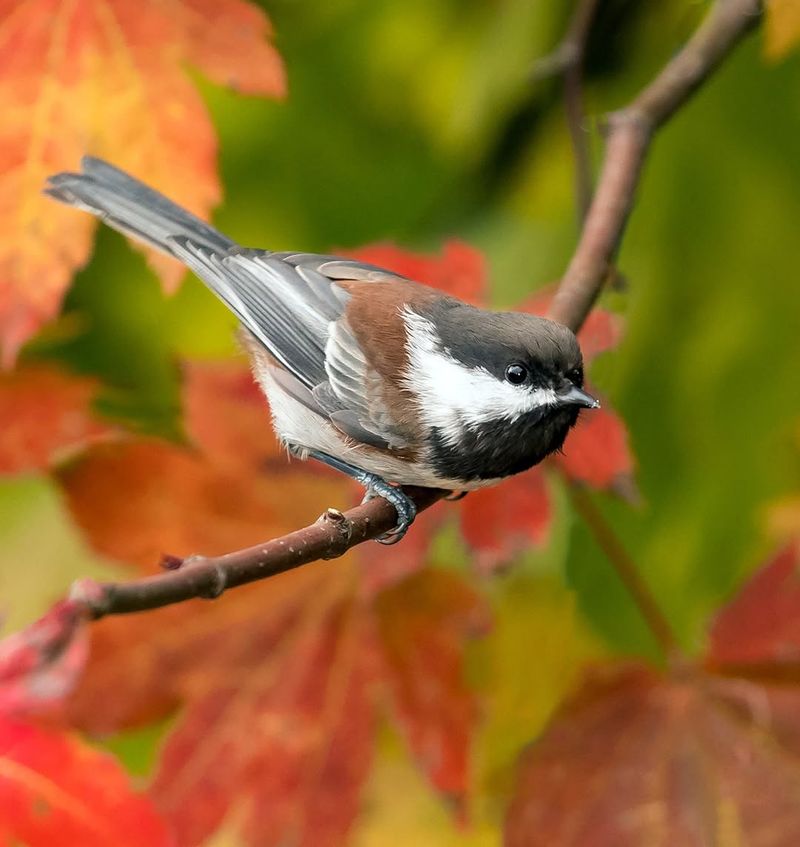
Vine Maple is one of Oregon’s most beloved native trees, and for good reason. Its graceful, twisting branches and stunning fall foliage make it a garden favorite, but it is the tree’s ecological role that really sets it apart.
Songbirds use Vine Maple heavily throughout the year for foraging, nesting, and shelter. The winged seeds, called samaras, are eaten by finches, grosbeaks, and nuthatches.
Insects that live in the bark and leaf litter attract insect-eating birds like warblers, vireos, and wrens.
The layered branching structure also creates ideal nesting sites, with many bird species choosing the sheltered interior of a mature Vine Maple for raising their young each spring in Oregon.
In the garden, Vine Maple is wonderfully flexible. It grows happily in full shade under taller conifers, in partial sun along forest edges, or even in full sun if given enough moisture.
It typically stays smaller than most maples, making it a great fit for average-sized yards. Its multi-stemmed form adds structure and visual interest in every season.
Plant it where you can watch birds move through its branches, because on a busy spring morning in Oregon, a Vine Maple can feel like a small city of feathered activity all on its own.
9. Evergreen Huckleberry (Vaccinium ovatum)
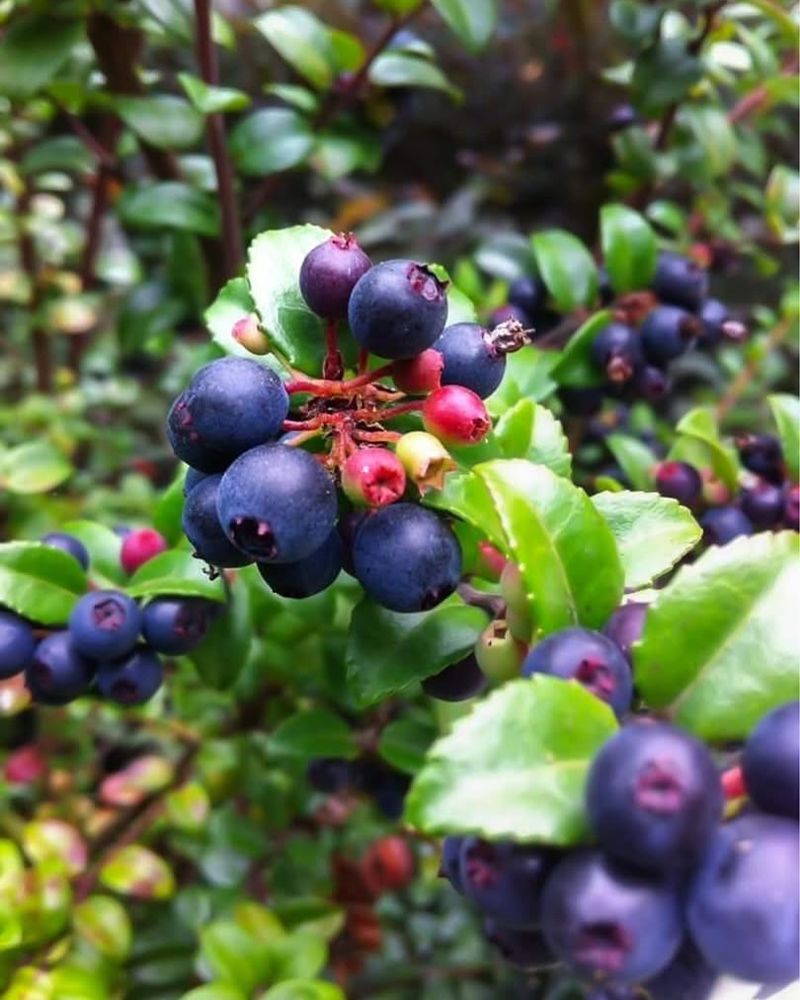
Few native plants in Oregon earn as much praise from both gardeners and wildlife enthusiasts as Evergreen Huckleberry.
This glossy-leaved shrub produces small, intensely flavored dark berries in late summer and fall that are absolutely irresistible to a long list of Oregon songbirds, including thrushes, waxwings, and robins.
What makes Evergreen Huckleberry especially useful is that it holds its berries for an extended period, giving birds a reliable food source well into the fall migration season.
The dense, evergreen foliage also provides year-round shelter, which is particularly valuable in Oregon’s coastal regions where winter storms can be harsh and sudden.
This shrub is a natural fit for shaded or partially shaded areas under conifers, where many other fruiting shrubs struggle to thrive. It grows slowly but steadily, eventually reaching four to eight feet in height.
Once established, it is quite drought-tolerant, especially in the cool, moist climates of western Oregon. The new spring growth emerges with a beautiful bronzy-red color before maturing to deep green, adding ornamental interest beyond just the berries.
For Oregon gardeners wanting a low-maintenance, high-impact native plant that songbirds will visit again and again, Evergreen Huckleberry is an outstanding choice.
10. Western Red Cedar (Thuja plicata)
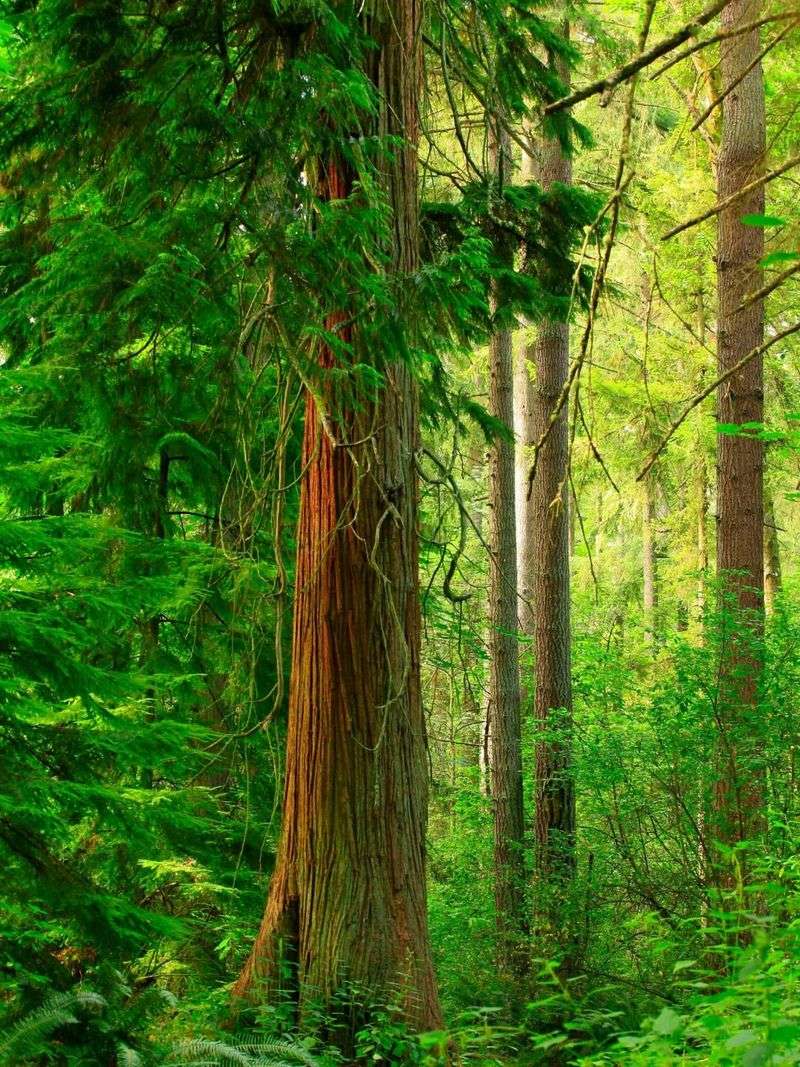
Western Red Cedar is a giant in every sense of the word. This iconic Pacific Northwest tree can live for over a thousand years and grow to enormous heights, but even young trees planted in Oregon gardens quickly become important wildlife resources.
Songbirds are drawn to Western Red Cedar for its dense, year-round cover above everything else.
The thick, layered foliage provides exceptional shelter from rain, wind, and predators. Hermit thrushes, varied thrushes, and golden-crowned kinglets are among the songbirds frequently found roosting and foraging within cedar canopies during Oregon’s wet winters.
The small cones also attract seed-eating birds, including siskins and crossbills, during years of good cone production.
Planting a Western Red Cedar is a long-term investment in your property and the local ecosystem. It grows best in moist, well-drained soils and does particularly well in western Oregon’s mild, rainy climate.
Give it plenty of space since it can eventually grow very wide. Even a young cedar just a few years old begins offering real value to local birds.
If you have the space and the patience, there is perhaps no single native plant in Oregon that will do more for songbirds over the long run than this magnificent, aromatic tree.
11. Nootka Rose (Rosa nutkana)
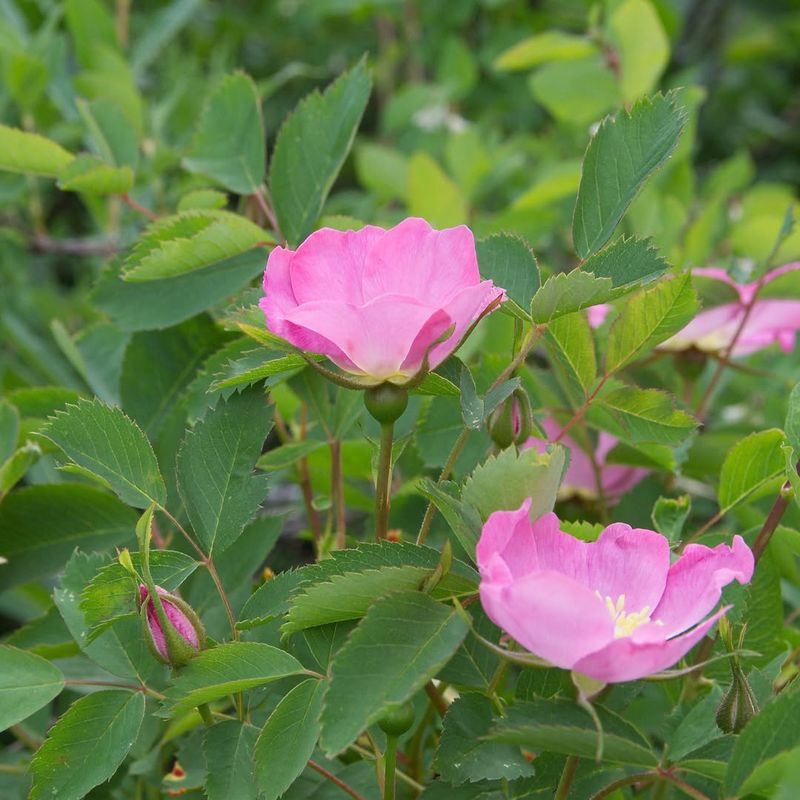
Thorny, wild, and absolutely teeming with life, Nootka Rose is one of the most productive native shrubs you can plant for Oregon songbirds. Its large, single pink flowers bloom in late spring and attract pollinators and insect-hunting birds.
But the real payoff comes in fall and winter, when the bright red rose hips ripen and become a critical food source for many species.
American robins, cedar waxwings, and Townsend’s thrushes are especially fond of the hips, which are packed with vitamin C and fat-rich compounds that help birds fuel up for migration or survive cold Oregon winters. The thorny canes also create some of the most predator-proof nesting habitat available, with several songbird species choosing to nest deep within Nootka Rose thickets.
This rose grows vigorously in Oregon’s moist, mild climate and can spread by root suckers to form dense thickets over time. It works beautifully along fence lines, property edges, or as a naturalistic screen.
It tolerates a wide range of soils and sun conditions, from full sun to light shade. Pruning is optional but can keep it more manageable in smaller spaces.
For a native plant that looks gorgeous, requires minimal care, and delivers maximum value for local birds, Nootka Rose is genuinely hard to beat.
12. Elderberry (Sambucus racemosa or Sambucus caerulea)
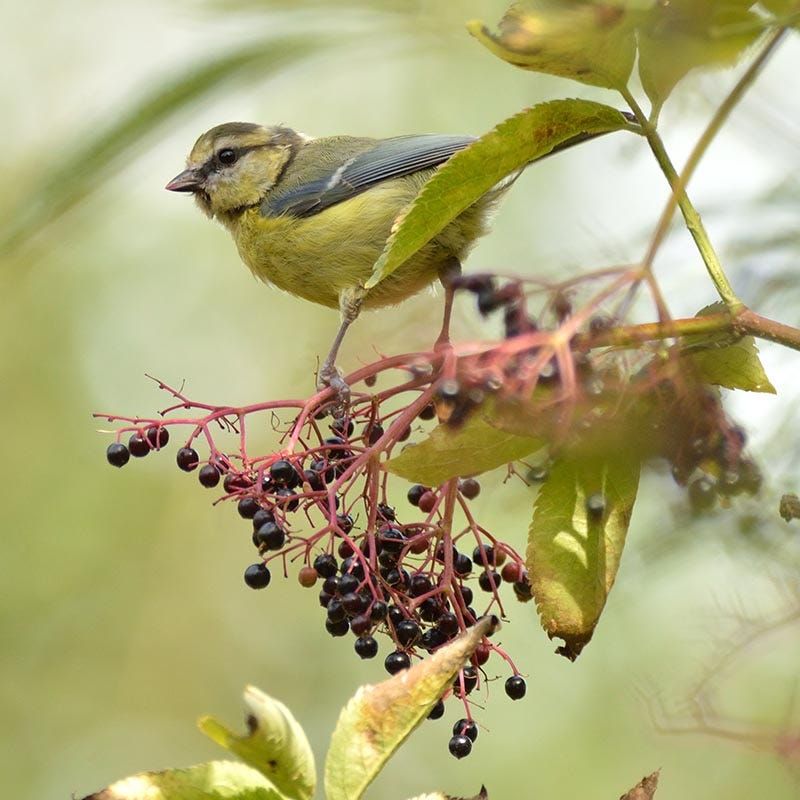
If there is one native plant in Oregon that songbirds go absolutely wild for, elderberry might be it. Both the red elderberry (Sambucus racemosa) and the blue elderberry (Sambucus caerulea) produce enormous clusters of berries that ripen in summer and attract an astonishing variety of birds in a very short period of time.
Tanagers, grosbeaks, orioles, thrushes, and waxwings all descend on elderberry shrubs during berry season. Watching an elderberry during peak fruiting is one of the most exciting birding experiences you can have in Oregon without ever leaving your yard.
The large, compound leaves and open branching structure also support a rich community of insects that attract warblers and flycatchers throughout the growing season.
Elderberry grows fast, which is great news for impatient gardeners. It can reach ten to fifteen feet in just a few years and produces its first berries relatively quickly after planting.
It prefers moist soils and grows particularly well near streams, ponds, or in low-lying areas of the yard. Pruning older stems back periodically encourages fresh, productive growth.
Plant elderberry where you want a fast-growing, wildlife-packed focal point in your Oregon garden, and be ready to share the harvest generously with your feathered neighbors.
13. Thimbleberry (Rubus parviflorus)
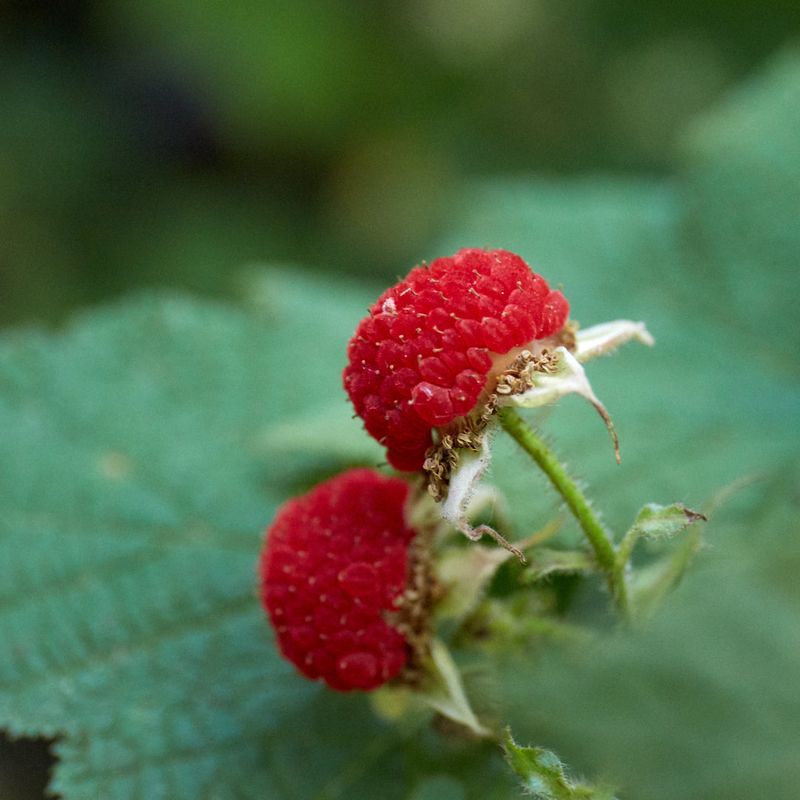
Soft, velvety leaves as big as your hand and berries that practically fall apart when ripe, Thimbleberry is one of Oregon’s most charming native shrubs.
It lacks the thorns of its blackberry cousins, making it a friendlier option for yards where kids play, and it is just as valuable to local songbirds as any fruiting native plant on this list.
The bright red berries ripen in midsummer and are quickly discovered by robins, thrushes, and towhees.
Because the fruit is soft and fragile, it does not last long on the plant, which means birds that know where a Thimbleberry patch is located will visit it repeatedly throughout the fruiting season.
That kind of reliable bird traffic is exactly what makes this plant so satisfying to grow in an Oregon garden.
Thimbleberry does best in partial shade and moist soils, conditions that are easy to find in much of western Oregon. It spreads by rhizomes and can cover ground quickly, which is helpful for naturalizing a shaded slope or filling in under trees.
The large white flowers are also attractive to pollinators. Pruning back old canes after fruiting keeps the patch productive and tidy.
For a thornless, bird-friendly native that thrives in Oregon’s shadier spots, Thimbleberry is a wonderful and underappreciated choice.
14. Douglas Spirea (Spiraea douglasii)
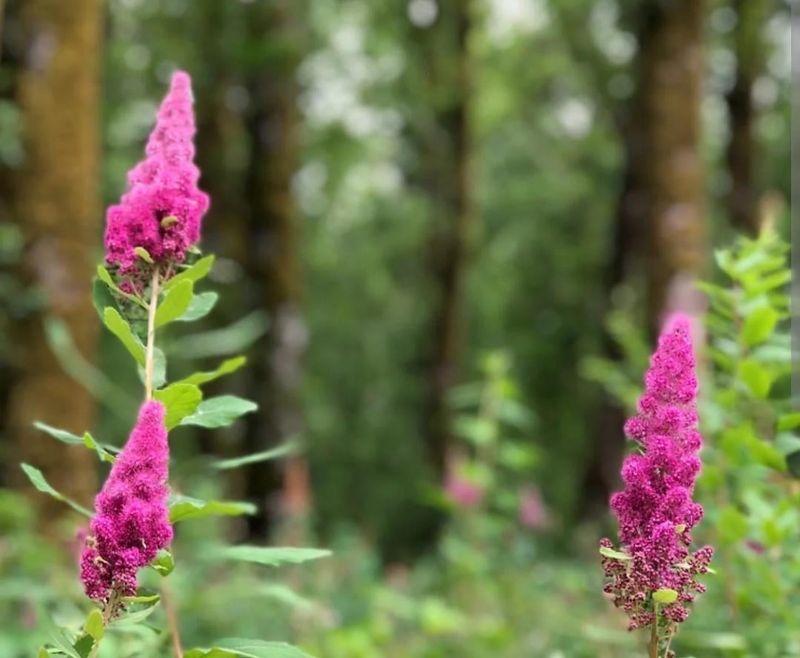
Bright pink flower plumes rising from a moist meadow edge are a sure sign that Douglas Spirea is in bloom. This native Oregon shrub is a magnet for insects during summer, and where insects gather, songbirds are never far behind.
Flycatchers, warblers, and vireos regularly hunt the flower clusters for beetles, flies, and other small invertebrates.
After the flowers fade, Douglas Spirea produces clusters of small, dry seed capsules that persist through fall and winter.
Seed-eating birds like sparrows and finches pick through these capsules during lean months when other food sources are scarce in Oregon’s colder landscapes.
The dense, upright growth habit also provides solid cover for ground-nesting and low-nesting songbirds.
Douglas Spirea is tailor-made for wet spots in the garden. It thrives in poorly drained soils, seasonal wet areas, and along pond or stream edges where many other shrubs would struggle.
It spreads by rhizomes to form colonies, which is a feature rather than a problem if you want a naturalistic, wildlife-friendly planting. It is also quite tolerant of full sun, which makes it a strong performer in open meadow restoration projects across Oregon.
If you have a wet, sunny area that feels hard to plant, Douglas Spirea is the native solution you have been looking for.
15. Oceanspray (Holodiscus discolor)
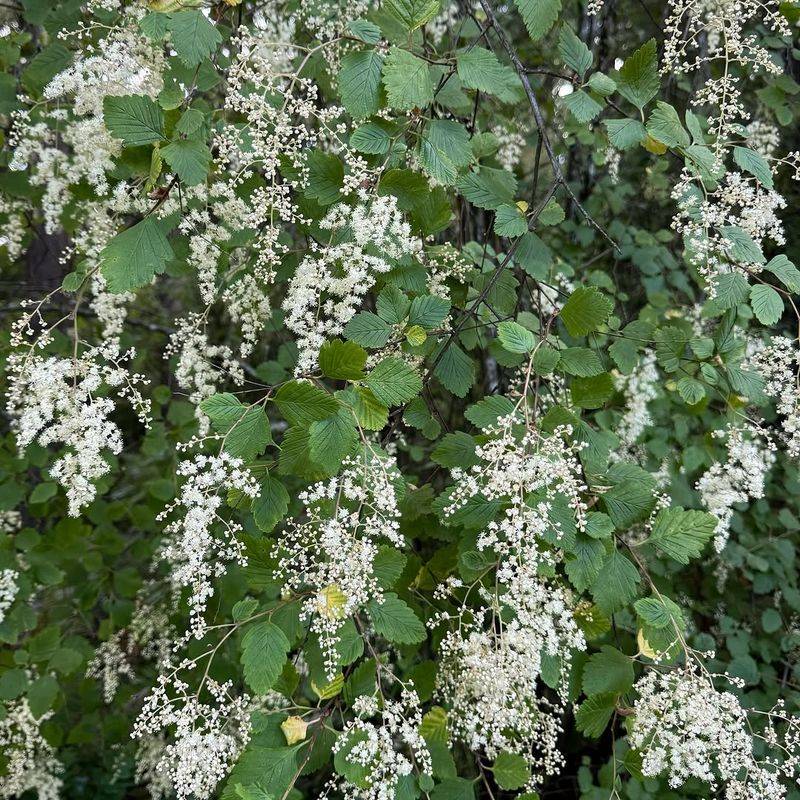
Named for its cascading plumes of creamy white flowers that look like seafoam spilling over the branches, Oceanspray is one of the most visually striking native shrubs in all of Oregon.
It blooms in early to midsummer, and during that time it buzzes with insect activity that draws in a steady stream of insect-eating songbirds.
Warblers, vireos, and flycatchers work the flower clusters methodically, hunting for the moths, beetles, and other insects that gather there.
Once the flowers fade and the dry, rust-colored seed clusters form, finches and sparrows move in to feed on the tiny seeds throughout fall and winter.
It is genuinely a plant that supports birds across multiple seasons without any extra effort on your part.
Oceanspray is exceptionally well-suited to Oregon’s dry-summer climate. Once established, it needs very little supplemental water and thrives on rocky slopes, dry hillsides, and sunny forest edges where other shrubs might struggle to survive.
It grows six to fifteen feet tall depending on conditions, creating a graceful arching form that looks beautiful in naturalistic landscapes. It also provides excellent nesting cover for birds that prefer drier habitats.
For gardeners in eastern Oregon or in drier parts of western Oregon, Oceanspray is one of the most dependable and bird-friendly native shrubs available anywhere in the state.