The 9 Best Plants To Grow Beneath Roses In Oregon
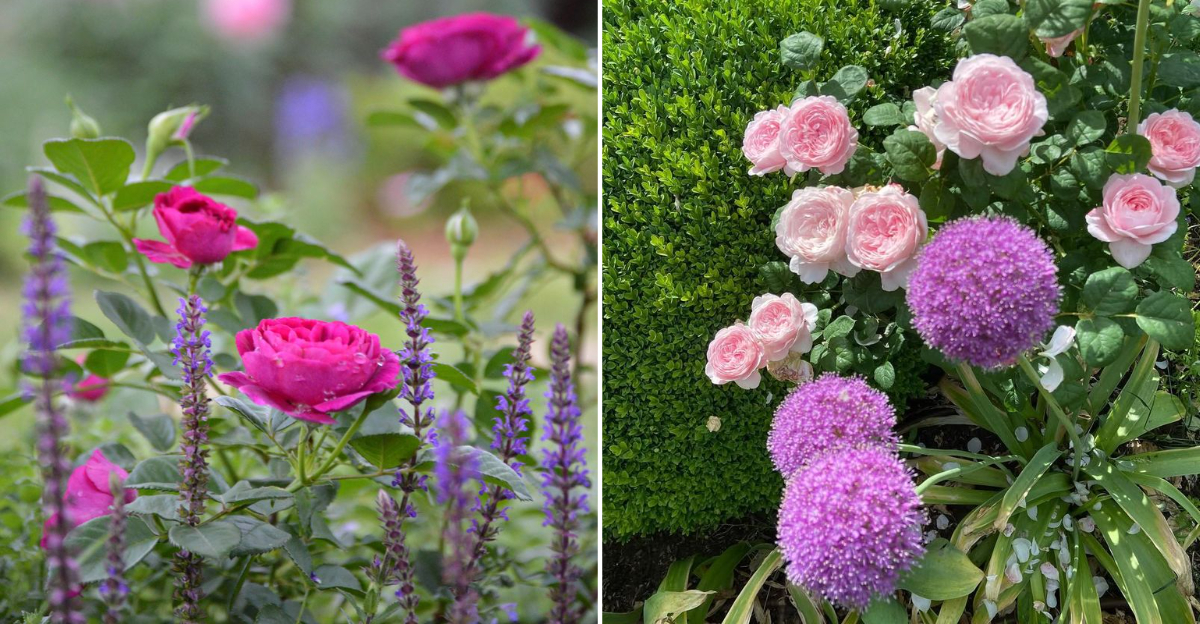
Roses may be the stars of the garden, but what you plant beneath them can make a huge difference in how they look and grow. The right companions do more than fill empty soil.
They help keep roots cool, reduce weeds, improve soil health, and even highlight your roses with extra color and texture. In Oregon’s climate, choosing plants that enjoy similar moisture, soil, and light conditions is the secret to a thriving, low maintenance rose bed.
Some companions boost pollinators, some protect the soil, and others simply make your roses shine even brighter.
A well layered planting turns a basic rose patch into a lush, balanced garden that looks beautiful from top to bottom. Let’s check them out!
1. Lavender (Lavandula spp.)
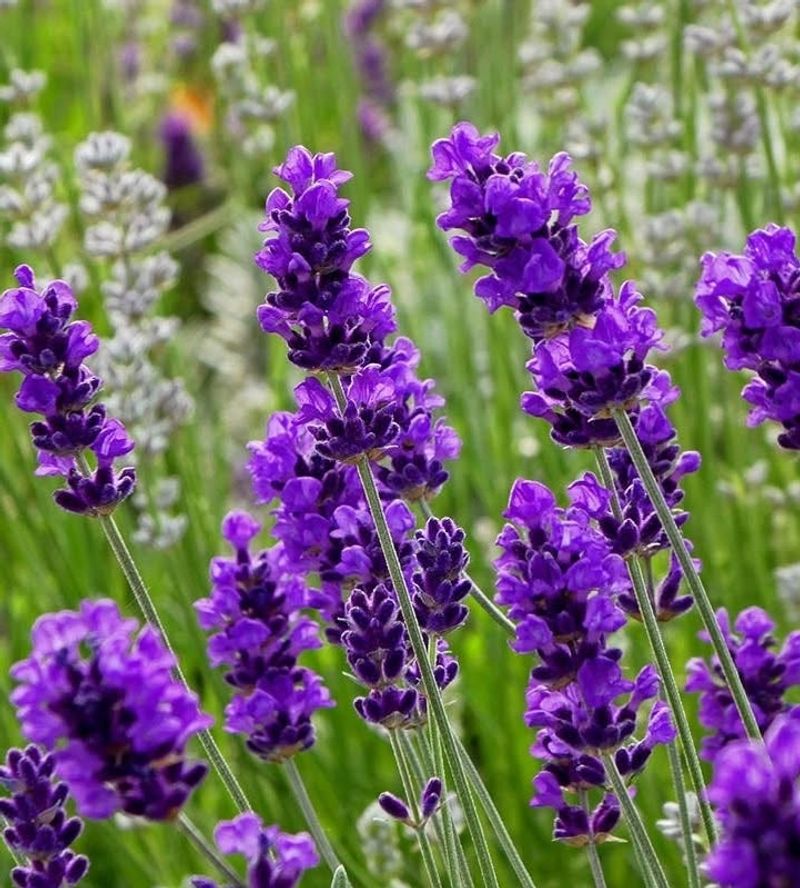
Lavender brings Mediterranean charm to your Oregon rose garden while offering practical benefits that extend beyond its beautiful purple blooms.
This aromatic herb thrives in the same well-drained soil your roses prefer, making it an ideal companion for beds throughout the Willamette Valley and southern Oregon regions.
Plant lavender about 18 to 24 inches from your rose base to give both plants room to develop healthy root systems. Lavender handles Oregon’s dry summers exceptionally well, requiring less frequent watering than many other perennials once established.
Its silvery foliage creates stunning contrast against rose greenery while its purple spikes bloom from June through August, extending color beyond peak rose season.
English lavender varieties like ‘Hidcote’ and ‘Munstead’ perform reliably in zones 5 through 9, covering most Oregon gardens. Spanish lavender offers showier blooms but needs protection in colder inland areas.
Both types prefer full sun and benefit from the same spring feeding schedule you use for roses.
Prune lavender lightly after flowering to maintain compact growth and encourage bushier plants. The aromatic oils naturally repel aphids and other common rose pests, creating a protective barrier around your beds.
Coastal gardeners should choose varieties bred for humidity tolerance to prevent fungal issues during wet spring months.
2. Catmint (Nepeta spp.)
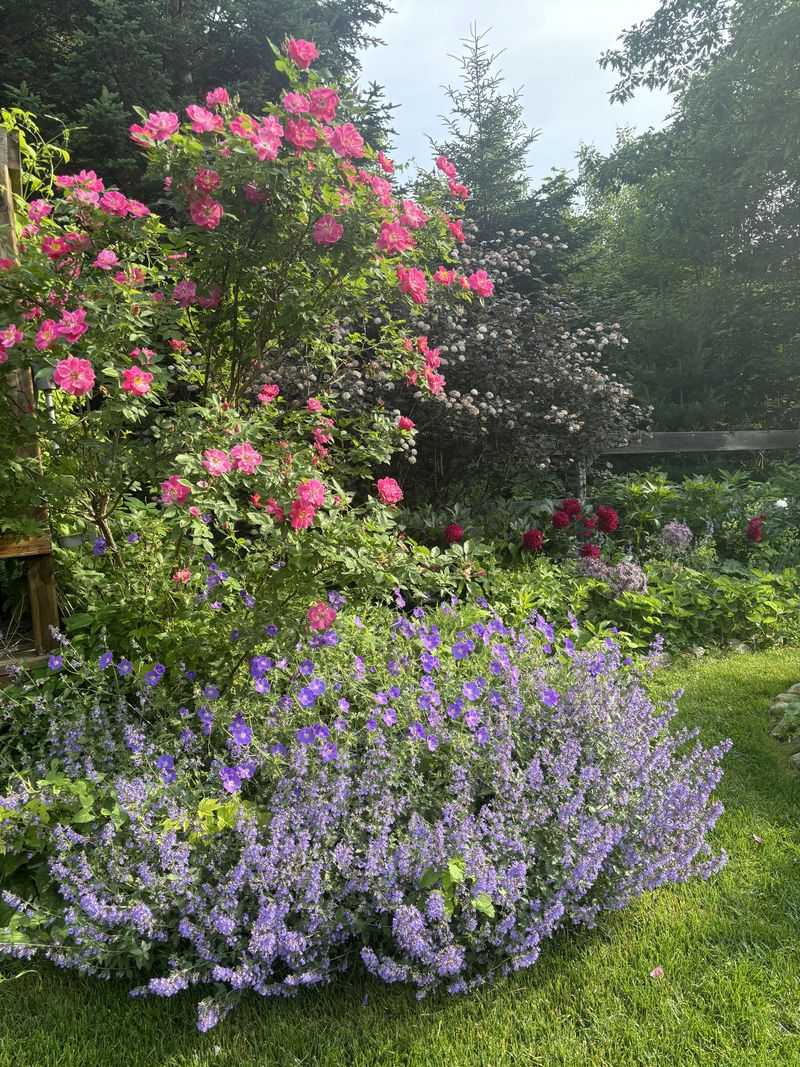
Your rose beds gain months of continuous color when you add catmint to the mix.
This reliable perennial produces waves of blue-purple flowers from May through September, filling gaps between rose bloom cycles and creating a cottage garden aesthetic that Oregon gardeners love.
Catmint tolerates a wide range of soil conditions, from the heavy clay common in Portland-area gardens to the sandier soils found east of the Cascades. It handles partial shade better than lavender, making it valuable for roses planted near fences or under high tree canopies.
Space plants 15 to 20 inches from rose stems to allow air circulation.
The plant’s mounding habit softens hard edges around rose bases while its gray-green foliage provides year-round interest even after flowers fade.
‘Walker’s Low’ and ‘Six Hills Giant’ are particularly vigorous varieties that create substantial groundcover without aggressive spreading. Shear plants back by one-third after the first bloom flush to encourage fresh growth and repeat flowering.
Catmint needs moderate water during establishment but becomes quite drought-tolerant by its second season, matching the water needs of mature roses perfectly. Deer and rabbits typically avoid catmint, offering some protection to nearby roses.
The flowers attract beneficial pollinators while the foliage’s strong scent may deter Japanese beetles and other rose pests.
3. Salvia
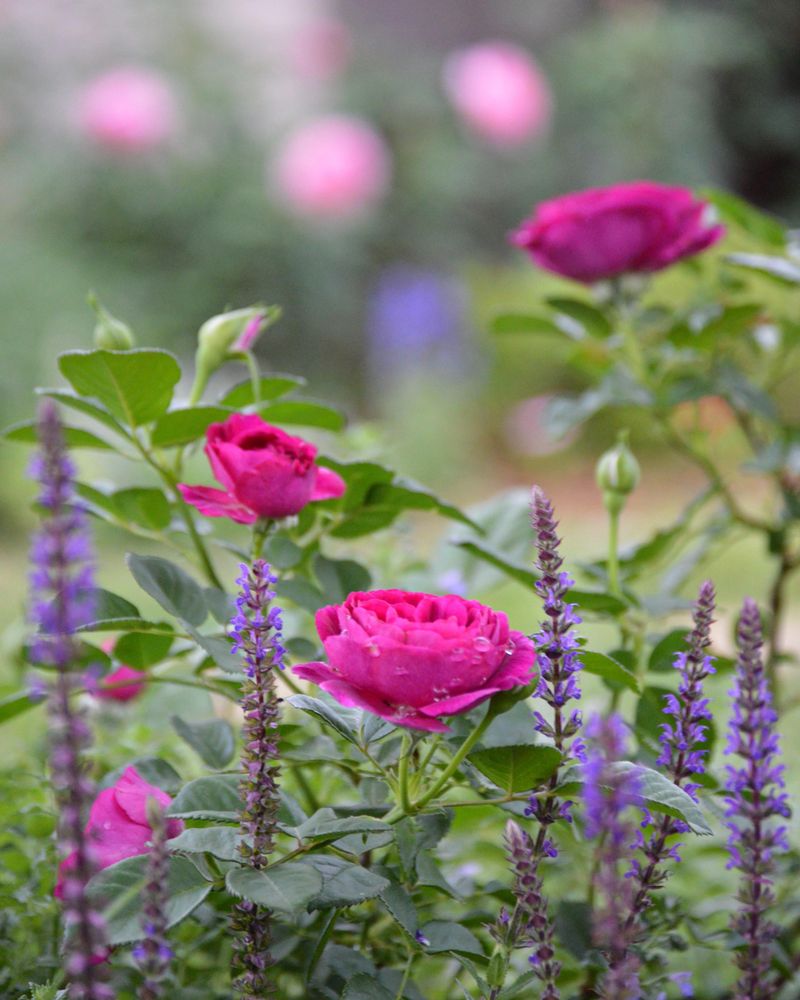
Salvia species offer incredible variety for Oregon rose gardeners, from low-growing groundcovers to upright spikes that echo the vertical lines of rose canes.
These hardy perennials bloom prolifically through Oregon’s long growing season, often continuing until first frost arrives in October or November.
Choose varieties based on your specific microclimate and design goals. ‘May Night’ salvia produces deep purple spikes that complement any rose color, while ‘Caradonna’ offers darker stems for added visual interest.
Both varieties reach 18 to 24 inches tall, creating mid-level interest without obscuring shorter rose varieties or miniatures.
Salvia prefers the same full sun exposure roses demand and thrives in well-drained soil with moderate fertility. Avoid overfeeding salvias growing near roses, as excess nitrogen produces leafy growth at the expense of flowers.
Water deeply but infrequently once plants establish, encouraging deep root development that helps them survive dry August and September weather.
Deadhead spent flower spikes regularly to promote continuous blooming and prevent self-seeding, which can become excessive in favorable conditions. Cut plants back to basal foliage in late fall or early spring before new growth emerges.
Salvia’s tubular flowers attract hummingbirds throughout summer, adding movement and life to your rose garden while providing pollination services.
4. Creeping Thyme (Thymus serpyllum)
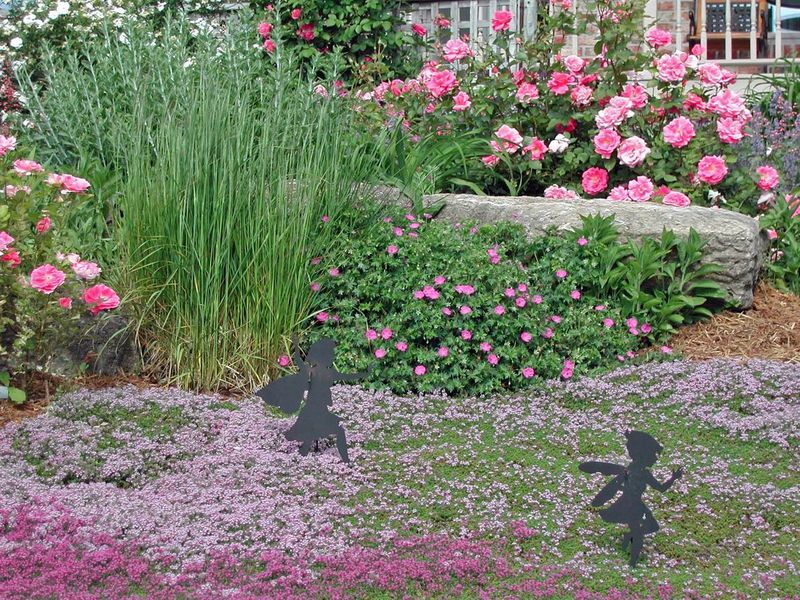
Ground-hugging creeping thyme transforms bare soil beneath roses into a living carpet that suppresses weeds while releasing wonderful fragrance when brushed or stepped on.
This Mediterranean herb adapts beautifully to Oregon’s climate, handling both coastal moisture and inland heat with equal success.
Plant small plugs or divisions 6 to 8 inches apart around rose bases, allowing them to spread and fill in over one to two growing seasons.
Creeping thyme stays low, typically reaching only 2 to 4 inches tall, so it never competes with roses for light or creates a crowded appearance.
Its dense growth shades soil, reducing water evaporation during hot summer months.
Choose from varieties with pink, purple, or white flowers that bloom heavily in June and sporadically through summer.
‘Elfin’ thyme creates extremely tight mats perfect for high-traffic areas, while ‘Pink Chintz’ offers showier blooms. All varieties prefer excellent drainage and can struggle in heavy clay unless you amend soil with compost and coarse sand.
Thyme requires minimal maintenance once established, needing only occasional trimming to keep growth in bounds. It tolerates light foot traffic, making it practical for beds where you need to reach in for rose deadheading or pruning.
The aromatic foliage may help mask rose scent from deer and provides habitat for beneficial ground beetles that prey on rose pests.
5. Geranium (Cranesbill varieties)
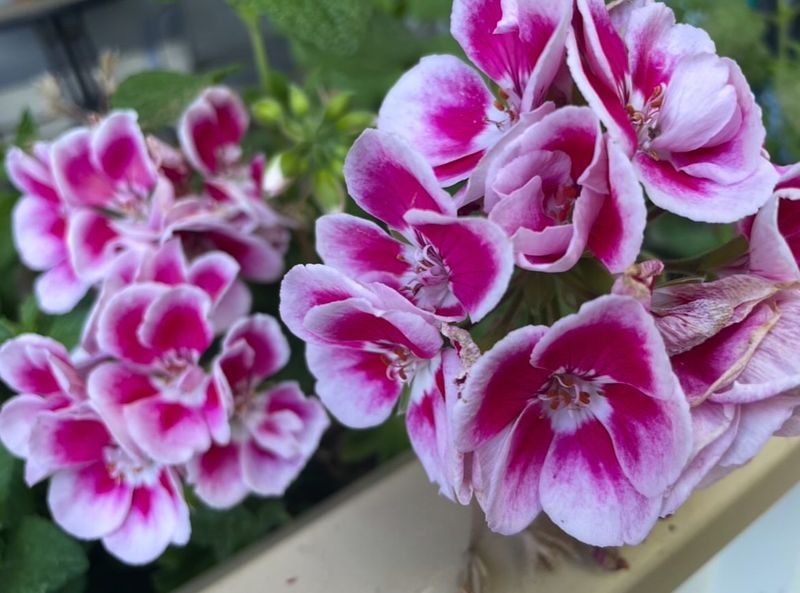
Hardy geraniums bring reliable color and texture to rose beds while requiring minimal fussing, making them favorites among Oregon gardeners who want beautiful results without constant maintenance.
These true geraniums differ completely from the annual geraniums sold at garden centers, offering cold hardiness and long-lived performance.
Select varieties based on your available space and light conditions. ‘Rozanne’ produces blue-purple flowers continuously from June through October, creating one of the longest bloom periods available in perennials.
‘Biokovo’ offers pink-tinged white flowers and stays compact at 10 to 12 inches tall, perfect for edging rose beds or underplanting miniature roses.
Plant geraniums 15 to 18 inches from rose stems, giving them room to develop their characteristic mounding shape.
They tolerate partial shade better than many rose companions, making them valuable for beds that receive afternoon shade or grow under high tree cover.
Most varieties handle Oregon’s summer drought well once established but appreciate occasional deep watering during extended dry spells.
Cut back spent flowers to encourage rebloom and prevent self-seeding in small gardens. Divide established clumps every three to four years to maintain vigor and create new plants for expanding your rose beds.
The dense foliage suppresses weeds effectively while providing habitat for beneficial insects that help control aphids and thrips on nearby roses.
6. Allium (Ornamental onion)
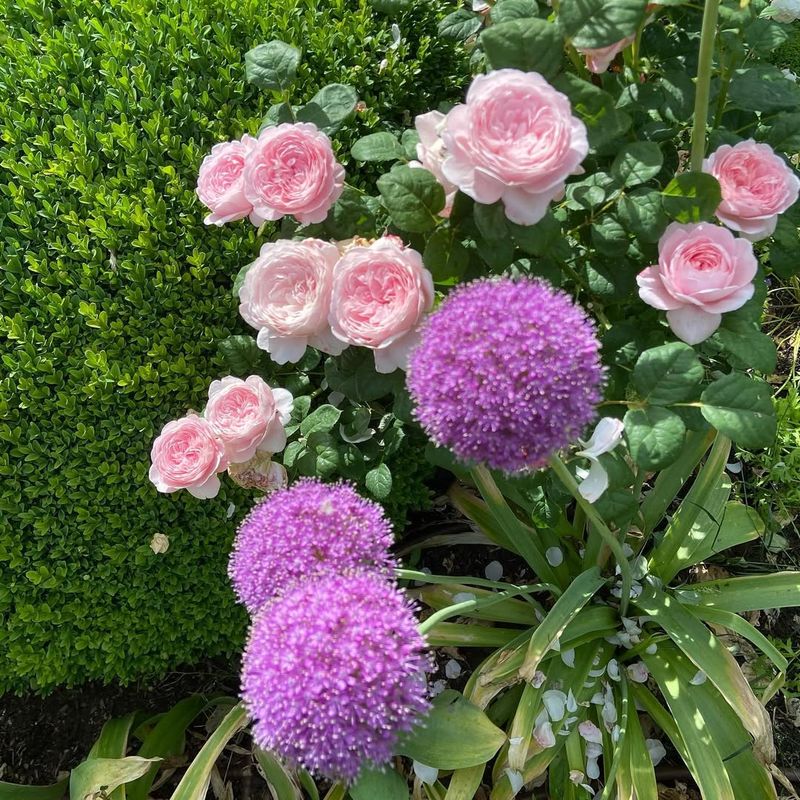
Ornamental alliums add dramatic vertical interest to rose beds with their distinctive globe-shaped flowers that appear on sturdy stems from late spring through early summer.
These bulbs naturalize reliably in Oregon gardens, returning year after year with minimal care while multiplying slowly to create larger displays.
Plant allium bulbs in fall, positioning them among roses where their spring and early summer blooms will bridge the gap before roses hit peak flowering.
‘Purple Sensation’ grows 30 inches tall with deep purple spheres, while ‘Globemaster’ reaches 36 inches with massive 8-inch flower heads. Shorter varieties like ‘Millenium’ work well for compact rose beds or around miniature roses.
Alliums prefer the same well-drained soil roses demand and can rot in heavy clay that stays wet during winter. Amend planting areas with compost and ensure good drainage before setting bulbs 4 to 6 inches deep.
Their vertical form contrasts beautifully with rounded rose shapes while taking up minimal ground space.
Allow allium foliage to die back naturally after flowering, as leaves provide energy for next year’s blooms. The foliage can look untidy as it yellows, but surrounding plants quickly hide it as summer progresses.
Dried seed heads remain attractive through summer and fall, adding architectural interest even after petals drop. Alliums contain compounds that may help repel aphids, Japanese beetles, and other common rose pests.
7. Feverfew (Tanacetum parthenium)
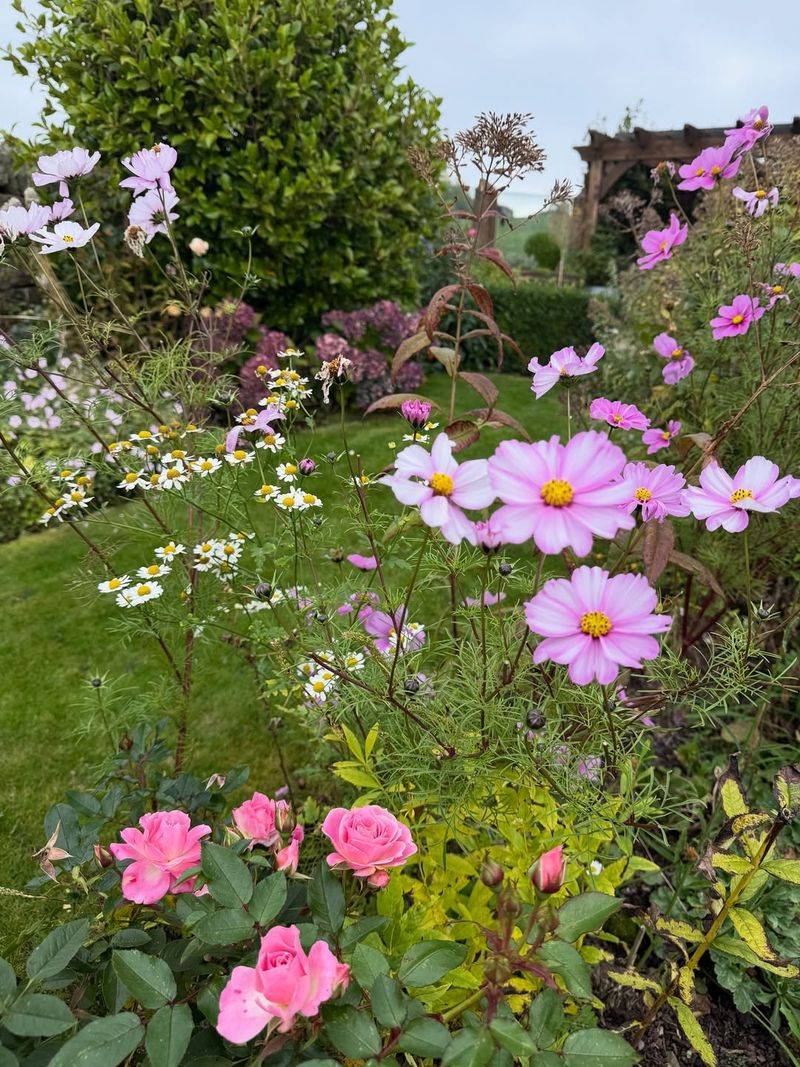
Cottage garden charm meets practical pest management when you plant feverfew beneath your Oregon roses.
This cheerful perennial produces masses of small white daisy flowers from June through September, creating a cloud of blooms that softens the base of rose bushes while potentially deterring insects.
Feverfew self-sows freely in Oregon gardens, which you can view as either an advantage or a challenge depending on your gardening style. Plants establish quickly from seed, filling gaps in new rose beds within a single season.
Seedlings pull easily from unwanted areas, or you can deadhead spent flowers to prevent spreading.
The plant grows 18 to 24 inches tall with ferny, aromatic foliage that provides textural contrast to rose leaves. It tolerates partial shade and adapts to various soil types, though it performs best in well-drained locations with moderate fertility.
Space plants 12 to 15 inches from rose stems to allow air circulation and prevent overcrowding.
Traditional herb lore suggests feverfew repels aphids and other pests, though scientific evidence remains limited. Regardless of pest effects, the flowers attract beneficial insects including ladybugs, lacewings, and parasitic wasps that prey on rose pests.
Cut plants back after the first bloom flush to encourage fresh growth and repeat flowering. Feverfew tolerates Oregon’s dry summers reasonably well but benefits from occasional deep watering during prolonged heat.
8. Marigold (Tagetes spp.)
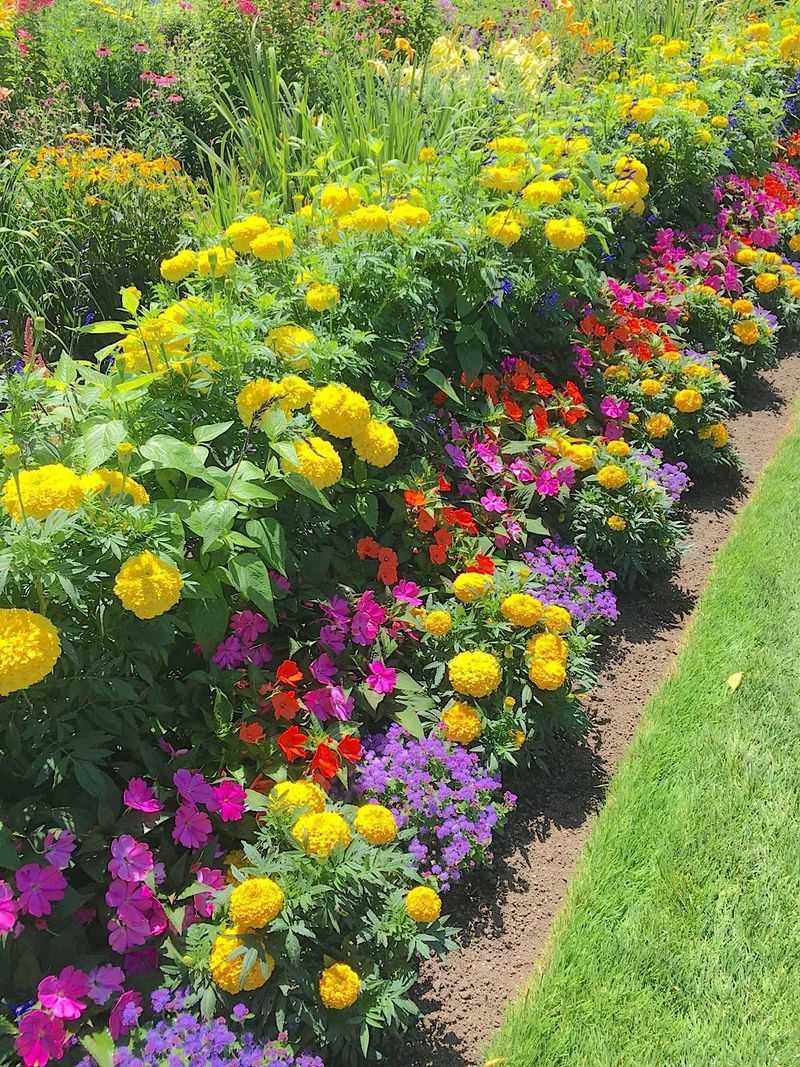
Bright marigolds bring bold color and possible pest-deterring benefits to Oregon rose gardens, though you’ll need to replant these annuals each spring.
French marigolds stay compact at 8 to 12 inches tall, making them suitable for tight spaces, while African marigolds reach 24 to 36 inches with larger blooms.
Plant marigolds after your last spring frost, typically in April for most Oregon locations. Space them 10 to 12 inches from rose stems, closer than perennial companions since you’ll remove them in fall.
They bloom continuously from planting until first frost without deadheading, though removing spent flowers produces tidier plants.
Marigolds thrive in full sun and tolerate Oregon’s summer heat exceptionally well, requiring only moderate water once established. They’re among the few annuals that can handle the dry conditions mature roses prefer.
Choose colors that complement your rose varieties, from pale yellow to deep mahogany red.
Research on marigolds’ pest-repelling properties shows mixed results, but many Oregon gardeners report fewer aphids and whiteflies in beds where marigolds grow. The flowers attract beneficial insects and provide pollen for native bees.
Their strong scent may mask rose fragrance from deer, offering some protection in areas with heavy browsing pressure. Pull plants after frost kills them in fall, adding them to compost piles where they break down quickly.
9. Sweet Alyssum (Lobularia maritima)
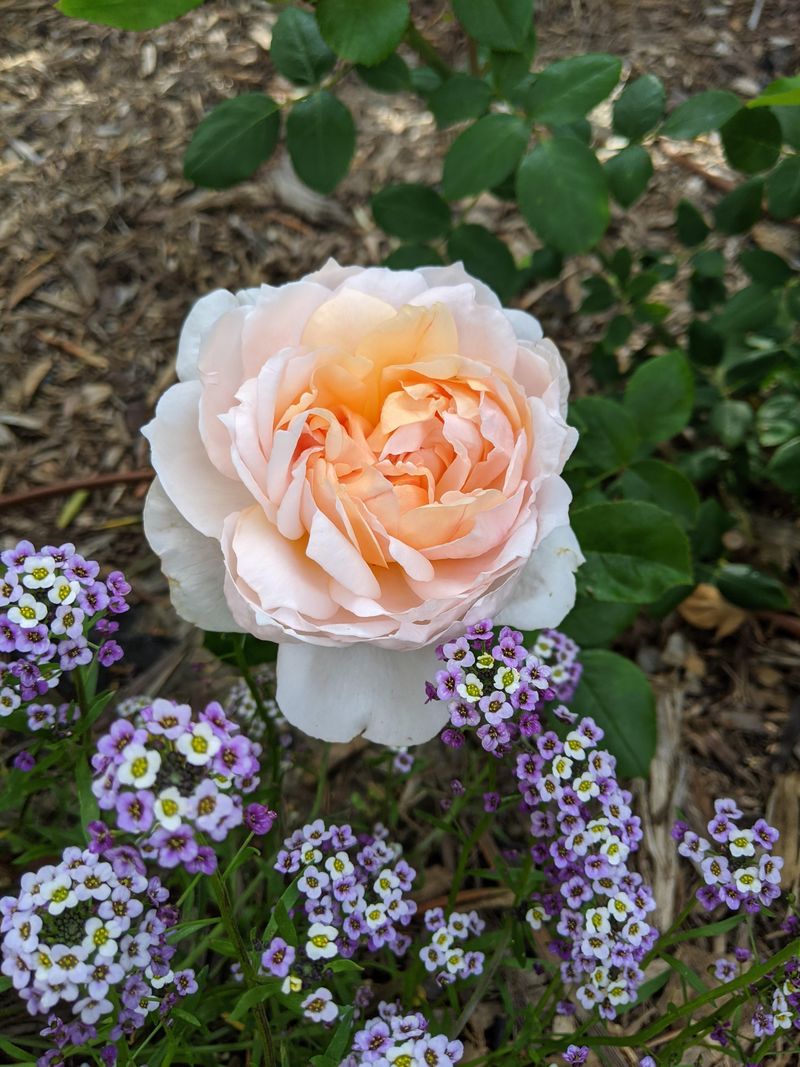
Delicate sweet alyssum creates a frothy edge along rose beds while releasing honey-sweet fragrance on warm afternoons.
This low-growing annual reaches only 4 to 6 inches tall, making it perfect for the very front of rose plantings where it softens hard edges without blocking views of your roses.
Sow seeds directly in garden beds after danger of frost passes, or transplant nursery starts for quicker results. Alyssum self-sows reliably in Oregon gardens, often appearing on its own in subsequent years wherever conditions suit it.
Plants grow quickly, filling in within weeks and blooming continuously until fall frost.
Choose white varieties for classic elegance or explore purple and pink selections for added color variety. Alyssum tolerates partial shade better than most annuals, making it valuable for roses growing in less-than-ideal light conditions.
It prefers consistent moisture and may sulk during hot, dry spells unless you water regularly.
Shear plants back by half if they become leggy in midsummer, which encourages fresh growth and renewed flowering. The tiny flowers attract beneficial insects including hoverflies, whose larvae consume aphids voraciously.
Alyssum’s spreading habit helps suppress weeds while its shallow roots don’t compete significantly with deeper-rooted roses.
The plant tolerates light foot traffic and releases fragrance when brushed, adding sensory appeal to paths along rose beds throughout Oregon’s long growing season.