The Best Raised Bed Garden Layout Idea For Arizona Yards
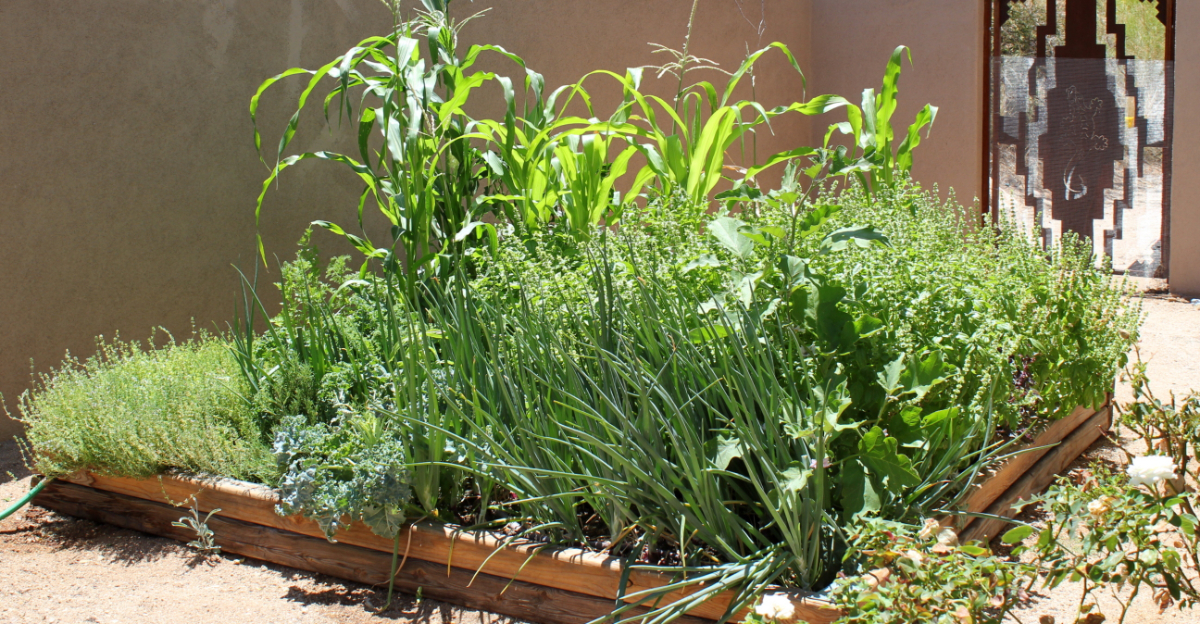
In Arizona, a raised bed is not just a wooden box filled with soil, it is a strategy for surviving intense sun, fast drying winds, and long stretches of heat that can wear plants down before summer even peaks.
The layout you choose decides whether your vegetables struggle in reflected heat or grow steadily with protection built right into the design.
The best raised bed garden layout idea for Arizona yards places beds north to south, allows space for airflow, and uses taller crops to shield more delicate plants from brutal western exposure.
When your layout works with the desert instead of against it, everything feels easier and far more productive.
A smart arrangement turns harsh sunlight into a tool rather than a threat. Once your beds are positioned with intention, your yard finally starts growing the way you imagined.
1. Position Beds To Capture Morning Sun And Avoid Harsh Afternoon Exposure
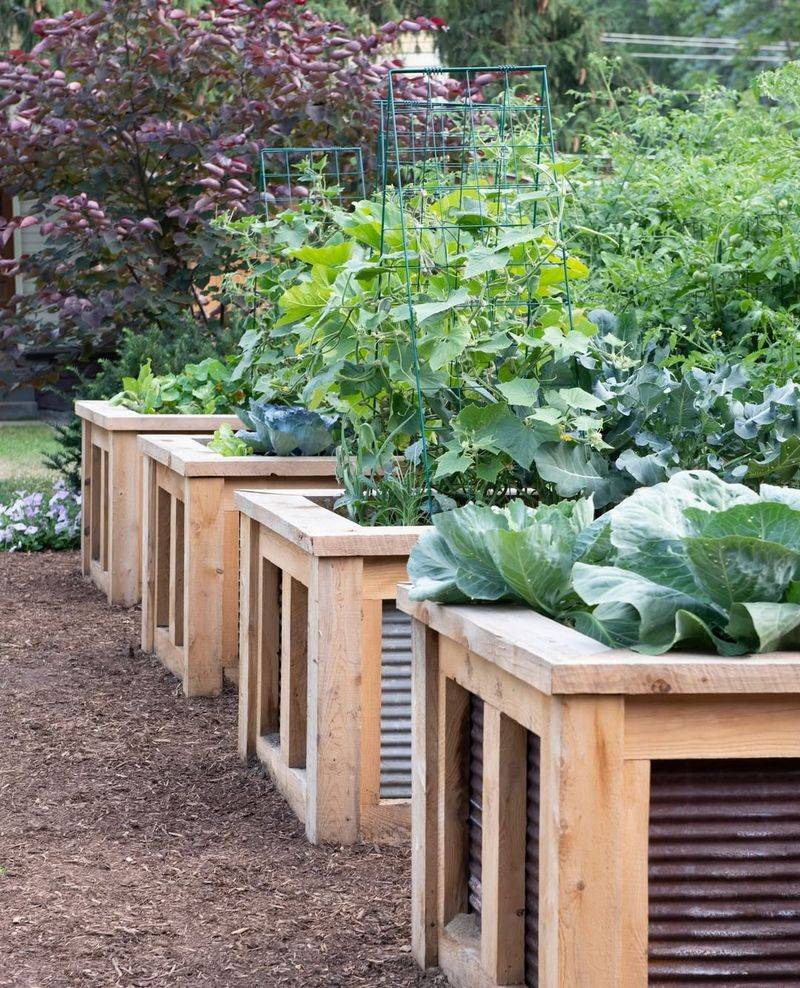
Morning light in Arizona delivers everything your vegetables need without the punishment that comes later. Between 6 AM and noon, the sun provides strong photosynthesis power while temperatures remain manageable for most crops.
Plants absorb this energy efficiently, building sugars and growing steadily without the stress that afternoon heat brings to their leaves and roots.
Afternoon sun from May through September becomes a destructive force rather than a helpful one. Temperatures climbing past 105 degrees cause even heat-tolerant plants to shut down their growth processes.
Leaves wilt, flowers drop, and fruits stop developing as plants focus entirely on survival. Positioning beds to receive morning sun while gaining afternoon shade prevents this daily trauma.
East-facing beds naturally capture those valuable morning hours. By 2 PM, when temperatures peak across Phoenix and Tucson, these beds fall into shadow from nearby structures, trees, or shade cloth.
This pattern matches the natural rhythm of desert plants that have adapted to similar light conditions over thousands of years.
South-facing beds work well during winter months when you want maximum warmth for cool-season crops like lettuce and broccoli. However, summer plantings in these locations suffer unless you add substantial shade protection.
West-facing beds should be your last choice, as they receive the most intense heat during the worst part of the day.
Consider how your house, garage, and fences cast shadows throughout the day. Map these patterns during different seasons since the sun’s angle changes dramatically between January and July in Arizona.
Strategic placement near structures provides natural afternoon protection without requiring additional materials or constant adjustments to shade cloth systems.
2. Keep Beds Narrow Enough To Reach From Both Sides
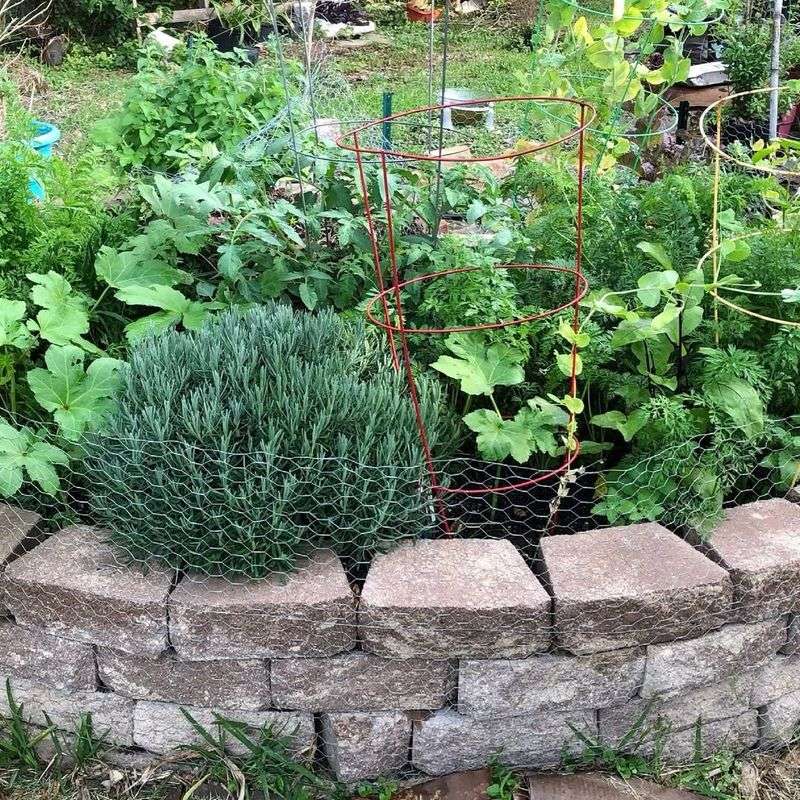
Width determines whether you’ll actually enjoy maintaining your garden or dread it. Beds wider than four feet force you to step inside them, compacting soil and damaging roots with every harvest or weeding session.
Compacted soil in Arizona’s climate becomes nearly cement-like, restricting root growth and creating drainage problems that lead to salt buildup and nutrient deficiencies.
Three to four feet wide creates the sweet spot for accessibility. Most adults can comfortably reach 18 to 24 inches from either side, covering the entire bed surface without stretching or stepping inside.
This measurement works whether you’re planting seedlings, harvesting tomatoes, or removing weeds that inevitably appear despite your best mulching efforts.
Tucson and Phoenix gardeners benefit especially from this narrower design because it allows better observation of plants. You’ll notice pest problems, nutrient deficiencies, and water stress much earlier when you can easily inspect every plant.
Early detection matters tremendously in Arizona’s fast-paced growing environment where problems escalate quickly under intense heat and dry conditions.
Length can extend as far as your space allows without causing the same problems. A bed measuring four feet wide by twenty feet long provides excellent growing space while maintaining full accessibility.
Multiple narrow beds arranged in parallel rows produce more usable planting area than one large, wide bed that forces you to sacrifice soil quality by walking on it.
Wheelchair users and gardeners with limited mobility find beds between two and three feet wide even more practical.
These dimensions ensure everyone can participate fully in Arizona gardening without physical strain or the need to compromise plant health through soil compaction.
3. Raise Soil At Least 12 Inches For Better Drainage In Desert Ground
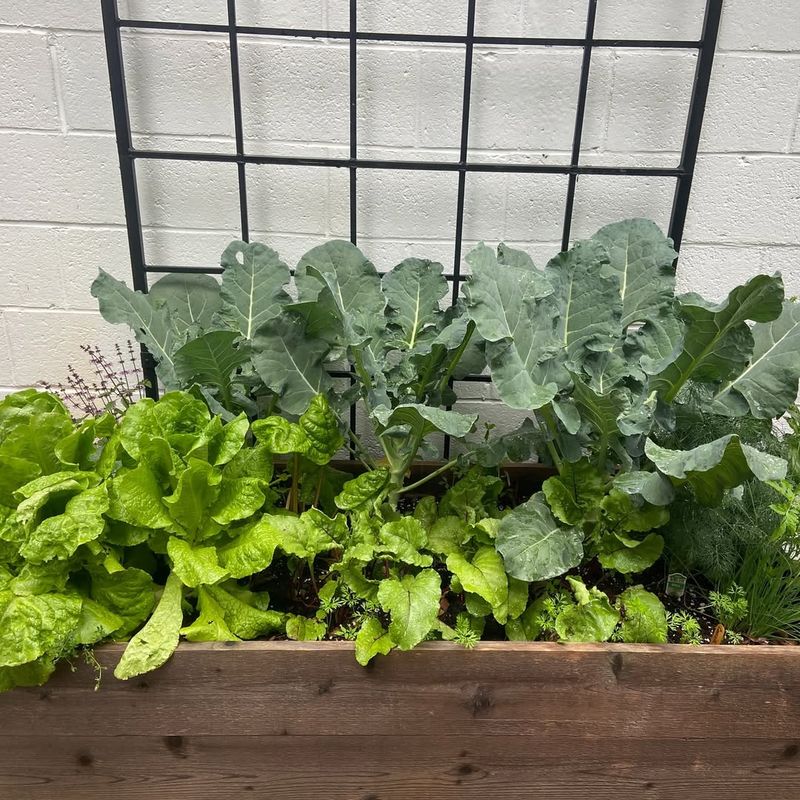
Shallow beds create problems that multiply quickly in Arizona’s challenging soil conditions. Six or eight inches of depth might seem adequate, but this limited space restricts root development and heats up dangerously fast during summer months.
Vegetables need room to establish deep root systems that can access moisture and nutrients while staying cooler than the scorching surface temperatures.
Twelve inches provides the minimum depth for successful vegetable production across most Arizona yards. This height gives tomatoes, peppers, and squash enough space to anchor themselves properly.
Root vegetables like carrots and beets develop fully without hitting hardpan or native caliche layers that plague so many desert gardens. The extra soil volume also moderates temperature swings, staying cooler during the day and warmer at night.
Native Arizona soil often contains high clay content or caliche deposits that prevent proper drainage. Raising beds above these problem layers allows you to create ideal growing conditions with imported soil amendments.
Water moves through elevated beds more efficiently, preventing the salt accumulation that occurs when irrigation water evaporates faster than it drains.
Eighteen to twenty-four inches works even better for serious vegetable gardeners. This increased depth supports larger plants like indeterminate tomatoes and provides thermal mass that buffers plants from extreme temperature fluctuations.
The additional soil stays moist longer between waterings, reducing irrigation frequency during Phoenix’s brutal summer months.
Building height into your beds from the start saves money and effort compared to adding depth later. Materials cost more initially, but the improved drainage, better root development, and reduced water stress deliver returns every growing season.
Your back will also appreciate the elevated working height when planting, weeding, and harvesting throughout the year.
4. Orient Rows North To South For Even Sunlight Distribution
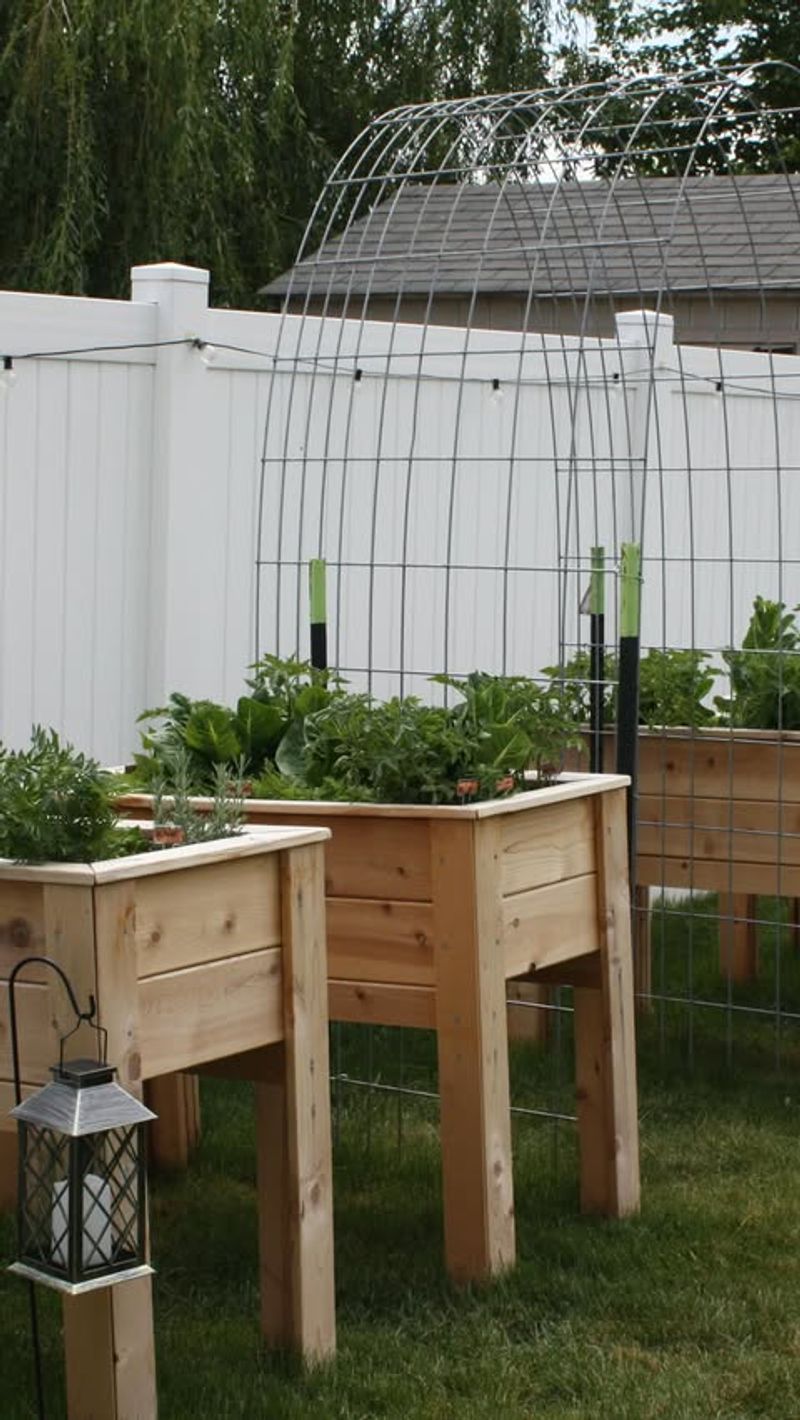
Sunlight distribution affects every plant in your garden differently depending on bed orientation.
North-to-south alignment ensures each row receives similar light exposure throughout the day rather than creating shaded and overly sunny zones within the same bed.
This balanced approach prevents competition between plants and eliminates the frustration of uneven growth rates.
East-to-west orientation creates permanent shade on the north side of taller plants. Tomatoes, peppers, and trellised crops block morning and afternoon sun from reaching anything planted behind them.
Shorter plants like lettuce and herbs struggle in these shadows, growing slowly and producing disappointing yields compared to their properly lit neighbors.
Arizona’s intense sun makes this consideration more critical than in milder climates. Even partial shade dramatically impacts plant performance when temperatures soar above 100 degrees.
Plants receiving inadequate light become stressed and vulnerable to pests while those in full exposure may suffer from too much intensity without the moderating effect of proper orientation.
North-south rows allow the sun to travel along the length of your beds rather than across their width. Morning light hits the east side of plants, midday sun illuminates the top, and afternoon rays reach the west side.
This rotation distributes light energy evenly across all leaf surfaces, promoting balanced growth and preventing the lopsided development common in poorly oriented gardens.
Tall crops still cast some shadow with this orientation, but the shade moves throughout the day rather than remaining fixed.
Quick-growing plants like radishes and lettuce can actually benefit from this moving shade during summer months in Tucson and Phoenix.
Strategic placement of taller plants on the north end of beds provides natural afternoon shade for heat-sensitive crops without blocking morning sun.
5. Group Crops By Water Needs To Prevent Stress And Waste
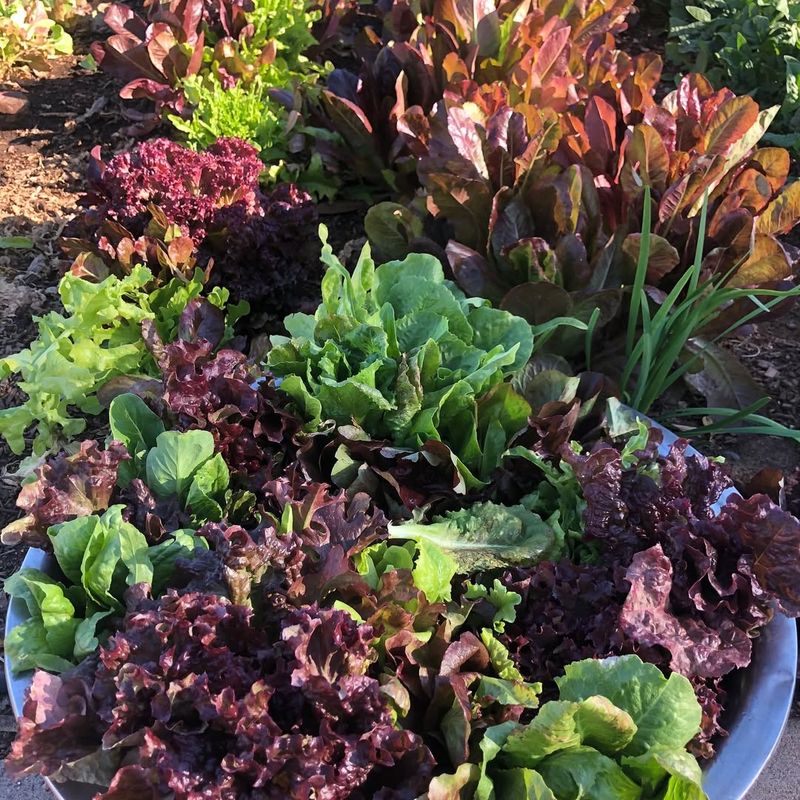
Water management separates successful Arizona gardens from expensive failures. Mixing heavy drinkers like cucumbers with drought-tolerant peppers in the same bed creates an impossible situation.
Either you underwater the thirsty plants or drown the ones that prefer drier conditions, wasting water and money while stressing everything you grow.
Grouping plants by water requirements allows precise irrigation that matches each crop’s actual needs. Leafy greens, cucumbers, and squash thrive with consistent moisture and can share one bed with similar irrigation schedules.
Tomatoes, peppers, and eggplants prefer slightly drier conditions between waterings and belong together in a separate area. Herbs like rosemary, thyme, and oregano need minimal water and should occupy their own dedicated space.
Drip irrigation becomes far more efficient when beds contain plants with matching needs. You can adjust flow rates and timing for each bed independently rather than compromising with a one-size-fits-all approach.
During Phoenix summers, this precision prevents water waste while ensuring each plant receives optimal moisture for its growth stage and species requirements.
Salt buildup occurs faster in Arizona when irrigation practices don’t match plant needs. Overwatering drought-tolerant plants leaches nutrients while leaving behind mineral deposits that accumulate in the root zone.
Proper grouping allows you to flush salts from beds that need it while avoiding unnecessary water application to areas that don’t.
Root depth also factors into these groupings. Shallow-rooted lettuce and radishes can share space since they access water from the same soil layer.
Deep-rooted tomatoes and peppers work well together because their roots explore different depths.
This vertical separation reduces competition and allows more efficient water use across your entire garden layout.
6. Leave Wide Pathways To Improve Airflow And Reduce Heat Build Up
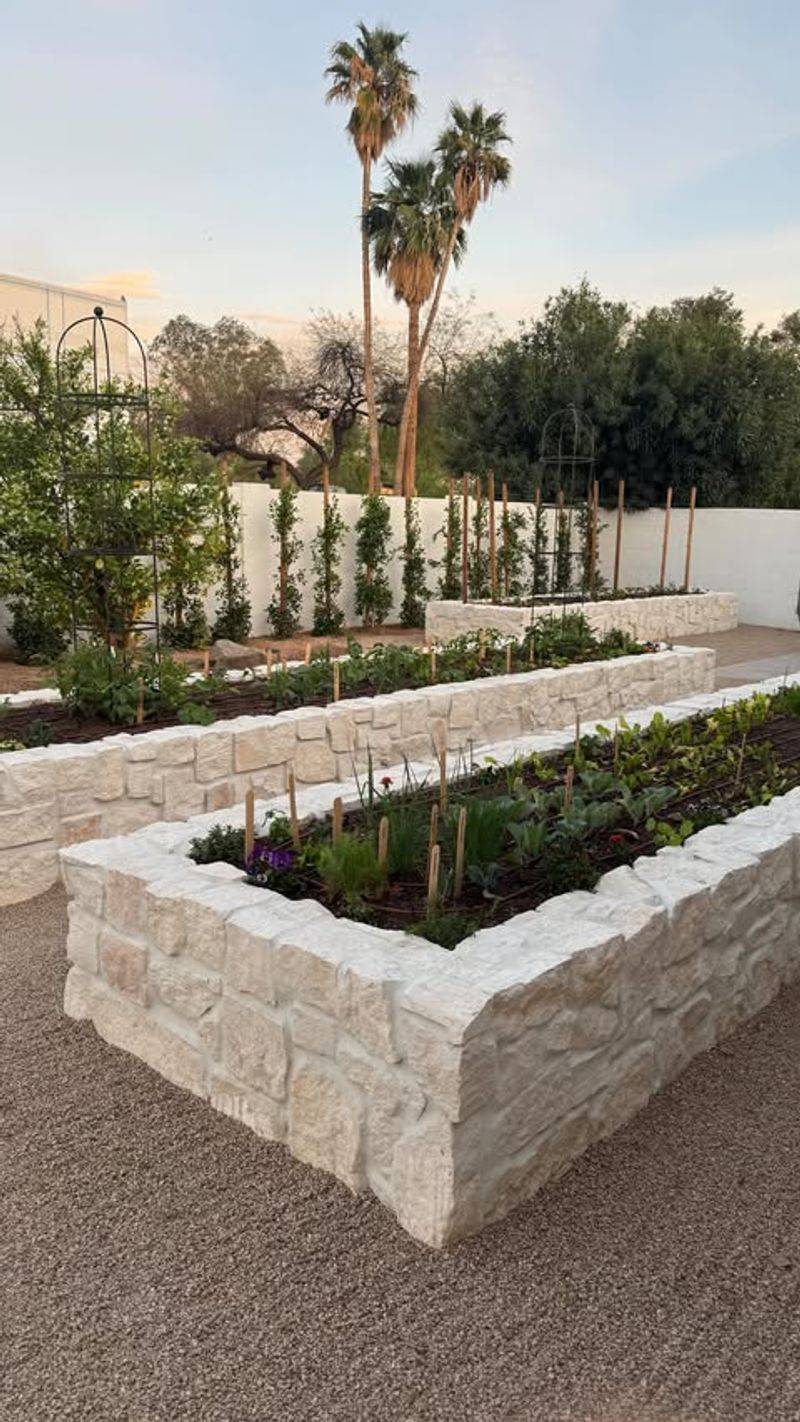
Cramped pathways trap heat and create stagnant air pockets that stress plants and invite disease. Arizona gardens already battle extreme temperatures without adding problems through poor spacing.
Narrow walkways might save a few square feet of yard space, but they sacrifice plant health and make maintenance frustrating when you’re squeezing between beds with tools and harvest baskets.
Three feet minimum between beds allows comfortable passage and creates air channels that moderate temperature. Moving air carries away heat that radiates from soil surfaces and sun-baked bed materials.
This circulation helps plants transpire efficiently, cooling themselves through moisture evaporation rather than shutting down during the hottest afternoon hours in Tucson or Phoenix.
Four feet works better for main pathways where you’ll push wheelbarrows or move with larger tools. This extra space prevents accidental plant damage and improves safety when beds are full of mature plants that spread into walkways.
Adequate width also means you can access beds from either side without trampling neighboring plantings or compacting pathway surfaces.
Heat reflection from narrow pathways intensifies stress on lower leaves and stems. Gravel, decomposed granite, or light-colored mulch in wide pathways reflects less heat upward compared to tight spaces where radiant energy has nowhere to dissipate.
Plants growing along bed edges suffer less heat damage when pathways provide breathing room and better air movement.
Pest management improves with proper spacing since you can inspect plants thoroughly from all angles. Spider mites, aphids, and whiteflies hide on leaf undersides and stem junctions that become invisible in cramped layouts.
Wide pathways let you scout effectively and catch problems before they explode into infestations that require aggressive intervention to control.
7. Plan For Shade Structures Before Summer Arrives
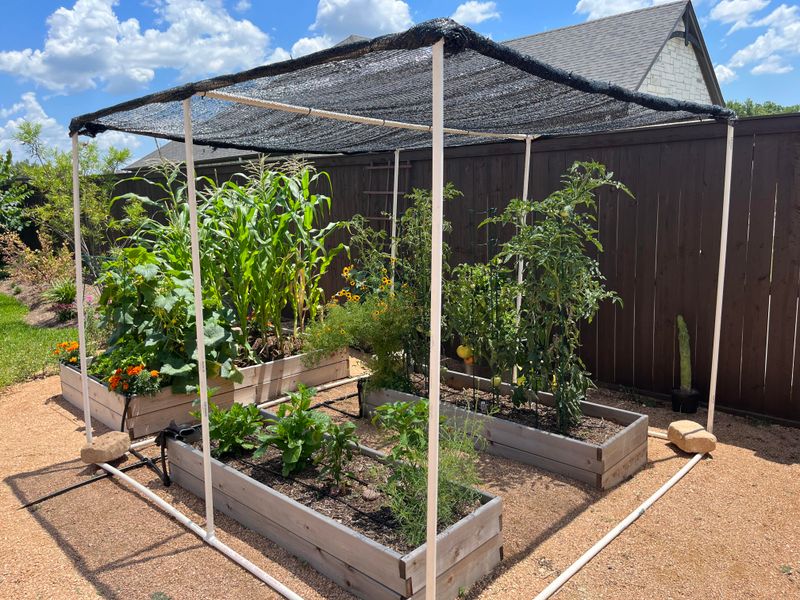
Summer heat in Arizona transforms gardens into survival zones where most vegetables struggle or fail completely.
Temperatures exceeding 110 degrees in Phoenix and Tucson make it impossible for tomatoes to set fruit, cause lettuce to bolt immediately, and stress even heat-loving peppers beyond their tolerance limits.
Shade structures extend your growing season and protect spring plantings into early summer when they’d otherwise collapse.
Planning shade before you need it prevents scrambling when temperatures spike unexpectedly. Installing posts, frames, or support systems while weather remains mild gives you time to do the job properly.
Waiting until June means working in dangerous heat while plants already show stress symptoms that shade can’t reverse once damage occurs.
Thirty to fifty percent shade cloth blocks enough intensity to drop leaf surface temperatures by 10 to 15 degrees. This reduction keeps plants in their productive range instead of survival mode.
Removable structures work best since winter crops actually need full sun exposure, and spring vegetables benefit from maximum light before summer arrives.
Permanent structures like ramadas or pergolas provide year-round benefits beyond summer shade.
They create comfortable spaces for working during hot months and can support shade cloth, lattice, or even vining plants that provide natural cooling.
Position these features on the west or south side of beds where afternoon sun hits hardest from May through September.
Simple hoops made from PVC or metal conduit support shade cloth economically and store easily when not needed. Space hoops every four to six feet along bed lengths, stretching fabric across them and securing edges with clips or ties.
This approach allows quick installation and removal while providing flexibility to shade individual beds based on what you’re growing and current weather conditions.