The 13 Best Tubular Flowers For Attracting Hummingbirds In California
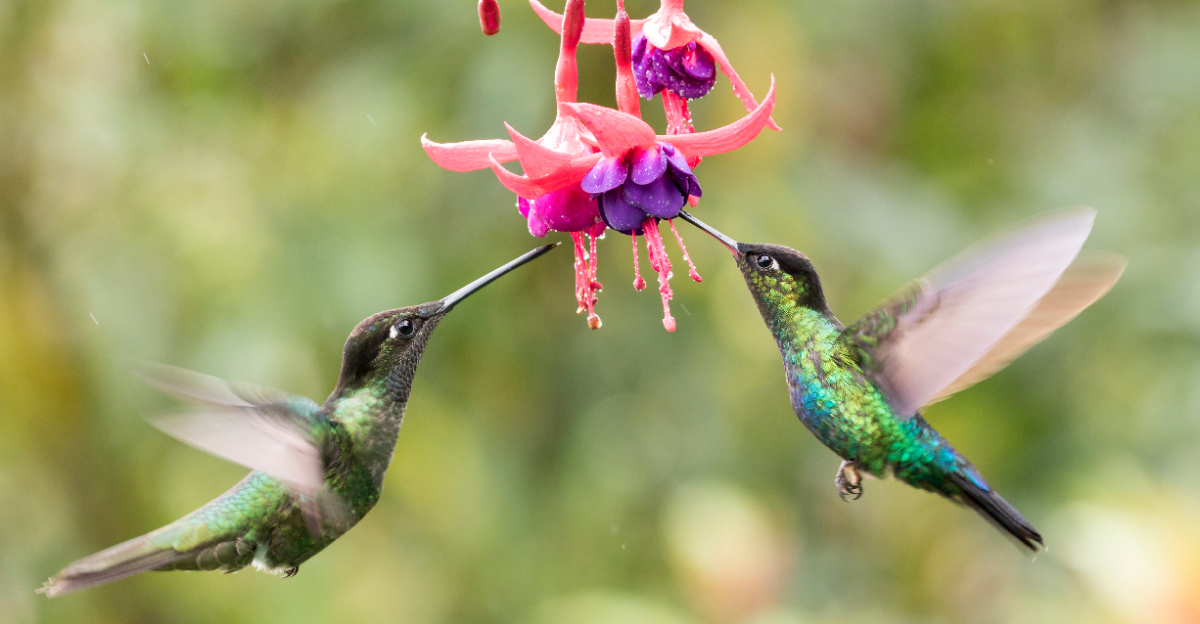
Flash of wings, a quick hover, then gone in a blink. That is the magic hummingbirds bring to California gardens, and the right flowers can keep them coming back again and again.
With the state’s mix of coastal breezes, dry summers, and mild winters, there is a huge opportunity to grow blooms that match exactly what these tiny visitors love.
Tubular flowers are especially effective, offering the perfect shape for those long beaks and fast-moving tongues.
Many of them also thrive in California’s sun and handle periods of drought once established. Adding a mix of these blooms can turn even a small yard into a reliable feeding stop throughout the season.
A few smart plant choices can transform your space into a lively, colorful hub that hummingbirds will not want to leave.
1. California Fuchsia
Few plants work harder for hummingbirds in California than this one. California Fuchsia, also known as Epilobium canum, bursts into bloom right when summer starts winding down.
That makes it incredibly valuable because most other flowers have already finished for the season.
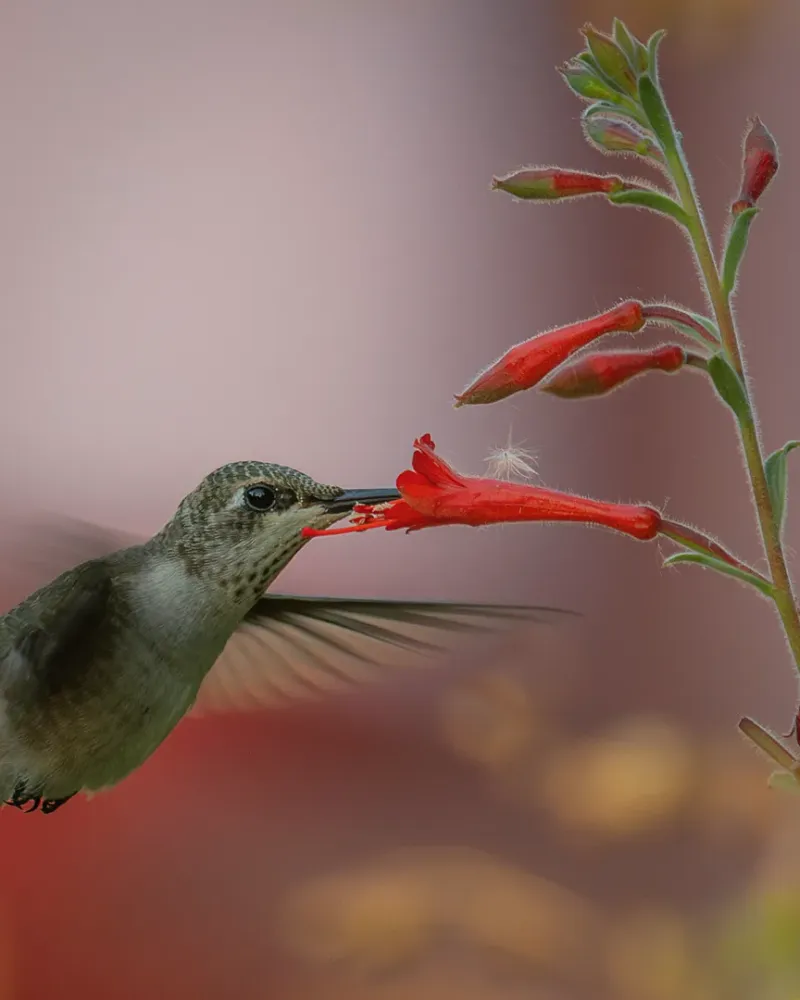
The bright red-orange tubular flowers are like a neon sign for hummingbirds. Anna’s hummingbirds, which stay in California year-round, absolutely love this plant.
You will often spot them hovering right in front of the narrow blooms, sipping away happily.
This plant is also wonderfully low-maintenance. It thrives in full sun and handles dry conditions really well, making it perfect for California’s warm, drought-prone climate.
Plant it along a sunny border or hillside and watch it spread into a stunning, wildlife-friendly ground cover. It blooms from late summer through fall, filling a gap when your garden needs it most.
Trim it back in late winter to keep it tidy and encourage fresh new growth each year.
2. Penstemon
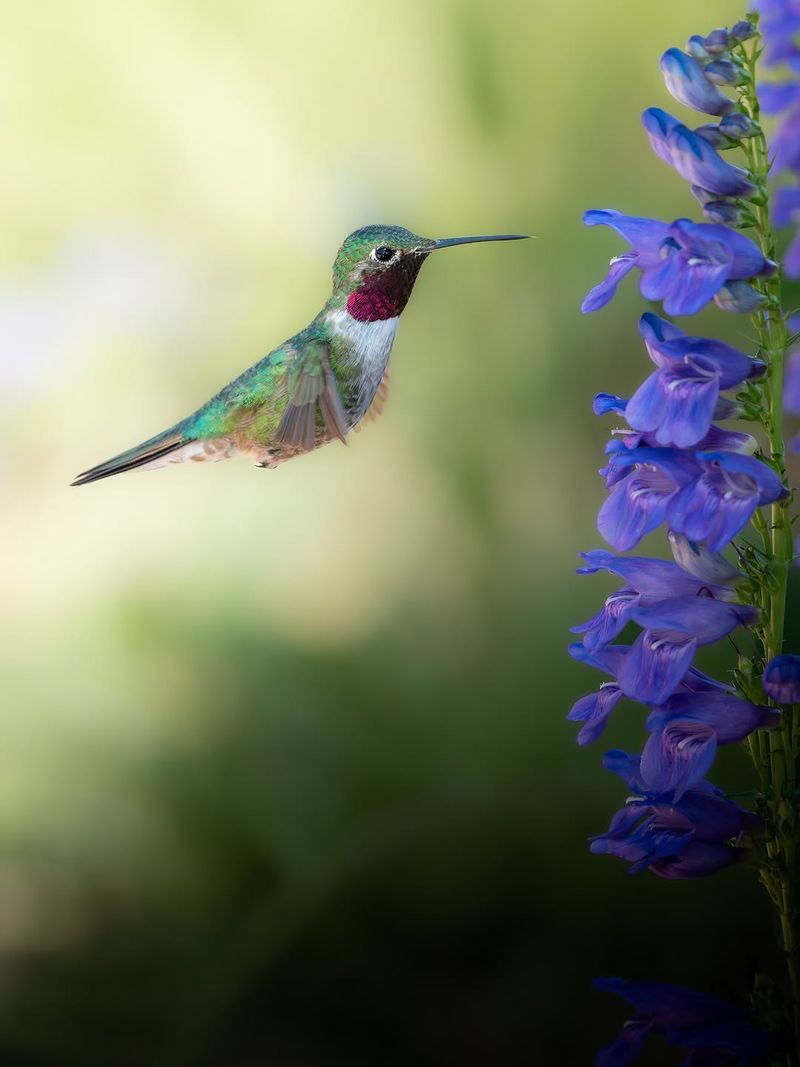
Walk through almost any native plant nursery in California and you will find Penstemon front and center. Known as beardtongue, this plant produces tall, elegant spikes covered in tubular flowers that hummingbirds simply cannot resist.
Colors range from deep red to soft pink and even purple.
What makes Penstemon especially great for California gardens is its toughness. Once established, it handles heat and drought like a champ.
It loves full sun and well-drained soil, which describes most California landscapes perfectly. You get big rewards without a lot of fussing.
Hummingbirds are naturally attracted to the long, narrow flower tubes because they are shaped perfectly for their beaks. Plant several varieties together to extend the blooming season from spring all the way into summer.
Rocky Penstemon and Foothill Penstemon are two native species that work especially well. Group them in clusters of three or five for the biggest visual impact.
Not only will you attract hummingbirds, but butterflies and bees will visit too, making your California yard a full-on wildlife celebration.
3. Salvia
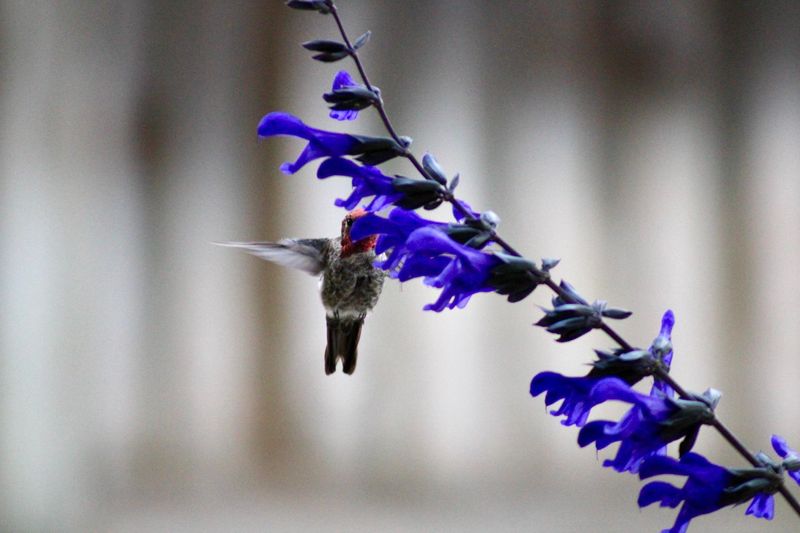
Salvia might just be the ultimate hummingbird magnet for California gardens. There are dozens of varieties to choose from, and nearly all of them produce the tubular, nectar-packed flowers that hummingbirds go crazy for.
Red and orange varieties tend to attract the most birds, but purple and pink ones work great too.
One of the best things about Salvia is how long it blooms. Depending on the variety, you can have flowers from spring all the way into late fall.
That means months of hummingbird visits to look forward to. Hummingbird Sage and Black and Blue Salvia are two standout choices for California yards.
Salvia is also incredibly adaptable. Most varieties handle California’s summer heat and dry spells without needing much extra water once they are established.
Plant them in a sunny spot with good drainage and they will reward you every single year. Deadheading spent flowers encourages even more blooms.
Mix different Salvia varieties throughout your garden to create waves of color and keep hummingbirds coming back again and again all season long.
4. Hummingbird Sage
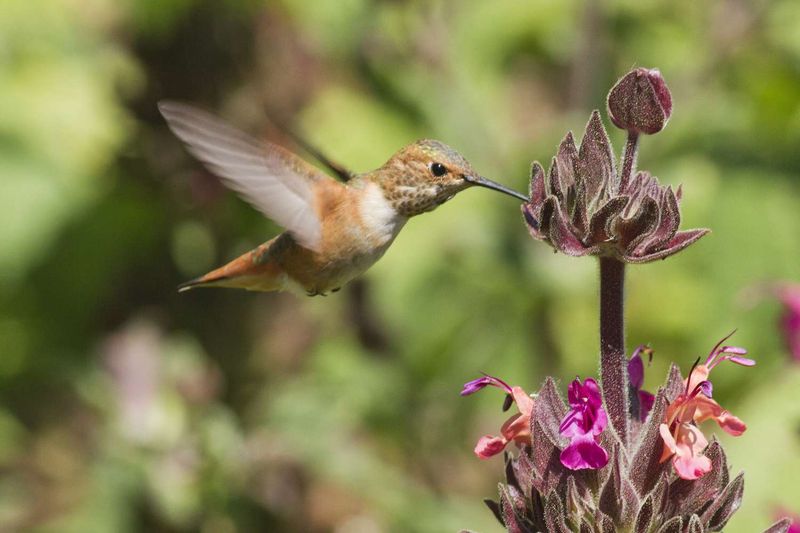
The name says it all. Hummingbird Sage, or Salvia spathacea, was practically made for California gardens and the birds that love them.
This native plant produces striking magenta-pink flower spikes that rise above large, fragrant leaves. The scent alone is enough to make you stop and smell the garden.
Unlike many other hummingbird plants, this one actually prefers shade or partial shade. That makes it a fantastic choice for spots under trees or along shaded fences where other plants struggle to grow.
It spreads naturally over time, forming a beautiful, fragrant ground cover.
Anna’s hummingbirds are especially fond of Hummingbird Sage and will visit repeatedly throughout the blooming season, which typically runs from late winter through spring.
That early bloom time is a real bonus because it gives hummingbirds a reliable food source when not much else is flowering yet.
It also handles California’s dry summers well once established, needing very little supplemental water.
If you want a plant that does double duty as both a wildlife attractor and a gorgeous garden accent, Hummingbird Sage deserves a prime spot in your California landscape.
5. Coral Honeysuckle
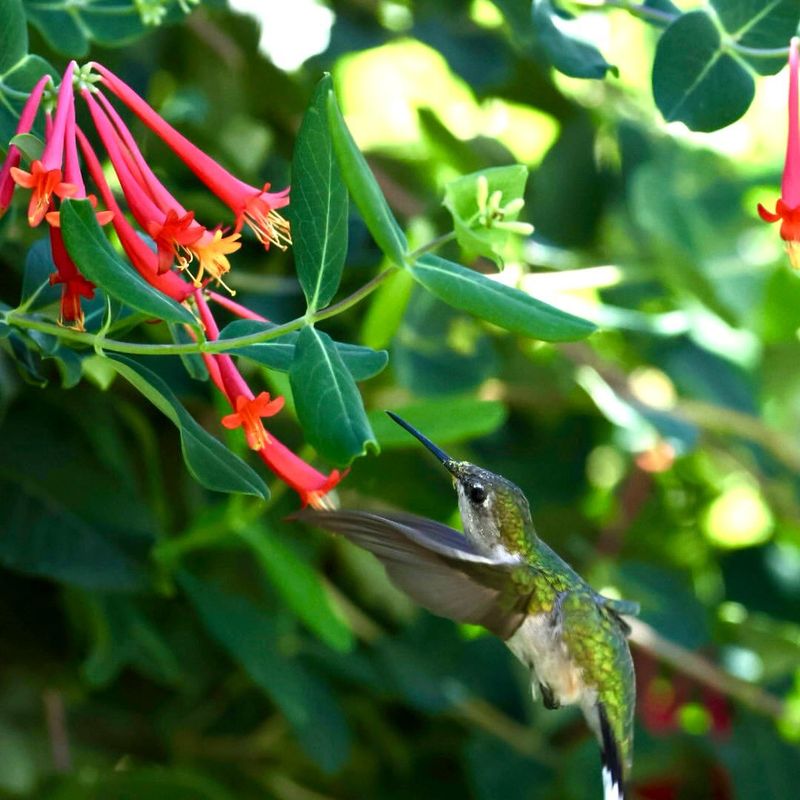
Coral Honeysuckle is one of those vines that earns its place in any California garden almost immediately.
Unlike its invasive Japanese cousin, this well-behaved native vine stays manageable while still putting on a spectacular show.
Clusters of slender red and orange tubular flowers appear from late spring through early summer, and sometimes again in fall.
Hummingbirds love the long, narrow flower tubes because they are perfectly sized for their beaks. The blooms are also odorless to humans, which means the plant puts all its energy into producing nectar rather than scent.
That is great news for hungry hummingbirds visiting your California yard.
Coral Honeysuckle grows happily in full sun to partial shade and prefers well-drained soil. Train it up a trellis, fence, or arbor for a stunning vertical garden feature.
It is drought-tolerant once established, which fits right in with California’s water-conscious gardening approach. The red berries that follow the flowers attract songbirds too, so you get extra wildlife value from one plant.
It is a genuinely rewarding vine that keeps giving back to your garden and the creatures that call it home.
6. Trumpet Vine
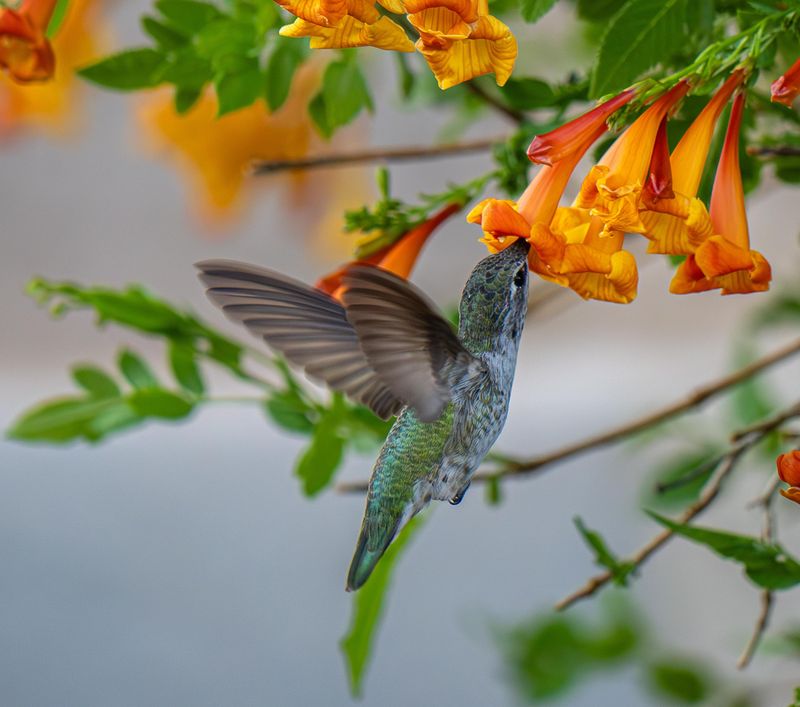
If you want hummingbirds to spot your garden from a distance, Trumpet Vine is the plant for the job.
The flowers are big, bold, and blazing orange-red, shaped like wide-mouthed trumpets that practically shout “hummingbirds welcome here.” This vigorous vine blooms from midsummer to early fall, filling a window when many other plants take a break.
Trumpet Vine, or Campsis radicans, thrives in full sun and well-drained soil. It is incredibly tough and can handle California’s hot, dry summers with ease.
Once established, it grows fast and strong, so give it a sturdy support structure like a fence, pergola, or thick trellis.
One thing to keep in mind: this vine is enthusiastic. It spreads readily and can become aggressive if left unchecked, so plan to prune it regularly to keep it where you want it.
In contained spaces or large yards, though, it is absolutely stunning and wildly effective at drawing in hummingbirds. Plant it in a spot where you can enjoy watching hummingbirds hover and feed up close.
Few garden sights in California are more exciting than a hummingbird disappearing into one of those giant blooms.
7. Cape Honeysuckle
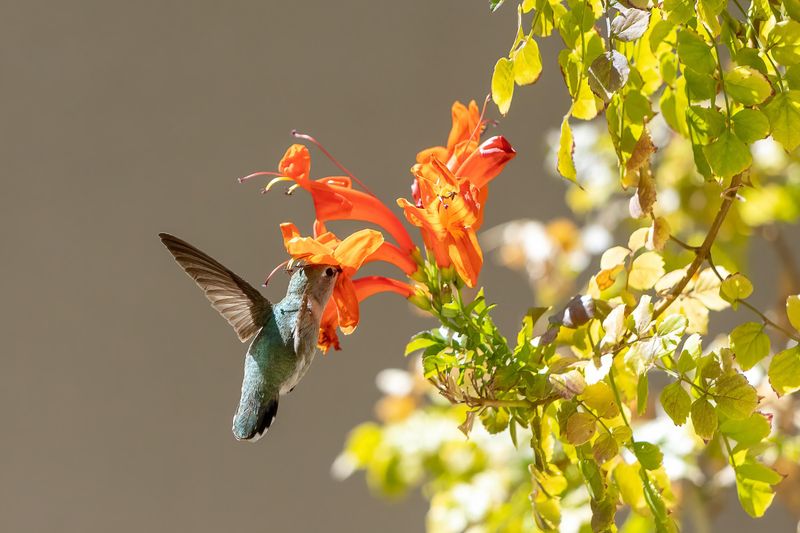
Originally from South Africa, Cape Honeysuckle has made itself completely at home in California’s warm climate. This fast-growing shrub or vine produces clusters of vivid orange tubular flowers that hummingbirds find absolutely irresistible.
It blooms for an impressively long season, often flowering from fall all the way through spring in milder California regions.
Cape Honeysuckle is tough as nails. It handles heat, drought, poor soil, and coastal conditions without complaining.
Plant it in full sun for the best flower production, though it tolerates light shade too. Use it as a sprawling hedge, a climber on a fence, or a colorful bank cover.
Because it blooms so heavily during fall and winter, Cape Honeysuckle fills a critical gap in the hummingbird food calendar. Anna’s hummingbirds, which overwinter in California, rely on nectar-producing plants during the cooler months.
Having Cape Honeysuckle in your yard means your hummingbird visitors always have something to eat. Just keep an eye on its growth since it can spread vigorously.
Regular trimming keeps it looking tidy and actually encourages more blooms. It is one of the most reliable hummingbird plants you can grow in Southern California.
8. Fuchsia
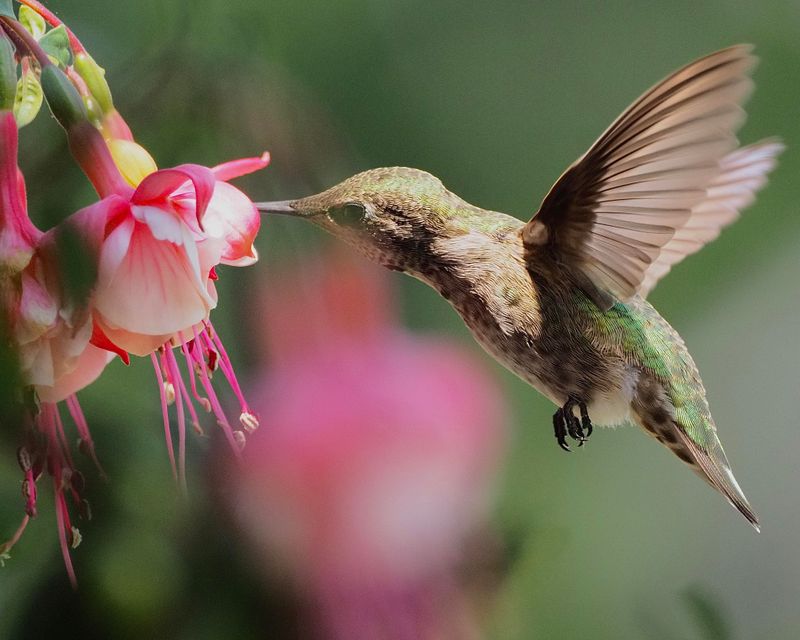
There is something almost magical about watching a hummingbird hover beneath a Fuchsia plant, reaching up into those dangling, jewel-like blooms.
Fuchsia flowers hang upside down like little lanterns, and their tubular shape is perfectly suited for hummingbirds feeding from below.
The color combinations of pink, red, and purple are hard to beat in any garden.
In California, Fuchsia grows beautifully in partial shade, making it one of the few great hummingbird plants that does not need full sun. It is ideal for shaded patios, under trees, or on the north side of a building.
Hanging baskets are a classic way to display Fuchsia and bring hummingbirds right up to eye level.
Keep the soil consistently moist and feed Fuchsia regularly during the growing season for the best bloom production. In mild coastal areas of California, some varieties can grow as perennial shrubs and reach impressive sizes.
Inland gardeners often grow them as annuals or bring them indoors during cold snaps. Either way, the payoff is worth it.
Few plants create such a reliable, up-close hummingbird feeding show as a well-tended Fuchsia in a California garden.
9. Lobelia
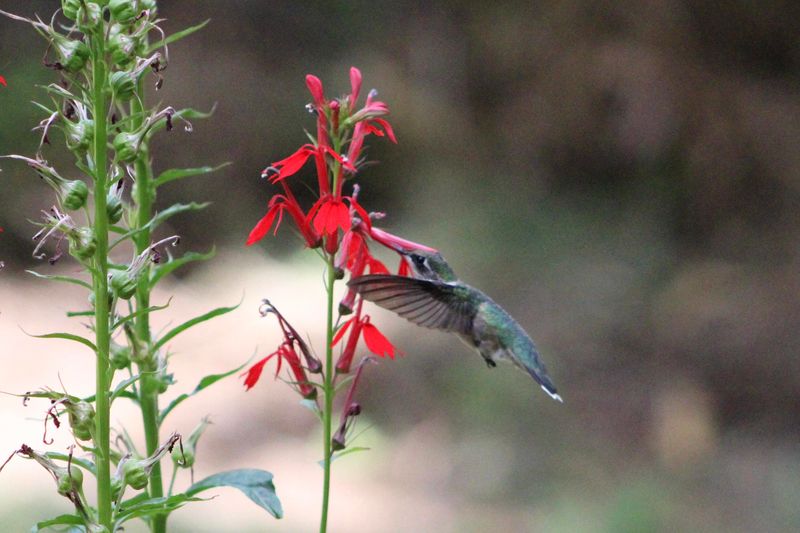
Cardinal Flower, the showiest member of the Lobelia family, produces some of the most intensely red flowers in the entire plant kingdom. That vivid scarlet color is basically a hummingbird beacon.
Studies have shown that hummingbirds are strongly attracted to red, and Lobelia cardinalis delivers that color in the most dramatic way possible.
Unlike many plants on this list, Cardinal Flower actually prefers moist conditions. Plant it near a water feature, pond edge, or in a consistently irrigated garden bed for best results.
It grows happily in full sun to partial shade and thrives in many parts of California where moisture is available.
The tall flower spikes, which can reach three to four feet high, are packed with slender tubular blooms that hummingbirds visit repeatedly throughout the day. It blooms from midsummer through fall, making it a valuable late-season nectar source.
Lobelia also works beautifully as a container plant, which lets you move it to wherever hummingbird activity is highest in your yard.
Let the plants self-seed at the end of the season and you will have new plants popping up the following year, giving you free flowers and happy hummingbirds in your California garden.
10. Columbine
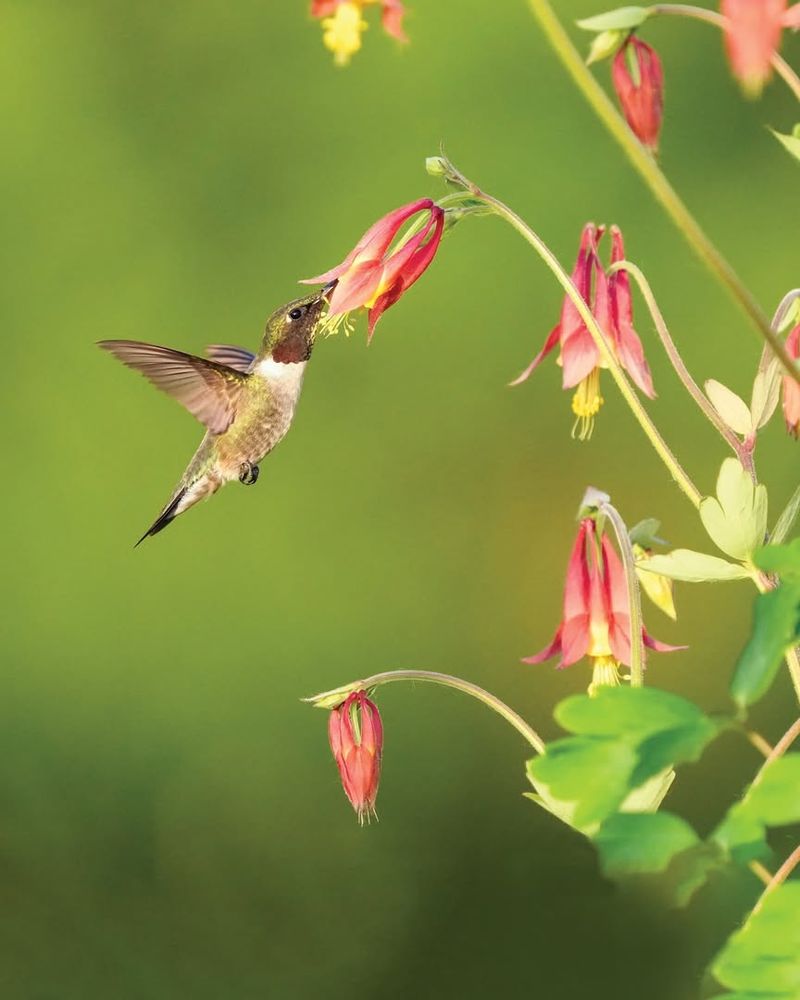
Columbine has a secret weapon hidden in plain sight: those long, elegant spurs at the back of each flower are packed with nectar, and hummingbirds have figured this out.
Wild Columbine, especially the red and yellow varieties, has co-evolved with hummingbirds over thousands of years.
Their relationship is one of nature’s most perfectly matched partnerships.
In California, Western Columbine (Aquilegia formosa) is the native species to look for. It grows naturally in woodland edges and shaded slopes, and it brings that same relaxed, woodland charm to home gardens.
Plant it in partial shade with well-draining, organically rich soil for the best results.
Columbine blooms in spring, which is perfectly timed with the arrival of migrating hummingbirds passing through California. It is also one of the earlier-blooming plants on this list, giving resident hummingbirds a much-needed early-season nectar boost.
The flowers are delicate and nodding, which gives your garden a soft, natural look. Columbine self-seeds freely, so once you plant it, it tends to come back year after year with very little effort on your part.
It is a charming, easy-care choice for any California hummingbird garden.
11. Firecracker Plant
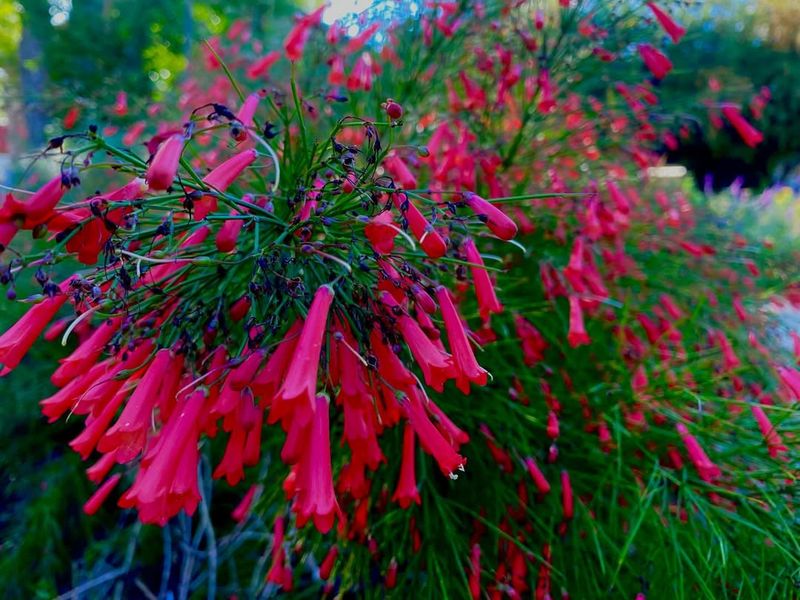
The Firecracker Plant lives up to its name in the best possible way. Russelia equisetiformis produces hundreds of tiny, bright red tubular flowers on long, arching, rush-like stems that cascade like a fountain of color.
From a distance, the whole plant looks like it is sparkling with little flames. Hummingbirds absolutely love it.
This plant is built for California’s warm conditions. It thrives in full sun and handles drought remarkably well once established.
The arching stems create a graceful, flowing shape that looks stunning spilling over walls, raised beds, or large containers. It blooms for a very long season, often flowering nearly year-round in frost-free parts of Southern California.
Because the tubular flowers are small and numerous, hummingbirds can feed quickly and efficiently, visiting many blooms in a short amount of time. That makes the Firecracker Plant a highly productive nectar station in your garden.
It also attracts butterflies and is generally resistant to deer browsing, which is a bonus for California gardeners in more rural areas. Plant it somewhere you can watch from a window or patio chair and enjoy the constant parade of hummingbird visitors it brings to your yard.
12. Mexican Cigar Plant
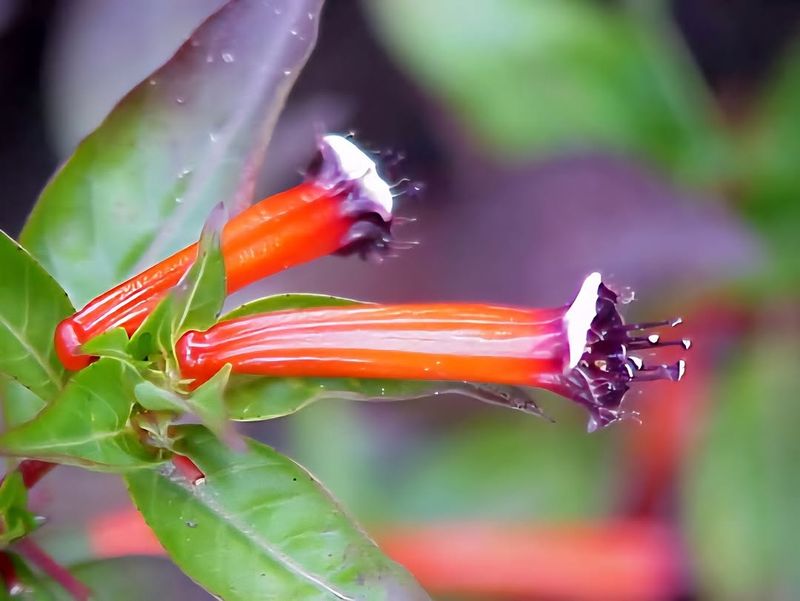
With a name like Mexican Cigar Plant, you know this one has personality. Cuphea ignea earns its quirky nickname from its slender, cylindrical orange-red flowers tipped with a dark ring and tiny white petals, which really do look like little lit cigars.
Hummingbirds are drawn to the bright color and abundant nectar tucked inside each tube.
This cheerful plant blooms almost nonstop from spring through fall, and in frost-free areas of California it can flower year-round. It stays compact and bushy, reaching about two feet tall, which makes it perfect for container gardens, borders, and mixed flower beds.
Full sun brings out the best flowering, though it tolerates some afternoon shade.
Mexican Cigar Plant is low-maintenance and fairly drought-tolerant once it settles in, which suits California’s water-smart gardening culture well. It also grows quickly, so you will see results fast after planting.
Because it blooms so consistently and produces so much nectar, it becomes a reliable stop on any hummingbird’s daily feeding route.
Mix it with other tubular flowers like Salvia or Penstemon to create a layered, season-long hummingbird buffet that keeps your California yard lively and colorful all growing season.
13. Red Hot Poker
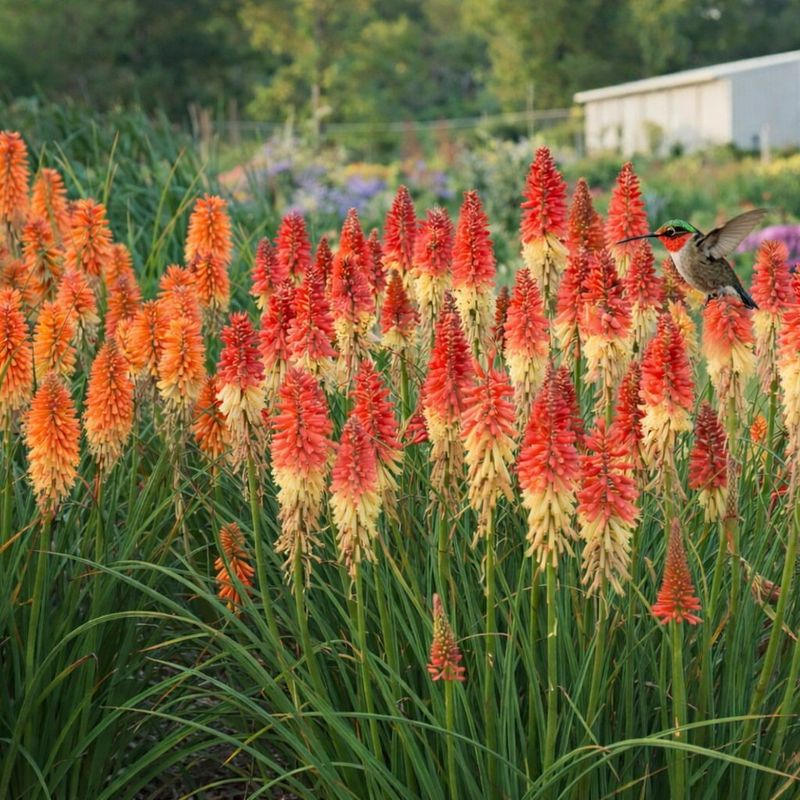
Red Hot Poker is one of those plants that makes people stop and stare. The tall, torch-like flower spikes rise dramatically from grassy clumps, blazing with red at the top and fading to orange and yellow toward the base.
The visual impact is stunning, and hummingbirds treat those spikes like an all-you-can-eat buffet.
Also called Kniphofia, Red Hot Poker thrives in full sun and well-drained soil. It handles California’s dry summers beautifully once established, needing minimal supplemental watering.
The plant forms large, attractive clumps over time that get more impressive each year.
Blooming times vary by variety, so you can plant early, mid, and late-season types to keep flowers going from spring through fall. Hummingbirds hover along the length of each spike, visiting dozens of tiny tubular flowers in one stop.
That makes Red Hot Poker one of the most efficient nectar sources in your California garden. The upright spikes also add great vertical structure to garden beds and work well alongside lower-growing plants like Salvia or Lobelia.
If you want a bold, dramatic plant that genuinely thrills both gardeners and hummingbirds alike, Red Hot Poker belongs in your yard.