The 11 Brightest Flowers That Thrive In Sunny California Gardens
Gardening in California feels like a cheat code for plant lovers, but let’s be honest: watching your favorite petals shrivel up after two weeks of glory is a total heartbreak.
You deserve a backyard that stays dressed to impress even when the July sun decides to turn the thermostat up to “searing.” Luckily, the Golden State offers a perfect stage for floral overachievers that simply refuse to quit.
If you’re tired of high-maintenance divas that bloom for a blink before disappearing, it is time to pivot toward the marathon runners of the botanical world.
We are talking about hardy, sun-drenched beauties that keep the color coming through summer heat and crisp autumn mornings alike.
Grab your favorite trowel and maybe a cold drink, because your garden is about to transform into a year-round paradise. These picks are ready to work overtime so you don’t have to.
1. Tidy Tips
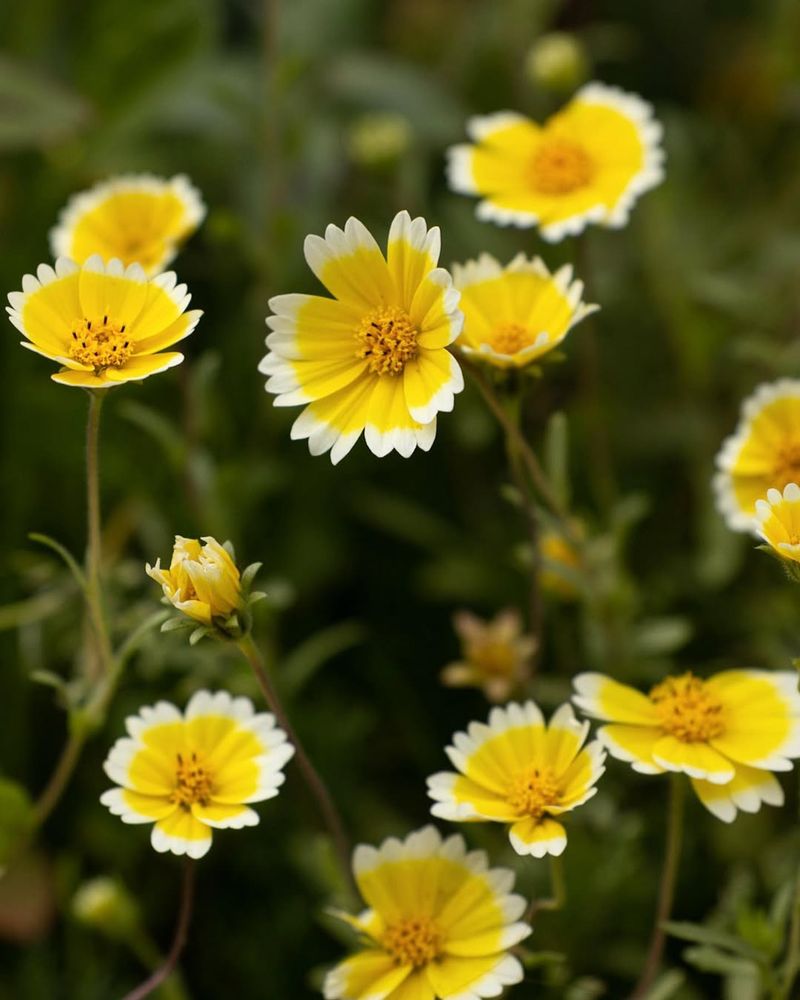
Bright, cheerful, and surprisingly tough, Tidy Tips is one of California’s most beloved native wildflowers. Its yellow petals are tipped with white, giving it a clean, crisp look that stands out beautifully in any sunny garden bed.
The name alone is enough to make you smile.
Layia platyglossa, its scientific name, grows naturally in open fields and grassy hillsides across California. It loves full sun and well-drained soil, and it handles dry conditions like a champ.
Scatter the seeds in fall for a spring bloom that will brighten up your yard from March through May.
Tidy Tips grow in dense, low clusters that look amazing when planted in masses. They attract native bees and other beneficial insects, making them a wonderful choice for pollinator gardens.
Since they are annuals, they complete their life cycle in one season, but they self-seed generously, so expect them to pop back up the following year. Pairing them with California Poppies creates a stunning wildflower display that feels natural and effortlessly beautiful in any sunny California landscape.
2. California Poppy
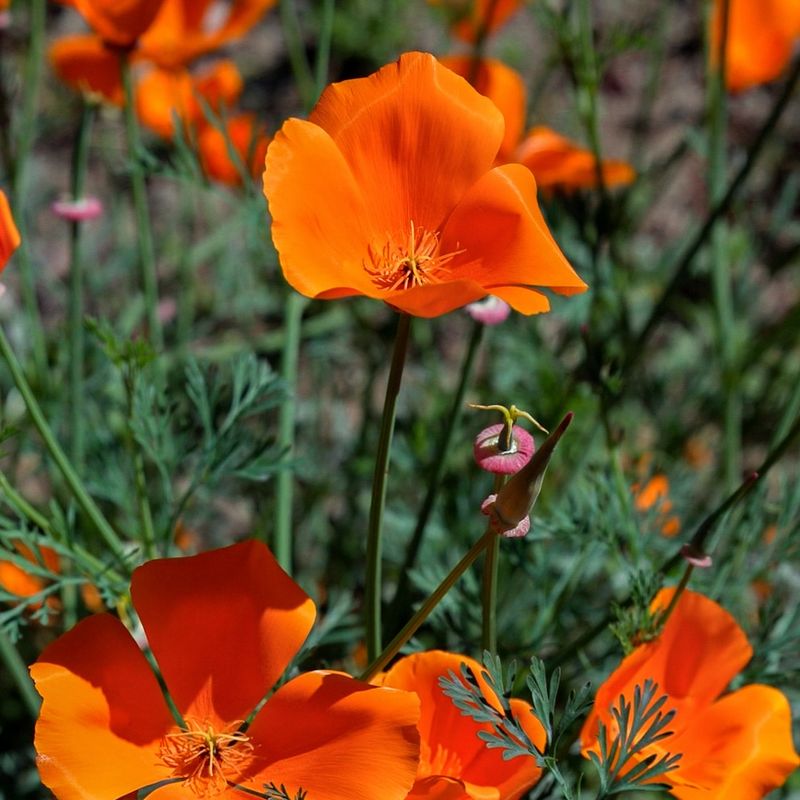
Few flowers say “California” quite like the poppy. The California Poppy, known scientifically as Eschscholzia californica, is actually the official state flower, and it earns that title with ease.
Its silky, bright orange petals practically glow in the afternoon sun, making any garden look like a painting.
One of the best things about this flower is how low-maintenance it is. It thrives in poor, dry soil and needs very little water once established, which makes it a smart pick for California’s drought-prone regions.
You can scatter seeds directly onto bare ground in fall or early spring and watch them take off on their own.
California Poppies close up at night and on cloudy days, which is a fun little quirk that surprises many first-time growers. They self-seed freely, meaning they come back year after year without much help from you.
Pollinators like bees love them too. If you want a wildflower look without a lot of work, this native bloom is your best friend in a sunny California garden.
3. Foothill Penstemon
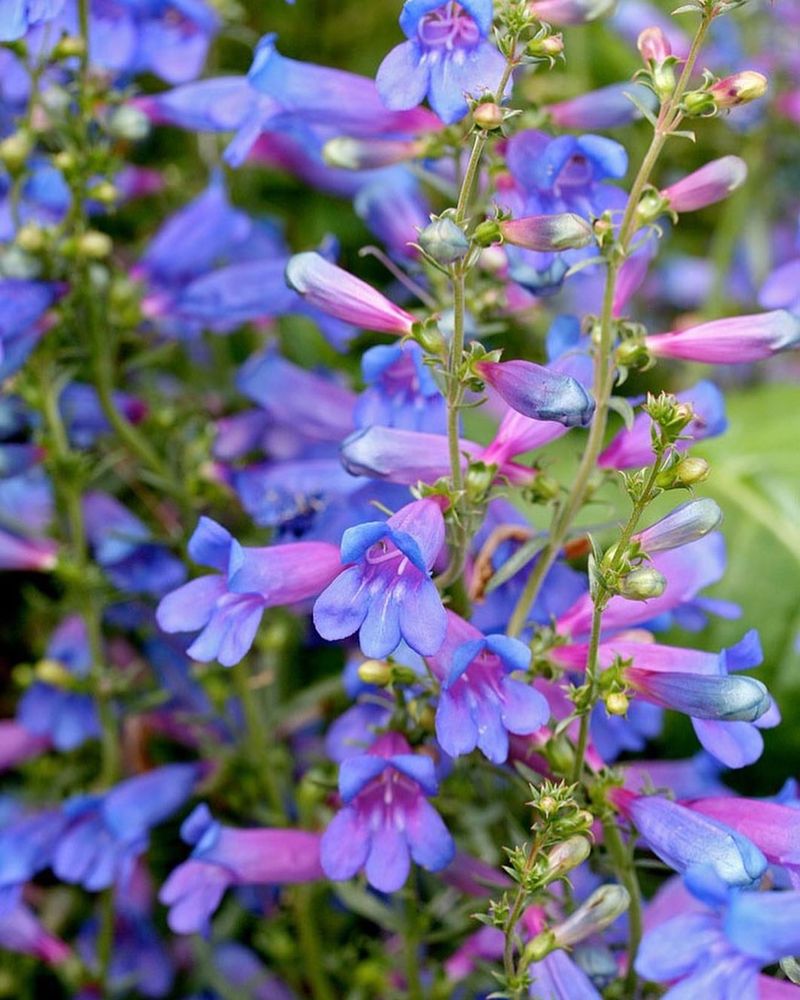
If you want to attract hummingbirds to your California garden, Foothill Penstemon is practically a guaranteed invitation. Its tall, slender stalks are lined with tubular flowers in shades of deep red, purple, and lavender that hummingbirds simply cannot resist.
It is one of those plants that feels like it was designed with wildlife in mind.
Penstemon heterophyllus, as it is formally called, is native to the foothills and dry slopes of California. It thrives in full sun and rocky or sandy soils with excellent drainage.
Once established, it is extremely drought-tolerant, making it a smart and sustainable choice for water-conscious gardeners throughout the state.
Blooming from spring into early summer, Foothill Penstemon puts on a long, reliable show of color when many other plants are just getting started. It grows to about two feet tall and works beautifully as a border plant or in a mixed native garden.
Bees and butterflies are also frequent visitors. Planting it alongside grasses or other California natives gives your garden a natural, layered look that feels both wild and well-designed at the same time.
4. Sticky Monkeyflower
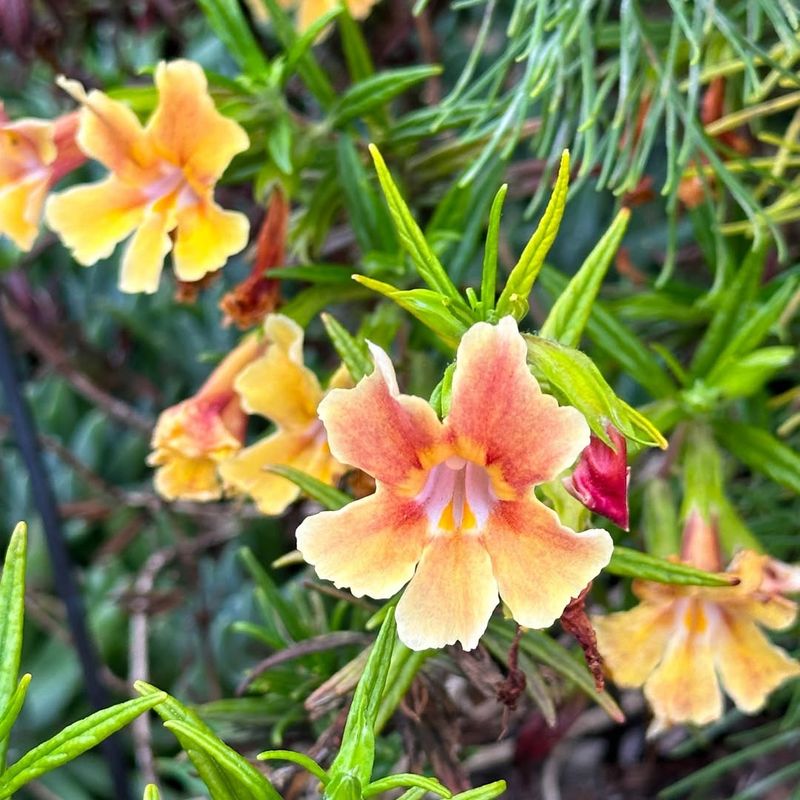
There is something wonderfully quirky about a flower called the Sticky Monkeyflower. The name comes from its slightly sticky leaves and the playful, monkey-face shape of its blooms.
But beyond its funny name, this plant is a serious performer in sunny California gardens.
Diplacus aurantiacus produces clusters of trumpet-shaped flowers in shades of orange, yellow, and sometimes soft cream. It blooms from spring through early fall, giving you months of color.
The plant grows naturally on dry slopes and chaparral hillsides throughout California, so it is perfectly adapted to the state’s warm, dry summers.
Sticky Monkeyflower is a semi-woody shrub that grows about two to four feet tall and wide. It handles full sun with ease and needs minimal water once it settles in.
Hummingbirds are especially drawn to its tubular blooms, and it also supports native bees. It works beautifully in slope plantings, habitat gardens, or as a colorful accent shrub.
Pairing it with other California natives like sage or buckwheat creates a layered, wildlife-friendly garden that looks stunning all season long.
5. Matilija Poppy
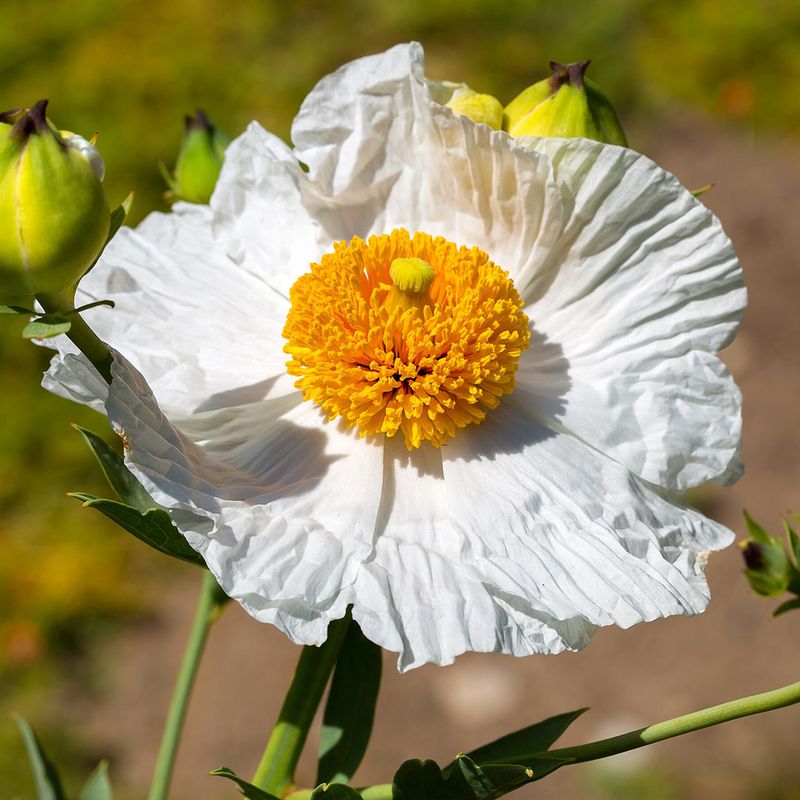
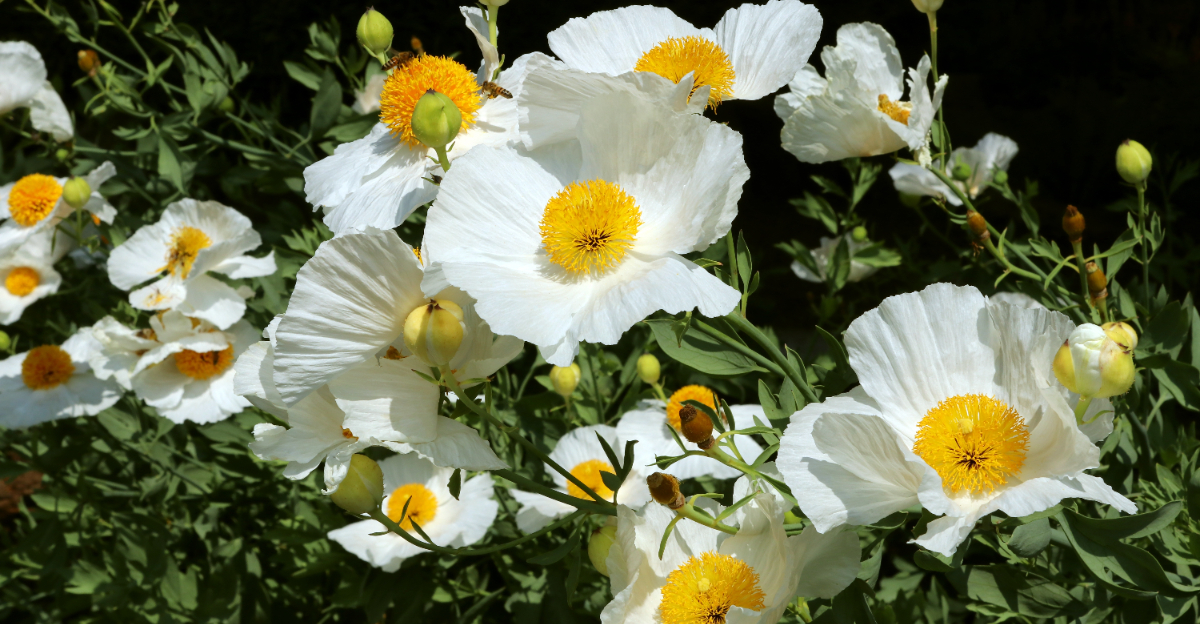
Sometimes called the fried egg flower because of its enormous white petals and bold yellow center, the Matilija Poppy is one of the most dramatic native flowers you can grow in California. It is big, bold, and absolutely unforgettable once you see it in full bloom.
Romneya coulteri can grow up to eight feet tall, making it more of a large shrub than a typical garden flower. Its blooms can reach six to nine inches across, which makes them some of the largest flowers of any California native plant.
They appear in late spring through summer and carry a light, sweet fragrance that adds another layer of charm.
This plant loves full sun and dry, well-drained soil. It is incredibly drought-tolerant and actually performs better when not overwatered, which makes it a practical and beautiful choice for water-wise California gardens.
Keep in mind that it spreads through underground roots and can take over a large area over time, so give it plenty of space. Once established, it rewards you with stunning blooms year after year with almost no effort on your part.
6. Autumn Sage
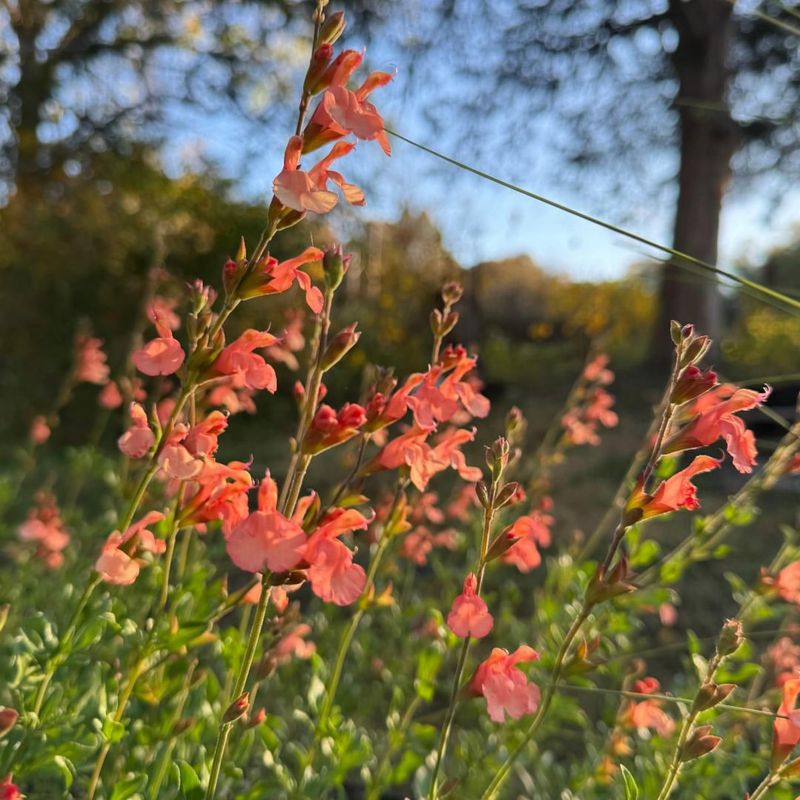
Do not let the name fool you. Autumn Sage does not just bloom in fall.
In California’s mild climate, this tough little shrub can produce its fire-red flowers from spring all the way through winter with barely a break.
It is the kind of plant that keeps on giving long after other flowers have stopped.
Salvia greggii is native to Texas and northern Mexico, but it has found a very happy home in California gardens. It thrives in full sun and well-drained soil, tolerates heat and drought well, and asks for very little in return.
Most varieties grow about two to three feet tall and wide, making them a manageable size for borders or container gardens.
Hummingbirds are absolutely wild about Autumn Sage, and bees are frequent visitors too. The bright red flowers stand out against the small, aromatic green leaves in a way that feels lively and vivid.
You can find Autumn Sage in pink, white, coral, and bicolor varieties as well, so there is something for every garden palette. For a California garden that stays colorful almost all year, this is one plant you will want to include.
7. Coreopsis
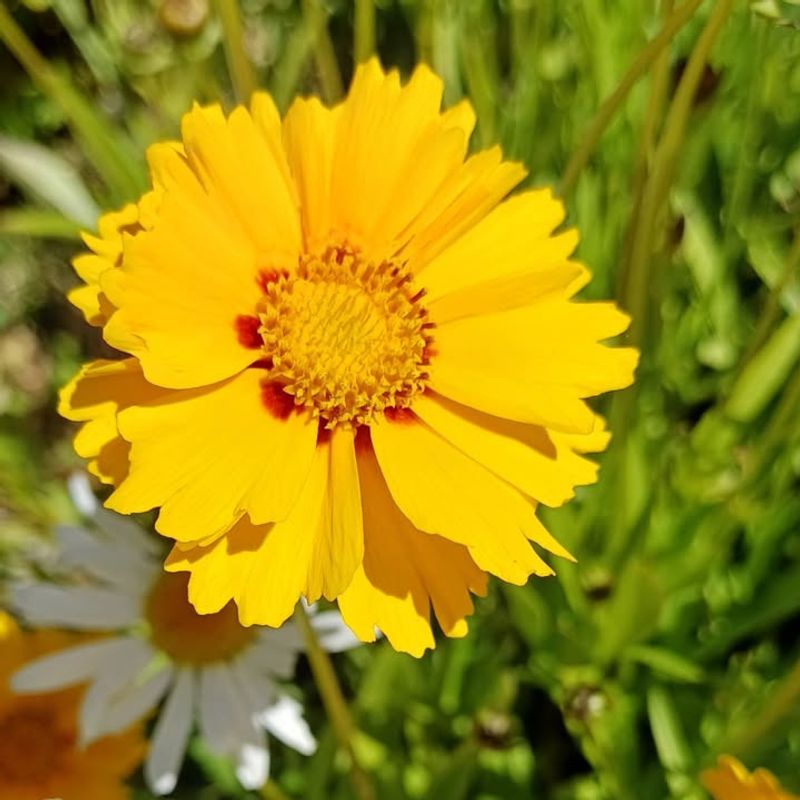
Bright as little suns and just as cheerful, Coreopsis is one of those flowers that makes a garden feel instantly happy.
Also known as tickseed, this hardy perennial produces waves of golden yellow blooms from late spring through summer, and sometimes well into fall in warmer parts of California.
Coreopsis thrives in full sun and actually prefers lean, well-drained soil over rich garden soil. Overfeeding it can reduce flowering, so less is more when it comes to fertilizer.
It is drought-tolerant once established, which is a major plus in California’s dry summers. Most varieties grow between one and three feet tall, making them versatile for borders, containers, or mass plantings.
One of the best features of Coreopsis is how long it blooms. Deadheading spent flowers regularly encourages the plant to keep producing new ones throughout the season.
Butterflies and bees love visiting the cheerful blooms, adding movement and life to your garden. Some varieties, like Coreopsis grandiflora, have larger flowers, while threadleaf types offer a more delicate, feathery texture.
No matter which variety you choose, Coreopsis delivers reliable color and low-maintenance beauty that sunny California gardens are perfectly suited for.
8. Blanket Flower
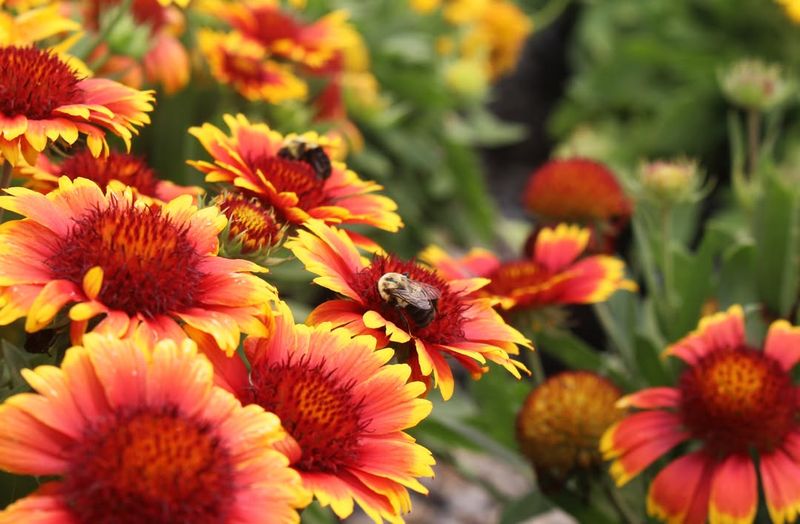
If you love bold, warm colors, Blanket Flower is going to be your new favorite plant. Gaillardia produces stunning daisy-like flowers in fiery combinations of red, orange, and yellow that look like something out of a sunset painting.
It is one of the most eye-catching flowers you can grow in a sunny California garden.
Originally from North America, Blanket Flower is incredibly tough and heat-tolerant. It thrives in full sun and sandy or rocky, well-drained soil.
It actually struggles in overly rich or wet soil, so do not pamper it too much. Once established, it is quite drought-tolerant, which fits right in with California’s warm, dry climate.
Blanket Flower blooms from late spring through fall, giving you a long season of vibrant color. Deadheading regularly keeps the blooms coming and prevents the plant from looking tired.
Butterflies are frequent visitors, and the flowers make excellent cut blooms for indoor arrangements. Both annual and perennial varieties are available, so you can choose based on your garden goals.
Planting Blanket Flower in groups of three or more creates a bold, sweeping display that draws the eye and anchors any sunny California garden bed beautifully.
9. Red Buckwheat
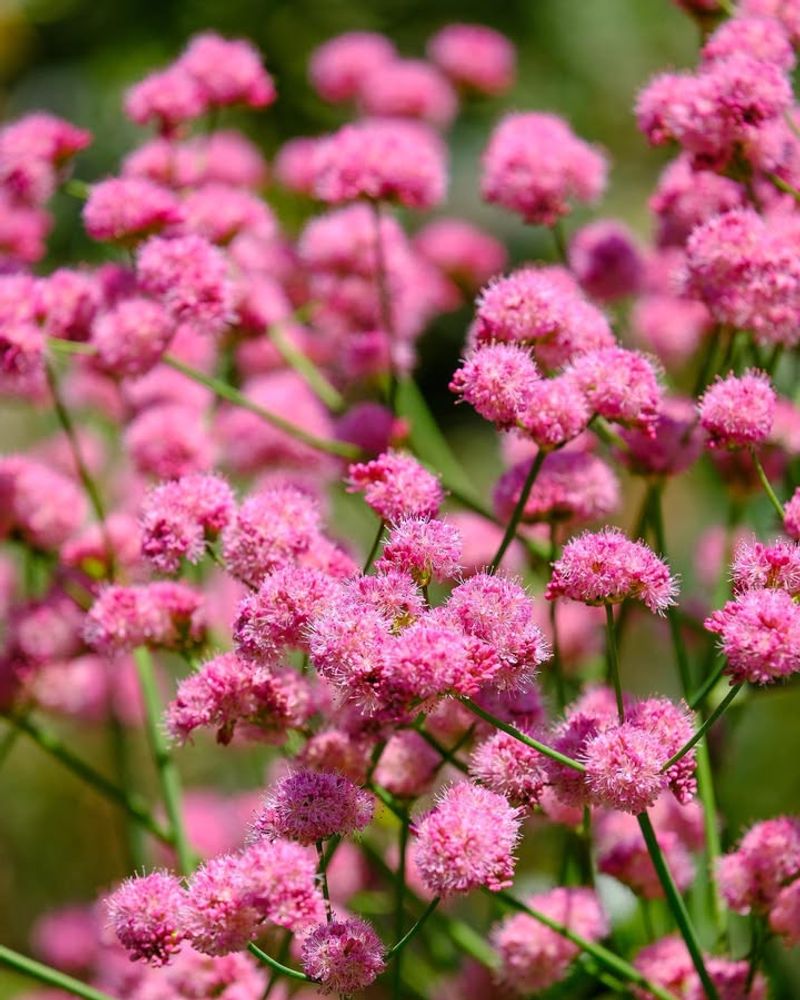
Red Buckwheat might not be the most well-known flower on this list, but gardeners who discover it tend to become instant fans. Eriogonum grande var. rubescens is a California native that produces clusters of tiny rose-red flowers on airy, branching stems.
Up close, it looks intricate and delicate. From a distance, it creates a warm, rosy haze of color.
This plant is native to the Channel Islands and coastal areas of Southern California. It thrives in full sun and fast-draining, sandy or rocky soil.
Once established, it is highly drought-tolerant and requires very little water or care. It grows about one to two feet tall and spreads two to three feet wide, making it a great low-growing accent plant.
Red Buckwheat blooms from late spring through summer and sometimes into fall. The dried flower heads remain attractive even after blooming, adding interest to the garden year-round.
It is an outstanding plant for supporting native wildlife. Butterflies, bees, and even some bird species are drawn to it.
Planting it near a path or patio where you can enjoy it up close is a great way to appreciate both its beauty and the pollinators it attracts in your California garden.
10. Seaside Daisy
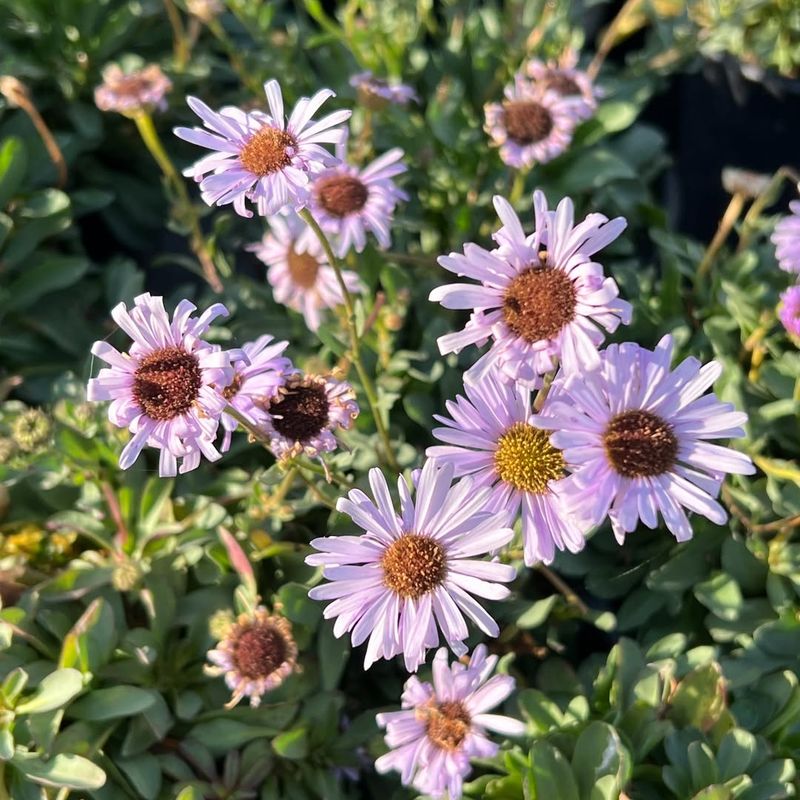
Soft, pretty, and wonderfully easy to grow, Seaside Daisy is a California native that brings a gentle pop of lavender-purple color to sunny garden spaces.
Erigeron glaucus is native to the coastal bluffs and sandy shores of California and Oregon, which tells you a lot about how tough and adaptable it really is.
This low-growing perennial thrives in full sun to partial shade and handles coastal conditions like salt air and sandy soil with no trouble at all. It grows about six to twelve inches tall and spreads into a tidy, ground-covering mat.
That spreading habit makes it a wonderful choice for rock gardens, border edges, or slopes where you want low-maintenance coverage.
Seaside Daisy blooms heavily in spring and continues producing flowers on and off through summer and into fall in many California gardens. The cheerful lavender petals surround a bright yellow center, creating a classic daisy look that never goes out of style.
Butterflies and bees visit regularly. It pairs beautifully with Red Buckwheat or Sticky Monkeyflower for a native plant combination that is both colorful and ecologically valuable.
For a coastal or low-water California garden, Seaside Daisy is a reliable and lovely choice.
11. Elegant Clarkia
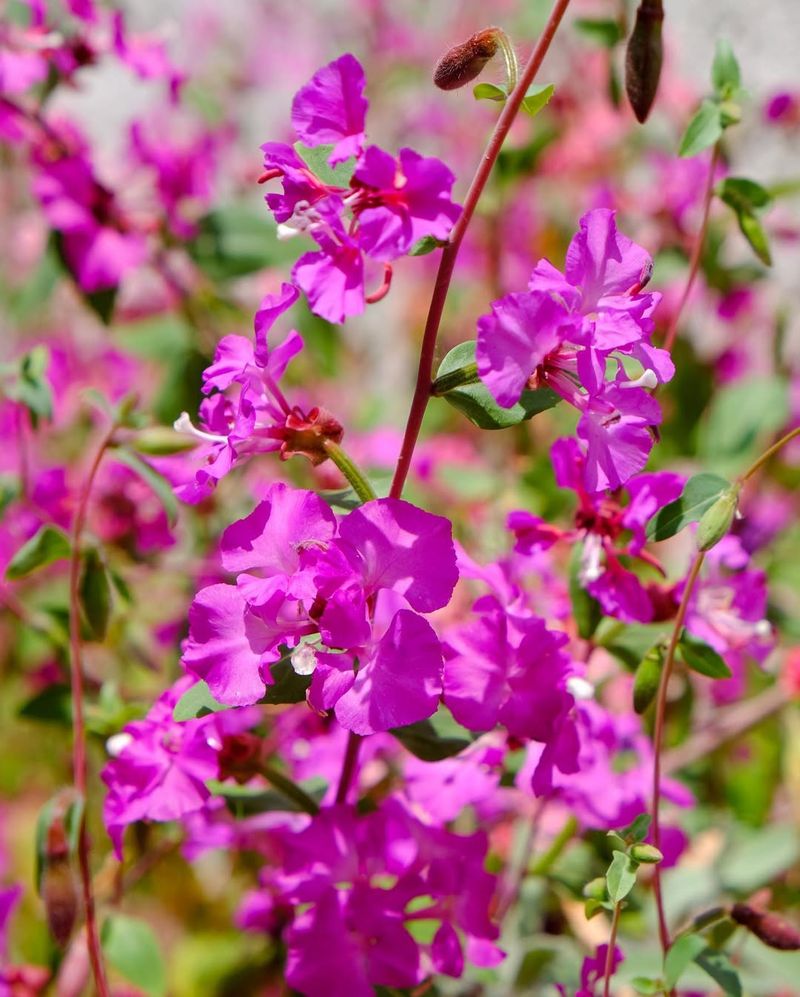
Named after explorer William Clark of the Lewis and Clark Expedition, Elegant Clarkia has a history as interesting as its blooms.
This California native annual produces delicate, ruffled flowers in shades of pink, lavender, and purple that look almost too pretty to be real.
And yet, it is one of the easiest wildflowers you can grow in the state.
Clarkia unguiculata thrives in full sun and well-drained soil. It actually prefers poor soil over rich garden beds, which makes it a great choice for areas where other plants struggle.
Sow seeds directly in fall or early spring and let the plant do the rest. It grows one to three feet tall and produces blooms from late spring through early summer.
Elegant Clarkia is a favorite among native bees, especially specialist bees that rely on it for pollen. It looks stunning when planted in large drifts alongside California Poppies or Tidy Tips, creating a wildflower meadow effect that feels natural and vibrant.
Since it self-seeds freely, it tends to return each year without replanting. For a California garden that celebrates native beauty and supports local pollinators, Elegant Clarkia is a truly wonderful finishing touch.