The 9 California Native Plants That Will Instantly Attract Butterflies
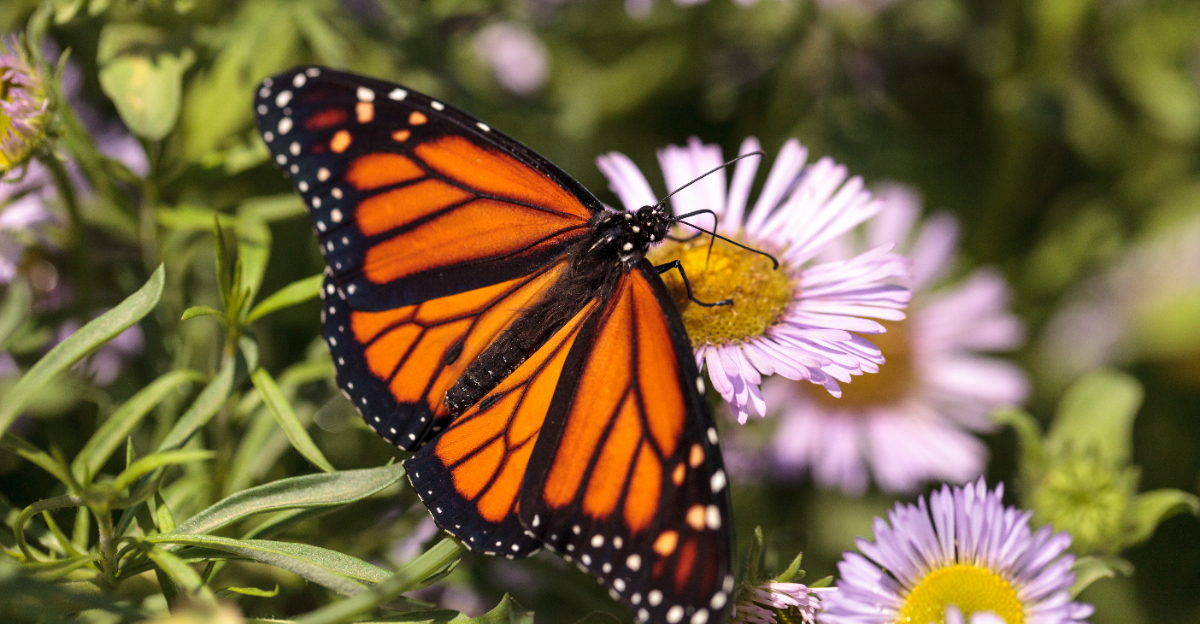
Butterflies bring a special kind of magic to a California garden. One sunny afternoon can turn into a fluttering show of color, movement, and life when the right native plants are in place.
These local bloomers are perfectly tuned to the climate, offering nectar, shelter, and safe spots for butterflies to rest and lay eggs.
The result is not just a prettier yard, but a living, breathing space filled with gentle motion and seasonal wonder.
Imagine bright wings drifting over flowers, warm air buzzing softly with pollinators, and your garden feeling more alive every single day. The best part is how easy it can be once you choose plants that already belong here.
Ready to turn your outdoor space into a butterfly favorite? With the right natives, you can invite beauty, support wildlife, and enjoy a garden that feels vibrant, natural, and full of life all season long.
1. Narrowleaf Milkweed (Asclepias fascicularis)
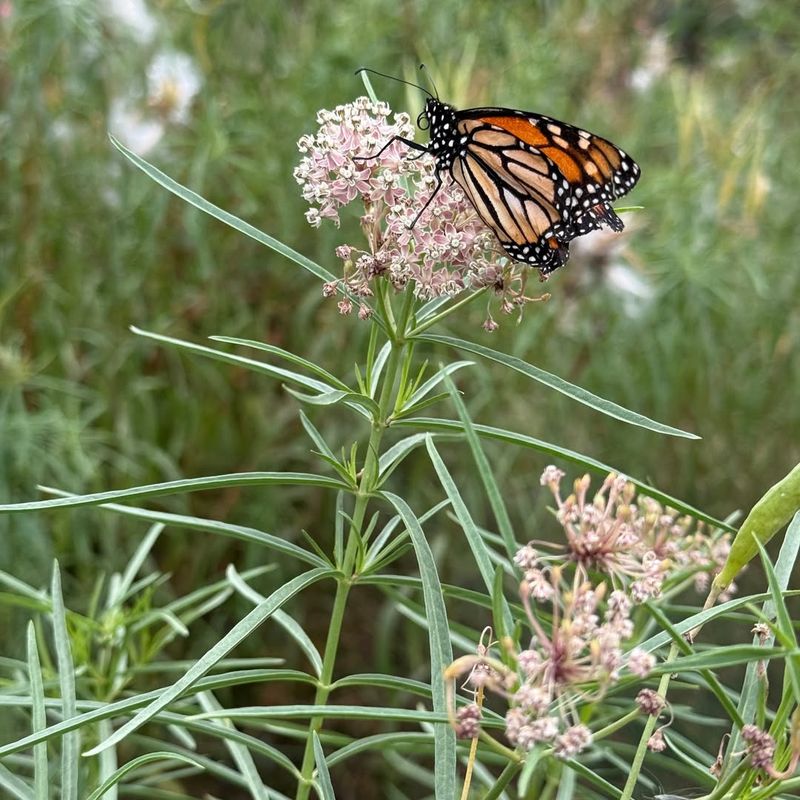
When monarch butterflies pass through California during their migration, they rely heavily on milkweed species.
Narrowleaf milkweed is an important host plant for monarchs in California, providing nectar for adults and serving as a primary food source for their caterpillars.
This California native grows best in full sun and tolerates dry summers once established. The plant typically reaches two to three feet tall with slender leaves and clusters of pale cream to light-colored flowers that bloom from late spring into summer.
Butterflies often begin visiting when the plant is in bloom.
Some gardeners worry that caterpillars will consume the plant completely, but established milkweed can recover after feeding. This natural cycle supports developing monarch caterpillars as they mature into butterflies.
Plant narrowleaf milkweed in well-draining soil and allow space for gradual spread through underground rhizomes. It can naturalize in sunny locations and generally needs little summer water once mature.
Avoid using pesticides near milkweed, as monarchs are sensitive to many chemicals. This plant can support multiple stages of the monarch life cycle and is widely used in butterfly-friendly gardens in California.
2. Showy Milkweed (Asclepias speciosa)
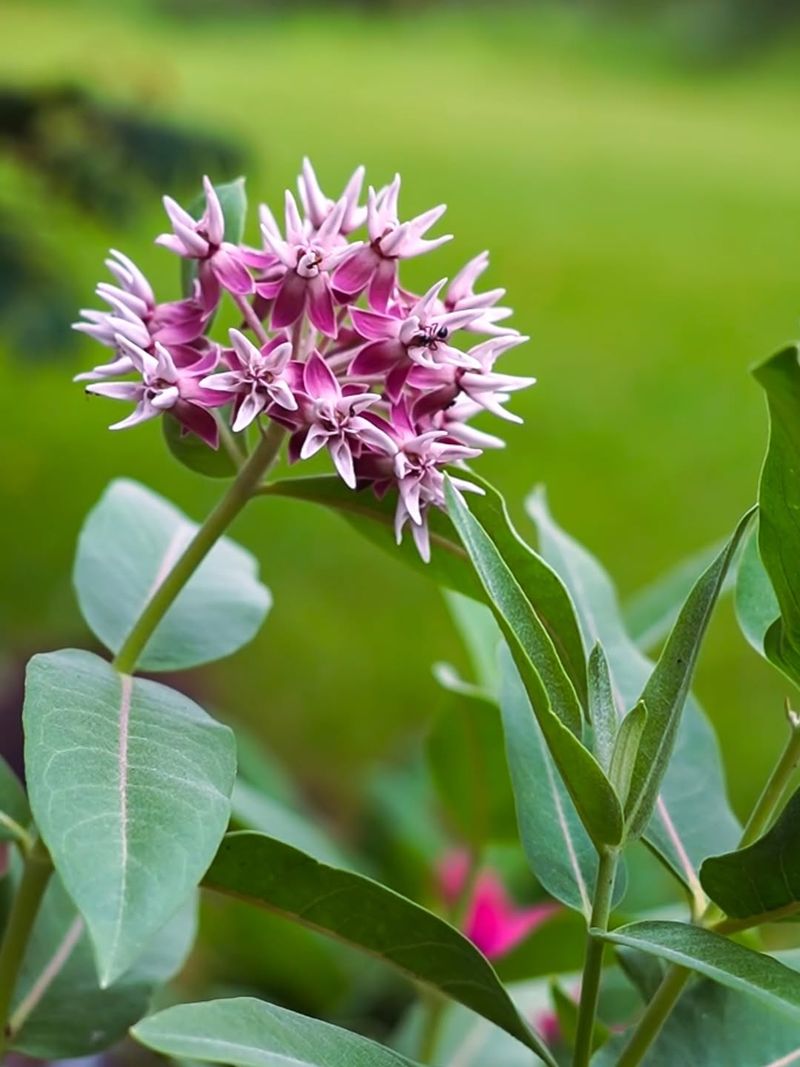
Inland valleys and foothill gardens can benefit from showy milkweed, a somewhat larger relative of narrowleaf milkweed. True to its name, this plant produces rounded clusters of dusty pink flowers that attract many butterflies.
In addition to monarchs, other species such as painted ladies and swallowtails may also visit.
Showy milkweed typically grows three to four feet tall with broad, velvety leaves that often have a gray-green appearance. The flowers bloom in late spring to early summer, adding visual interest to sunny plantings.
Each cluster contains many small nectar-rich flowers.
This species tolerates heat and is well suited to many of California’s interior regions. Once established, it requires relatively little water and often performs best in well-drained, moderately lean soil.
Excessive watering can contribute to root problems, so allow soil to dry somewhat between deep waterings.
The seed pods that develop after flowering are also distinctive, eventually opening to release silky-tufted seeds carried by the wind. Seeds can be left for wildlife or collected for propagation.
Showy milkweed spreads through rhizomes but is often somewhat less aggressive than narrowleaf, which can make it easier to manage in smaller spaces. Plant it where butterfly activity can be easily observed during the growing season.
3. Coyote Mint (Monardella villosa)
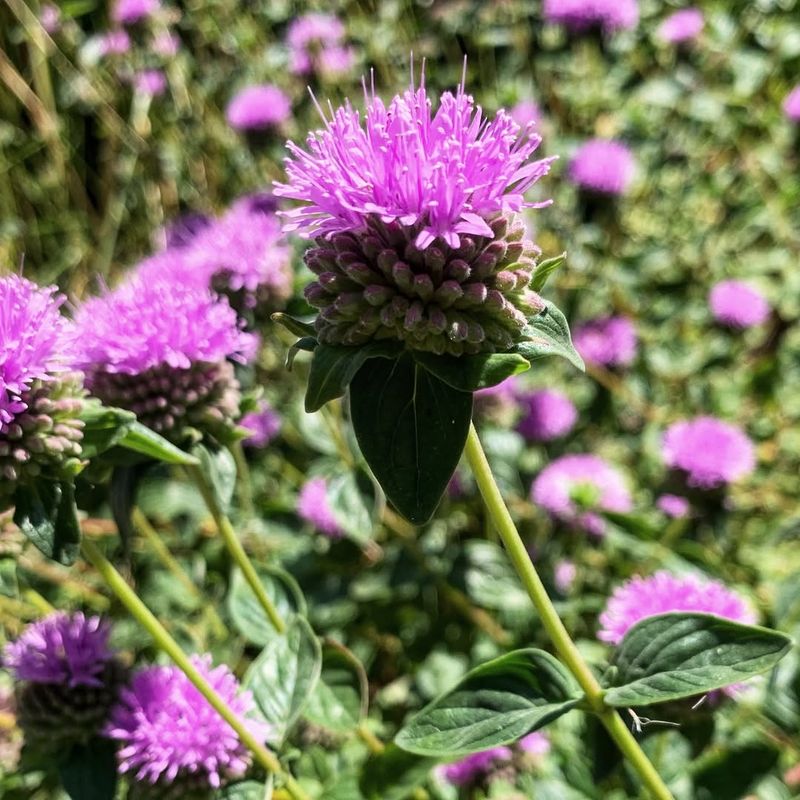
Your nose may notice coyote mint before your eyes do. This low-growing California native releases a minty fragrance when brushed or warmed by the sun, adding scent to the garden on warm afternoons.
Butterflies are attracted to the tubular purple to pink flowers that bloom from summer into fall.
Coyote mint stays relatively compact, usually reaching about one foot tall and gradually spreading to form a small, aromatic groundcover. The flowers appear in rounded clusters at the stem tips, and their tubular shape can attract butterflies such as swallowtails and skippers, as well as hummingbirds.
This plant grows best in full sun to light shade and requires excellent drainage, as it does not tolerate persistently wet soil. Rocky slopes, dry banks, and well-drained planting areas are well suited.
Once established, coyote mint typically needs little to no supplemental summer water, making it a low-maintenance choice.
Overwatering is a common issue, so allow the dry conditions it prefers. With appropriate care, it can be a long-lived, reliable plant that attracts pollinators year after year.
The aromatic foliage is often less appealing to deer and rabbits. Plant it near pathways where its fragrance can be easily enjoyed.
4. California Goldenrod (Solidago californica)
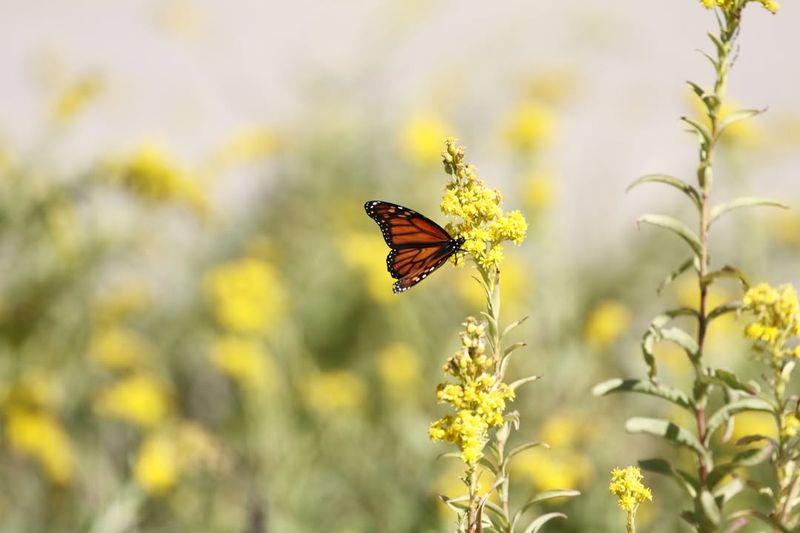
Late summer brings a golden glow to California gardens when goldenrod begins blooming. This native perennial produces plumes of bright yellow flowers when many other plants are finishing, providing nectar for late-season pollinators.
Monarchs may use it as a food source before migration in some areas.
California goldenrod typically grows two to five feet tall depending on conditions, with narrow leaves and branching stems topped with yellow flower clusters. Blooms usually appear from late summer into fall.
Compared with some non-native goldenrods, this species is generally less aggressive and can be manageable in garden settings.
Goldenrod is often blamed for allergies, though ragweed—which blooms at the same time, is a more common trigger. Goldenrod pollen is relatively heavy and less likely to become widely airborne.
The flowers attract a variety of butterflies and beneficial insects.
This plant tolerates full sun to partial shade and adapts to different soils with reasonable drainage. It benefits from occasional summer water in hotter areas but usually needs less irrigation than many traditional perennials.
Cut stems back in late fall or winter after flowering, and new growth typically emerges in spring. California goldenrod can naturalize in informal or meadow-style plantings.
5. California aster (Symphyotrichum chilense)
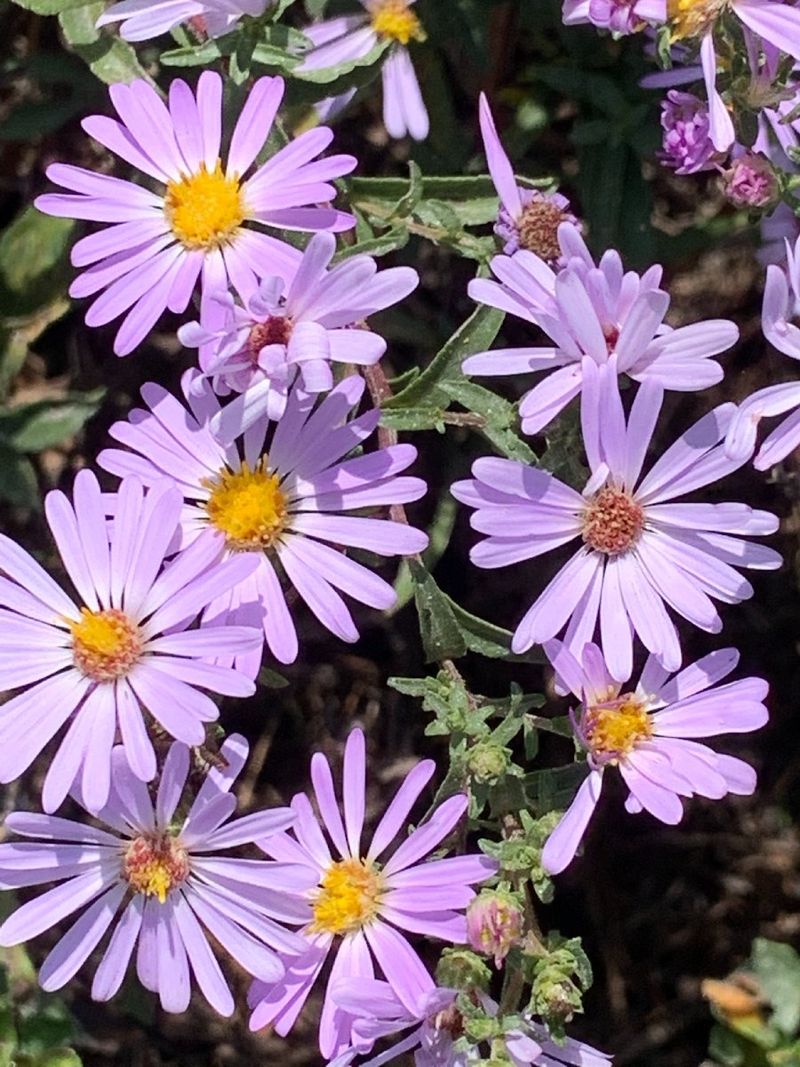
Fall gardens brighten when California aster comes into bloom with masses of purple-blue flowers. This native provides nectar for late-season pollinators during autumn, when many butterflies are preparing for migration or seasonal changes.
The daisy-like flowers with yellow centers create a soft, natural look suited to informal plantings.
California aster grows as a spreading perennial, typically reaching about two to three feet tall and wide. Flowers usually appear from late summer into fall, attracting butterflies such as painted ladies and buckeyes along with other pollinators.
Individual blooms are small, but together they can create broad swaths of color.
Coastal gardens often suit this plant well, as it tolerates salt spray and fog and performs in mild coastal climates. In hotter inland areas, it often benefits from some afternoon shade and periodic watering during active growth.
The plant may appear less tidy in summer, so it can be placed where nearby plants help screen the foliage before fall flowering begins.
Cut California aster back by about half in early summer to encourage denser growth and potentially more blooms, which can also help reduce floppiness. It may self-seed and form colonies over time.
It can be allowed to naturalize in meadow-style or informal plantings with other native species.
6. Seaside Daisy (Erigeron glaucus)
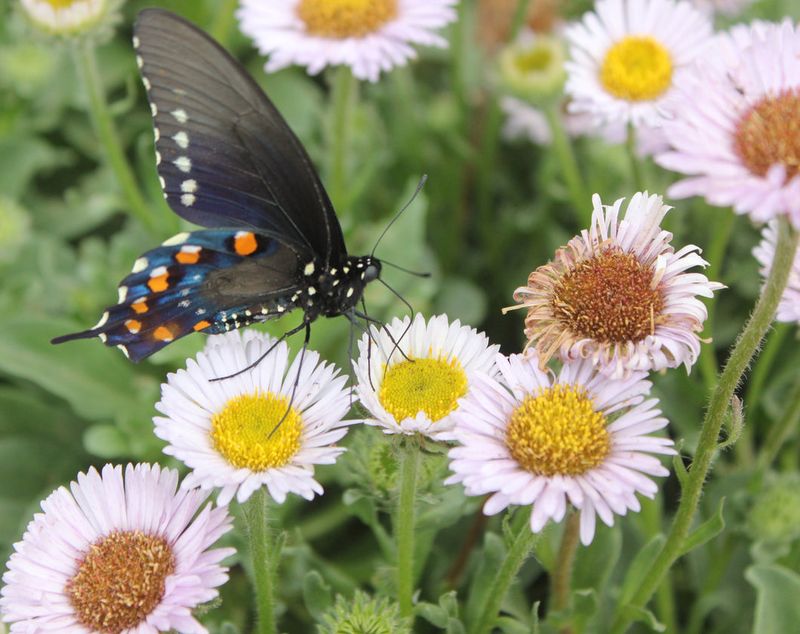
Coastal conditions challenge many plants, but seaside daisy performs well where salt spray, wind, and sandy soil limit others.
This low-growing native produces pink to purple daisy-like flowers for much of the year in mild coastal climates, offering butterflies a consistent nectar source across seasons.
Small butterflies such as blues and coppers may visit.
Seaside daisy forms a low mat about six to twelve inches tall and can spread two feet or more. The fleshy blue-green foliage remains attractive even when not in bloom, and flowers tend to appear in repeating flushes, often heaviest in spring and early summer.
Deadheading can help encourage continued flowering.
This plant tolerates salt spray, fog, and coastal wind, making it well suited to seaside gardens. Inland, it can also grow successfully but may benefit from afternoon shade in hotter areas.
Seaside daisy typically requires moderate water, more than very drought-adapted natives but less than many traditional ornamentals.
Use seaside daisy as groundcover on slopes, in rock gardens, or along pathways where its compact habit works well. It can trail over walls and edges, softening hardscape.
After heavy flowering, light trimming can encourage fresh growth. It pairs well with other low-water natives and can contribute to pollinator-friendly plantings throughout the growing season.
7. Blue-Eyed Grass (Sisyrinchium bellum)
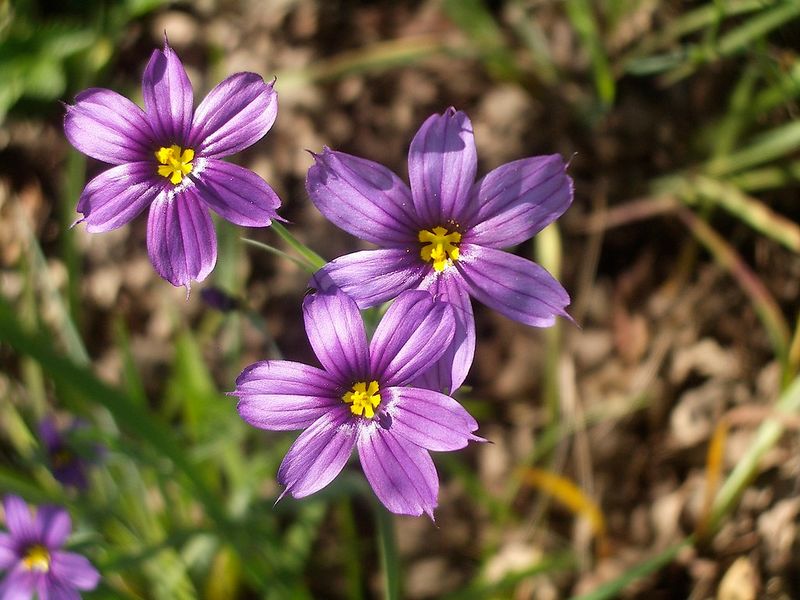
Delicate star-shaped flowers appear above grass-like foliage when blue-eyed grass blooms in spring. Despite its common name, this plant is not a true grass but is related to irises.
The blue to purple flowers with yellow centers attract small pollinators, including bees and some small butterflies, adding fine-textured interest to California gardens.
Blue-eyed grass forms compact clumps of narrow, upright leaves about eight to twelve inches tall. Flowers appear on slender stems above the foliage from early to mid-spring, creating a subtle display.
Individual blooms are short-lived, but successive flowers open over several weeks.
This native grows in full sun to partial shade and adapts to a range of soils with good drainage. It benefits from regular moisture during active growth but can tolerate drier conditions after flowering, when it may go partially dormant.
Foliage often declines in summer and may regrow with cooler, wetter conditions.
Blue-eyed grass is well suited to planting in groups where its small flowers can be appreciated up close, such as along paths, in rock gardens, or at the front of borders. It may self-seed lightly, forming small naturalized colonies over time.
8. Douglas Iris (Iris douglasiana)
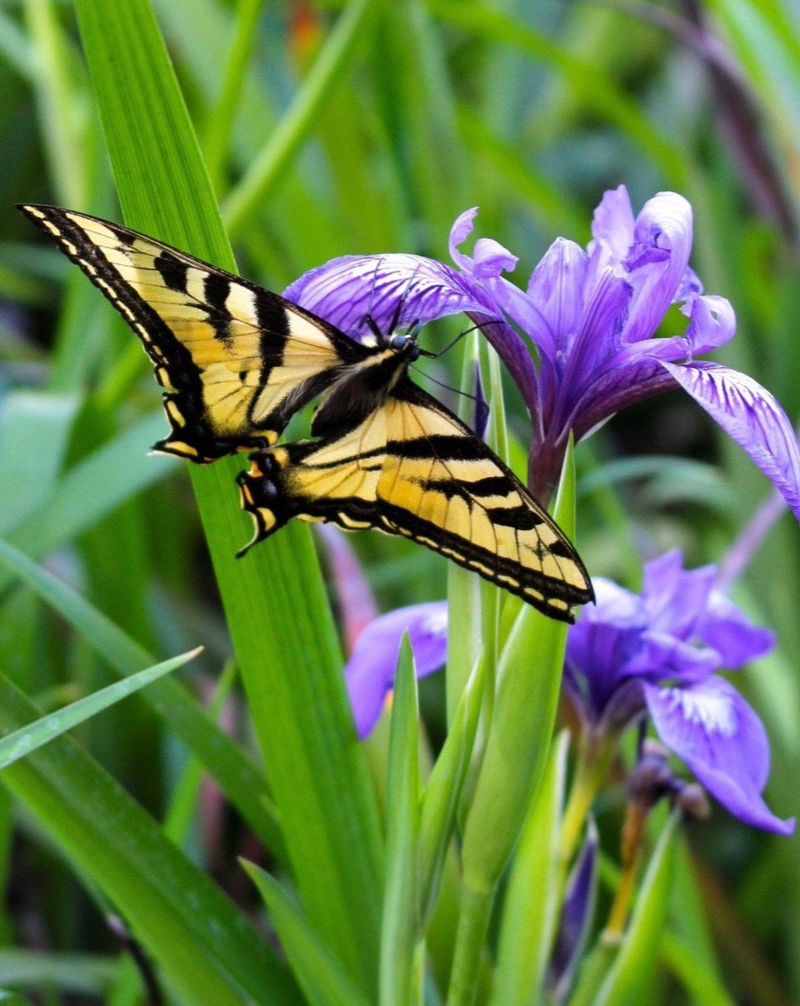
Spring arrives in California gardens when Douglas iris unfurls its blooms in shades of purple, blue, cream, and white. These native irises can provide early nectar for pollinators, including some butterflies, as activity increases in spring.
The flower structure offers landing surfaces that may be used by larger butterflies such as swallowtails.
Douglas iris forms evergreen clumps of sword-shaped leaves about one to two feet tall. Flowers typically appear on stems above the foliage in early to mid-spring, and individual blooms can last several days.
Color varies widely among plants, creating natural diversity when grown in groups.
This iris grows well in coastal gardens with part shade and regular moisture and can adapt to some inland locations with afternoon shade.
Unlike many bearded irises, Douglas iris generally does not require frequent division and may be sensitive to disturbance once established.
Rhizomes spread slowly, forming dense clumps that can help limit weeds.
Plant Douglas iris on slopes for erosion control or in lightly shaded garden areas similar to its natural habitat. It can tolerate some summer dryness but often performs best with occasional deep watering during extended heat.
The evergreen foliage provides structure year-round, adding value beyond the spring bloom period.
9. California Fuchsia (Epilobium canum)
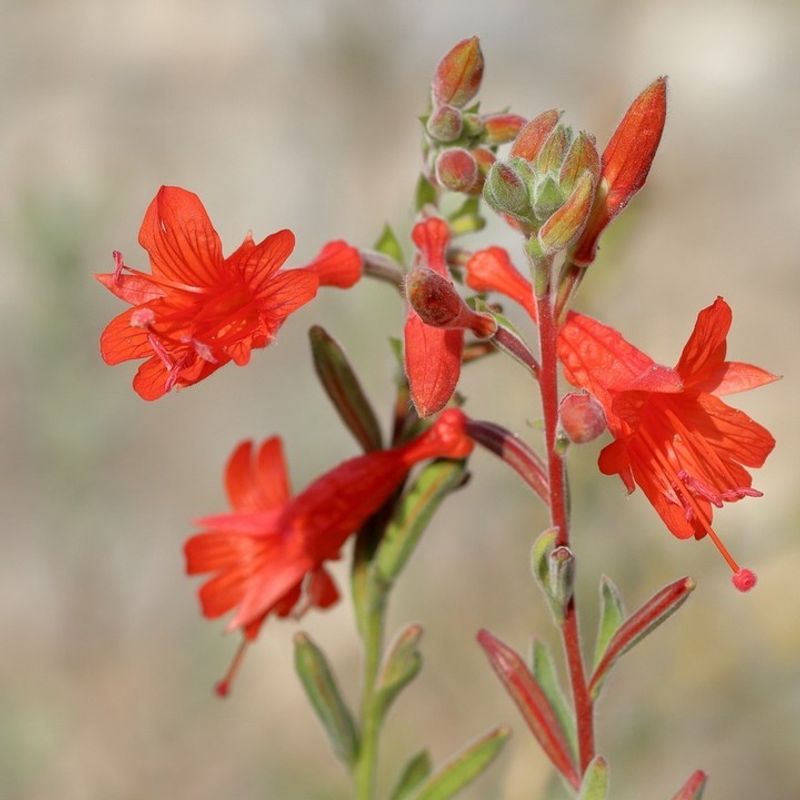
Late summer heat often coincides with California fuchsia coming into bloom, bringing bright orange-red flowers when many plants are slowing down. These tubular blooms produce nectar that attracts hummingbirds and some butterflies into fall.
The extended flowering period can provide a useful late-season food source for pollinators.
California fuchsia grows as a low subshrub about one to three feet tall depending on the variety. The gray-green foliage remains present through summer, followed by flowering typically from late summer into fall.
The bright blooms add noticeable color during a time when many gardens are less showy.
This native grows best in full sun and well-drained soil and often flowers more heavily under relatively dry, lean conditions. Rich soil and frequent watering may encourage more foliage at the expense of blooms.
Once established, it usually requires little to no summer irrigation in many regions.
The plant spreads by underground runners, which can be useful for naturalizing but may require management in smaller spaces. Compact selections are available for tighter areas.
Cut plants back significantly in late fall or winter after flowering to encourage fuller growth the following season. California fuchsia provides strong late-season color and nectar for pollinators into autumn.