The 7 Caterpillars That Nibble Oregon Vegetables Early In Spring
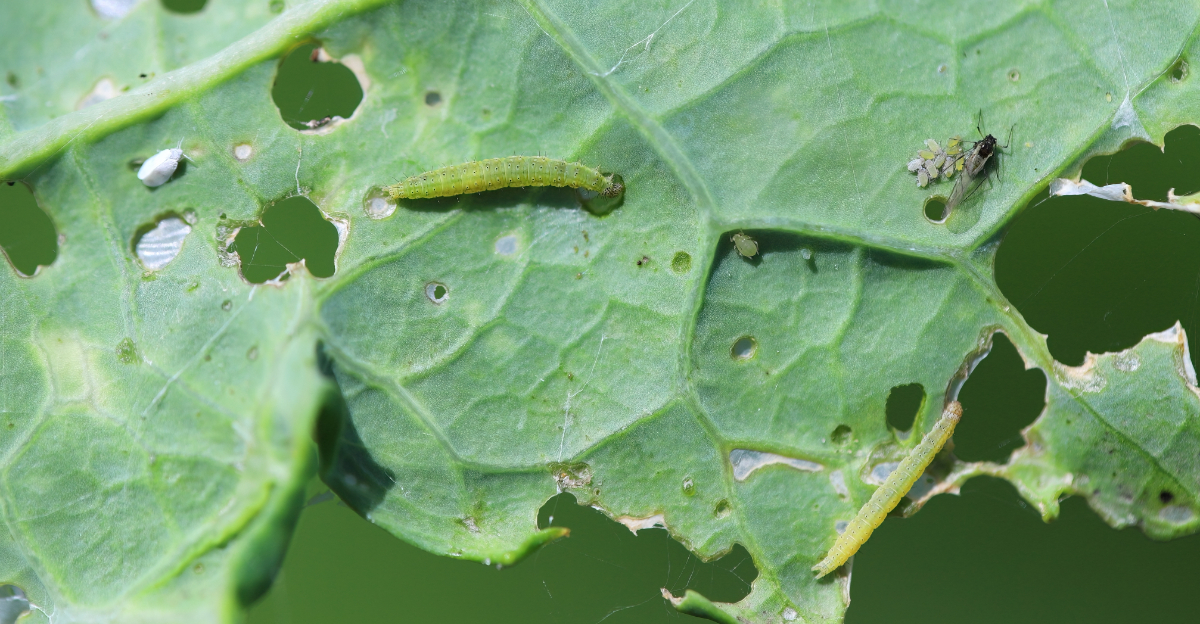
As spring arrives in Oregon, your garden isn’t the only thing waking up. A few caterpillars also make an appearance, eager to feast on tender vegetable leaves.
These little munchers are quick to find their way into your plants, and before you know it, your young crops are being stripped of their precious foliage.
Some caterpillars are especially fond of leafy greens, herbs, and even other vegetables that start to sprout early in the season.
While they’re a natural part of the ecosystem, they can quickly become a problem for gardeners trying to grow healthy crops.
Knowing which caterpillars are likely to show up gives you a better chance of protecting your plants early. Keep an eye out for these common garden pests, and you can stop them before they cause too much damage.
1. Cabbage Worm (Imported Cabbageworm)
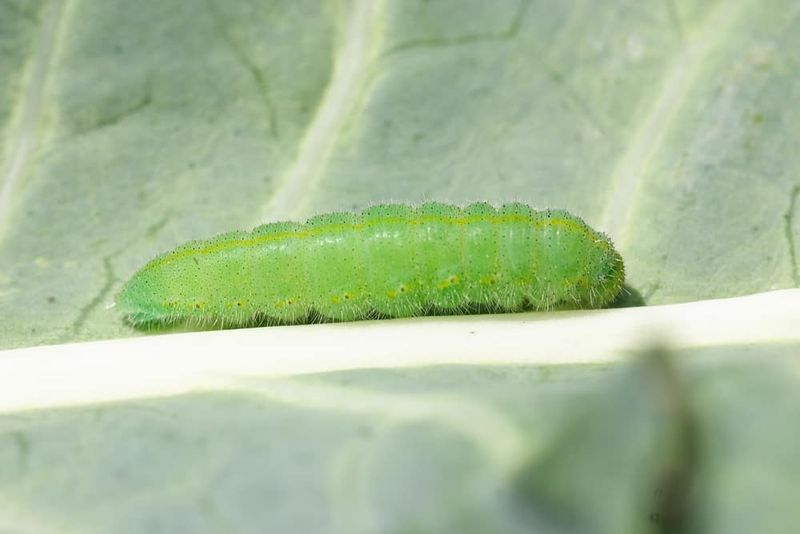
You might spot a pretty white butterfly fluttering around your Oregon garden and think nothing of it. But that little butterfly is actually laying eggs on your brassica plants.
Those eggs hatch into the imported cabbageworm, one of the most common spring vegetable pests in Oregon.
This caterpillar is bright green with a faint yellow stripe running down its back. It blends in so well with cabbage and broccoli leaves that it can be hard to notice at first.
By the time you see the ragged holes in your leaves, a whole colony may already be munching away.
Cabbage worms love brassicas like kale, cauliflower, Brussels sprouts, and collards. They chew large, irregular holes in the outer leaves and can work their way into the center of a head of cabbage.
Oregon gardeners should check the undersides of leaves often for tiny yellow eggs. Removing eggs by hand is a great first step.
Covering plants with floating row covers can stop adult butterflies from laying eggs in the first place. Bacillus thuringiensis, commonly called Bt, is a natural spray that works well against these caterpillars without harming beneficial insects.
2. Cabbage Looper
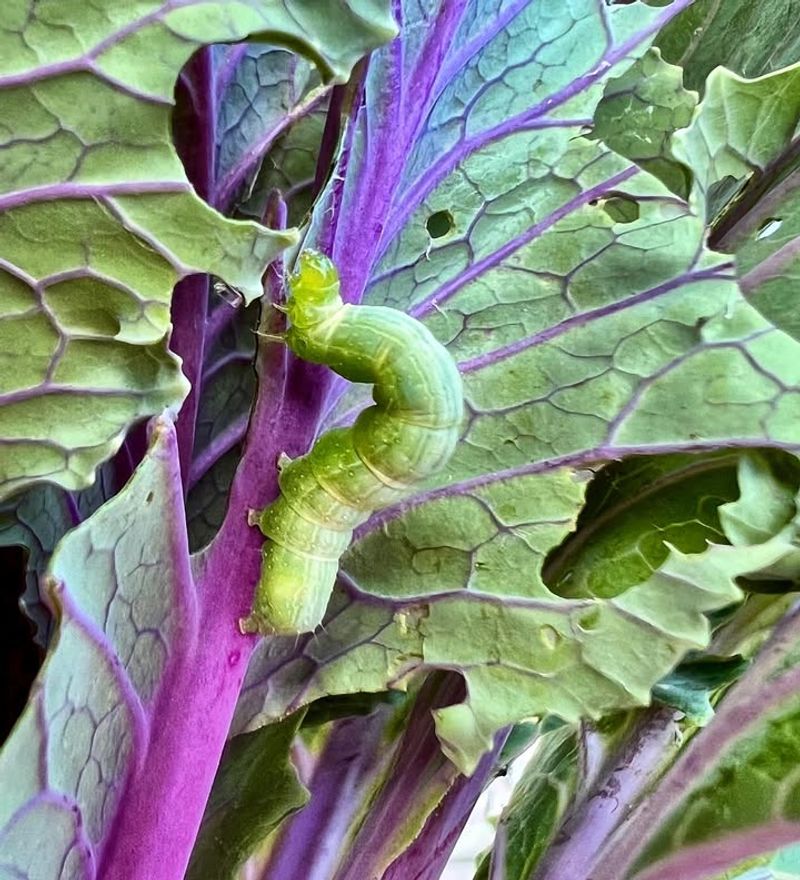
Watch closely and you might notice a caterpillar that moves in a funny way, curling its body into a loop with each step. That looping motion is the telltale sign of the cabbage looper, a very common spring pest in Oregon vegetable gardens.
It may look amusing, but the damage it causes is no joke.
Cabbage loopers are pale green and grow up to about one and a half inches long. They prefer brassica crops like broccoli, cabbage, and kale, though they will also snack on spinach, lettuce, and even tomatoes.
Oregon gardeners often find them feeding on both the upper and lower surfaces of leaves.
Unlike the cabbage worm, the cabbage looper hatches from eggs laid by a brownish moth, not a white butterfly. The moth is most active at night, making it tricky to spot.
Young caterpillars do the most damage because they feed constantly as they grow. Bt spray is very effective and safe for people, pets, and pollinators.
Checking plants two or three times a week during early spring in Oregon gives you the best chance of catching an infestation before it gets out of hand. Row covers also help keep moths from reaching your plants.
3. Cutworms
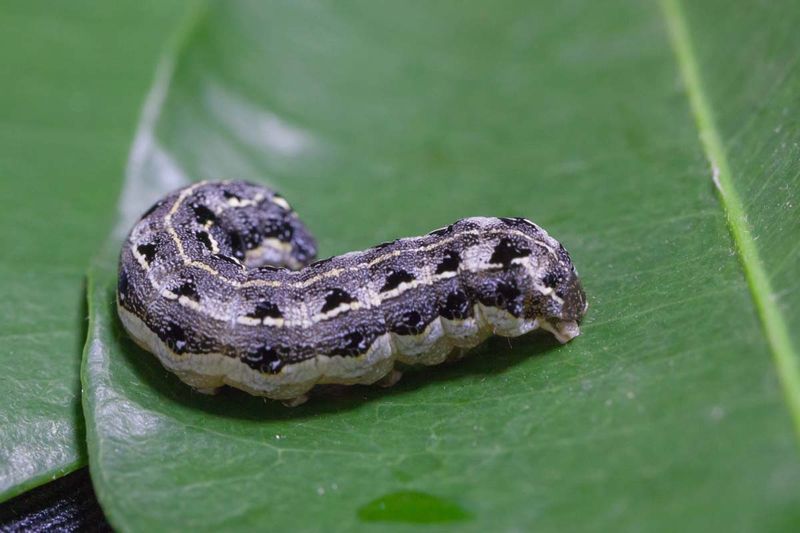
Imagine planting a row of healthy seedlings one evening, then walking out the next morning to find them lying flat on the ground, cut clean at the soil line. That is the frustrating signature of cutworms, one of Oregon’s most sneaky early spring garden pests.
They do their damage at night and hide underground during the day.
Cutworms are the larvae of several different moth species. They are usually gray, brown, or nearly black and curl into a tight C shape when disturbed.
Most species spend their days just beneath the soil surface, making them very hard to spot without digging around your plants. In Oregon, they become active as soon as soil temperatures start warming up in early spring.
Young transplants and newly sprouted seedlings are most at risk. Cutworms can target tomatoes, peppers, corn, lettuce, and many other vegetables.
A simple and effective trick is to place a cardboard or plastic collar around each seedling, pushing it about an inch into the soil. This creates a physical barrier the cutworm cannot easily cross.
Tilling the soil before planting can also expose hidden larvae to birds. Applying beneficial nematodes to your Oregon garden soil is another natural and effective approach worth trying.
4. Armyworms
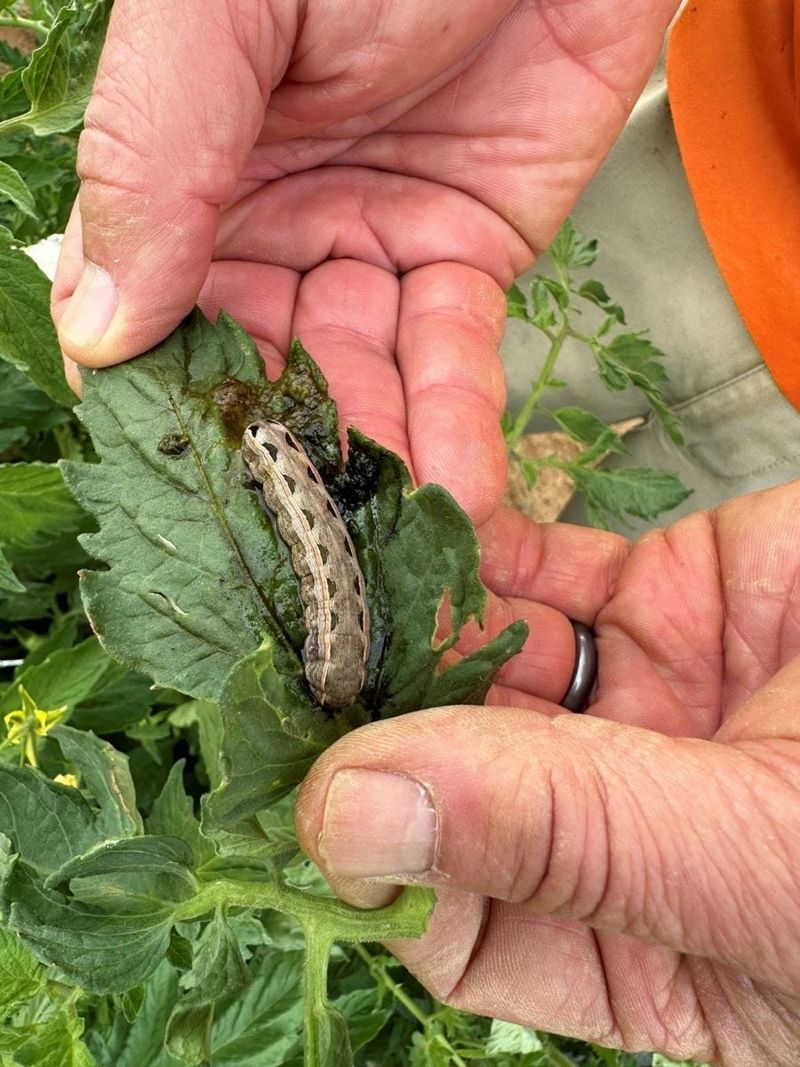
There is a reason these caterpillars are called armyworms. They move in groups, sometimes by the hundreds, marching through a garden and stripping plants bare in just a few days.
Oregon gardeners who have faced an armyworm outbreak know just how fast things can go wrong in early spring.
Armyworm caterpillars are usually greenish to brownish with pale stripes running along their sides and back. They grow up to about one and a half inches long.
Several species can show up in Oregon gardens, with the true armyworm and the Bertha armyworm being among the most common. They feed on corn, lettuce, beans, beets, and even grass.
Adult moths lay eggs in grassy areas near gardens, and the newly hatched caterpillars migrate toward vegetable beds as they grow. Early spring in Oregon is a prime time to watch for them, especially after mild winters that allowed moth populations to survive and thrive.
Check the undersides of leaves and along the soil surface for clusters of caterpillars. Bt spray works well on young armyworms.
For large outbreaks, spinosad, a naturally derived insecticide, is another solid option. Keeping the area around your garden free of tall weeds and grass can reduce egg-laying spots significantly.
5. Diamondback Moth Larvae
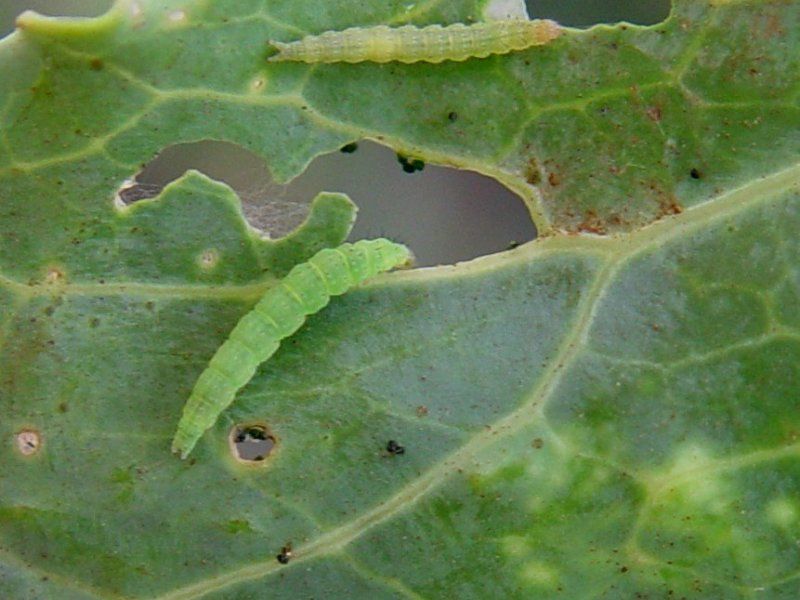
Small but mighty in the worst possible way, the diamondback moth larva is one of the trickiest pests Oregon brassica growers face each spring.
These tiny caterpillars are only about a third of an inch long when fully grown, yet they can cause serious harm to kale, cabbage, broccoli, and mustard greens.
What makes them especially tricky is where they feed. Diamondback moth larvae prefer the undersides of leaves, scraping away the inner tissue and leaving the top layer intact.
This creates thin, papery patches that look like little windows, which is why gardeners often call it windowpane damage. Oregon State University researchers have noted that this species is a consistent early-season threat across the Willamette Valley and beyond.
The diamondback moth is also known for developing resistance to many common insecticides, which makes control a bit more challenging. Rotating between different types of organic sprays, like Bt and spinosad, helps slow down resistance.
Planting trap crops like mustard greens around the edges of your garden can lure larvae away from your main vegetables.
Inspect your Oregon brassica plants carefully in early spring, paying special attention to leaf undersides where eggs and larvae tend to cluster.
Early action makes a real difference with this persistent pest.
6. Variegated Cutworm
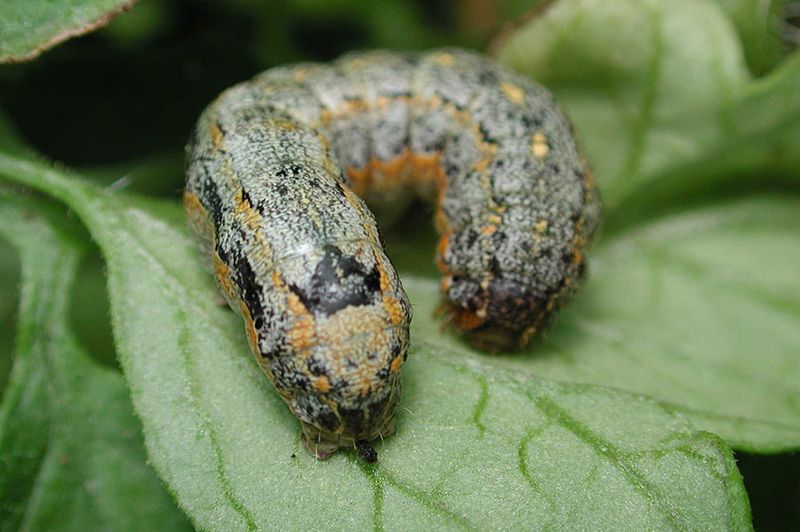
Unlike most cutworms that stick close to the soil, the variegated cutworm has a habit that sets it apart from the rest of the group. It actually climbs up plants and feeds on leaves, fruit, and stems, not just the base.
This climbing behavior makes it a threat to a much wider range of vegetables in Oregon gardens.
The variegated cutworm is mottled gray and brown with a row of pale yellow or orange dots running down its back. It can reach about two inches in length and is most active at night.
During the day it hides under plant debris, clods of soil, or in shallow tunnels in the ground. Oregon gardeners growing tomatoes, peppers, and even strawberries should keep a close eye out for this species each spring.
Damage from variegated cutworms can look similar to slug damage, so it is worth checking plants after dark with a flashlight to confirm what is actually doing the feeding. Hand-picking caterpillars at night is surprisingly effective for small gardens.
Sticky traps placed around the base of plants can help catch climbing larvae before they reach your vegetables. Bt spray and beneficial nematodes applied to the soil are both proven organic options for managing this persistent Oregon garden pest.
7. Garden Webworm
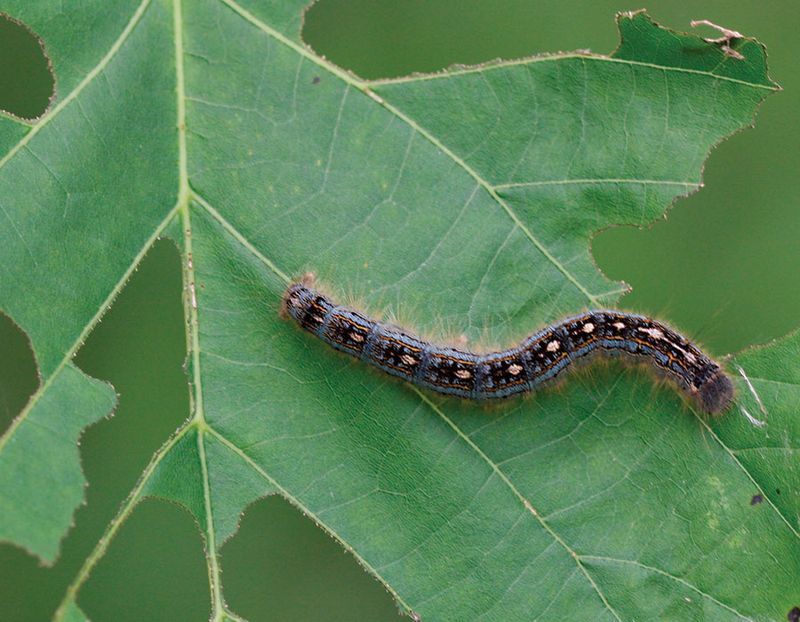
Pull back a cluster of leaves on your bean or beet plants in early spring and you might find a messy tangle of silky webbing with a small caterpillar hiding inside.
That is the garden webworm at work, a sneaky little pest that uses its web like a personal fortress in Oregon vegetable gardens.
Garden webworms are yellowish-green to greenish-brown with a dark stripe down the back and small dark spots along the sides. They grow to about three quarters of an inch long.
The silky webs they spin protect them from predators and from spray treatments, which makes them a bit harder to manage once they have settled in. They feed on beans, beets, corn, peas, and many other common garden vegetables.
The key to managing garden webworms in Oregon is catching them early, before those protective webs get established. Check your plants regularly starting in early spring and look for the first signs of leaf webbing or small holes in leaves.
When populations are low, simply removing infested leaves and dropping them into a bucket of soapy water works well. For larger infestations, Bt spray applied directly to the webbed areas is effective.
Disrupting the web with a stick before spraying helps the solution reach the caterpillar inside. Good garden cleanup in fall also reduces overwintering moth populations for the following spring.