The 8 Colorful Container Plants That Don’t Struggle In Arizona Heat
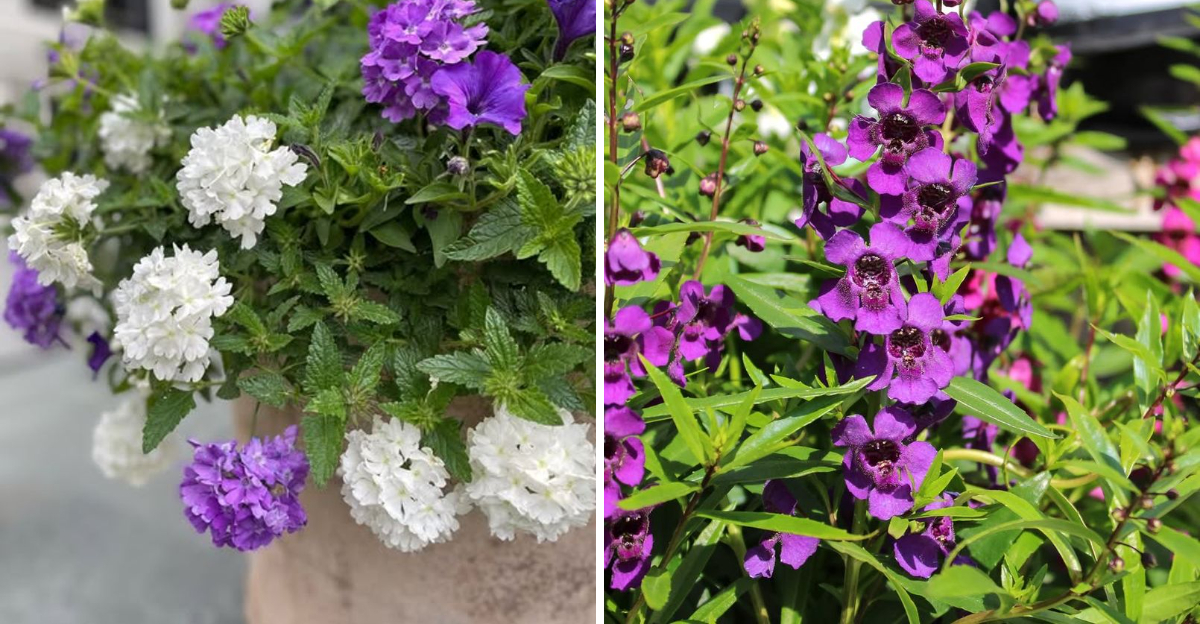
A burst of color in a container can make any Arizona patio, porch, or sunny corner feel more alive. The challenge, of course, is the heat.
Once temperatures climb, many plants that looked great earlier in the season quickly lose their energy. Leaves fade, flowers disappear, and containers start looking tired far sooner than expected.
But some plants are built for exactly these conditions. They handle strong sun, warm nights, and dry air without losing their color or shape.
When the right varieties go into a container, they keep blooming and growing even during the hottest parts of the season.
That is why plant choice matters so much in desert gardening. Instead of constantly replacing struggling flowers, it helps to start with plants that naturally tolerate the climate.
These colorful container plants are known for holding up well when Arizona heat really begins to settle in.
1. Bougainvillea Bursts With Color Even Under Scorching Sun
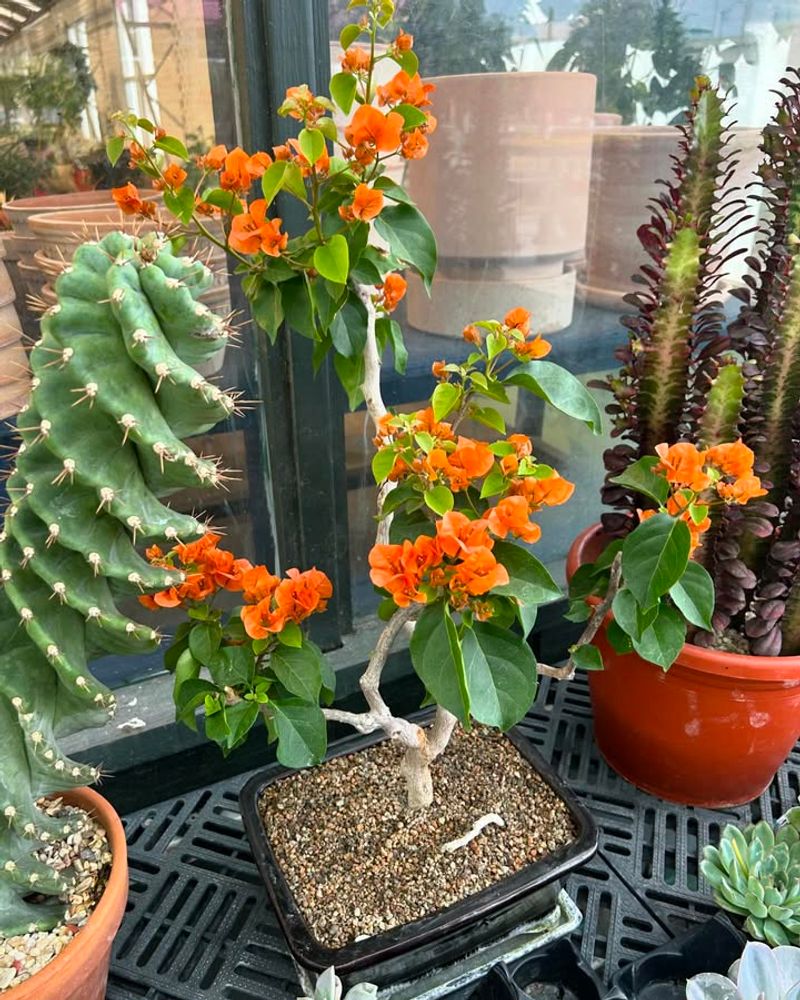
Few plants put on a show quite like bougainvillea does in the middle of an Arizona summer. While most flowering plants are struggling to stay upright in triple-digit heat, bougainvillea looks like it’s actually enjoying itself.
The bracts, which most people mistake for petals, come in blazing shades of magenta, coral, red, orange, and even white.
In a container, bougainvillea stays more compact than it does in the ground, which actually works in your favor. You can shape it, move it around the patio, and keep it looking tidy without too much effort.
Just make sure the pot drains really well, because soggy roots are the one thing that will knock this plant back hard.
Water it deeply but let the soil dry out completely before watering again. In Phoenix or Tucson, that might mean watering every two to three days during peak summer.
It blooms most aggressively when it’s slightly root-bound and a little stressed, so resist the urge to repot it too often. Full sun is non-negotiable here, and the more direct light it gets, the more color you’ll see.
A south or west-facing spot is perfect for Arizona conditions.
Once established, bougainvillea is remarkably drought tolerant and handles Arizona’s dry air with ease. A light feeding with a balanced fertilizer during the growing season can help support continuous waves of colorful bracts.
2. Lantana Attracts Pollinators While Withstanding Heat With Ease
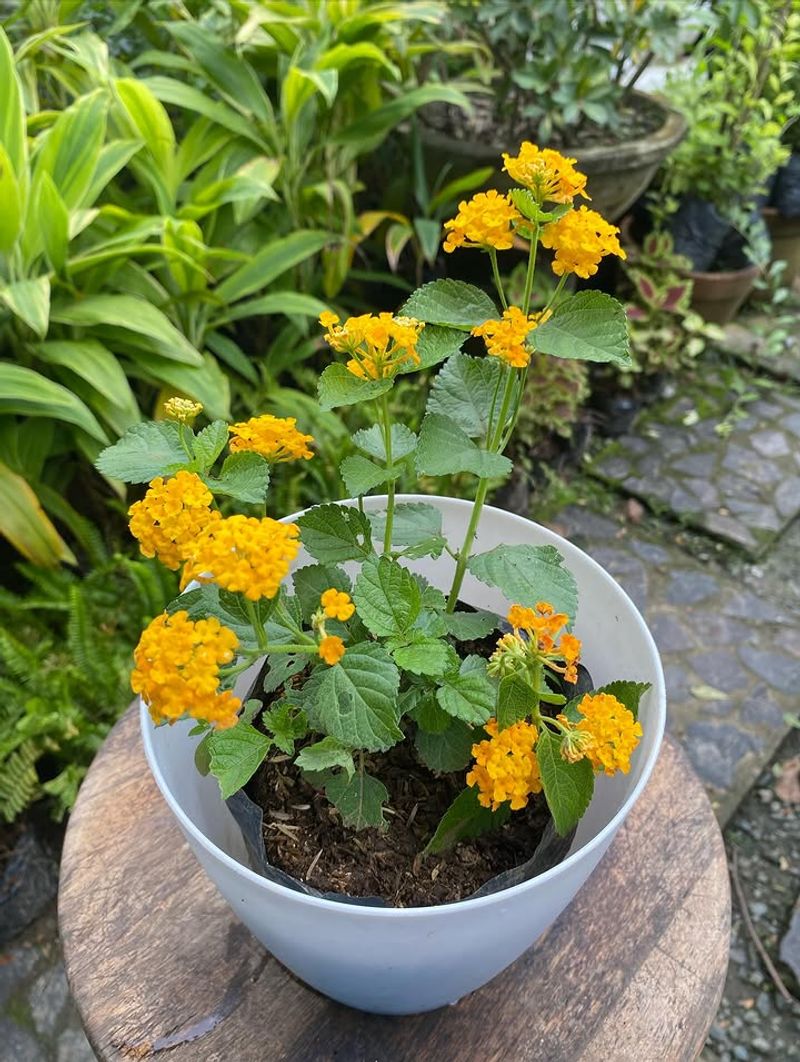
Walk past a blooming lantana on a hot Arizona afternoon and you’ll almost always find a butterfly or two hovering around it. That’s not a coincidence.
Lantana is one of those plants that manages to look beautiful and serve a real purpose at the same time, drawing in pollinators even when the temperature is pushing 110 degrees.
What makes lantana genuinely impressive is how the flower clusters change color as they age. A single cluster can show yellow, orange, and deep red all at once, which gives the plant a constantly shifting, layered look.
For containers in Arizona, the trailing varieties tend to do especially well because they fill out a pot quickly and spill over the edges in a way that looks intentional.
Plant it in a container that holds at least five gallons so the roots have room to spread. Good drainage is critical, and a well-draining cactus or desert mix works better than standard potting soil here.
Cut it back by about a third in late summer if it starts looking woody, and it’ll push out fresh growth and blooms fast.
Lantana handles both the dry heat of Phoenix and the slightly more humid monsoon season without skipping a beat, which is more than most plants can say.
3. Angelonia Blooms Relentlessly When Temperatures Soar
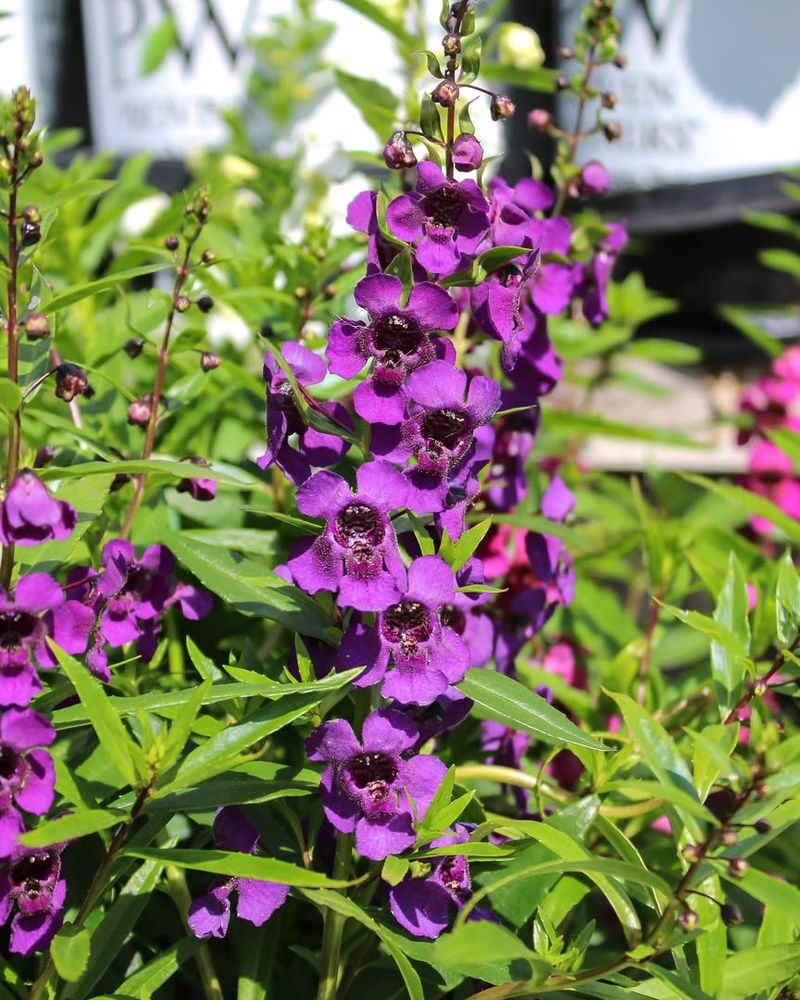
Angelonia gets called the summer snapdragon sometimes, and honestly, that nickname fits.
It blooms on tall, slender spikes covered in small flowers that come in purple, pink, white, and bicolor combinations, and it does all of this without flinching in Arizona’s brutal summer heat.
Unlike some heat-tolerant plants that slow down or go dormant when temperatures peak, angelonia actually ramps up during the hottest months. It’s one of those rare plants that looks better in July than it does in May, which is exactly what Arizona gardeners need.
The flowers have a faint, sweet scent that’s pleasant without being overpowering, and they don’t require deadheading to keep blooming, which saves real time.
In a container, angelonia works well on its own or as a vertical element in a mixed pot. Pair it with a low-spreading plant like portulaca or vinca to fill out the container at different heights.
It prefers full sun and a consistent watering schedule, though it handles short dry spells without much drama. Fertilize every two to three weeks with a balanced liquid fertilizer during the growing season to keep the blooms coming.
For Tucson or Scottsdale gardens that need reliable color from spring all the way through fall, angelonia rarely disappoints.
Its upright growth also makes it a good choice for adding height and structure to patio containers. Once established, it handles Arizona’s dry air and intense sunlight far better than many other summer annuals.
4. Vinca Keeps Its Vibrant Flowers Despite Dry, Hot Conditions
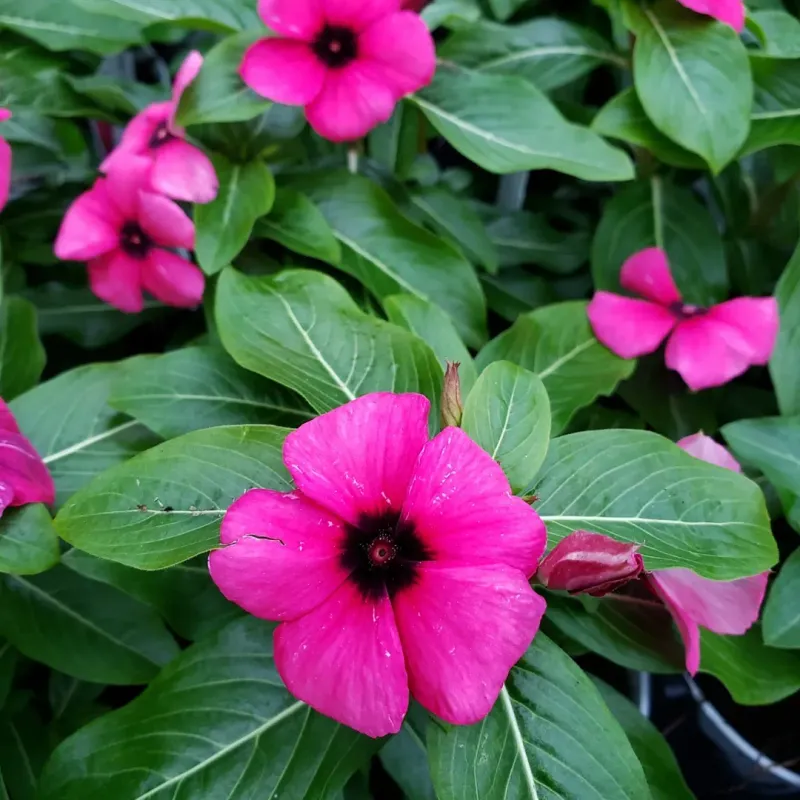
Vinca has a reputation for being tough, and in Arizona, that reputation is fully earned. You can push this plant pretty hard, forget to water it for a couple of days during a heat wave, and come back to find it still blooming like nothing happened.
That kind of resilience is rare and genuinely valuable when you’re dealing with Arizona summers.
The flowers are flat and round with a clean, simple look that comes in shades of pink, red, white, lavender, and bicolor. Newer varieties have been bred specifically for heat and humidity tolerance, so look for those when you’re shopping at a local Arizona nursery.
Catharanthus roseus is the botanical name, and it’s worth knowing because it’s different from the trailing vinca vine, which is a separate plant entirely.
In containers, vinca stays relatively compact and upright, usually reaching about twelve to eighteen inches tall. It does best with consistent moisture but can handle short dry periods far better than most flowering annuals.
Avoid overhead watering if possible since wet foliage in humid monsoon conditions can lead to fungal issues.
Plant it in a spot that gets at least six hours of direct sun daily, and feed it with a phosphorus-rich fertilizer every few weeks to encourage continuous blooming throughout the long Arizona growing season.
5. Portulaca Thrives And Spreads Color Across Any Container
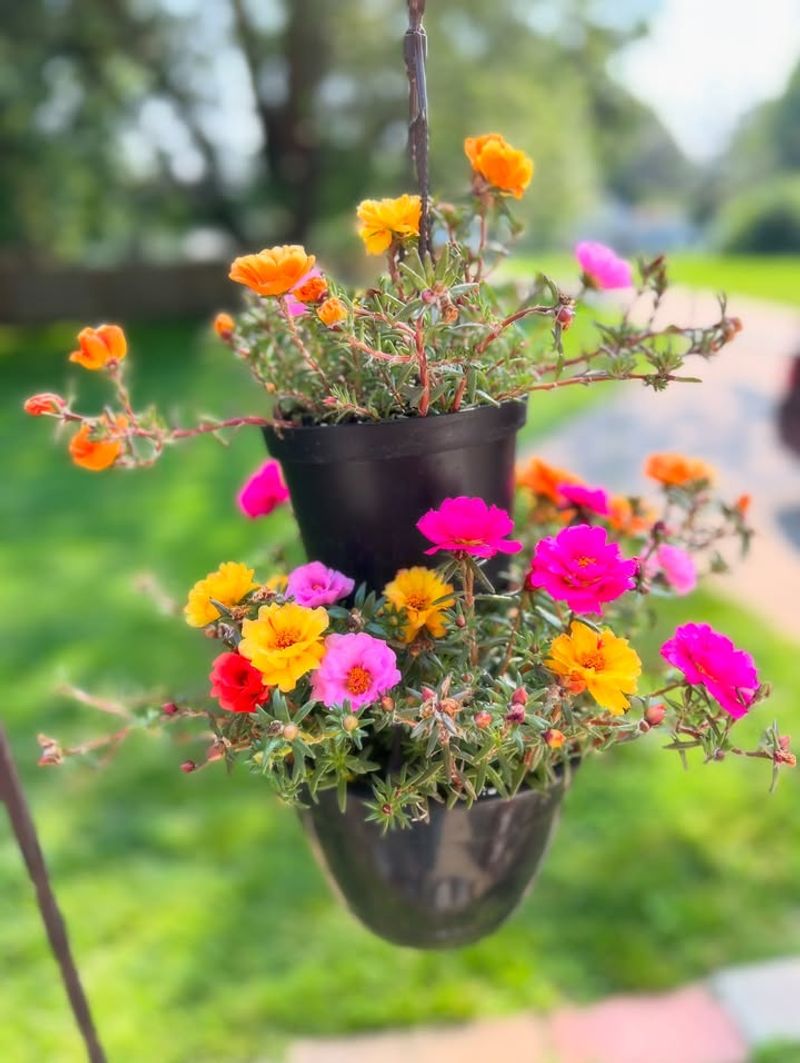
Portulaca is the kind of plant that almost seems to laugh at heat. Give it the worst combination of blazing Arizona sun, dry air, and minimal water, and it responds by spreading wider and pushing out more flowers.
It’s genuinely one of the most satisfying plants you can grow in a container here.
Also called moss rose, portulaca has small, succulent-like leaves that store water, which explains how it handles drought so well. The flowers are silky and jewel-bright, coming in shades of hot pink, yellow, orange, red, and white, often with a cheerful ruffled look.
They open fully in direct sunlight and close at night or on cloudy days, which is just one of those quirky things that makes the plant interesting to observe.
Shallow containers actually work fine for portulaca since the roots don’t go deep. A wide, low pot lets it spread out and show off.
Sandy or gritty soil that drains fast is ideal, and this is one plant where you should resist the urge to fertilize heavily since too much nitrogen pushes leafy growth at the expense of flowers. Water it lightly once the top inch of soil dries out.
For balconies, patios, or front entries in Scottsdale or Mesa that get full afternoon sun, portulaca is one of the most reliable choices available.
6. Gazania Stays Bright And Cheerful In Full Sun
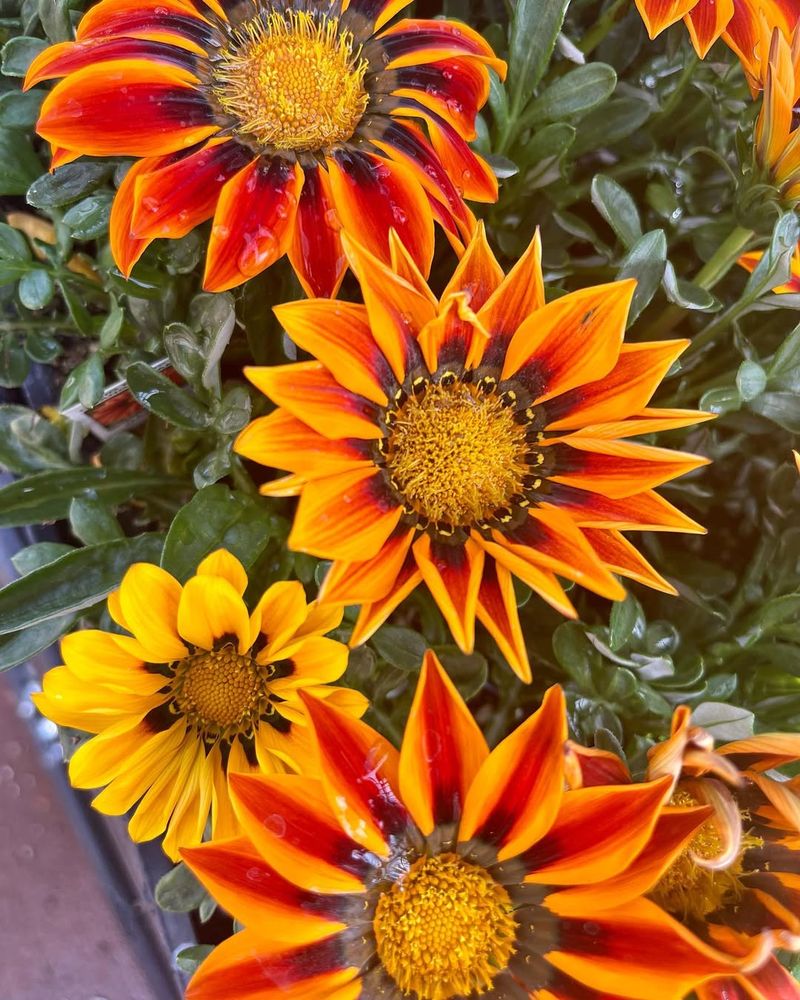
Gazania looks like someone cranked the color saturation up to maximum. Bold orange, golden yellow, hot pink, and deep red petals radiate outward from a dark center, and the whole flower catches light in a way that makes it almost glow in direct Arizona sun.
It’s a head-turner in any container arrangement.
Originally from South Africa, gazania evolved in dry, sunny conditions that aren’t all that different from what you’d find in the Sonoran Desert. That background means it handles Arizona heat with a level of ease that other flowering annuals can’t quite match.
It blooms most heavily in spring and fall, but good heat-tolerant varieties will keep pushing flowers through summer as long as they’re not sitting in soggy soil.
For containers, use a well-draining mix and a pot that’s at least eight inches deep. Gazania has a taproot that appreciates a little depth, and cramming it into a shallow pot will limit how well it performs.
Water moderately and let the soil dry slightly between sessions. Deadhead spent blooms regularly to keep new flowers coming rather than letting the plant put energy into seed production.
If your container is in a south-facing spot in Tempe or Chandler where the sun is relentless, gazania will feel right at home and keep delivering color long after other plants have given up.
7. Trailing Verbena Cascades Beautifully Without Wilting
There’s something satisfying about a plant that knows exactly what it wants to do and does it without any fuss.
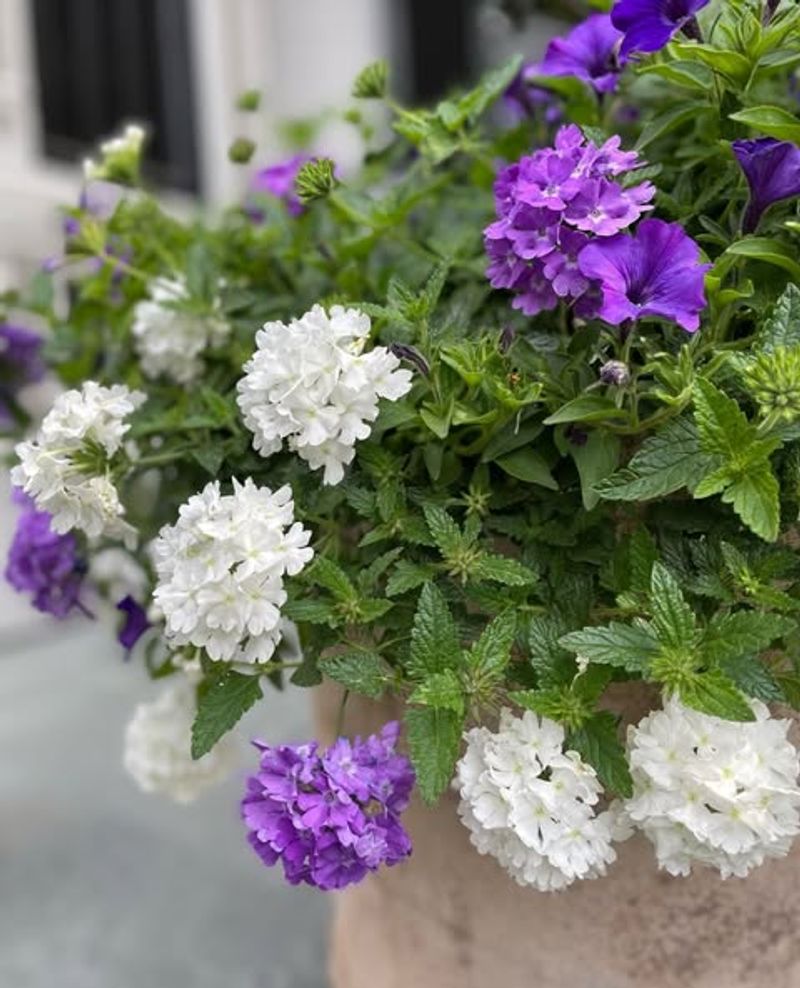
Trailing verbena wants to cascade, and in Arizona, it does exactly that, spilling over the edges of containers and hanging baskets in long, flower-covered streams of purple, pink, red, and white.
Heat doesn’t slow it down the way it does with many trailing annuals. Verbena was bred to handle tough conditions, and newer varieties like Superbena and Tapien are especially well-suited to desert climates.
The flowers cluster into small, rounded heads and bloom almost nonstop from spring through late fall in Arizona’s extended growing season. Hummingbirds are particularly fond of it, which is a nice bonus for any patio setup.
Good air circulation helps verbena stay healthy, so avoid cramming it into a tight spot with no airflow, especially during monsoon season when humidity spikes. Let the soil dry out a bit between waterings rather than keeping it consistently moist.
Fertilize every two weeks with a balanced liquid fertilizer to keep the bloom cycle strong. In a mixed container, trailing verbena pairs well with upright plants like angelonia or salvia, creating a layered look that fills out a pot beautifully.
For Flagstaff gardens at higher elevation or for Phoenix patios at sea level, trailing verbena adapts well across Arizona’s varied growing zones.
A quick light trim now and then keeps the plant compact and encourages even more blooms.
8. Firecracker Plant Brings Bold Color And Handles Heat Like A Pro
Hummingbirds in Arizona practically have the firecracker plant memorized.
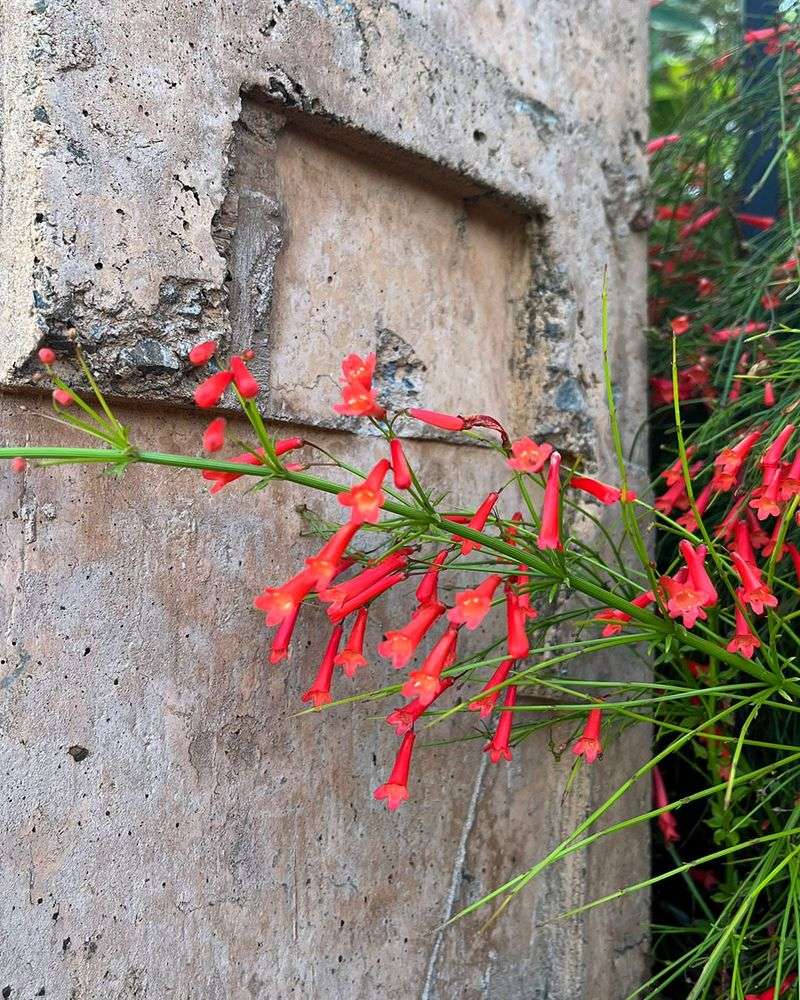
Those long, narrow tubular flowers in bright red-orange are exactly what hummingbirds are searching for, and a blooming firecracker plant in a container will bring them to your patio on a regular basis.
That alone makes it worth growing.
Russelia equisetiformis, its botanical name, has a loose, airy structure with thin, rush-like stems that arch outward and droop slightly under the weight of the flowers. It looks almost like a firework frozen mid-burst, which is where the common name comes from.
In Arizona, it blooms heavily in spring and fall, and during summer it keeps producing flowers even when temperatures are well above 100 degrees.
Container size matters more with this plant than with some others on this list. A large pot, at least twelve to fifteen gallons, gives the root system room to support all that top growth.
Use a well-draining mix and water consistently but never let the container sit in standing water. Full sun brings out the best flowering, and afternoon sun in Arizona is no problem for this plant at all.
For gardeners in Tucson, Phoenix, or anywhere else in the Sonoran Desert looking for a bold, hummingbird-friendly container plant, firecracker plant is worth every inch of patio space it takes up.
Once it settles in, it quickly becomes one of the most reliable bloomers in a sunny container.