The Desert Flowers That Only Bloom After Heavy California Rain
California’s deserts can look quiet and dusty for months, like they are holding their breath. Then a powerful rainstorm rolls through, soaking the sand and waking up something magical beneath the surface.
Almost overnight, the landscape transforms into a living painting splashed with neon orange, electric purple, and sunshine yellow.
These rare bloom events feel like nature’s pop up party, drawing hikers, photographers, and wildflower chasers out into the wide open spaces.
Seeds that have waited patiently for years finally seize their moment, bursting into color across valleys and hillsides. It is dramatic, fleeting, and completely unforgettable.
Miss the timing and you miss the show. Catch it just right and you will swear the desert has a secret it only shares with the lucky few.
1. Desert Gold Poppy (Eschscholzia glyptosperma)
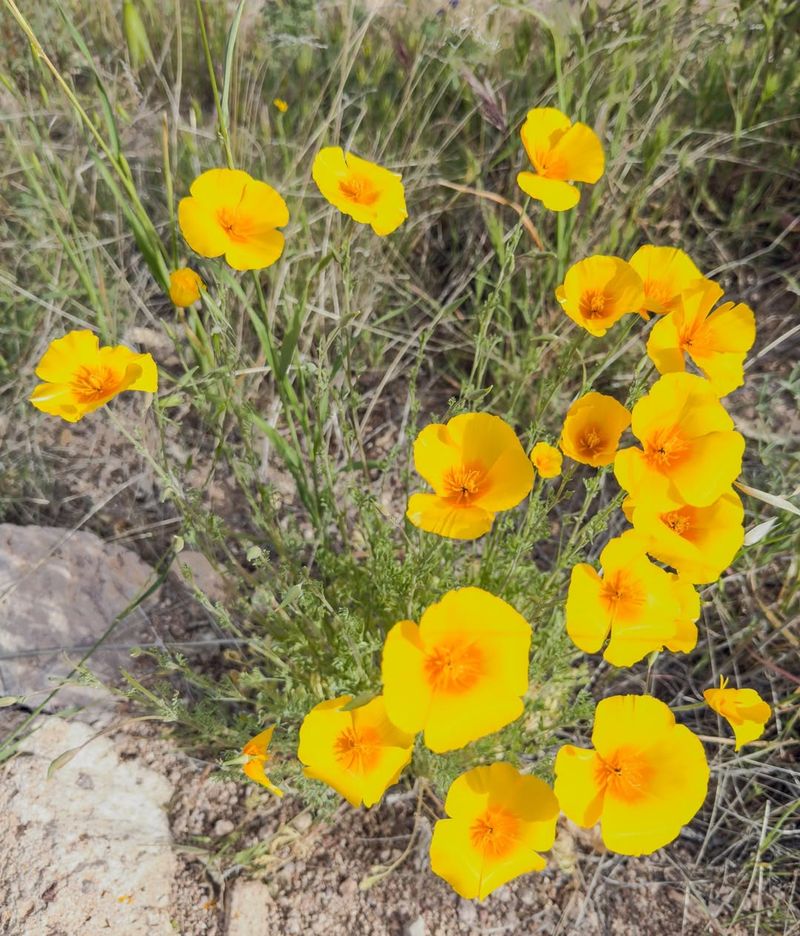
When the California desert floor turns gold after a wet winter, you are almost certainly looking at Desert Gold Poppy. This flower is one of the most iconic signs of a super bloom in places like Anza-Borrego and the Mojave Desert.
It spreads across the sandy ground like a bright yellow carpet, making it impossible to miss.
Unlike its cousin the California poppy, this species is specially built for desert life. Its petals are a deeper, richer shade of gold, and the plant stays low to the ground to conserve moisture.
It only opens its petals when the sun is shining, closing them at night and on cloudy days.
Seeds from this poppy can stay dormant in the soil for decades, patiently waiting for the right conditions. When heavy rain finally comes, they spring to life almost overnight.
Hikers exploring the desert trails often describe the experience as walking through a painting. If you visit during a super bloom year, bring sunglasses because the color is that bright and that bold out there.
2. Sand Verbena (Abronia villosa)
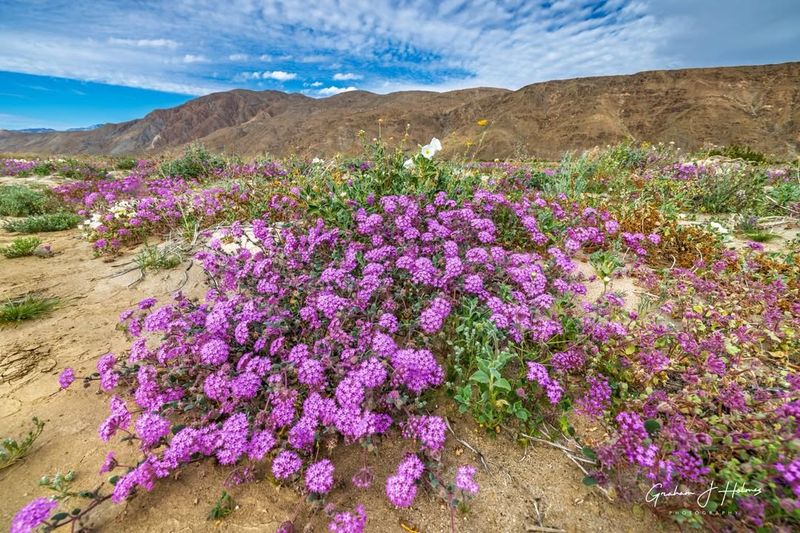
Few desert flowers are as cheerful and fragrant as Sand Verbena. Rolling across the sandy desert floor in soft pink and purple clusters, this flower looks like something out of a dream.
It is one of the first plants to pop up after heavy rain hits the low deserts of Southern California, including areas around the Salton Sea and Anza-Borrego Desert State Park.
The sweet, honey-like scent of Sand Verbena is strong enough to catch your attention from several feet away. Pollinators like hawk moths are huge fans of this plant, visiting the blooms at dusk when the fragrance is most powerful.
The plant itself spreads outward in long, sprawling stems covered in sticky, slightly fuzzy leaves.
Sand Verbena is a real team player in the desert ecosystem. Its low-growing habit helps hold loose sand in place, reducing erosion after rainstorms.
It often blooms alongside Desert Gold Poppy, creating stunning two-toned patches of color across the landscape. Photographers travel from all over the country to capture these scenes in California every super bloom season.
Spotting it in person is a genuine treat.
3. Desert Lily (Hesperocallis undulata)
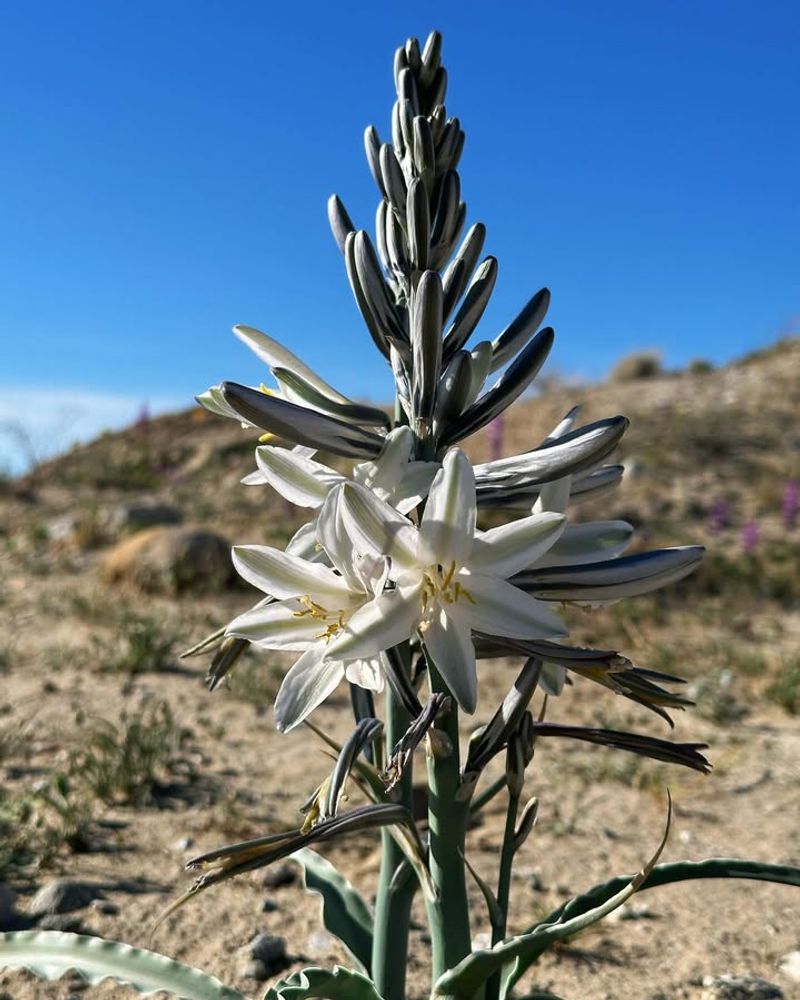
Standing tall and elegant among the low-growing desert wildflowers, Desert Lily is in a class of its own. This striking plant can grow up to six feet tall, with large white trumpet-shaped flowers that carry a sweet fragrance similar to Easter lilies.
It blooms in sandy flats and washes across the Colorado Desert and parts of the Mojave Desert in California.
What makes this flower truly remarkable is its underground bulb. The bulb can sit buried in dry desert soil for many years, waiting for enough rain to trigger growth.
Once heavy winter rains arrive, the plant shoots up quickly and produces flowers that seem almost too fancy for such a harsh environment.
Native tribes in California historically used the bulb of the Desert Lily as a food source. The bulbs were roasted or eaten raw, providing important nutrition in a landscape where food could be scarce.
Today, this plant is protected in many areas, so admiring it from a distance is the way to go. If you spot one rising above the sandy floor on a spring hike, take a moment to appreciate how long it may have been quietly waiting underground for its big debut.
4. Brown-Eyed Primrose (Chylismia claviformis)
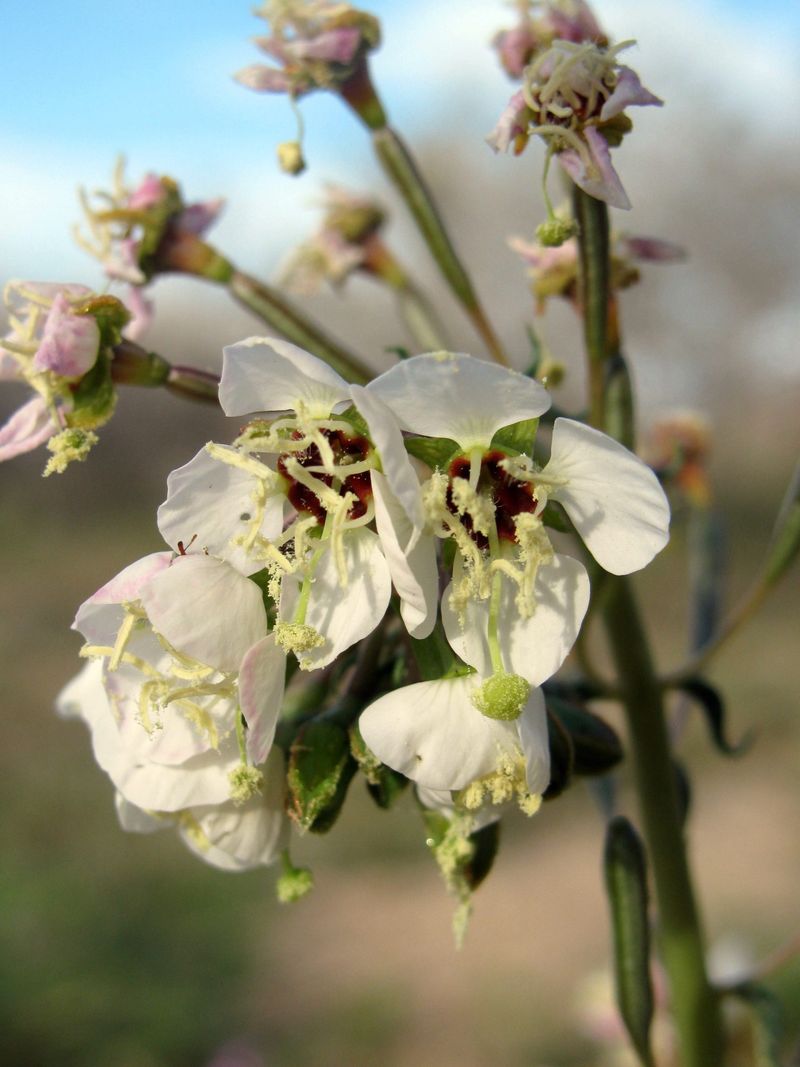
At first glance, Brown-Eyed Primrose might seem modest compared to the flashier desert blooms around it. But look a little closer and you will notice its charm.
Each small white flower has a deep reddish-brown center that gives it a warm, almost vintage look. This plant thrives across California’s Mojave and Sonoran Desert regions, often carpeting sandy washes and open flats after a rainy season.
The plant tends to grow in dense clusters, which means when conditions are right, entire hillsides can be covered in a soft white glow. It blooms from late winter through early spring, making it one of the earlier wildflowers to appear after the rains.
Its petals are thin and papery, giving it a delicate appearance that contrasts beautifully with the rough desert terrain.
Brown-Eyed Primrose is a favorite among desert botanists because it shows up reliably after good rainfall years. It is also a valuable food source for native bees and other small pollinators.
If you are visiting Anza-Borrego Desert State Park or Joshua Tree National Park during a wet spring, keep your eyes low to the ground. You might find entire patches of this understated beauty hiding right at your feet.
5. Desert Sunflower (Geraea canescens)
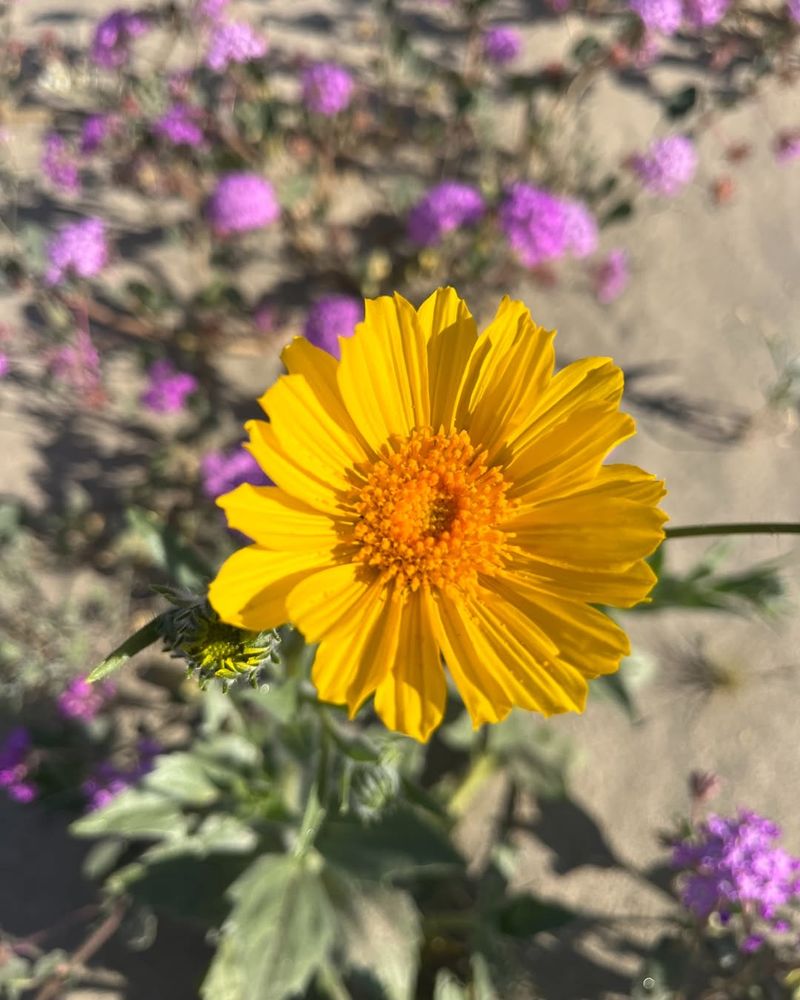
Few sights in the California desert are as uplifting as a field of Desert Sunflowers in full bloom. These cheerful, bright yellow flowers look like miniature sunflowers, and they have an incredible ability to blanket huge stretches of open desert after a wet winter.
They are especially common in the low deserts of Southern California, including areas near the Mojave and Colorado Desert regions.
Desert Sunflower plants can grow anywhere from one to three feet tall, and each stem holds multiple blooms at once. The flowers face outward rather than tracking the sun like their larger garden cousins.
They tend to grow in large groups, creating sweeping fields of yellow that are visible from miles away when conditions are ideal.
One fun fact about this plant is that its seeds are covered in fine, silvery hairs, which is actually what its species name “canescens” refers to. These hairs help reflect heat and reduce water loss in the brutal desert sun.
Desert Sunflower blooms are also a magnet for butterflies and native bees, making any patch of them a buzzing little hub of activity.
Visiting during peak bloom in February or March gives you the best chance of catching this golden spectacle across the California desert.
6. Dune Evening Primrose (Oenothera deltoides)
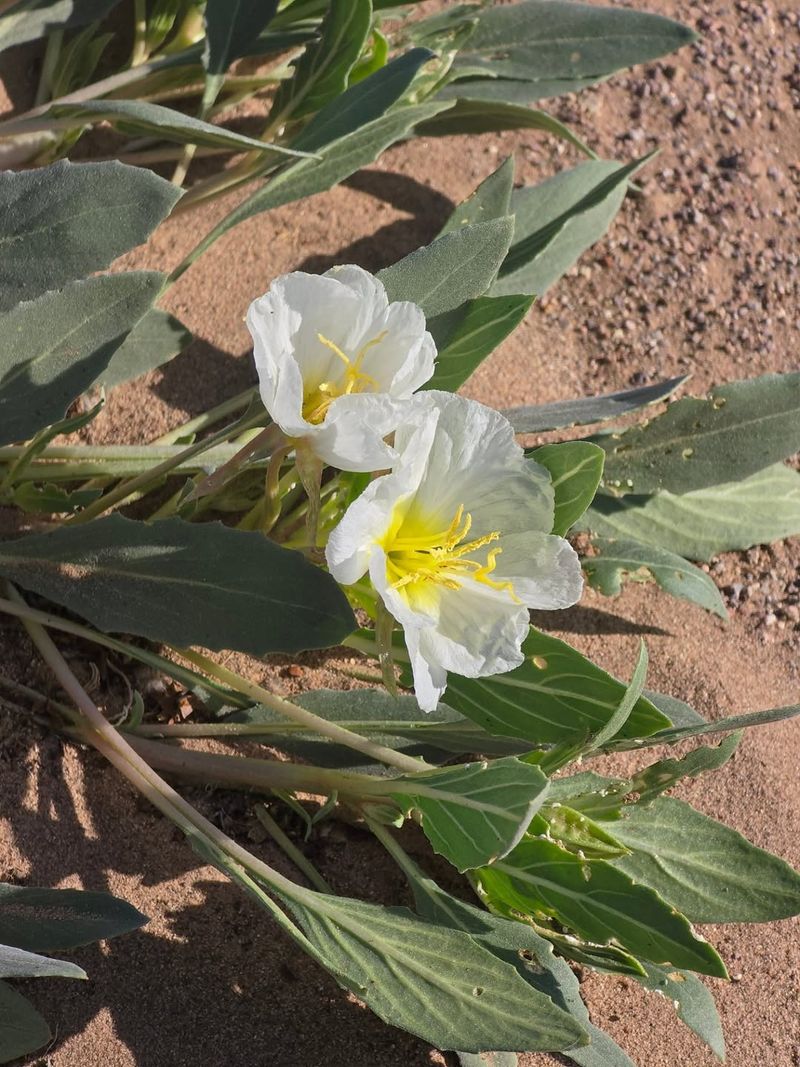
When the sun starts to set over the California desert, something magical happens. Dune Evening Primrose opens its large, snowy-white blooms and releases a soft fragrance into the cooling evening air.
This plant is a night-bloomer, meaning it saves its best performance for after dark. It grows on sandy dunes and open flats across the Mojave and Sonoran Desert regions of California.
Each flower can be up to three inches across, making it one of the larger wildflowers you will find in the desert. The blooms open in the late afternoon and stay open through the night, attracting sphinx moths that act as its main pollinators.
By midday the next day, the petals turn pinkish and begin to close, completing a short but stunning cycle.
Heavy winter rainfall is what triggers this plant to grow and bloom in abundance. In dry years, you might find just a few scattered plants, but after a strong rainy season, entire dune fields in places like Anza-Borrego can be covered in white.
Camping in the California desert during a super bloom year means you might wake up surrounded by these glowing blossoms. It is a quiet, peaceful experience that is hard to forget once you have seen it.
7. Mojave Aster (Xylorhiza tortifolia)
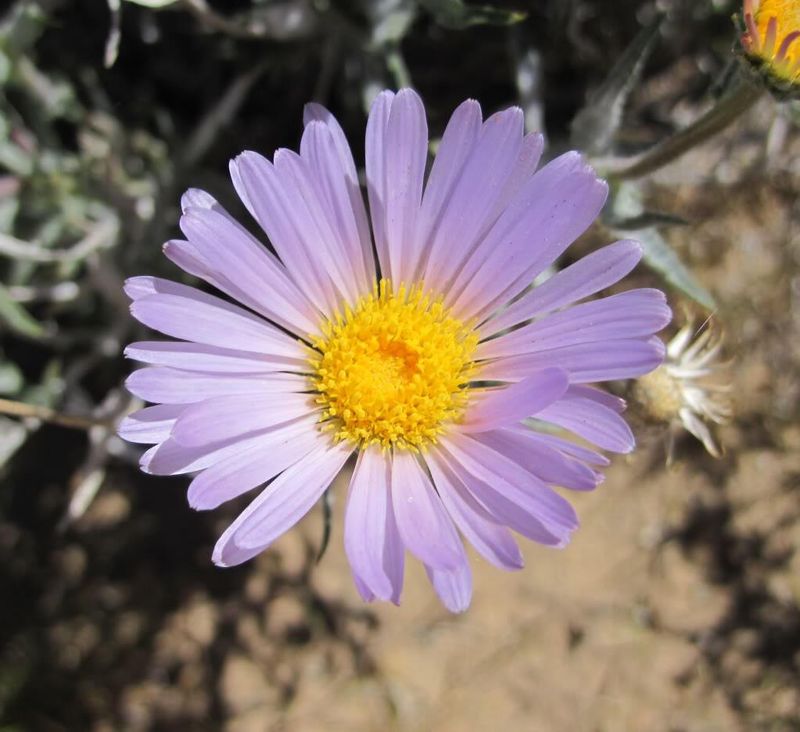
Rocky slopes and dry washes in the California desert come alive with soft purple color when Mojave Aster is in bloom. This woody perennial is a little different from many of the other super bloom flowers because it does not sprout fresh from seed every year.
Instead, it has a permanent woody base that stays rooted in the ground and sends out new flowering stems after sufficient rainfall arrives.
The flowers look similar to garden asters, with long lavender petals surrounding a bright yellow center. Each plant can produce dozens of blooms at once, making it one of the showier wildflowers in the Mojave Desert region.
It typically blooms from March through May, which is slightly later than some of the other desert wildflowers.
Mojave Aster is also impressively tough. It can handle rocky, nutrient-poor soil that would challenge most other flowering plants.
Its gray-green leaves have a slightly fuzzy texture that helps reduce water loss in the intense desert heat. Pollinators like native bees and painted lady butterflies absolutely love this plant.
If you are hiking in the higher elevations of the Mojave Desert or around Joshua Tree National Park in spring, look for its cheerful purple blooms dotting the hillsides after a good rain year.
8. Bigelow’s Coreopsis (Leptosyne bigelovii)
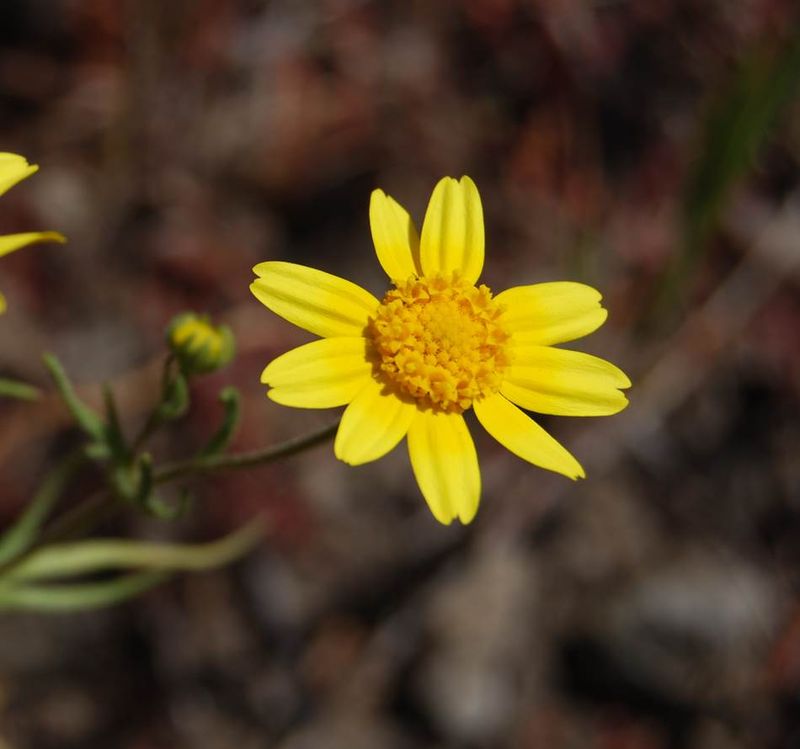
Bright, bold, and almost electric in color, Bigelow’s Coreopsis is one of those flowers that stops you in your tracks.
Its golden-yellow petals are almost neon in direct sunlight, and when thousands of plants bloom together on a California desert hillside, the effect is absolutely stunning.
This annual wildflower is most commonly found in the western Mojave Desert and parts of the Sonoran Desert after heavy winter rain.
Unlike some of the larger desert plants, Bigelow’s Coreopsis is slender and airy. Its thin stems and feathery leaves give it a light, delicate look that dances in the desert breeze.
The flower heads sit at the tips of long stems, lifting the blooms up above the surrounding ground cover so they catch the sunlight perfectly.
This plant is a true annual, meaning it completes its entire life cycle in one season. It sprouts, blooms, produces seeds, and fades all within a few short months.
Those seeds then wait patiently in the soil until the next good rain year. Bigelow’s Coreopsis often blooms alongside Desert Sunflower, and the two together create an almost overwhelming wall of yellow across the landscape.
Visiting locations like Antelope Valley or Anza-Borrego during a strong bloom year is the best way to witness this golden spectacle firsthand.
9. Canterbury Bells / Desert Bluebells (Phacelia campanularia)
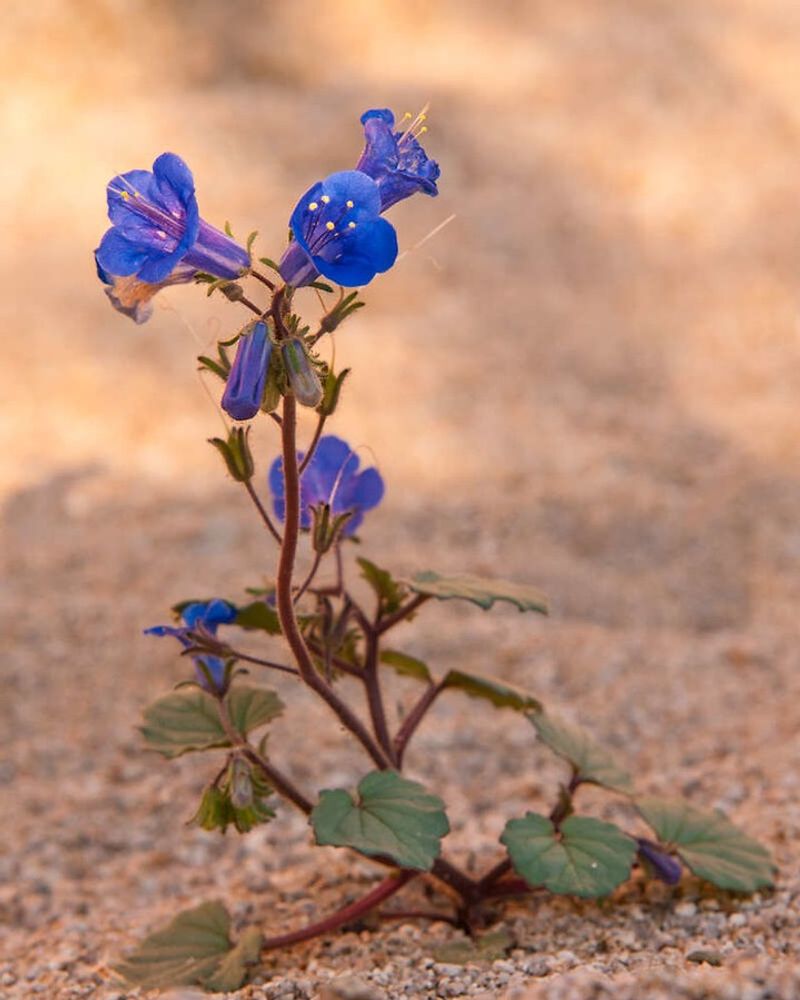
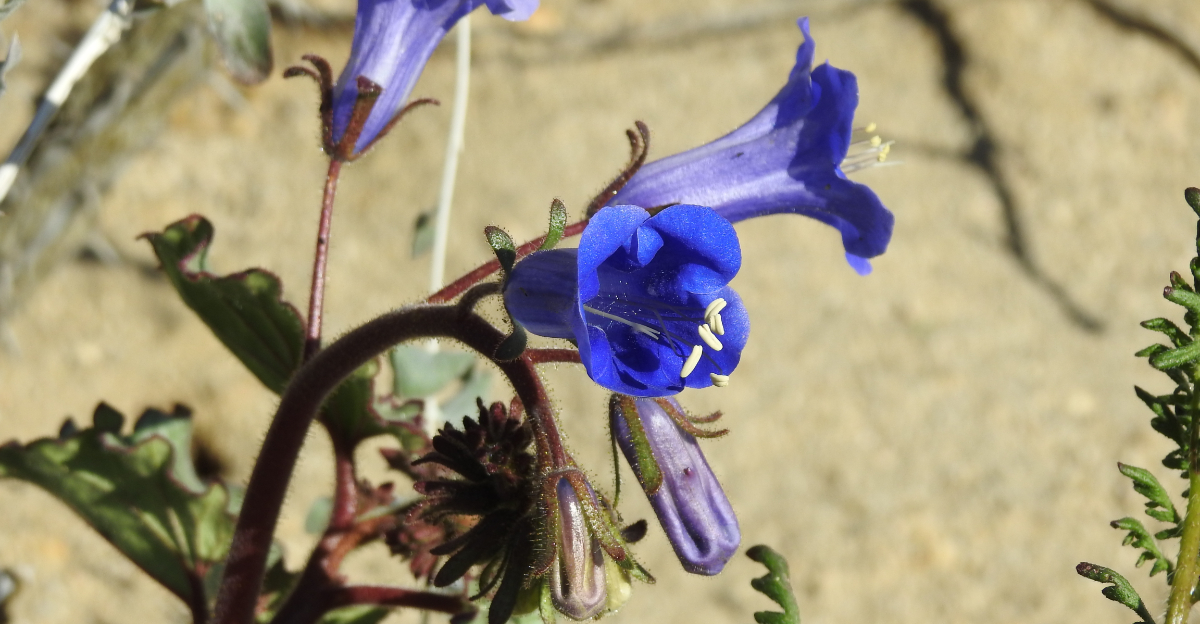
Of all the wildflowers that bloom in the California desert after heavy rain, Desert Bluebells might have the most jaw-dropping color. The blooms are a deep, rich blue-violet that almost looks unreal against the pale desert sand.
Also called Canterbury Bells, this annual plant is one of the most sought-after sights during a California super bloom, especially in the Mojave and Anza-Borrego Desert regions.
The bell-shaped flowers cluster along arching stems and tend to face outward or slightly downward, like tiny lanterns hanging in the breeze. Each bloom has a ring of white stamens inside that adds a nice contrast to the deep blue petals.
The leaves have a strong, slightly spicy scent when crushed, which is a natural defense against browsing animals.
One thing to know before you go searching for this plant is that its leaves can cause a mild skin rash in some people, so it is best to admire it without touching. That said, it is absolutely worth seeking out.
Native bees are incredibly attracted to the blue flowers, so wherever you find a patch of Desert Bluebells, you will likely find a buzzing cloud of pollinators too.
After a heavy rain year, this brilliant blue wildflower turns the California desert into something that feels almost otherworldly.