The Fast-Growing Privacy Plants California Gardeners Are Planting Right Now
If your yard feels a little too open and the neighbors seem closer than ever, you are not alone. Gardeners across California are turning to fast growing privacy plants to create lush, living screens that look beautiful and work hard.
Imagine stepping outside into a green retreat where leafy walls sway in the breeze, block unwanted views, and soften noise from the outside world.
The best part is how quickly these plants grow, transforming bare space into a cozy garden escape in what feels like no time.
With the right choices, you can enjoy rich greenery, lovely textures, and even flowers while adding shade and habitat for birds.
It is a simple, natural way to bring peace, beauty, and a little breathing room back to your outdoor space while keeping your garden vibrant, cool, and full of life all year long.
1. Toyon (Heteromeles arbutifolia)
This shrub brings year-round beauty to California landscapes while growing at an impressive rate. This native evergreen shrub can add two to three feet each year under the right conditions.
Gardeners love it because it adapts to almost any soil type and handles both sun and partial shade with ease.
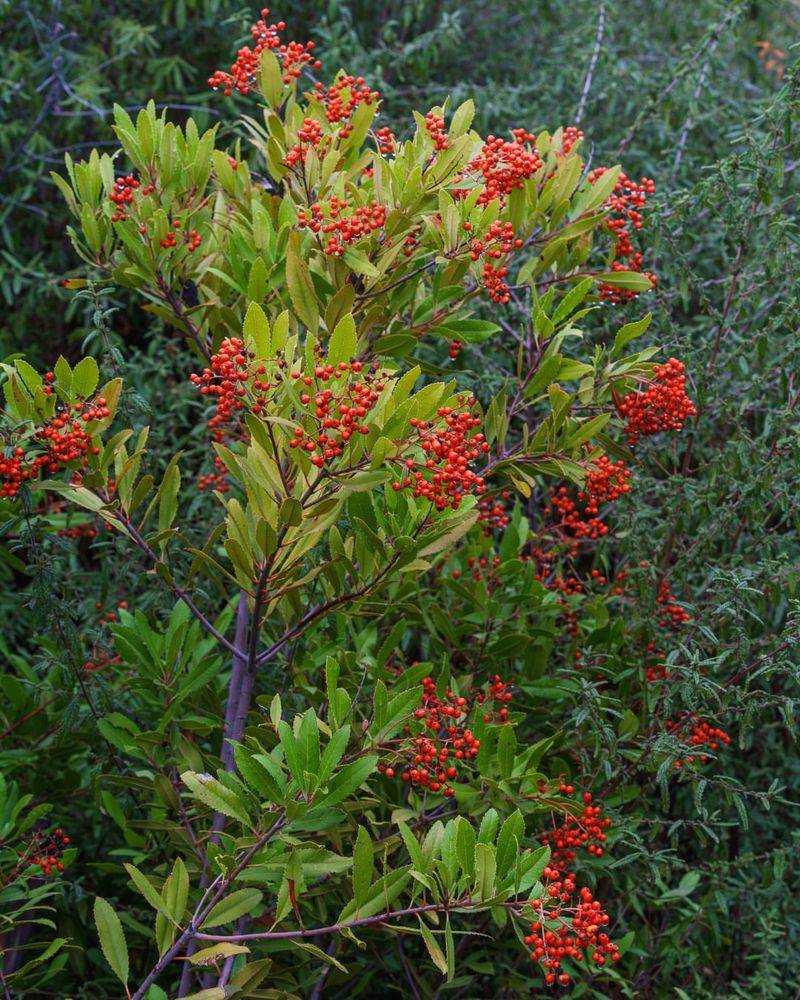
The glossy green leaves create a dense screen that blocks views effectively. During late fall and winter, clusters of bright red berries appear, adding seasonal color when many other plants look dull.
These berries also attract birds, turning your privacy hedge into a wildlife haven.
Toyon grows naturally throughout California, from coastal areas to mountain foothills. It can reach ten to fifteen feet tall if left unpruned, making it ideal for tall privacy screens.
Regular trimming keeps it at any height you prefer while encouraging thicker growth.
Water needs drop significantly after the first two years. Once established, toyon survives on rainfall alone in most California regions.
It resists pests and diseases naturally, so you won’t spend weekends dealing with problems. Many gardeners plant toyon along property lines where they want a natural-looking barrier that feels like part of the California landscape rather than a formal hedge.
2. California Wax Myrtle (Morella californica)
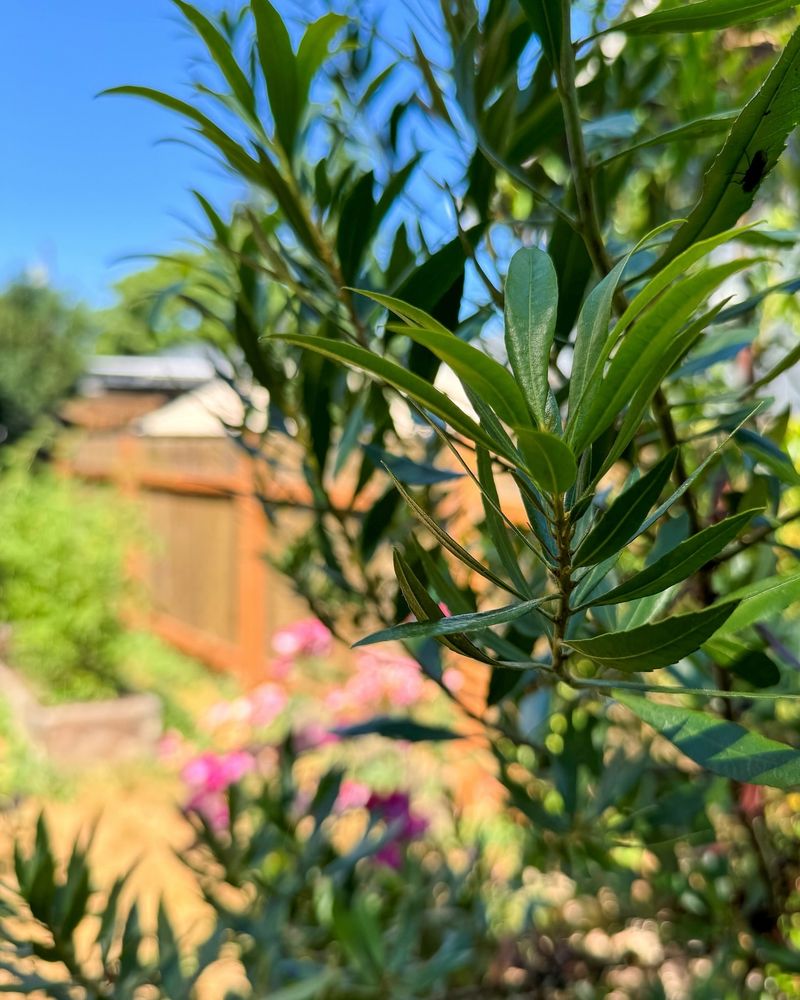
The Wax Myrtle stands out as one of the fastest privacy solutions available to gardeners in the state. Growth rates often exceed three feet per year when planted in good soil with regular water during establishment.
The dense branching pattern creates an almost impenetrable screen that gives you privacy from day one.
Glossy dark green leaves stay on the plant year-round, maintaining your privacy through all seasons. When you brush against the foliage, it releases a pleasant aromatic scent.
This evergreen shrub tolerates coastal conditions beautifully, handling salt spray and ocean winds without damage.
Height reaches fifteen to twenty feet at maturity, though you can keep it shorter with annual pruning. The natural growth habit is upright and bushy, perfect for narrow spaces along fences or property lines.
It adapts to different soil types but performs best with occasional summer water.
California Wax Myrtle works especially well in areas with morning fog or coastal moisture. Inland gardeners should provide afternoon shade in the hottest regions.
The plant supports beneficial insects and birds while requiring almost no pest control. Many California landscapers recommend it as their top choice for quick privacy screening that looks natural and stays healthy with minimal effort.
3. Coffeeberry (Frangula californica)
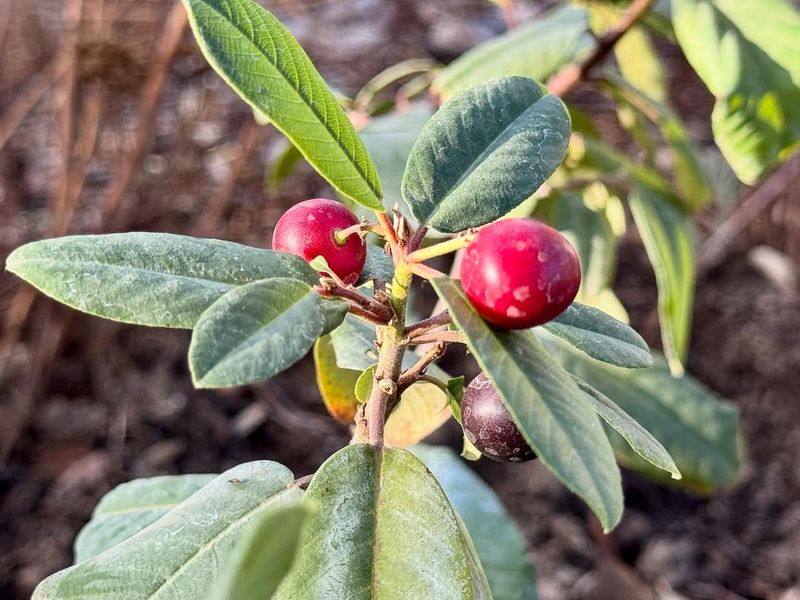
Coffeeberry earns its place in California gardens through reliable fast growth and stunning seasonal interest. Expect two to three feet of new growth each year during the first few years after planting.
The shrub develops into a full, rounded shape naturally without much pruning needed.
Shiny green leaves catch sunlight beautifully and create a lush backdrop for other plants. The real show happens when berries appear, changing color from green to red to deep purple-black as they ripen.
Birds flock to these berries, making your privacy hedge a gathering spot for local wildlife.
Several cultivars are available, with some staying compact at four feet while others stretch to eight feet or more. This variety lets you match the plant to your specific space requirements.
Coffeeberry handles full sun along the coast but appreciates afternoon shade in hotter inland valleys.
Water needs are moderate at first but decrease dramatically once roots establish. The plant tolerates clay or sandy soil equally well.
Coffeeberry resists most pests and diseases that trouble other shrubs, keeping maintenance time low.
California gardeners often use it in mixed hedges with other natives, creating textured privacy screens that look more interesting than single-species plantings while supporting local ecosystems.
4. Lemonade Berry (Rhus integrifolia)
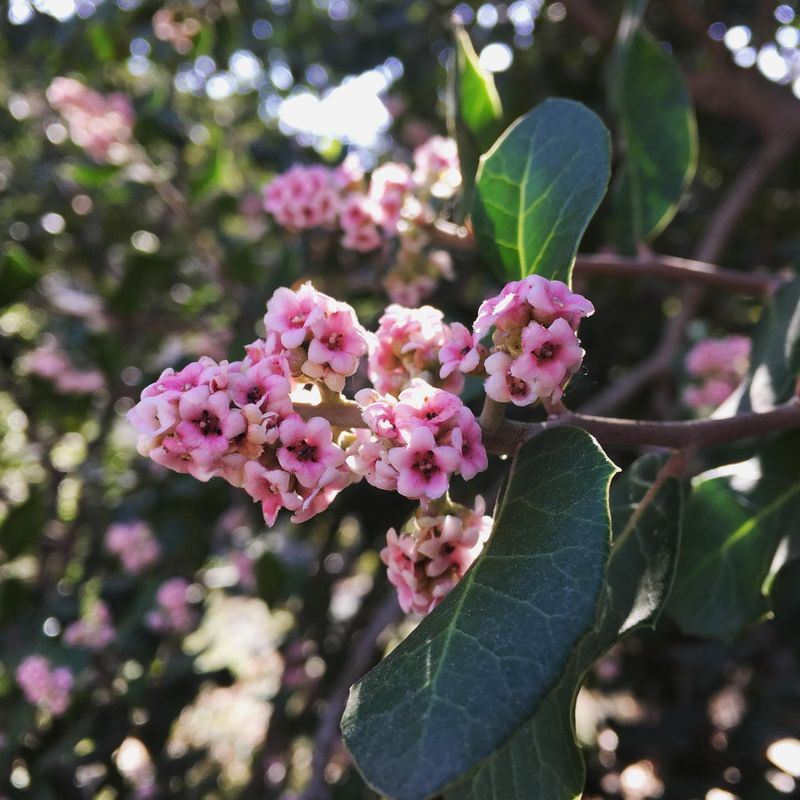
This shrub thrives in California’s toughest coastal conditions while creating excellent privacy screens. Growth happens quickly in spring and summer, with plants easily adding two feet or more each season.
The thick, leathery leaves overlap to form a solid visual barrier that blocks views completely.
This native shrub handles salt spray, strong winds, and poor sandy soil without complaint. The reddish stems add winter interest when combined with the dark green foliage.
Small pink flowers appear in spring, followed by sticky red berries that early California settlers used to make a lemonade-like drink.
Mature height ranges from six to ten feet, with an equal or greater spread. The plant naturally grows wider than tall, making it perfect for filling in large areas quickly.
Pruning shapes it into a more upright form if space is limited.
Lemonade Berry needs almost no water once established, making it ideal for dry California landscapes. It grows best in full sun and actually struggles with too much water or rich soil.
Coastal gardeners appreciate how it stays green and healthy year-round despite harsh conditions. The dense growth pattern means you can plant specimens farther apart than other shrubs and still achieve a solid privacy screen within two to three years.
5. Catalina Cherry (Prunus ilicifolia ssp. lyonii)
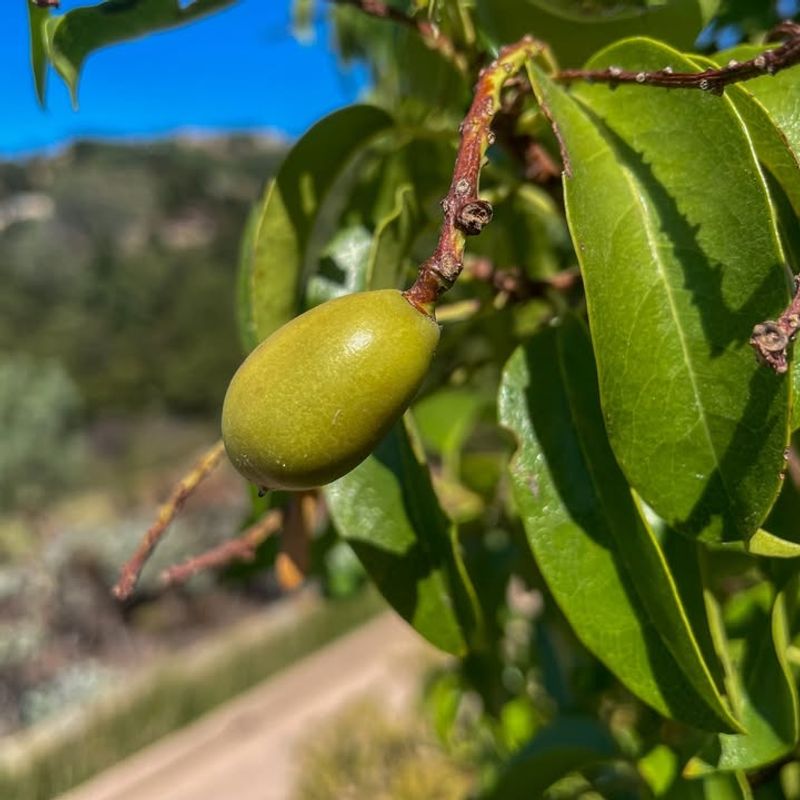
Young trees routinely put on three to four feet of height each year with adequate water. The holly-like leaves create a formal appearance that suits both traditional and modern landscapes.
Glossy dark green foliage stays attractive throughout the year without seasonal color changes. White flower clusters appear in spring, releasing a sweet fragrance that fills the garden.
These blooms develop into dark purple cherries that birds devour quickly, rarely making a mess on patios or driveways.
Mature specimens reach twenty to thirty feet tall, making Catalina Cherry perfect for screening two-story homes or blocking tall structures. The canopy spreads fifteen to twenty feet wide, providing substantial coverage.
Lower branches can be removed to create a tree form, or left in place for a fuller hedge effect.
This tree adapts to various soil types and handles both coastal and inland conditions across California. Water needs are moderate, with established trees surviving on monthly deep watering during summer.
Catalina Cherry resists most pests and diseases naturally. Gardeners throughout California appreciate how quickly it creates a tall privacy screen while maintaining a neat, tidy appearance that never looks overgrown or messy even without regular trimming.
6. Podocarpus (Podocarpus macrophyllus)
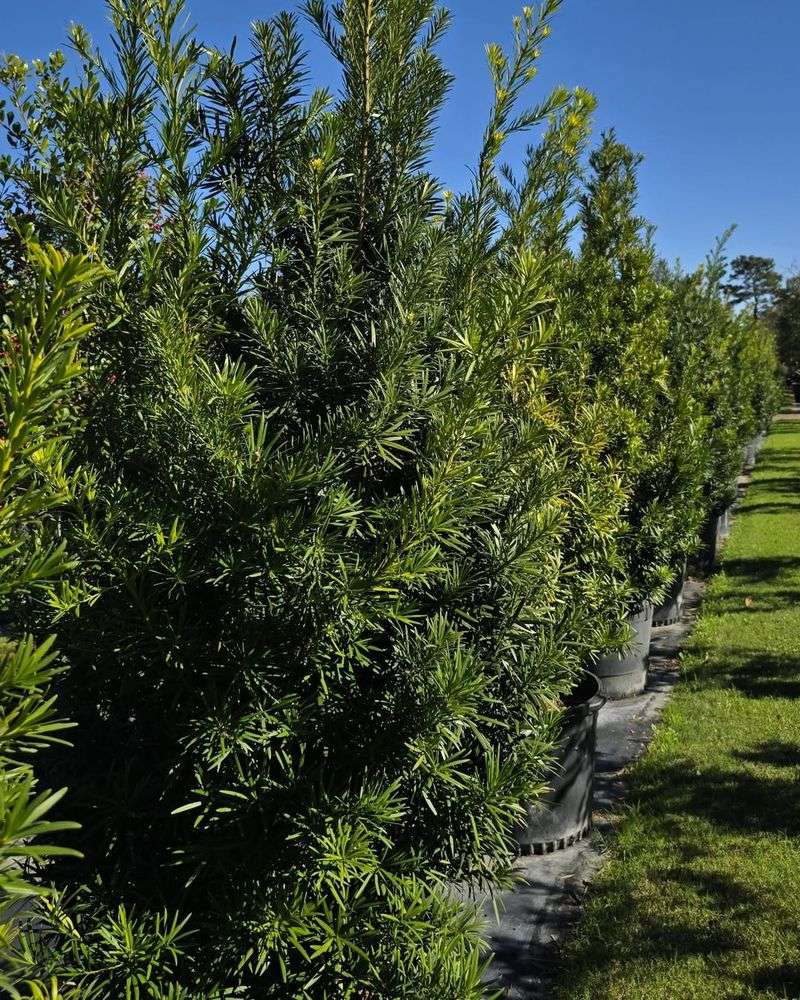
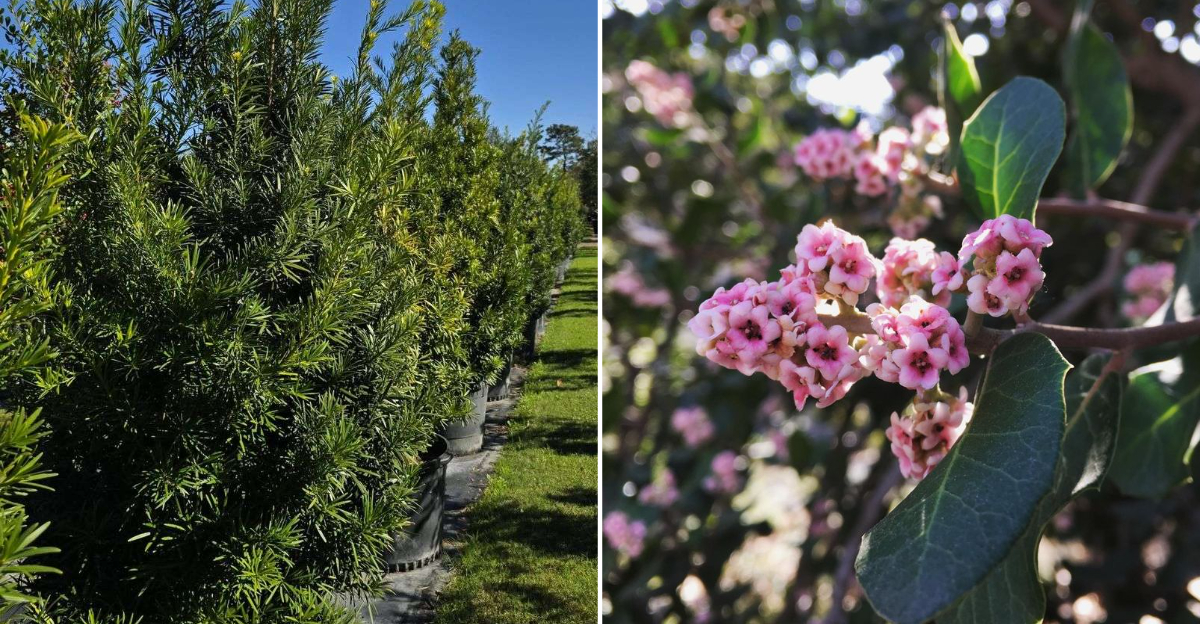
Podocarpus delivers reliable fast growth that California gardeners count on for quick privacy. Expect twelve to eighteen inches of new growth each year, sometimes more with regular feeding and water.
The upright growth habit naturally creates a columnar shape that fits perfectly in narrow spaces.
Narrow dark green leaves grow densely along the stems, creating a fine-textured appearance. This evergreen shrub responds beautifully to shearing, making it easy to maintain as a formal hedge.
The foliage stays rich green year-round without browning or dropping leaves.
Height can reach twenty feet or more if left unpruned, but most gardeners keep it between six and twelve feet. Width stays relatively narrow at three to six feet, making Podocarpus ideal for side yards or areas where space is limited.
It tolerates shade better than many privacy plants, growing well with only four to six hours of sun.
Podocarpus adapts to California’s Mediterranean climate surprisingly well for a plant with Asian origins. It handles heat and drought once established, though it looks best with regular summer water.
The plant resists most pests and rarely needs treatment.
Many California landscapers use Podocarpus for formal hedges around courtyards or along driveways where a neat, controlled appearance is desired rather than a wild, natural look.
7. Hopseed Bush (Dodonaea viscosa)
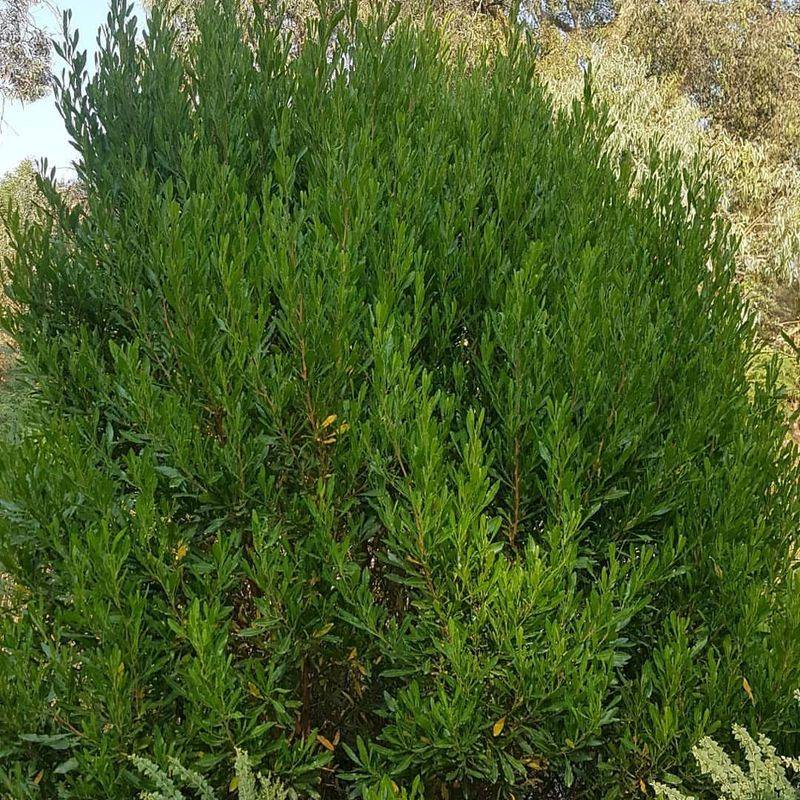
This bush races upward faster than most drought-tolerant privacy plants available to California gardeners. Annual growth of three to four feet is typical during the establishment period.
The upright, vase-shaped growth naturally creates tall screens without spreading too wide.
Narrow green leaves create a fine texture that moves gracefully in the breeze. Purple-leaved varieties offer dramatic color that contrasts beautifully with green plants nearby.
The foliage stays on the plant year-round, maintaining privacy through all seasons.
Mature plants reach twelve to fifteen feet tall with a width of six to eight feet. Hopseed Bush tolerates aggressive pruning and quickly recovers from shearing.
It adapts to formal or informal landscape styles equally well.
This plant excels in hot, dry areas of California where other species struggle. Once established, it survives on rainfall alone in many regions.
Hopseed Bush handles poor soil, reflected heat, and windy conditions without problems. It resists pests and diseases naturally, requiring no chemical treatments.
California gardeners love how Hopseed Bush creates fast privacy while using minimal water. The plant works perfectly for modern drought-tolerant landscapes where water conservation is a priority.
It combines beautifully with succulents, ornamental grasses, and other low-water plants while providing the height and density needed for effective screening along property boundaries or around patios.
8. Pittosporum tenuifolium
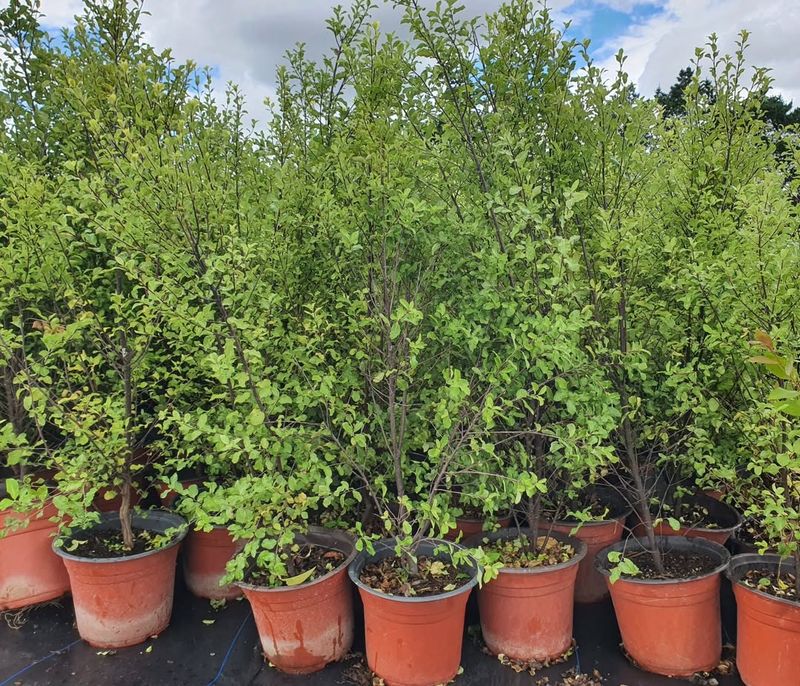
The tenuifolium brings unique texture and fast growth to California privacy plantings. Growth rates of two to three feet per year are common when plants receive adequate water and nutrition.
The naturally dense branching creates excellent screening without requiring constant pruning to fill in gaps.
Small wavy-edged leaves in light green create an airy appearance despite the dense growth. Dark purple-black stems contrast beautifully with the foliage, adding visual interest up close.
Several cultivars offer different leaf colors, including silvery-green and variegated options that brighten shady areas.
Mature height reaches ten to fifteen feet with a width of six to eight feet. The plant tolerates shearing well and can be maintained at any height you prefer.
It grows naturally into an oval or rounded shape that looks attractive even without formal pruning.
Pittosporum tenuifolium adapts to both coastal and inland California gardens, handling a range of temperatures and conditions. It prefers regular water but tolerates some drought once roots establish deeply.
The plant works well in partial shade or full sun. California gardeners often choose this species when they want a softer, less rigid appearance than formal hedges provide.
The light-colored foliage brightens dark corners while still providing the solid screening needed for privacy along property lines or around outdoor living spaces.
9. Italian Cypress (Cupressus sempervirens)
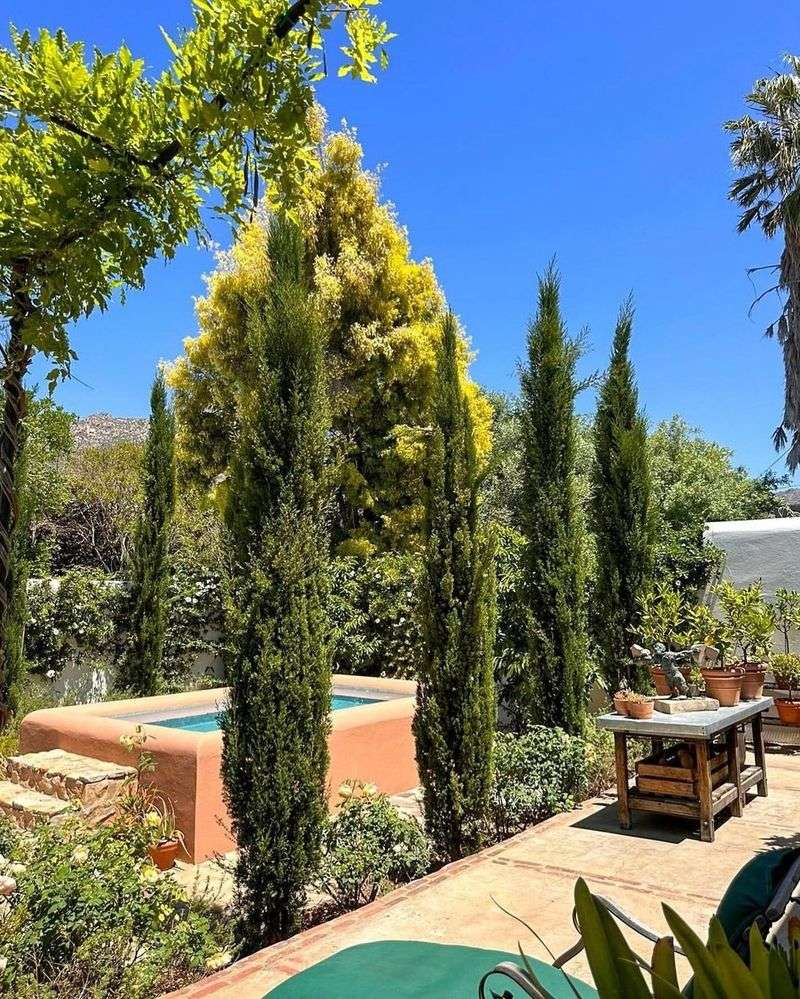
This one is a favorite for many Californians. Young trees grow three to four feet each year, quickly reaching impressive heights. The naturally narrow columnar form requires no pruning to maintain its distinctive shape.
Dark green foliage grows densely along the trunk from bottom to top. The fine-textured needles create a soft appearance despite the formal architectural shape. Trees stay evergreen year-round, never dropping leaves or creating cleanup work.
Mature height reaches forty to sixty feet with a width of only three to five feet. This extremely narrow profile makes Italian Cypress perfect for tight spaces where other trees won’t fit.
Multiple trees planted close together create a solid green wall that blocks views completely.
Italian Cypress tolerates heat, drought, and poor soil once established. It grows well throughout California except in the coldest mountain areas.
The tree needs full sun and good drainage to perform its best. It resists most pests and diseases naturally.
California gardeners have used Italian Cypress for generations to line driveways, frame entrances, and create tall privacy screens. The formal Mediterranean appearance suits traditional architecture beautifully.
The trees work equally well in modern landscapes where vertical elements add drama and height without taking up precious ground space in smaller yards.