The Fertilizing Schedule Virginia Gardeners Follow To Keep Christmas Cactus Blooming Longer
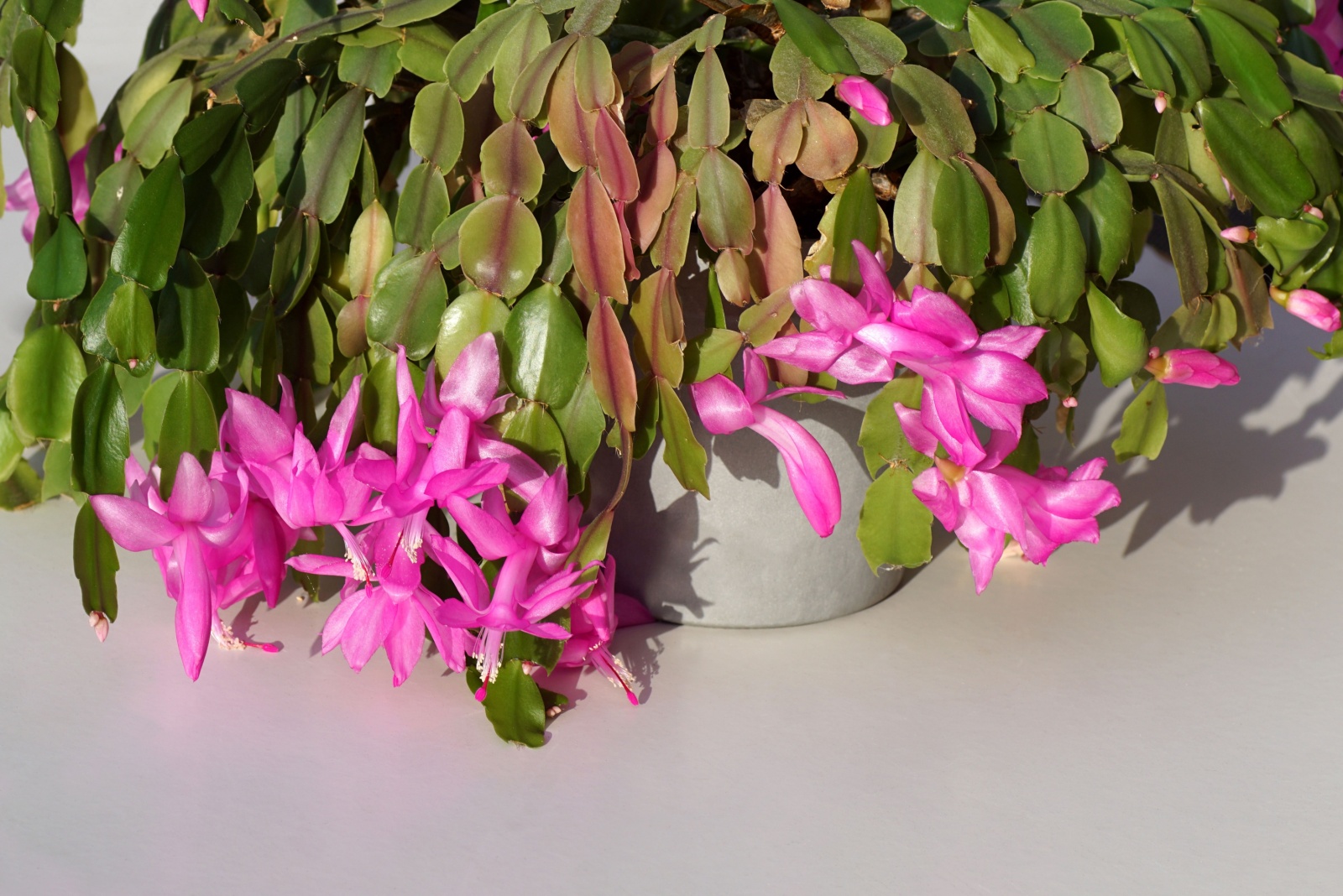
A Christmas cactus in full bloom is one of winter’s most rewarding sights, especially in Virginia where gray days make colorful houseplants shine even brighter.
Yet many gardeners are surprised when buds drop early or flowers fade just days after opening.
The reason is often improper fertilizing.
Unlike many houseplants, a Christmas cactus has a specific growth and rest cycle, and feeding it at the wrong time can do more harm than good.
Experienced Virginia gardeners follow a fertilizing schedule that aligns with seasonal light, temperature changes, and the plant’s natural rhythm.
When nutrients are applied correctly, the cactus develops stronger roots, healthier segments, and produces more buds that stay open longer.
This approach doesn’t require expensive products or complicated steps—just smart timing and consistency.
If you want your Christmas cactus to bloom more fully and hold onto its flowers well past the holidays, this proven fertilizing schedule makes all the difference.
Spring Growth Phase Feeding
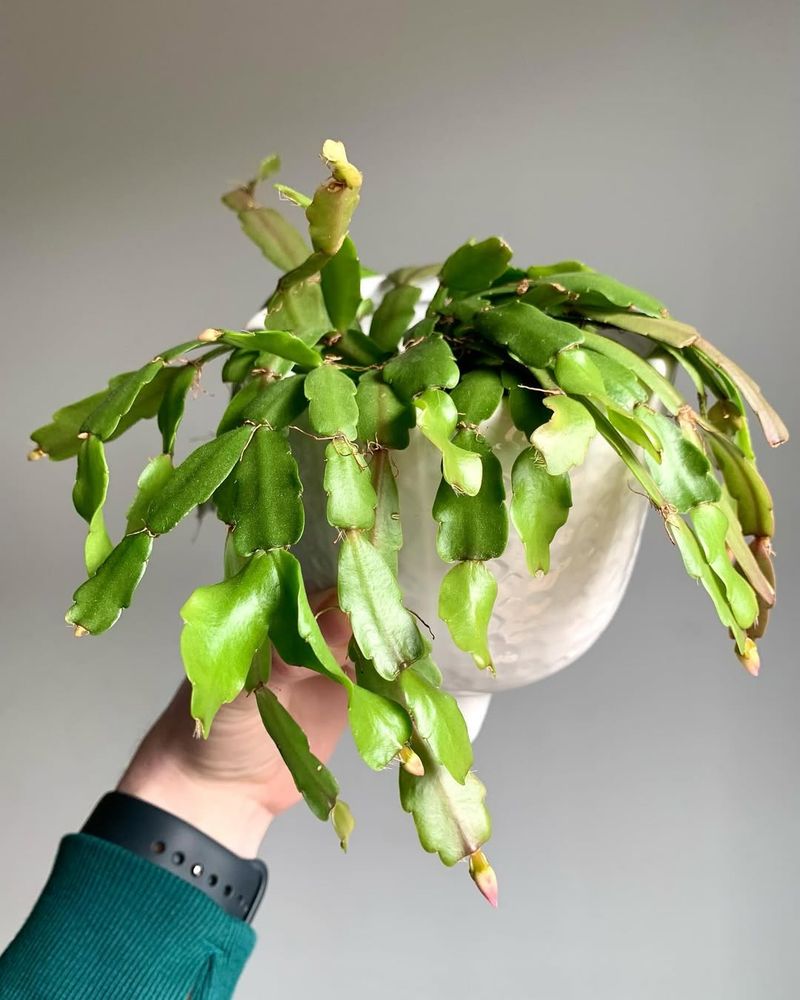
After the holiday blooms fade away, your Christmas cactus enters a growth phase that requires specific nutritional support for future success.
Virginia gardeners begin their fertilizing routine in early March when daylight hours increase and temperatures start warming up across the region.
A balanced liquid fertilizer diluted to half strength works perfectly during this awakening period when plants emerge from winter dormancy.
Apply the diluted solution every two weeks to encourage healthy new segment growth without overwhelming the plant with excessive nutrients.
Room temperature water mixed with fertilizer prevents shock to the root system and ensures better nutrient absorption throughout the plant.
Many experienced gardeners in Virginia prefer using a 20-20-20 formula that provides equal amounts of nitrogen, phosphorus, and potassium.
The spring feeding schedule continues through April and May as the plant develops strong, thick segments that will support future blooms.
Consistent feeding during this growth phase builds the foundation for spectacular flowering later in the year when conditions become favorable again.
Summer Maintenance Program
Summer months bring warm weather to Virginia, and your Christmas cactus needs adjusted care to thrive during this active growing season.
From June through August, continue feeding your plant every two weeks with the same diluted fertilizer solution you used in spring.
The warmer temperatures and longer days encourage rapid segment development, so maintaining regular nutrition becomes essential for plant health.
Virginia summers can get quite humid, which actually benefits Christmas cactus plants since they naturally grow in Brazilian rainforest environments.
Position your plant in a location that receives bright but indirect light, such as an east-facing window or shaded porch area.
Direct afternoon sun can scorch the segments and cause permanent damage, so protection from intense rays remains critically important.
Some gardeners move their plants outdoors to covered patios where they benefit from fresh air circulation and natural humidity levels.
Monitor soil moisture carefully during summer since warmer temperatures cause faster evaporation and increased water consumption by the plant.
Always allow the top inch of soil to dry between waterings to prevent root problems.
September Transition Strategy
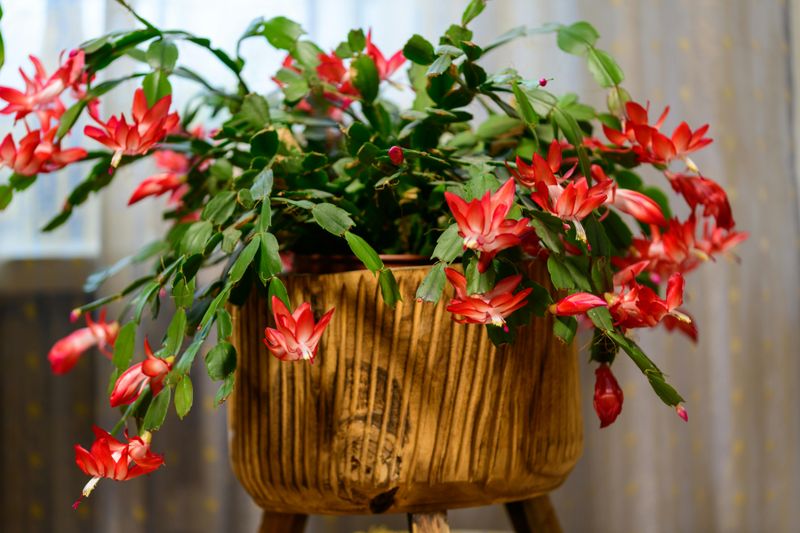
September marks a crucial turning point in the fertilizing schedule when Virginia gardeners begin preparing their Christmas cactus for the blooming phase.
As autumn approaches and temperatures start cooling down, especially during nighttime hours, your plant receives natural signals to shift gears.
Reduce fertilizer applications to once every three weeks instead of the biweekly schedule you maintained throughout spring and summer months.
This gradual reduction helps the plant transition from active growth mode to the reproductive phase when bud formation begins.
Virginia gardeners take advantage of the state’s natural temperature fluctuations during September, which typically include cooler nights in the fifties.
These temperature changes trigger hormonal responses within the plant that initiate the blooming process when combined with proper light exposure.
Continue using the same diluted balanced fertilizer, but spacing out applications allows the plant to slow down vegetative growth.
Watch for small bumps appearing at the tips of segments, which indicate early bud development and signal successful transition to flowering mode.
October Bud Development Support
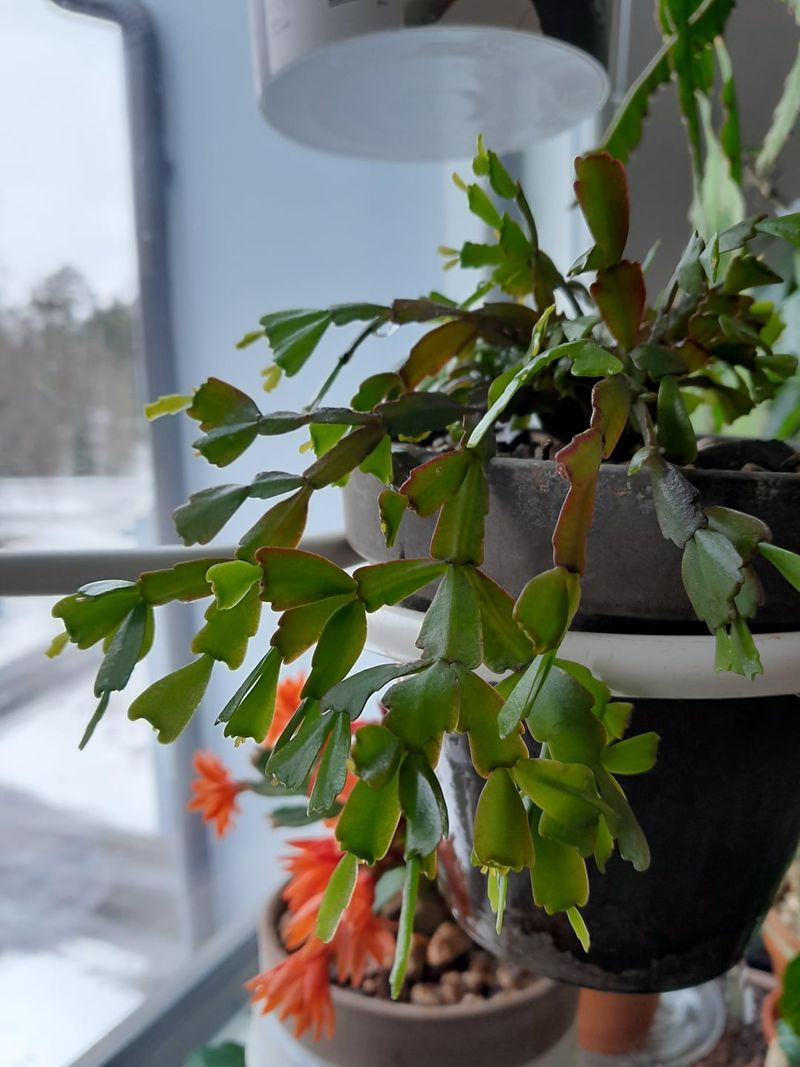
October brings excitement as tiny buds become visible on your Christmas cactus, and proper feeding during this stage ensures abundant flowering ahead.
Switch to a bloom-boosting fertilizer formula with higher phosphorus content, such as a 10-30-20 blend, to support flower development.
Apply this specialized fertilizer once every three weeks, maintaining the reduced schedule you started in September to avoid disrupting the blooming process.
The increased phosphorus content strengthens bud formation and helps produce larger, more vibrant flowers when they eventually open in coming weeks.
Virginia gardeners know that consistency matters tremendously during this delicate phase, so stick to your schedule without skipping or doubling applications.
Avoid moving the plant to different locations once buds appear, as environmental changes can cause bud drop and ruin months of effort.
Maintain stable temperatures between sixty and seventy degrees, which Virginia homes naturally provide during October with minimal heating or cooling needed.
Keep the plant away from drafty windows and heating vents that create temperature fluctuations harmful to developing buds.
November Bloom Enhancement
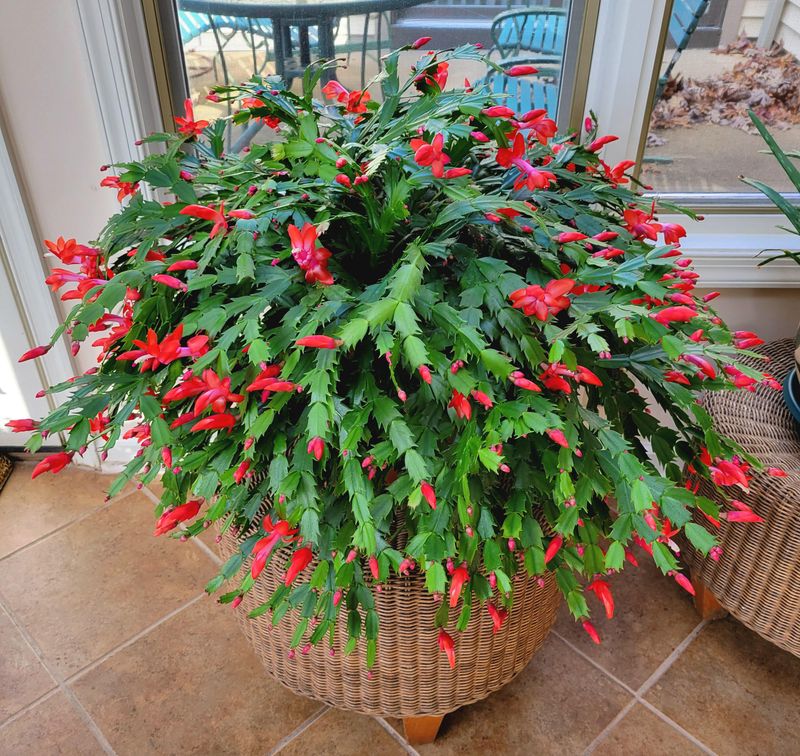
As Thanksgiving approaches, your Christmas cactus enters the most rewarding phase when buds swell and begin revealing their beautiful colors gradually.
Continue with the bloom-boosting fertilizer every three weeks, but watch the plant carefully for signs that flowers are starting to open.
Some Virginia gardeners prefer switching to a very diluted balanced fertilizer once flowers begin opening to extend the blooming period.
The key is providing just enough nutrition to support the energy-intensive flowering process without pushing the plant back into vegetative growth.
November weather in Virginia can be unpredictable, with some days feeling like summer and others bringing early winter chills to the region.
Keep your plant away from cold windows at night, but ensure it receives plenty of bright indirect light during daytime hours.
Proper lighting helps flowers develop their full color potential and keeps blooms lasting longer than they would in dimmer conditions.
Water carefully during this period, keeping soil lightly moist but never soggy, as overwatering can cause both bud drop and root problems.
December Through January Flowering Peak
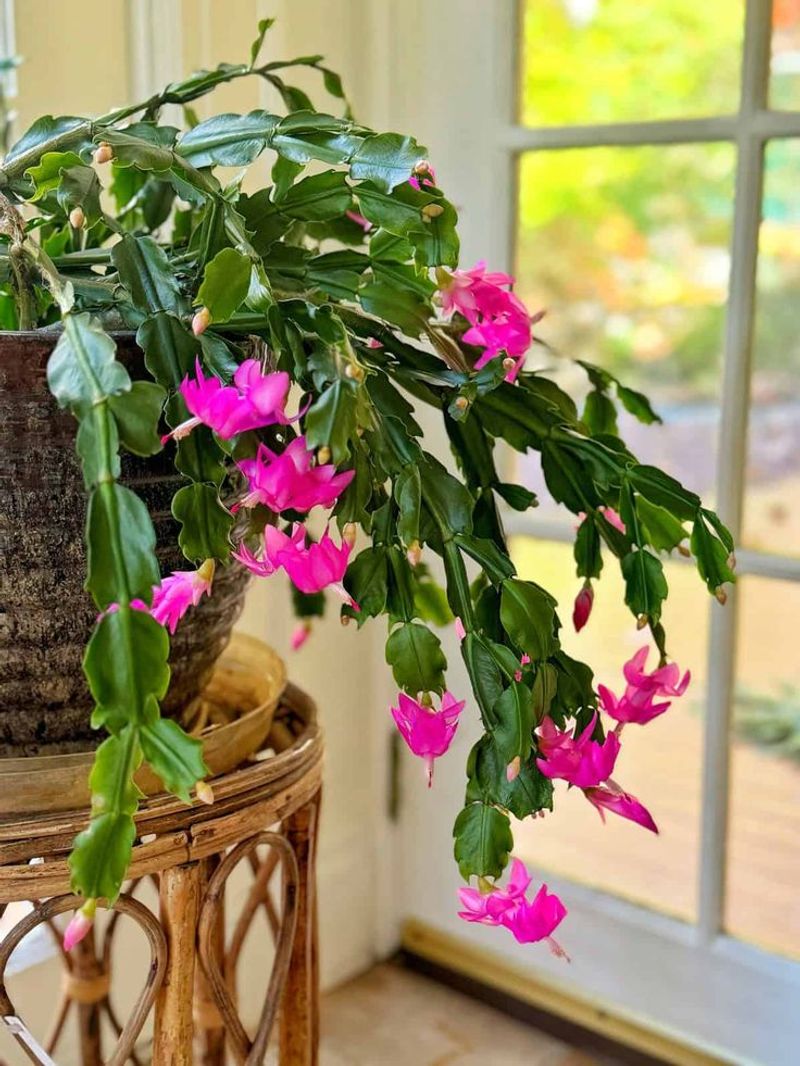
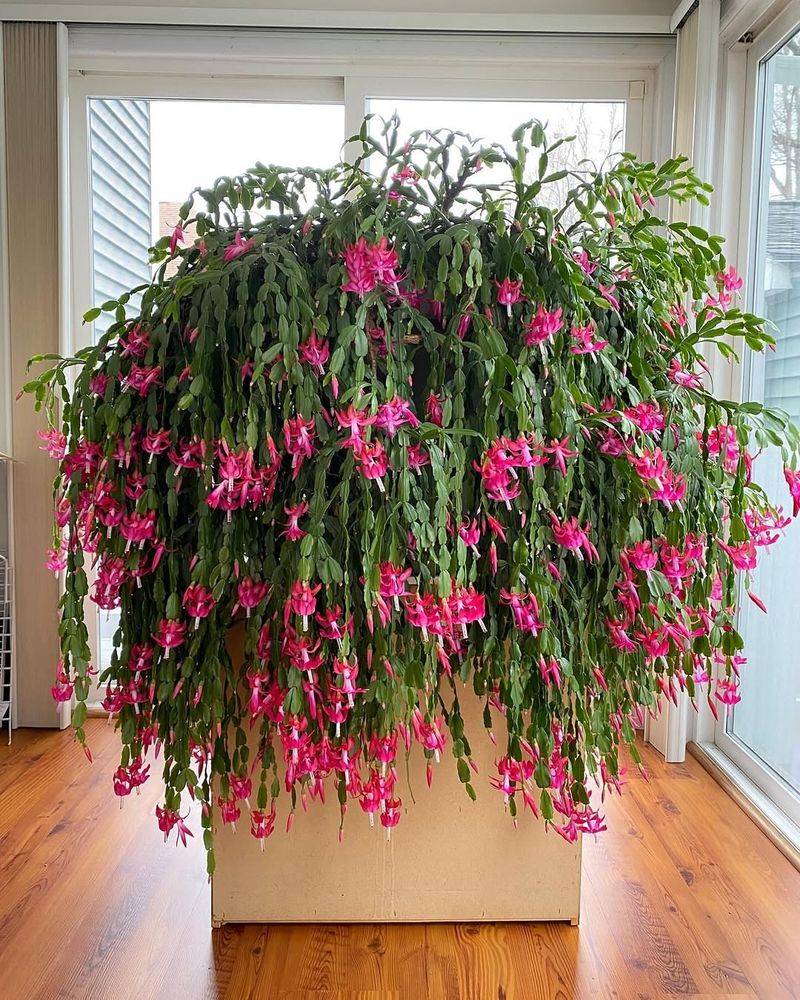
Peak blooming season arrives during December and January when your Christmas cactus displays its magnificent flowers throughout Virginia homes and brightens winter days.
Reduce fertilizer applications to once per month using a diluted balanced formula, or stop feeding entirely if the plant shows abundant flowers.
Many experienced growers in Virginia skip fertilizing completely during peak bloom because the plant focuses all energy on maintaining flowers.
Overfeeding during this stage can actually shorten the blooming period by encouraging new segment growth instead of sustaining existing flowers.
Focus your care efforts on maintaining consistent environmental conditions rather than worrying about fertilizer applications during these spectacular weeks of flowering.
Keep temperatures stable, provide adequate light, and water when the soil surface feels dry to the touch but before segments wrinkle.
Virginia winters can be dry indoors due to heating systems, so monitor humidity levels and consider using a pebble tray.
Enjoy the stunning display your careful fertilizing schedule has produced, and take photos to document your success for future reference and sharing.
February Rest Period Approach
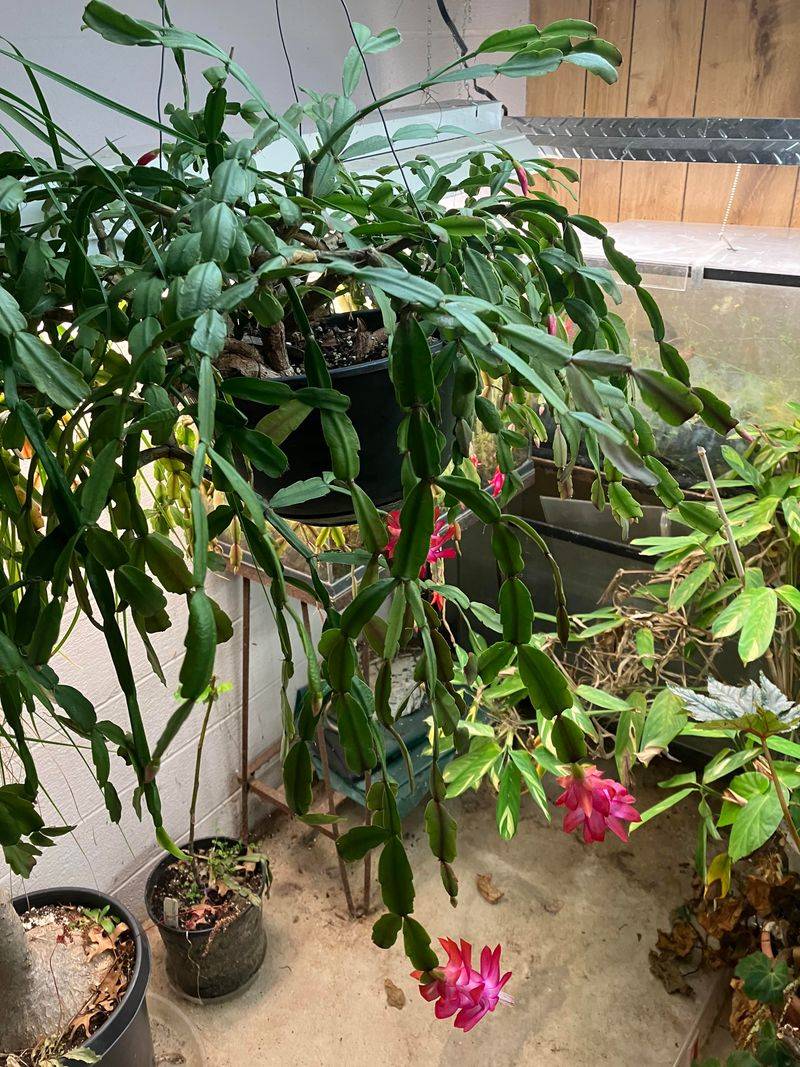
After weeks of spectacular blooming, your Christmas cactus needs a well-deserved rest period that Virginia gardeners respect by withholding fertilizer completely.
February marks the time when flowers naturally fade and drop, signaling the plant’s need for dormancy before the growth cycle begins again.
Do not apply any fertilizer during this month, allowing the plant to rest and recover from the energy-intensive flowering period.
This break in feeding mimics natural growing conditions and prevents nutrient buildup in the soil that could harm sensitive roots.
Reduce watering frequency as well, letting the soil dry out more between waterings than you allowed during active growth or blooming phases.
The rest period typically lasts four to six weeks, giving the plant time to recharge before spring growth resumes in March.
Virginia’s late winter weather provides ideal conditions for this dormancy, with cooler temperatures and shorter days supporting the natural rest cycle.
Resist the temptation to fertilize, even if the plant looks a bit tired, because this rest period is essential for long-term health.
Year-Round Water Quality Considerations
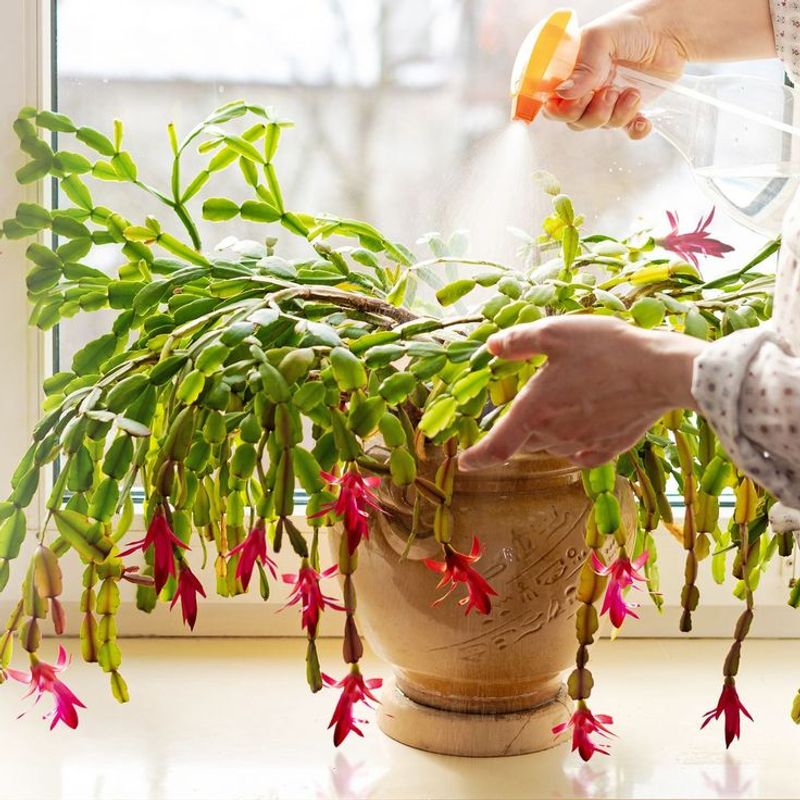
Throughout the entire fertilizing schedule, water quality significantly impacts how well your Christmas cactus absorbs and utilizes nutrients you provide to it.
Virginia’s municipal water often contains chlorine, fluoride, and dissolved minerals that can build up in soil over time and interfere with fertilizer effectiveness.
Let tap water sit in an open container overnight before mixing with fertilizer, allowing chlorine to evaporate and water to reach room temperature.
Many successful gardeners collect rainwater during Virginia’s frequent storms, which provides naturally soft water perfect for Christmas cactus care and fertilizing.
Distilled or filtered water works well too, especially if your area has particularly hard water with high mineral content that leaves white deposits.
Always mix fertilizer according to package directions, then dilute further for Christmas cactus since these plants prefer weaker solutions than many houseplants.
Proper water quality ensures nutrients remain available to roots rather than binding with minerals and becoming useless to the plant.
This attention to detail throughout the year contributes significantly to the success of your fertilizing schedule and overall plant health.