The 8 Flowering Trees That Thrive In California Climate
Selecting the right tree for your California landscape is all about finding a balance between show-stopping beauty and local grit. Our weather can be unpredictable, swinging from a coastal fog to a blistering inland heatwave in a single afternoon.
These eight picks are the absolute champions of the Golden State because they handle our unique soil and dry spells with total style.
They offer up a massive payoff in color and fragrance without demanding a fortune in water bills or constant babying.
If you want your yard to be the envy of the neighborhood, you need a centerpiece that thrives on our abundant sunshine.
These varieties are the ultimate local legends, ranging from native heroes to Mediterranean favorites that feel right at home in a backyard from San Diego to Santa Rosa.
Let’s look at the best options for adding some serious vertical color to your property.
1. Jacaranda
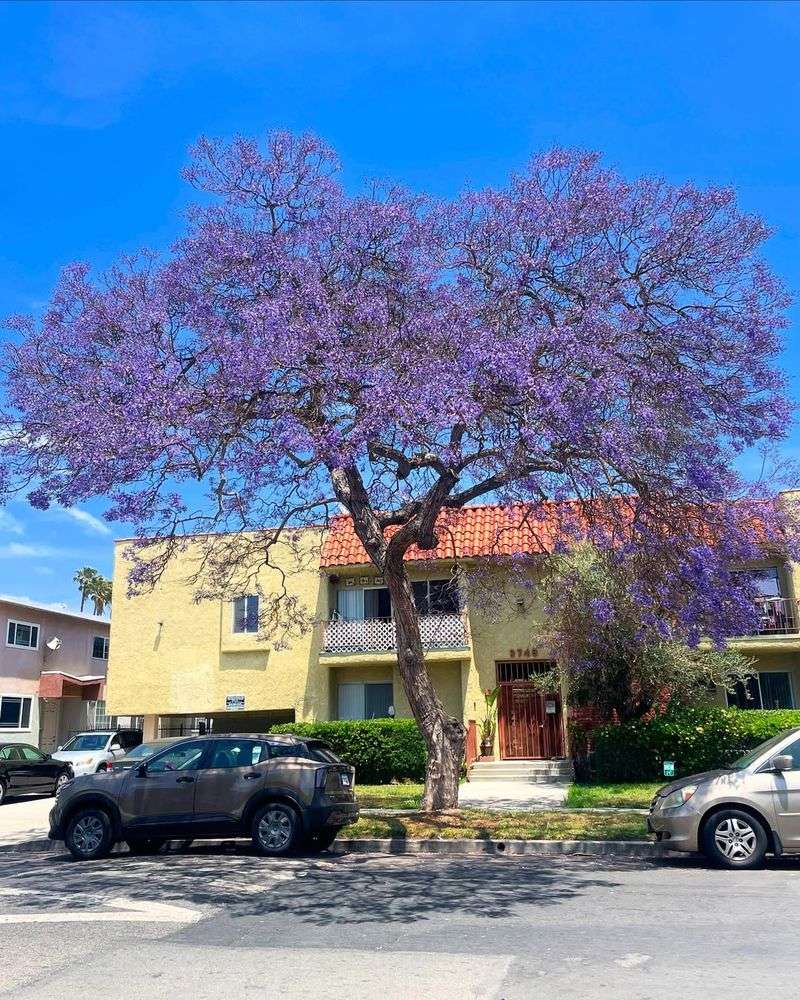
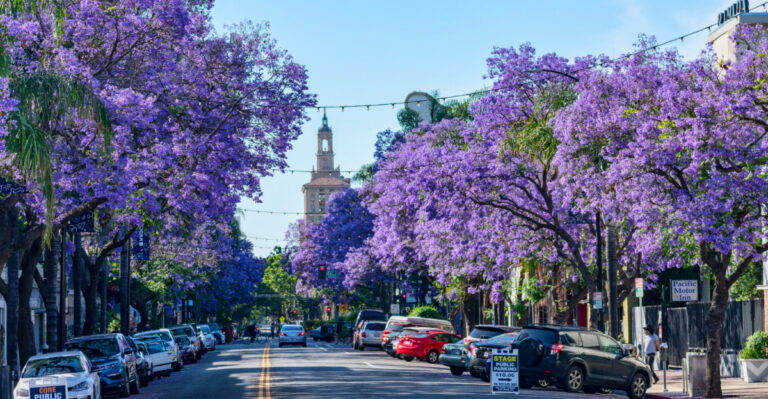
Few trees stop traffic quite like a Jacaranda in full bloom. In late spring and early summer, this tree explodes into a canopy of purple-blue trumpet-shaped flowers that carpet streets and sidewalks across Southern California.
Cities like Los Angeles and San Diego are famous for their Jacaranda-lined streets, and for good reason.
Jacaranda mimosifolia thrives in full sun and well-drained soil. It grows best in USDA hardiness zones 9 to 11, which covers most of Southern California’s coastal and inland areas.
Once established, it becomes quite drought-tolerant, making it a practical and gorgeous choice for California landscapes.
This tree can grow 25 to 40 feet tall, so give it plenty of space. Plant it away from driveways and sidewalks since the fallen flowers can get slippery.
Young trees may need regular watering during the first couple of years to help roots settle in. After that, nature does most of the work.
Jacaranda also attracts bees and hummingbirds, adding even more life to your yard. If you want a tree that turns heads every single spring, this one is hard to beat.
2. Western Redbud
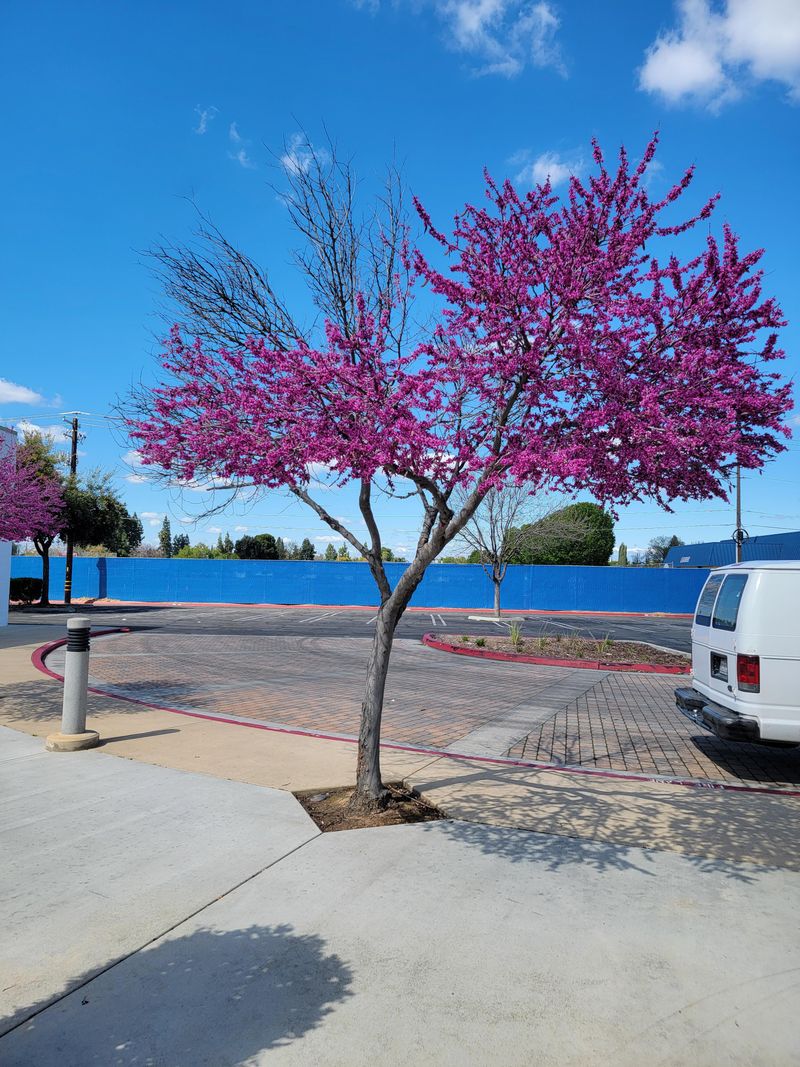
Before most trees even think about waking up from winter, the Western Redbud is already putting on a show. Cercis occidentalis bursts into clusters of vivid pink to magenta flowers as early as February or March, often before a single leaf has appeared.
It is one of the most dramatic early-spring bloomers in California’s native plant world.
This tree is a true California native, naturally found in the foothills, canyons, and slopes of the Coast Ranges and Sierra Nevada foothills. Because it evolved right here, it is perfectly adapted to the state’s hot, dry summers and cool, wet winters.
Once established, it needs very little supplemental watering, which makes it a favorite among water-conscious gardeners.
Western Redbud typically grows 10 to 18 feet tall with a graceful, multi-trunked form. It works beautifully as a standalone specimen tree or as part of a native garden.
After the flowers fade, heart-shaped leaves emerge, followed by flat seed pods that add visual interest through fall. Birds love the seeds, so you get wildlife value too.
Plant it in full sun to partial shade and well-drained soil for the best blooming results each season.
3. Crape Myrtle
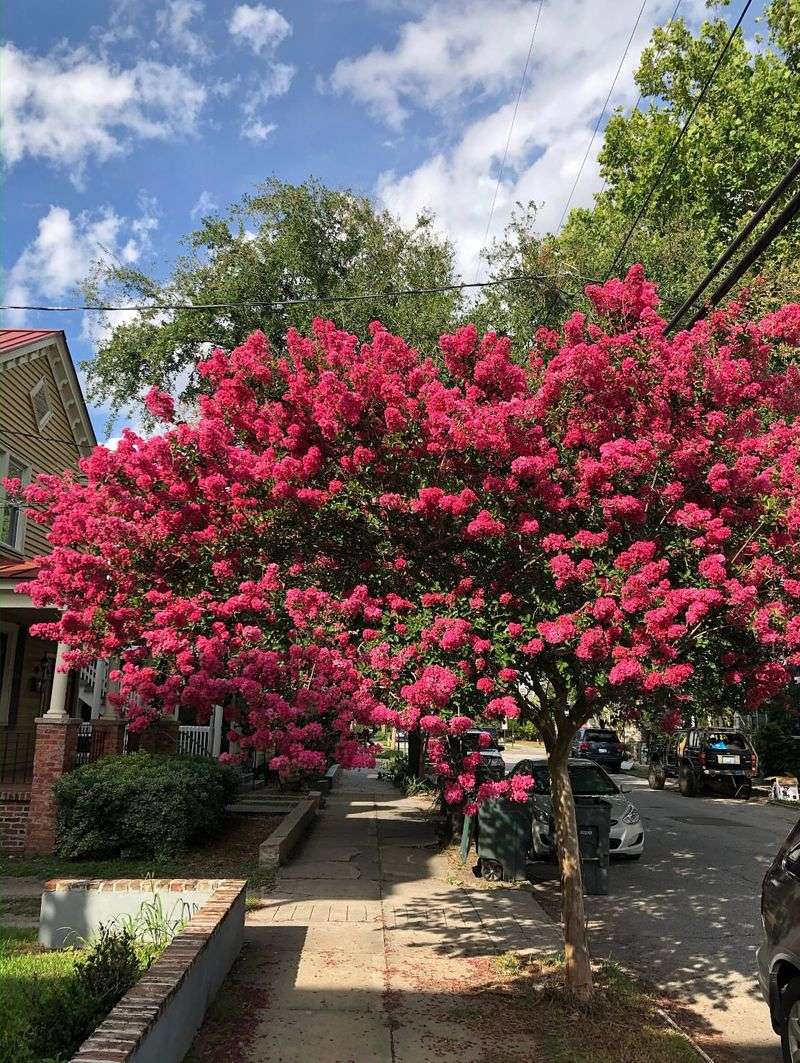
Walk through almost any California neighborhood in July or August and you will likely spot a Crape Myrtle showing off its fluffy, colorful blooms.
Lagerstroemia indica is one of the most popular ornamental trees in the state, and it earns that reputation every summer with long-lasting flowers in shades of pink, red, purple, lavender, and white.
One of the biggest reasons California gardeners love Crape Myrtle is its heat tolerance. It absolutely thrives in the hot inland valleys of Sacramento, Fresno, and the Inland Empire, where summer temperatures regularly top 100 degrees Fahrenheit.
It loves full sun and well-drained soil. The more sun it gets, the more it blooms.
Beyond the flowers, Crape Myrtle offers year-round visual interest. In winter, its smooth, peeling bark in shades of tan, cinnamon, and gray becomes the main attraction.
Fall brings fiery orange and red foliage before the leaves drop. It grows anywhere from 3 to 30 feet tall depending on the variety, so there is a size for every yard.
Avoid heavy pruning, sometimes called “crape murder,” as it weakens the tree’s natural shape. Light shaping after blooming is all it really needs to stay healthy and beautiful.
4. Desert Willow
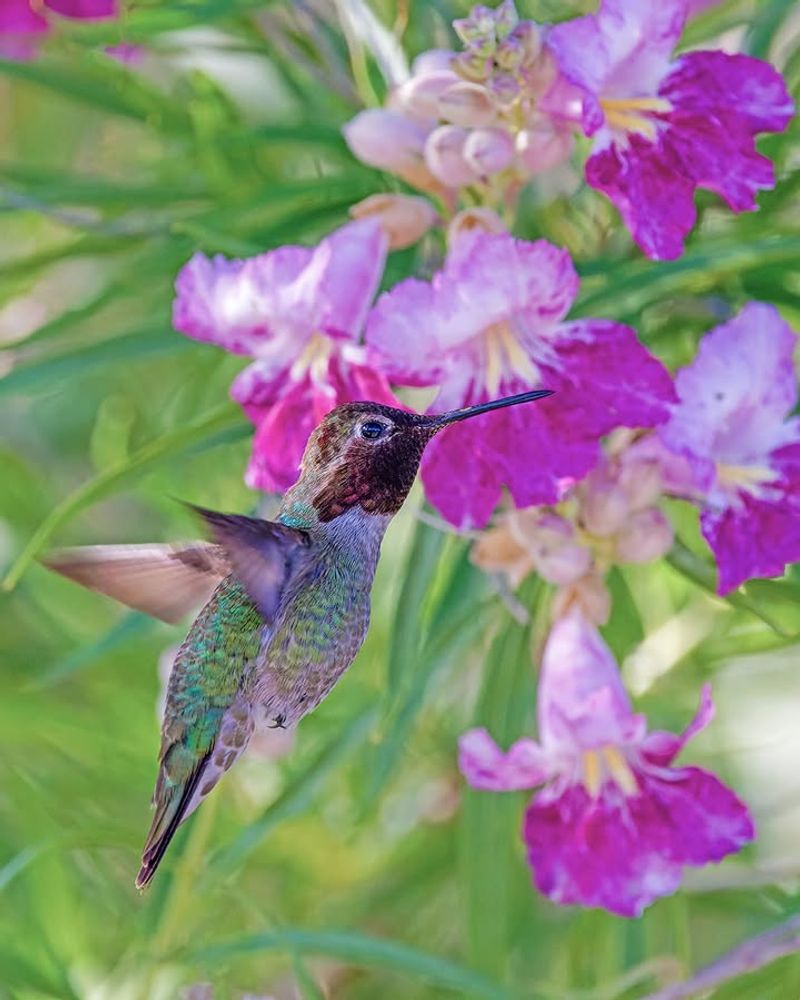
Do not let the name fool you. Desert Willow is not actually a willow at all.
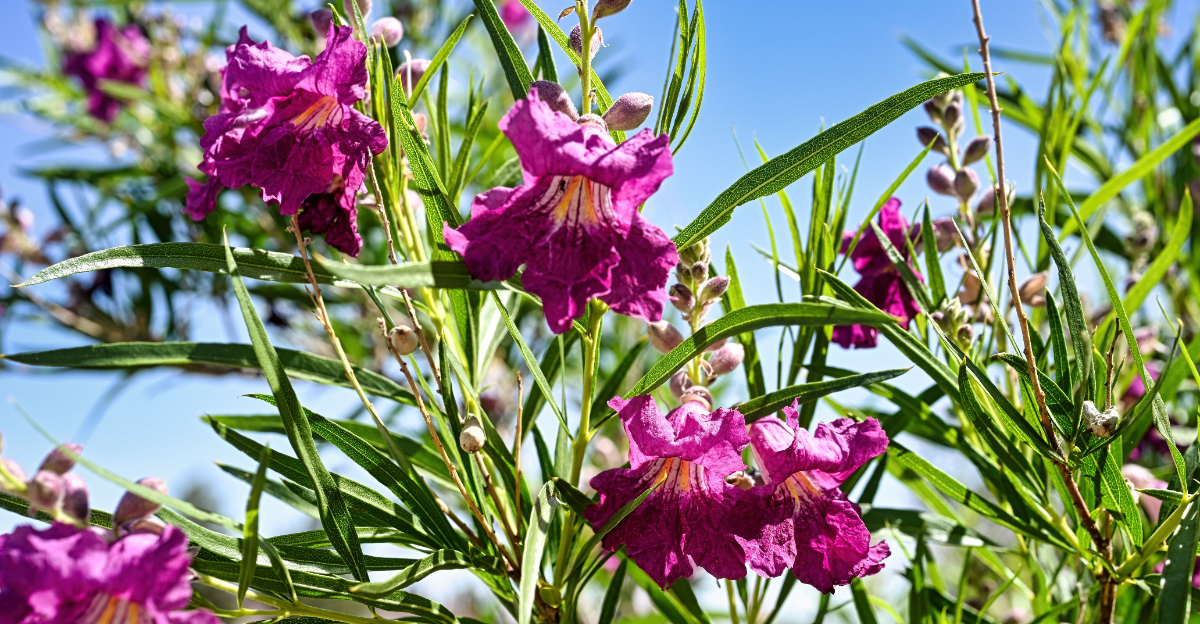
Chilopsis linearis belongs to the same plant family as Catalpa trees, and it produces some of the most eye-catching trumpet-shaped flowers you will find on any drought-tolerant tree.
Blooms appear in shades of pink, lavender, white, and burgundy from late spring all the way through early fall.
In California, Desert Willow is a star performer in the hotter, drier parts of the state, including the Mojave Desert region, the Coachella Valley, and the dry foothills of Southern California. It thrives in full sun and sandy, well-drained soil.
Once established, it can handle long dry spells with minimal irrigation, making it a smart and responsible choice in water-scarce areas.
This tree grows 15 to 25 feet tall with a loose, airy canopy and long, narrow leaves that sway in the breeze. Hummingbirds absolutely love the nectar-rich flowers, so expect plenty of activity around it throughout the warm months.
It is also low-maintenance and rarely troubled by pests. Plant it where it gets maximum sun exposure and excellent drainage.
In return, it will reward you with months of colorful blooms and a graceful, natural form that suits California’s arid landscapes beautifully.
5. Southern Magnolia
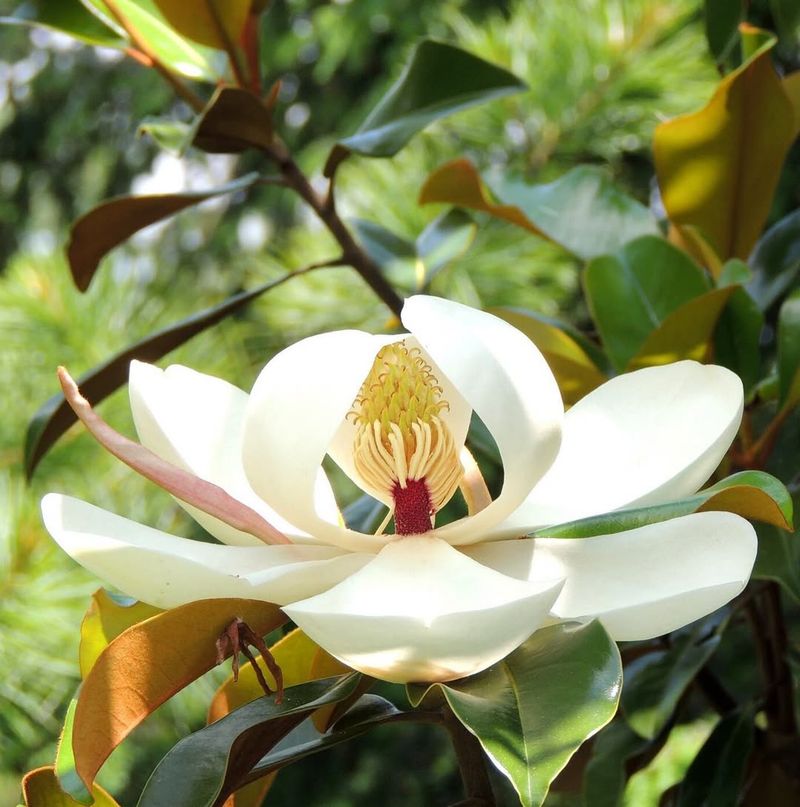
There is something timeless and elegant about a Southern Magnolia in bloom. Magnolia grandiflora produces enormous, creamy white flowers that can measure up to 12 inches across, filling the air with a rich, lemon-honey fragrance.
It is a tree that commands attention without trying too hard.
Despite its Southern roots, this magnolia does remarkably well throughout much of California. It thrives in the mild coastal climates of the Bay Area and Los Angeles, as well as in warmer inland valleys.
It prefers full sun to partial shade and deep, well-drained, slightly acidic soil. Regular watering during the first few years helps it establish a strong root system.
Southern Magnolia is an evergreen, which means it holds onto its large, glossy leaves all year long. The dark green leaves with rusty-brown undersides look attractive even when the tree is not flowering.
It can grow 60 to 80 feet tall in ideal conditions, so it works best in larger yards where it has room to spread. Smaller cultivars like ‘Little Gem’ are available for tighter spaces.
After the blooms fade, cone-like seed pods develop and attract birds. It is a long-lived, low-maintenance tree that adds real character to any California property.
6. Palo Verde
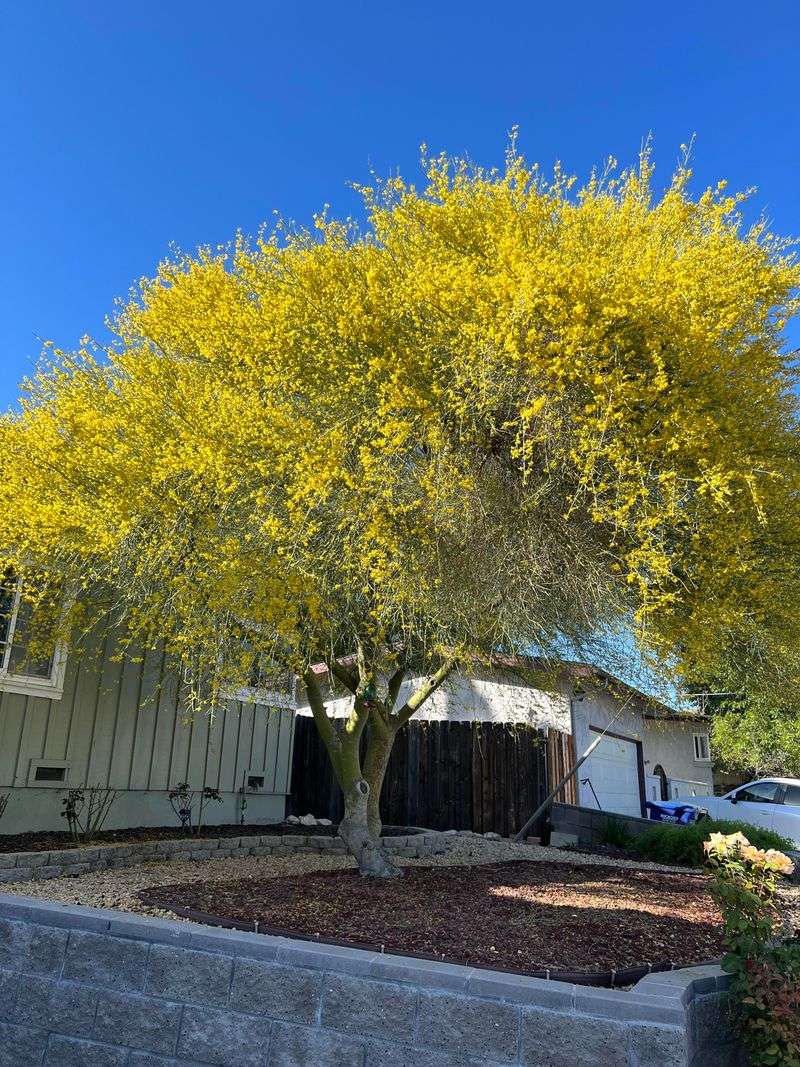
Bright yellow and absolutely fearless in the heat, Palo Verde is one of California’s most cheerful flowering trees.
The name means “green stick” in Spanish, which is a nod to its most unusual feature: a green trunk and branches that can actually photosynthesize sunlight even when the tree has shed its tiny leaves during dry spells.
It is a fascinating and resourceful plant.
Palo Verde thrives in the desert regions of Southern California and the Colorado Desert, where summer heat is intense and rainfall is scarce. It is extremely drought-tolerant once established and needs very little care to look good.
Full sun and fast-draining soil are the main requirements. In spring, the entire tree erupts in golden-yellow blooms that are truly hard to miss.
This tree typically grows 15 to 30 feet tall with a wide, open canopy that provides light, dappled shade. It is a great choice for desert-style landscapes and xeriscaping projects throughout California.
Native bees are particularly attracted to its flowers, making it a valuable plant for local pollinators. Thorns are present on some varieties, so plant it away from high-traffic areas.
With almost no watering needs and a stunning spring bloom, Palo Verde offers some of the best value of any flowering tree in the state.
7. California Lilac (Ray Hartman)
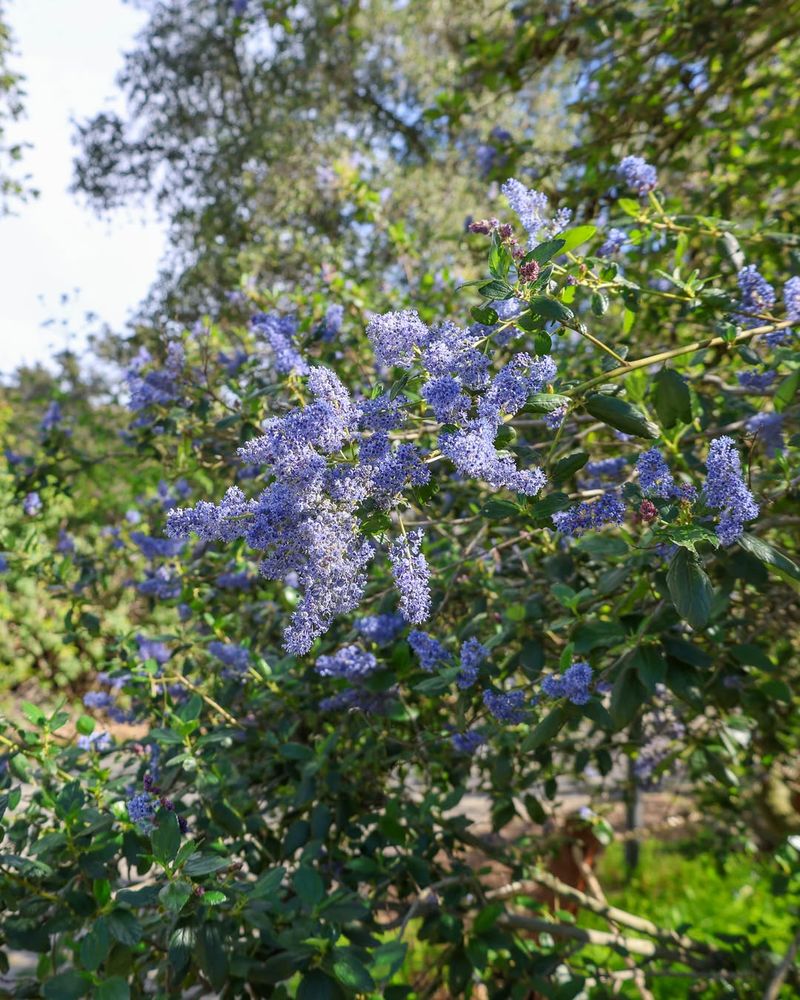
If you want a flowering tree that is deeply rooted in California’s natural landscape, look no further than Ceanothus ‘Ray Hartman.’
This California Lilac variety is one of the largest and most tree-like of all the Ceanothus cultivars, growing up to 20 feet tall with a sturdy trunk and a full, rounded canopy.
In early spring, it covers itself in dense clusters of rich, medium-blue flowers that practically glow in the sunlight.
Ray Hartman is bred from California native species, which means it is naturally adapted to the state’s Mediterranean climate of wet winters and dry summers. Once established, it needs almost no supplemental irrigation during the summer months.
Plant it in full sun to light shade and well-drained soil. It does not like soggy roots, so avoid low-lying areas where water tends to collect.
Pollinators go wild for this tree. Bees, butterflies, and native insects swarm the flowers during bloom season, making it an excellent choice for wildlife-friendly gardens across California.
The glossy, dark green leaves stay on the tree year-round, providing structure and color even when it is not in bloom. It grows quickly, which means you will not wait long to enjoy its full beauty.
For a native, low-water, high-impact flowering tree, Ray Hartman is genuinely hard to top.
8. Cape Honeysuckle
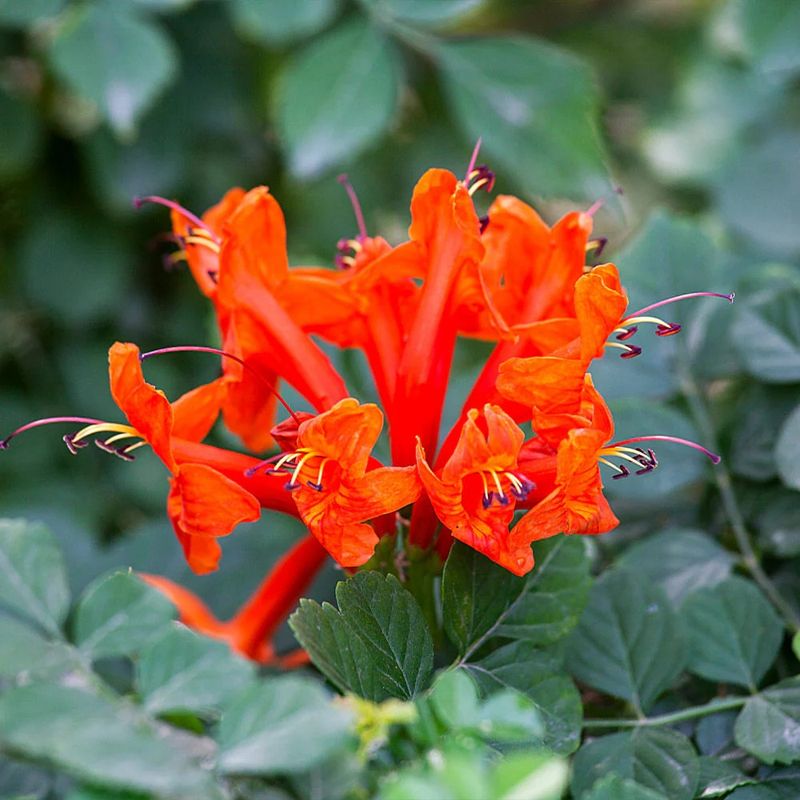
Bold, bright, and practically unstoppable, Cape Honeysuckle brings a tropical energy to California gardens that few other plants can match.
Tecoma capensis produces clusters of vivid orange or red trumpet-shaped flowers that bloom from fall through spring, which is the exact opposite of most flowering trees.
That makes it incredibly valuable when the rest of the garden has quieted down.
Cape Honeysuckle is most commonly grown as a sprawling shrub, but with some training and pruning it can be shaped into a small, attractive tree reaching 6 to 10 feet tall. It thrives in Southern California’s coastal and inland areas, loving full sun and well-drained soil.
It handles drought, heat, and even light frost once established, which speaks to its impressive toughness in California’s varied climate zones.
Hummingbirds are absolutely obsessed with the nectar-packed flowers, so if you enjoy watching those tiny birds zip around your yard, this tree will make them regular visitors. The dark, glossy leaves stay green all year, giving the plant great structure even between bloom cycles.
It grows quickly and fills in fast, making it a smart choice for new gardens or bare spots that need color soon. Plant it near a fence or wall where it can lean and spread, and you will have a flowering showpiece all winter long.