The Front Yard Mistake Many Ohio Gardeners Make Without Realizing It
You can spend time picking out plants, arranging beds, and keeping everything watered, yet something about your Ohio front yard still feels slightly off. The plants are in, the effort is there, but the results never quite match what you pictured.
It is a frustrating spot many homeowners find themselves in, especially in spring when everything should be taking off.
In many cases, the problem has nothing to do with plant choice or how much care you are putting in. It often comes down to a small, easy-to-miss habit that quietly interferes with how plants grow and establish over time.
At first, it seems harmless. As the seasons move along, though, you may start noticing slower growth, stressed plants, or areas that never quite fill in the way they should.
Because this issue develops gradually, it is easy to overlook until the effects become hard to ignore. By then, it can influence the overall health and appearance of your entire front yard.
1. Piling Mulch Against Tree Trunks Like A Volcano

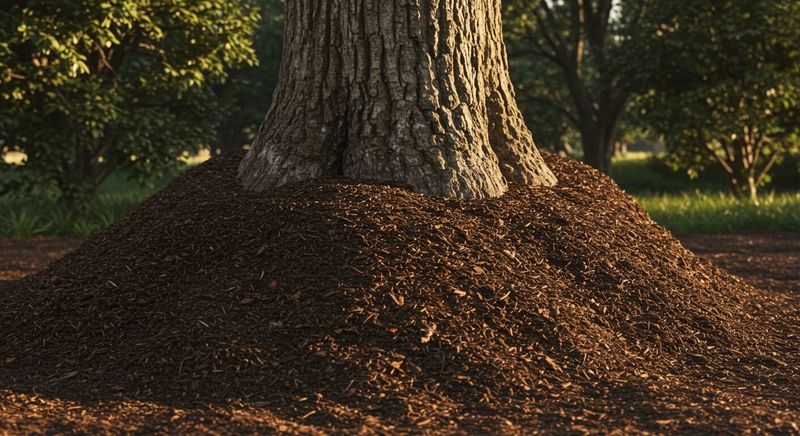
Walk through almost any Ohio neighborhood in spring, and you will likely spot it right away. Homeowners and even some landscaping crews pile mulch up against tree trunks in a thick, cone-shaped mound that looks almost like a little volcano.
It might seem tidy, even professional, but arborists across the country consistently flag this as one of the most damaging things you can do to a tree.
The volcano mulch look became popular partly because it gives a yard a finished, manicured appearance. People figure that if a little mulch is good, a lot must be even better.
Unfortunately, that logic does not hold up when it comes to tree care. Mulch piled six, eight, or even twelve inches high against a trunk can trap moisture, reduce airflow, and keep the bark in a damp environment it was not designed to handle.
Ohio gardeners often notice their trees looking a little off, with yellowing leaves or sparse canopies, but never connect it back to the mulch mound at the base. The damage happens slowly and silently beneath the surface.
Recognizing volcano mulching as a real problem is the first step toward protecting the trees that give your front yard its greatest curb appeal and shade value.
2. Why Volcano Mulch Causes Slow, Hidden Stress
Tree stress is sneaky. Unlike a broken branch or a pest infestation you can see from the sidewalk, the damage caused by volcano mulching works from the inside out, building quietly over months and even years before any obvious symptoms show up above ground.
By the time most Ohio homeowners notice something is wrong, the tree has already been struggling for a long time.
When mulch is piled high against a trunk, the bark stays wet almost constantly. Bark is designed to be dry and exposed to air.
Keeping it buried under a soggy mound creates the perfect conditions for fungal growth, bacterial rot, and wood decay. The outer layer of the trunk can begin to break down, which may interfere with the tree’s ability to move water and nutrients between its roots and its canopy.
Insects that target weakened trees are also drawn to the warm, moist environment created by a mulch volcano. Borers and other pests find easy entry points in softened bark, speeding up the decline.
Many Ohio residents are shocked to learn that a tree they thought was simply aging or suffering from drought stress was actually being slowly harmed by the very mulch meant to protect it. Catching the problem early and correcting it right away gives the tree a real chance to recover.
3. How Buried Trunk Flares Lead To Bigger Problems
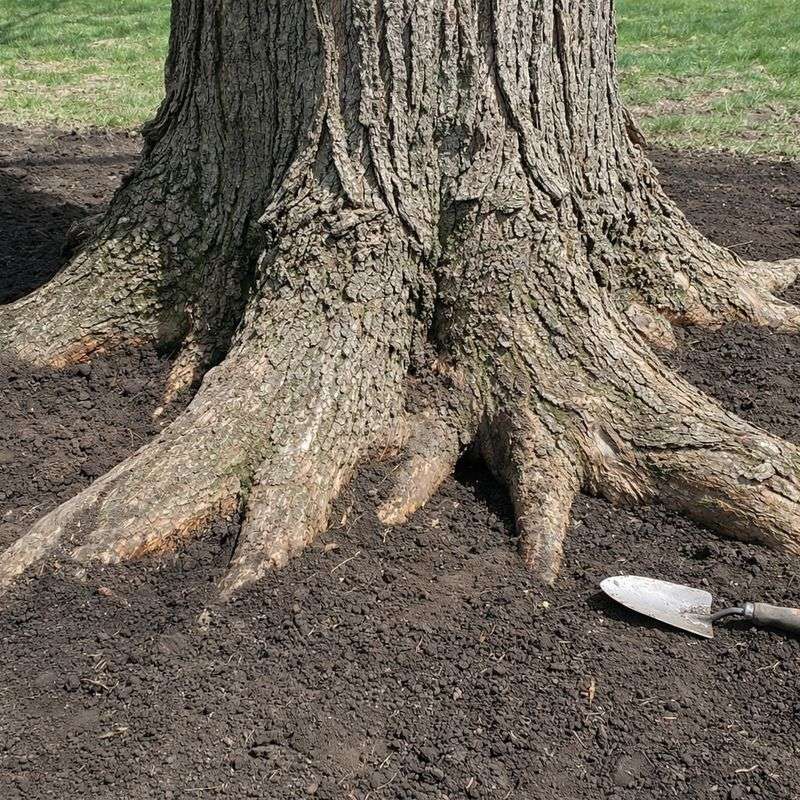
Every healthy tree has what arborists call a trunk flare, that gentle outward widening at the very base where the trunk meets the soil. You have probably seen it on big, old oaks or maples in Ohio parks, where the base of the tree fans out beautifully before disappearing into the ground.
That flare is not just cosmetic. It plays an important role in the structural stability and vascular health of the tree.
When mulch buries the trunk flare completely, serious problems follow. The flare is designed to sit at or just above the soil line, where it can breathe and stay relatively dry.
Burying it under several inches of mulch mimics the effect of planting a tree too deeply, a well-known cause of long-term tree decline. The tissue in that area begins to break down because it simply cannot tolerate being constantly covered and moist.
In Ohio front yards, buried trunk flares are extremely common, and most homeowners have no idea the flare even exists, let alone that it should be visible. A simple way to check your own trees is to look at the base and ask whether you can see that natural widening shape.
If the trunk appears to go straight into the ground like a telephone pole, chances are the flare is buried and the tree needs some attention before bigger structural issues develop.
4. Why Stem-Girdling Roots Start Forming Under Mulch Mounds
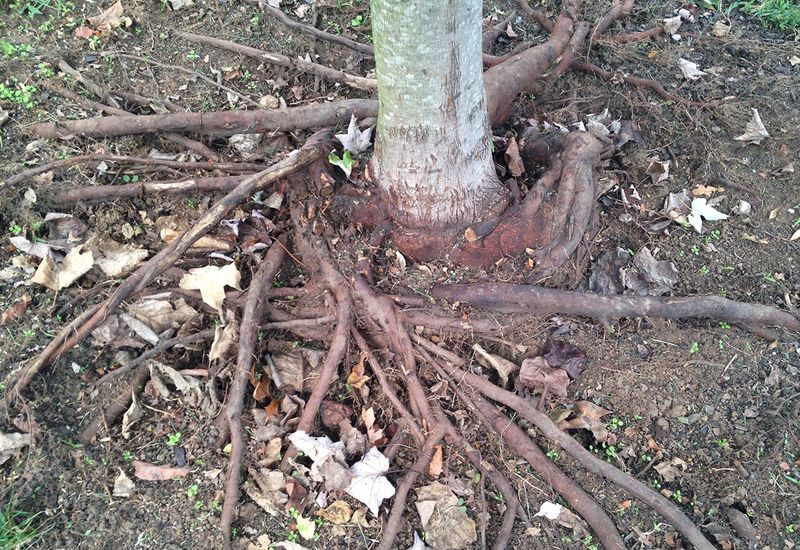
One of the most serious long-term consequences of volcano mulching is something called stem-girdling roots. The name sounds technical, but the concept is straightforward and genuinely alarming once you understand what is happening underground.
Roots that should be growing outward horizontally sometimes start circling back around the trunk instead, eventually wrapping so tightly that they cut off the flow of water and nutrients moving up through the tree.
Mulch mounds encourage this by creating a warm, loose environment right at the base of the trunk where roots tend to stay rather than spreading outward into harder soil. Over several growing seasons, those roots thicken and tighten.
In Ohio, where clay-heavy soils already make it tough for roots to spread freely, the problem can develop faster than in sandier regions. The girdling roots can restrict the trunk from the outside in a process that takes years and can be difficult to correct once advanced.
Many certified arborists working in Ohio communities say stem-girdling roots are among the top reasons otherwise healthy-looking trees begin declining with no obvious explanation. Homeowners spend money on fertilizers and watering programs without realizing the real issue is structural and happening just below the mulch surface.
Pulling mulch back from the base and inspecting for circling roots every few years is one of the smartest and most overlooked maintenance habits any front yard tree owner can develop.
5. How Excess Mulch Can Dry Out And Repel Water
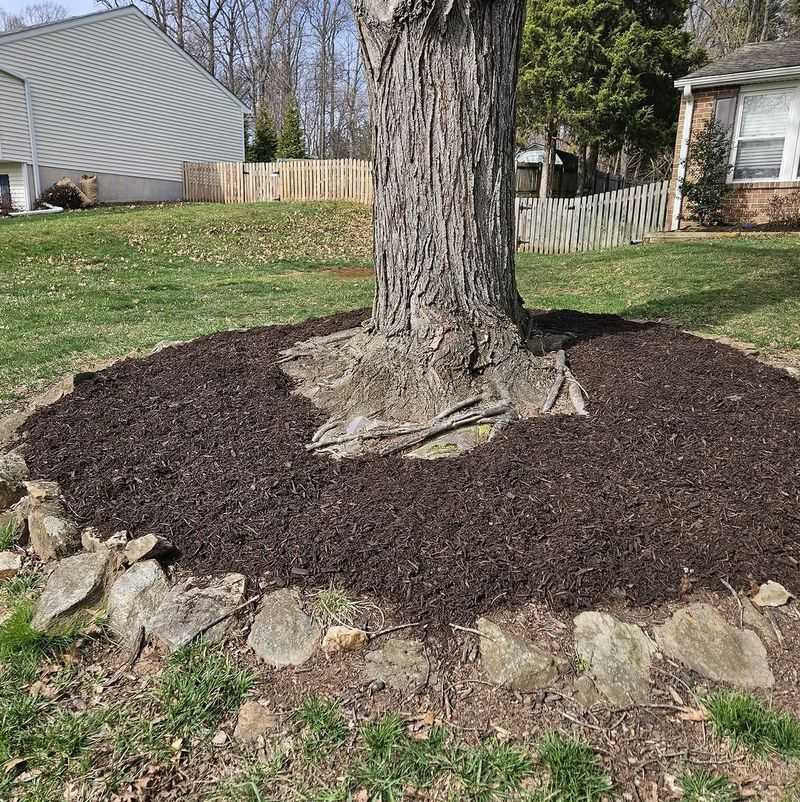
Here is something that surprises a lot of Ohio gardeners: too much mulch can actually make it harder for water to reach a tree’s roots, not easier. Most people add mulch partly to help retain soil moisture during dry Ohio summers, which is a perfectly good instinct in the right amounts.
But when mulch piles up several inches thick, it starts behaving more like a sponge that never fully wets through or, worse, like a water-resistant mat that sheds rain right off the surface.
Organic mulch that is packed too densely or applied too thickly can develop what is called a hydrophobic layer. This happens when the mulch dries out completely between rain events, especially during hot July and August stretches common across Ohio.
Once that crust forms, water rolls off the mound and away from the root zone entirely, leaving the tree thirsty even after a good rainstorm. You might notice the soil directly under a thick mulch volcano is bone dry even when surrounding lawn areas are moist.
Spreading mulch too thickly also reduces the oxygen exchange that tree roots depend on. Roots need air as well as water, and a dense, compacted mulch layer can limit oxygen to the uppermost feeding roots over time.Keeping mulch at the right depth and raking it occasionally to break up any crust that forms will go a long way toward making sure your trees actually benefit from the mulch you are working hard to apply.
6. What Proper Tree Mulching Should Look Like
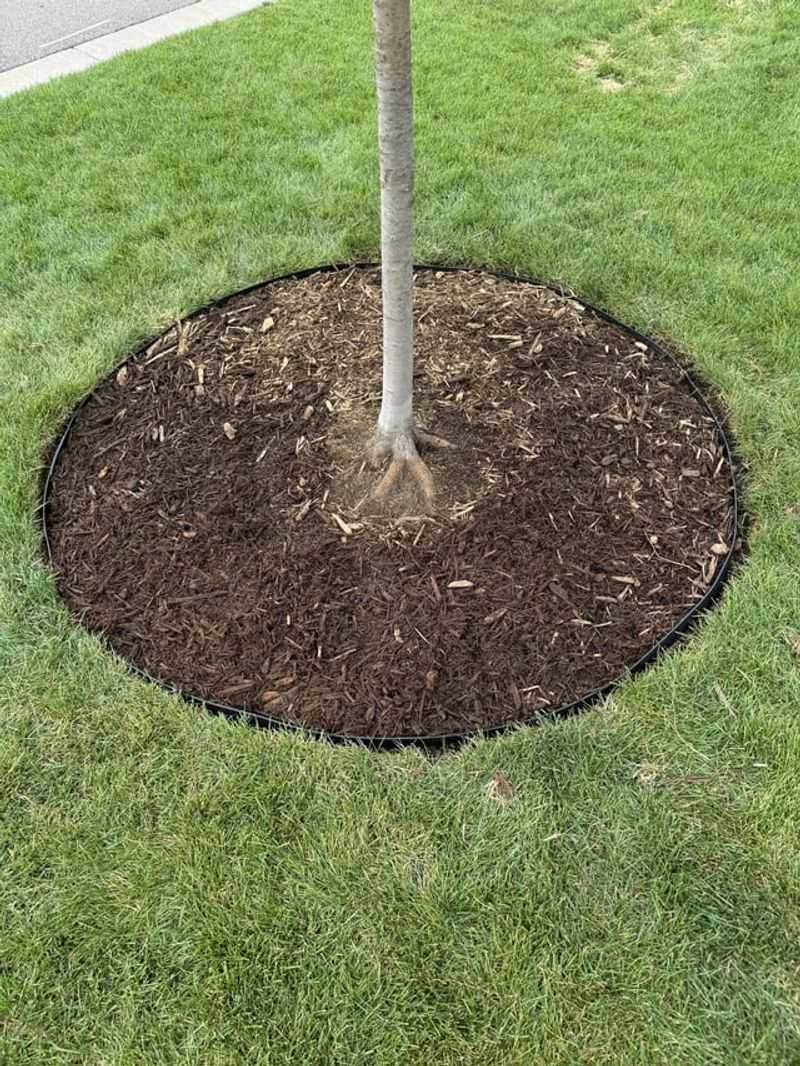
Proper mulching honestly looks a little different from what most people are used to seeing. Instead of a cone or volcano shape, correctly applied mulch forms a wide, flat ring around the base of the tree, sometimes called a donut shape.
The mulch spreads outward several feet from the trunk to cover as much of the root zone as possible, while the area immediately around the trunk stays completely clear.
The goal is to mimic what happens naturally on a forest floor in Ohio, where fallen leaves create a broad, shallow layer of organic material that breaks down slowly and feeds the soil. That natural layer never piles up against tree trunks in a thick mound.
It stays relatively even and loose, allowing rainwater to filter through easily and air to circulate freely around the root zone and lower trunk.
Extending your mulch ring outward rather than upward is one of the most impactful changes you can make in your front yard. A wider ring means more root coverage, better moisture retention across the actual root zone, and less competition from grass and weeds.
Many Ohio landscape professionals recommend extending the mulch ring at least to the drip line of the tree, which is the outer edge of the canopy. Even if you cannot go that far, simply widening the ring and flattening it out will put your trees in a much healthier position for the long term.
7. Keep Mulch Only 2 To 3 Inches Deep And Off The Trunk
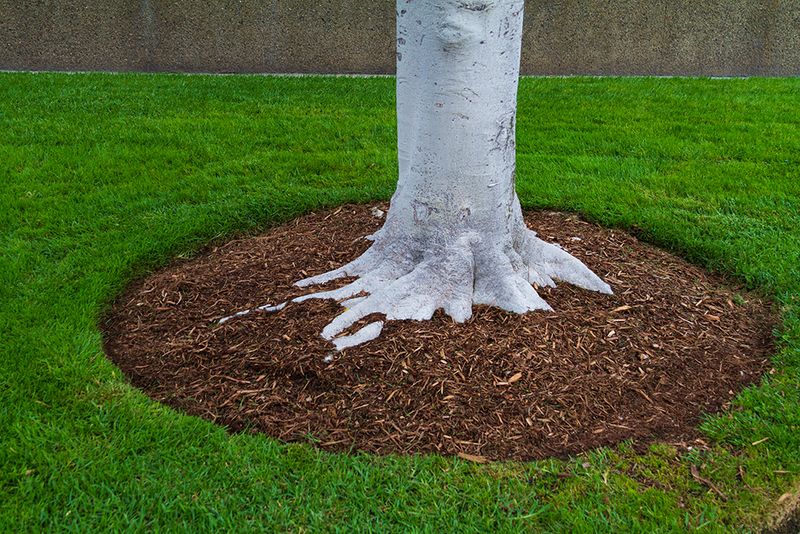
Two to three inches. That is really all you need, and it is a number worth remembering every single spring when mulching season rolls around in Ohio.
A two-to-three-inch layer of mulch is deep enough to hold moisture, regulate soil temperature, and suppress weeds without creating any of the serious problems that come with thicker applications. It sounds almost too simple, but sticking to that range makes an enormous difference in tree health over time.
Just as important as depth is distance. Mulch should never touch the bark of the trunk.
Leaving a gap of at least two to four inches between the edge of your mulch and the trunk allows the bark to stay dry, breathe properly, and resist the fungal and bacterial issues that come with constant moisture contact. If you are refreshing mulch that was applied in previous years, rake back the old material first and check how deep it already is before adding more on top.
Ohio gardeners who switch to this approach often notice their trees looking visibly healthier within a single growing season. Leaves come in fuller, color improves, and the overall vigor of the tree picks up noticeably.
Sharing this simple guideline with neighbors is one of the easiest ways to improve the look and health of an entire Ohio street or community. Sometimes the smallest correction produces the biggest results, and mulching depth is a perfect example of that truth.