The Georgia Road Trip That Shows Off The Most Stunning Live Oaks
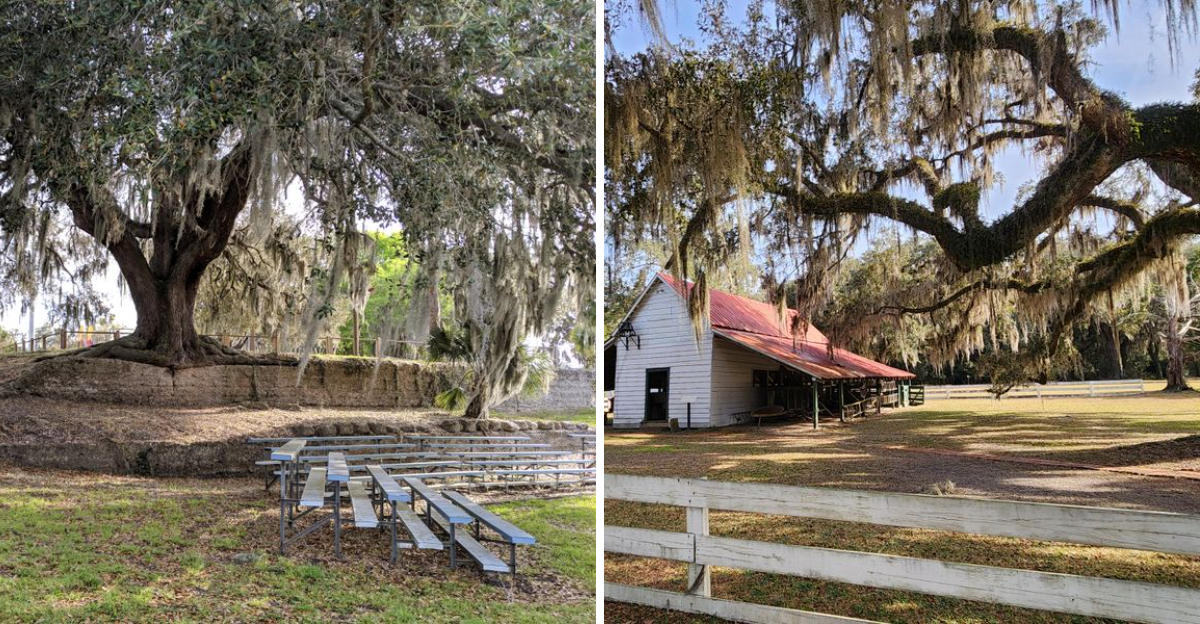
There is something powerful about driving beneath towering live oaks that stretch so wide their branches seem to reshape the sky above you.
On this Georgia road trip, the live oaks are not background scenery, they take over the entire view with thick, twisting limbs and massive canopies that make every mile feel unforgettable.
As you move under those sweeping branches, the road feels wrapped in living structure that has stood for generations, turning a simple drive into a moment that feels bigger than expected.
If you have been craving a stretch of road that feels timeless, dramatic, and quietly breathtaking, this is the Georgia route to take. Live oaks command the landscape and leave a lasting impression long after the drive ends.
1. Wormsloe Historic Site In Savannah Features A Famous Live Oak Tunnel
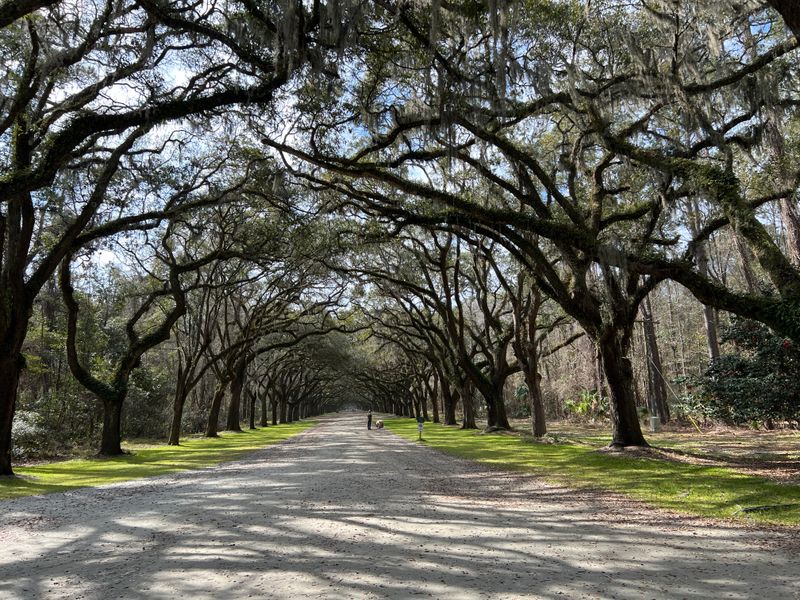
The entrance to Wormsloe Historic Site presents visitors with one of Georgia’s most photographed natural wonders: a mile and a half avenue completely shaded by towering live oaks.
Planted centuries ago, these trees have grown into a continuous canopy that filters sunlight into dappled patterns across the road.
Spanish moss hangs in graceful curtains from every branch, swaying gently in coastal breezes.
Walking or driving this oak lined path feels like stepping into another time period entirely. The symmetry of the trees creates a perspective that seems to stretch endlessly ahead.
Early morning visits offer the best lighting, when sunbeams pierce through the moss draped branches and illuminate the forest floor.
Beyond the famous driveway, the property includes walking trails where additional live oaks stand among pine forests and salt marshes. Tabby ruins from the original colonial estate peek through the vegetation.
The grounds provide excellent opportunities to observe how live oaks adapt to coastal conditions, with their sprawling root systems anchoring them against storms.
Located at 7601 Skidaway Rd in Savannah, the site’s oak avenue has become an iconic image representing Georgia’s lowcountry landscape. Photographers visit year round to capture the changing light and seasons beneath these ancient trees.
Each oak displays its own character through twisted branches and unique growth patterns shaped by hundreds of years of coastal weather.
Seasonal humidity deepens the green tones of the leaves, while cooler months reveal more of the intricate branch structure overhead.
The long corridor of trees creates a quiet transition between modern Savannah and the preserved colonial landscape beyond.
2. St. Simons Island’s Avenue Of The Oaks Forms A Coastal Canopy Drive
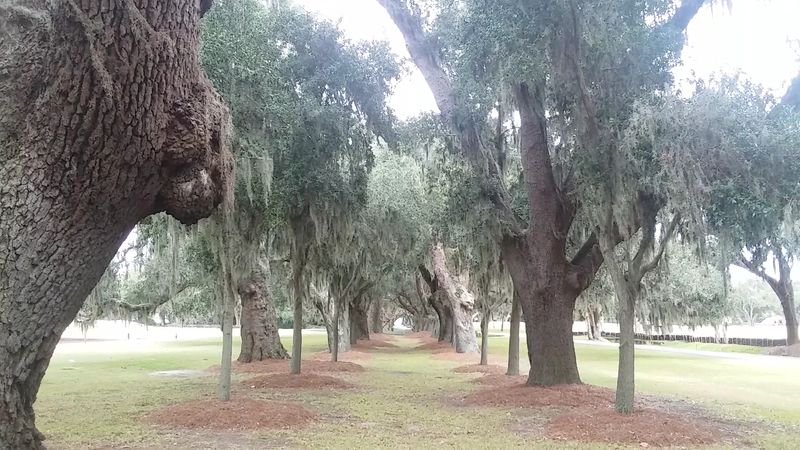
Driving beneath the intertwined branches along this coastal island route creates an immediate sense of entering a special place. Massive live oaks arch overhead from both sides of the road, their limbs reaching across to meet in the middle.
The effect resembles a living cathedral, with columns of gray bark supporting a ceiling of leaves and moss.
This particular stretch of massive live oaks runs along Canary Drive, St. Simons Island, GA 31522. The oaks lining this drive have developed exceptional size due to the island’s mild climate and long protection from heavy development.
Some trunks measure over twenty feet in circumference, their bark deeply furrowed with age.
The trees’ horizontal growth pattern proves especially striking here, with major branches extending forty or fifty feet before turning upward. This architectural quality creates the dramatic arching effect that makes the avenue so memorable.
Underneath the canopy, ferns and resurrection ferns grow along the lower branches, adding layers of green even in winter.
Local residents consider this avenue a treasure worth protecting, as coastal development threatens similar oak stands elsewhere. The trees filter salt air and provide habitat for countless bird species.
During summer afternoons, the shade beneath these oaks offers welcome relief from Georgia’s coastal heat.
In early morning light, the canopy glows softly as sunbeams slip through gaps in the leaves and Spanish moss sways overhead. The quiet atmosphere along the drive feels almost timeless, shaped by decades of steady coastal breezes and careful preservation.
Even after powerful coastal storms move through the island, these deeply rooted oaks continue standing firm as one of St. Simons Island’s most enduring natural landmarks.
3. Forsyth Park In Savannah Filled With Massive Live Oaks
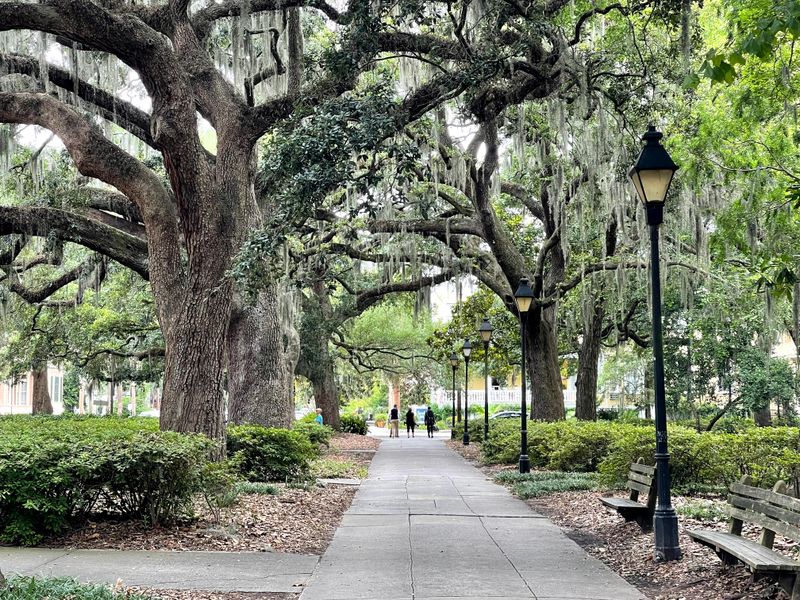
Savannah’s largest public green space spreads across thirty acres in the city’s historic district, offering residents and visitors a tree filled retreat from urban streets.
The white cast iron fountain at the park’s north end serves as its most recognized feature, but the surrounding live oaks provide the real magic.
These trees frame walking paths, shade picnic areas, and create natural gathering spaces throughout the grounds.
Unlike plantation or estate settings, these oaks grow in an urban park context where they serve the daily needs of a living neighborhood. Joggers pass beneath their branches every morning.
Families spread blankets in their shade for weekend picnics. The trees witness countless proposals, photo sessions, and quiet moments of reflection.
The park’s oak collection includes specimens of varying ages, from relatively young trees planted during recent decades to ancient giants that predate the park’s official establishment. This range allows visitors to observe how live oaks develop over time.
Younger trees display more upright growth, while older specimens spread their massive limbs horizontally across the grass.
Pathways wind between the oaks, connecting different sections of the park and leading to features like the fragrance garden and children’s play areas. The trees’ placement creates natural rooms within the larger landscape.
Each season brings subtle changes, from fresh spring growth to the bronze tones of winter. Visitors arriving at 2 W Gaston St in Savannah step directly into this canopy lined setting, where the park unfolds block by block beneath arching branches.
Street traffic fades quickly once you move deeper into the grounds. The open lawns, framed by historic homes and mature oaks, make this address one of the city’s most recognizable gathering spots year round.
4. Hofwyl-Broadfield Plantation State Historic Site Covered In Mature Oaks
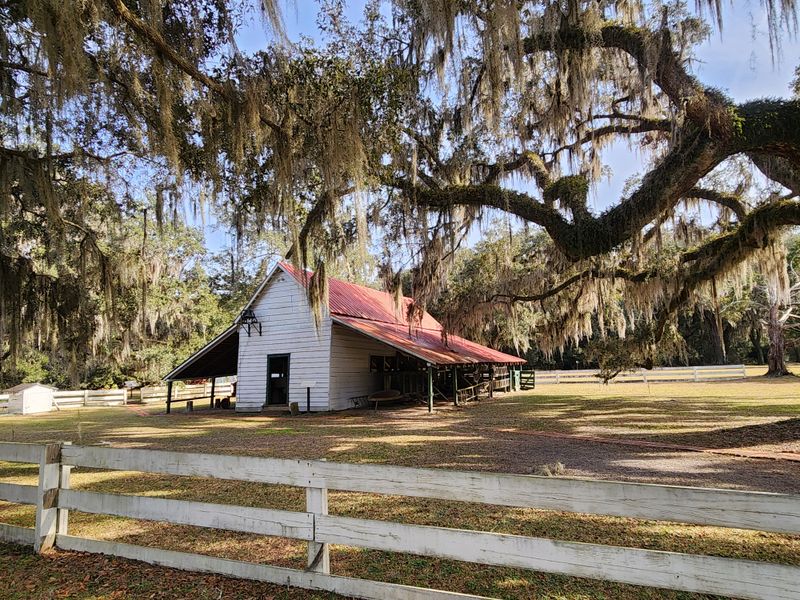
This coastal property preserves both the history of rice cultivation and the natural beauty of mature live oaks that have grown here for generations. The main house sits surrounded by oaks that were already well established when the plantation operated.
Their presence adds a sense of continuity to the landscape, connecting past and present through living trees.
Several particularly impressive specimens grow near the historic buildings, their branches spreading wide over the grounds. These oaks witnessed the plantation’s entire history, from its rice growing days through its later dairy operations.
Today they provide context for understanding how the landscape looked during different periods.
The property’s location near coastal marshes creates ideal conditions for live oak growth. Salt tolerant and wind resistant, these trees thrive in the transitional zone between upland and wetland.
Visitors walking the grounds at 5556 US 17 N in Brunswick can easily notice how the oaks’ root systems help stabilize soil and prevent erosion along marsh edges.
A nature trail winds through the property, passing additional oak groves and offering views across the salt marsh. Interpretive signs explain both cultural history and natural features.
The oaks here demonstrate remarkable resilience, having survived hurricanes, floods, and centuries of coastal weather while maintaining their graceful form.
Seasonal changes bring subtle shifts in light and color beneath the canopy, especially in early spring when fresh growth softens the branches. The filtered sunlight creates a calm atmosphere that feels removed from the nearby highway.
Benches placed along the trail encourage visitors to slow down and take in the setting. Even on warmer coastal days, the shade beneath these towering trees keeps the grounds comfortable for walking and quiet reflection.
5. Fort King George Historic Site In Darien Set Among Towering Live Oaks
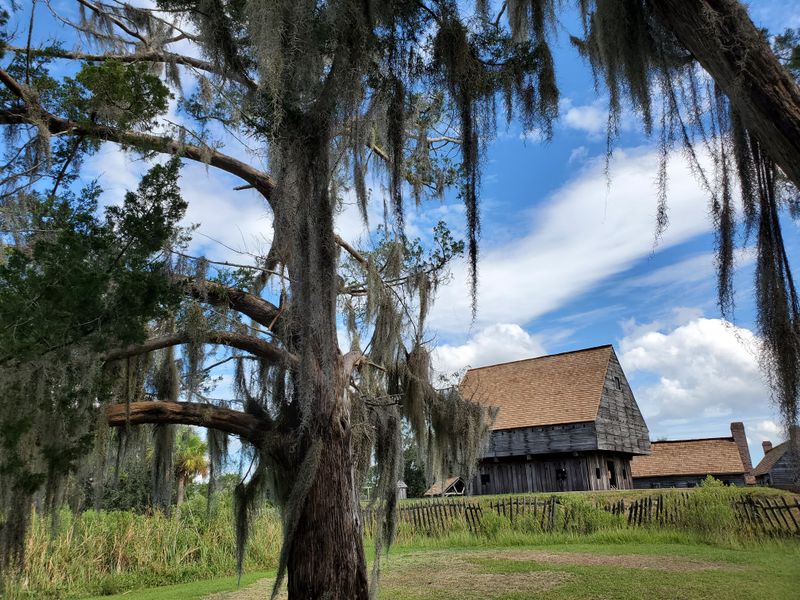
Stand on the bluff above the Altamaha River at 302 McIntosh Rd SE, Darien, GA 31305 and the first thing you notice is not the reconstructed walls but the wide sky, open marsh, and live oaks holding their ground against the coastal wind.
The setting feels expansive and exposed, with trees scattered across the landscape rather than arranged in neat avenues.
Each live oak grows on its own terms, developing a distinctive canopy shaped by salt air and steady breezes instead of formal design.
Their branches stretch outward and slightly downward, framing long views across the river while anchoring the bluff with deep, steady roots.
From this elevated position, the water and marshlands unfold in every direction, and several mature oaks line the edge as natural sentinels.
Unlike manicured garden specimens, these trees receive minimal maintenance, yet they continue to thrive despite salt spray, storms, and occasional flooding. Their resilience highlights how naturally live oaks belong in coastal Georgia’s environment.
A museum building on site houses artifacts and exhibits that explain the fort’s role in the region, while interpretive displays across the grounds guide visitors through the reconstructed structures.
Walking between the buildings and beneath the oaks creates a layered experience where open sky, river views, and historic reconstruction merge.
The trees lend scale and permanence to a landscape that has changed over centuries, adding shade, texture, and a quiet sense of endurance to this bluff overlooking the Altamaha.
6. Darien Waterfront Park With Wide Riverfront Oaks
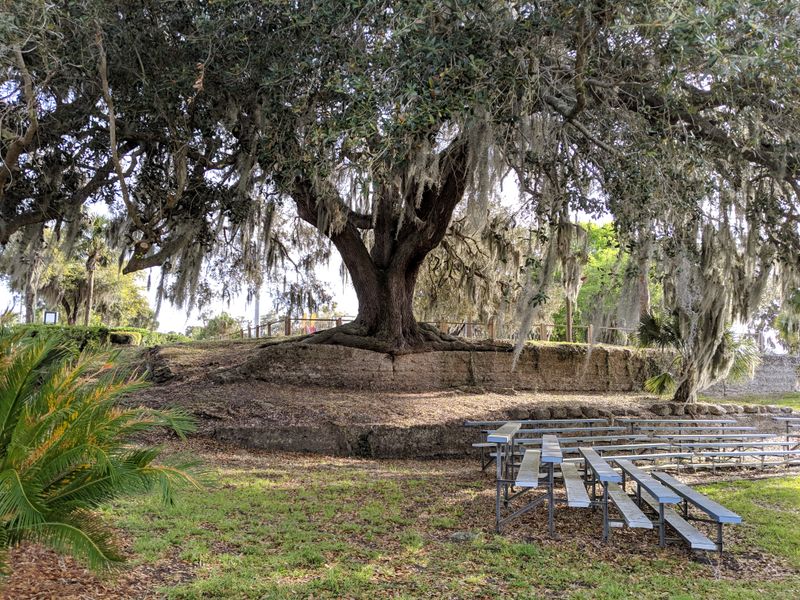
Salt air and slow river views greet you the moment you step into this relaxed waterfront park at 1 Screven St, Darien, GA 31305, where live oaks shape the entire experience.
Set along the banks of the Darien River, the park feels grounded in everyday coastal life rather than polished for tourism.
Wide spreading branches create dependable shade over picnic tables, giving visitors a comfortable place to sit while shrimp boats idle nearby and smaller vessels drift past on the tide.
A paved walking path follows the water’s edge, offering open views across the river and steady breezes that soften the summer heat.
The live oaks show subtle signs of their saltwater environment, from slightly smaller leaves to wind shaped branching that angles away from prevailing coastal gusts.
Their bark carries a weathered texture shaped by humidity and salt exposure, yet the trees still hold their classic form with strong horizontal limbs and dense evergreen canopies.
Spanish moss hangs lightly from many branches, filtering sunlight and adding depth to the riverfront scenery. Families gather here for simple outings, unhurried conversations, and quiet afternoons watching the marsh grasses shift with the tide.
You can walk directly up to the trunks, study the patterns in the bark, and notice small plants clinging to shaded crevices.
Compared to grand estates, this setting feels intimate and approachable, highlighting how live oaks anchor daily life in coastal Georgia while offering beauty, shelter, and a lasting sense of place.
7. Pebble Hill Plantation Marked By A Grand Oak Drive
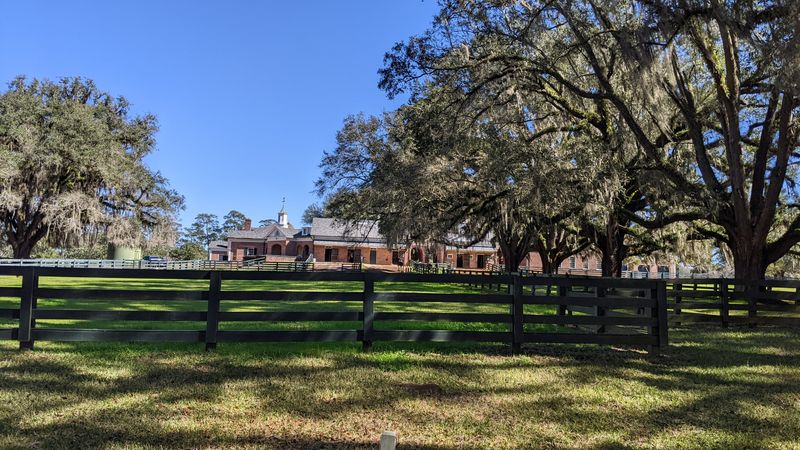
Nothing feels more dramatic than driving beneath a tunnel of live oaks that seem to stretch endlessly toward a historic estate.
At 1251 US-319 S, Thomasville, GA 31792, this preserved sporting plantation near Thomasville delivers exactly that kind of unforgettable entrance.
A long, oak-lined driveway sets the tone immediately, framing the approach to the main house and creating a powerful sense of arrival that defines the entire property.
Here, the live oaks were intentionally planted and maintained as part of a formal landscape design. Their broad limbs arch outward with confidence, forming dense green canopies that cast deep shade over the drive.
Each curve in the path feels deliberate, guiding visitors toward the estate while highlighting the symmetry and structure that plantation landscapes are known for.
Beyond the main approach, additional oak-lined roads and walking paths weave through the grounds.
Some areas feel refined and architectural, while others transition into open fields and woodland edges where live oaks stand alongside longleaf pines and native understory plants.
This blend of managed beauty and natural habitat gives the property depth and character.
The main house and historic outbuildings are open for tours, and the grounds include gardens, stables, and preserved acreage that reflects both agricultural heritage and conservation values.
Walking the estate reveals live oaks in multiple settings, from carefully designed vistas to quieter, more natural corners that feel untouched.