The Gorgeous Hydrangea Alternatives That Thrive Without Fuss In Pennsylvania Gardens
Love the look of hydrangeas but not the constant care they sometimes demand? Many Pennsylvania gardeners are discovering beautiful alternatives that offer the same lush charm with far less effort.
These easygoing plants handle local weather, changing seasons, and occasional neglect without losing their appeal. You still get full blooms, soft color, and eye catching texture, but with fewer worries about soil tricks or frequent watering.
Some varieties bloom longer, others attract pollinators, and many stay strong through heat, rain, and cool evenings. They fit perfectly in cottage gardens, tidy landscapes, or relaxed backyard spaces.
Best of all, they bring reliable beauty year after year without turning gardening into hard work. If you want the elegance of hydrangea style flowers with simpler care, these low fuss favorites might become the stars of your Pennsylvania garden this season and beyond.
1. Beautyberry Shrubs Bring Purple Magic To Fall Gardens
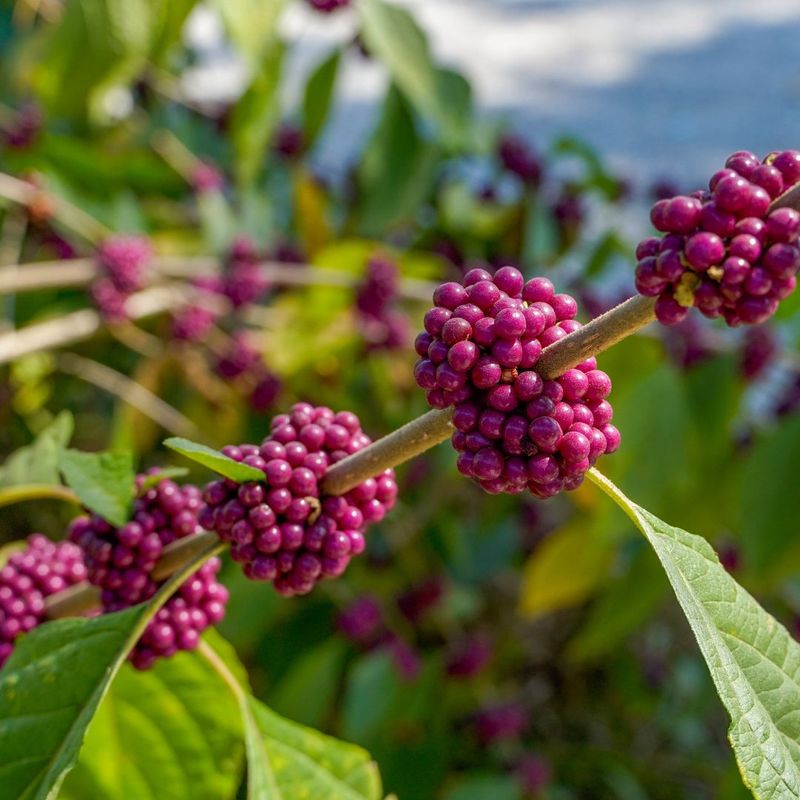
American beautyberry transforms Pennsylvania gardens into something truly special when fall arrives. Bright purple berries appear in clusters along gracefully arching branches, creating a display that stops visitors in their tracks.
This native shrub grows three to six feet tall and wide, fitting perfectly into most landscape designs without taking over your entire yard.
Planting beautyberry in your Pennsylvania garden means choosing a spot with partial shade to full sun. The shrub adapts to various soil types as long as drainage is decent. Once established, it handles dry spells without constant watering or attention from you.
The small pink flowers that bloom in summer might not grab headlines, but they attract bees and butterflies to your space. Birds absolutely love the berries that follow, making your garden a wildlife haven through autumn and early winter.
Deer usually leave beautyberry alone, which solves a common problem for Pennsylvania gardeners.
Pruning happens in late winter or early spring before new growth starts. Cut the shrub back hard if needed since it blooms on new wood.
This forgiving nature means mistakes rarely cause lasting damage. The shrub bounces back quickly and produces berries on fresh stems each season.
Beautyberry works wonderfully as a specimen plant, in mixed borders, or as part of a naturalized area. Its unique berry color adds an unexpected pop that hydrangeas simply cannot match during fall months in Pennsylvania landscapes.
2. Summersweet Clethra Perfumes Your Garden With Fragrant Spikes
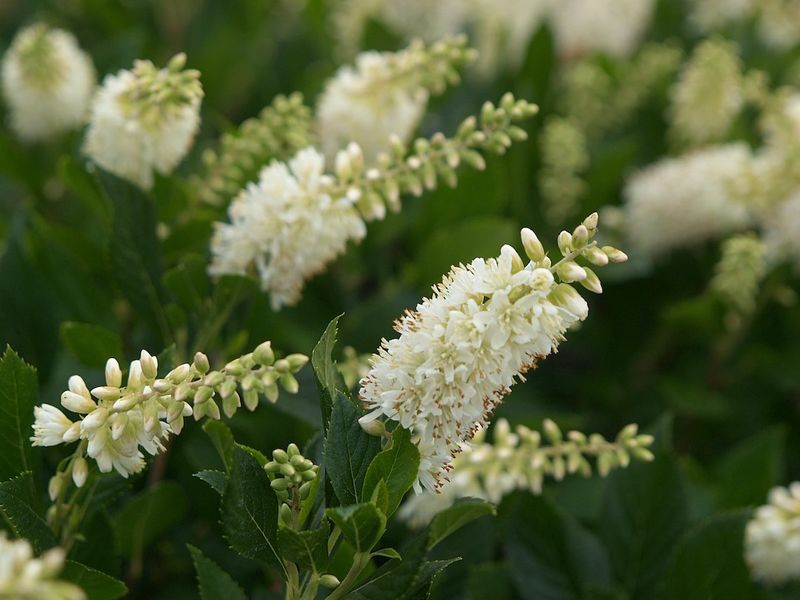
Walk past summersweet on a warm July evening and the sweet fragrance stops you in your tracks.
White or pink flower spikes cover this native shrub from mid to late summer, filling Pennsylvania gardens with perfume when many other plants have finished blooming. The flowers look like bottlebrush spikes standing upright on branch tips.
Clethra alnifolia grows four to eight feet tall depending on the variety you choose. It spreads slowly through underground stems, creating a nice colony over time without becoming aggressive.
This growth habit makes it perfect for filling in shady spots or creating natural-looking groupings.
Pennsylvania gardeners love summersweet because it tolerates wet soil better than most flowering shrubs. Plant it in areas that stay damp or near downspouts where other plants struggle.
It also handles partial to full shade, making it ideal for woodland gardens or spots under tree canopies.
Butterflies, bees, and hummingbirds visit the flowers constantly throughout the blooming period. The golden fall foliage adds another season of interest before leaves drop. Deer typically avoid browsing on summersweet, protecting your investment.
Maintenance stays minimal once the shrub establishes itself in your garden. Water during extreme drought, but otherwise let nature take its course.
Pruning needs are light since the plant maintains a naturally attractive shape. Remove any dry wood in early spring before new growth emerges.
Summersweet brings that cottage garden charm to Pennsylvania landscapes without the fussy requirements hydrangeas demand for consistent blooming success.
3. Oakleaf Hydrangea Offers Hydrangea Beauty With Tougher Roots
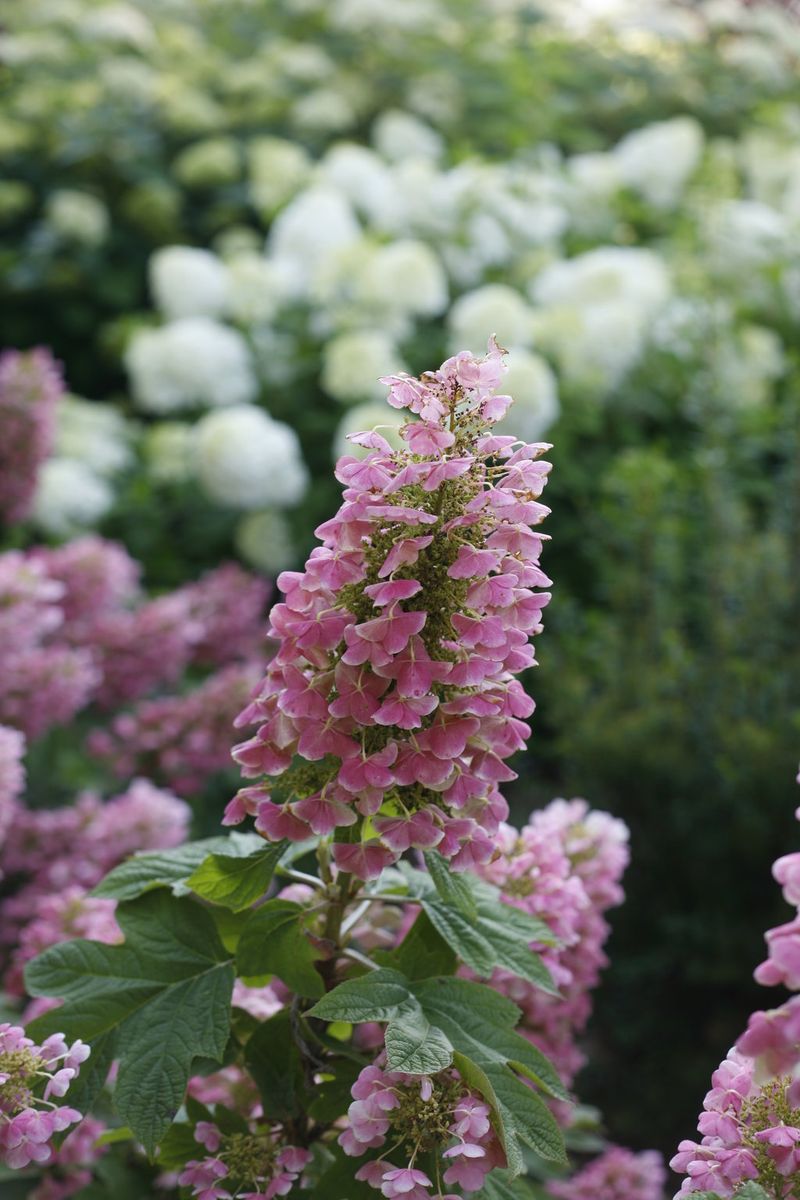
Yes, this is technically a hydrangea, but oakleaf hydrangea behaves completely differently from those finicky mopheads that cause so much frustration. Native to the southeastern United States, this tough customer handles Pennsylvania conditions like a champion.
Large white flower clusters shaped like cones appear in early summer and age to pink and tan shades that last for months.
The oakleaf hydrangea gets its name from leaves shaped like red oak foliage. These leaves turn brilliant shades of red, orange, and purple each fall, giving you two major seasons of visual impact.
Peeling cinnamon-colored bark adds winter interest after leaves drop, making this a true four-season plant for Pennsylvania yards.
Growing four to six feet tall and wide, oakleaf hydrangea fits comfortably in foundation plantings, mixed borders, or as a specimen.
It prefers partial shade but tolerates more sun than bigleaf hydrangeas, especially in Pennsylvania where summers are not brutally hot.
Regular garden soil works fine without amendments or special pH adjustments. Drought tolerance improves significantly after the first year in the ground.
Deep watering during establishment helps roots spread, but mature plants handle dry periods without wilting or dropping buds. This reliability makes oakleaf hydrangea perfect for busy gardeners.
Pruning happens right after flowering if needed, though the plant looks attractive with minimal intervention.
Remove oldest stems at ground level every few years to encourage fresh growth. Flowers form on old wood, so avoid late-season pruning that removes next year’s buds.
4. Ninebark Shrubs Deliver Color Without Constant Care
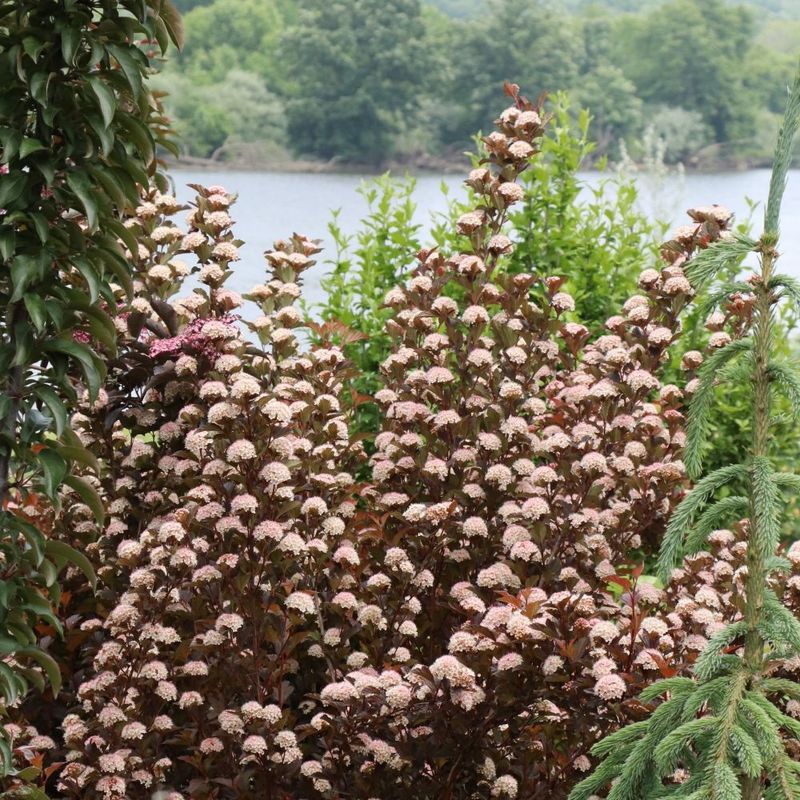
Ninebark might have an odd name, but this native shrub delivers non-stop color and texture to Pennsylvania landscapes. Varieties come with foliage in shades of burgundy, gold, orange, or traditional green.
Small white or pink flowers appear in rounded clusters during late spring, adding another layer of interest. Height ranges from three to ten feet depending on which cultivar you select.
Compact varieties work perfectly in smaller Pennsylvania gardens, while larger types create excellent privacy screens or hedges. The shrub grows quickly, filling in spaces within a couple of seasons.
Adaptability makes ninebark a winner for Pennsylvania conditions. It handles clay soil, rocky soil, and everything in between.
Full sun to partial shade both work fine, though colored foliage varieties show their best hues with more light exposure. Once established, ninebark tolerates drought, humidity, and temperature swings without complaining.
Exfoliating bark reveals layers of different colors underneath, creating winter interest similar to river birch trees.
This feature gives the shrub its common name and adds texture to your garden even when leaves have fallen. Birds appreciate the small seeds that develop after flowers fade.
Maintenance stays simple with ninebark in Pennsylvania gardens. Prune in late winter if you want to control size or shape, but the plant looks attractive without constant trimming.
Remove oldest stems at ground level every few years to keep the shrub vigorous and full. Pests and diseases rarely cause problems, making this truly a plant-it-and-forget-it option for busy homeowners seeking reliable garden performers.
5. Buttonbush Creates Unique Spherical Blooms Near Water Features
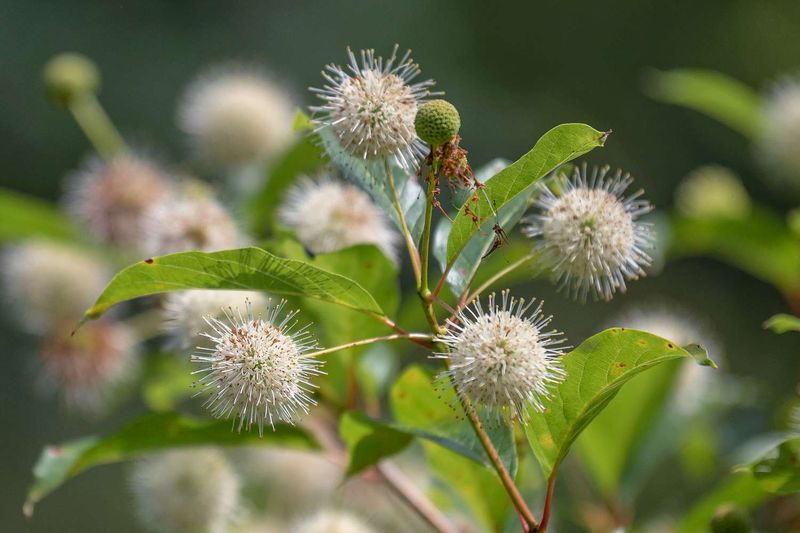
Round white flowers that look like pincushions covered in tiny pins make buttonbush instantly recognizable in Pennsylvania gardens.
These unusual blooms appear throughout summer, attracting more butterflies and hummingbirds than almost any other native shrub. Each sphere measures about an inch across and covers the plant in waves of white.
Cephalanthus occidentalis grows naturally along streams and pond edges throughout Pennsylvania. This native shrub reaches six to twelve feet tall in garden settings, creating a substantial presence.
Plant it anywhere soil stays consistently moist, including those problem spots where water collects after rain.
Buttonbush actually grows in standing water, making it perfect for rain gardens or pond edges in Pennsylvania landscapes. Regular garden beds work too as long as you water during dry spells.
The shrub tolerates full sun to partial shade, adapting to various light conditions without fuss.
Glossy green leaves stay attractive all summer long, providing a nice backdrop for the unusual flowers. Birds eat the round seed balls that form after blooms fade, extending wildlife value into fall and winter.
Deer browse buttonbush occasionally but rarely cause serious damage to established plants.
Pruning needs stay minimal since buttonbush naturally forms a rounded shape. Cut back hard in late winter if the shrub grows too large for its space.
New growth emerges quickly in spring, and flowers appear on current season stems. This forgiving nature means you cannot really mess up pruning tasks.
Buttonbush brings that wow factor to Pennsylvania water gardens without requiring the perfect conditions hydrangeas demand.
6. Spirea Shrubs Bloom In Waves From Spring Through Summer
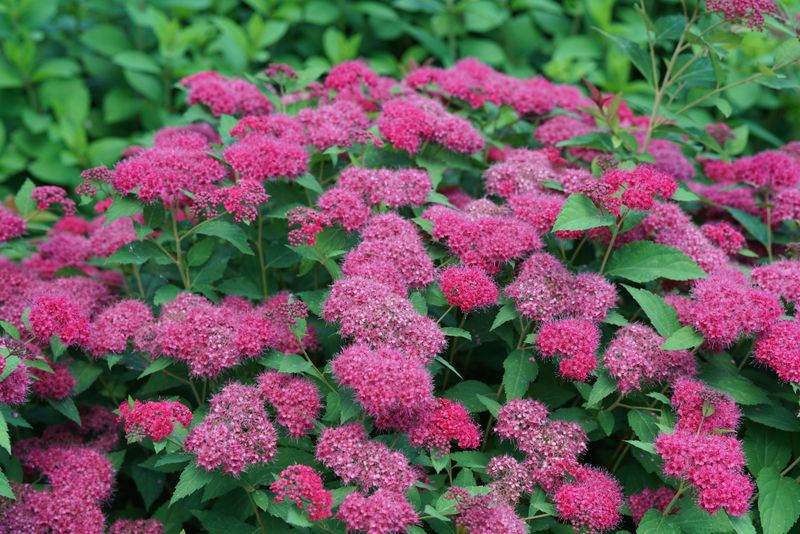
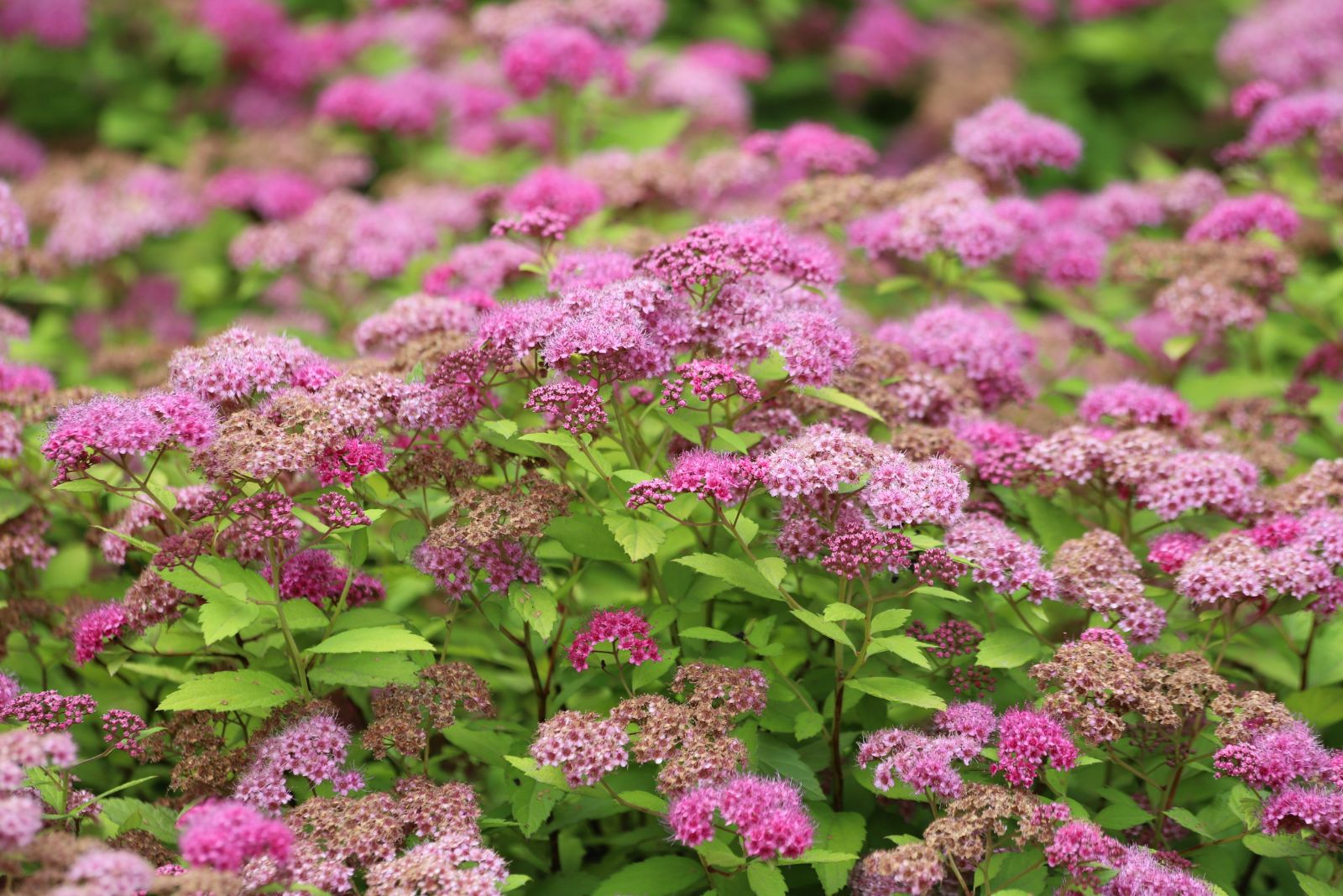
Few shrubs bloom as generously or as reliably as spirea in Pennsylvania gardens. Cascading branches covered in clusters of tiny flowers create a fountain effect that rivals any hydrangea display.
Spring-blooming types like bridal wreath spirea cover themselves in white, while summer bloomers offer pink and rose shades that last for weeks.
Spirea varieties range from two to eight feet tall, giving Pennsylvania gardeners options for every landscape situation. Compact types work beautifully in foundation plantings or mixed borders.
Larger varieties create informal hedges or specimen plants that anchor garden beds with reliable structure.
Toughness makes spirea a champion for Pennsylvania conditions. The shrubs handle clay soil, occasional drought, temperature extremes, and neglect without missing a beat.
Full sun produces the heaviest flowering, but partial shade works fine too. Pests and diseases rarely bother spirea, eliminating the need for sprays or treatments.
Many spirea varieties offer colorful foliage in addition to flowers. Gold, lime, burgundy, and orange-tinted leaves provide season-long interest even when blooms have faded.
Some types show attractive fall color before leaves drop, extending visual impact into autumn months.
Maintenance stays simple with spirea in Pennsylvania landscapes. Prune spring bloomers right after flowers fade since they bloom on old wood.
Summer bloomers get trimmed in late winter because they flower on new growth. Remove oldest stems every few years to keep plants vigorous and full of blooms.
Spirea bounces back from hard pruning, making mistakes easy to correct the following season.