The 4 Most Overplanted Arizona Shrubs (And Better Low-Maintenance Swaps)
Arizona yards can look good on paper and still feel like they are missing something. A shrub may be popular, easy to find, and planted all over the neighborhood, but that does not always mean it is the right choice for the yard.
In a place like Arizona, where every plant has to earn its spot, the difference becomes hard to ignore.
Some shrubs stay in heavy rotation simply because people are used to seeing them. They become the default.
The safe pick. The thing homeowners grab without thinking twice.
But after a while, that same familiar look can make a yard feel flat, tired, or harder to manage than expected.
That is usually when people start noticing there may have been a better option all along. Arizona has no shortage of shrubs that can handle the climate and still keep a yard looking clean, natural, and full of character.
The tricky part is knowing which ones are worth replacing and which lower effort choices make more sense.
1. Oleander Is Overused And Requires Constant Maintenance
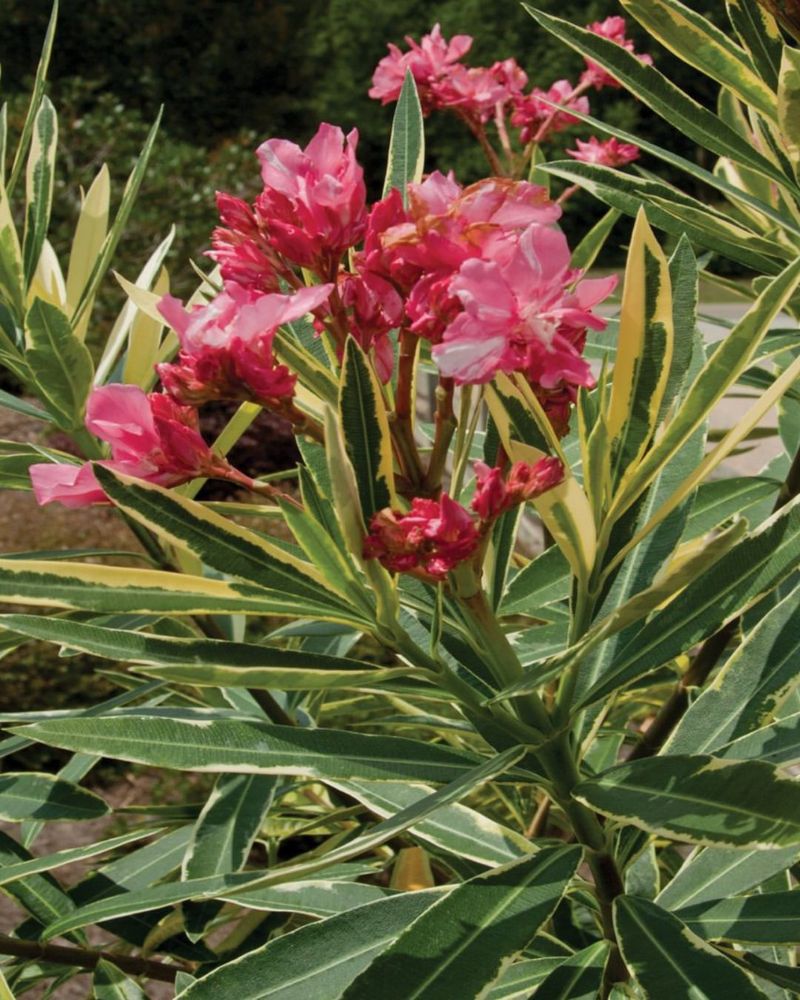
Oleander is everywhere in Arizona — and that alone should make you pause before planting it. You see it lining highways, parking lots, and front yards from Tempe to Tucson, which tells you more about habit than good plant selection.
Pruning oleander is practically a seasonal job. Left alone, it gets rangy, top-heavy, and starts looking more like a scraggly tree than a tidy shrub.
Keeping it shaped means regular cuts, which also means regular cleanup of clippings that cannot go into a compost pile because every part of the plant is toxic.
Families with young kids or pets need to be especially careful. Accidental ingestion can cause serious health problems, and that risk does not disappear just because the plant is familiar.
Lots of Arizona homeowners do not realize what they have in their yard until something goes wrong.
Beyond safety, oleander is simply exhausting to maintain in a residential setting. It pushes out suckers from the base, gets hit by frost damage in colder Arizona winters, and can look rough by late summer.
There are better choices that give you privacy, color, and structure without the constant upkeep.
It also tends to collect pests like aphids and scale, which adds even more maintenance to an already demanding shrub. If a cleaner, safer yard is the goal, this is one plant that often ends up causing more problems than it solves.
2. Indian Hawthorn Struggles In Intense Heat And Often Declines
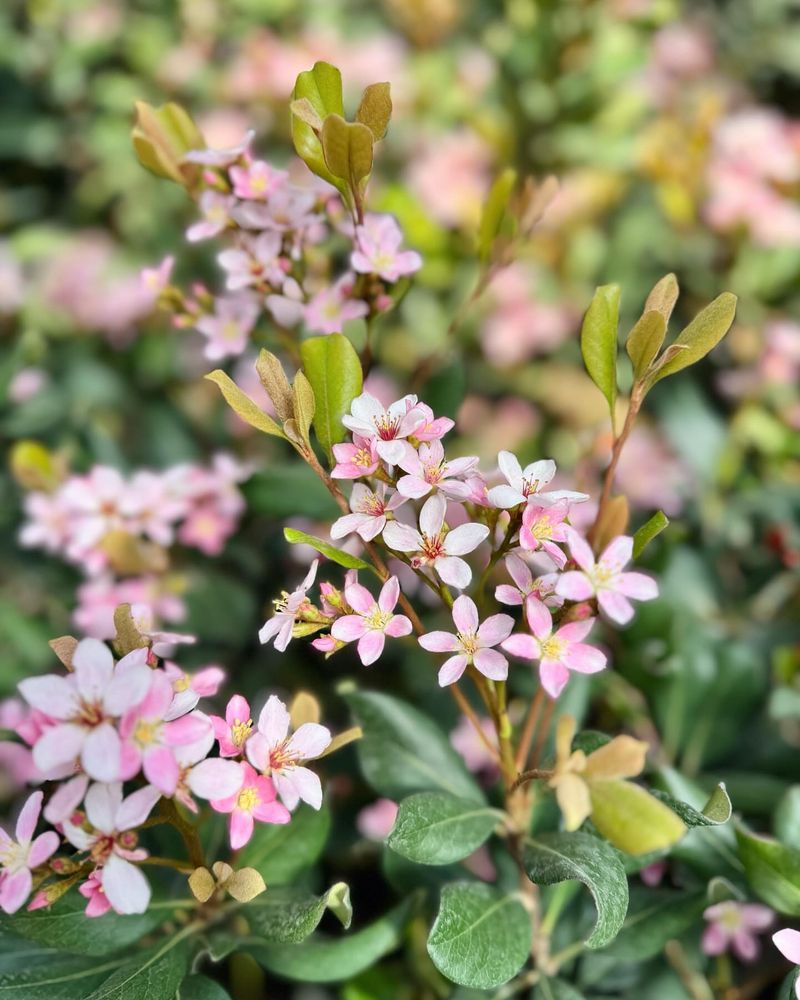
Indian Hawthorn looks great in a nursery photo, but Arizona summers have a way of exposing its weaknesses fast. Planted across Phoenix and Chandler neighborhoods for years, it has a reputation for looking solid in spring and then slowly falling apart by August.
Leaf spot fungus is a real problem here. Arizona does not seem humid enough for fungal issues, but monsoon season changes that equation.
Wet soil, high temps, and poor air circulation around tightly planted hawthorns create the exact conditions that trigger spotty, discolored foliage.
Recovery is slow. Once leaf spot gets going, the plant drops leaves and never quite fills back in the way it did before.
You end up with a patchy, uneven shrub that looks worse each year rather than better. Replacing it becomes the only real fix, which means wasted time and money.
Intense reflected heat from walls, driveways, and pavement speeds up the decline even more. Indian Hawthorn was not bred for the kind of brutal radiant heat that bounces off concrete in a Scottsdale or Mesa backyard.
Shade and gentle conditions suit it far better than what most Arizona landscapes actually offer. If your Indian Hawthorn is already struggling, do not wait around hoping it will bounce back — it probably will not.
3. Boxwood Does Not Handle Heat Well And Needs Ongoing Care
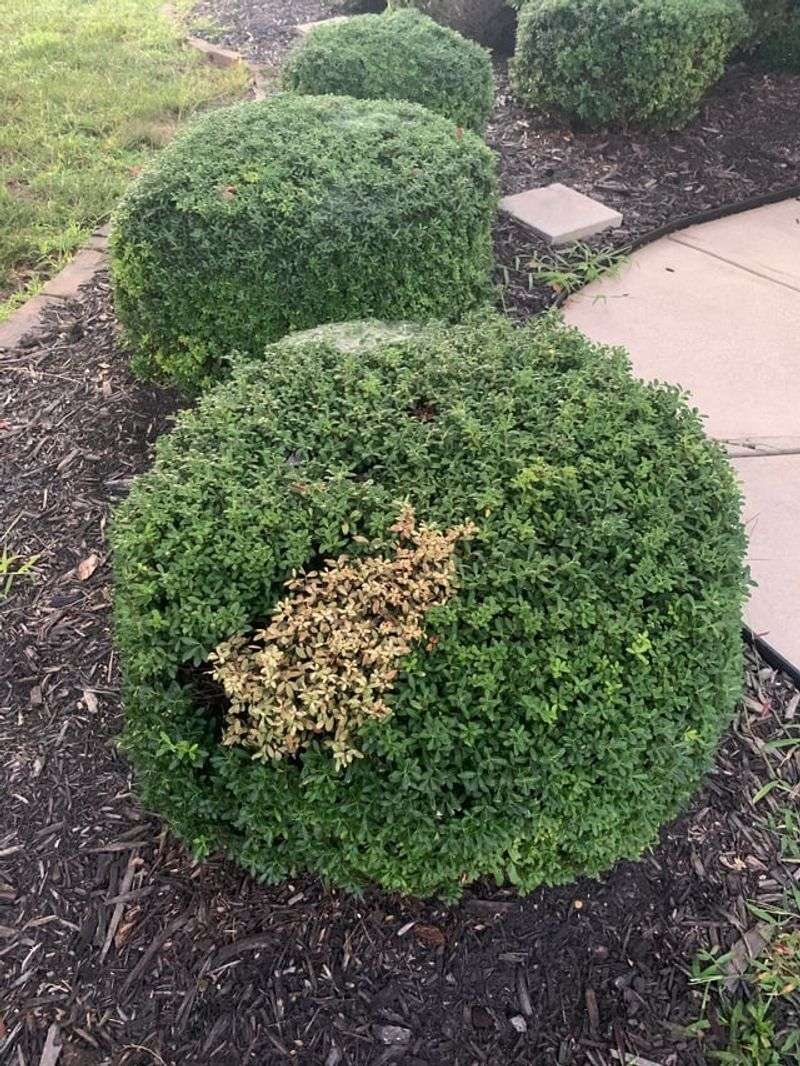
Boxwood is a classic hedge plant in cooler parts of the country, but Arizona is not a cool place. Planting boxwood in the Valley of the Sun is a bit like wearing a wool coat in July — it just does not make sense for the environment.
Heat stress shows up fast. Leaves turn bronze or brown around the edges, and the plant starts looking like it is barely holding on.
Consistent deep watering can help, but even well-irrigated boxwood in Phoenix tends to look stressed during the hottest weeks of summer.
Root rot is another issue. Arizona soils vary widely, and in areas with heavy clay or poor drainage, boxwood roots struggle to breathe.
Overwatering to compensate for heat stress often makes the root situation worse, not better. It becomes a cycle that is hard to break without pulling the plant.
Boxwood blight has also become a growing concern nationally, and Arizona is not immune. Once blight hits, it spreads quickly and there is no easy fix.
Regular fungicide applications become necessary just to keep the plant alive, which adds cost and effort on top of an already demanding plant. For a state where water is precious and summers are brutal, boxwood demands far more than it gives back in most residential Arizona settings.
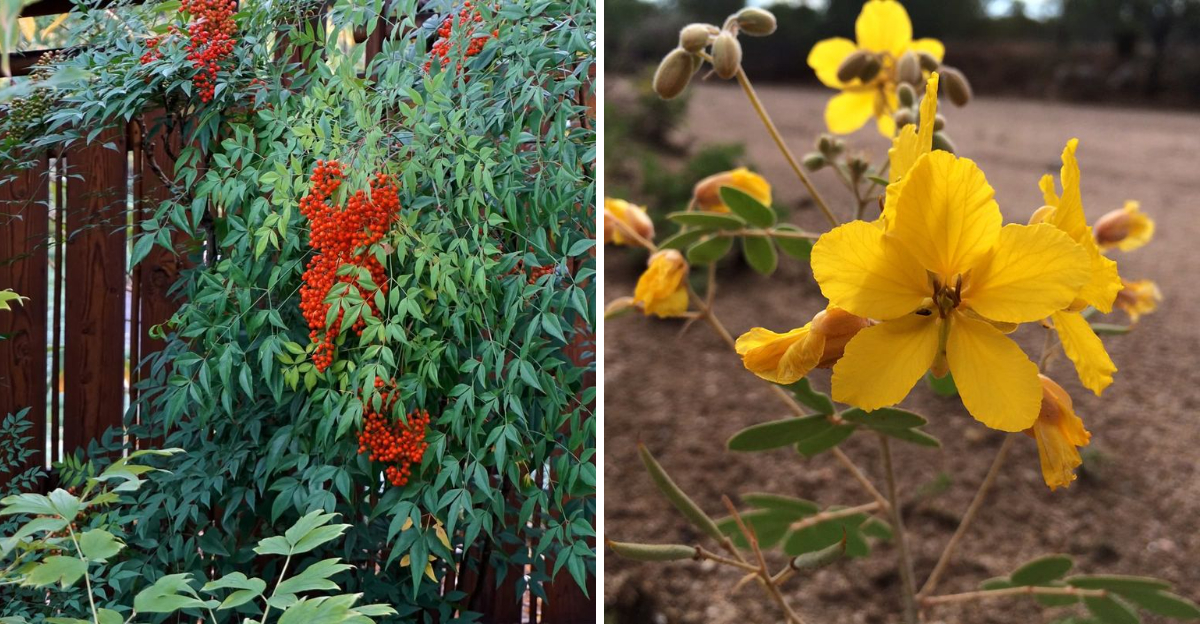
4. Nandina Fails In Full Sun And Looks Sparse Over Time
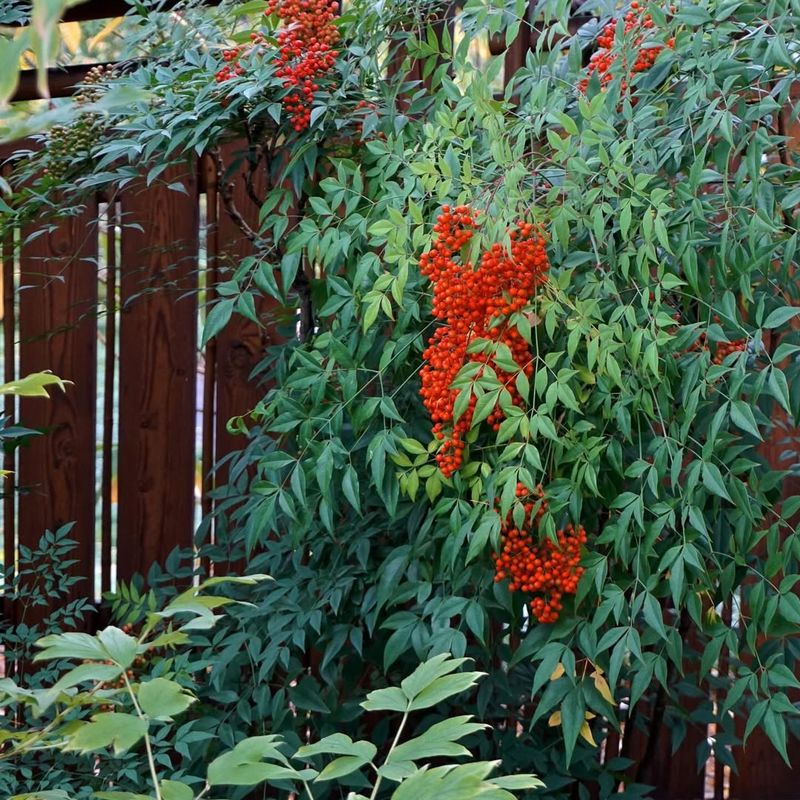
Nandina — sometimes called heavenly bamboo — sounds exotic, but its performance in full Arizona sun is anything but impressive. Planted in shaded California gardens, it can look lush and layered.
Stick it in a south-facing Tucson or Gilbert front yard and the story changes completely.
Full sun bleaches the foliage. What should be rich red or deep green turns pale and washed out by midsummer.
Stems get leggy over time, with all the growth pushing upward and leaving the base bare and unattractive. No amount of pruning fully fixes that open, sparse look once it sets in.
Wildlife concerns have also put Nandina on the radar in recent years. Berries from the plant contain compounds that can harm birds, and several states have flagged it as a problem plant for that reason.
Arizona gardeners who care about the local ecosystem have good reason to reconsider it.
Beyond the ecological side, Nandina just does not fit the desert aesthetic. It looks out of place against gravel mulch, desert-adapted neighbors, and the warm tones of an Arizona landscape.
Homeowners often plant it hoping for easy color and structure, then spend years managing a plant that never quite looks right. There are shrubs far better suited to Arizona conditions that deliver more visual payoff with far less frustration.
5. Texas Sage Thrives In Heat With Minimal Water And Care
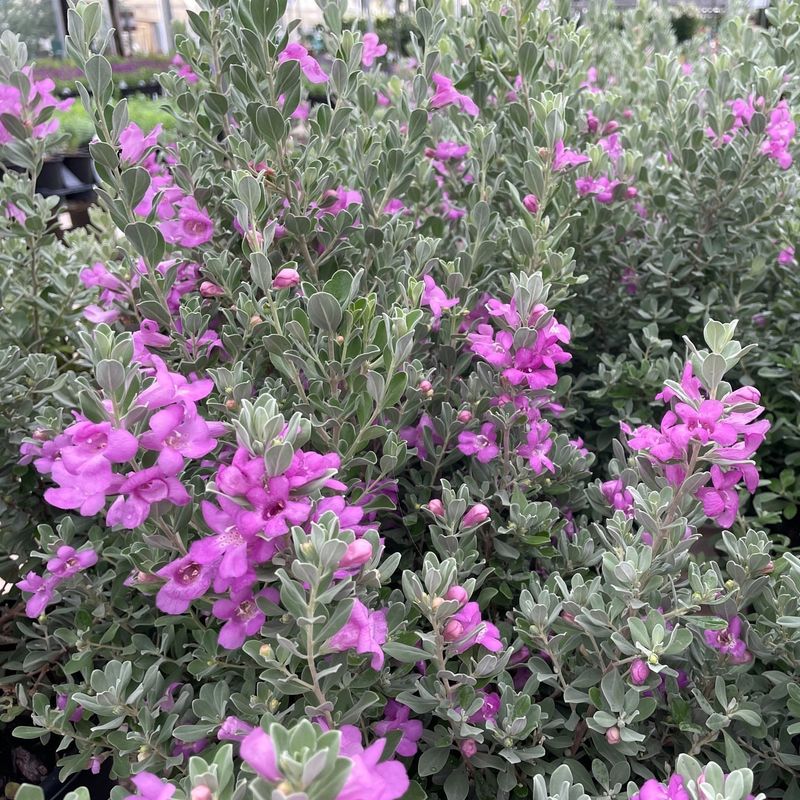
Few shrubs put on a show quite like Texas Sage right after a monsoon rolls through. Almost overnight, the whole plant erupts in purple blooms, which is why Arizona gardeners sometimes call it the barometer bush — it flowers in response to humidity and rainfall cues.
Water needs are impressively low. Established plants in Tucson and Phoenix front yards survive on rainfall alone for much of the year.
Supplemental irrigation during the hottest stretch of summer helps, but you are not looking at a thirsty plant that demands constant attention from a drip system.
Pruning is minimal compared to most shrubs. Texas Sage holds a naturally rounded shape without much help, and hard pruning is rarely needed unless you want to keep it tighter for a formal hedge look.
Even then, a light trim once or twice a year is usually enough to keep it tidy.
Silver-gray foliage looks sharp against gravel mulch and adobe walls, which makes it a natural fit for classic Arizona landscape designs. Heights vary by variety, with some staying compact around three feet and others reaching five or six feet at maturity.
Whether you are replacing an old oleander hedge or starting a new bed from scratch, Texas Sage earns its spot in almost any Arizona yard with very little effort required from you.
6. Baja Fairy Duster Handles Dry Conditions Easily And Blooms Reliably
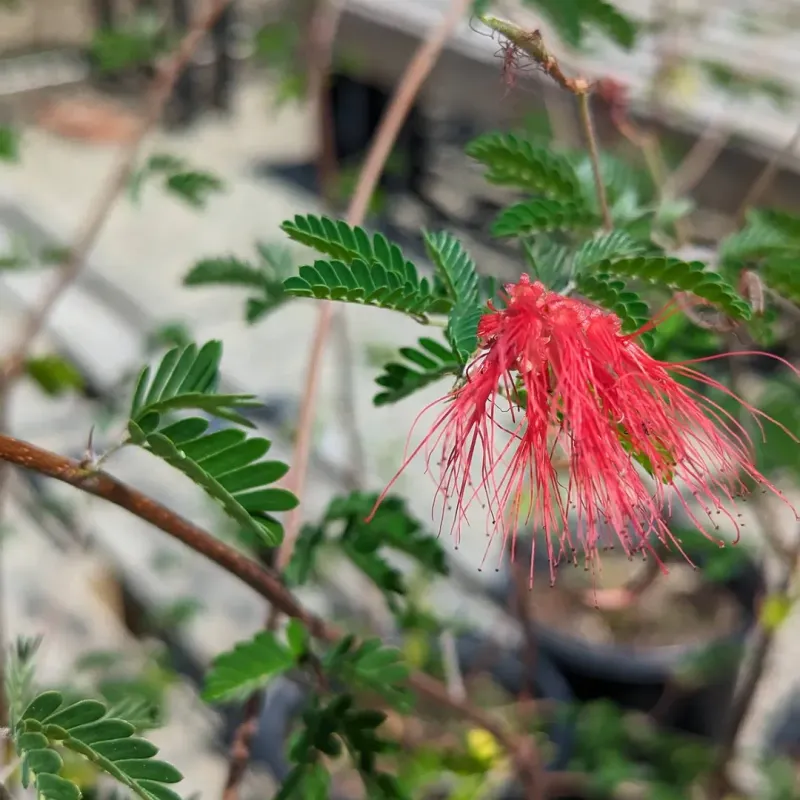
Fluffy, feathery blooms in shades of red, pink, and coral — Baja Fairy Duster looks like something a landscape designer ordered, but it grows with almost no help in Arizona conditions. Native to the Sonoran Desert, it genuinely belongs here in a way that boxwood or Indian Hawthorn never will.
Hummingbirds cannot get enough of it. Plant one near a patio in Scottsdale or Oro Valley and you will have regular visitors hovering around the blooms from late winter through summer.
That kind of wildlife activity adds real life to a yard without requiring feeders, water features, or extra effort.
Drought tolerance is exceptional. Once roots are settled in, Baja Fairy Duster handles stretches of dry weather that would stress most conventional shrubs.
Occasional deep watering encourages more blooms, but neglect does not send it into decline the way it would with plants like Indian Hawthorn.
Size stays manageable — typically three to five feet in both height and spread — which makes it easy to fit into foundation plantings, borders, or mixed desert beds. Pruning once a year after the main bloom cycle keeps it from getting too woody at the base.
Compared to the shrubs it replaces, Baja Fairy Duster asks for very little while delivering color, texture, and wildlife value that most overplanted Arizona shrubs simply cannot match.
7. Hop Bush Works As A Tough Heat-Tolerant Hedge Alternative
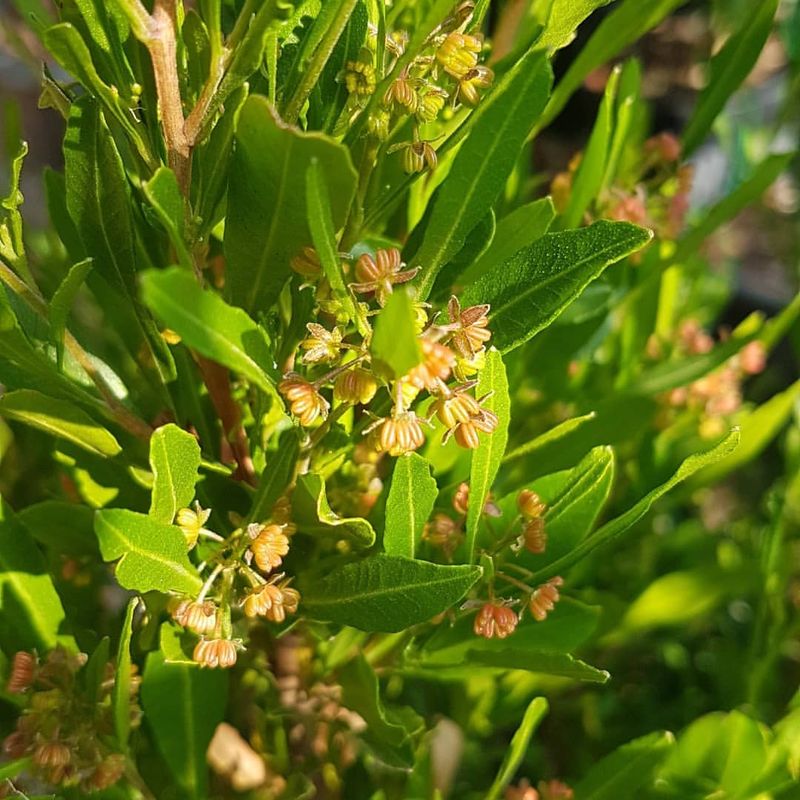
Privacy hedges in Arizona need to survive punishment — intense sun, reflected heat, dry soil, and wind. Hop Bush handles all of it without complaint, which is exactly why it deserves a spot on more Arizona planting lists than it currently occupies.
Growth rate is solid without being aggressive. Hop Bush fills in steadily over a couple of seasons and reaches heights of ten to fifteen feet if left unpruned, making it a serious option for screening out neighbors, walls, or utility areas.
Trim it lower and it works just as well as a mid-height border shrub.
Foliage comes in green and purple-leaf varieties, giving you options depending on your landscape color scheme.
Purple-leaf Hop Bush looks especially striking against light-colored walls and gravel mulch — a combination you see throughout Tempe, Mesa, and Peoria neighborhoods where desert landscaping is the standard.
Water requirements are low once roots are established. Hop Bush does not need babying through summer the way oleander might after frost damage or boxwood during a heat wave.
It just keeps growing. Seed pods add another layer of visual interest in late spring, hanging in papery clusters that catch the light and add texture without looking messy.
For anyone tired of replacing shrubs every few years, Hop Bush brings the kind of durability that Arizona landscapes genuinely reward.
8. Desert Senna Performs Well With Very Little Maintenance
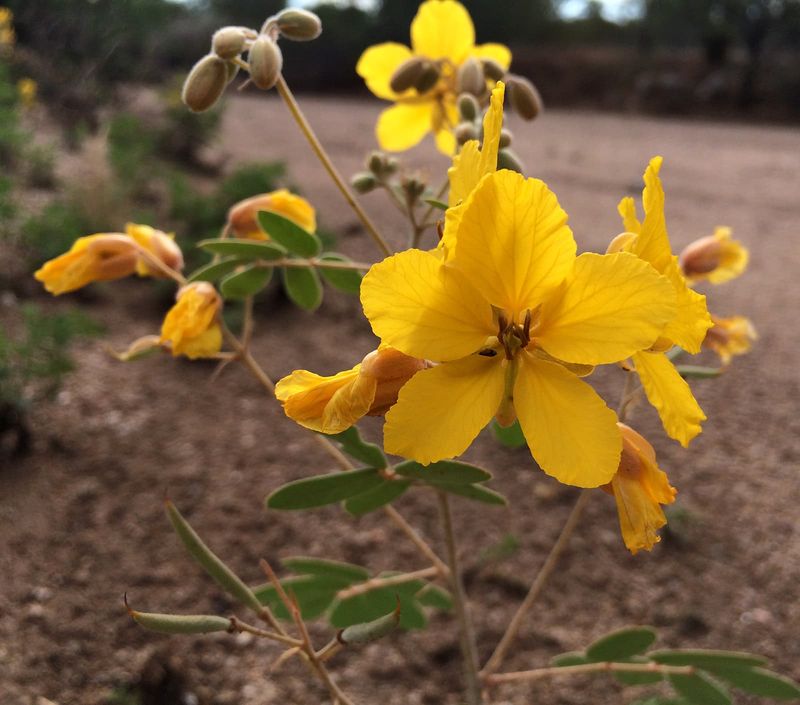
Bright yellow flowers against bare desert soil — Desert Senna is one of those plants that stops people mid-walk and makes them ask what it is.
Bloom season in late winter through spring turns an otherwise quiet Arizona yard into something genuinely eye-catching without any extra work on your part.
Soil quality barely matters. Desert Senna grows in rocky, sandy, and alkaline soils that would challenge most conventional shrubs.
Arizona native soils are notoriously tough, and a plant that handles caliche, poor drainage, and mineral-heavy ground without skipping a beat is worth its weight in any landscape plan.
Water use is minimal. Rainfall alone carries Desert Senna through most of the year in Tucson and southern Arizona.
Gardeners in the Phoenix metro may want to give it a deep soak every few weeks during the hottest months, but it will not sulk or drop leaves if watering gets inconsistent.
Pollinators swarm it during bloom season. Native bees in particular are drawn to the bright yellow flowers, and the plant supports the kind of local insect activity that keeps a garden ecosystem healthy.
After blooms fade, seed pods develop and add structure through summer. Pruning is optional — a light cut after flowering keeps the shape tighter if you prefer a neater look, but Desert Senna handles neglect far better than almost anything else you could plant in an Arizona yard.