The Most Overplanted Shrubs In North Carolina And Better Low Maintenance Alternatives
Some shrubs end up in North Carolina yards again and again, not because they are the best choice, but because they are familiar.
Garden centers keep selling them, builders keep planting them, and homeowners often pick them without knowing there may be better options.
The problem is that many of these overused shrubs bring extra work, outgrow their space, or struggle to stay attractive through the year. When the same plants show up on every street, landscapes can also start to feel flat and forgettable.
A better shrub can give you strong color, cleaner shape, and far less upkeep without making the yard look ordinary. In a state with hot summers, heavy humidity, and changing conditions from region to region, plant choice matters more than many people realize.
The right replacement can make your landscape look sharper, easier to manage, and much more interesting from season to season.
1. Boxwood (Buxus spp.)
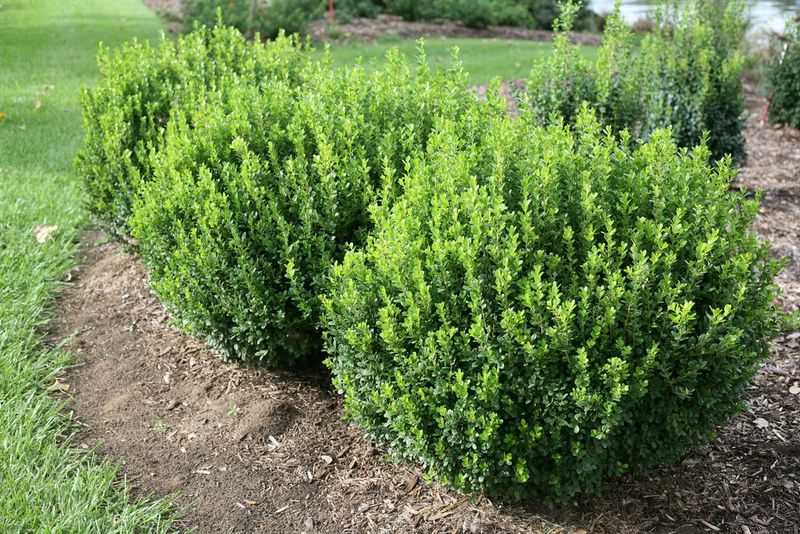
Walk through almost any neighborhood in the North Carolina Piedmont and you will spot boxwoods lining driveways, framing front doors, and filling foundation beds. They look tidy, sure, but beneath that polished surface lies a growing problem.
Boxwood blight, caused by the fungus Calonectria pseudonaviculata, has swept through North Carolina landscapes and turned once-perfect hedges into patchy, struggling messes almost overnight.
Boxwood leafminer is another serious issue, tunneling through leaves and causing ugly brown patches that no amount of pruning can fix. Because boxwoods are planted so heavily across the state, disease spreads easily from yard to yard, making recovery even harder.
The humid summers North Carolina is known for only speed things along and make fungal problems worse.
Swapping boxwood for inkberry holly (Ilex glabra) is one of the smartest moves a North Carolina gardener can make. This native evergreen holds a similar rounded shape, thrives in acidic soils, and shrugs off the diseases that bring boxwoods down.
Dwarf yaupon holly (Ilex vomitoria ‘Nana’) is another fantastic choice, staying compact and tidy without demanding constant attention.
Both options give you that structured, evergreen look you love while actually working with North Carolina’s climate instead of fighting it every season.
2. Nandina (Nandina domestica)
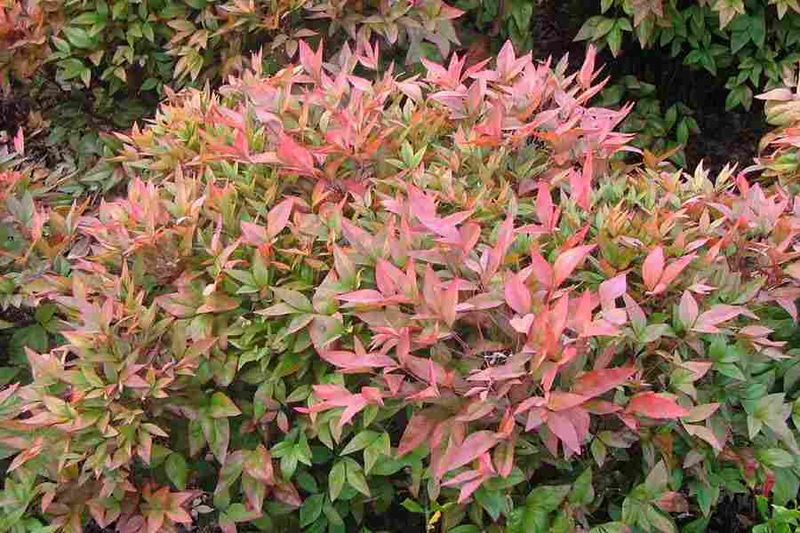
Nandina, sometimes called heavenly bamboo, has been a go-to shrub for North Carolina homeowners for decades. Its colorful foliage and bright red berries look eye-catching in the winter landscape, and nurseries have sold it by the millions.
But nandina has a serious dark side that most people never hear about at the garden center.
Those pretty red berries contain compounds that are toxic to birds, particularly cedar waxwings, which tend to eat large quantities at once.
On top of that, nandina spreads aggressively into natural areas across North Carolina, pushing out native plants and reducing habitat for local wildlife.
The North Carolina Native Plant Society has flagged it as a problematic invasive, and for good reason.
Fortunately, you have some genuinely stunning native options to replace it. American beautyberry (Callicarpa americana) puts on one of the most jaw-dropping berry displays of any shrub in the Southeast, producing vivid purple clusters that stop people in their tracks every fall.
Virginia sweetspire (Itea virginica) brings graceful white flower spikes in early summer and rich red fall color that rivals anything nandina offers.
Both plants support local pollinators, fit naturally into North Carolina’s ecology, and need far less fussing to look their best through every season of the year.
3. Japanese Privet (Ligustrum japonicum)
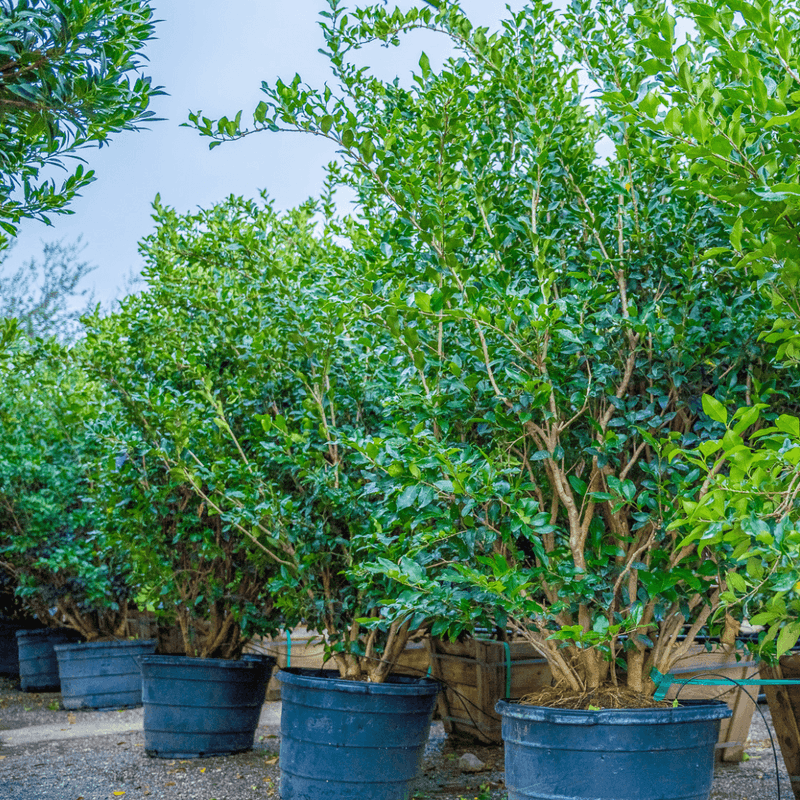
Japanese privet is everywhere in North Carolina. Homeowners and landscapers have planted it for decades as a fast-growing privacy screen, and it delivers on that promise with impressive speed.
The problem is that it does not stop at the property line. Privet seeds spread into woodlands, roadsides, and natural areas across the state, where it crowds out native vegetation and disrupts local ecosystems.
North Carolina’s warm, humid climate is practically perfect for privet to thrive and spread, which makes it one of the most aggressively invasive shrubs in the region. Once it gets established in a natural area, removing it takes enormous effort.
Planting more of it in your yard essentially feeds the problem that land managers and conservation groups across the state are working hard to control.
Wax myrtle (Morella cerifera) is a brilliant native replacement that grows quickly, stays evergreen, and provides excellent privacy screening without the invasive baggage.
It handles a wide range of soil conditions, from dry sandy spots to occasionally wet areas, making it one of the most adaptable shrubs in the entire North Carolina plant palette.
Inkberry holly (Ilex glabra) is another excellent option for a dense, lower-growing evergreen screen. Both plants attract birds and support local wildlife while keeping your yard looking polished and full throughout the entire year.
4. Autumn Olive (Elaeagnus umbellata)
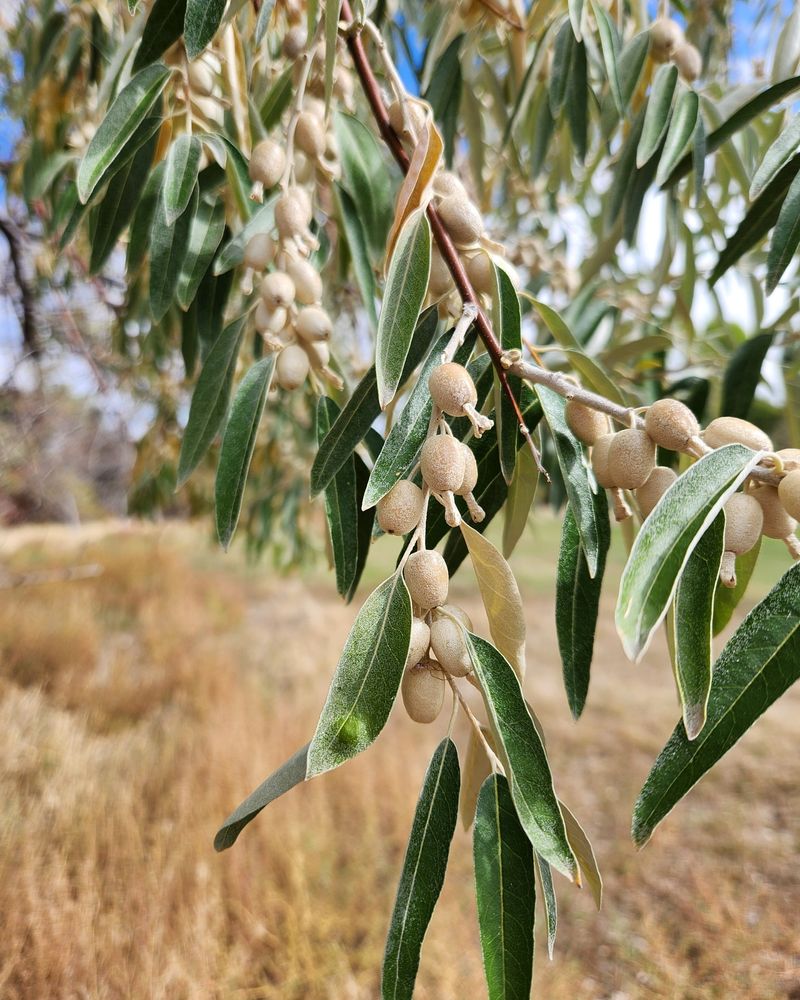
Autumn olive was once promoted as a wonder shrub. Conservation programs across the eastern United States recommended it for erosion control, wildlife habitat, and roadside planting throughout the mid-twentieth century.
In North Carolina, it was widely installed along highways and in rural landscapes with the best of intentions. Decades later, the results have been a conservation nightmare that experts are still trying to undo.
Autumn olive produces enormous quantities of berries that birds spread far and wide, allowing the plant to colonize fields, forest edges, and disturbed areas with alarming speed.
It now appears on North Carolina’s invasive plant list, and land managers across the state spend significant resources trying to control it.
Planting it in a home landscape today means actively contributing to a problem that threatens native plant communities across the region.
Serviceberry (Amelanchier arborea) makes a gorgeous native swap, offering clouds of white spring flowers, edible blueberry-like fruit in early summer, and outstanding fall color that lights up any yard.
Arrowwood viburnum (Viburnum dentatum) is another excellent choice, providing creamy white flower clusters, blue-black berries that birds genuinely love, and rich fall foliage.
Both plants are naturally adapted to North Carolina’s soils and climate, require minimal care once established, and give local wildlife exactly the kind of habitat and food sources that healthy ecosystems actually need.
5. Japanese Spirea (Spiraea japonica)
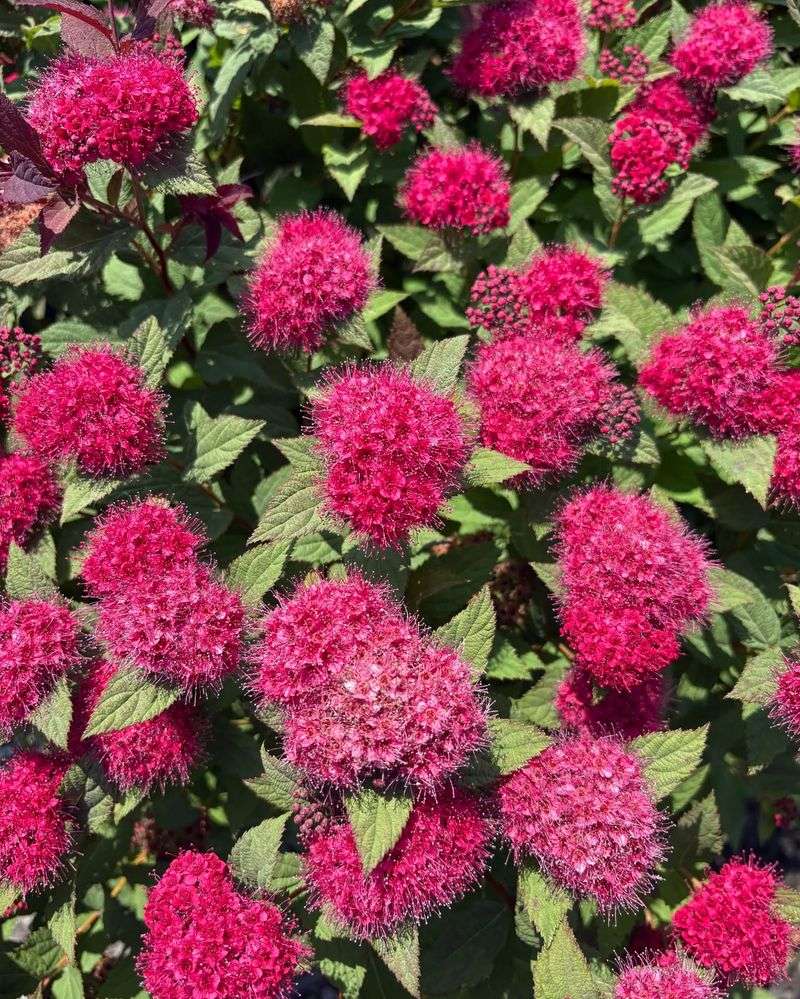
Japanese spirea is one of those shrubs that seems harmless enough at first glance. The pink flower clusters are cheerful, the plants stay relatively small, and they pop up at every big-box garden center across North Carolina for just a few dollars.
Gardeners plant them in masses along walkways and in foundation beds without giving it much thought. But spirea has a habit of quietly spreading beyond the garden in parts of the state.
Seeds from Japanese spirea can escape into disturbed areas, roadsides, and natural edges, where the plant competes with native vegetation. Several mid-Atlantic and southeastern states have flagged it as potentially invasive, and North Carolina’s natural areas are not immune.
Beyond the ecological concerns, spirea tends to look ratty and spent after its brief bloom period unless you prune it back hard, which adds to the maintenance load most gardeners are trying to avoid.
New Jersey tea (Ceanothus americanus) is a fantastic native replacement that produces frothy white flower clusters beloved by butterflies and native bees, and it thrives in the well-drained soils common across the North Carolina Piedmont.
Dwarf fothergilla (Fothergilla gardenii) brings bottlebrush-shaped white flowers in spring and some of the most brilliant orange, red, and yellow fall color of any small shrub available.
Both plants are genuinely low-maintenance once established and reward North Carolina gardeners with multiple seasons of standout beauty.
6. Cherry Laurel (Prunus laurocerasus)
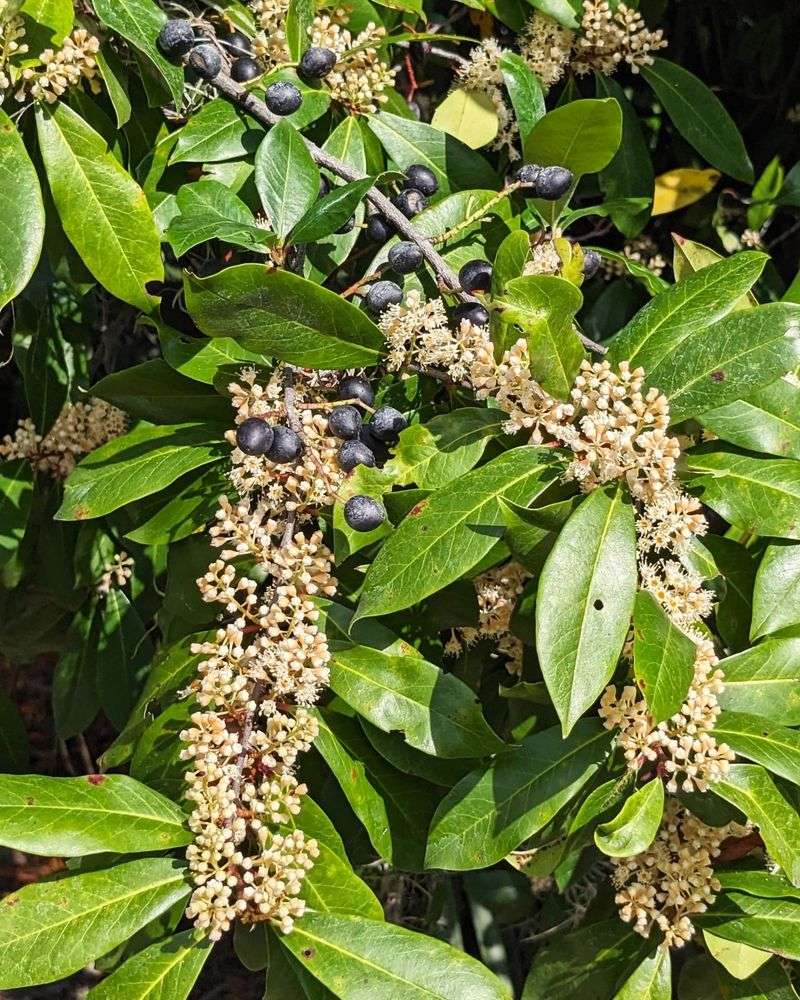
Cherry laurel has been a staple privacy hedge plant across North Carolina for years, and it is easy to understand the appeal. The large, glossy leaves create a dense screen quickly, and the plants grow vigorously in the state’s mild climate.
Garden centers sell them constantly, and homeowners plant them hoping for a low-effort solution to the privacy problem. What many people discover too late is that cherry laurel and North Carolina’s humidity are a troubled combination.
Shot hole disease, caused by the fungus Wilsonomyces carpophilus, punches ragged holes through the leaves and leaves hedges looking tattered and worn.
Poor airflow inside dense plantings makes the problem worse, especially during the long, muggy summers that North Carolina gardeners know all too well.
Keeping cherry laurel looking presentable often requires repeated fungicide treatments and aggressive pruning, which is the opposite of low-maintenance gardening.
Carolina cherry laurel (Prunus caroliniana) is a native cousin that handles the local climate far more gracefully, offering similar dense evergreen screening with much better disease resistance and genuine wildlife value.
Wax myrtle (Morella cerifera) remains one of the most reliable native screening shrubs across the entire state, growing quickly into a full, fragrant, bird-friendly hedge without the disease headaches.
Both plants are naturally suited to North Carolina’s conditions and will give you the privacy you want without the annual battle against fungal problems.
7. Loropetalum (Loropetalum chinense)
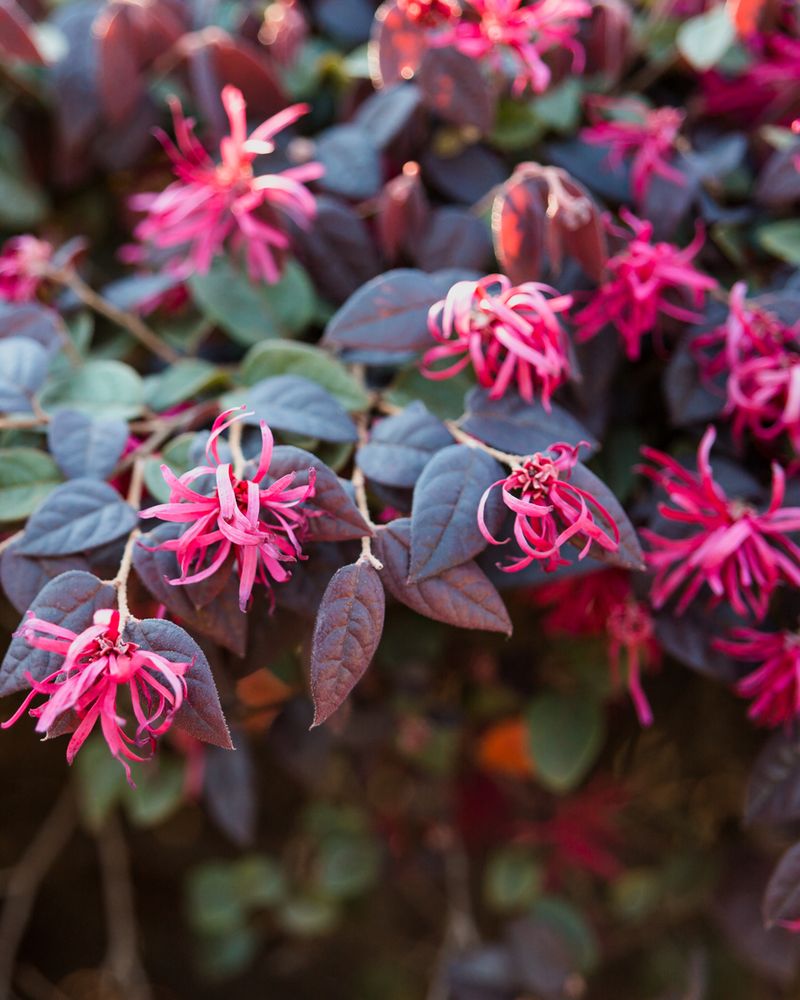
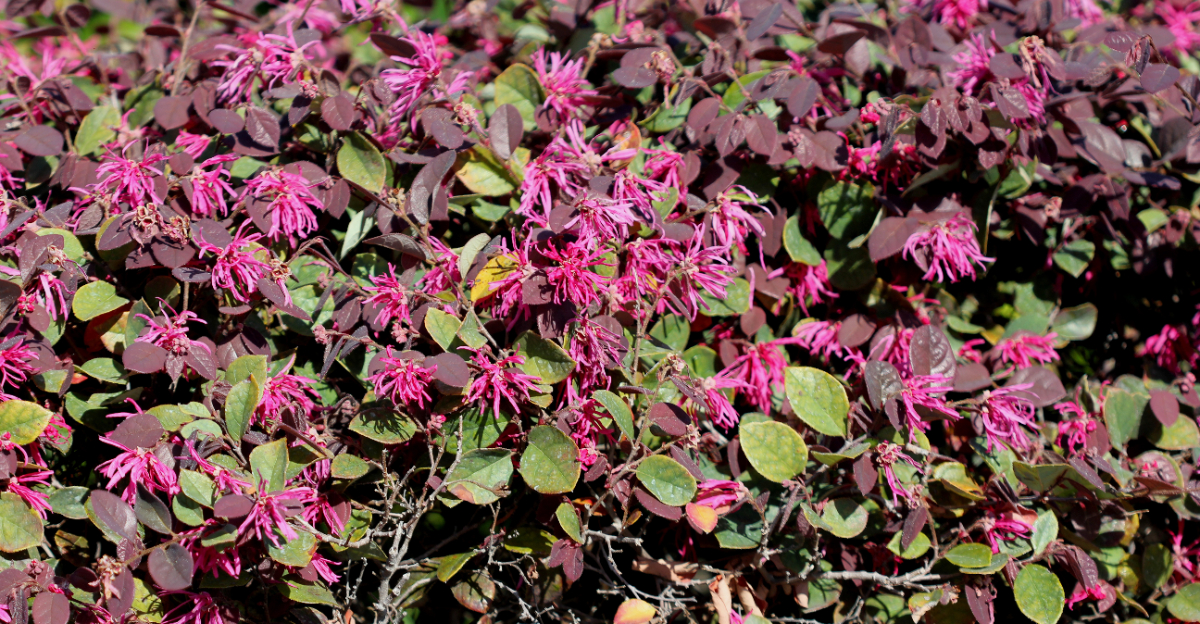
Loropetalum swept through North Carolina landscaping like a trend that nobody could resist. Those deep burgundy leaves and hot-pink fringe flowers are genuinely striking, and for a few years after planting, loropetalum looks fantastic.
Nurseries promoted it heavily, and it became one of the most installed shrubs in foundation beds across the entire state. Then reality set in for a lot of homeowners.
Many loropetalum varieties sold as compact or dwarf plants grow far larger than their labels suggest, eventually swallowing windows, blocking walkways, and overwhelming the spaces they were supposed to accent.
Keeping them in bounds requires constant pruning, and heavy pruning often ruins their natural form.
In colder parts of North Carolina, particularly in the mountains and upper Piedmont, loropetalum can suffer significant cold damage during harsh winters, leaving plants looking ragged and stressed.
Oakleaf hydrangea (Hydrangea quercifolia) is a spectacular native alternative that brings enormous cone-shaped flower clusters, exfoliating cinnamon-colored bark, and some of the richest burgundy fall foliage you will find on any shrub in the Southeast.
It fits naturally into North Carolina’s woodland-edge conditions and looks stunning in foundation plantings or mixed borders.
Dwarf yaupon holly (Ilex vomitoria ‘Nana’) offers a tidy, evergreen alternative for spots where you need reliable structure without the size surprises that loropetalum so often delivers to unsuspecting homeowners.
8. Indian Hawthorn (Rhaphiolepis indica)
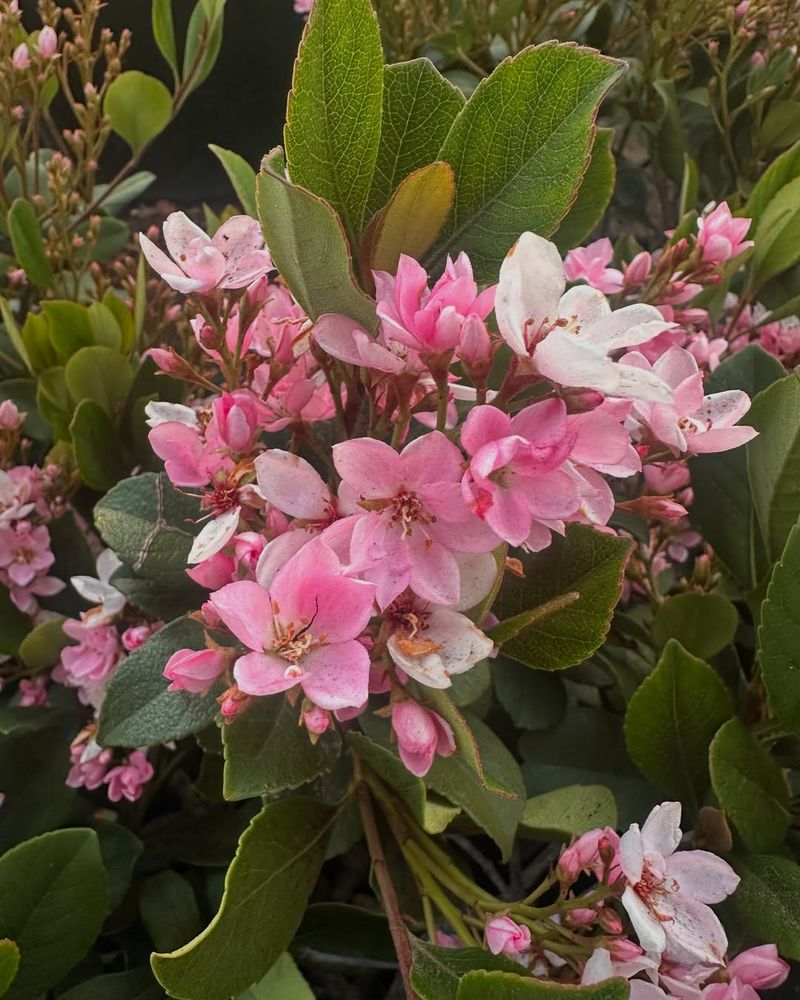
Indian hawthorn shows up in shopping center planters, housing development entrances, and residential foundation beds all across coastal and Piedmont North Carolina.
Landscape designers reach for it because it stays compact, produces pretty pink or white flowers in spring, and looks good in photos.
In drier, warmer climates farther south and west, it performs reasonably well. In North Carolina, though, the story often goes sideways pretty quickly.
Entomosporium leaf spot is the main villain here, a fungal disease that thrives in exactly the kind of humid, warm conditions that North Carolina summers serve up reliably every year.
Infected plants develop dark spots across their leaves, drop foliage prematurely, and slowly weaken over multiple seasons.
Gardeners often spend years spraying fungicides and replacing plants before finally giving up on Indian hawthorn altogether, which is time and money that could have been saved from the start.
Distylium (Distylium spp.) has emerged as one of the most exciting low-maintenance evergreen shrubs available to North Carolina gardeners right now.
It stays dense and tidy, shows outstanding disease resistance, and handles heat, humidity, and drought far better than Indian hawthorn ever could.
Virginia sweetspire (Itea virginica) is another superb native pick, producing fragrant white flower spikes in early summer and blazing red fall color that makes any yard look professionally designed. Both plants are built for North Carolina’s climate and will reward you with years of easy, reliable beauty.