The Most Overused Shrubs In California Landscapes And What To Plant Instead
Take a walk through almost any California neighborhood and you’ll start noticing the same shrubs again and again. They line driveways, fill parking lot planters, and show up in front yards across the state.
Many of them became popular because they’re tough, easy to maintain, and widely available at garden centers. The problem is that landscapes can start to feel a little repetitive.
Relying on the same few shrubs also means missing out on plants that offer better color, seasonal interest, and support for local wildlife. California actually has an incredible range of shrubs that thrive in the climate while bringing more personality to a garden.
Swapping out a few overused choices can instantly make a landscape feel fresher and more interesting. Even better, many alternatives handle drought well and attract birds and pollinators.
A small change in plant choices can turn a familiar yard into something far more vibrant and unique.
1. Boxwood
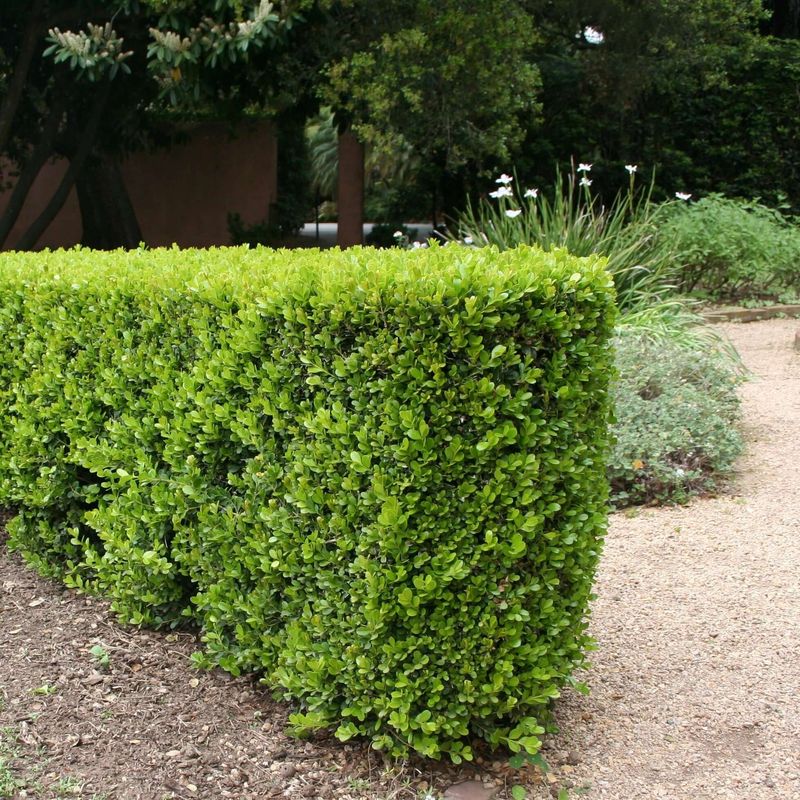
Everyone seems to love a perfectly clipped hedge, and for years, boxwood was the go-to choice for that tidy, formal look across California yards. You see it lining driveways, framing front doors, and edging flower beds from San Francisco to San Diego.
But boxwood has a serious problem: it struggles in California’s heat and dry conditions, and it is highly vulnerable to boxwood blight, a fungal disease that spreads fast and is very hard to stop.
A smarter swap is Coffeeberry (Frangula californica), a native California shrub that grows beautifully in both sun and shade. It has glossy leaves, produces berries that birds absolutely love, and handles drought like a champ once it is established.
It can also be pruned into a neat hedge shape if that formal look is what you are after.
Another great option is Dwarf Coyote Brush (Baccharis pilularis), which stays low, spreads nicely, and asks for almost nothing in return.
Both plants are far better suited to California’s climate than boxwood, and they support local pollinators and birds in ways that boxwood simply cannot match.
2. Oleander
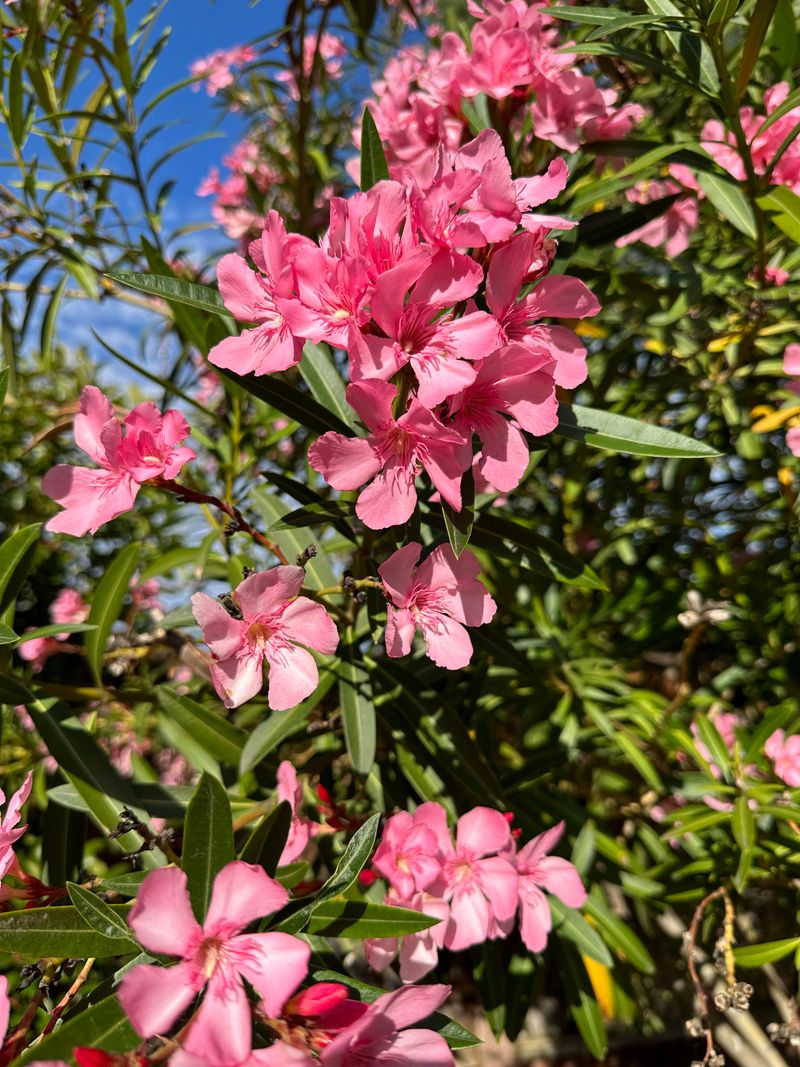
You have definitely seen oleander if you have ever driven a California freeway. It lines highways from Bakersfield to the Bay Area in massive pink and white waves.
For a long time, it was considered the perfect low-maintenance shrub because it tolerates heat, drought, and poor soil with ease.
But oleander has fallen out of favor for good reasons, including its toxicity to pets and children and its tendency to look scraggly and overgrown without regular attention.
A wonderful native replacement is Toyon (Heteromeles arbutifolia), sometimes called California Holly. It is an evergreen shrub that produces clusters of bright red berries in winter, making it a favorite for birds.
Toyon thrives in the California heat and needs very little water once it gets going in your yard.
Lemonade Berry (Rhus integrifolia) is another excellent choice for Southern California gardeners. It grows into a dense, attractive shrub with pink flower clusters and sticky red berries that wildlife enjoy.
Both Toyon and Lemonade Berry bring far more ecological value to your garden than oleander, without the worries that come with planting something toxic near kids or pets.
3. Heavenly Bamboo (Nandina)
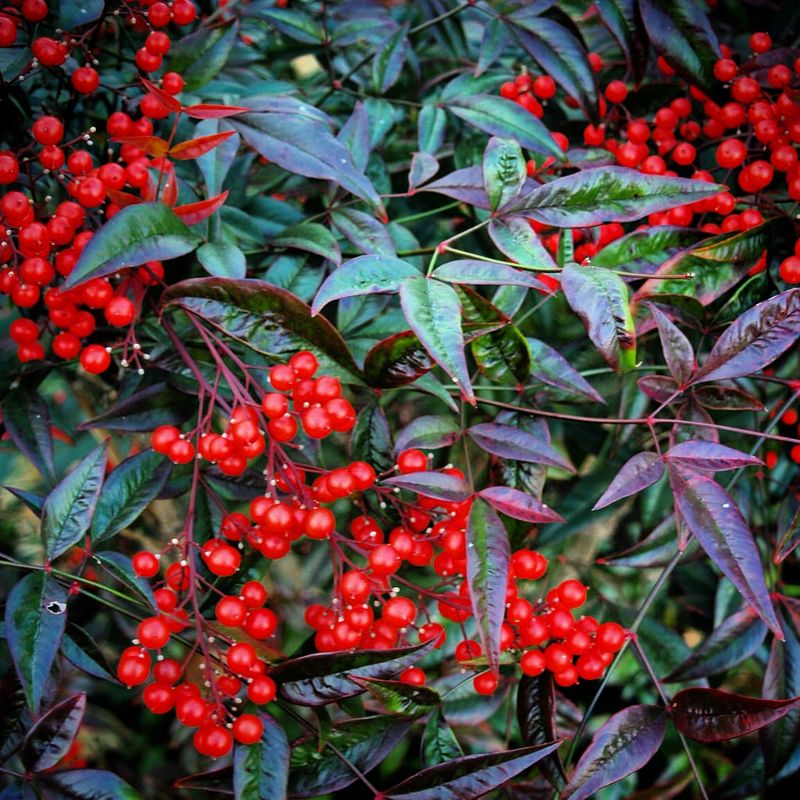
The name sounds lovely, and the look is undeniably pretty. Nandina, also called Heavenly Bamboo, became wildly popular in California because of its colorful foliage and low water needs.
It pops up in front yards all over the state, from the Central Valley to coastal neighborhoods.
However, Nandina is actually considered invasive in many regions, and its berries are toxic to birds, which is a real problem in a state that prides itself on wildlife-friendly gardening.
A much better native alternative is Toyon, which we mentioned earlier, but another top pick is Western Spice Bush (Calycanthus occidentalis). It has large, glossy leaves and unique burgundy-red flowers that smell amazing.
It loves water but can adapt to average garden conditions and grows into a lush, eye-catching shrub.
For gardeners who love that layered, multi-stem look that Nandina provides, try planting Coffeeberry or Flowering Currant (Ribes sanguineum). Both bring seasonal interest, attract pollinators, and fit naturally into California’s native plant communities.
Making the switch away from Nandina is one of the best things you can do for local birds and the broader ecosystem in your backyard.
4. Indian Hawthorn
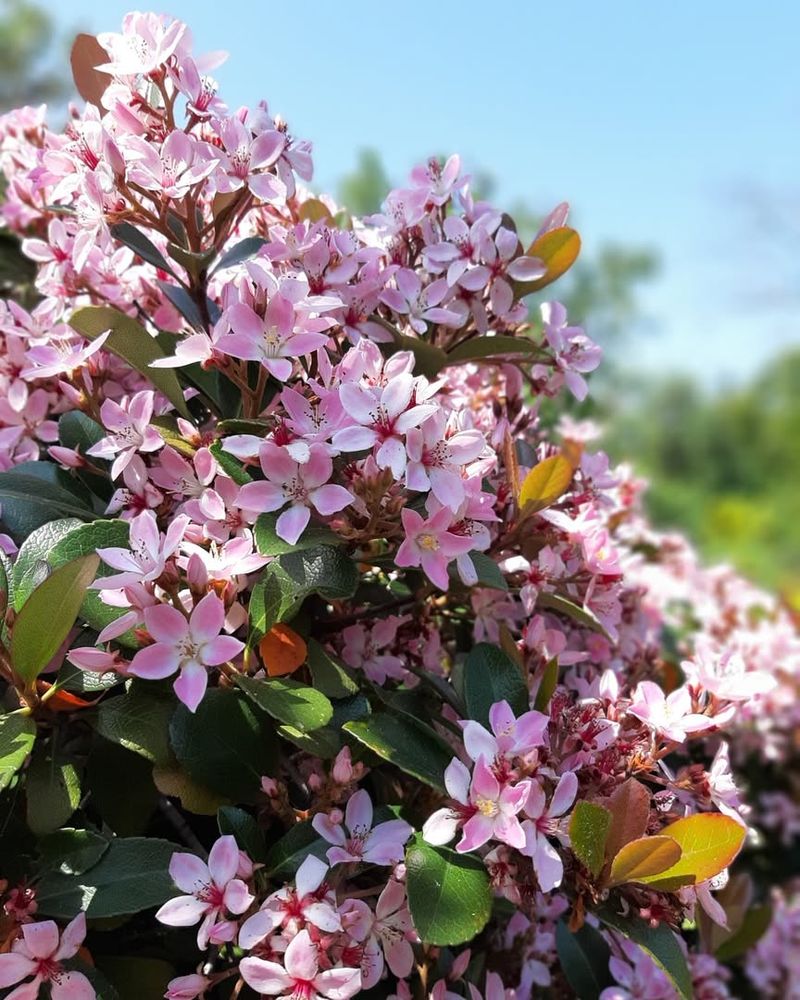
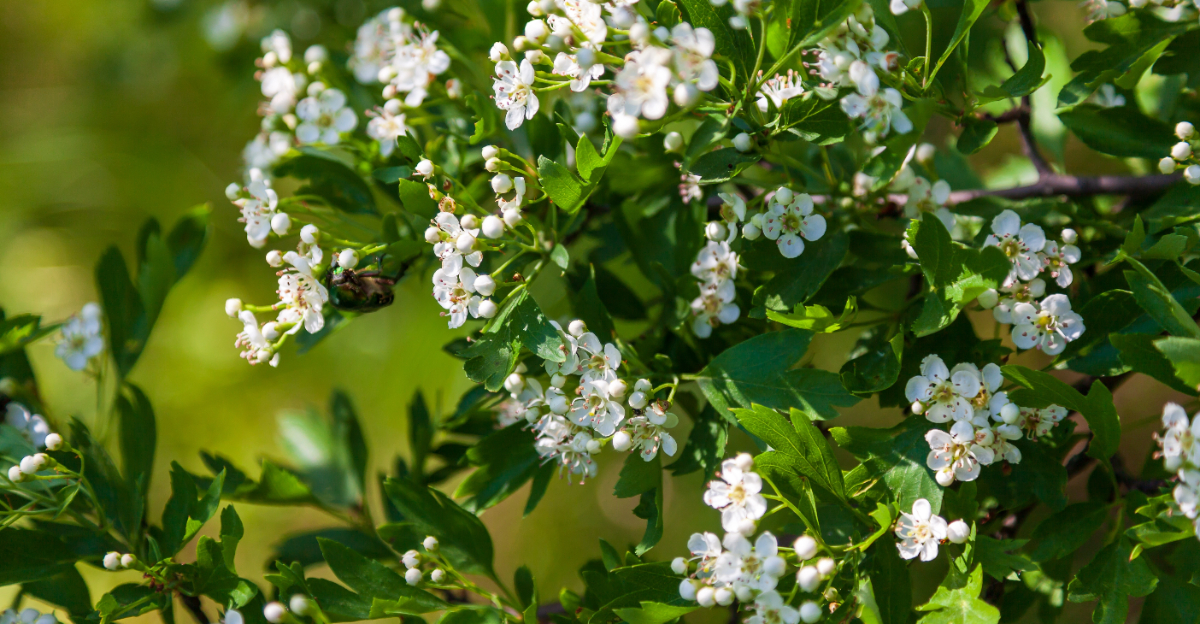
Walk through almost any Southern California neighborhood and you will spot Indian Hawthorn tucked into foundation plantings, used as low borders, or grouped in parking lot islands. It has been a landscaping staple for decades because it is compact, produces pretty pink or white flowers in spring, and tolerates neglect fairly well.
But over time, Indian Hawthorn has become so common that it blends into the background, and it is also prone to leaf spot disease in humid conditions.
One of the best swaps is Dwarf Coyote Brush (Baccharis pilularis), which is incredibly tough, stays low to the ground, and thrives in the California sun without needing much water at all. It is a true California native and supports a wide range of native insects and birds throughout the year.
Another option worth trying is Island Snapdragon (Galvezia speciosa), a spreading shrub native to the California Channel Islands. It produces cheerful red tubular flowers that hummingbirds cannot resist.
It handles coastal conditions beautifully and works well as a ground cover or low border plant. Both of these alternatives bring more personality and ecological value to your garden than Indian Hawthorn ever could.
5. Privet
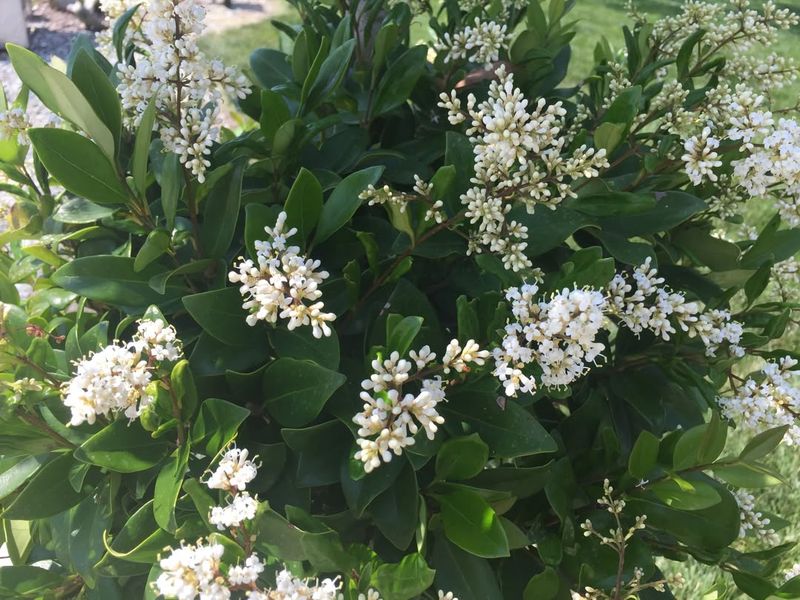
Privet is one of those shrubs that just keeps showing up in California gardens, especially as hedges and privacy screens. It grows fast, fills in quickly, and stays green year-round, which sounds great on paper.
The problem is that privet is invasive in many parts of California. It escapes gardens and spreads into wildlands, crowding out native plants and reducing habitat for local wildlife.
Its pollen is also a well-known allergy trigger for many people.
For a native privacy screen that actually helps the environment, consider planting Toyon, which can grow quite tall and dense with minimal pruning. It looks fantastic in large groupings and provides food and shelter for birds, especially during the winter months when berries are plentiful.
Another top pick is Lemonade Berry (Rhus integrifolia), which forms a thick, attractive hedge along coastal areas of California. For inland gardens, Sugar Bush (Rhus ovata) is a close relative that handles dry heat extremely well.
All of these options grow into solid privacy screens without the aggressive spreading that makes privet such a headache. Replacing privet with a native alternative is a win for your yard and for California’s wild spaces.
6. Juniper
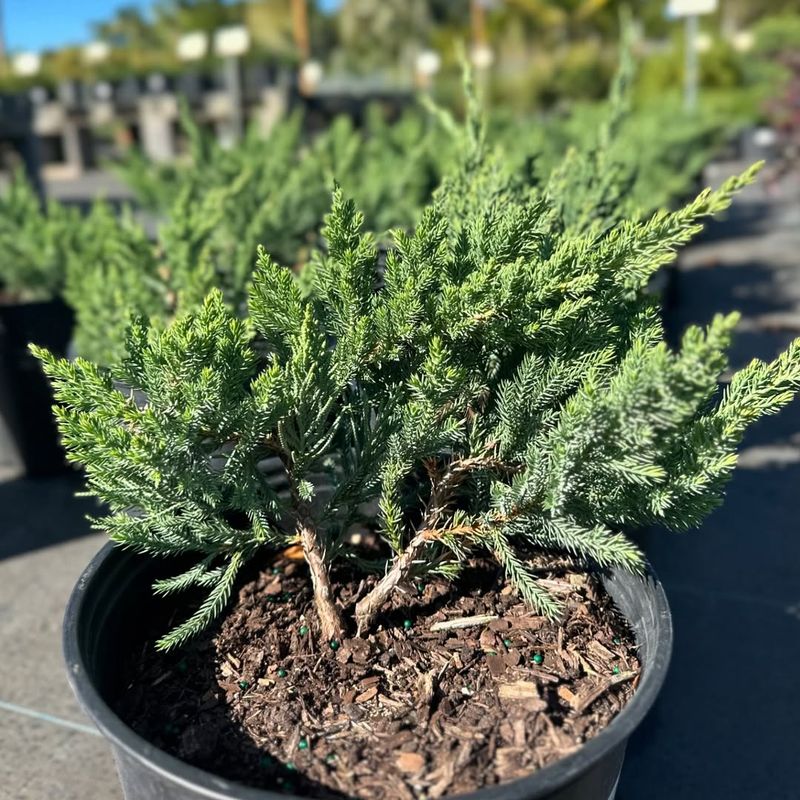
Few shrubs have been planted more widely across California than juniper. Drive through any older neighborhood and you will find sprawling, carpet-like junipers spilling over driveways or mounded juniper shrubs anchoring every corner of a front yard.
They were everywhere in the 1970s and 1980s, and honestly, a lot of them are still there, looking tired and brown in the middle. Junipers are also considered a fire hazard in many parts of California because they contain flammable oils.
A smarter choice for slopes and ground cover is Ceanothus, also known as California Lilac. It comes in dozens of varieties, from ground-hugging spreaders to upright shrubs, and it produces stunning blue or purple flower clusters in spring.
It is native, drought-tolerant, and absolutely loved by bees and butterflies.
For a similar low-growing, spreading look without the fire risk, try Prostrate Sage (Salvia sonomensis) or any of the low Manzanita varieties like Arctostaphylos uva-ursi.
These plants hug the ground beautifully, require almost no water once established in California’s climate, and provide far more ecological benefit than juniper ever did.
Plus, they look genuinely fresh and interesting rather than dated.
7. Photinia (Red Tip Photinia)
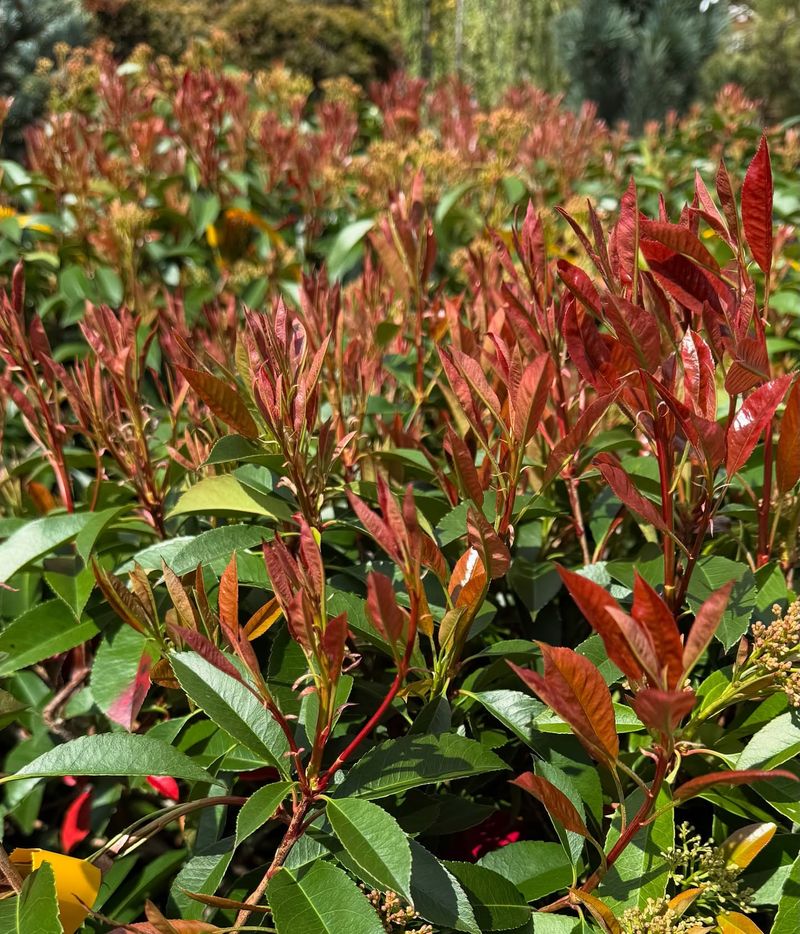
Red Tip Photinia is hard to miss in California gardens. Those bright red new leaves that pop up after pruning are genuinely eye-catching, and that is exactly why it became so popular.
Gardeners loved the burst of color it provided throughout the year. However, Photinia is extremely susceptible to a fungal disease called Entomosporium leaf spot, which causes unsightly red and brown blotches all over the leaves.
In California’s mild, sometimes humid coastal climates, this disease spreads fast and is tough to manage.
A fantastic native alternative with similar bold foliage interest is Toyon, which earns its keep year-round with glossy green leaves and vivid red berries.
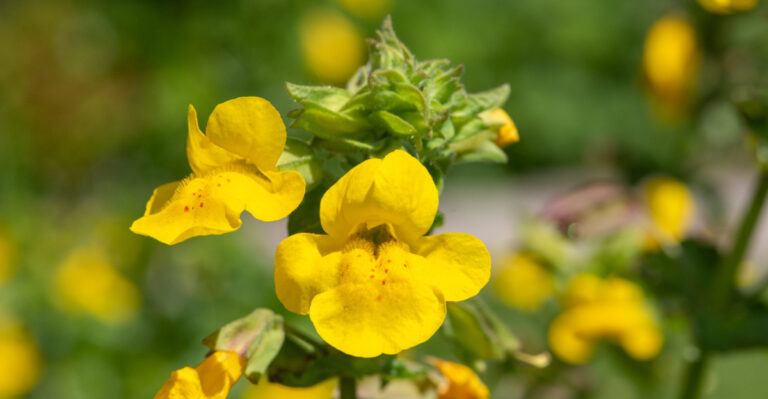
For gardeners who specifically love that flash of red new growth, consider Heteromeles arbutifolia or even Sticky Monkeyflower (Diplacus aurantiacus), which offers cheerful orange blooms and a shrubby form.
Western Redbud (Cercis occidentalis) is another showstopper worth planting. Its bright magenta-pink flowers appear in early spring before the leaves even emerge, creating a jaw-dropping display.
It adapts beautifully to California’s dry summers and cold winters in foothill and inland areas. Any of these plants will outshine a struggling, disease-spotted Photinia any day of the week.
8. Pittosporum
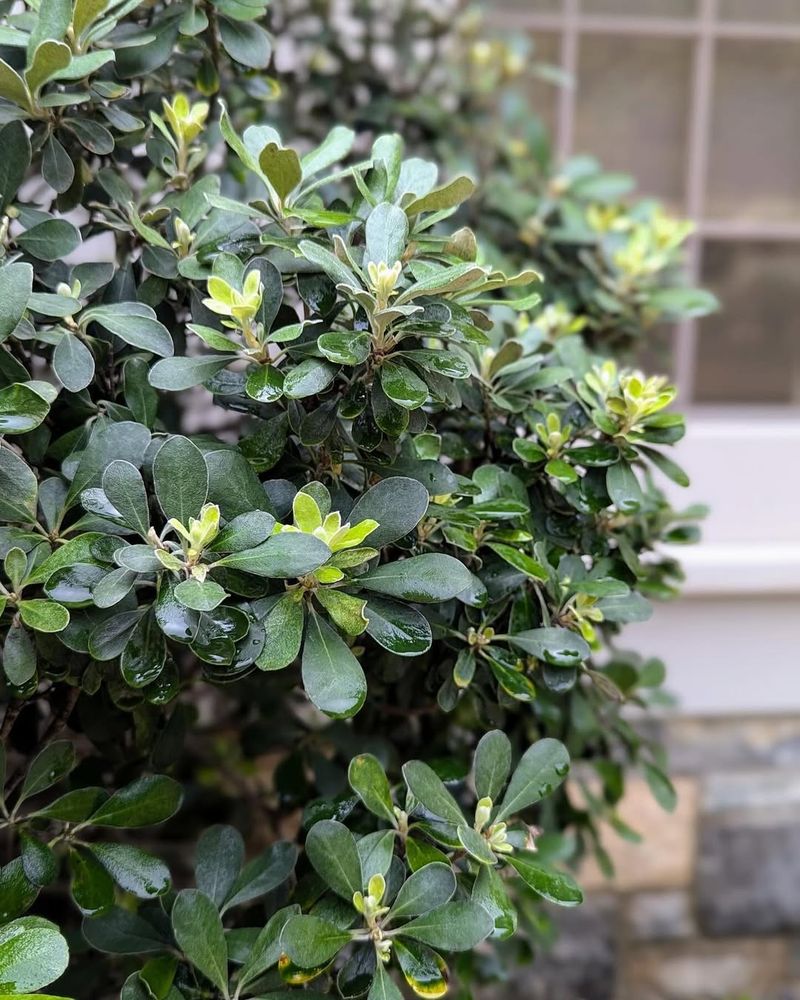
Pittosporum is a go-to shrub for California landscapers because it is fast-growing, dense, and stays green without much fuss. It is a common choice for hedges, screens, and foundation plantings all across the state, from the coast to the inland valleys.
While it is not as aggressively invasive as some other plants on this list, it does escape into natural areas in certain parts of California, particularly along the coast, where it can crowd out native plants.
A wonderful native hedge alternative is Toyon, which we have already praised several times in this article because it truly is that good.
But for something with more texture and visual interest, consider Lemonade Berry or Sugar Bush, both of which form dense, attractive hedges that feel right at home in California’s landscape.
Coffeeberry is another excellent option, especially for shaded or partly shaded spots where other natives might struggle. It has a refined, tidy look that works well in more formal garden settings.
All of these native alternatives grow at a reasonable pace, respond well to light pruning, and contribute to the local food web in ways that Pittosporum simply does not. Your garden will feel more connected to California’s natural world with any of these choices.
9. Bottlebrush
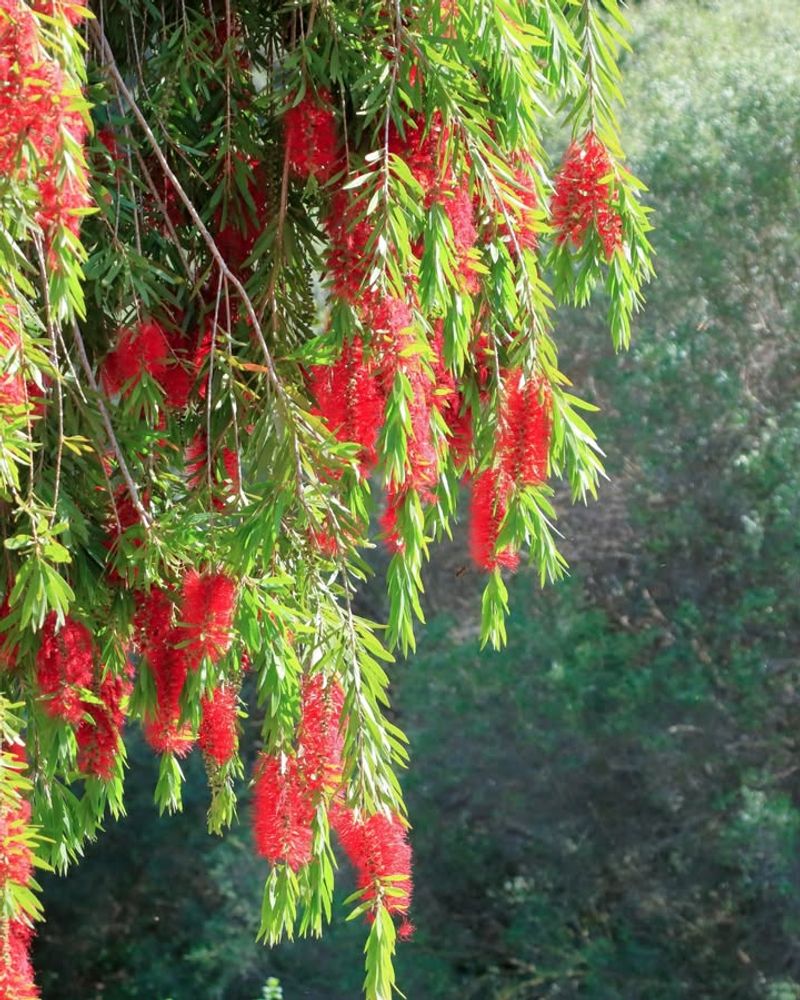
Bottlebrush is one of those plants that gardeners genuinely love at first. Those brilliant red, brush-like flowers are dramatic and showy, and hummingbirds flock to them. It is tough, drought-tolerant, and easy to find at any California nursery.
The problem is not that bottlebrush is harmful exactly, but it is an Australian native that has become wildly overplanted in California, and it does not support the local food web the way a true California native would.
If you love the idea of a hummingbird magnet in your yard, try planting Island Snapdragon (Galvezia speciosa) instead. It produces clusters of vivid red tubular flowers that hummingbirds absolutely adore, and it is native to the California Channel Islands.
It grows into a relaxed, spreading shrub that works beautifully in coastal and mild-climate gardens.
For a more upright, dramatic look, consider Woolly Blue Curls (Trichostema lanatum), a striking native shrub with deep purple-blue flowers and woolly stems. It thrives in dry, sunny spots throughout Southern and Central California.
Both options bring that same vibrant energy as bottlebrush while doing far more for native pollinators, birds, and insects that call California home.
10. Rosemary (Used As A Shrub)
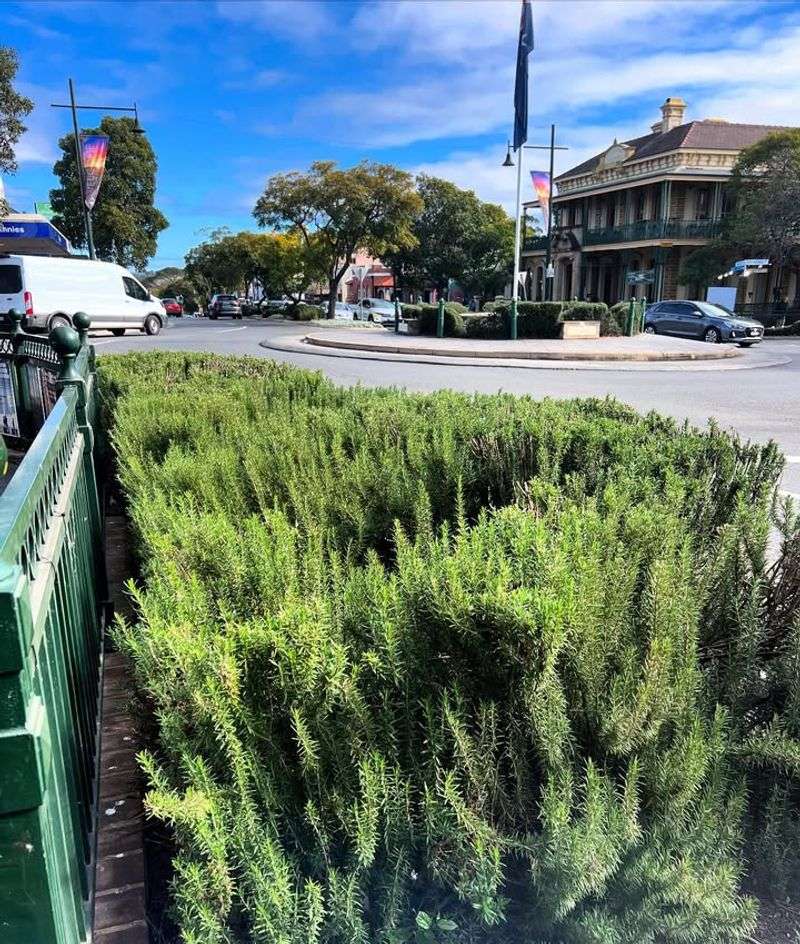
Rosemary might be surprising to see on this list because it is genuinely a tough, drought-tolerant plant that smells incredible. In California, it has been used as a landscape shrub for decades, lining driveways, covering slopes, and filling in large planting areas.
The issue is not that rosemary is bad, but it has been so heavily overplanted that it has become a landscape cliche. It also struggles in certain California climates, particularly in areas with heavy clay soil or poor drainage, where it tends to rot at the roots.
A fresh and beautiful native alternative is White Sage (Salvia apiana), which has silvery-white leaves, tall flower spikes, and an incredible fragrance.
It is deeply connected to California’s indigenous heritage and supports native bees and butterflies in a meaningful way.
It thrives in dry, sunny spots with excellent drainage.
Cleveland Sage (Salvia clevelandii) is another outstanding choice, producing vivid blue-purple flowers with a bold, spicy scent that fills the garden on warm days.
Both sages handle California’s dry summers with ease and require almost no supplemental watering once established.
Swapping out overused rosemary for a native sage is an easy upgrade that instantly makes your California garden feel more authentic and alive.