The Native Flower That Starts Blooming Right As Arizona Temperatures Rise
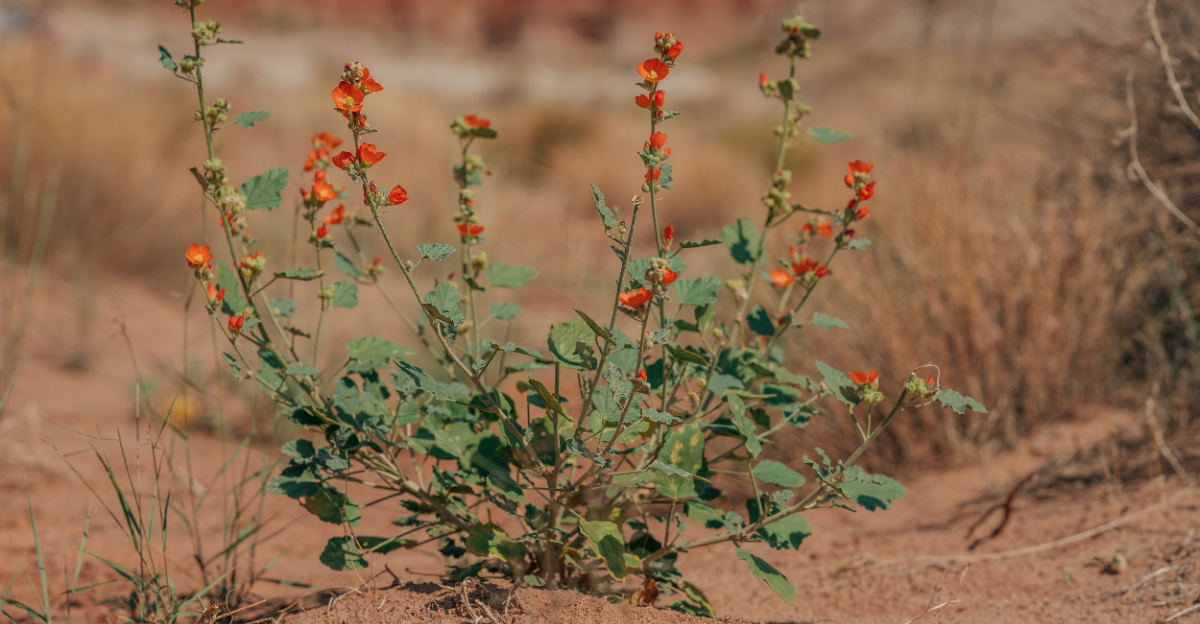
Early heat in Arizona brings a shift that shows up first in the garden, and one native flower begins to stand out right at that moment.
While many plants still hold back, this one responds as temperatures climb, adding color when the landscape can start to look washed out.
That timing makes a noticeable difference, especially when most blooms have not fully started. The garden gains a fresh burst of life without waiting for peak season, which helps keep everything from feeling flat.
Strong adaptation to local conditions plays a big role here. This flower handles rising heat with ease and keeps its presence steady without constant care.
Once it appears, the change is hard to miss, and it quickly becomes one of the most reliable signs that the season is shifting in Arizona gardens.
1. Desert Globemallow Starts Blooming Right As Temperatures Rise
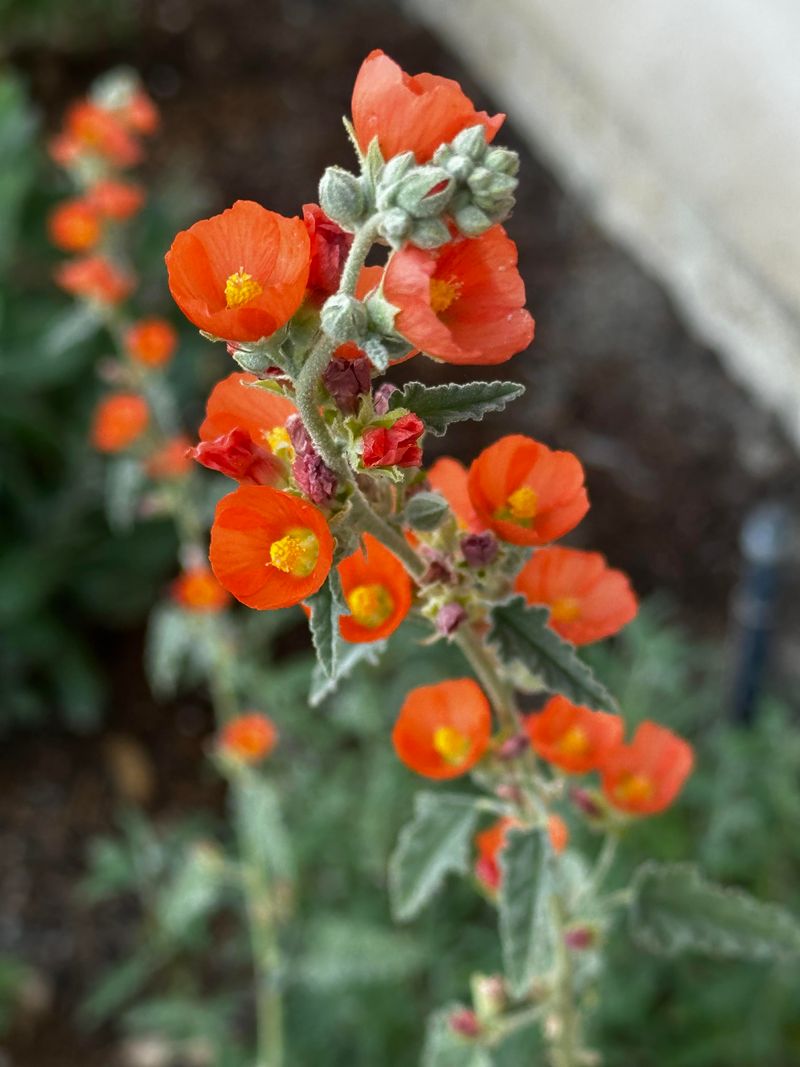
Walk outside in late February in Phoenix and you might catch the first orange blooms of Desert Globemallow already open, even when the air still has a chill in the morning. That early timing isn’t luck — it’s biology.
Sphaeralcea ambigua has evolved to sync its flowering cycle with rising soil temperatures, not with a calendar or a gardener’s schedule.
As days get longer and the desert floor warms up, Globemallow picks up on those temperature cues and starts pushing out buds. Most years in Arizona, you’ll see flowers appear anywhere from late January through March, depending on elevation and how warm the winter was.
Lower desert areas like the Phoenix metro tend to see blooms earlier than higher-elevation spots around Prescott or Flagstaff.
What makes this timing useful isn’t just the visual payoff. Globemallow blooming early means it provides pollen and nectar to native bees and other insects before most other plants have woken up.
That’s a real ecological contribution, not just a nice detail. In a garden setting, it fills a gap that few other native perennials cover.
2. First Flowers Open Earlier Than Many Other Native Perennials
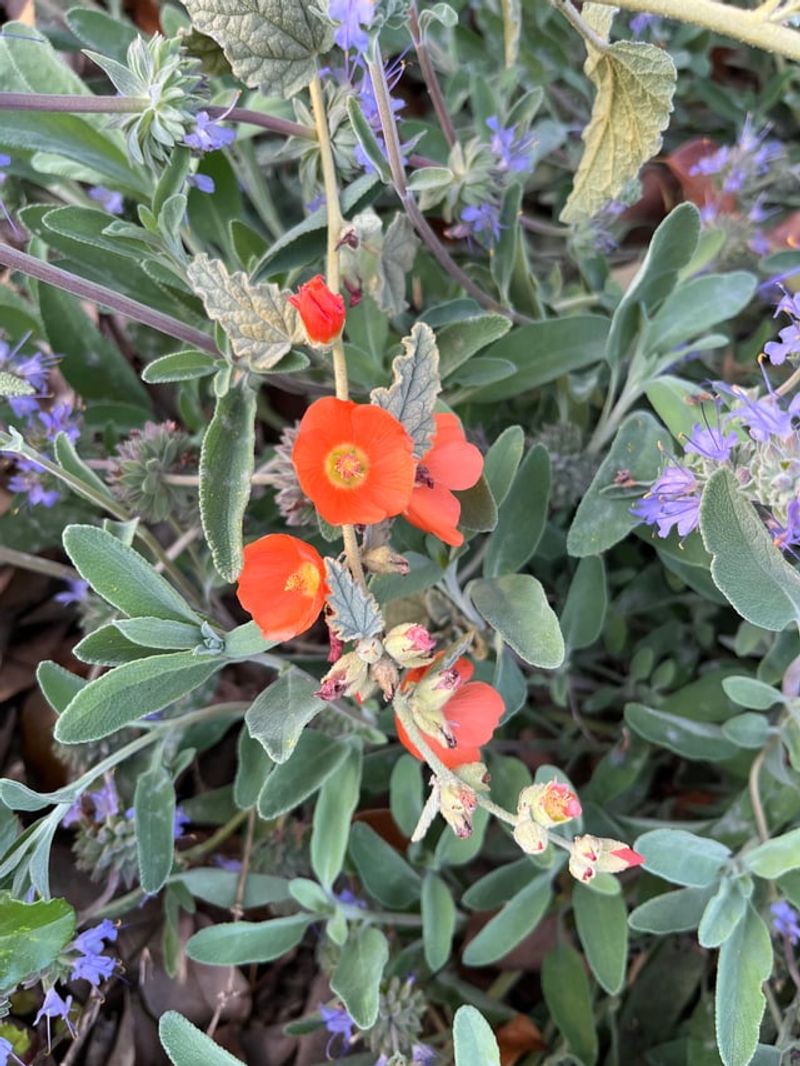
Plenty of Arizona natives wait until March or April before showing any real growth. Globemallow doesn’t wait.
Its flowers can appear weeks ahead of plants like Brittlebush, Penstemon, and Desert Marigold — a head start that matters more than you’d think in a short blooming season.
Early flowering gives Globemallow a practical edge. Native solitary bees in Arizona emerge in late winter, often before flowering plants are widely available.
Globemallow steps in right at that moment, offering a food source when options are genuinely limited. That relationship between plant and pollinator isn’t something you can engineer — it developed over thousands of years in the Sonoran Desert.
From a gardening standpoint, early bloom time also means you get color in your yard during what feels like the desert’s dullest stretch. January and February in Arizona can look pretty brown and lifeless in a lot of landscapes.
A patch of Globemallow changes that without requiring any extra watering or fertilizing during the cooler months.
It’s worth knowing that bloom timing can shift a bit year to year based on rainfall and temperatures in November and December. A warmer fall sometimes pushes flowers out even earlier.
A cold snap in January can slow things down slightly.
3. Silvery Foliage Helps Reduce Moisture Loss In Dry Conditions
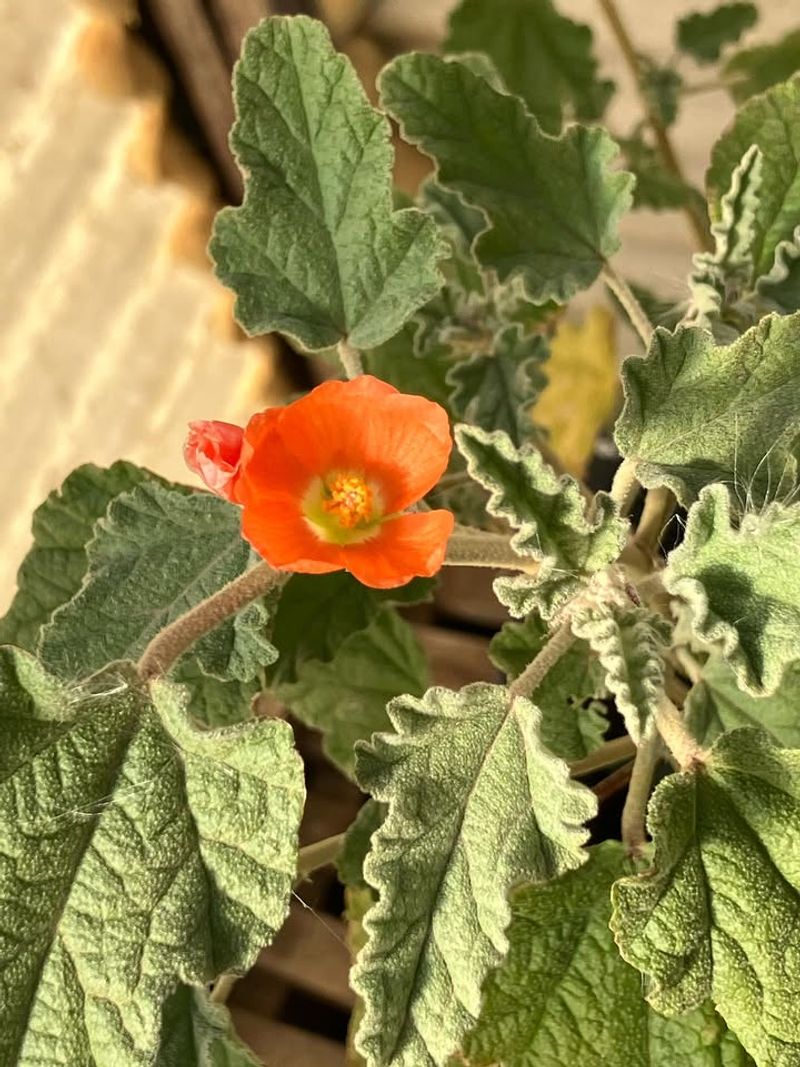
Run your fingers along a Globemallow leaf and you’ll notice it feels soft and slightly rough at the same time — almost like fine velvet. That texture comes from tiny star-shaped hairs covering the entire leaf surface.
Those hairs aren’t decorative. They’re one of the main reasons this plant survives Arizona’s brutal dry spells without falling apart.
The hairs create a layer of still air between the leaf surface and the surrounding environment. That trapped air slows down the rate at which moisture escapes from the plant.
In a desert where soil moisture can drop to almost nothing between rains, that kind of passive water retention is genuinely valuable. It’s a structural adaptation, not a response to stress.
The silvery color is a side effect of those same hairs reflecting sunlight. Lighter-colored leaves absorb less heat than dark green ones, which helps keep the internal temperature of the leaf lower during peak afternoon sun in places like Tucson or the Phoenix valley.
Less heat inside the leaf means less water vapor escaping through the stomata.
You’ll notice the foliage stays relatively consistent even when the plant hasn’t had rain in weeks.
4. Deep Roots Allow It To Stay Active With Very Little Water
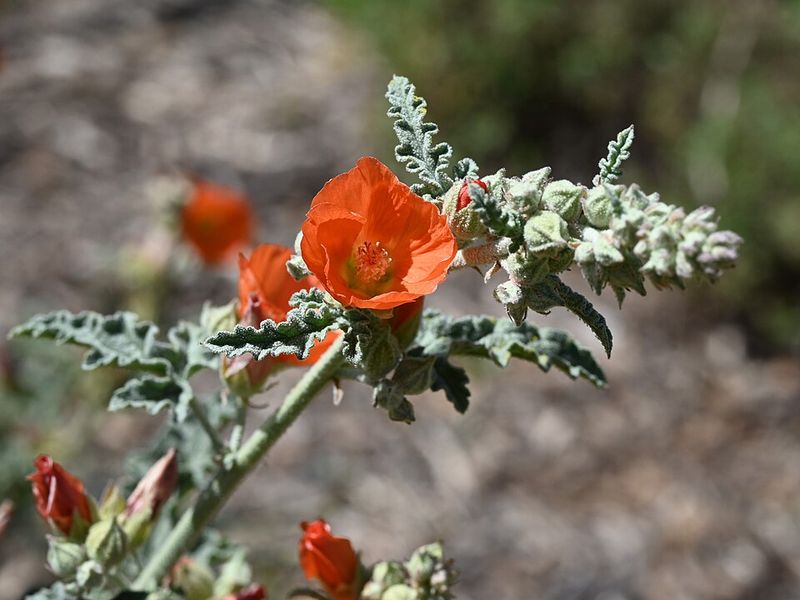
Below the surface, Globemallow is doing something most people never see. A deep taproot pushes down into the soil well past where surface moisture exists, tapping into water stored in lower layers that shallow-rooted plants simply can’t reach.
That root system is one of the main reasons Globemallow stays active through dry stretches that stress out other plants.
In Arizona, summer monsoon rains can be unpredictable. Some years bring heavy storms in July and August.
Other years, the monsoon shows up late or delivers less than expected. Globemallow handles both scenarios reasonably well because it isn’t dependent on surface moisture staying consistently available.
Once the taproot is established, the plant has access to a deeper water reservoir.
That said, deep roots don’t make Globemallow indestructible. Extended drought with no rainfall at all for several months can still stress the plant, especially in sandy soils that drain quickly.
Supplemental watering every few weeks during the hottest and driest stretches can help, particularly in the first year or two when the root system is still developing.
One practical note: because of that taproot, Globemallow doesn’t transplant easily once it’s been in the ground for a season or two. It’s best to plant it where you want it to stay.
Container-grown plants from a nursery establish better than bare-root transplants.
5. Bright Orange Blooms Attract Bees And Other Pollinators
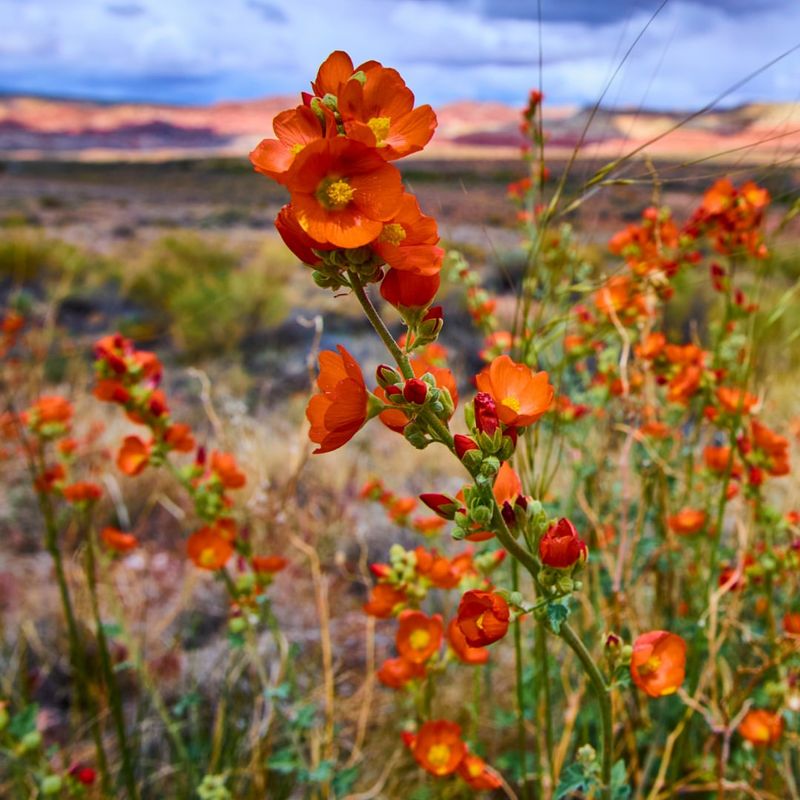
Orange is not a subtle color in the desert, and Globemallow isn’t trying to be subtle. Those bright cup-shaped blooms are practically a billboard for pollinators, visible from a distance against the muted tans and grays of the surrounding landscape.
Native bees notice them fast.
Several species of native bees in Arizona are specifically associated with Globemallow. Diadasia bees — sometimes called Mallow Bees — are specialists that collect pollen almost exclusively from plants in the mallow family.
You’ll often see them working Globemallow flowers in the morning, their bodies dusted orange with pollen. That’s a genuinely specialized relationship, not just a casual visit.
Beyond the specialist bees, Globemallow also draws in generalist pollinators including honeybees, bumblebees, and various native fly species. Butterflies occasionally visit as well, though they tend to prefer tubular flowers.
The open cup shape of Globemallow makes it easy for a wide range of insects to access the pollen and nectar without needing specialized mouthparts.
Planting Globemallow in clusters rather than as a single specimen tends to attract more pollinator activity.
6. Growth Stays Compact Without Needing Regular Pruning
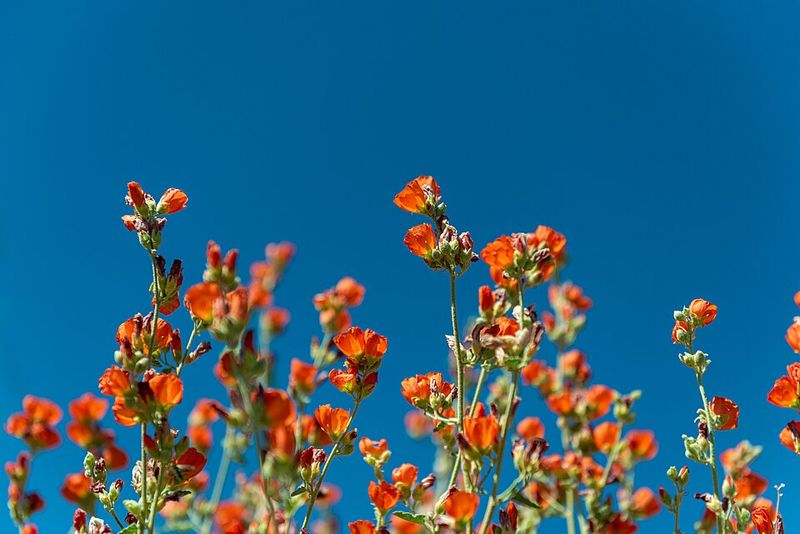
Globemallow doesn’t sprawl aggressively or send runners out across your garden.
In most Arizona conditions, mature plants reach roughly two to three feet tall and about as wide — a compact, mounding shape that fits neatly into a xeriscape design without constant management.
That size stays fairly predictable over time.
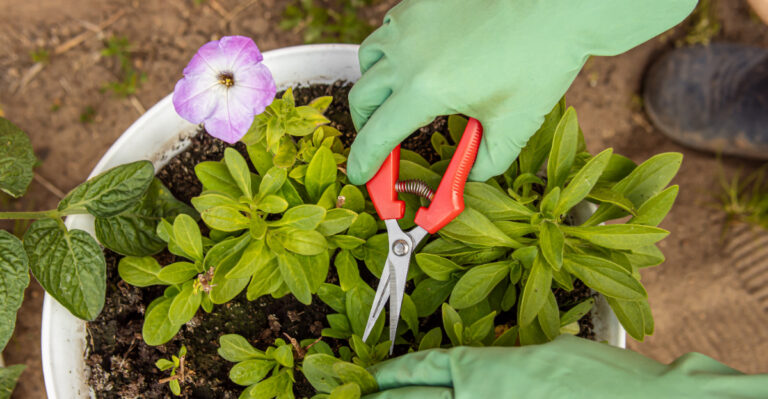
You won’t need to pull out pruning shears every few weeks to keep it in check. Globemallow grows at a moderate pace, and its natural form is tidy enough for most garden settings.
Some gardeners cut it back by about a third after the main bloom period ends in late spring, which can encourage a fresh flush of growth and sometimes a second wave of flowers later in the season. That’s optional, not mandatory.
In terms of placement, its compact size makes Globemallow useful along pathways, in rock gardens, or as part of a mixed native planting. It doesn’t shade out neighboring plants aggressively because it stays relatively low and open in structure.
That transparency is actually useful in a desert garden where you want sunlight reaching multiple layers of plants.
One thing to keep in mind: older plants can get a bit woody at the base over several years. At that point, cutting the whole plant back hard in late winter — before new growth starts — tends to refresh it and encourage healthier, more vigorous stems.
7. Flowering Continues Even As Conditions Turn Hot And Dry
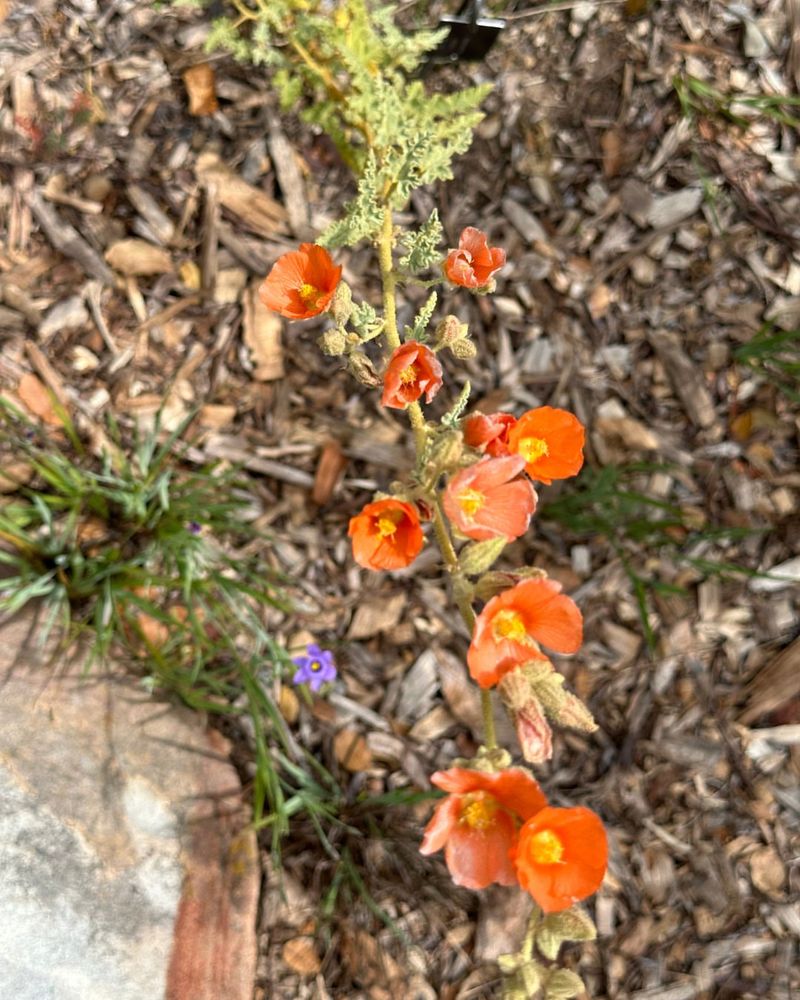
Most spring-blooming plants in Arizona hit their peak in March, slow down in April, and give up entirely by May when temperatures start pushing past 100 degrees. Globemallow keeps going longer than that.
It’s not unusual to see flowers persisting into late May or even June in some Arizona locations, well into the stretch when the desert feels punishing.
Part of that heat tolerance comes down to the same adaptations that help the plant handle drought — the reflective foliage, the deep roots, the overall efficiency of the plant’s water use.
High temperatures alone don’t immediately shut down Globemallow’s flowering the way they do for plants adapted to cooler climates.
It slows down, but it doesn’t stop abruptly.
Bloom density does decrease as summer approaches. You’ll see fewer flowers per stem in May than you did in March, and the plant may start looking a bit tired by June.
That’s normal and expected. Globemallow typically goes semi-dormant during the hottest and driest part of summer before the monsoon season brings some relief.
After monsoon rains arrive, it often produces another round of growth and occasional blooms in late summer or early fall.