The Native Plants That Take Off Fast In Georgia’s Early Spring
Early spring in Georgia can feel quiet at first, but native plants know exactly when to wake up. While other plants hesitate, many local species push out fresh growth as soon as temperatures begin to rise and daylight stretches a little longer.
They are already adapted to the soil, the rainfall patterns, and the swings between cool nights and warm afternoons.
That natural head start makes a noticeable difference in the landscape. Native plants often establish faster, need less extra care, and settle into steady growth without constant attention.
They are built for Georgia’s conditions, not fighting against them.
Choose the right natives in early spring, and you will see strong growth early in the season that carries confidently into the months ahead.
1. Eastern Red Columbine Wakes Up Early And Blooms By Mid-Spring
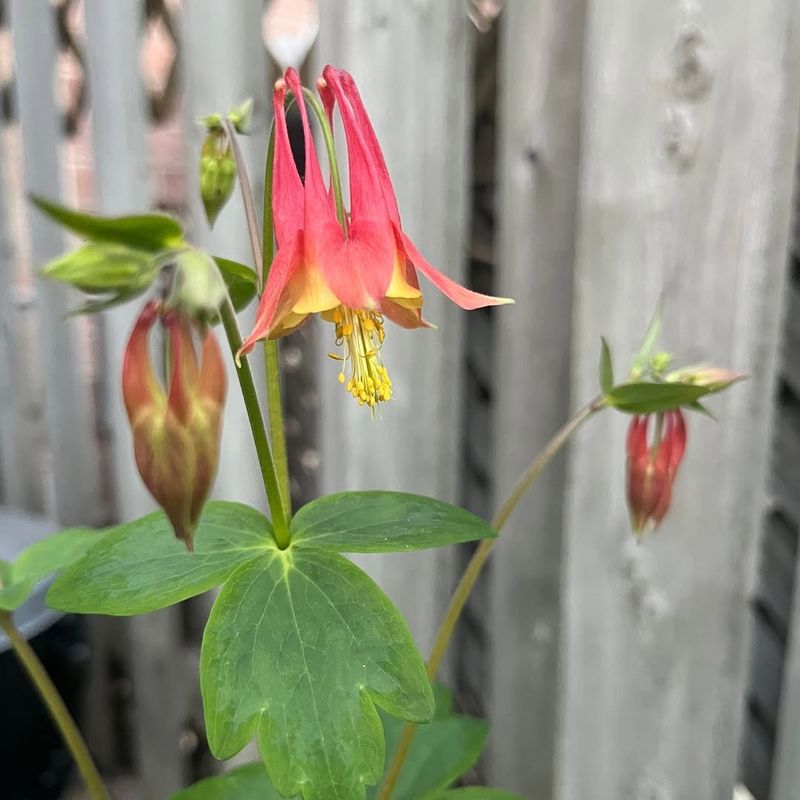
Columbine doesn’t mess around when March arrives in Georgia. You’ll see the ferny foliage emerge from the crown almost as soon as the ground thaws, and within three weeks, flower stalks shoot up carrying those unmistakable red and yellow blooms.
Hummingbirds show up right when the flowers open, sometimes before you’ve even noticed the plant is blooming.
Plant it in partial shade where the soil stays cool and slightly moist. Full sun in Georgia will stress it out by late April when temperatures start spiking.
The roots establish fast in spring, sending out new growth in multiple directions if conditions suit it. You’ll often find seedlings popping up nearby the following year because this plant self-sows freely.
Foliage stays attractive through May, then starts looking tired as summer heat builds. That’s normal.
Let it go dormant naturally and don’t cut it back too early or you’ll reduce next year’s show. The plant goes to sleep by July in most Georgia gardens, but it comes back reliably every spring.
Spacing matters less than you’d think. Columbine doesn’t form dense clumps like some perennials.
It has an airy, delicate structure that looks best when planted in groups of five or more. Pair it with ferns or wild ginger for a classic woodland combination that fills in fast and looks natural from the start.
2. Wild Geranium Forms Quick Clumps In Part Shade
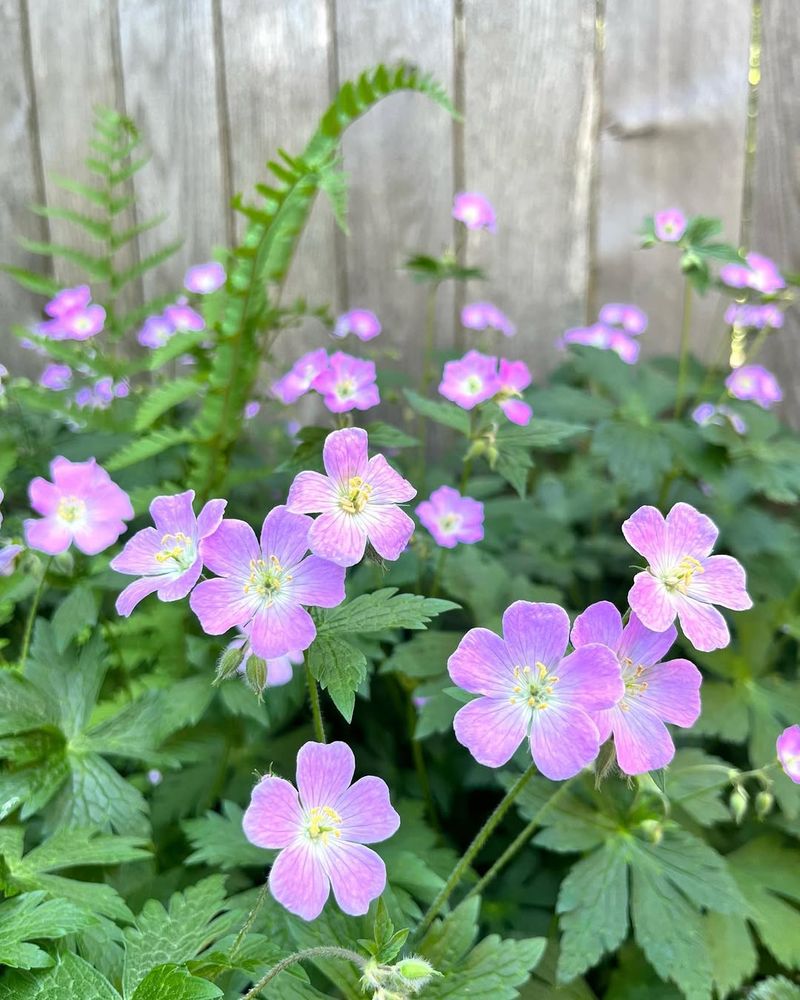
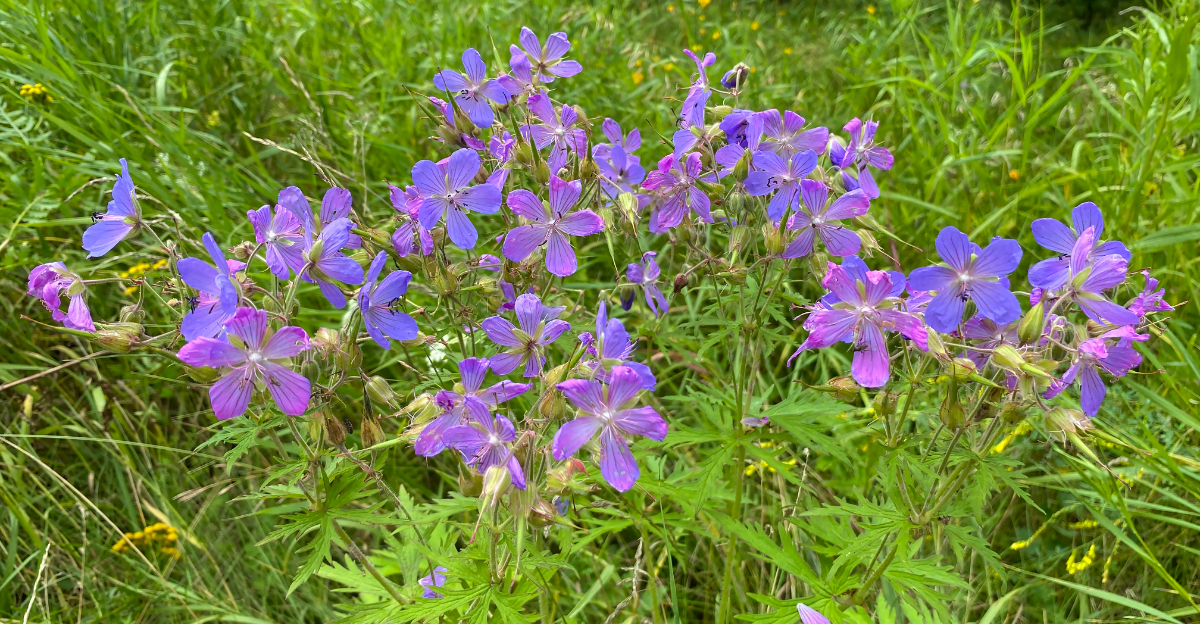
Few native perennials bulk up as fast as wild geranium in Georgia gardens. One plant in March becomes a solid clump by May, spreading outward with healthy green foliage that looks lush even before the flowers appear.
The growth rate surprises people who are used to slower woodland plants.
Flowers open in mid to late April depending on how warm the spring runs. They’re a soft pink-purple, about an inch across, and they cover the plant for several weeks.
Bees work them heavily during bloom time. After flowering, the foliage remains dense and attractive well into summer, unlike some spring ephemerals that vanish by June.
Part shade works best across most of Georgia. Too much sun and the leaves start to look bleached by early summer.
Too much shade and flowering decreases noticeably. Morning sun with afternoon shade hits the sweet spot, especially in the middle and southern parts of the state where heat arrives early.
Wild geranium doesn’t need rich soil, but it does appreciate consistent moisture during its active growth phase in spring. Once summer arrives and growth slows, it tolerates dry spells better than you’d expect.
Mulch helps, but don’t pile it against the crown or you’ll invite rot. This plant spreads by rhizomes, so give it room to expand or be prepared to divide clumps every few years.
3. Golden Ragwort Spreads Fast In Moist Spring Soil
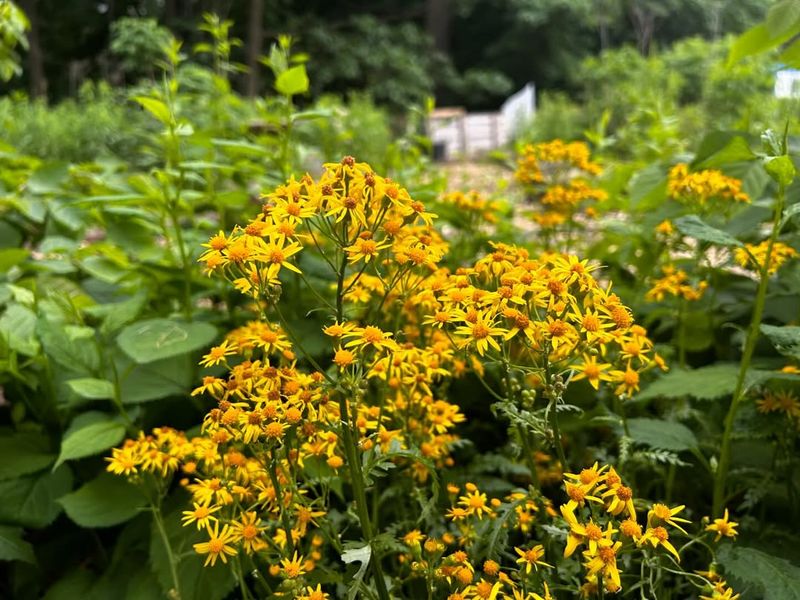
Golden ragwort explodes in wet spots. If you have an area that stays damp in spring, this plant will colonize it faster than almost any other native perennial in Georgia.
The foliage emerges early, often in late February, and by mid-March you’ll see flower stalks pushing up rapidly. Bright yellow blooms open in clusters that light up shady areas where most plants struggle.
Moisture drives its growth rate. In consistently moist soil, golden ragwort can double its coverage in a single season.
It spreads by short rhizomes and also self-sows, so you get expansion from multiple directions.
That aggressive nature makes it perfect for problem areas but less ideal for small, tidy garden beds where space is limited.
Bloom time peaks in April across most of Georgia. The flowers last several weeks and attract a variety of pollinators.
After blooming, the foliage stays green through summer if moisture holds. In drier conditions, it goes semi-dormant but bounces back with fall rains.
Don’t bother with golden ragwort in dry, sunny spots. It just won’t perform.
But plant it along a drainage swale, near a downspout, or in a low spot that holds water, and you’ll be impressed at how quickly it fills in. Pair it with ferns and native sedges for a naturalistic groundcover that requires zero maintenance once it’s going.
4. Coral Honeysuckle Pushes Strong New Growth As Temperatures Rise
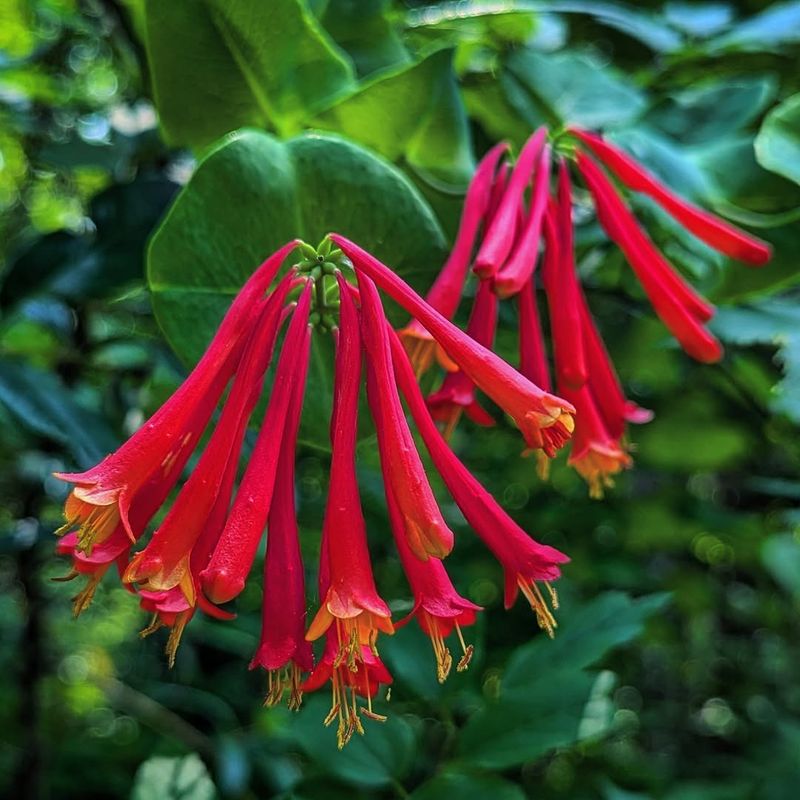
Coral honeysuckle doesn’t wait for warm weather to settle in. As soon as daytime temperatures in Georgia start hitting the 60s consistently, new shoots emerge from the base and climb aggressively.
You can almost watch it grow during peak spring weeks. A vine that looked worn out in January will be covered in fresh green leaves by late March.
Flowering starts in April and continues sporadically through fall, but that first spring flush is the heaviest. The tubular red-orange flowers attract hummingbirds immediately.
Unlike its invasive cousin Japanese honeysuckle, coral honeysuckle stays manageable and doesn’t strangle everything in sight. It climbs by twining, so give it something to wrap around like a trellis, fence, or arbor.
Growth speed depends on sunlight and water. Full sun produces the most flowers and the fastest growth, but part shade works fine in hotter areas of Georgia.
Water it regularly during the first spring after planting, then it becomes fairly drought-tolerant. Mulch around the base helps retain moisture and keeps roots cool.
Pruning isn’t usually necessary, but you can trim it back in late winter if it’s outgrowing its space. Don’t prune in spring or you’ll cut off flower buds.
This vine handles Georgia’s heat and humidity without any disease issues, and it stays evergreen in mild winters across the southern part of the state.
For fast vertical coverage that actually belongs here, coral honeysuckle delivers.
5. Spiderwort Shoots Up Fast With Early Purple Flowers
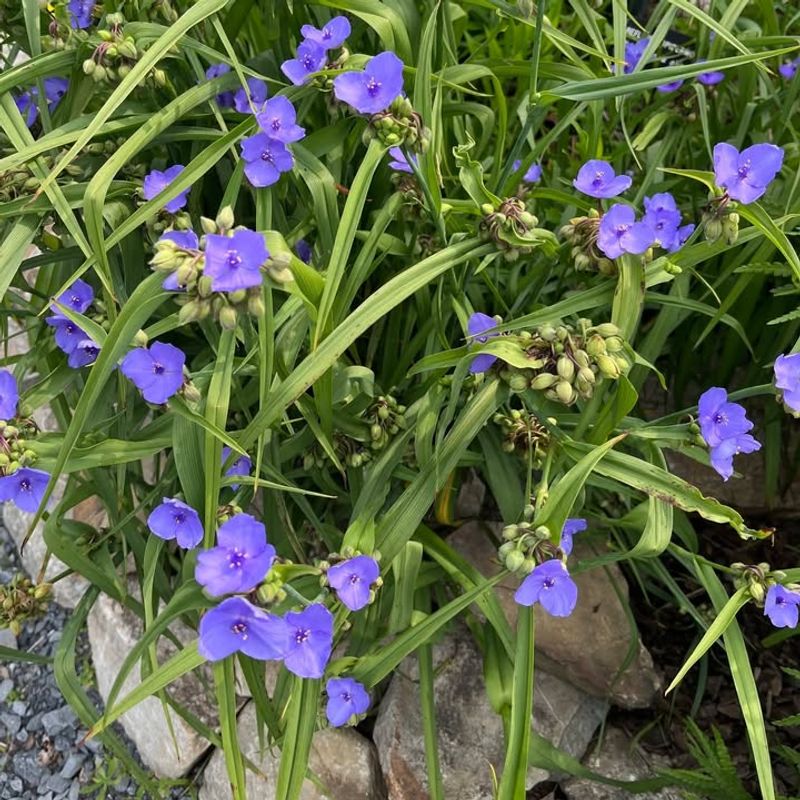
Spiderwort emerges fast and blooms even faster. By early April, you’ll see flower stalks rising above the grass-like foliage, and those distinctive three-petaled purple flowers open in succession for weeks.
Each flower only lasts a day, but the plant produces so many buds that you get continuous color through late spring.
Growth happens in spurts tied to rainfall. After a good spring rain in Georgia, spiderwort can put on six inches of new growth in a week.
The foliage forms dense clumps that spread steadily outward each year. It’s not invasive, but it does fill space quickly, which makes it useful for covering bare ground in borders or naturalized areas.
Sun tolerance varies depending on where you are in Georgia. In the northern parts of the state, full sun works fine.
Further south, afternoon shade prevents the foliage from looking scorched by June. Morning sun with afternoon protection is the safe bet across most of the state.
After blooming winds down in late May or early June, the foliage starts to look ragged. Some gardeners cut it back hard at that point, and the plant responds with fresh growth if moisture is adequate.
Others let it go dormant naturally. Either approach works.
Spiderwort isn’t fussy, and it comes back reliably every spring no matter how you treat it. For early color that establishes quickly, it’s hard to beat.
6. Phlox Divaricata Covers Woodland Edges With Spring Color
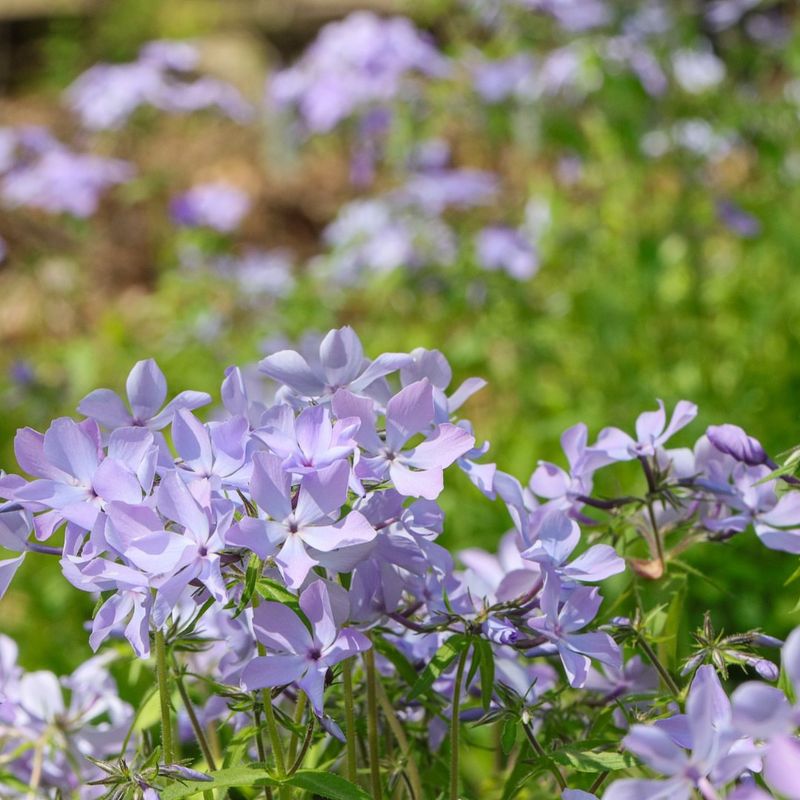
Woodland phlox spreads like a low tide across shaded areas in Georgia gardens. Once it starts growing in March, it moves outward steadily, forming mats of foliage that bloom heavily in April.
The flowers are lavender-blue, lightly fragrant, and appear in such abundance that they create a haze of color along woodland edges and under trees.
Speed of establishment depends on soil moisture and shade quality. In rich, slightly moist soil with dappled shade, phlox divaricata can cover a square yard in two growing seasons.
It spreads by creeping stems that root as they go, creating new plants without any effort on your part. That makes it excellent for naturalizing under deciduous trees where grass struggles.
Bloom time is short but intense. You get about three weeks of peak flowering in mid-spring, then the show fades.
The foliage stays semi-evergreen in milder parts of Georgia, providing year-round groundcover. In colder areas, it goes dormant in winter but returns vigorously each spring.
Avoid planting phlox divaricata in heavy clay that stays wet. It tolerates dry shade once established, but soggy roots lead to problems.
Pair it with ferns, wild ginger, or Solomon’s seal for a layered woodland planting that looks natural and fills in quickly. It self-sows moderately, so you’ll often find seedlings establishing nearby, which only adds to the naturalized effect.
7. Black-Eyed Susan Establishes Quickly In Sunny Beds
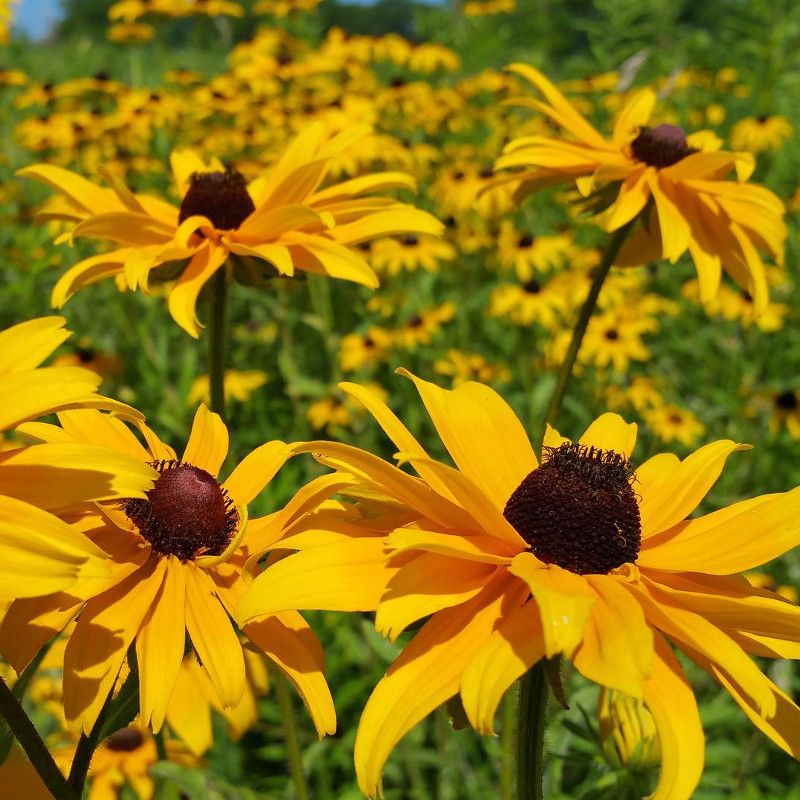
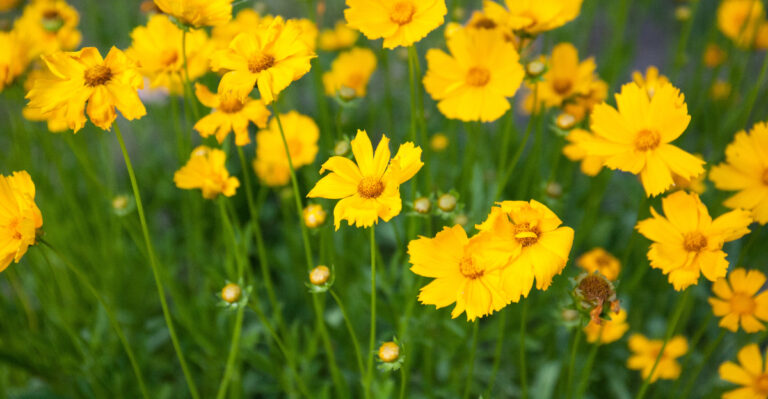
Black-eyed Susan hits the ground running in Georgia gardens. Plant it in spring, and by summer you’ll have a robust clump producing dozens of bright yellow flowers with dark centers.
The basal foliage emerges early, often in March, and grows steadily as temperatures rise. Root development happens fast, which helps the plant handle the heat and occasional drought that comes with Georgia summers.
Full sun is non-negotiable for best performance. Shade reduces flowering significantly and causes the plant to stretch and flop.
Well-drained soil is important too. Black-eyed Susan tolerates clay as long as water doesn’t sit around the roots.
Amend heavy soil with compost at planting time to improve drainage and give roots an easier path to establish.
Flowering starts in June and continues through September if you deadhead spent blooms. That’s a long season of color for a native perennial.
Butterflies and bees visit constantly during bloom time, and goldfinches feed on the seed heads in fall if you leave them standing.
Black-eyed Susan self-sows freely, so expect seedlings to pop up around the parent plant. Some gardeners consider this a bonus, others find it annoying.
Either way, it’s easy to pull unwanted seedlings in spring. The plant is short-lived as perennials go, usually lasting three to four years, but it replaces itself through self-sowing.
For fast color in sunny spots, it’s one of the most reliable natives you can plant in Georgia.
8. Oakleaf Hydrangea Leaf-Out Comes Early And Grows Fast In Shade
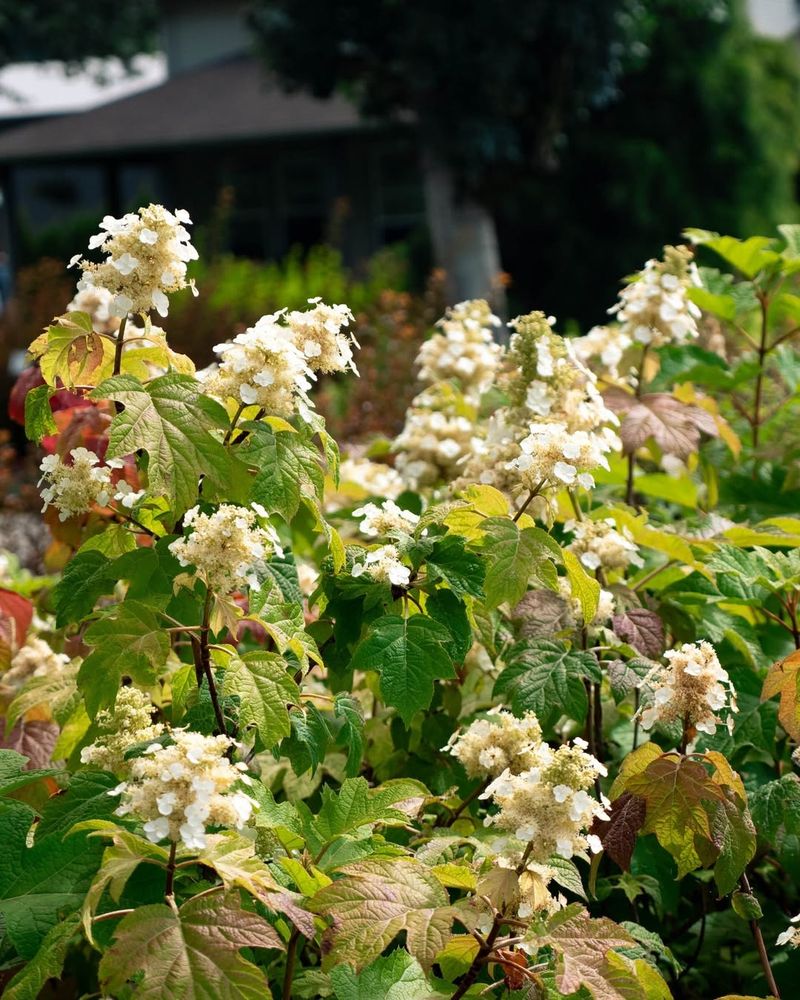
Oakleaf hydrangea breaks dormancy earlier than most shrubs in Georgia. By late March, you’ll see leaf buds swelling, and within two weeks, the distinctive oak-shaped leaves unfurl rapidly.
New shoots can grow several inches per week during peak spring growth, and the plant puts on noticeable size each year until it reaches mature dimensions.
Shade is this shrub’s preferred environment, though it tolerates more sun in northern Georgia than in the southern parts of the state. Too much direct sun causes leaf scorch and slows growth.
Morning sun with afternoon shade works well across most of the region. The plant handles dry shade once established, but consistent moisture during the first year speeds establishment considerably.
Flowers appear in late spring, large white cone-shaped clusters that age to pink and tan. They’re showy, but the foliage is the real star.
The leaves provide bold texture all season, then turn brilliant red and burgundy in fall. Exfoliating bark adds winter interest after the leaves drop.
Mature size reaches six to eight feet tall and wide, so give it room. Crowding slows growth and reduces flowering.
Mulch around the base to retain moisture and keep roots cool during Georgia summers. Pruning is rarely needed, but if you must shape it, do so right after flowering.
Oakleaf hydrangea is one of the few native shrubs that delivers fast growth, shade tolerance, and year-round interest without any fuss.