The Native Shrubs That Look Best In Georgia Front Yards
Native shrubs can quietly make or break the way a Georgia front yard feels from the street. Some look great for a season, then fade, thin out, or lose their shape once weather shifts.
Others seem to settle in, hold their form, and look right year after year without demanding constant attention.
Georgia’s climate rewards plants that are built for it. Heat, humidity, sudden cold snaps, and long growing seasons all expose which shrubs truly belong and which ones are just passing through.
In a front yard, that difference shows fast.
The best native shrubs bring structure first. They frame walkways, anchor corners, and keep front yards looking intentional even when flowers come and go.
Color, texture, and seasonal interest follow naturally, not forced.
When shrubs match Georgia’s conditions, the entire front yard feels calmer, more confident, and far easier to keep looking good.
1. Inkberry Holly Keeps Front Yards Neat Year Round
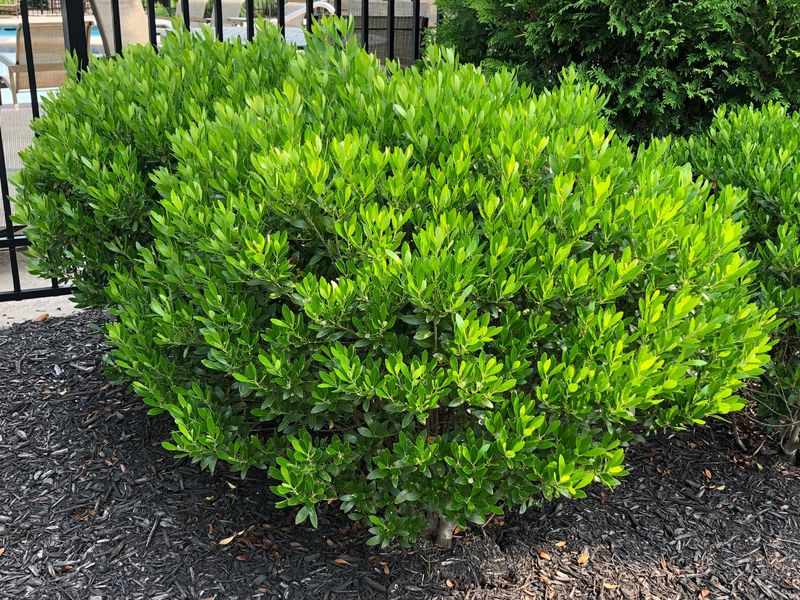
Evergreen foliage makes inkberry holly a reliable choice when you want your Georgia front yard looking polished every single month. The glossy dark green leaves stay put through winter, providing structure when other plants go dormant.
This shrub naturally grows into a rounded shape between three and eight feet tall, depending on the variety you select.
Inkberry adapts to different light conditions better than many hollies, tolerating part shade or full sun across Georgia landscapes. It handles wet spots surprisingly well, making it useful near downspouts or low areas where other shrubs struggle.
The small black berries that appear on female plants in fall provide food for birds without creating the mess that some fruiting shrubs produce.
Pruning stays minimal because inkberry maintains its shape without constant trimming. You can shear it into formal hedges if your front yard leans toward structured design, or let it grow more naturally for a relaxed look.
Georgia gardeners appreciate how this native shrub resists most pests and diseases that plague imported hollies.
Spacing plants about four feet apart creates a solid screen or foundation planting within a few growing seasons. The dense branching habit blocks unwanted views while still allowing air circulation that keeps foliage healthy.
Inkberry works equally well as a standalone specimen or massed along walkways and property lines throughout Georgia neighborhoods.
2. Oakleaf Hydrangea Adds Texture And Seasonal Interest
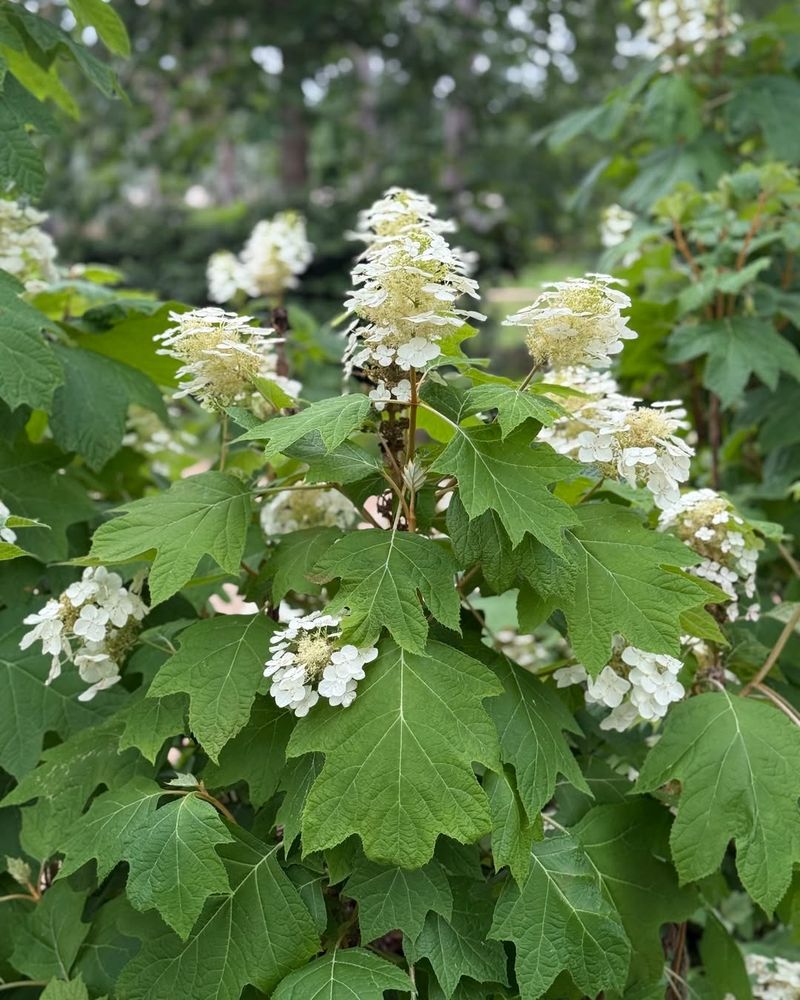
Bold cone-shaped flower clusters appear in late spring and early summer, transforming Georgia front yards into show-stopping displays.
Oakleaf hydrangea earns its name from leaves shaped remarkably like red oak foliage, adding distinctive texture that sets it apart from typical rounded-leaf shrubs.
These blooms start creamy white and age to pink and tan shades that remain attractive well into fall.
Fall color delivers another round of visual interest when the large leaves turn burgundy, bronze, and deep purple across Georgia landscapes.
The exfoliating bark becomes more prominent as plants mature, revealing cinnamon-colored layers that catch attention during winter months.
This multi-season performance makes oakleaf hydrangea worth every bit of front yard real estate it occupies.
Mature size ranges from four to eight feet tall and wide, so give this shrub room to spread without crowding walkways or windows. It prefers morning sun with afternoon shade in Georgia, especially in southern parts of the state where summer heat intensifies.
Consistent moisture during establishment helps, but established plants tolerate short dry spells better than many hydrangeas.
The layered branching habit creates architectural form that looks intentional even when plants stand bare in winter.
Oakleaf hydrangea mixes beautifully with ferns and hostas in shaded front yard beds or anchors sunny borders when paired with coneflowers and black-eyed Susans throughout Georgia gardens.
3. Virginia Sweetspire Creates A Soft Natural Border
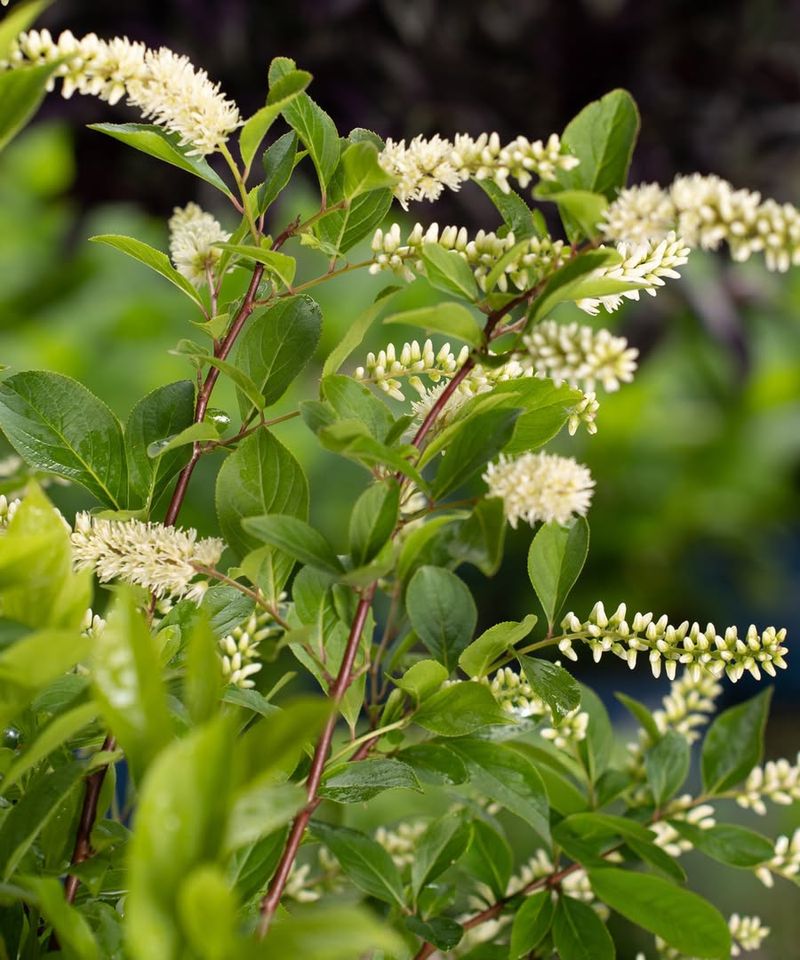
Fragrant white flower spikes dangle from arching branches in late spring, filling Georgia front yards with a sweet scent that attracts butterflies and bees.
Virginia sweetspire grows three to five feet tall with a graceful spreading habit that softens hard landscape edges beautifully.
The flowers appear just as many spring bloomers finish, extending the show into early summer across Georgia neighborhoods.
Adaptability ranks among this shrub’s best qualities since it tolerates both wet and dry soils once established in Georgia landscapes. You can plant it in that tricky spot where water pools after heavy rains or in average garden beds with good drainage.
Part shade to full sun both work fine, though afternoon shade helps in the hottest parts of Georgia.
Fall foliage puts on a spectacular display with leaves turning vibrant shades of red, orange, and purple that rival any imported ornamental. The color develops reliably across Georgia, even during mild autumns when some natives skip their seasonal show.
Bare stems in winter reveal reddish bark that adds subtle warmth to dormant front yard plantings.
This shrub spreads slowly by underground stems, eventually forming colonies that create natural-looking borders without aggressive takeover behavior.
Virginia sweetspire works wonderfully along property lines, beside driveways, or massed beneath shade trees where grass struggles to grow in Georgia yards.
4. American Beautyberry Brings Standout Color In Fall
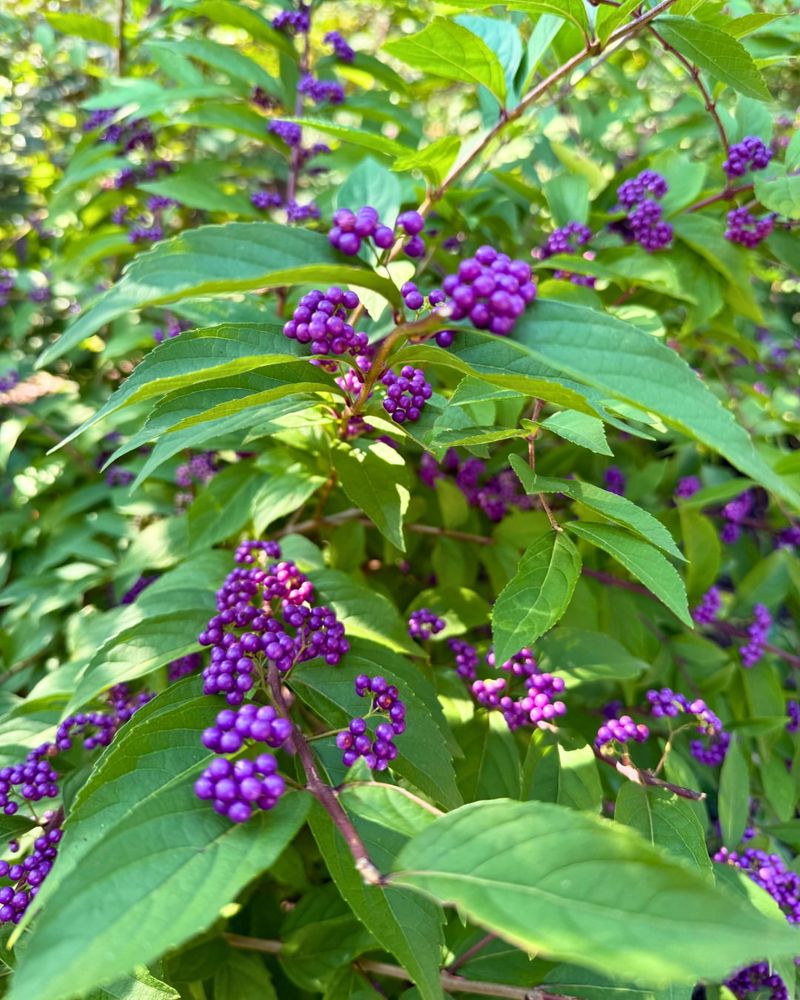
Clusters of brilliant purple berries line the stems each fall, creating one of the most eye-catching displays any Georgia native shrub can produce.
American beautyberry deserves a prominent spot in front yards because those magenta fruits practically glow against autumn foliage.
Birds eventually feast on the berries, but they persist long enough for homeowners to enjoy weeks of color.
Summer brings small pink flowers that most people overlook until those famous berries develop in September and October across Georgia. The shrub grows four to six feet tall with an open, arching form that fits cottage-style landscapes better than formal designs.
Light green leaves turn yellowish before dropping in fall, allowing the berry display to take center stage.
Full sun to part shade both support healthy growth, though berry production increases with more sunlight in Georgia gardens. Average soil works fine since this native adapts to different conditions without demanding amendments or special care.
The loose growth habit means you might want to prune back stems by one-third in late winter to encourage bushier plants.
American beautyberry makes a bold statement when planted where people can see it up close from walkways or windows. Pairing it with evergreen shrubs provides contrast that makes the purple berries pop even more dramatically.
Georgia gardeners love how this native requires almost zero maintenance while delivering such memorable seasonal interest in front yard plantings.
5. Native Azaleas Light Up Shaded Front Yards In Spring
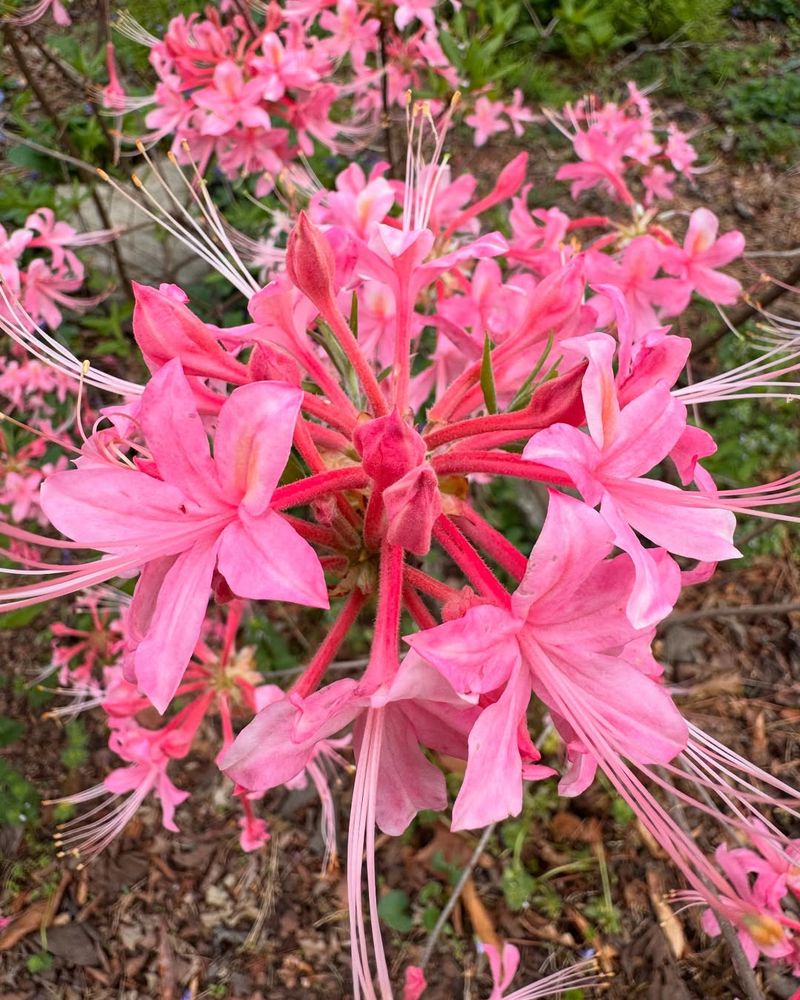
Spring explodes with color when native azaleas bloom across Georgia, offering flowers in shades from pure white to coral, pink, and fiery orange.
Unlike the common evergreen azaleas imported from Asia, these deciduous natives grow larger and bloom later with incredible fragrance that fills front yards.
Florida flame azalea and piedmont azalea are two species that thrive throughout Georgia landscapes.
These shrubs prefer the dappled shade beneath tall trees, making them perfect for front yards with mature oaks or pines. They typically reach six to ten feet tall, creating substantial presence without blocking windows or views.
The tubular flowers attract hummingbirds and butterflies, adding movement and life to shaded Georgia gardens during peak bloom.
Fall foliage turns yellow, orange, or reddish before leaves drop, giving native azaleas a second season of interest beyond spring flowers. The branching structure looks attractive even when bare, with a natural irregular form that suits woodland-style landscapes.
Acidic soil rich in organic matter keeps these shrubs happiest, which matches conditions already present under pine trees across Georgia.
Avoid planting native azaleas in full sun or dry exposed sites where they struggle and bloom poorly. Morning sun with afternoon shade creates ideal conditions throughout Georgia, especially in southern counties where heat intensifies.
Mulching with pine straw or shredded leaves mimics forest floor conditions and helps retain the consistent moisture these beauties appreciate during establishment.
6. Fothergilla Offers Early Blooms And Strong Structure
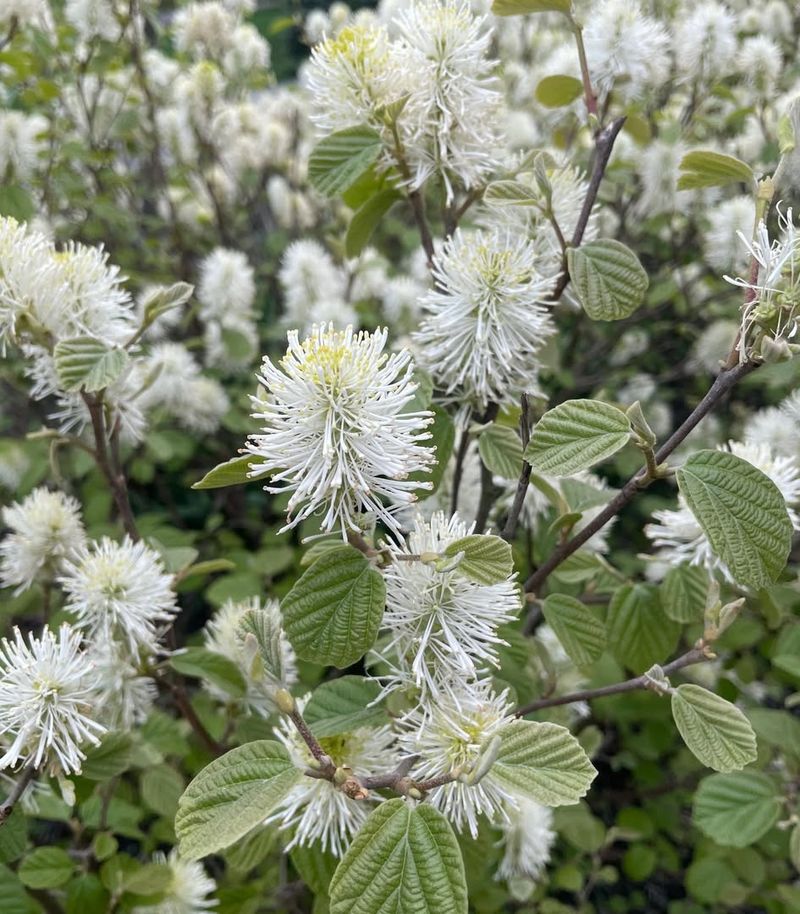
Bottlebrush-shaped white flowers appear before leaves emerge in early spring, giving Georgia front yards a fresh start to the growing season.
Fothergilla blooms when most shrubs still look dormant, making it a valuable choice for homeowners who want extended interest.
The honey-scented flowers attract early-season pollinators that appreciate nectar sources when options remain limited.
Compact varieties stay three to five feet tall, fitting neatly into foundation plantings and smaller front yard spaces across Georgia. Larger selections can reach six to eight feet, working well as anchors in mixed borders or standalone specimens.
The rounded growth habit looks intentional without requiring constant pruning to maintain shape.
Fall foliage ranks among the best of any shrub, with leaves turning brilliant combinations of yellow, orange, red, and purple simultaneously. This multi-toned display develops reliably in Georgia, even during warm autumns when some plants skip their color change.
The show lasts several weeks before leaves finally drop and reveal interesting branching structure.
Fothergilla adapts to full sun or part shade, though some afternoon protection helps in the hottest parts of Georgia. It prefers acidic soil but tolerates average garden conditions better than many native shrubs.
Pest and disease problems rarely occur, making this a truly low-maintenance choice for busy homeowners.
Pairing fothergilla with evergreens creates year-round interest, while combining it with other flowering shrubs extends bloom time across seasons in Georgia front yards.
7. Buttonbush Works Well In Moist Or Low Areas
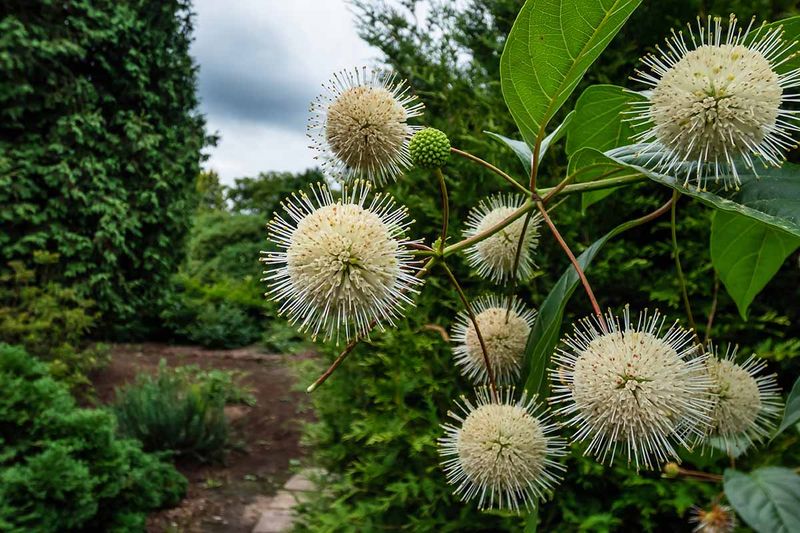
Round white flower balls appear in summer, looking like pincushions stuck full of pins when blooming across Georgia landscapes.
Buttonbush thrives in wet spots where most shrubs struggle, making it the perfect solution for low areas or spots near drainage swales in front yards.
The unique spherical flowers attract butterflies and hummingbirds throughout the blooming period.
This native shrub grows five to twelve feet tall depending on growing conditions, with moisture availability directly influencing final size. It tolerates standing water better than almost any other ornamental shrub suitable for Georgia front yards.
The glossy green leaves stay attractive all summer, providing a lush backdrop for the distinctive white blooms.
Buttonbush works beautifully beside ponds or rain gardens, but it also adapts to average moisture conditions once established in Georgia. Full sun produces the most flowers, though part shade still allows decent blooming.
The seeds that follow flowers feed waterfowl and songbirds into fall and winter.
Pruning in late winter controls size and encourages bushier growth with more flower production the following summer. You can cut buttonbush back hard if it outgrows its space, and it will resprout vigorously from the base.
This resilience makes it forgiving for gardeners still learning proper pruning techniques.
Pairing buttonbush with ornamental grasses and moisture-loving perennials creates cohesive plantings in challenging wet spots throughout Georgia front yards where traditional foundation shrubs would struggle or perish.
8. Yaupon Holly Fits Both Formal And Natural Designs
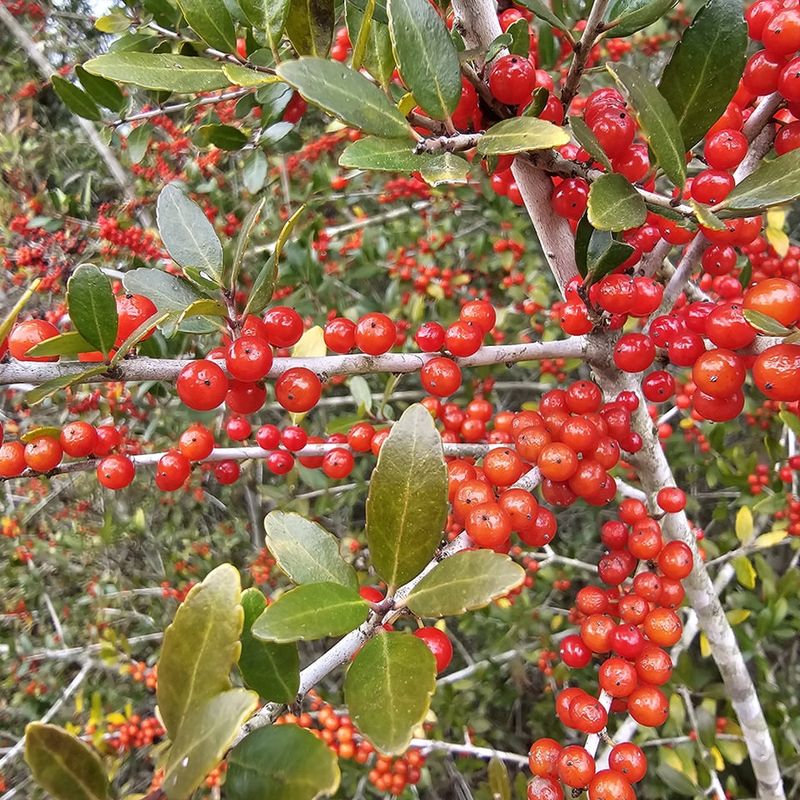
Small evergreen leaves create fine texture that works equally well sheared into formal shapes or left natural for a relaxed look in Georgia front yards.
Yaupon holly adapts to almost any landscape style, making it incredibly versatile for homeowners with different design preferences.
The tiny leaves stay glossy and dark green throughout winter, providing reliable color when deciduous plants stand bare.
Female plants produce abundant red berries that persist from fall through winter, attracting cedar waxwings and other berry-loving birds to Georgia landscapes.
The berries create bright spots of color against dark foliage, adding visual interest during months when gardens need it most.
Male plants are needed nearby for berry production, so consider planting both if you want fruit.
Size varies dramatically depending on variety, from dwarf selections under three feet tall to tree forms reaching fifteen feet or more.
Compact varieties fit beneath windows perfectly, while larger types create privacy screens or property line buffers throughout Georgia neighborhoods.
The dense branching habit provides good screening even on younger plants.
Yaupon tolerates salt spray, drought, and poor soil once established, making it tougher than most hollies used in Southern landscapes. It grows in full sun to part shade across Georgia, though berry production improves with more sunlight.
Pruning anytime maintains desired size and shape without harming the plant.
This native holly requires less water than non-native alternatives while delivering superior performance in Georgia heat and humidity that challenges imported landscape plants.