The Plants That Make An Oregon Garden Feel Complete
Great Oregon gardens have a certain feeling, lush, layered, and perfectly at home in the landscape. The secret is not just colorful flowers or neat pathways, but the right mix of plants that bring structure, texture, and year round life.
Some anchor the garden with rich evergreen presence, others weave in seasonal color, soft movement, and habitat for birds and pollinators. Together, they create balance and harmony that feels natural, never forced.
In Oregon’s mild, rain nourished climate, many plants thrive with surprising ease, rewarding gardeners with steady growth and lasting beauty.
Choosing the right ones can turn an ordinary yard into a space that feels calm, full, and deeply connected to the Pacific Northwest.
If your garden feels like it is missing something, the perfect finishing plants might be the simple touch that brings everything together in the most satisfying way.
1. Oregon Grape (Mahonia aquifolium)
Few plants say “Oregon” quite as boldly as the Oregon Grape. It is actually the state flower of Oregon, and it earns that title every spring when its bright yellow blooms burst open in clusters along stiff, holly-like stems.
The flowers smell faintly sweet and attract early pollinators when not much else is blooming yet.
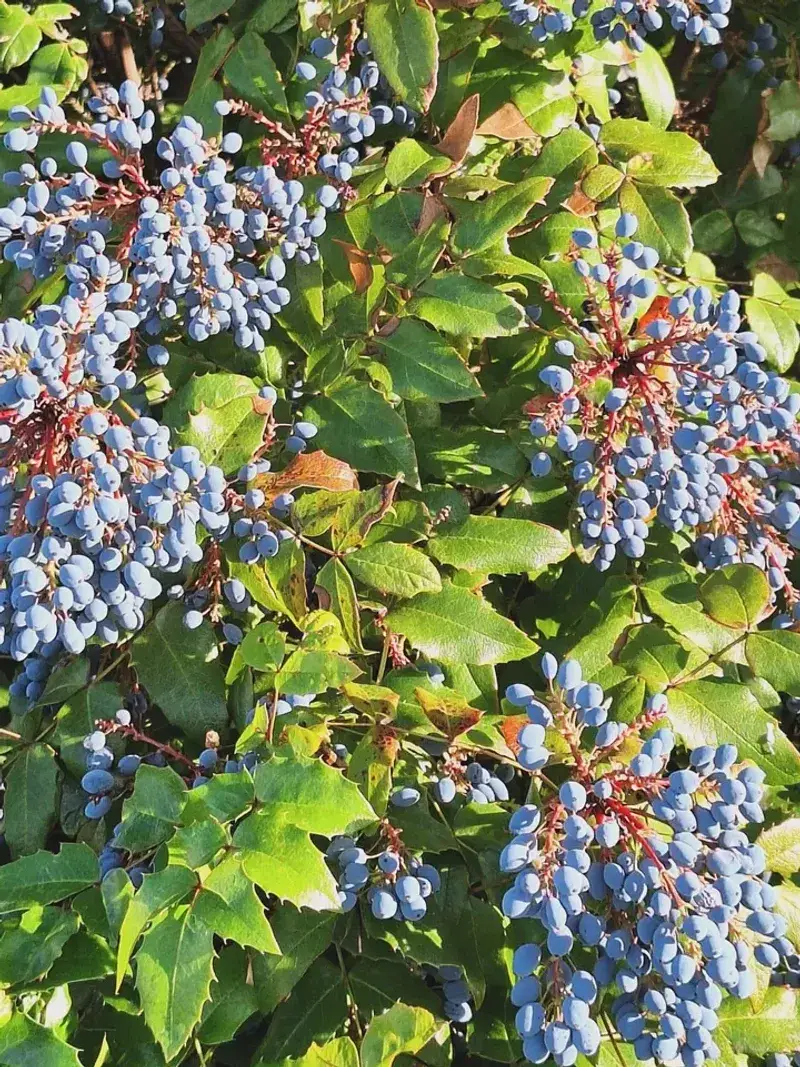
After the flowers fade, deep blue-purple berries appear. Birds absolutely love them.
Humans can eat them too, though they are quite tart. Some people use them to make jelly or juice with a little extra sweetener added in.
Oregon Grape grows well in shade or partial sun, making it ideal for spots under trees where other plants struggle. It stays green all year, which means your garden has structure even in the middle of a gray Oregon winter.
It grows slowly but steadily, reaching about three to six feet tall depending on the variety. Low-growing varieties work beautifully as ground cover along pathways or slopes.
Once established, this plant needs very little water and almost no fertilizer. It is tough, reliable, and deeply rooted in Oregon’s natural identity.
2. Vine Maple (Acer circinatum)
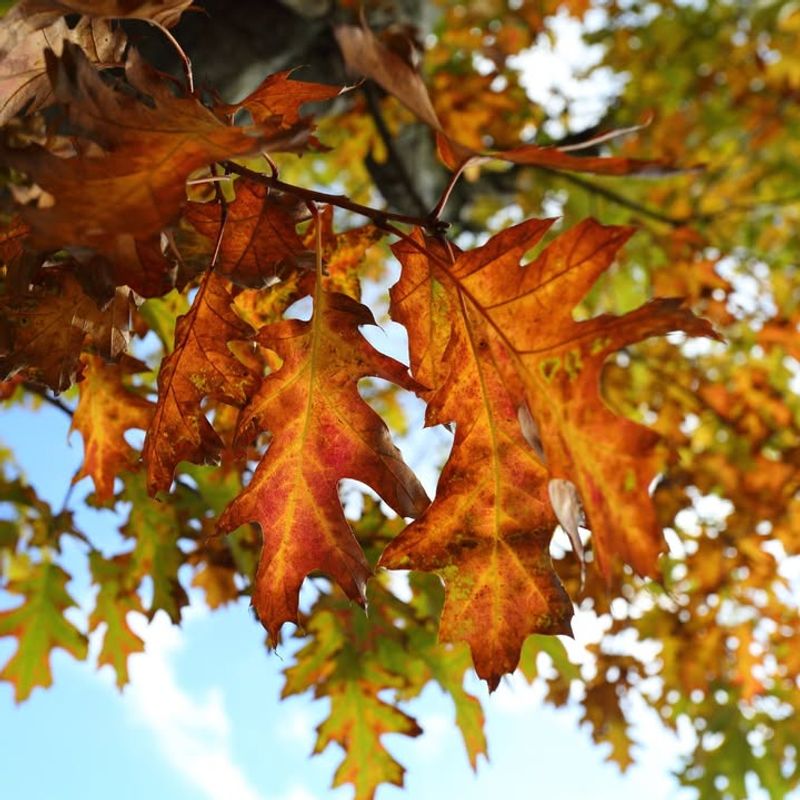
Walk through almost any Oregon forest and you will likely brush past a Vine Maple. Its arching, twisting stems grow in every direction, giving it a wild and graceful look that feels straight out of a fairy tale.
In the fall, the leaves turn brilliant shades of red, orange, and gold that rival any ornamental tree you could find at a nursery.
What makes Vine Maple so useful in an Oregon garden is how flexible it is. It can grow as a large shrub or be trained into a small tree.
It handles shade well, which is a big plus in yards with taller trees already established. It also does fine in full sun along the edges of open spaces.
Spring brings tiny reddish-purple flowers that are small but charming. Seeds follow in the shape of winged pairs that spin like helicopters as they fall.
Wildlife including birds and small mammals enjoy the seeds throughout the season. Vine Maple grows at a moderate pace and rarely needs pruning to look good.
It is a low-maintenance plant that rewards patient gardeners with one of the most stunning fall color displays Oregon has to offer.
3. Western Sword Fern (Polystichum munitum)
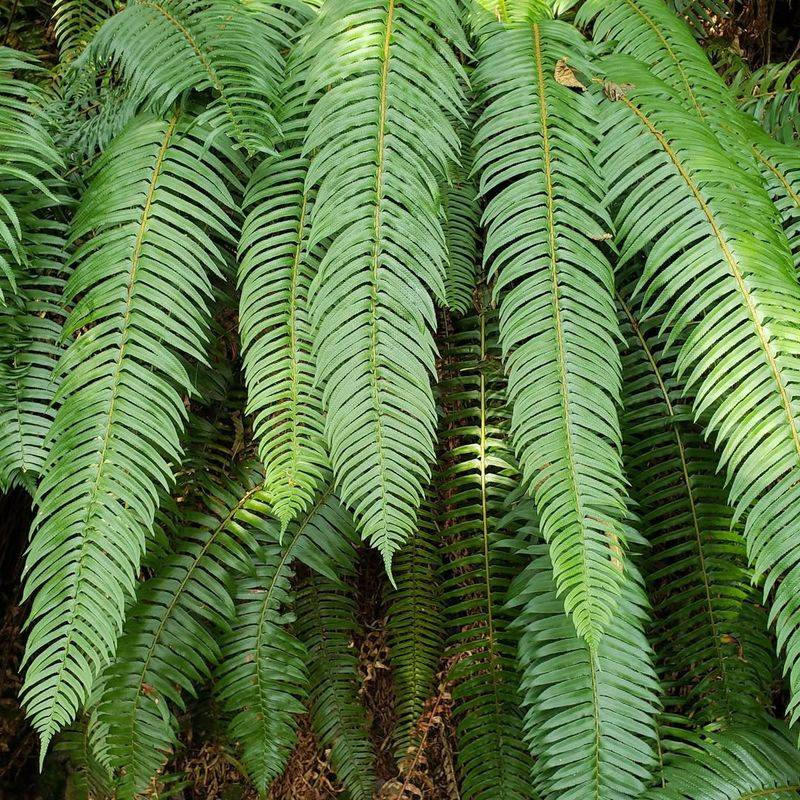
There is something deeply calming about a garden full of ferns. Western Sword Fern is one of the most common plants in Oregon’s forests, and for good reason.
Its long, arching fronds stay dark green all year long, giving any shaded garden corner a lush, forest-floor feel that never goes out of style.
Each frond can grow up to four feet long, and a single clump can spread quite wide over time. The individual leaflets along each frond have small teeth along their edges, giving the plant a slightly spiky, sword-like appearance.
That is exactly where the name comes from.
Planting Western Sword Fern is almost foolproof. It loves shade and moist, well-drained soil, which describes a huge number of Oregon yards perfectly.
Once it settles in, it practically takes care of itself. It rarely needs watering after its first year, and it does not attract many pests.
It pairs beautifully with other shade-lovers like Oregon Grape and Salal to create a layered, naturalistic look.
Gardeners in Oregon use it along fence lines, under large trees, and on shaded slopes where erosion can be a problem. It is a true workhorse plant.
4. Oregon White Oak (Quercus garryana)
Some trees are more than just plants. They are landmarks, ecosystems, and living history all in one.
Oregon White Oak is exactly that kind of tree. It is the only oak native to the Pacific Northwest, and it has been growing in Oregon for thousands of years.
Some individual trees are hundreds of years old and still going strong.
Oregon White Oak grows slowly, but the wait is absolutely worth it. Over time, it develops a wide, spreading canopy that provides deep shade in summer.
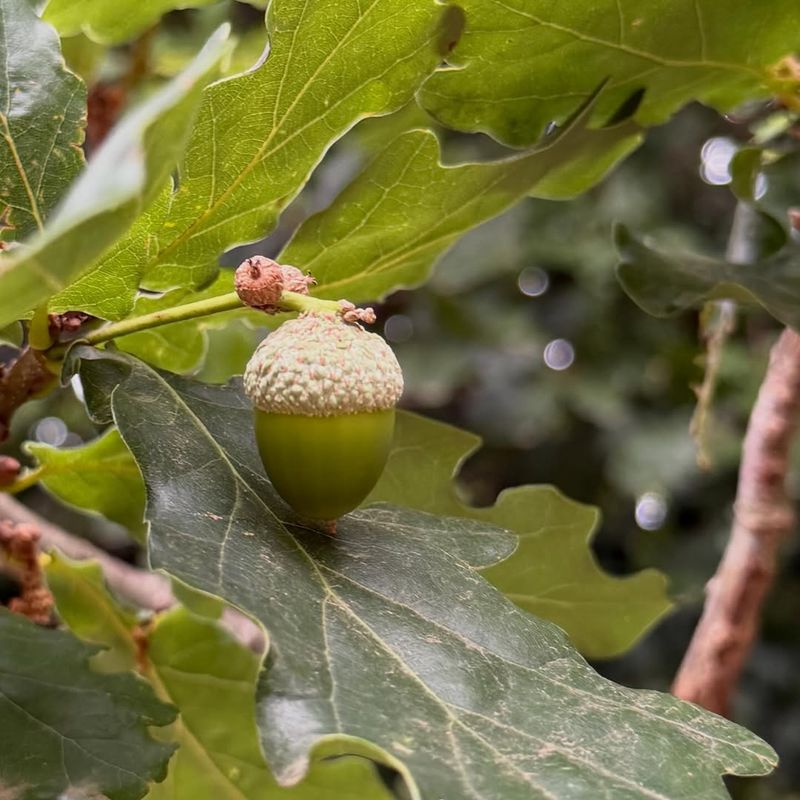
The deeply lobed leaves turn golden brown in fall and often hang on the tree well into winter. Acorns are produced in large numbers and are a critical food source for squirrels, deer, and many bird species including woodpeckers and jays.
In a home garden, Oregon White Oak works best in larger spaces where it has room to spread. It prefers well-drained soil and tolerates dry summers once established, which makes it a smart choice for Oregon’s warm, dry late-season months.
Planting one is a long-term investment, but few trees make a garden feel more rooted in the Oregon landscape than this majestic native oak. Future generations will thank you for it.
5. Pacific Madrone (Arbutus menziesii)
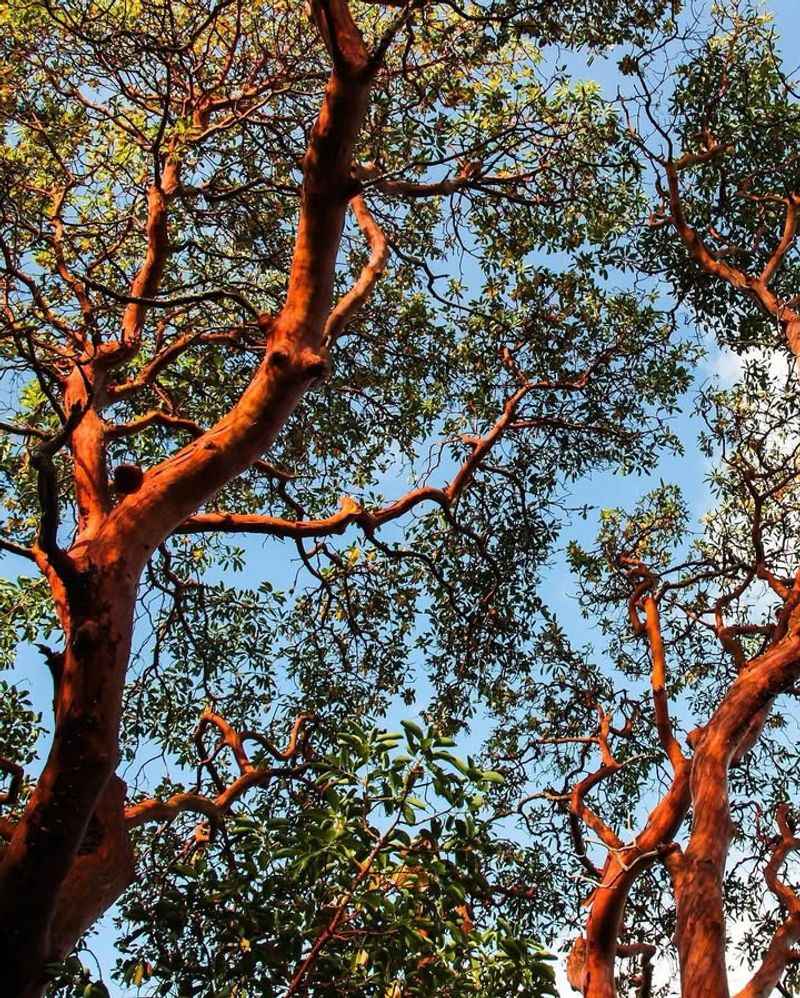
No other tree in Oregon turns heads quite like Pacific Madrone. Its bark is the first thing people notice.
It peels away in papery layers to reveal smooth, reddish-orange wood underneath that almost glows in the afternoon sun. The bark alone makes this tree a year-round conversation starter in any garden.
Beyond the bark, Pacific Madrone offers a lot. It stays green all year with thick, glossy leaves.
In spring, clusters of small white bell-shaped flowers attract bees and other pollinators. By fall, bright red-orange berries replace the flowers and become a feast for birds including robins, cedar waxwings, and band-tailed pigeons.
Pacific Madrone grows naturally along Oregon’s coast and in the foothills of the Cascades. It prefers dry, rocky, or sandy soil with excellent drainage.
Overwatering is the most common mistake people make with this tree, especially in summer. Once you understand its preference for dry conditions, it becomes much easier to grow.
It does best when left alone after planting. Pacific Madrone can be tricky to establish, but once it takes root, it becomes one of the most striking and wildlife-friendly trees you can have in an Oregon yard.
6. Red-Flowering Currant (Ribes sanguineum)
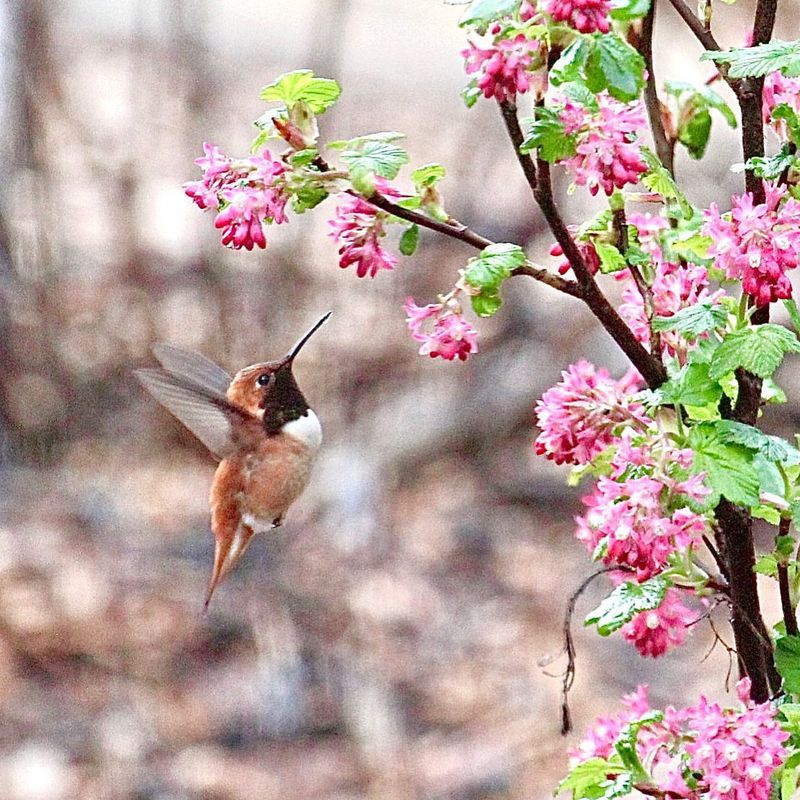
Every Oregon garden deserves at least one plant that makes hummingbirds stop in their tracks. Red-Flowering Currant is that plant.
In late winter or very early spring, long drooping clusters of deep pink to red flowers appear before most other plants have even woken up. Rufous hummingbirds time their northward migration specifically around this plant’s bloom season.
The flowers are absolutely beautiful and stand out vividly against the still-bare landscape of an Oregon late-winter garden. After blooming, the plant leafs out fully with soft, lobed leaves that smell pleasantly spicy when you brush against them.
Small blue-black berries follow in summer and attract birds.
Red-Flowering Currant grows as a medium to large shrub, typically reaching five to ten feet tall. It handles a wide range of conditions including full sun, partial shade, dry soil, and clay-heavy Oregon soils.
It is one of the most adaptable native shrubs you can plant in this region. Pruning after flowering keeps it tidy and encourages more blooms the following year.
Whether you plant it near a window to watch the hummingbirds or along a fence line for privacy, this shrub delivers reliable beauty season after season.
7. Douglas Fir (Pseudotsuga menziesii)
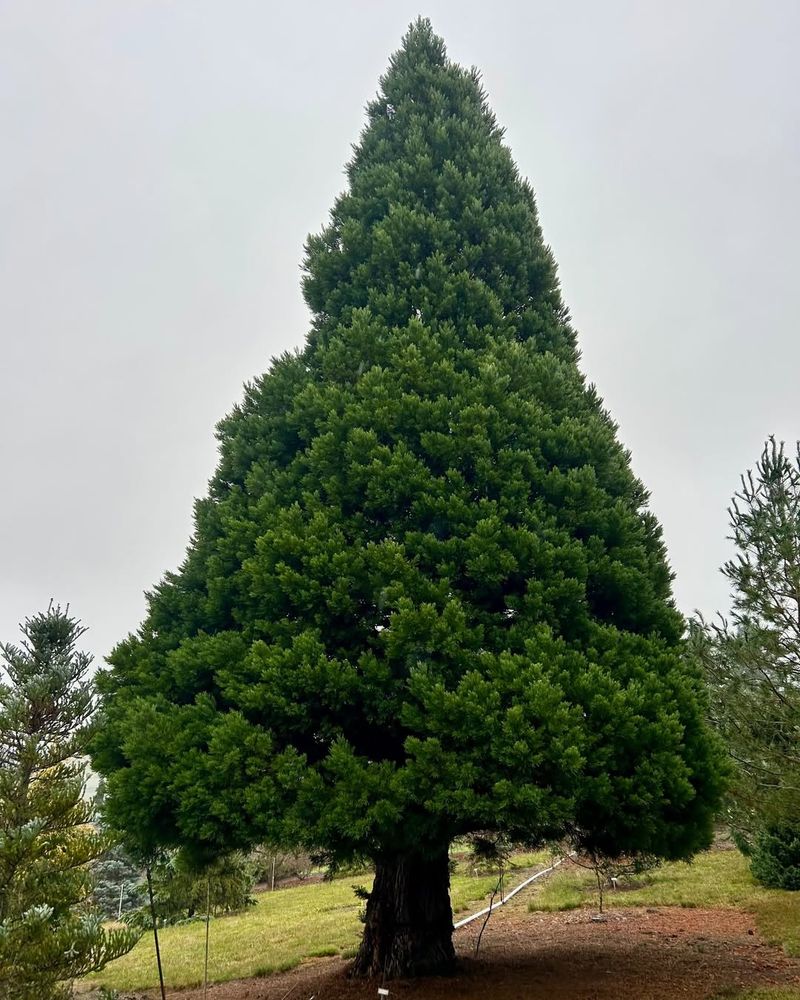
Ask anyone to picture Oregon, and chances are they are imagining a Douglas Fir. This iconic evergreen is the state tree of Oregon and one of the tallest trees in the world.
It defines the look and feel of the Pacific Northwest more than almost any other plant. Driving through Oregon’s forests, you see Douglas Fir towering above everything else in every direction.
In a home garden, Douglas Fir works best as a large specimen tree or as a privacy screen in spacious yards. It grows fairly fast for a conifer, adding about a foot or two of height each year when conditions are right.
The soft needles are dark green on top and have two white lines on the underside. Small oval cones hang from the branches and have distinctive three-pointed bracts sticking out between the scales.
Douglas Fir provides excellent shelter for birds, squirrels, and other Oregon wildlife. It handles Oregon’s rainy winters and dry summers with ease once established.
Young trees may need some watering during their first couple of dry seasons, but after that they are remarkably self-sufficient.
Planting a Douglas Fir in your Oregon garden is one of the most meaningful things you can do for local wildlife and the landscape’s long-term character.
8. Oregon Iris (Iris tenax)
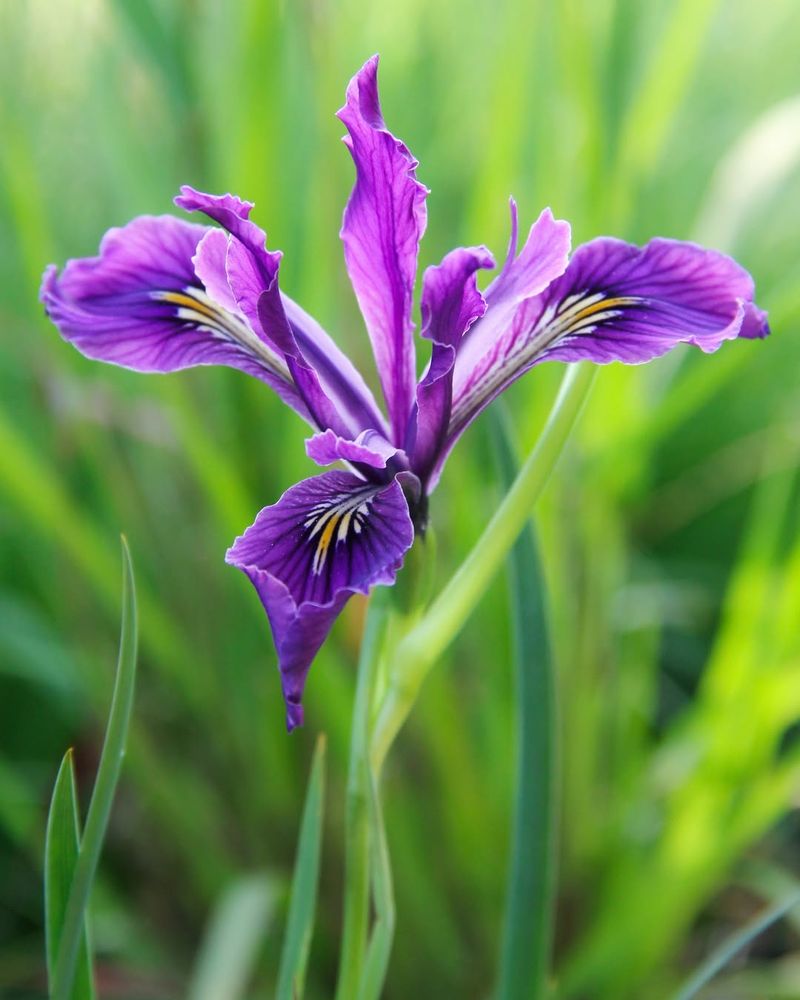
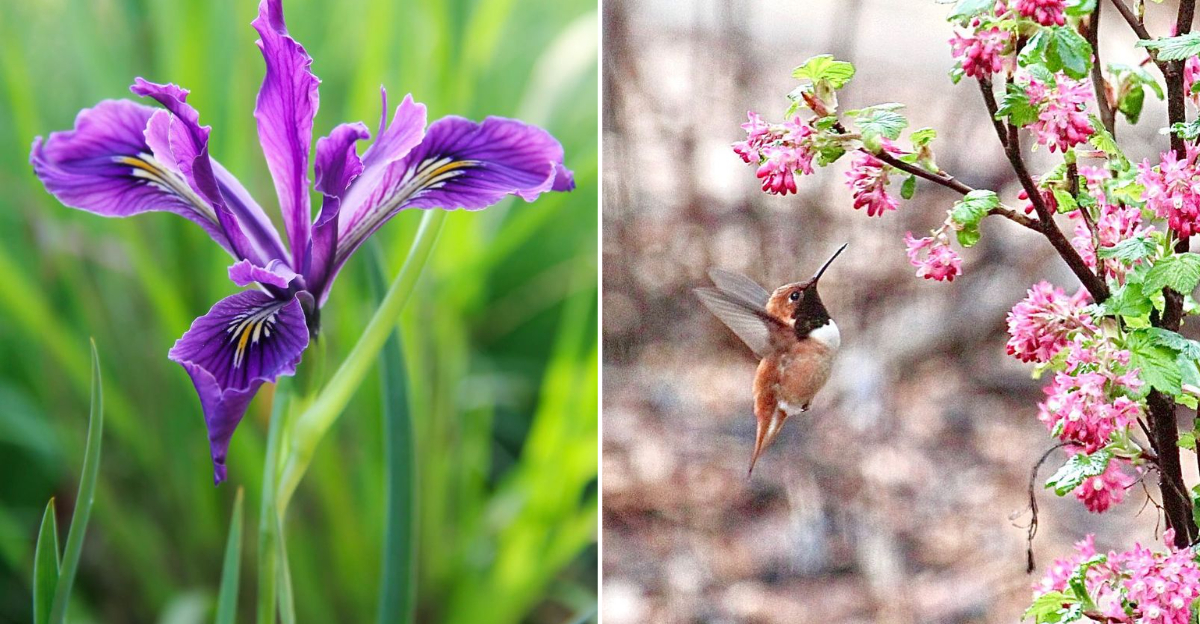
Tucked into meadows and open woodlands across western Oregon, Oregon Iris is one of those wildflowers that catches your eye and stops you mid-step. Its flowers range from deep purple to pale lavender, often with beautiful yellow and white veining at the center.
The blooms appear in mid to late spring and have a delicate, artistic quality that looks almost painted.
Oregon Iris is a tough little plant despite its elegant appearance. It grows in clumps of narrow, grass-like leaves that stay green for much of the year.
The plant tolerates poor soils, dry conditions, and competition from grasses, which makes it surprisingly easy to establish in typical Oregon garden conditions.
Planting Oregon Iris along a sunny border, in a rock garden, or scattered through a naturalistic meadow planting creates a lovely wildflower effect without much effort. It spreads slowly over time by forming larger clumps and occasionally self-seeding.
Bumblebees and other native pollinators visit the flowers regularly during bloom season. Oregon Iris pairs especially well with grasses, Red-Flowering Currant, and other low-growing Oregon natives.
It is a genuinely underused garden plant that deserves far more attention from Oregon gardeners looking to add native beauty to their outdoor spaces.
9. Salal (Gaultheria shallon)
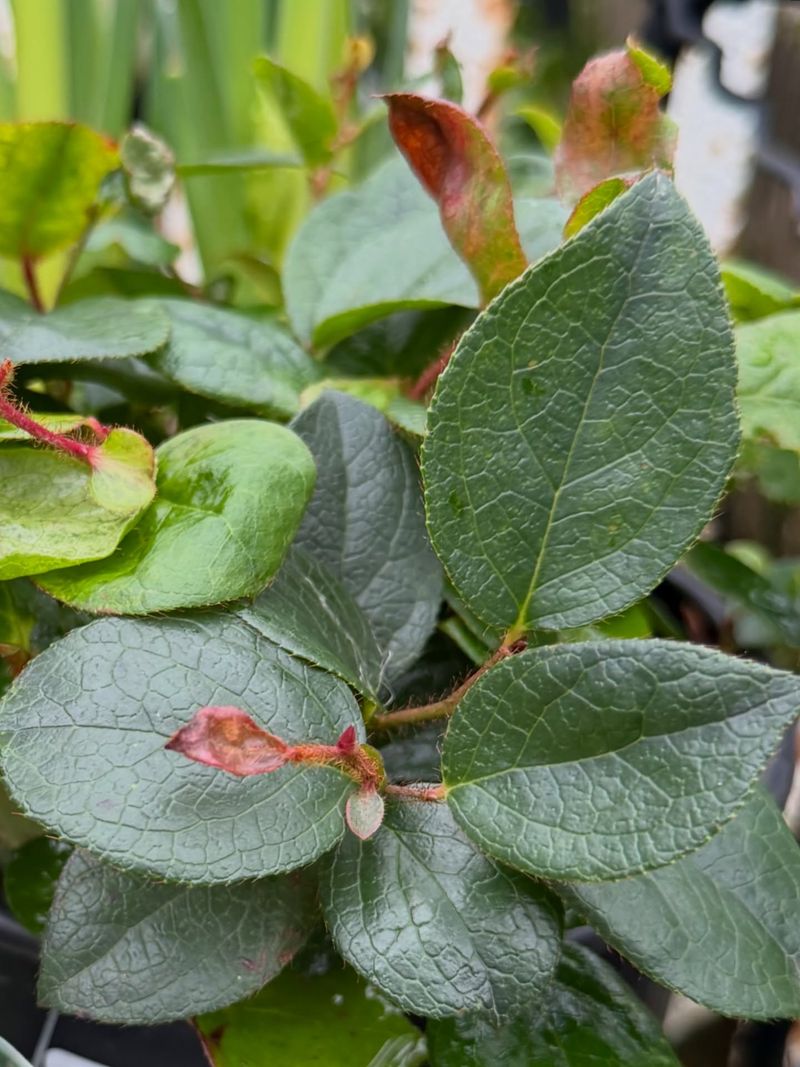
Salal is the unsung hero of Oregon’s native plant world. It does not get as much attention as some flashier natives, but ask any experienced Oregon gardener and they will tell you just how valuable it is.
Salal forms dense, low to medium-height thickets of thick, glossy leaves that stay evergreen all year. It is one of the toughest ground-covering shrubs Oregon has to offer.
Small urn-shaped flowers in pink or white appear in spring and early summer. They hang in clusters like tiny lanterns along the stem tips.
Dark purple berries follow and are eagerly eaten by birds, bears, and other wildlife. Indigenous peoples across the Pacific Northwest have used Salal berries as a food source for centuries, often drying them or mixing them with other foods.
In the garden, Salal excels in shaded spots under conifers or along the north side of buildings where little else will grow well. It handles Oregon’s heavy winter rains and summer dry spells with equal ease.
It spreads gradually by underground stems, filling in bare areas over time without becoming invasive. Salal pairs naturally with Western Sword Fern and Oregon Grape to create a layered understory planting that looks right at home in the Oregon landscape.