The Reason Pollinators Love Oregon Grape Flowers In Spring
Early spring in Oregon brings a burst of golden blooms that seem to hum with life. Oregon grape lights up the landscape with bright yellow flower clusters just when pollinators are waking hungry and ready to work.
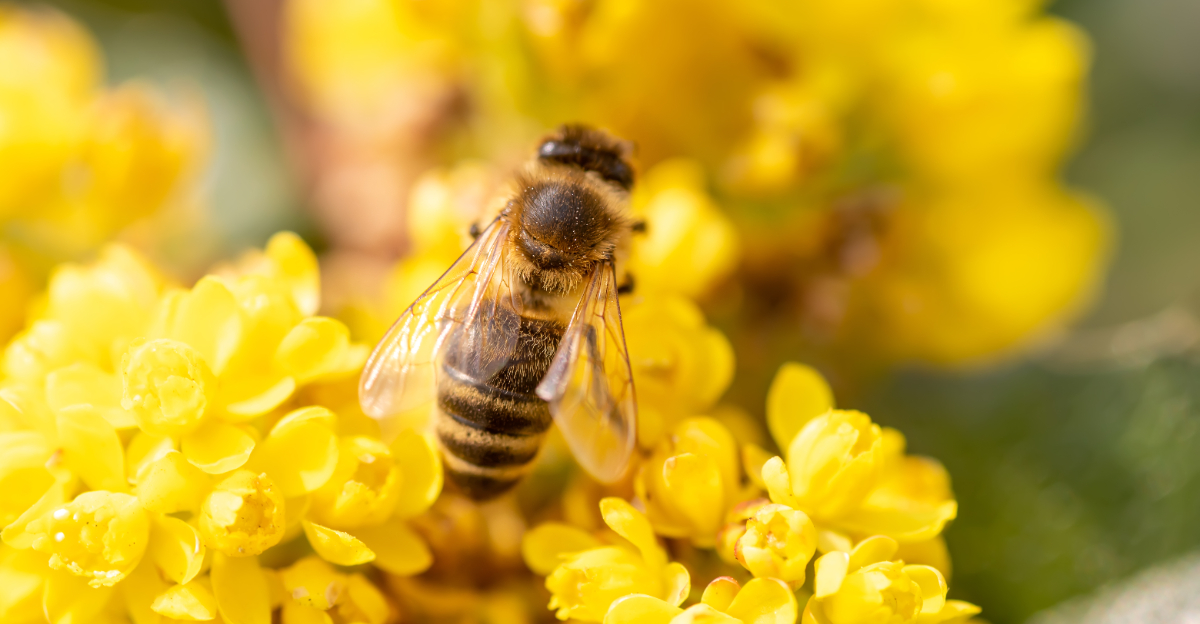
On cool mornings you can spot bees, hoverflies, and even early butterflies crowding the blossoms, drawn by rich nectar and easy access. This native plant blooms at the perfect moment, offering one of the season’s first reliable food sources when little else is available.
Beyond feeding pollinators, it adds bold color, glossy evergreen foliage, and year round structure to the garden.
The real charm is how effortlessly it supports local wildlife while asking almost nothing in return.
Curious what makes these sunny flowers such a pollinator magnet each spring? A closer look at timing, nectar, and nature’s clever design reveals why Oregon grape becomes one of the busiest and most valuable plants in the garden.
1. Early Blooms When Little Else Is Flowering
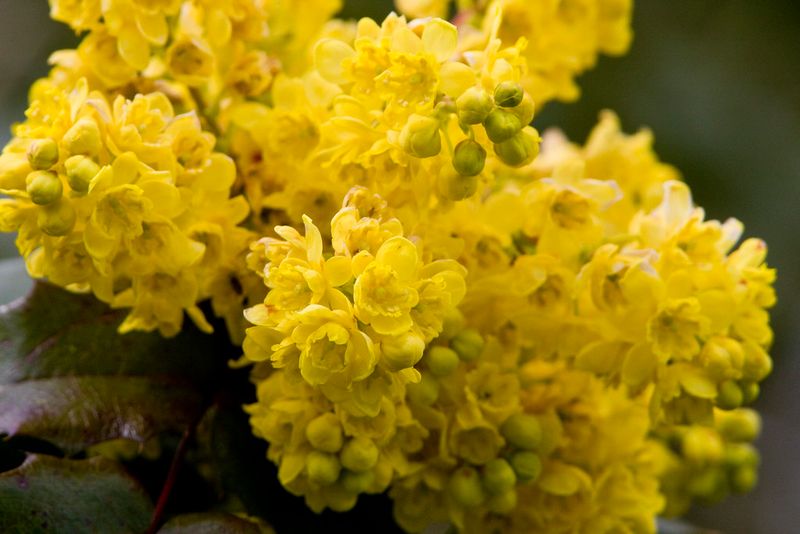
Stand in your yard on a chilly March morning and you may notice something interesting. While many shrubs are still leafing out and most perennials remain dormant, Oregon grape is often already in bloom with bright yellow flowers.
This early timing is part of its adaptation and can benefit both the plant and early-season pollinators.
Native bees and some early butterflies emerge from winter dormancy based largely on temperature and daylight, sometimes before many plants are flowering. During this period, available nectar and pollen sources can be limited.
Oregon grape blooms during this early window, providing an important food source when fewer other plants are in flower.
In much of Oregon, flowering typically occurs from late winter into early spring, varying with elevation and local climate. Oregon grape often blooms before many fruit trees and ahead of later spring shrubs.
For early-emerging pollinators such as queen bumblebees, these early flowers can provide valuable energy as they begin establishing nests for the season.
This early bloom period is sometimes overlooked by gardeners, yet it plays a meaningful role in supporting pollinators at a time when floral resources are still relatively scarce.
2. Bright Yellow Flowers That Signal Food
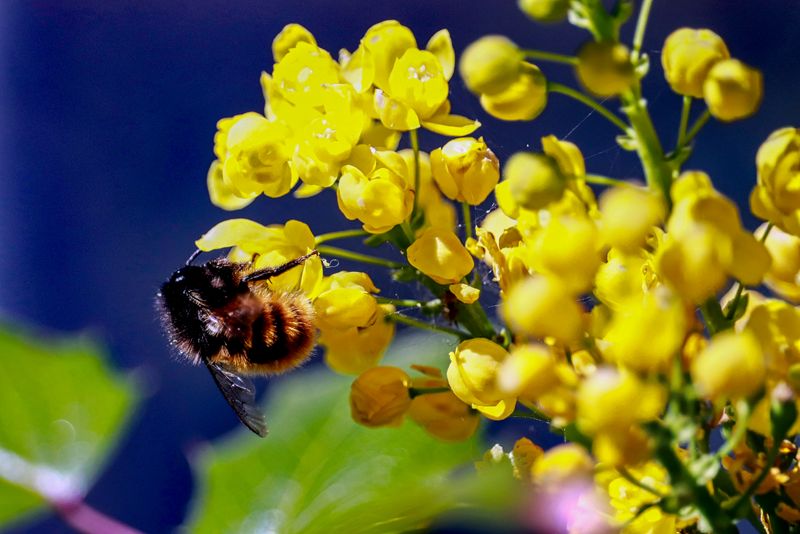
Color can influence how pollinators locate flowers, since many insects perceive light differently from humans and can detect ultraviolet patterns that guide them to nectar and pollen.
Yellow is among the colors that many bees, hoverflies, and some early-season butterflies readily notice, helping them identify potential food sources.
Oregon grape’s bright yellow blooms contrast strongly with the subdued tones of early spring foliage and bark. This visibility can help pollinators locate the flowers more easily while foraging, reducing the energy they spend searching for food.
The flowers also grow in clustered sprays rather than as single scattered blooms, creating a more noticeable visual display. Grouped blossoms can make the plant easier for insects to detect and may encourage repeated visits.
For gardeners, these features mean the plant provides not only early-season color in the landscape but also a visible and accessible resource for pollinators during a time when flowering plants may still be limited.
3. Rich Nectar Fuels Spring Pollinators
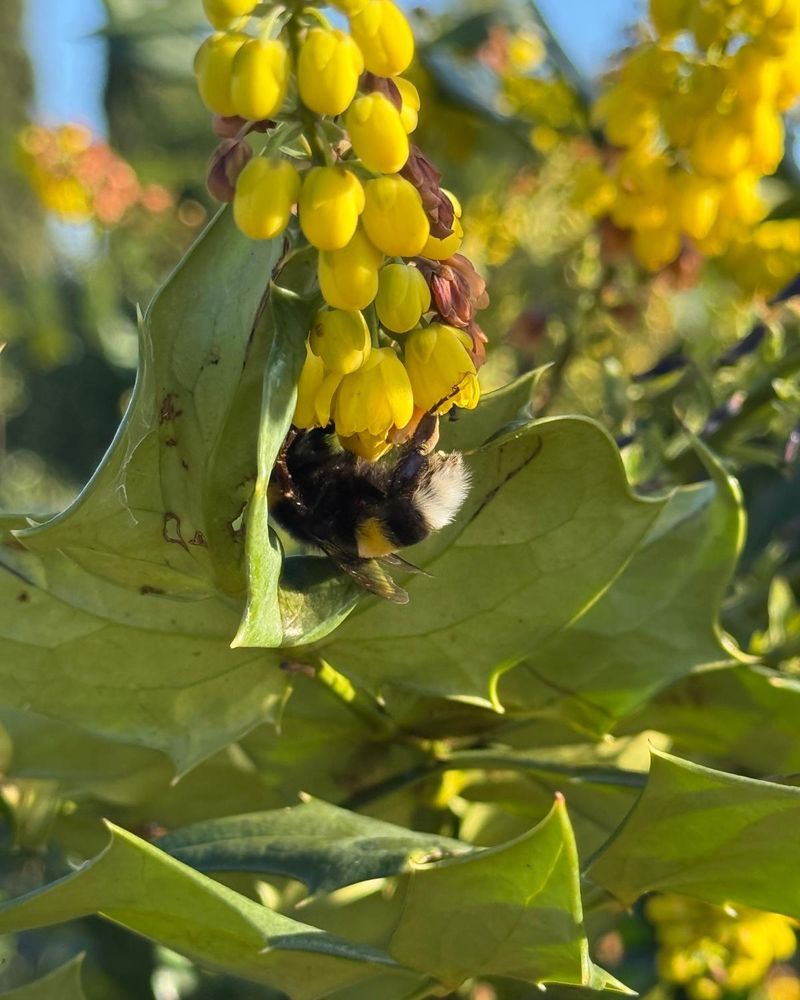
After winter dormancy, emerging pollinators need reliable food sources to regain energy. Flight requires significant energy, and nectar, rich in sugars, provides an important fuel that supports movement and foraging, especially in cool spring conditions.
Oregon grape flowers offer both nectar and pollen during this early period, helping sustain a variety of insects. The nectar is generally accessible to different pollinators.
The flower structure allows visits from larger bees, smaller native bees, and hoverflies, which can be beneficial when insects are less active in cooler temperatures. Easy access to nectar and pollen can help early-season insects forage more efficiently.
Nectar sugars provide readily usable energy that supports activities such as flight and nest searching, particularly for insects active in cool weather, including queen bumblebees beginning new colonies.
For solitary bees, early nectar sources can help support repeated foraging trips as nesting begins.
In many gardens, this often results in noticeable pollinator activity around Oregon grape during its bloom period, as it serves as one of the earlier available food sources in the season.
4. Native Plant, Natural Magnet
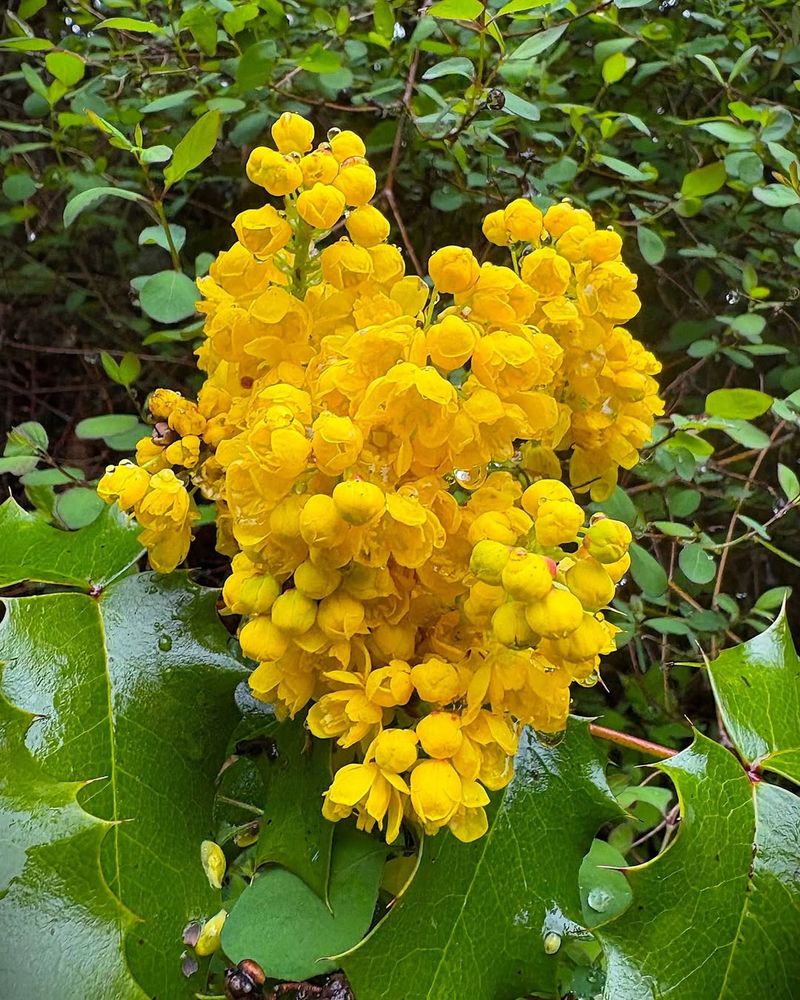
Walk through many Oregon forests or woodland edges and you may find Oregon grape growing naturally.
Its native status reflects long-term ecological relationships with local wildlife, including pollinators that have interacted with these plants over many generations.
Rather than random association, many insects regularly use native plants that bloom during the periods when they are active.
Some native bees emerge in sync with the flowering of early native plants such as Oregon grape, creating a useful seasonal overlap. Features such as bloom timing, nectar, pollen, and scent can make these plants attractive and dependable food sources for local insects.
As a result, pollinators often visit native species readily, though they may also use a range of other available flowers.
Growing Oregon grape in a garden can help support these existing ecological connections by providing familiar forage for local pollinators.
Native plants frequently attract a variety of insects, sometimes supporting greater diversity than a landscape composed only of non-native ornamentals.
For gardeners interested in supporting pollinators, including native plants like Oregon grape can contribute valuable early-season resources that help sustain local insect populations as they begin their yearly life cycles.
5. Dense Flower Clusters Boost Feeding
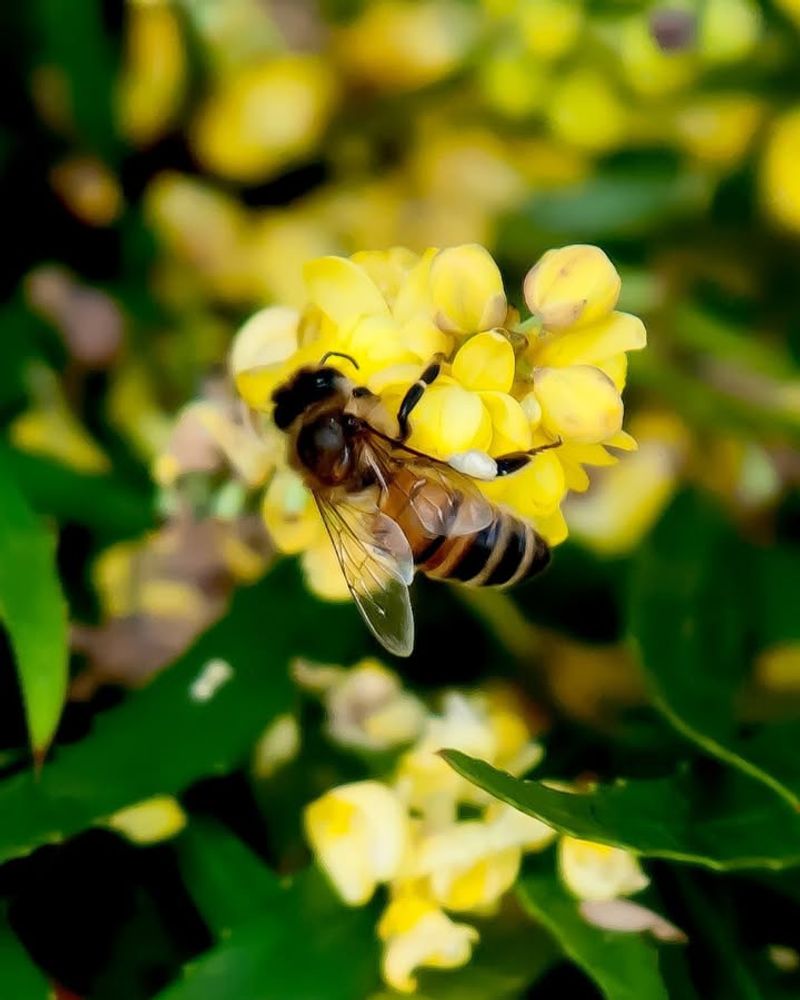
Imagine being a bee with limited flight time and energy. Visiting a plant with many flowers clustered together can be more efficient than moving between widely spaced blooms, and Oregon grape provides this type of arrangement.
Pollinators often take advantage of closely grouped flowers when foraging.
Each flower cluster can contain numerous small blossoms packed closely together, allowing an insect to visit several flowers from a single landing.
This can improve foraging efficiency, particularly in early spring when temperatures vary and insects may have limited active periods during the day.
The clustered flowers also provide a concentrated pollen source. Bees collect pollen as a protein resource for developing larvae, and dense flower groupings can allow them to gather it more efficiently.
It is common to see bees move methodically across a flower cluster, visiting many blooms in sequence.
In garden settings, this concentrated floral display can encourage repeated visits from pollinators during the bloom period.
Consistent activity around a flowering Oregon grape may help support pollinators and contribute to overall pollination within the surrounding landscape.
6. Supports Bees, Butterflies, And More
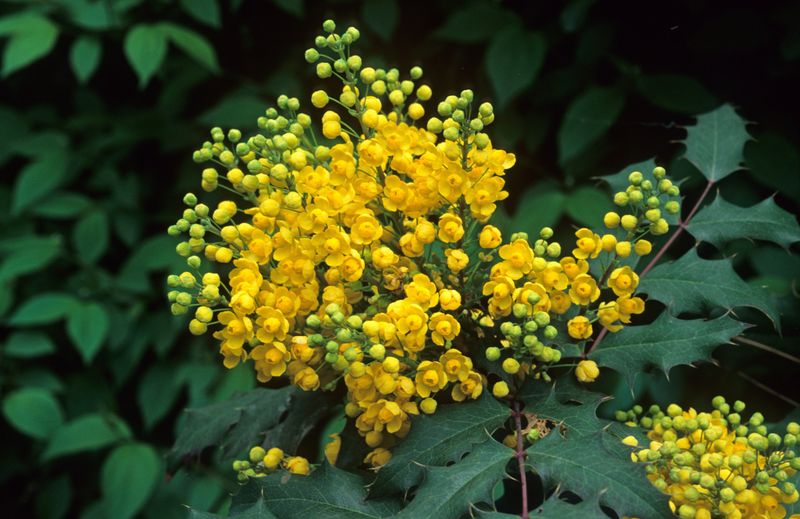
Pollinator diversity can play an important role in garden resilience. A landscape that attracts a range of pollinator species may be less affected if one group declines, since different insects can contribute to pollination.
Oregon grape is known to attract a variety of early-season pollinators, supporting this diversity.
Bumblebees are often among the first visitors, as they can forage in cooler temperatures. As conditions warm, other native bees such as mason bees and mining bees may also visit.
Hoverflies frequently feed on nectar and pollen, and some early butterflies may use the flowers as a nectar source. Various other insects can also visit while feeding on pollen.
Oregon grape flowers are relatively accessible, which allows visits from a wide range of pollinators rather than only specialized species. Nectar and pollen are available to insects with different body sizes and feeding structures, encouraging broader participation.
In a garden, this diversity can support more stable pollination and contribute to a healthier ecological balance. A variety of pollinators also supports other wildlife, linking flowering plants with broader food webs and ecosystem functions.
7. A Reliable Spring Lifeline For Pollinators
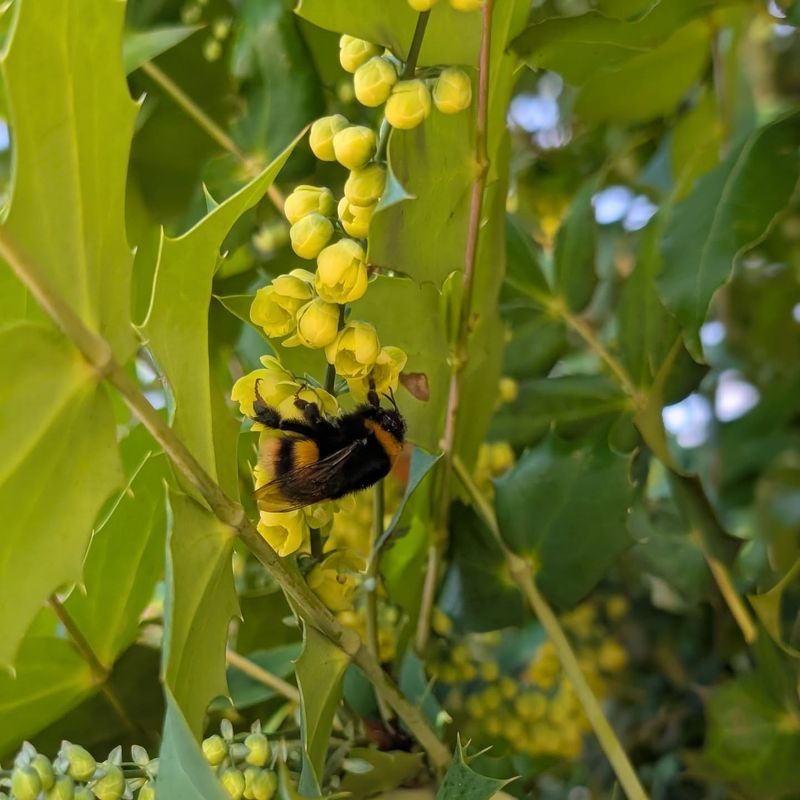
Reliability may sound simple, but for pollinators facing variable spring weather, consistent bloom timing can be important.
Oregon grape typically flowers early each year and often does so with relatively steady timing, though exact dates can vary with local weather and site conditions.
This regularity can make it a dependable early-season resource for pollinators when few other plants are in bloom.
Some early-flowering species shift their bloom time noticeably depending on winter and spring conditions, which can occasionally create mismatches with pollinator activity.
Oregon grape often flowers within a fairly consistent seasonal window, helping provide food for insects emerging in early spring, although both plant and pollinator timing can still vary from year to year.
The bloom period usually lasts several weeks, with flowers opening gradually across the plant. This extended flowering window can allow pollinators to continue using the plant even if cool or wet weather temporarily limits their activity.
For gardeners, this consistency means Oregon grape can serve as a recurring early-season resource that supports pollinators over many years with relatively little maintenance once established.