The Right Time To Plant Citrus Trees In Arizona For A Healthy Start
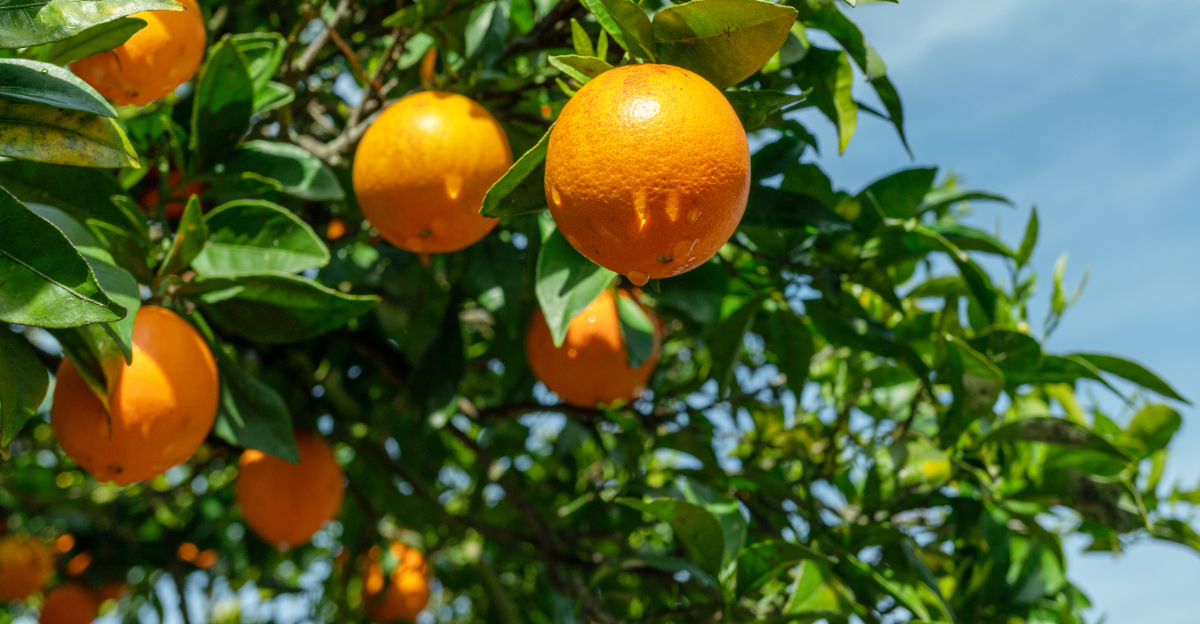
Getting citrus trees established in Arizona can go two very different ways, and it often has nothing to do with how much care they get.
Some trees settle in quickly, start pushing steady growth, and look healthy right from the start, while others lag behind and never quite catch up the same way.
What most people do not realize is how much timing shapes that outcome in Arizona conditions. The moment a tree goes into the ground can influence how well it adjusts, how strong its roots become, and how prepared it is for what comes next.
That early phase is where everything begins to take direction, even if it is not obvious right away.
When that timing lines up properly, citrus trees establish more smoothly and hold a much more consistent look as the season moves forward.
1. Why Planting Timing Matters More Than You Think
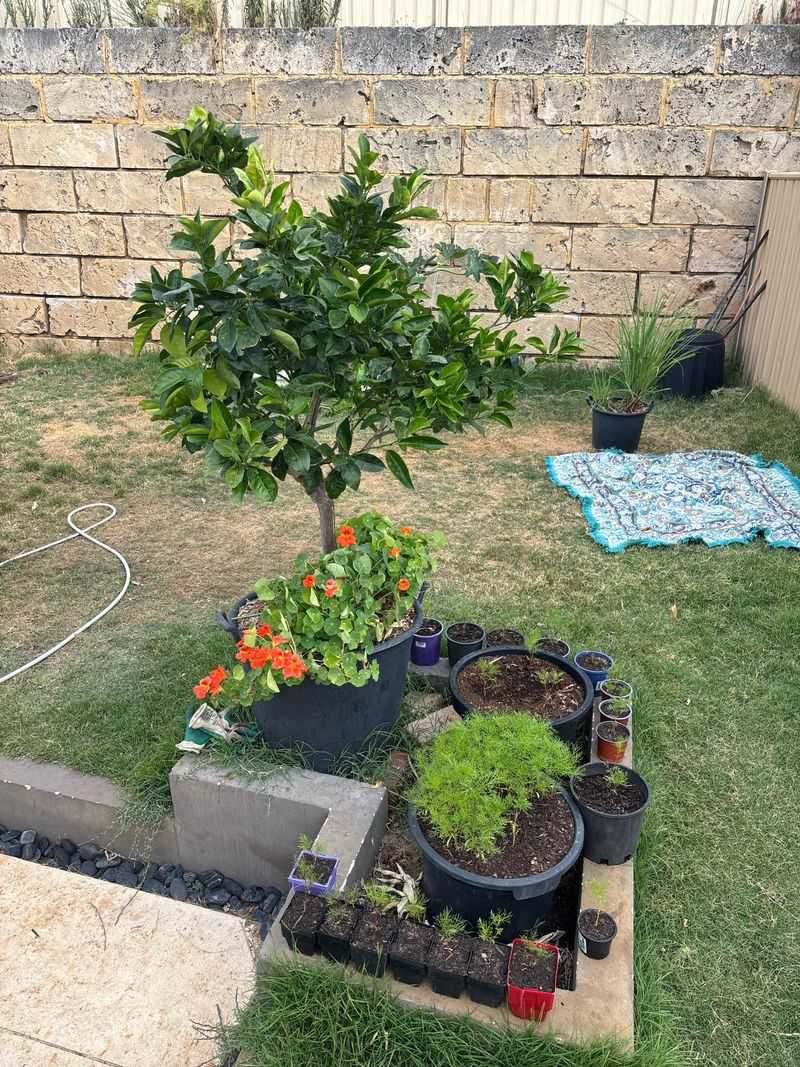
Planting a citrus tree at the wrong time in Arizona is not just a small mistake — it can set your tree back by an entire growing season.
Young trees have not built up the root system they need to handle stress, and if you drop one into the ground right before a brutal summer, you are asking it to do too much too soon.
Arizona summers are intense. Temperatures regularly climb past 110 degrees Fahrenheit in the low desert regions around Phoenix and Tucson.
A newly planted tree has almost no buffer against that kind of heat, and the combination of scorching sun and dry air can quickly overwhelm it before the roots get a chance to settle in.
Timing your planting correctly means your tree gets weeks or even months of manageable weather to establish itself. It gets to grow roots slowly and steadily before any real challenge shows up.
Root development is everything in the early stages — once the roots are strong, the tree can handle a lot more.
Skipping this step is one of the most common reasons Arizona gardeners end up frustrated. A struggling tree is not always a bad tree.
2. Early Spring Is One Of The Best Windows To Plant
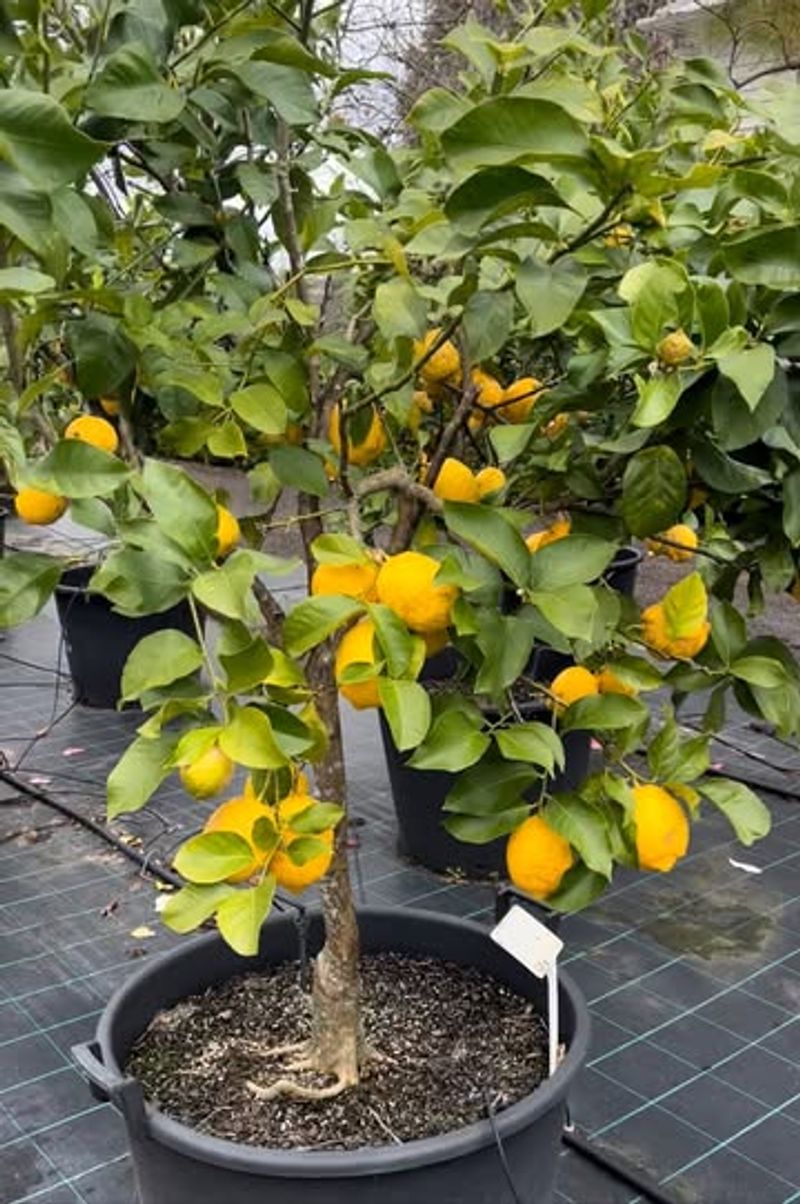
Mid-February through early March is a sweet spot for planting citrus in Arizona. Temperatures are mild, the nights are still cool but not freezing, and the soil is starting to warm up just enough to encourage root growth.
Your tree gets to ease into life in the ground without being shocked by extreme conditions.
During this window, daytime highs in the Phoenix area usually sit somewhere between 65 and 78 degrees. That range is comfortable for both you and your tree.
Roots push outward naturally, and the tree can start taking up water and nutrients without fighting heat stress at the same time.
Planting in early spring also gives you a solid head start before summer arrives. By the time June rolls around and temperatures spike, a tree planted in February has already had three or four months to build its root system.
That extra time makes a real difference when the heat shows up.
One thing to watch for is an unexpected cold snap in late February. Arizona can still get frost warnings in the desert valleys during that time, so keep an eye on the forecast for the first few weeks after planting.
3. Choosing The Right Citrus Variety For Arizona Soil
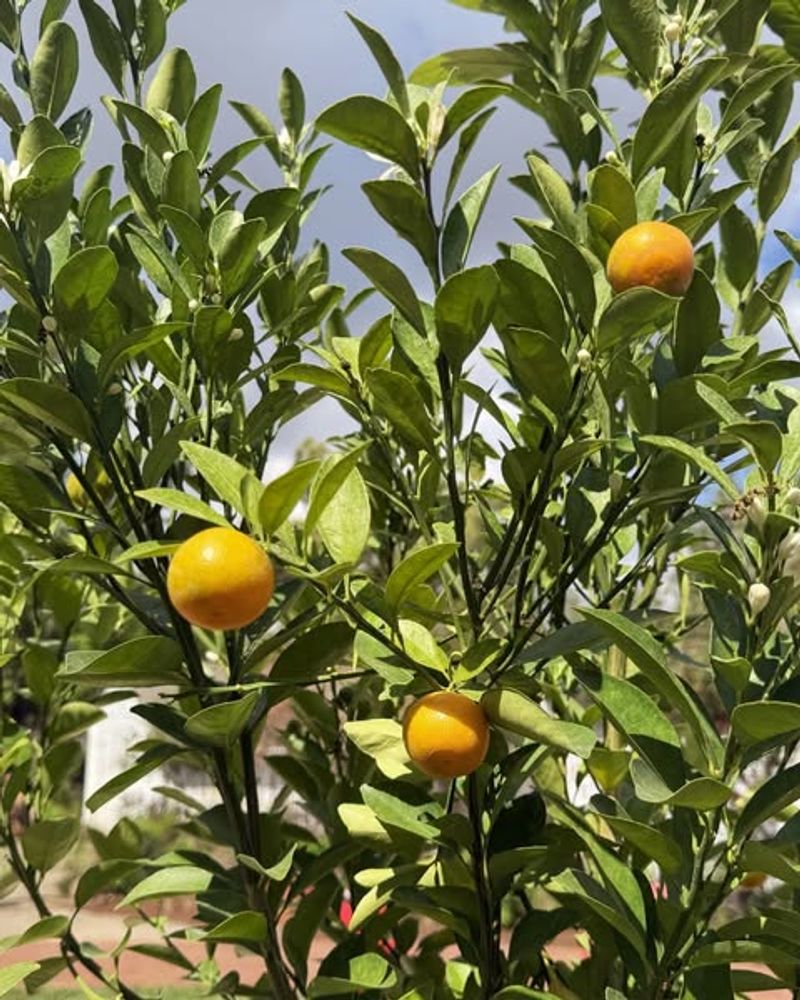
Not every citrus variety handles Arizona conditions the same way. Navel oranges, Valencia oranges, lemons, limes, grapefruits, and tangerines all grow well here, but some are better suited to specific regions and microclimates within the state.
Navel oranges are one of the most popular choices for backyard growers in the Phoenix and Tucson areas. They produce fruit reliably, handle the heat reasonably well once established, and are widely available at local nurseries.
Valencia oranges are another strong pick, especially if you want fruit that stays on the tree longer into summer without dropping.
Lemons, particularly the Eureka and Lisbon varieties, are heavy producers in Arizona and tend to be forgiving of the desert climate. Meyer lemons are also popular and tend to do well in containers if you are working with limited space.
Grapefruit has a long history in Arizona — the state was once a major commercial grapefruit producer — and the Ruby Red variety thrives in the low desert heat.
Limes can be a bit more sensitive to cold, so if you are in an area that sees occasional frost, plant them in a warm, protected spot near a south-facing wall. Tucson gardeners especially need to think about cold hardiness since winter nights there can dip lower than in Phoenix.
4. Soil Preparation Makes A Huge Difference Before You Dig
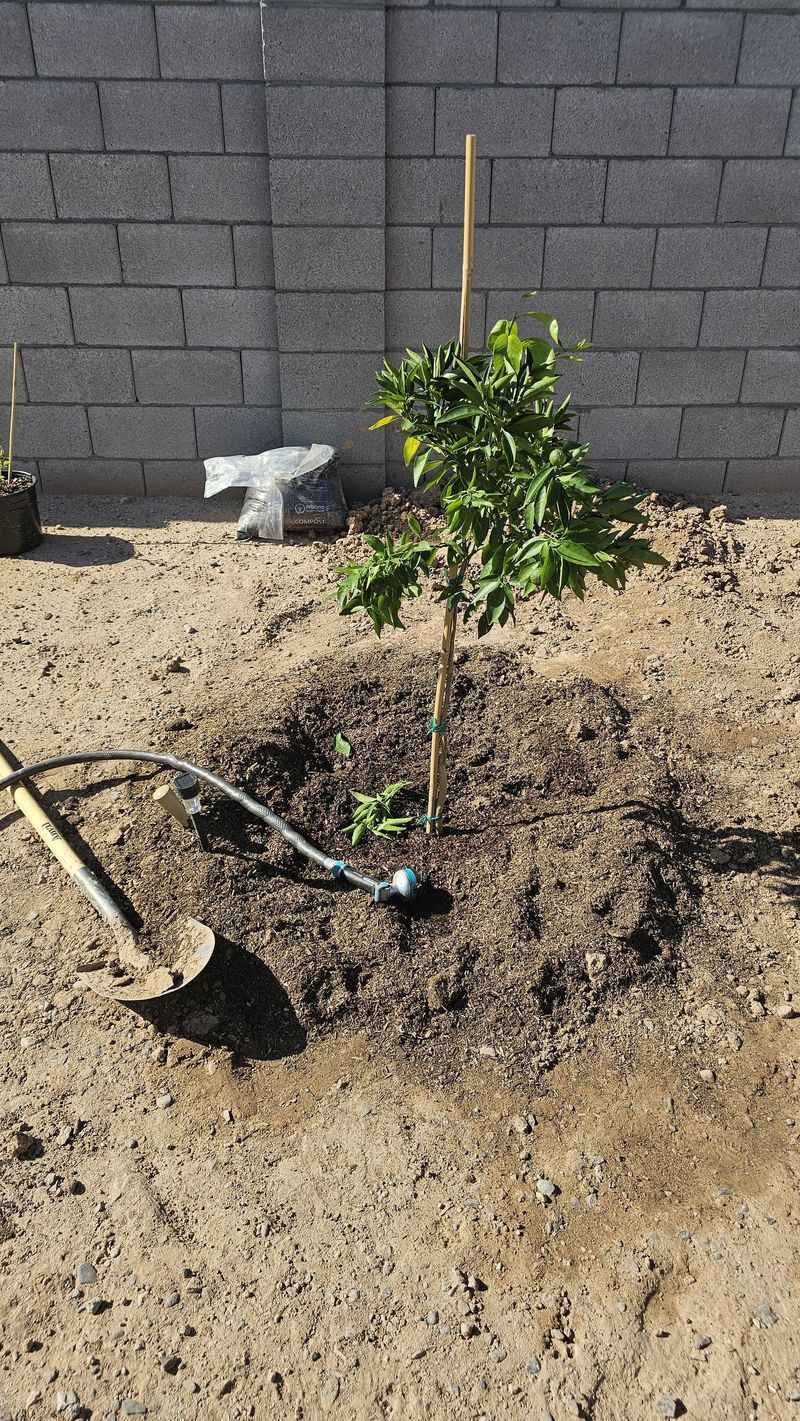
Arizona soil can be tough on young citrus trees if you just dig a hole and drop the root ball in without any preparation.
Caliche layers, alkaline pH, and low organic matter are common challenges across much of the state, and addressing them before planting gives your tree a much better foundation.
Caliche is a layer of calcium carbonate that can form a hard, nearly concrete-like barrier just below the soil surface in many Arizona yards. Roots cannot push through it, which means water pools above it and the tree never gets the drainage it needs.
Breaking through caliche with a pick or post-hole digger before planting is a step that pays off for years.
Mixing organic compost into the backfill soil helps loosen the texture and adds some nutrients that Arizona desert soil typically lacks. You do not need to go overboard — a 50/50 mix of native soil and quality compost works well for most citrus varieties.
Avoid using heavy clay amendments or anything that holds too much moisture, since citrus roots prefer good drainage.
Arizona soil also tends to be alkaline, with pH levels often between 7.5 and 8.5. Citrus prefers a slightly acidic to neutral pH range.
Adding sulfur to the planting area over time can help lower the pH gradually, though it is not something you need to get perfect before the first planting.
5. Watering Correctly Right After Planting Is Critical
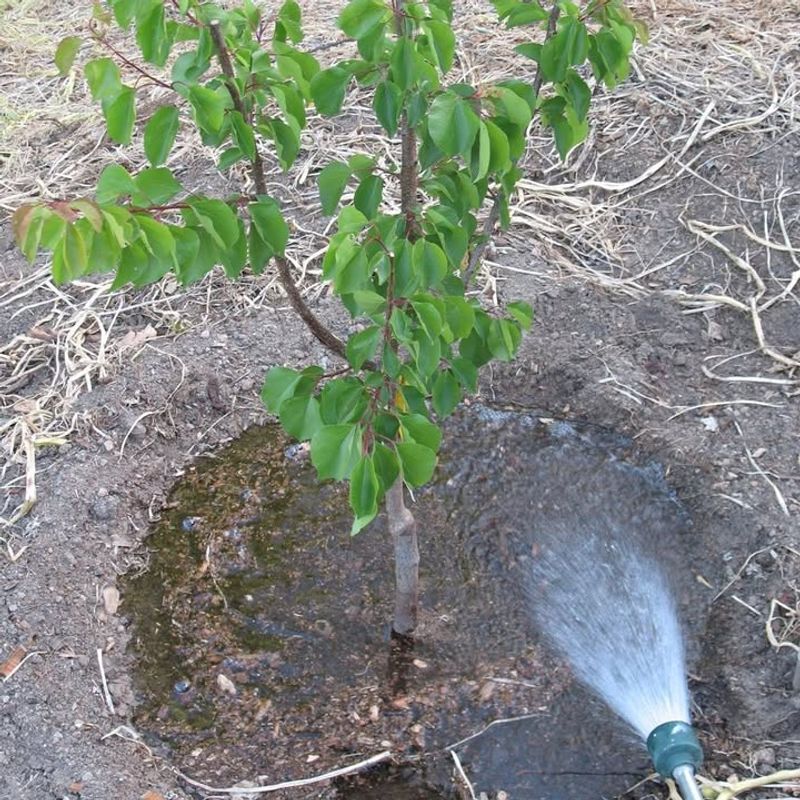
Getting watering right immediately after planting is one of the most important things you can do for a new citrus tree in Arizona. Too little water and the roots dry out before they can establish.
Too much and you risk root rot, which is just as damaging.
Right after planting, water your tree deeply and slowly. You want the water to soak down at least 18 to 24 inches into the soil, reaching below the root ball.
A slow trickle from a garden hose held at the base for 20 to 30 minutes works well for the first watering. This encourages roots to grow downward instead of staying shallow near the surface.
For the first few weeks, water every two to three days in spring and every day or every other day during warmer stretches. Once you start to see new leaf growth, that is a sign the roots are taking hold and you can begin spacing out your waterings a bit.
Drip irrigation is worth setting up early if you have not already. Arizona gardeners who use drip systems consistently report healthier, more consistent growth in their citrus trees compared to hand watering.
A drip line set about 18 inches from the trunk and run for an hour or two at a time keeps moisture in the root zone without overwatering the trunk area.
6. Sunlight And Location Are Not Something To Guess About
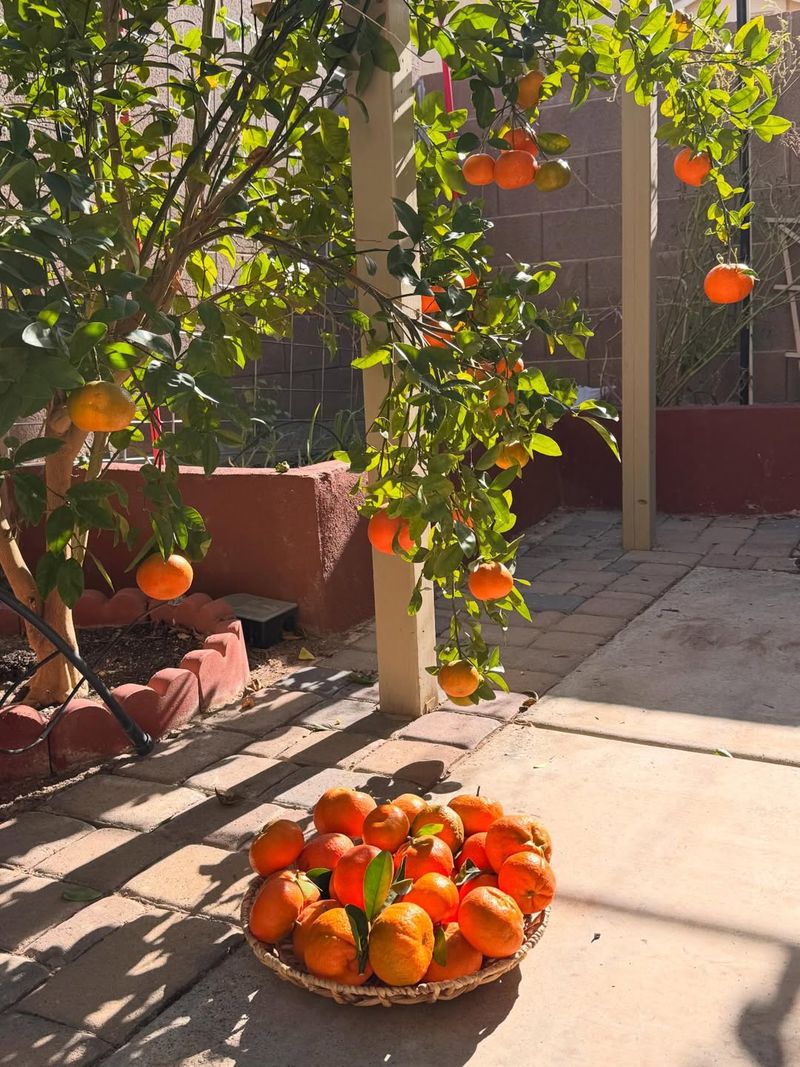
Citrus trees need full sun — a minimum of six to eight hours of direct sunlight daily. In Arizona, that is easy to come by, but where exactly you place the tree in your yard still matters quite a bit, especially for young trees that are still getting settled.
South and west-facing exposures get the most sun in Arizona yards.
Planting near a block wall on the south side of your property can actually be an advantage because the wall absorbs heat during the day and radiates it back at night, which helps protect the tree during unexpected cold snaps in winter.
Avoid planting citrus in low-lying areas of your yard where cold air settles on winter nights. Cold air drains downhill and pools in depressions, and those spots can be several degrees colder than the rest of your yard.
A few degrees matters when it comes to frost sensitivity, particularly for lime trees and young trees that have not had time to harden off.
Also consider overhead clearance. Citrus trees can grow 10 to 20 feet tall depending on the variety and rootstock.
Planting too close to a roofline, power line, or fence creates problems down the road that are hard to fix without heavy pruning.
7. Fertilizing And Long-Term Care After Planting
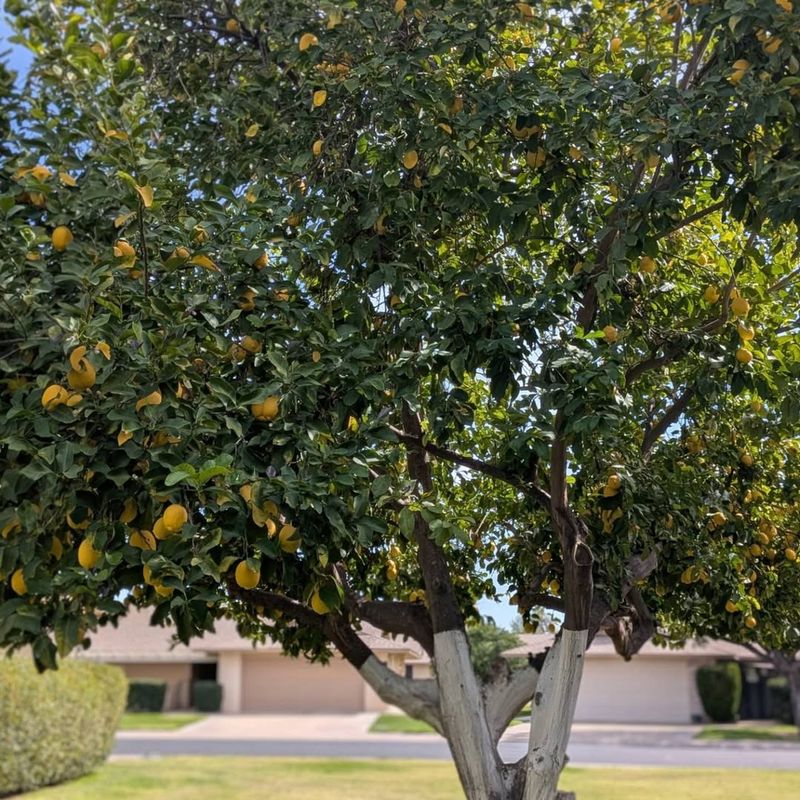
Citrus trees in Arizona are actually pretty hungry plants. Arizona’s sandy, alkaline desert soil does not hold nutrients well, which means you need to stay on top of fertilizing to keep your tree healthy and productive year after year.
Hold off on fertilizing for the first four to six weeks after planting. New roots need time to settle before you start pushing growth with fertilizer.
Applying fertilizer too early can actually burn young roots and slow things down instead of speeding them up.
After that initial period, a citrus-specific fertilizer with a balanced ratio of nitrogen, phosphorus, and potassium works well. Look for products that also include micronutrients like iron, manganese, and zinc, which are commonly deficient in Arizona soils.
Iron deficiency in particular shows up as yellowing leaves with green veins, a condition called chlorosis, and it is very common in citrus trees grown in the desert.
Fertilize three times a year — in late January or February, in late April or May, and again in September.
That schedule aligns with the active growing periods for citrus in Arizona and keeps the tree fed through its most productive months without pushing tender new growth right before cold weather.