The 7 Shrubs That Give Ohio Songbirds Safe Cover From Hawks
The moment a hawk shows up, your backyard turns into a survival course. Feeders stop swinging, birdsong cuts out, and every finch, wren, and chickadee starts hunting for one thing fast: cover.
In Ohio, the best bird-friendly yards do more than serve seeds and fresh water. They give songbirds a place to vanish.
The right shrubs create that safety with thick branches, dense growth, and the kind of shelter small birds trust when danger drops from the sky. Some even pull double duty with berries, nesting spots, and winter protection that keeps your yard busy long after summer fades.
That means a better-looking landscape for you and a much safer daily refuge for the birds you love to watch. This list features the shrubs that help Ohio songbirds hide, rest, and return, while making your yard feel fuller, livelier, and far more inviting.
1. Arrowwood Viburnum Builds The Kind Of Cover Birds Count On
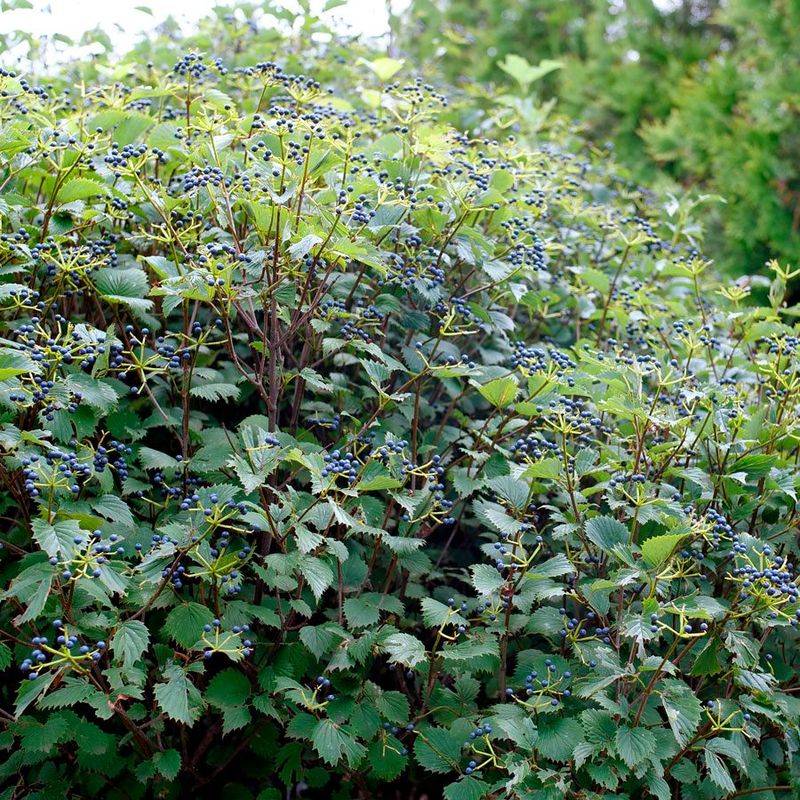
Few native shrubs earn their place in an Ohio yard quite like Arrowwood Viburnum. Known botanically as Viburnum dentatum, this adaptable native grows into a rounded, multi-stemmed shrub that can reach six to ten feet tall and nearly as wide.
That size and shape are exactly what make it so valuable for songbirds looking for a quick escape from a passing hawk.
The branching habit is the real story here. Arrowwood Viburnum develops a dense, layered structure of stems that overlap and weave together as the shrub matures.
Small birds like Carolina wrens, song sparrows, and yellow warblers can slip into that tangle in seconds, while a hawk simply cannot follow. The shrub essentially becomes a built-in safety net planted right in your yard.
Beyond cover, Arrowwood Viburnum delivers a full season of wildlife value. Flat-topped clusters of small white flowers bloom in late spring and attract pollinators by the dozen.
By late summer, those flowers give way to clusters of blue-black berries that migrating songbirds and resident species consume eagerly. Ohio State University Extension recognizes Arrowwood Viburnum as a strong native plant choice for wildlife habitat, noting its broad value across multiple seasons.
Placement matters with this shrub. Planting it along a fence line, near a brush pile, or at the edge of a garden bed gives birds a short flight path from a feeder to safe cover.
It handles full sun to part shade and tolerates a range of soil conditions, making it one of the more forgiving native shrubs available to Ohio gardeners. For a plant that works this hard in all four seasons, Arrowwood Viburnum is genuinely hard to beat.
2. Winterberry Holly Turns Shelter Into A Seasonal Lifeline
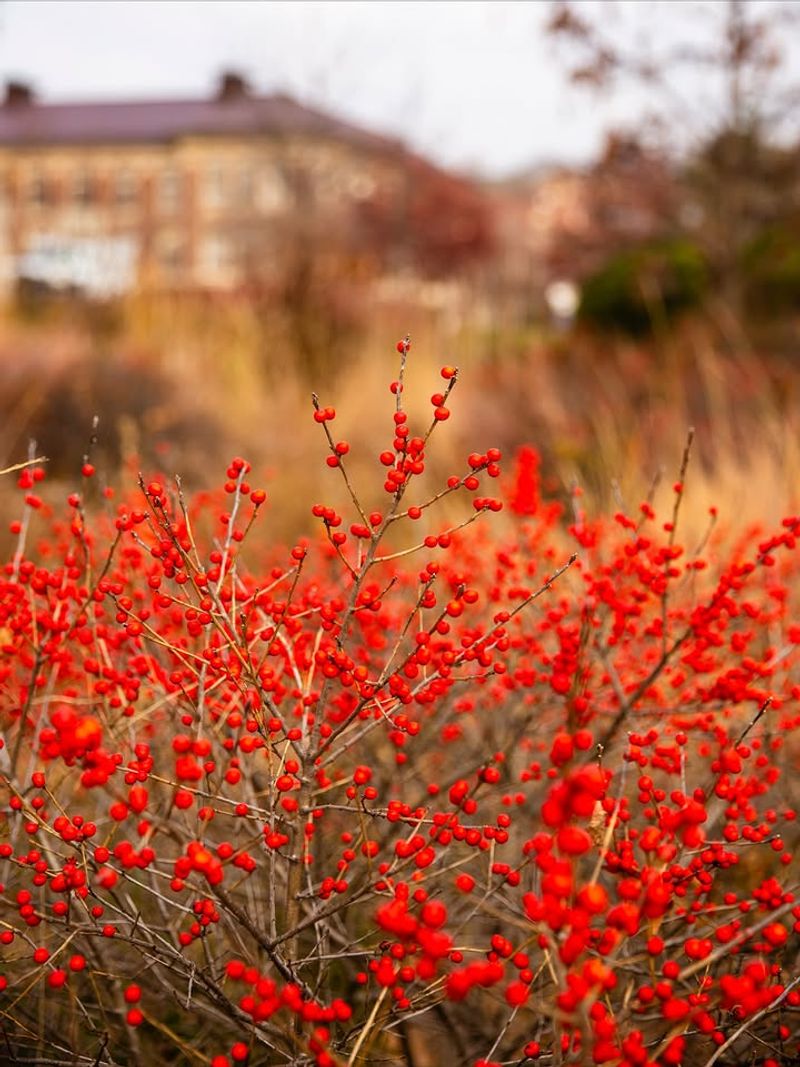
Walk past a winterberry holly in January and you will stop. The bright red berries clinging to bare branches against a gray Ohio winter sky are genuinely striking.
But for the songbirds sharing that cold landscape, Ilex verticillata is more than a pretty sight. It is one of the most reliable sources of both shelter and food during the hardest months of the year.
Winterberry holly is a native deciduous holly that thrives in Ohio’s wet and low-lying areas, though it adapts well to average garden soil with consistent moisture. It typically grows six to ten feet tall and forms a dense, twiggy structure that gives small birds real protection even after the leaves drop in fall.
That bare-branch density is what sets it apart from many other shrubs that lose their cover value once autumn ends.
The berries are the bonus that makes this shrub truly exceptional. Loaded with fruit that persists well into winter, winterberry holly feeds American robins, cedar waxwings, bluebirds, and many other species when other food sources have disappeared.
Planting a male pollinator variety alongside female plants ensures heavy berry production, which Ohio Cooperative Extension and native plant guides consistently recommend for maximum fruit set.
For songbirds hiding from hawks, the thick stem structure of a mature winterberry holly offers real concealment even without foliage. Birds can press into the inner branches and become nearly invisible to aerial predators scanning from above.
Grouping several plants together amplifies this effect dramatically. Placed near a water source or feeder, a winterberry holly planting creates a layered habitat zone that keeps birds safer and better fed throughout the coldest stretch of the Ohio year.
3. Gray Dogwood Gives Songbirds A Safe Place To Disappear
Some shrubs grow politely in a defined space. Gray Dogwood has other plans.
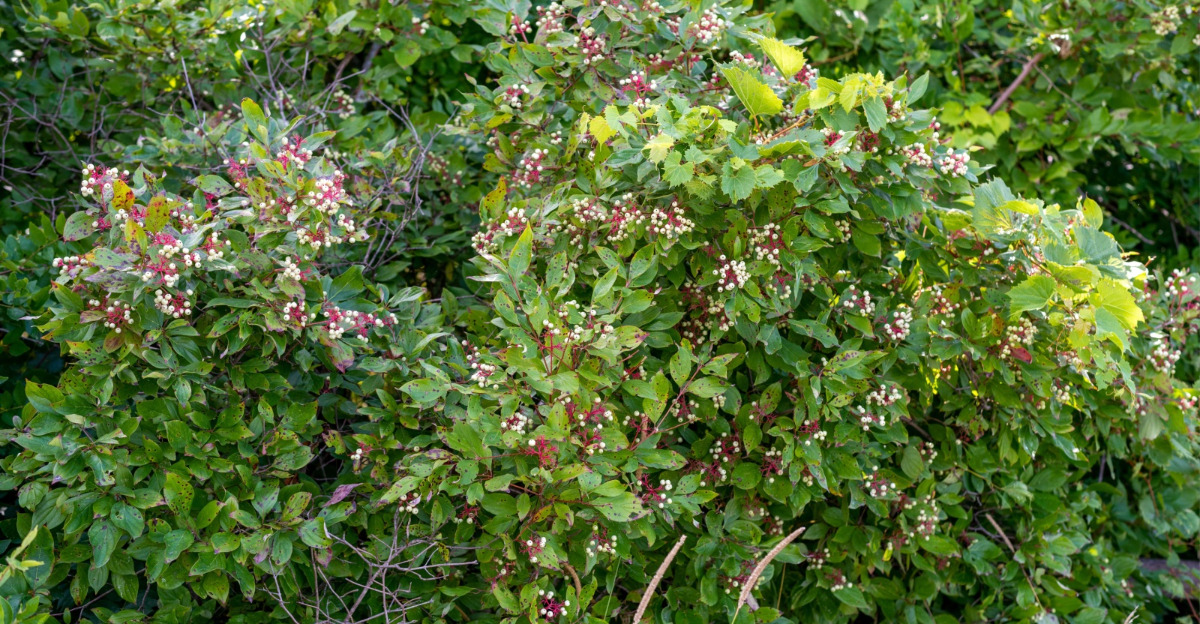
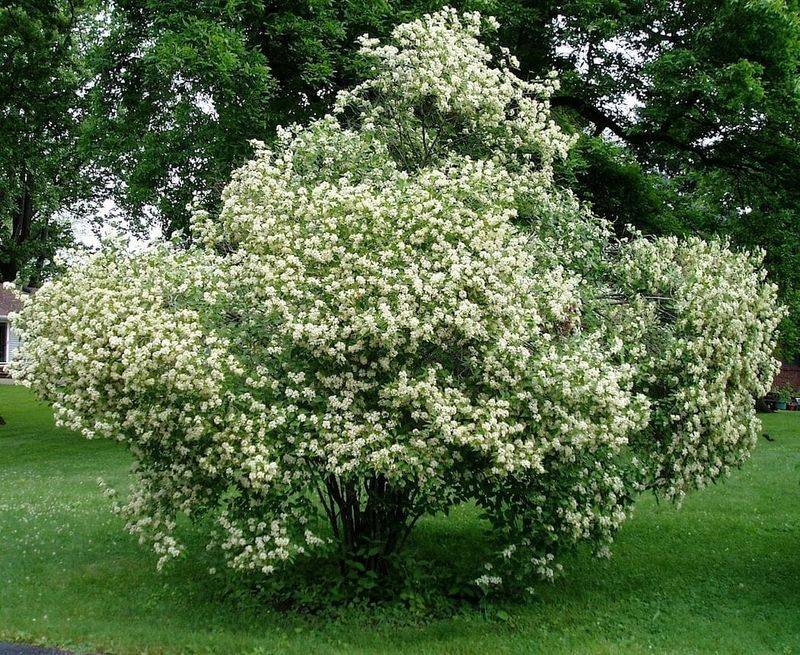
Cornus racemosa spreads by root suckers to form wide, dense thickets that are absolutely ideal for songbirds that need to vanish in a hurry. In Ohio landscapes where space allows, this native dogwood creates the kind of tangled, multi-layered cover that mimics the shrubby woodland edges where many songbirds naturally evolved.
The thicket-forming habit is the standout feature for bird safety. A hawk hunting low through a yard has almost no chance of following a small bird into the dense interior of a mature gray dogwood colony.
The stems grow close together, branches overlap at multiple heights, and the overall structure creates a genuinely impenetrable zone for larger birds of prey. Song sparrows, white-throated sparrows, and common yellowthroats are among the species that regularly use this kind of dense shrubby cover in Ohio.
Gray dogwood also delivers food value that extends well beyond the growing season. Clusters of white berries ripen in late summer and are consumed quickly by migrating birds, including many warbler species passing through Ohio during fall migration.
Even after the berries are gone, the persistent reddish fruit stalks add winter interest while the bare stems continue to provide structural cover.
Mature plants typically reach six to ten feet tall and can spread significantly wider over time. Planting gray dogwood at the back of a yard, along a property line, or near a fence gives birds a large refuge zone while also screening the yard naturally.
Ohio State University Extension lists gray dogwood among recommended native shrubs for wildlife habitat, and its combination of fast establishment, low maintenance, and strong bird value makes it a genuinely practical choice for Ohio gardeners.
4. Spicebush Creates The Dense Refuge Small Birds Need Most
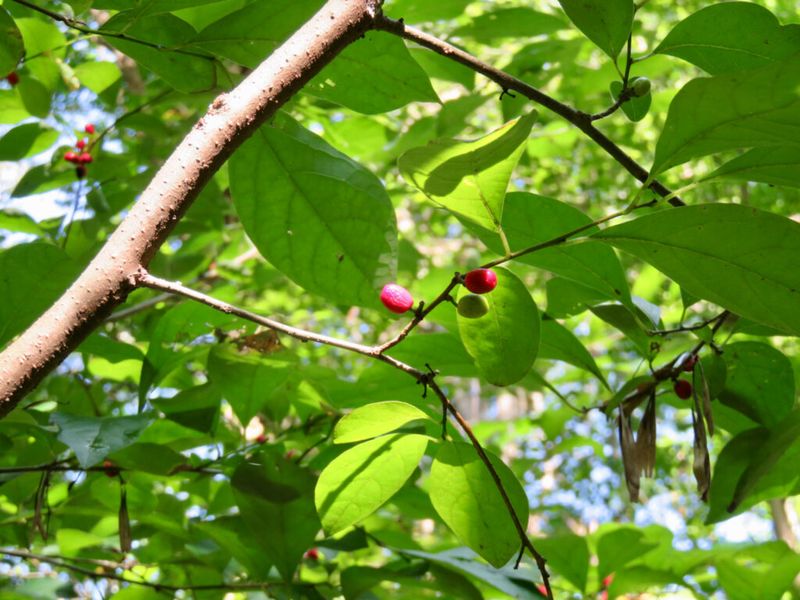
Spicebush has been growing in Ohio’s forests and stream edges for thousands of years, long before anyone thought of planting it intentionally. Lindera benzoin is one of those native shrubs that seems to know exactly what the local ecosystem needs, and what it offers songbirds goes well beyond simple cover.
The combination of dense layered branching, rich berry production, and shade tolerance makes it one of the most complete protective shrubs available to Ohio gardeners.
The shrub typically grows six to twelve feet tall with a naturally rounded, multi-stemmed form. In shaded or partly shaded spots under larger trees, spicebush fills the understory layer beautifully, creating the kind of mid-height cover that small birds rely on to move safely between ground level and the tree canopy.
That middle layer is often missing in Ohio yards, and spicebush fills it better than almost any other native option.
The berries ripen in late summer and are among the most nutritious available to migrating songbirds. Research from multiple sources, including ornithological studies on fall migration fueling, shows that spicebush berries are exceptionally high in fat, making them a premium food source for birds building energy reserves for long journeys.
Wood thrushes, veeries, and many warbler species seek out spicebush berries specifically during Ohio’s fall migration window.
For cover purposes, the dense foliage of spicebush during the growing season offers genuine concealment from above. Birds can tuck into the interior branches and become nearly invisible to a hunting hawk flying overhead.
Even in winter, the branching structure remains thick enough to provide useful shelter. Spicebush grows best in moist, rich soil with part to full shade, conditions that are common in many Ohio yards with established trees nearby.
5. American Hazelnut Offers Backyard Protection With Bonus Wildlife Value
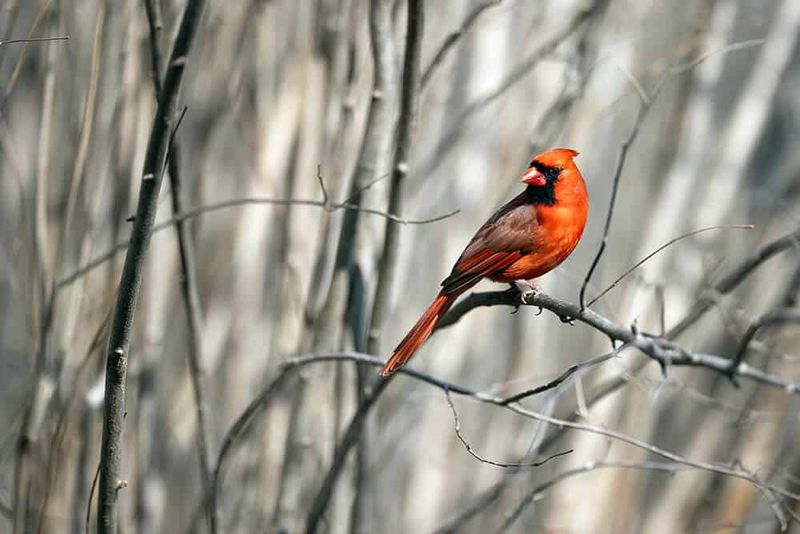
There is something almost old-fashioned and deeply satisfying about growing American Hazelnut. Corylus americana has been part of Ohio’s native landscape forever, feeding wildlife and providing habitat structure long before the idea of a bird-friendly backyard existed.
As a protective shrub for songbirds, it brings a combination of dense cover and genuine food value that few other native shrubs can match.
American Hazelnut grows as a large, multi-stemmed shrub reaching eight to twelve feet tall with a broad, arching canopy. The stems emerge in dense clusters and develop a layered, overlapping structure that small birds find very easy to navigate and very hard for hawks to penetrate.
The shrub fills out quickly once established and can spread gradually by root sprouts, eventually forming a colony that offers even more cover.
The nuts are the headline wildlife feature. Hazelnuts ripen in late summer and attract a wide range of species, including blue jays, woodpeckers, and various small mammals that in turn create activity and movement that draws songbirds into the area.
The nuts are enclosed in leafy husks that cling to the branches and provide additional visual texture in the yard. Even after the nuts are gone, the catkins that emerge in late winter add subtle interest and serve as an early food source for returning songbirds.
Placement works best along yard edges, near hedgerows, or in naturalized corners where the shrub has room to spread without crowding other plantings. American Hazelnut handles full sun to part shade and grows in a range of Ohio soil types, including heavier clay soils that challenge many other shrubs.
Ohio Department of Natural Resources and native plant organizations across the state consistently recommend it as a high-value wildlife plant for backyard habitat projects.
6. Red Osier Dogwood Makes A Busy Yard Feel Safer For Birds
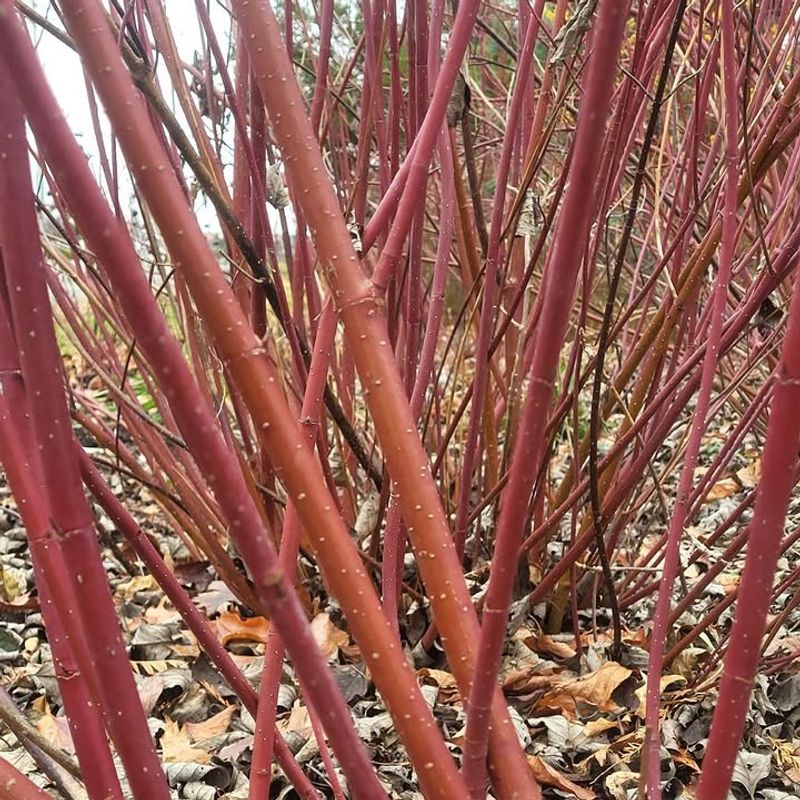
Bright red stems cutting through a gray Ohio winter are hard to miss, and for good reason. Red Osier Dogwood, known as Cornus sericea, is one of those shrubs that earns attention in every season, but its value to songbirds goes far deeper than good looks.
The combination of thick, dense growth and persistent wildlife appeal makes it one of the most hardworking protective shrubs you can add to an Ohio yard.
The shrub grows quickly, typically reaching six to nine feet tall with a spreading, multi-stemmed form that fills out into a broad thicket over time. Stems emerge in dense clusters and branch repeatedly, creating the kind of tangled interior structure that small birds love.
A song sparrow or a white-throated sparrow can disappear into the inner branches of a mature red osier dogwood almost instantly, which is exactly the kind of quick-escape cover that matters when a hawk is circling overhead.
White flowers bloom in late spring and attract pollinators, followed by clusters of white berries that ripen by midsummer. Those berries are consumed by a wide range of bird species, including wood-pewees, thrushes, and various warblers moving through Ohio during migration.
Even after the berries are gone, the shrub remains a useful shelter plant through fall and winter, with its dense stem structure providing cover even without foliage.
Red Osier Dogwood performs best in moist soils and does particularly well near rain gardens, pond edges, or low-lying yard areas where other shrubs struggle. It tolerates full sun to part shade and is highly adaptable across Ohio’s varied growing conditions.
Ohio State University Extension recognizes it as a top native shrub for wildlife habitat, and its ease of establishment makes it a reliable choice for gardeners at any experience level.
7. Ninebark Gives Ohio Songbirds A Thick Place To Hide
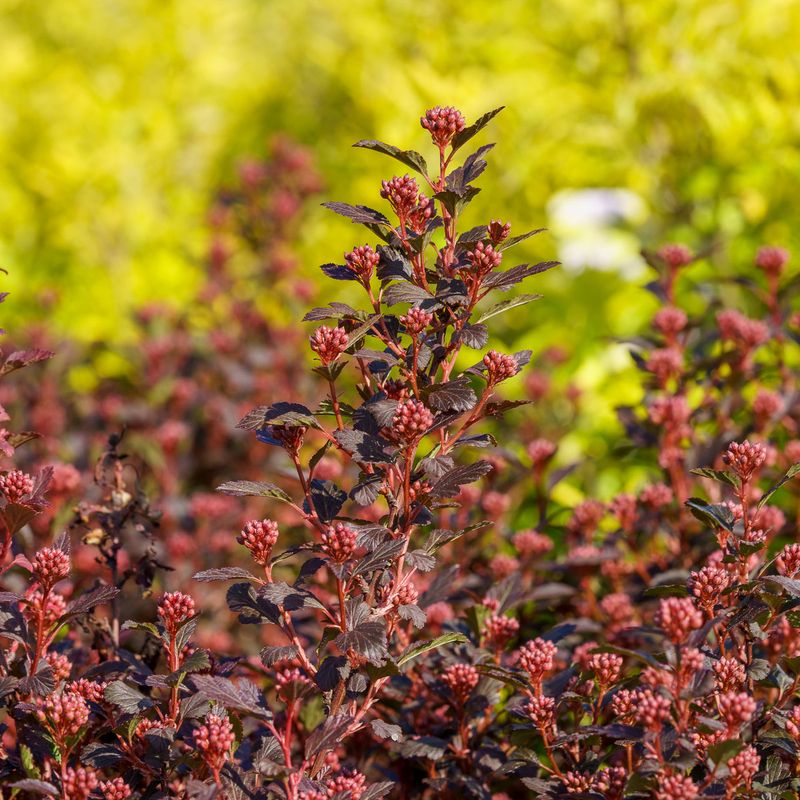
Ninebark is the kind of shrub that quietly outperforms your expectations. Physocarpus opulifolius is native to Ohio and widely distributed across the state’s woodland edges and stream banks, where it has long served as a reliable habitat plant for wildlife.
In a backyard setting, its combination of tough adaptability and genuinely dense growth makes it one of the most practical shrubs for giving songbirds a thick, reliable place to shelter from aerial predators.
The shrub typically grows six to ten feet tall with long, arching stems that cascade outward from a central base. As it matures, the stems layer over each other and create a dense, overlapping mass of branches that offers real concealment.
Small birds can move through the inner structure with ease while the outer canopy remains thick enough to block the view of a hunting hawk passing above. That combination of accessibility for birds and visual density from outside is exactly what effective cover shrubs need to provide.
Ninebark blooms in late spring with showy clusters of small white or pinkish flowers that attract native bees and other beneficial insects. The seed capsules that follow ripen to a reddish color and persist into fall, adding visual interest and providing a modest food source for seed-eating birds.
The peeling, layered bark that gives the shrub its common name adds winter texture that makes it attractive even after the growing season ends.
One of ninebark’s biggest strengths for Ohio gardeners is its flexibility. It grows in full sun or part shade, handles clay or sandy soil, tolerates drought once established, and requires very little ongoing care.
Several cultivated varieties are widely available at Ohio nurseries, though straight-species plants offer the strongest wildlife value. For gardeners who want a no-fuss shrub that genuinely delivers for birds year after year, ninebark is a smart and satisfying choice.