The Top Desert Botanical Gardens Worth Visiting Across Arizona
Arizona’s desert feels completely different when you experience it inside a botanical garden built to highlight its bold shapes, rich colors, and surprising variety.
If you have only seen the desert from the road, you are missing the details that make it unforgettable.
Towering saguaros, glowing wildflowers, and rare cacti come together in curated spaces that show just how alive this landscape really is. The desert is not empty, it is dramatic and full of character when you stand in the middle of it.
A single visit can change the way you see every stretch of sand and mountain around you.
These desert botanical gardens across Arizona give you a closer look at plants that survive intense heat while still creating scenes that feel vibrant, artistic, and completely worth the trip.
1. Desert Botanical Garden Showcases Arizona’s Most Iconic Saguaro Landscapes
Located at 1201 N Galvin Pkwy, Phoenix, AZ 85008, Desert Botanical Garden stretches across 140 acres within Papago Park and protects one of the world’s most respected desert plant collections.
More than 50,000 individual specimens representing over 4,000 species grow throughout carefully designed landscapes that reflect real Sonoran Desert habitats.
Rather than arranging plants for decoration alone, curators organize five distinct trails that highlight ecological function and long term survival strategies.
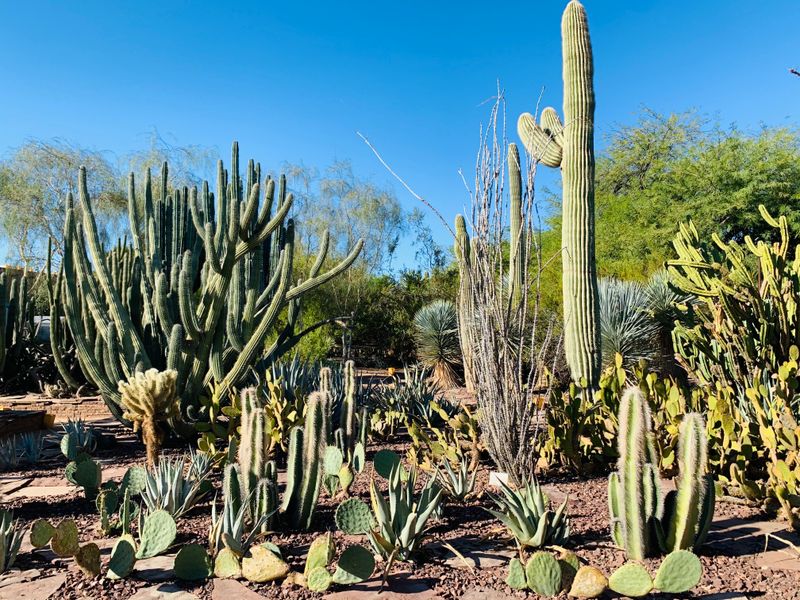
Towering saguaros along the Desert Discovery Loop can live well beyond 150 years and reach heights exceeding forty feet.
Shallow radial root systems explained on the Sonoran Desert Nature Trail demonstrate how cacti absorb sudden monsoon rainfall within minutes.
Indigenous knowledge appears throughout the Plants and People of the Sonoran Desert Trail, documenting recorded uses of mesquite pods, agave fibers, and prickly pear fruit.
During spring, winter rainfall triggers dense wildflower blooms that transform open desert ground into fields of color. By early summer, cactus flowers open at sunrise and close before intense midday temperatures arrive.
After sunset, night blooming cereus and other species rely on moth and bat pollinators during guided flashlight tours. Beyond public displays, seed banking initiatives and plant rescue operations focus on protecting threatened desert flora across Arizona.
Research partnerships contribute to habitat restoration efforts that strengthen long term ecosystem resilience throughout the Southwest.
Together, scientific conservation and immersive design make this garden both a major public attraction and an active center for desert ecological study.
2. Tohono Chul Garden Blends Desert Ecology With Cultural Heritage
Set within 49 acres of preserved Sonoran Desert, Tohono Chul at 7366 N Paseo Del Norte, Tucson offers an immersive look at how culture and desert ecology intertwine.
The name means “desert corner” in the language of the Tohono O’odham Nation, and that sense of place is felt throughout the grounds.
Since opening in 1985, the garden has grown into a respected destination that balances conservation, education, and artistic expression without losing its natural character.
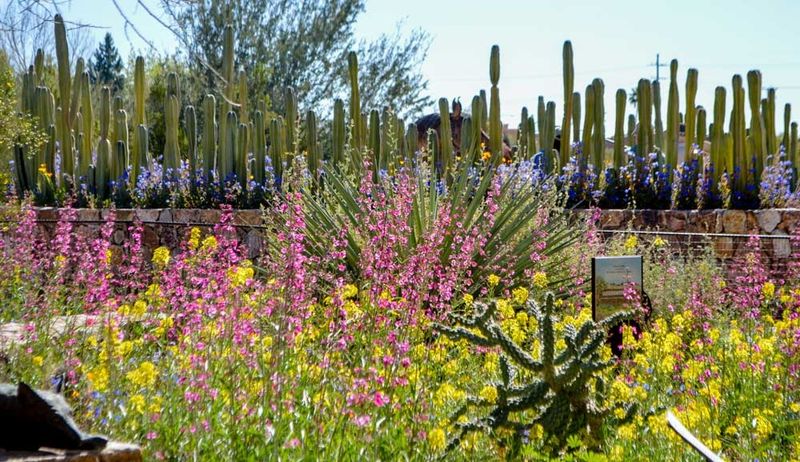
Instead of feeling overly manicured, the pathways guide visitors through living desert scenes where saguaros, agaves, prickly pears, and native shrubs grow in settings that echo the surrounding landscape.
The Ethnobotanical Garden highlights how Indigenous communities have relied on native plants for nourishment, tools, shelter, and healing practices for generations.
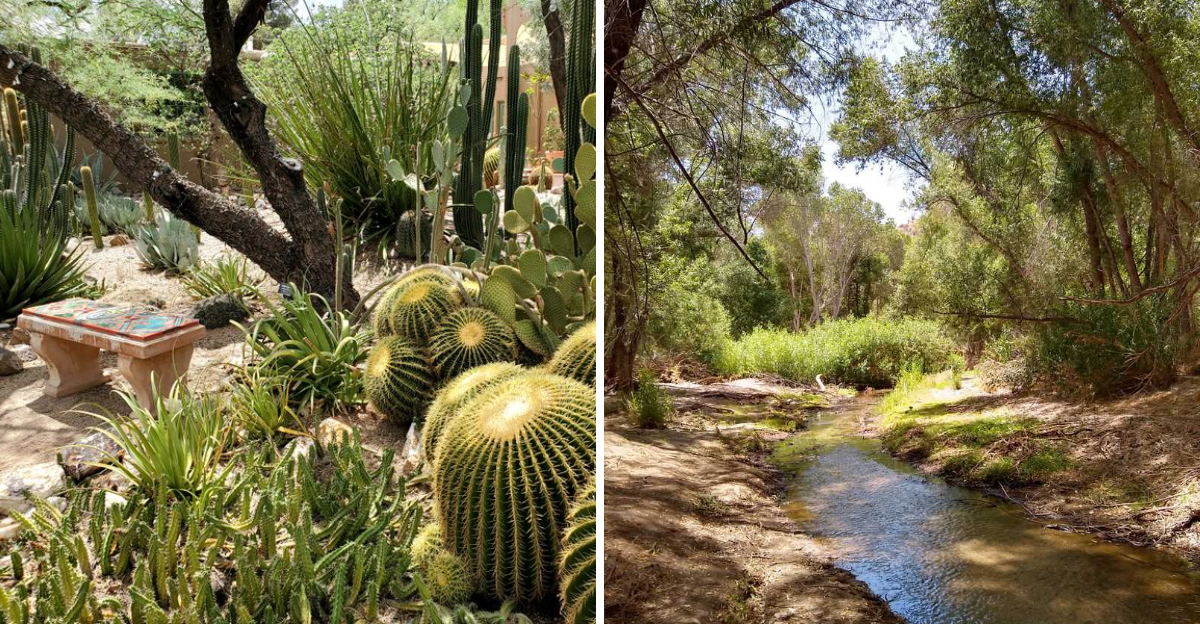
A riparian habitat section introduces a surprising contrast, with cottonwoods and willows creating cooler shade and demonstrating how water shapes plant life in the Sonoran Desert.
Art galleries and outdoor sculptures appear throughout the property, connecting regional creativity with desert forms and textures. The on-site bistro reflects local flavors and seasonal ingredients, enhancing the experience beyond the trails.
Educational programs and workshops focus on sustainable gardening methods suited to Tucson’s climate, helping homeowners design water-conscious landscapes.
During warmer months, hummingbirds move quickly between penstemons and blooming agaves, adding color and energy to this thoughtfully preserved desert sanctuary that continues to inspire visitors year after year.
Visitors often pause to admire the intricate textures of desert plants up close. Quiet corners offer space for reflection and connection with nature.
The garden hosts seasonal events that celebrate local culture and ecology.
3. Tucson Botanical Gardens Prove Small Gardens Can Deliver Big Inspiration
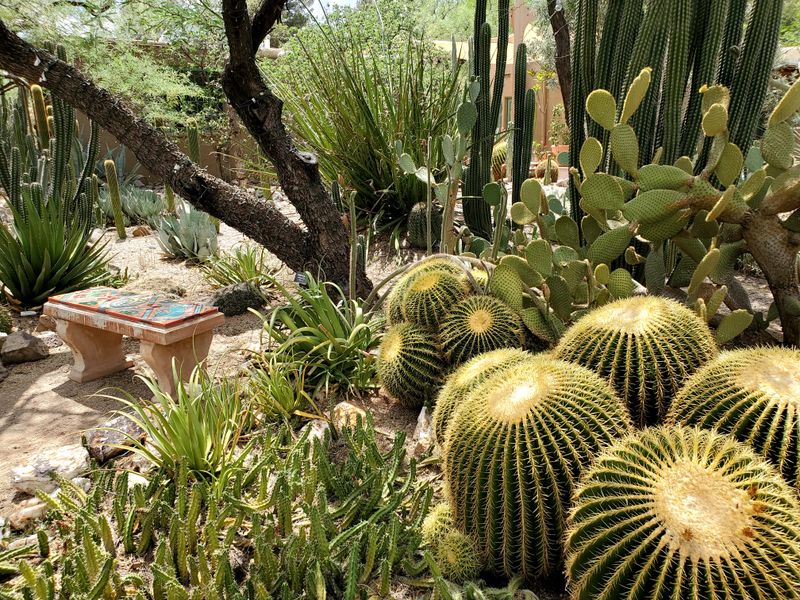
Tucson Botanical Gardens, found along 2150 N Alvernon Way in Tucson, brings lush detail and creative planting into the middle of an ordinary neighborhood setting.
Covering five thoughtfully designed acres, it shows how much impact a smaller garden can have when every space is intentional.
What began decades ago as a private estate has evolved into a lively public garden focused on ideas real homeowners can actually use.
Because of its manageable size, you can move slowly, notice plant combinations up close, and imagine similar designs working beautifully in your own landscape. Seventeen themed garden areas create variety without feeling overwhelming.
The Butterfly Garden draws steady movement during warm months, while the sensory garden encourages visitors to brush textured leaves, inhale fragrant herbs, and listen to ornamental grasses shifting in the breeze.
The Barrio Garden honors regional heritage by featuring plants long grown in Tucson’s historic neighborhoods, blending ornamental beauty with edible purpose.
Seasonal vegetable beds demonstrate what thrives during southern Arizona’s distinct cool and warm growing periods.
A dedicated children’s garden invites exploration and hands-on learning, making the experience welcoming for families.
Year-round classes cover composting, water harvesting, and pollinator-friendly planting, reinforcing practical desert gardening skills.
Even the gift shop extends the experience by offering plants propagated on-site, giving visitors the chance to carry a small piece of inspiration back home.
4. Boyce Thompson Arboretum Reveals Desert Plants From Around The World
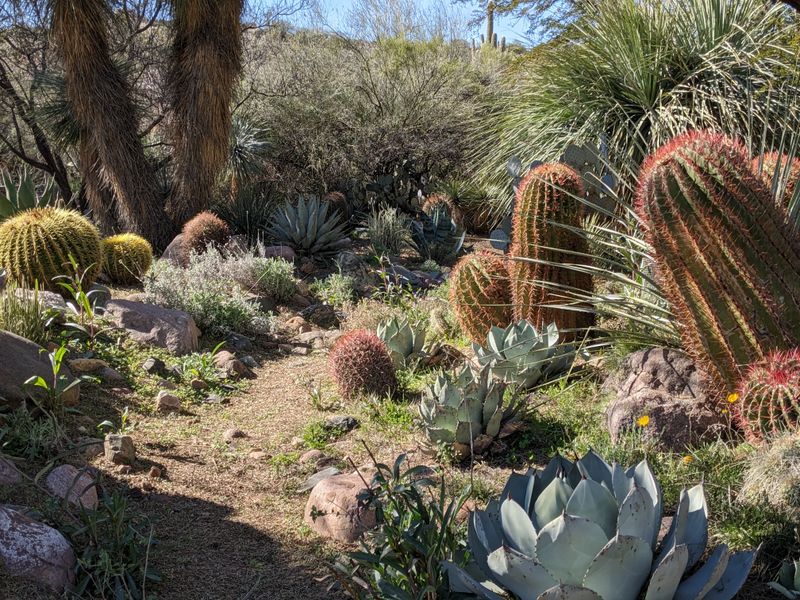
Boyce Thompson Arboretum, set along 37615 E Arboretum Way in Superior, is Arizona’s oldest and largest botanical garden, first established in 1924.
Spanning 392 acres at the base of Picketpost Mountain, it feels vast, open, and deeply connected to the surrounding desert landscape.
Founder William Boyce Thompson created it as a living research space after traveling through deserts worldwide and recognizing how resilient and useful arid-land plants could be.
His goal was simple but ambitious: study desert species that could support agriculture, landscaping, and conservation across the American Southwest.
Today, more than 2,600 species grow throughout the grounds, representing desert regions from Africa, Australia, Asia, and the Americas.
Towering eucalyptus trees rise near dramatic aloes, while cacti and succulents from different continents share the same Arizona sun.
The 1.5-mile loop trail moves through cactus-covered hillsides and into the shaded riparian corridor along Queen Creek. Ayer Lake adds a cooler contrast, where moisture-loving plants stand out against the dry desert landscape.
Wildlife is part of the experience, with hummingbirds, javelinas, and countless bird species regularly seen along the trails. Clear plant labels make exploration easy and educational, especially for serious gardeners.
Demonstration areas highlight drought-tolerant techniques suited to Arizona’s varied elevations. In spring, wildflowers spread across nearby hillsides, adding bursts of color that make the entire landscape feel alive and unforgettable.
Docents and seasonal workshops offer deeper insight into desert ecology, making each visit both relaxing and informative.
The arboretum’s setting beneath rugged canyon walls creates dramatic light and shadow throughout the day, especially in the early morning and late afternoon.
Whether you come for photography, birdwatching, or quiet reflection, the landscape leaves a lasting impression long after you leave.
5. Arizona-Sonora Desert Museum Garden Immerses You In Living Desert Habitat
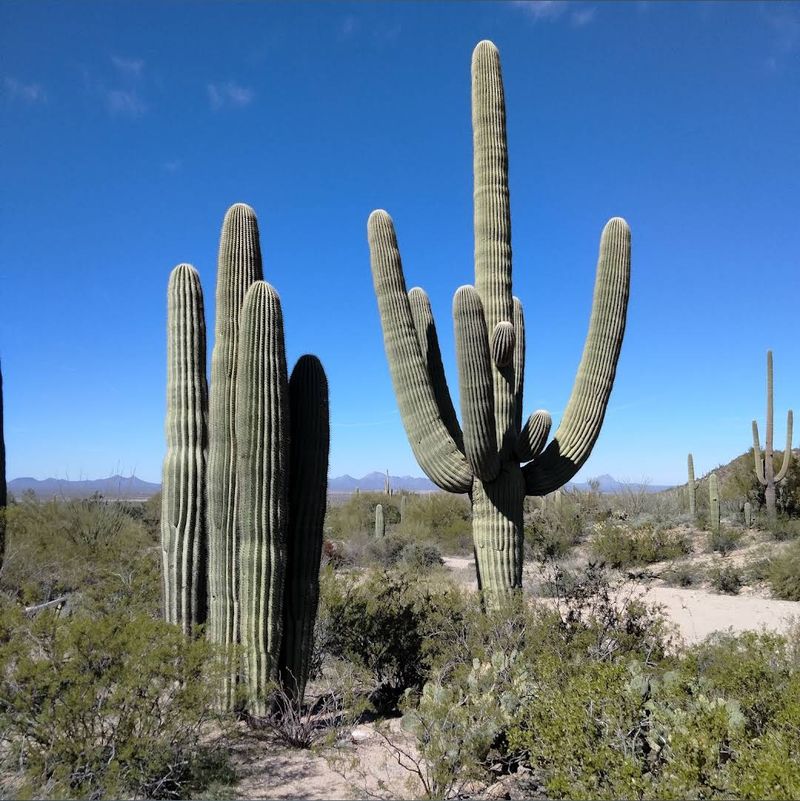
Part botanical garden, part zoo, and part living history museum, Arizona-Sonora Desert Museum at 2021 N Kinney Rd, Tucson immerses visitors in the full wonder of the Sonoran Desert.
Since opening in 1952, this 98-acre treasure has offered an up-close look at desert life, where plants and animals interact exactly as they do in the wild.
The collection features over 1,200 native species, each displayed in settings that highlight how cacti, succulents, and desert grasses thrive alongside local wildlife.
Walking through the saguaro forest, you witness the intricate relationships between these towering cacti and the creatures that rely on them for food, nesting, and shelter.
Desert grassland areas show how flowers, shrubs, and grasses adapt to Arizona’s extreme heat and scarce water, giving gardeners ideas for resilient landscaping.
The Desert Garden Loop Trail focuses on plants useful for home gardens, complete with clear labels detailing water needs and mature sizes.
The museum goes beyond observation. Demonstration gardens reveal striking combinations of native plants in thoughtfully designed spaces.
Educational programs connect visitors with pollination, seed dispersal, and desert ecology.
A hummingbird aviary brings visitors face-to-face with these tiny, energetic pollinators, while evening tours reveal night-blooming flowers and desert scents under cooler skies.
This immersive experience teaches how desert ecosystems function while inspiring practical gardening ideas. From the interplay of wildlife to the careful plant groupings, every trail, exhibit, and garden spot offers lessons in resilience, adaptation, and beauty.
For anyone wanting to understand how desert plants and animals coexist—or to gather inspiration for a home garden built to survive Arizona’s heat—this museum delivers a rich, unforgettable experience.
6. Yuma Conservation Garden Demonstrates Smart Water Wise Desert Design
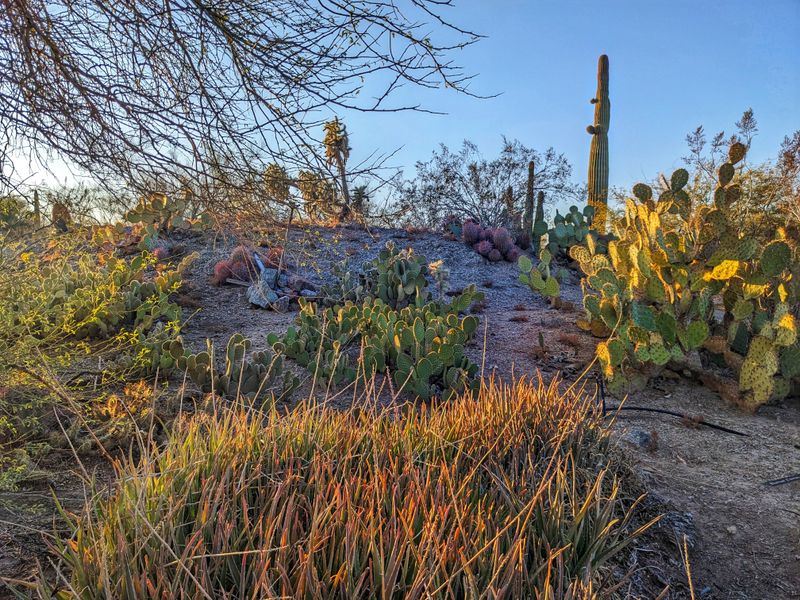
Yuma Conservation Garden at 2191 S 4th Ave, Yuma sits in Arizona’s southwestern corner, where summer temperatures often exceed 110 degrees and rainfall barely reaches four inches a year.
This compact garden demonstrates how landscapes can remain vibrant, lush, and full of life while using minimal water, proving that beauty and sustainability can coexist even under the harshest desert conditions.
Across its few acres, visitors encounter practical examples of climate-smart design, from colorful succulent groupings to clusters of native trees that provide shade, texture, and seasonal interest.
Texas rangers burst into purple blooms after summer rains, while desert marigolds display golden flowers for much of the year, and palo verde trees showcase their striking green bark and spring blossoms.
The garden emphasizes plant choices and layouts that thrive naturally, reducing the need for constant irrigation while creating a visually appealing space year-round.
Educational signage throughout the garden teaches techniques such as mulching, soil improvement, and efficient irrigation design, turning every pathway into an opportunity to learn.
Monthly workshops in the cooler months cover composting, pruning, and other desert gardening basics, giving homeowners and professionals practical guidance for water-wise planting.
By showing how well-chosen plants thrive in extreme heat, Yuma Conservation Garden helps visitors create resilient, sustainable landscapes.
It inspires visitors to work with the desert climate instead of fighting it. Even the hottest, driest conditions can still produce gardens full of color, life, and long-term success.
Visitors can enjoy shaded seating areas while taking in the desert scenery.
Educational signs highlight practical tips for creating a low-water landscape at home. Seasonal displays show how color and texture shift throughout the year.
7. Hassayampa River Preserve Garden Highlights A Rare Desert Riparian Oasis
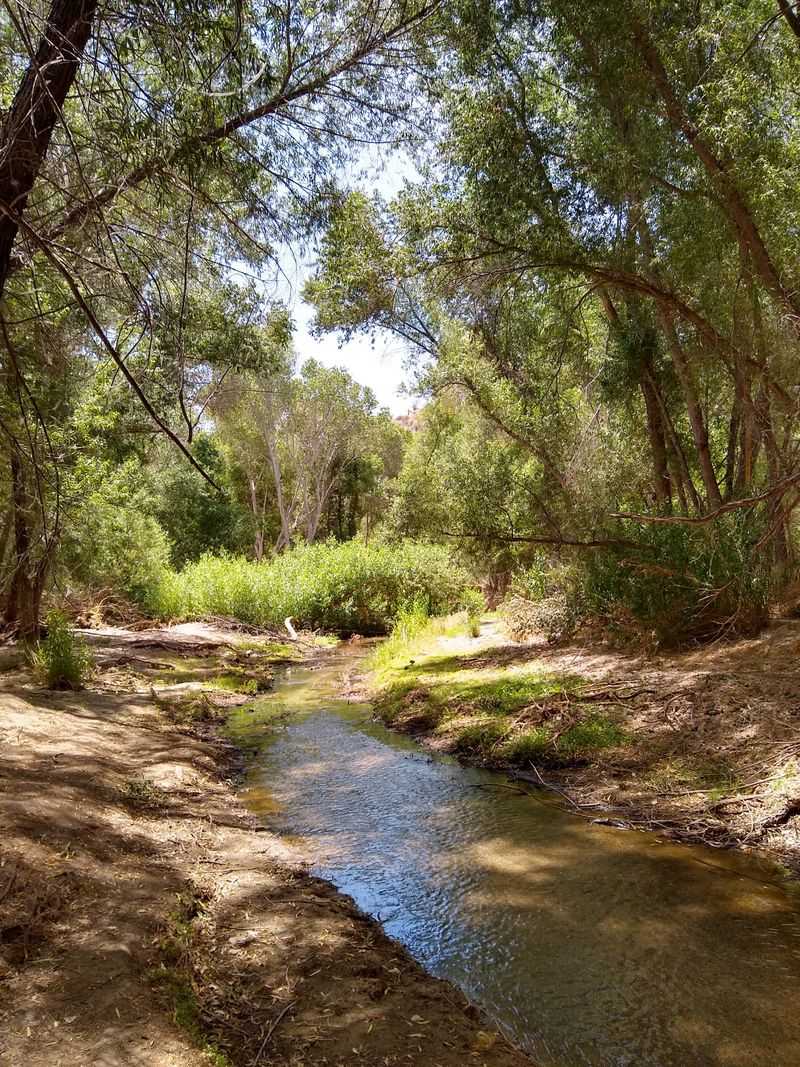
Where the Hassayampa River flows above ground, a vibrant ribbon of green stretches in stark contrast to the surrounding desert.
The Hassayampa River Preserve, located at 49614 N US Highway 60, Wickenburg, protects one of Arizona’s few remaining perennial desert streams.
Managed by The Nature Conservancy, the preserve demonstrates how water availability shapes desert ecosystems and how plant communities transition naturally depending on moisture levels.
Towering Fremont cottonwoods and Goodding’s willows line the stream corridor, their deep roots tapping into constant water. These trees create shaded areas where moisture-loving plants thrive despite the intense desert sun.
Walking from the dry uplands into this green tunnel feels like entering a completely different world, highlighting the vital role of water in sustaining life.
Trails wind through zones that change with distance from the water source. Plants closest to the stream rely on steady moisture, while further upslope, mesquite and acacia dominate, eventually giving way to typical desert species on higher ground.
This natural gradient shows gardeners how to match plant selection to water availability in their own landscapes.
Bird enthusiasts witness constant activity as more than 280 species use the riparian corridor for feeding, nesting, and pollination.
For anyone interested in native plants, the preserve provides an opportunity to see species interacting naturally with water, soil, and wildlife, offering insights that translate into more resilient and sustainable home plantings.
Experiencing this oasis inspires creativity while showing how thoughtful water management can transform even the harshest desert environment into a thriving, living landscape.