The Touch Me Not Plant North Carolina Gardeners Are Suddenly Obsessed With

North Carolina gardeners are falling hard for a plant that comes with a warning label—don’t touch.
The touch-me-not, famous for seed pods that pop at the slightest disturbance, is turning gardens into interactive experiences that delight kids and adults alike.
It’s not just the party trick that’s winning hearts.
This plant grows quickly, fills spaces gracefully, and attracts pollinators like it’s their job.
In a single season, it can transform a quiet corner into something lively and unexpected.
Gardeners love it because it feels playful yet purposeful.
It invites curiosity while supporting local ecosystems, striking a balance between fun and function.
In a world where gardening trends come and go, the touch-me-not stands out by doing what it’s always done—surprising anyone who gets close enough to notice.
It’s Famous For Responding Instantly To Touch
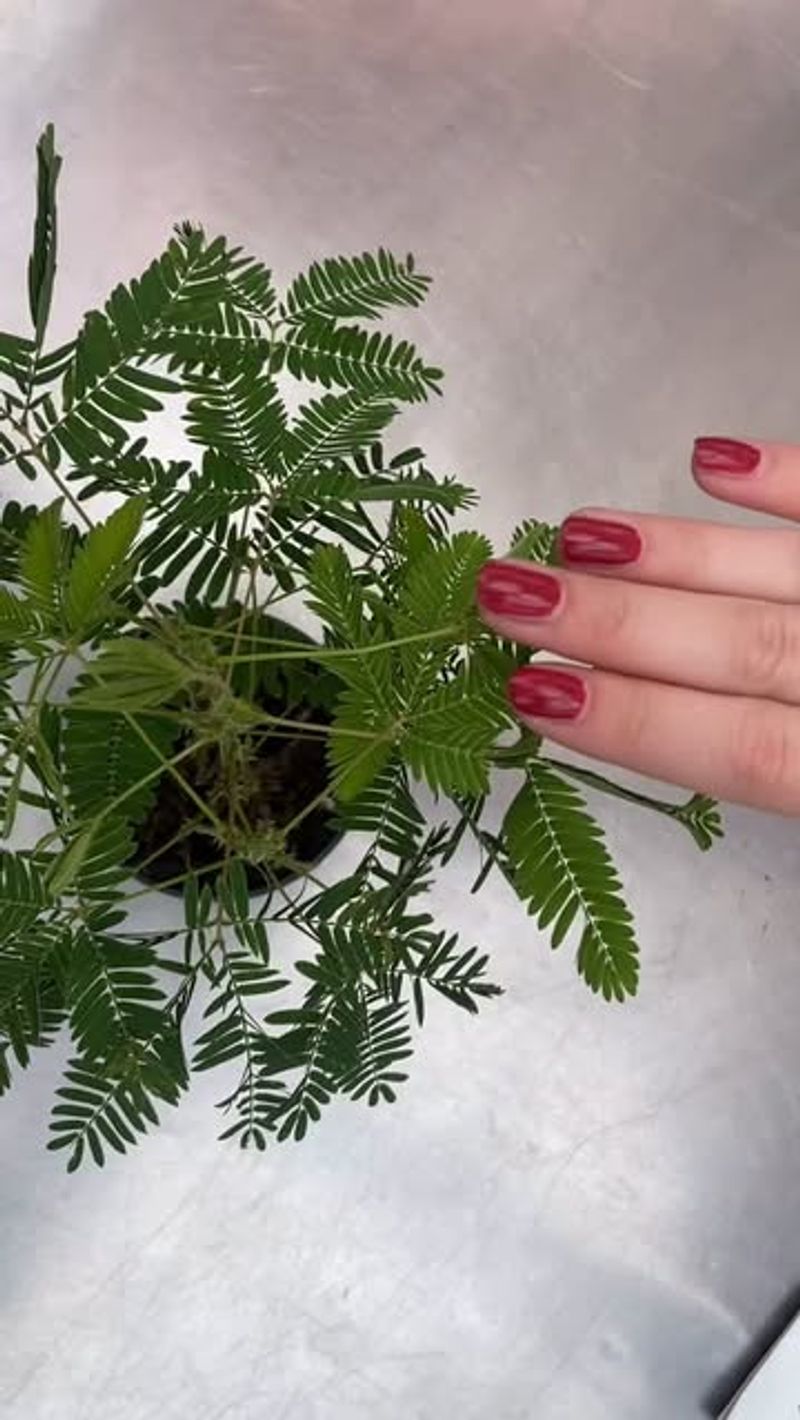
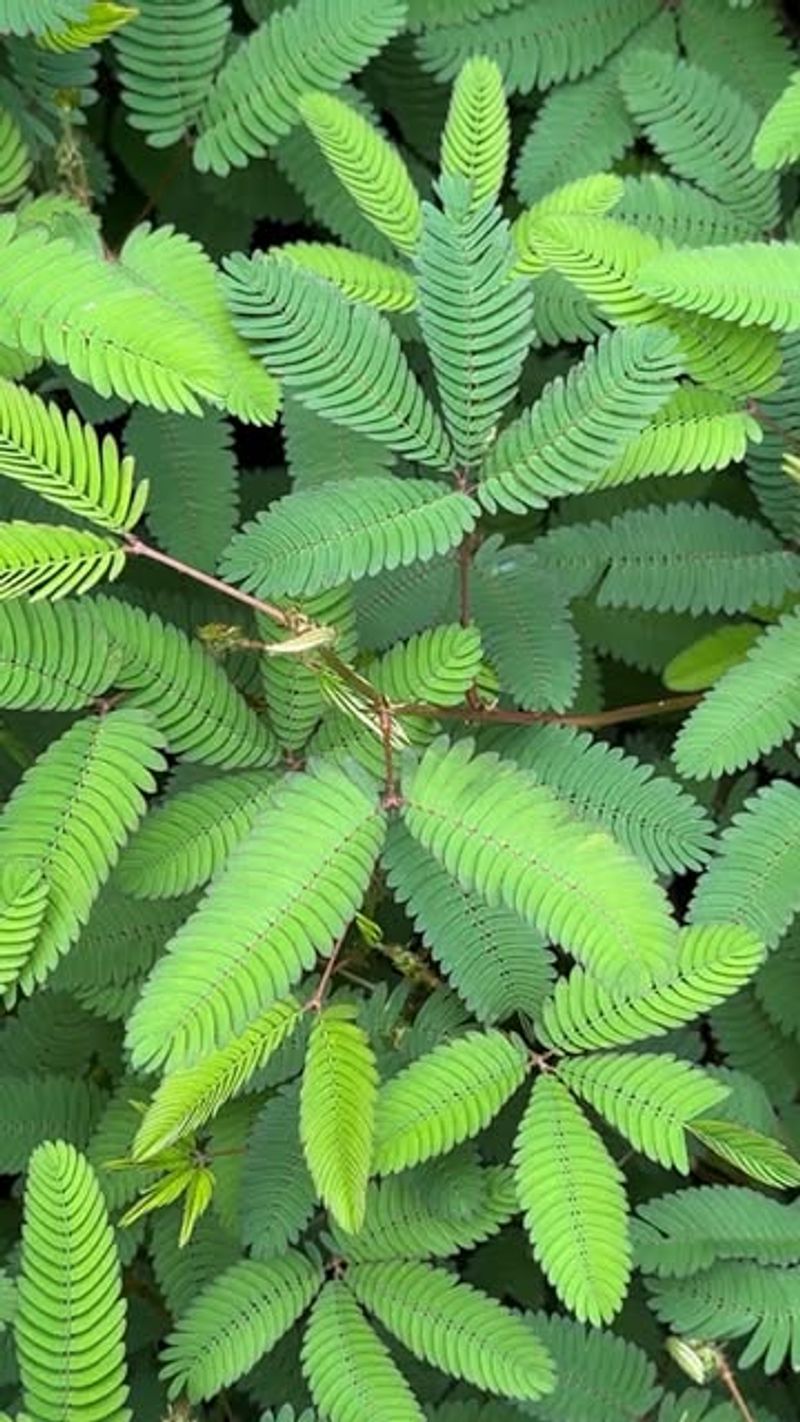
Watch a child touch Mimosa pudica for the first time, and you’ll witness pure wonder spreading across their face as the leaves collapse within seconds.
This remarkable response happens through a process called thigmonasty, where specialized cells at the base of each leaflet rapidly lose water pressure when disturbed.
The entire leaf structure folds downward and inward, creating a dramatic transformation that never gets old no matter how many times you see it.
North Carolina gardeners love showing off this party trick to visitors, who often can’t believe a plant can move so quickly without any visible mechanism.
The response works with gentle touches, strong winds, shaking, or even changes in temperature.
Within 15 to 30 minutes, the leaves slowly reopen and return to their original position, ready to respond again.
Children find this interaction absolutely mesmerizing, making the sensitive plant an incredible teaching tool about how living things respond to their environment.
Many local gardeners report spending surprisingly long periods simply watching and gently interacting with their plants.
This instant feedback creates a connection between gardener and plant that few other species can match, turning routine garden care into an engaging, hands-on experience that brings joy every single day.
Grows Easily As A Warm-Season Annual In North Carolina
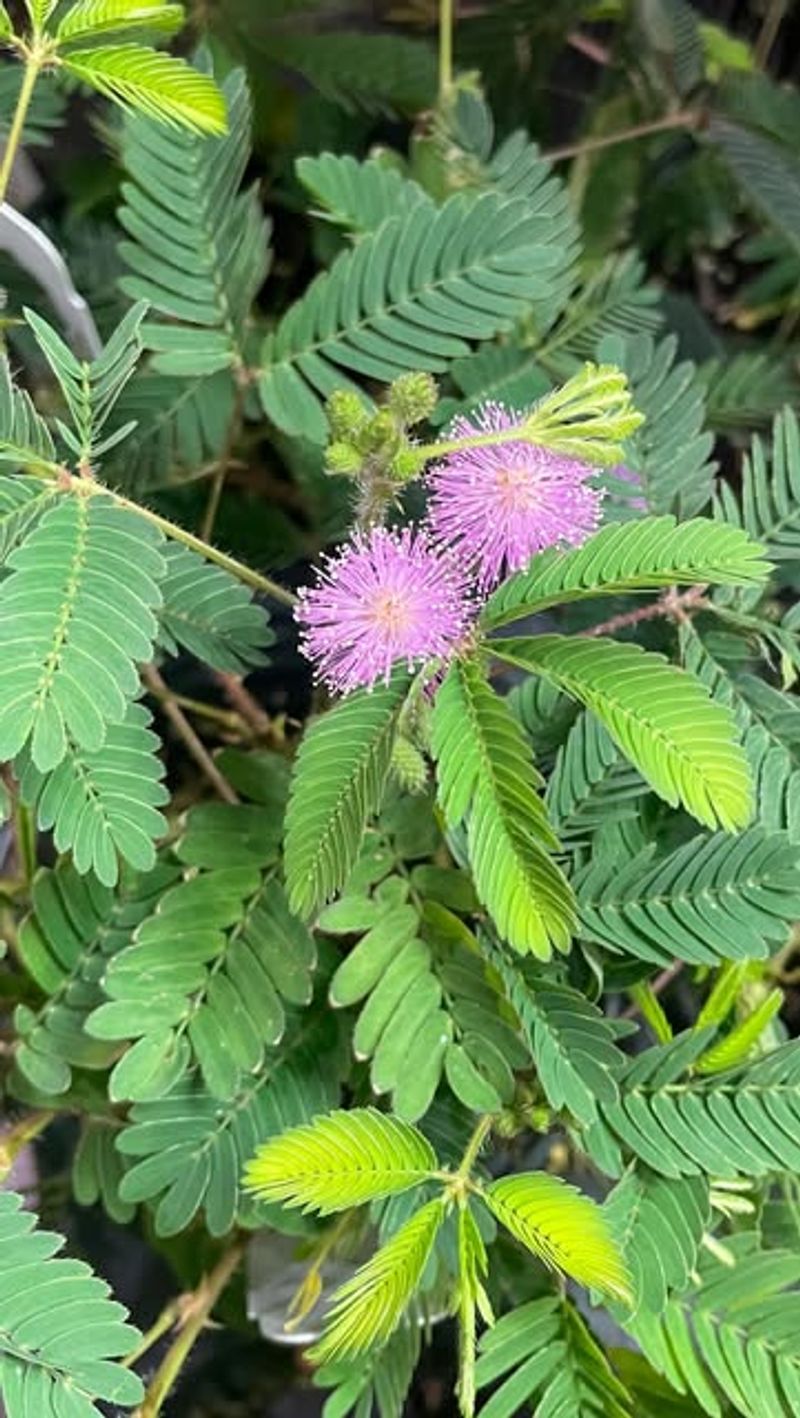
Summer heat doesn’t faze Mimosa pudica one bit—in fact, this tropical native absolutely thrives when North Carolina temperatures climb into the 80s and 90s.
Gardeners across the state treat it as a warm-season annual, planting it outdoors once nighttime temperatures stay reliably above 60 degrees Fahrenheit.
The plant rewards this timing with vigorous growth throughout June, July, and August, producing lush foliage and continuous blooms.
Unfortunately, sensitive plants cannot survive even a light frost, which means North Carolina’s first autumn chill signals the end of their outdoor growing season.
Most gardeners accept this limitation and simply enjoy the plant’s performance during the warmest months.
Some enthusiasts bring their favorite specimens indoors before frost arrives, treating them as houseplants through winter.
The annual growing cycle actually works perfectly for North Carolina’s climate, allowing gardeners to experiment with placement and companions each year without long-term commitment.
Seeds germinate quickly in warm soil, and young plants establish rapidly once temperatures stabilize.
This predictable growth pattern makes planning summer displays straightforward and stress-free, with plants reaching attractive size within just a few weeks of transplanting outdoors into beds or containers.
Popular In Containers And Patios
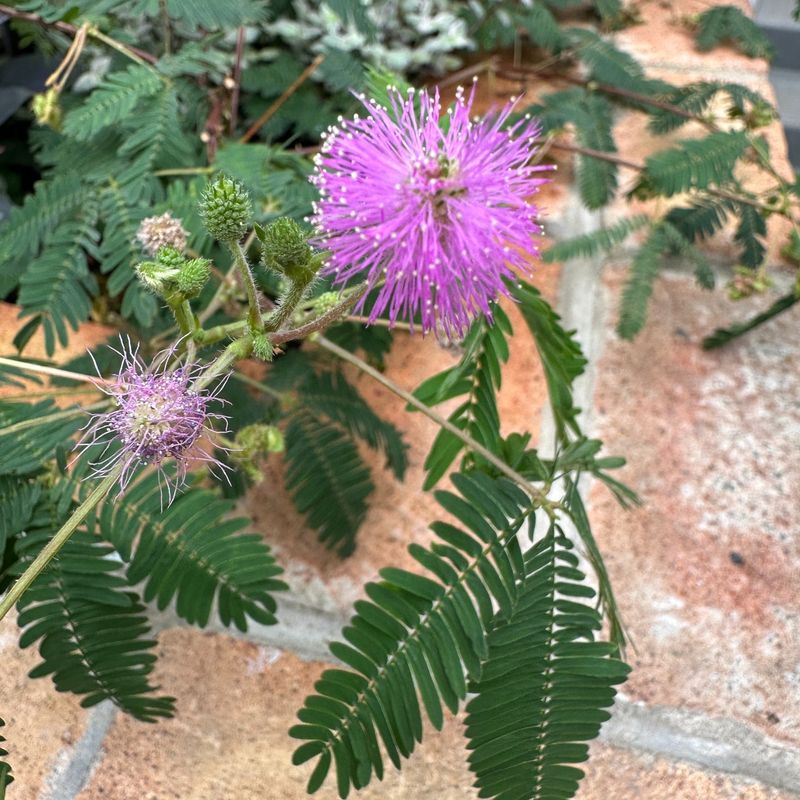
Container growing suits Mimosa pudica perfectly, making it the ideal choice for North Carolina’s countless porches, decks, and small urban gardens.
The plant’s moderate size—typically reaching 12 to 18 inches tall—fits beautifully in standard pots without overwhelming limited spaces.
Its spreading habit creates an attractive mound that softens container edges while staying manageable throughout the growing season.
Patio placement offers the added bonus of keeping this interactive plant within easy reach for frequent touching and observation.
Gardeners appreciate having the sensitive plant positioned near seating areas where guests naturally gather and children play.
The contained root system also prevents any concerns about spreading, giving complete control over exactly where the plant grows.
Well-draining potting mix works wonderfully for sensitive plants, which prefer consistent moisture without waterlogged conditions.
Container culture also allows gardeners to move plants around as needed—shifting them into brighter spots during cloudy stretches or bringing them closer to outdoor entertaining areas.
Many North Carolina gardeners create stunning mixed containers featuring sensitive plants alongside complementary annuals, though Mimosa pudica certainly commands attention even when grown solo in its own decorative pot positioned prominently on a sunny patio corner.
Produces Delicate Pink Pom-Pom Flowers
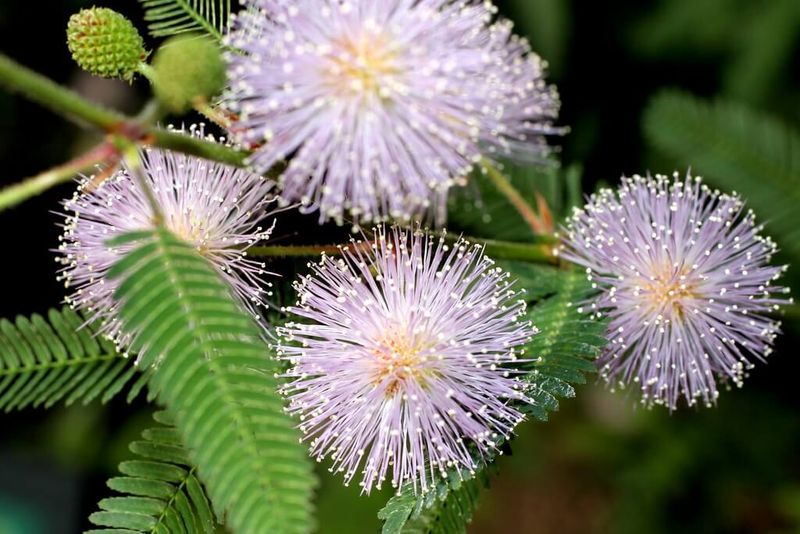
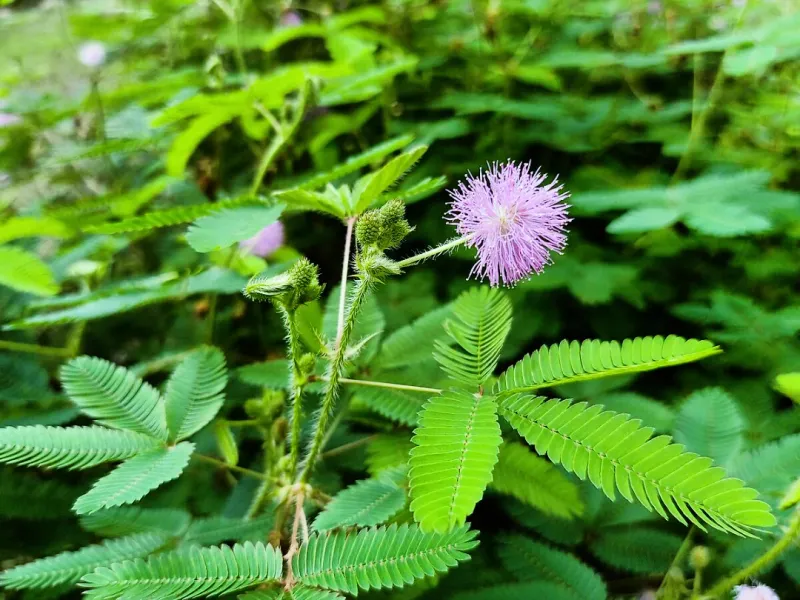
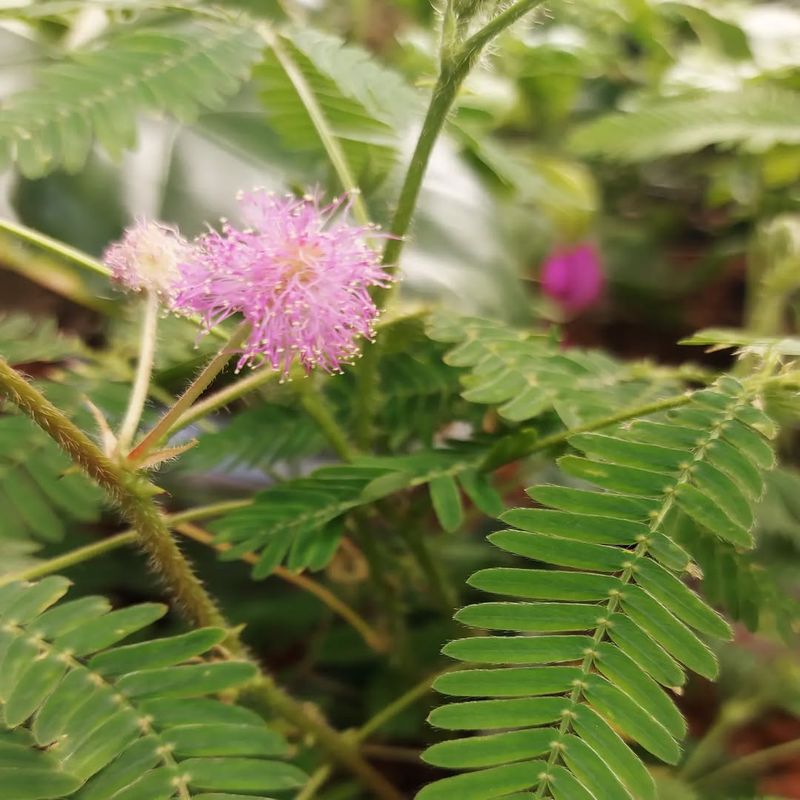
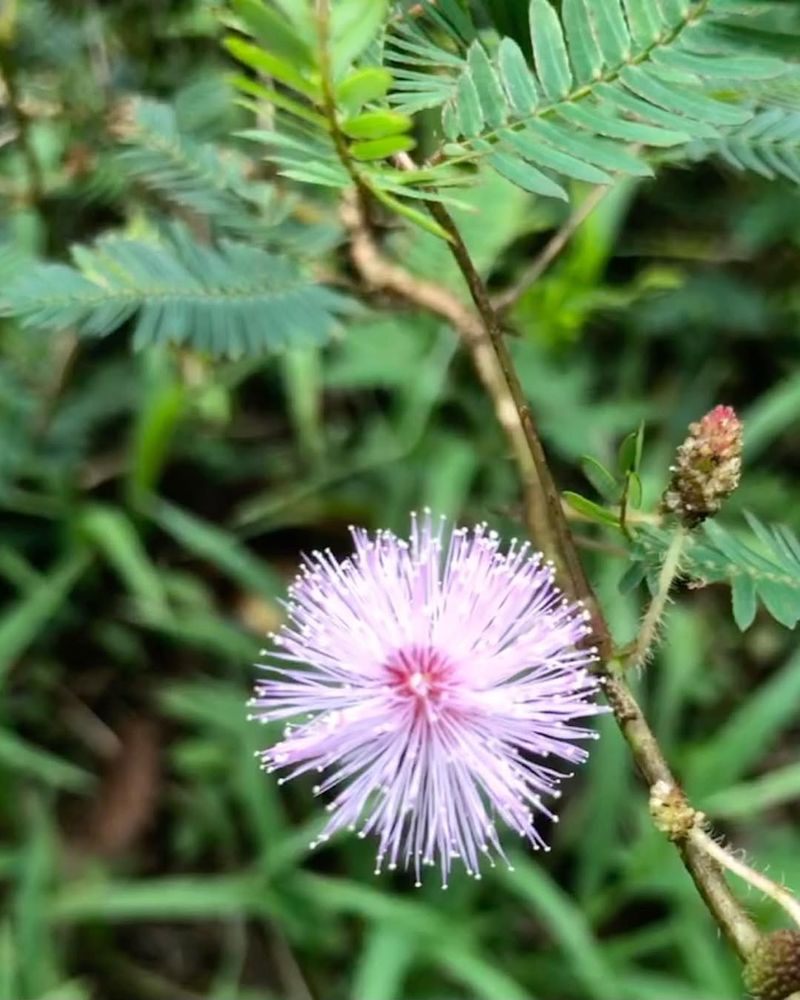
Beyond its famous leaf movements, Mimosa pudica surprises gardeners with enchanting spherical flowers that look like miniature pink fireworks frozen in time.
These fuzzy, globe-shaped blooms measure roughly half an inch to three-quarters of an inch across and consist of dozens of delicate stamens radiating from a central point.
The soft pink color ranges from pale blush to deeper rose depending on growing conditions and individual plant genetics.
Flowers appear continuously throughout the warm growing season, with new blooms opening regularly from early summer through September in North Carolina gardens.
Each flower emerges on a slender stem rising above the foliage, creating an airy, floating effect that adds vertical interest.
While the interactive leaves draw initial attention, many gardeners find themselves equally charmed by these dainty blooms that provide ornamental value even when nobody’s touching the plant.
Pollinators occasionally visit the flowers, though sensitive plants don’t require pollination to remain attractive and healthy throughout the season.
The blooms eventually develop into small seed pods covered with tiny bristles, though most gardeners focus on the fresh flowers rather than seed production.
This dual appeal—both moving foliage and pretty flowers—makes Mimosa pudica a complete package that delivers visual interest from multiple angles throughout its entire growing period.
Often Grown Indoors Before Moving Outside
Smart North Carolina gardeners get a jump on the growing season by starting sensitive plants indoors during March or early April.
Seeds germinate readily on bright windowsills or under grow lights, with seedlings emerging within 7 to 14 days when kept warm and moist.
This indoor head start means young plants reach transplant size right around the time outdoor temperatures become reliably warm enough for tropical species.
Indoor growing also lets gardeners enjoy the sensitive plant’s interactive nature even before spring arrives in full force outside.
Children especially love having a touch-responsive plant available during those last weeks of unpredictable weather when outdoor gardening remains impractical.
The controlled indoor environment produces sturdy, healthy seedlings that transition smoothly to outdoor conditions once hardened off properly.
Timing the indoor-to-outdoor transition requires watching nighttime temperatures closely, waiting until consistent readings above 60 degrees eliminate frost risk entirely.
Most North Carolina gardeners plan this move for late April through mid-May depending on their specific location within the state.
Gradual hardening off over a week helps plants adjust to direct sun, wind, and temperature fluctuations, preventing transplant shock and ensuring vigorous growth once permanently situated outdoors in their summer homes.
Fixes Nitrogen In The Soil
Mimosa pudica belongs to the legume family, which means it possesses a hidden superpower that eco-conscious North Carolina gardeners truly appreciate.
Like peas, beans, and clover, sensitive plants form symbiotic relationships with beneficial bacteria that colonize their roots.
These bacteria capture nitrogen from air in the soil and convert it into forms that plants can actually use for growth.
This nitrogen-fixing ability means sensitive plants actually improve soil quality as they grow rather than depleting nutrients like many ornamental annuals.
When the growing season ends and plant material gets composted or worked back into garden beds, that captured nitrogen becomes available to next year’s crops.
Container-grown specimens contribute similarly when their spent potting mix gets refreshed into garden areas.
For gardeners practicing organic or sustainable methods, this trait makes sensitive plants valuable beyond their entertainment and ornamental qualities.
The process happens quietly underground without any special effort required from the gardener—the plants simply do what comes naturally.
While nitrogen fixation isn’t the primary reason most people grow Mimosa pudica, discovering this bonus benefit often increases appreciation for these remarkable plants and reinforces their value in thoughtfully planned gardens focused on soil health and environmental stewardship.
Low Maintenance Once Established
Once settled into their summer homes, sensitive plants prove surprisingly undemanding compared to many popular annuals.
Regular watering ranks as the primary care requirement, with plants preferring consistently moist but never soggy soil.
Container specimens may need daily watering during hot stretches, while garden-bed plants typically manage with two to three thorough soakings weekly.
Well-draining soil prevents the root problems that occur when water sits around roots too long.
Standard potting mix works perfectly for containers, while garden beds benefit from adding compost to heavy clay if drainage seems sluggish.
Sensitive plants tolerate average soil fertility without demanding heavy feeding, though occasional applications of balanced fertilizer can boost vigor and flowering.
Pest and disease issues rarely trouble Mimosa pudica in North Carolina gardens, eliminating the need for complicated spray schedules or constant monitoring.
The plants naturally resist most common garden problems, allowing gardeners to simply enjoy them without worry.
Deadheading spent flowers isn’t necessary since new blooms appear continuously regardless, and the plants maintain attractive shape without any pruning or pinching.
This easy-care nature makes sensitive plants perfect for busy gardeners who want maximum impact with minimal ongoing effort throughout the summer growing season.
Not Invasive In North Carolina Gardens

North Carolina gardeners sometimes hesitate when they hear the word “mimosa” because the invasive mimosa tree (Albizia julibrissi) has earned a troublesome reputation across the Southeast.
However, Mimosa pudica operates completely differently and poses absolutely zero invasive threat in North Carolina landscapes.
The sensitive plant’s tropical origins and total inability to survive freezing temperatures prevent any possibility of naturalization or spread beyond cultivated areas.
Every autumn, the first frost eliminates sensitive plants entirely, preventing seed production from establishing persistent populations in the wild.
Even in the unlikely event that seeds germinated in natural areas during summer, those seedlings would perish the following winter without fail.
This cold sensitivity creates a natural control that keeps the species confined exactly where gardeners plant it.
Container growing further eliminates any remote concerns about spread since plants never contact garden soil where seeds might potentially germinate.
Gardeners can enjoy Mimosa pudica with complete confidence, knowing their interactive plants will never escape cultivation or create ecological problems.
This responsible choice distinguishes sensitive plants from truly problematic species and makes them appropriate even for environmentally conscious gardeners who carefully consider the broader impacts of their planting decisions on local ecosystems and native plant communities.
Seen As A Fun Gateway Plant For New Gardeners
Gardening educators across North Carolina increasingly recommend sensitive plants as perfect first-time growing projects for children and hesitant beginners.
The instant feedback from touching leaves creates engagement that typical plants simply cannot match, transforming gardening from abstract activity into interactive experience.
Success comes quickly and obviously, building confidence that encourages continued interest in growing things.
Fast growth means new gardeners see results within weeks rather than months, maintaining enthusiasm during that crucial early learning period.
The straightforward care requirements prevent overwhelming confusion, while the plant’s forgiving nature tolerates beginner mistakes better than many alternatives.
Families often start with a single sensitive plant and then expand into broader gardening adventures once initial success sparks genuine interest.
Teachers use Mimosa pudica in classroom settings to demonstrate plant responses and biology concepts in ways that stick with students long after lessons end.
The combination of visual interest, physical interaction, and relatively foolproof cultivation makes sensitive plants ideal for building foundational gardening skills and knowledge.
Many North Carolina gardeners trace their current passion back to childhood experiences with touch-responsive plants that first showed them how amazing and rewarding plant cultivation can be when approached with curiosity and care.