The 9 Vegetables California Gardeners Should Plant Right Now
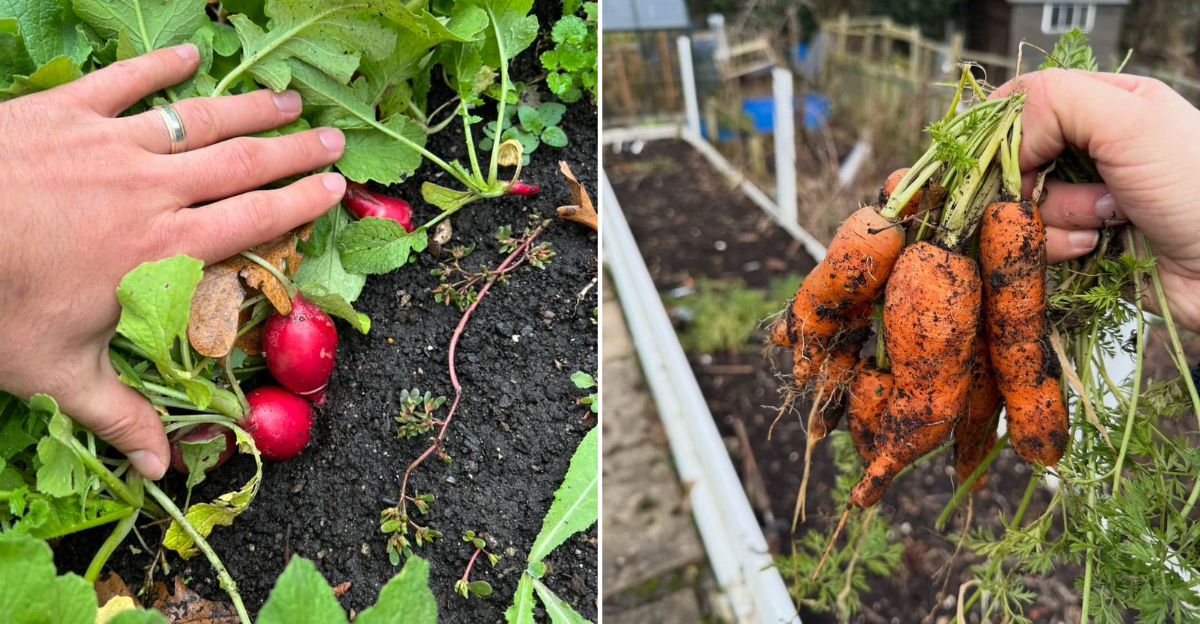
California gardeners, this is your green light moment. Right now is prime planting time, and missing it could mean smaller harvests and slower growth later.
Soil temperatures are warming, daylight is stretching longer, and plants are ready to take off. Put the right vegetables in the ground now and you give them a powerful head start.
Roots settle faster. Stems grow stronger.
Yields come in earlier and heavier. Wait too long and you risk battling heat stress and crowded planting windows.
The good news is you don’t need a huge garden or complicated setup to see big results. A few smart choices can fill your beds with fast-growing, high-reward crops.
1. Lettuce
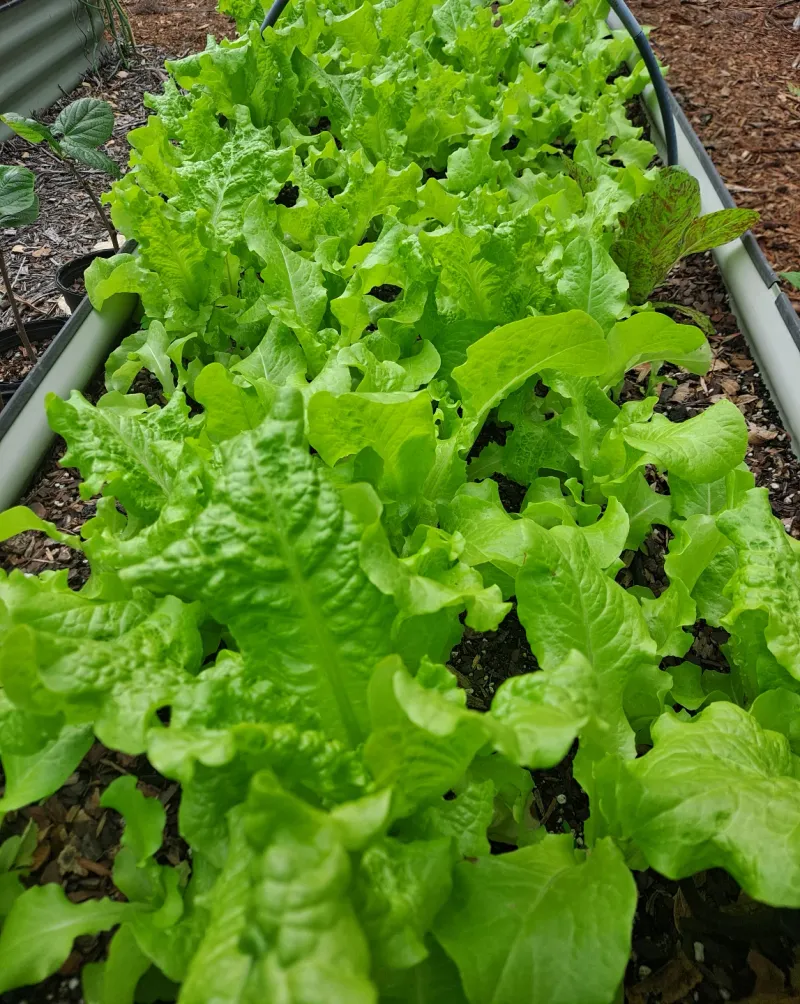
Cool mornings signal the perfect window for starting your salad garden. Soil temperatures between 45°F and 75°F create ideal germination conditions, and lettuce seeds sprout quickly when the scorching summer heat finally breaks.
Your raised beds and containers are ready for these shallow-rooted greens that need consistent moisture without waterlogged conditions.
Leaf varieties establish faster than head types, giving you harvests in as little as 30 days. Plant seeds about a quarter-inch deep and thin seedlings to six inches apart once they develop true leaves.
Coastal gardeners can direct sow almost any time, while inland valleys should time plantings to avoid lingering heat waves that cause bolting.
Water newly planted lettuce daily until seedlings emerge, then switch to every other day as roots establish. Morning watering prevents fungal issues and conserves moisture during California’s dry periods.
Succession planting every two weeks extends your harvest window well into spring, providing fresh greens when grocery store prices peak during winter months.
2. Spinach
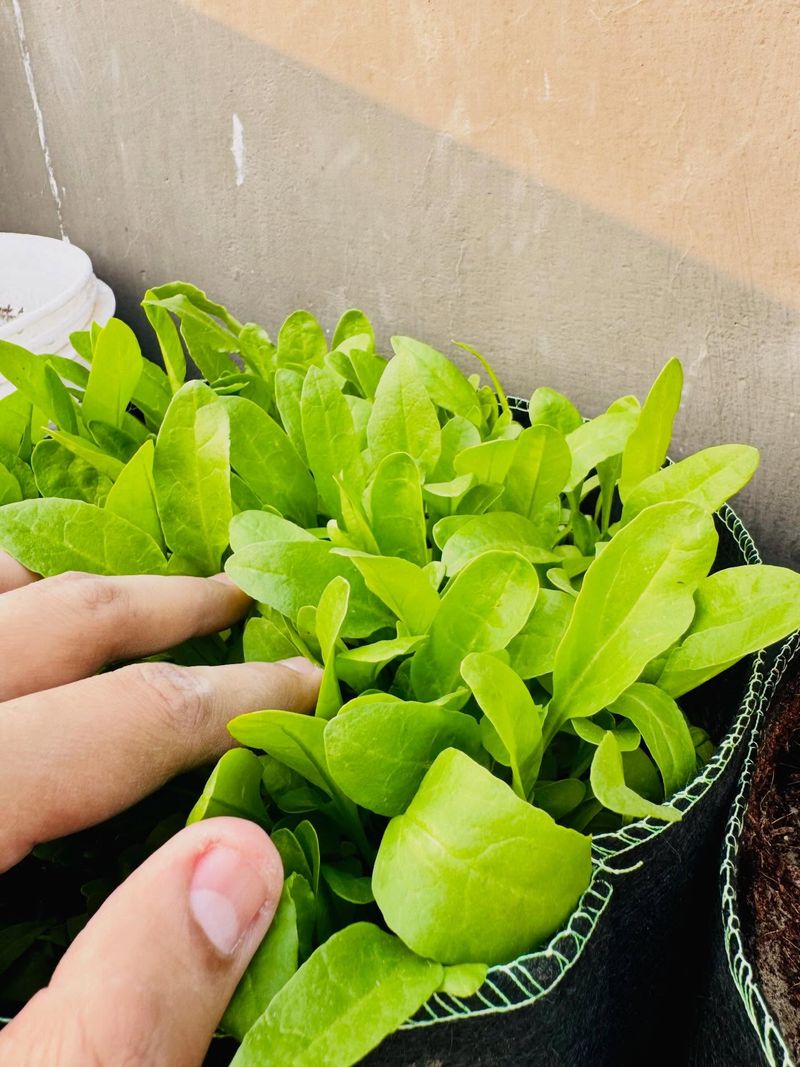
Dropping nighttime temperatures below 70°F trigger the best growing conditions for this nutrient-packed green. Unlike lettuce, spinach handles light frosts beautifully, making it reliable insurance against early cold snaps in foothill and valley gardens.
Seeds germinate best when soil stays between 50°F and 70°F, which typically arrives after September heat finally moderates.
Direct sowing works better than transplanting since spinach develops a taproot that dislikes disturbance. Space seeds one inch apart in rows twelve inches wide, covering with half an inch of soil.
Thin seedlings to four inches once they reach two inches tall, using the thinnings in salads rather than composting perfectly good greens.
Container gardeners should choose pots at least eight inches deep to accommodate root growth. Spinach demands steady moisture but tolerates California’s drier air better than many greens.
Water deeply twice weekly rather than light daily sprinklings, encouraging roots to reach down where soil stays consistently moist.
Harvest outer leaves first, allowing center growth to continue producing through multiple cuttings before plants eventually bolt when spring warmth returns.
3. Carrots
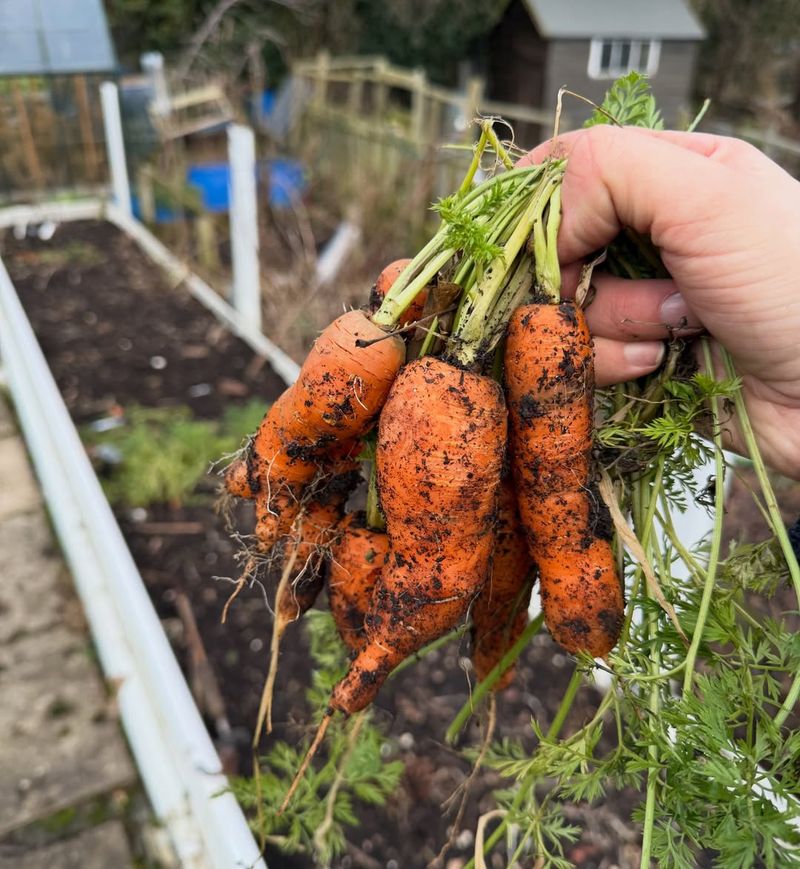
Loose, rock-free soil determines carrot success more than any other factor. Now that summer’s heat has passed, soil works easily and stays moist longer between waterings.
Carrots need temperatures between 45°F and 85°F for steady growth, with cooler weather actually improving their sweetness through natural sugar concentration.
Choose shorter varieties like Nantes or Chantenay types if your soil runs heavy with clay. Longer varieties require deeply worked beds with added compost to prevent forking and twisting.
Sow seeds directly since carrots refuse to transplant successfully, spacing them about two inches apart in rows or broadcasting in wide beds.
Germination takes up to three weeks, testing every gardener’s patience. Keep soil surface consistently moist during this waiting period, using shade cloth if late-season sun still beats down hard.
Once seedlings emerge, thin to proper spacing based on variety recommendations. Crowded carrots develop stunted, misshapen roots that disappoint at harvest time.
Raised beds and containers work wonderfully for carrots, giving you complete control over soil texture. Water deeply but infrequently once established, encouraging roots to grow downward rather than staying shallow.
Harvest begins around 60 days for baby carrots, extending to 80 days for full-sized roots.
4. Radishes
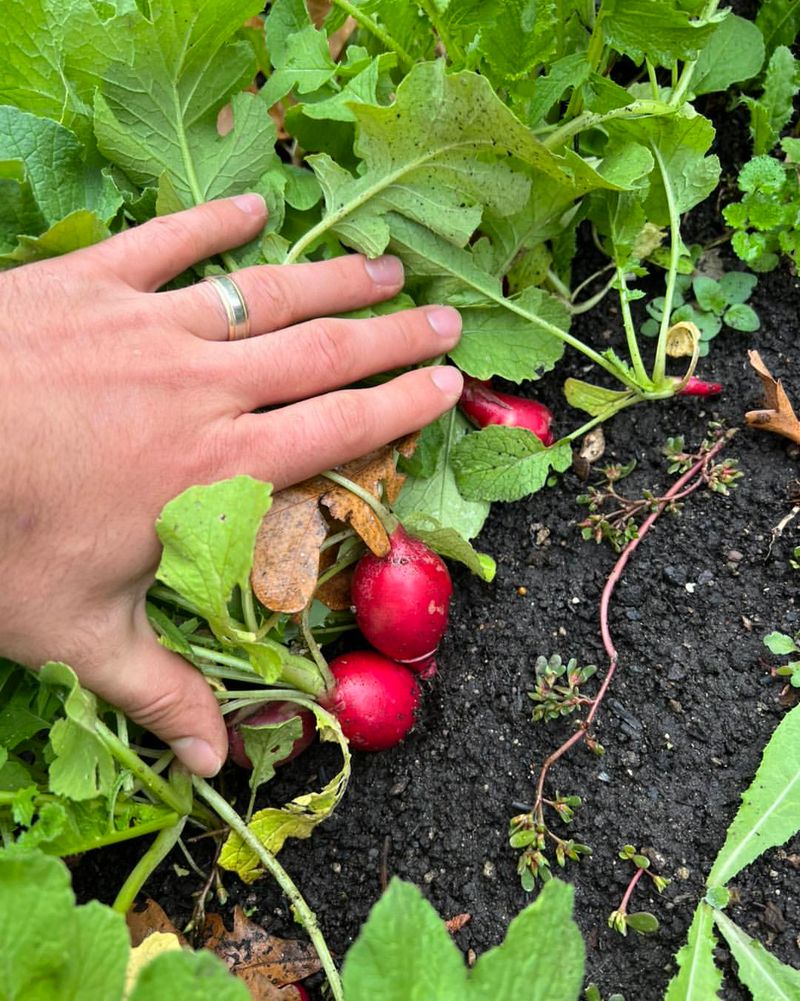
Impatient gardeners celebrate radishes as the ultimate instant gratification crop. These speedy roots mature in just 25 to 30 days, perfect for filling gaps between slower-growing vegetables or satisfying kids who want quick results.
Current soil conditions across California provide exactly what radishes crave: moderate temperatures between 50°F and 65°F and moisture retention without summer’s evaporation rates.
Plant seeds half an inch deep and one inch apart, then thin to two inches once seedlings develop. Crowding creates all tops and no bottoms, leaving you with leafy plants but tiny, disappointing roots.
Radishes thrive in containers as small as six inches deep, making them ideal for balcony gardens and tight spaces.
Consistent moisture prevents the woody, pithy texture that makes radishes unpleasant to eat. Water every other day during establishment, then adjust based on your specific microclimate.
Coastal gardens may need less frequent watering, while inland areas require more attention during dry spells.
Succession planting every week provides continuous harvests rather than one overwhelming crop. Pull radishes promptly when they reach maturity since they decline quickly if left in the ground too long.
The peppery crunch adds zing to fall salads and provides satisfying proof that your California garden remains productive beyond summer’s peak.
5. Peas
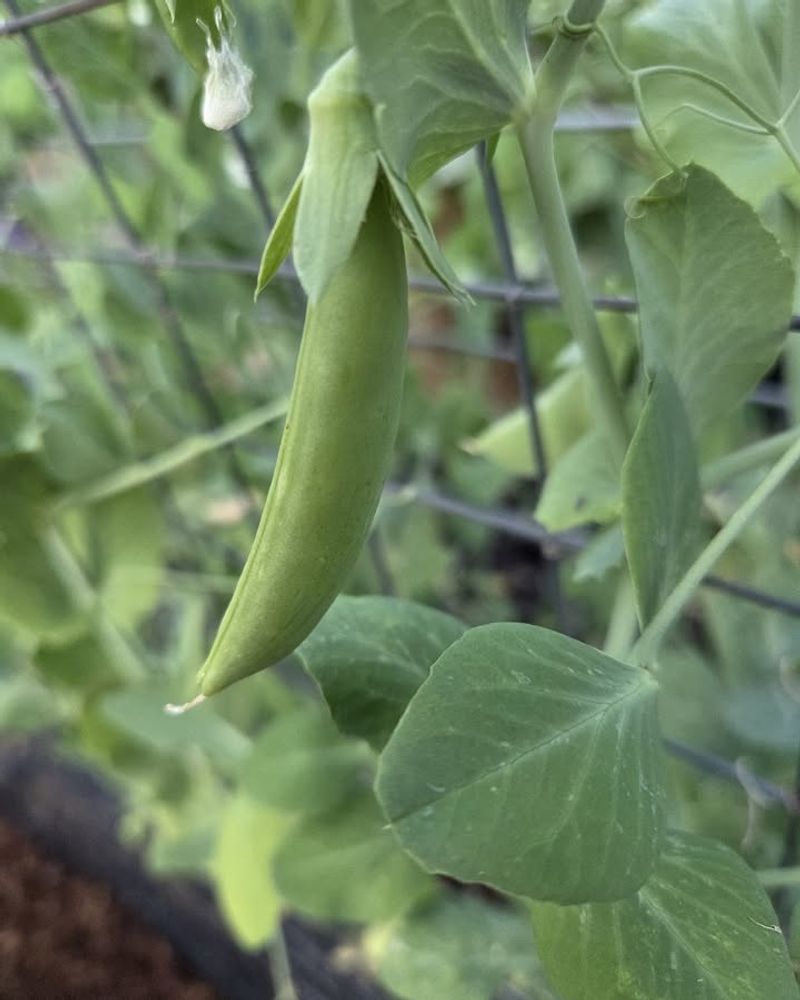
Climbing vines and sweet pods make peas a favorite for vertical gardening in space-limited California yards. These legumes actually prefer cooler weather, with ideal growing temperatures between 55°F and 75°F.
Planting now allows roots to establish before winter rains arrive, setting up robust spring harvests when pea production peaks.
Choose between shelling peas, snap peas, or snow peas based on your eating preferences. All types need support structures unless you select dwarf bush varieties.
Install trellises, stakes, or netting before planting to avoid disturbing roots later. Peas fix their own nitrogen, improving soil for whatever you plant next in that bed.
Soak seeds overnight before planting to speed germination, then push them one inch deep and two inches apart along your support structure. Peas handle light frosts without damage, making them reliable even in colder inland valleys and foothill gardens.
Container gardeners should choose pots at least twelve inches deep and provide sturdy supports for climbing varieties.
Water regularly during establishment, then reduce frequency as plants mature and develop deeper roots. Peas signal moisture stress by wilting during afternoon heat, but they bounce back quickly with evening watering.
Harvest begins around 60 days for snow peas and extends to 70 days for shelling types, with regular picking encouraging continued pod production.
6. Broccoli
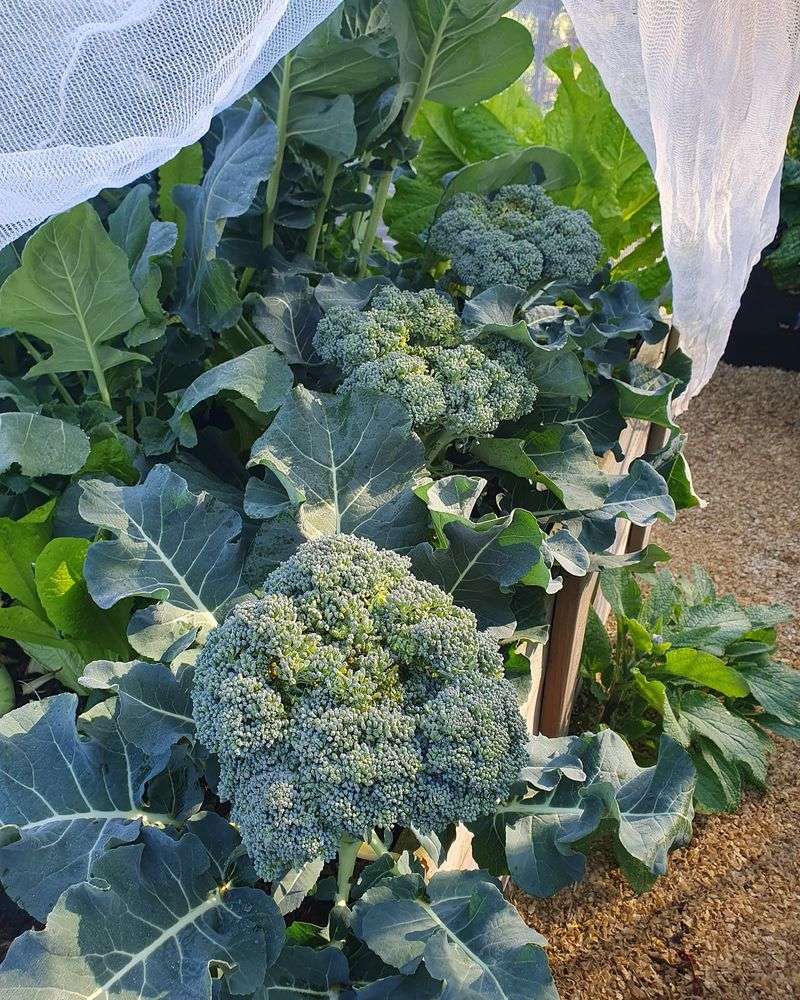
Large, nutritious heads develop best when plants establish during California’s cooling autumn weather. Broccoli demands temperatures between 45°F and 75°F, with cool nights triggering the tight bud formation that creates those perfect crowns.
Starting now gives plants time to build strong root systems before head formation begins in late winter or early spring.
Transplants work better than direct seeding for most home gardeners, giving you a head start on the 60 to 90 day growing cycle. Space plants eighteen inches apart in all directions, providing room for their substantial leaf spread.
Broccoli grows successfully in raised beds and large containers at least twelve inches deep, though in-ground beds typically produce larger heads.
These heavy feeders appreciate compost-enriched soil and benefit from side dressing with organic fertilizer once heads begin forming. Water deeply twice weekly rather than frequent shallow watering, encouraging roots to grow down where soil moisture stays consistent.
Coastal gardeners often achieve the most reliable broccoli production since mild temperatures prevent premature bolting.
Watch for the main head to reach full size but before individual buds begin opening into yellow flowers. After harvesting the central crown, side shoots continue developing smaller heads for weeks, extending your harvest period.
Inland valleys may experience faster bolting when spring temperatures spike, so timing your planting matters more in those regions.
7. Cabbage
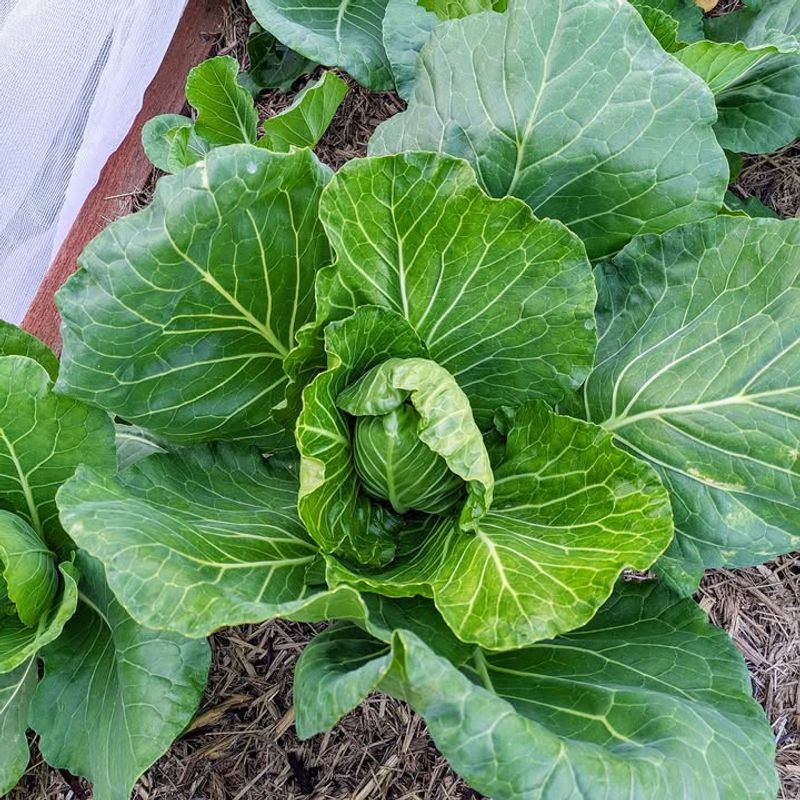
Solid, crisp heads require patience and consistent care, but cabbage rewards California gardeners with storage-quality harvests.
These cool-season champions thrive in temperatures between 45°F and 75°F, with the best head formation occurring during our mild winter months.
Planting transplants now allows root establishment before the real growing push begins.
Choose early varieties for quicker harvests or storage types for long-keeping heads that last months in your refrigerator. Space plants eighteen to twenty-four inches apart depending on variety, giving them room to develop without crowding.
Cabbage grows well in raised beds and large containers, though their substantial size means one plant per five-gallon pot minimum.
Consistent moisture prevents head splitting, a common problem when irregular watering causes rapid growth spurts. Water deeply two to three times weekly, adjusting for rainfall and your specific microclimate.
Mulching around plants conserves moisture and moderates soil temperature, both beneficial for steady cabbage development.
These heavy feeders appreciate rich soil amended with compost before planting. Side dress with balanced organic fertilizer monthly to support head formation.
Coastal regions provide ideal conditions with their fog and moderate temperatures, while inland gardeners should watch for aphid pressure during warm spells.
Harvest when heads feel solid and tight, typically 70 to 90 days after transplanting, cutting just below the head and leaving roots to decompose and enrich your soil.
8. Kale
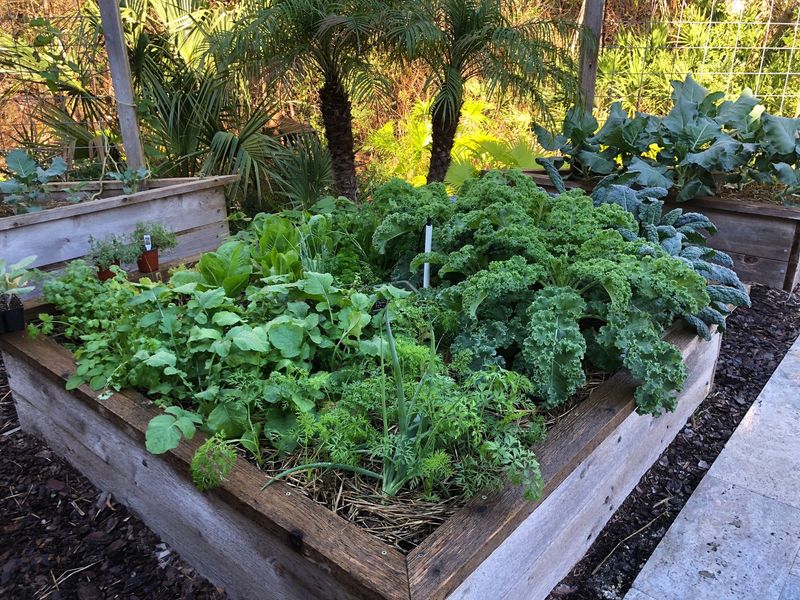
Frost actually improves kale’s flavor, making it one of the most reliable crops for California gardens heading into cooler months. This hardy green tolerates temperatures from 20°F to 80°F, though it grows most vigorously between 60°F and 70°F.
Planting now establishes plants before winter, providing harvests that continue for months as you pick outer leaves while allowing centers to keep producing.
Transplants or direct seeding both work well, with transplants giving you a few weeks head start. Space plants twelve to eighteen inches apart, or closer if you plan to harvest baby leaves.
Kale thrives in raised beds, containers, and in-ground gardens, adapting to various growing situations better than most vegetables.
These moderate feeders appreciate compost-enriched soil but don’t demand heavy fertilization. Water deeply twice weekly, allowing soil to dry slightly between waterings to prevent root issues.
Kale handles California’s dry air better than many greens, though consistent moisture produces the most tender leaves.
Harvest by removing outer leaves first, allowing the growing center to continue producing new foliage. Plants can produce for six months or longer with proper care, surviving light frosts that would kill more tender crops.
Coastal and inland gardens both succeed with kale, though inland areas may need shade cloth if unexpected heat waves arrive. The nutritional powerhouse reputation is well-deserved, and homegrown kale tastes remarkably better than store-bought versions.
9. Beets
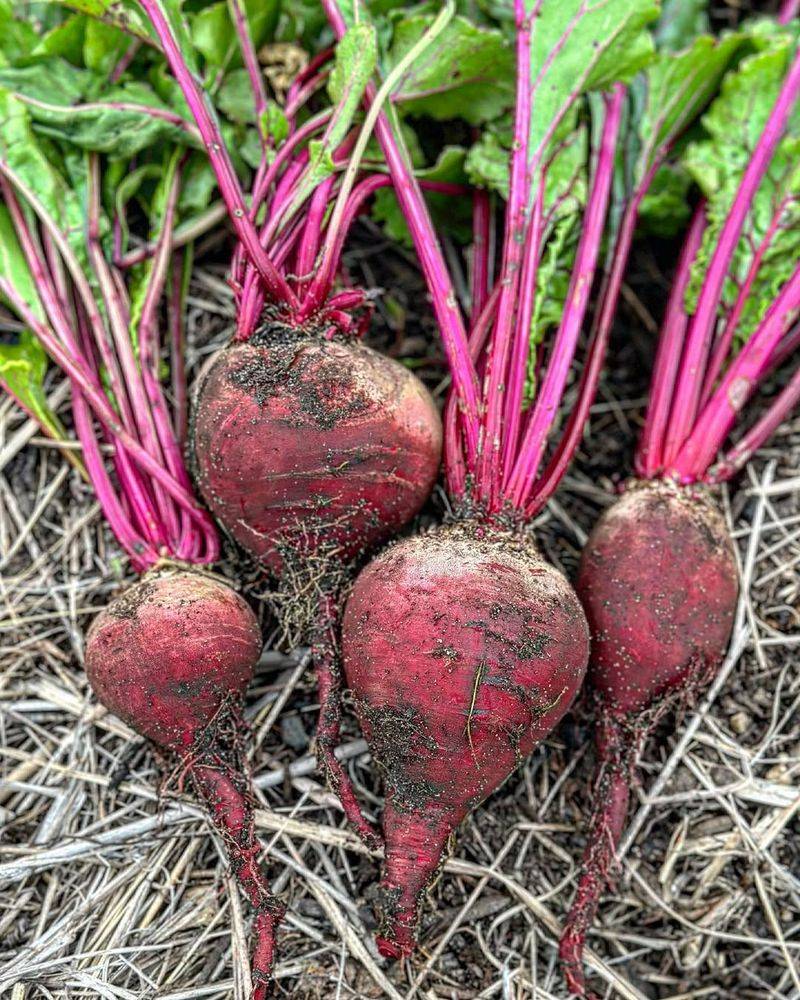
Dual-purpose harvests make beets particularly valuable since both roots and greens provide nutritious eating.
These versatile vegetables prefer temperatures between 50°F and 70°F, with current California conditions across most regions falling perfectly within that range.
Beets tolerate light frosts, making them reliable insurance against early cold snaps while still producing well during mild winter weather.
Each beet “seed” actually contains multiple seeds clustered together, so thinning becomes essential once seedlings emerge. Plant seeds half an inch deep and two inches apart, then thin to four inches when seedlings reach two inches tall.
Use the thinned seedlings as tender salad greens rather than wasting them. Beets grow successfully in raised beds and containers at least ten inches deep, though in-ground beds often produce larger roots.
Consistent moisture prevents the woody texture that makes beets unpleasant. Water deeply twice weekly, more frequently during establishment.
Beets signal water stress through wilting leaves, but they recover quickly with irrigation. Adding compost before planting provides the fertility these moderate feeders require.
Harvest greens anytime by removing a few outer leaves from each plant without damaging the growing center. Roots mature in 50 to 70 days depending on variety, reaching peak sweetness at two to three inches diameter.
Coastal gardens may experience slower growth than inland valleys, but both regions produce excellent beets with proper timing and care.