The Welcome Plant That Handles Georgia Heat (And Looks Good In Pots All Year)
Georgia heat can push potted plants past their limit faster than expected, especially once humidity settles in and soil starts to dry unevenly.
Leaves can lose their edge, growth can slow, and containers that once looked full may start to feel tired long before the season peaks.
Some plants hold up far better under those conditions without losing their shape or steady color. One stands out for how reliably it stays full in a pot, even when temperatures stay high and care stays simple.
That kind of consistency changes how outdoor spaces feel through the season. Patios and entry areas keep a clean, finished look without constant swaps or extra effort.
It becomes clear why this plant keeps showing up in Georgia containers once the heat settles in and everything else starts to struggle.
1. Lantana Keeps Blooming Even When Heat Builds Up
Most flowering plants start looking rough by mid-July in Georgia. Not lantana.
When temperatures push past 95 degrees and the pavement radiates heat like an oven, lantana just keeps opening new flower clusters like the weather is perfectly fine.
The plant handles heat because it comes from tropical and subtropical regions where intense sun is normal, not unusual. Its biology is built for conditions that stress out most common garden plants.
Thin-leafed annuals wilt and drop petals. Lantana adjusts and keeps producing.
What makes this especially useful in Georgia is that the heat does not cause the plant to slow down or pause its bloom cycle.
You might notice a slight lull during the absolute peak of August, but the flowers come right back as soon as nighttime temperatures ease even slightly.
Deadheading spent clusters encourages faster rebloom.
Gardeners in Columbus and Augusta who grow lantana in black plastic pots on south-facing patios report strong performance even in those extra-hot microclimates.
The key is making sure the pot has drainage holes so roots never sit in standing water, which is far more damaging than the heat itself.
Full sun is where lantana performs best. Six to eight hours of direct sunlight daily produces the most flowers and the most compact growth habit.
Shade causes the plant to stretch and produce fewer blooms, which defeats the whole point of growing it in a visible container spot.
2. This Sun Lover Thrives In Pots Without Constant Attention
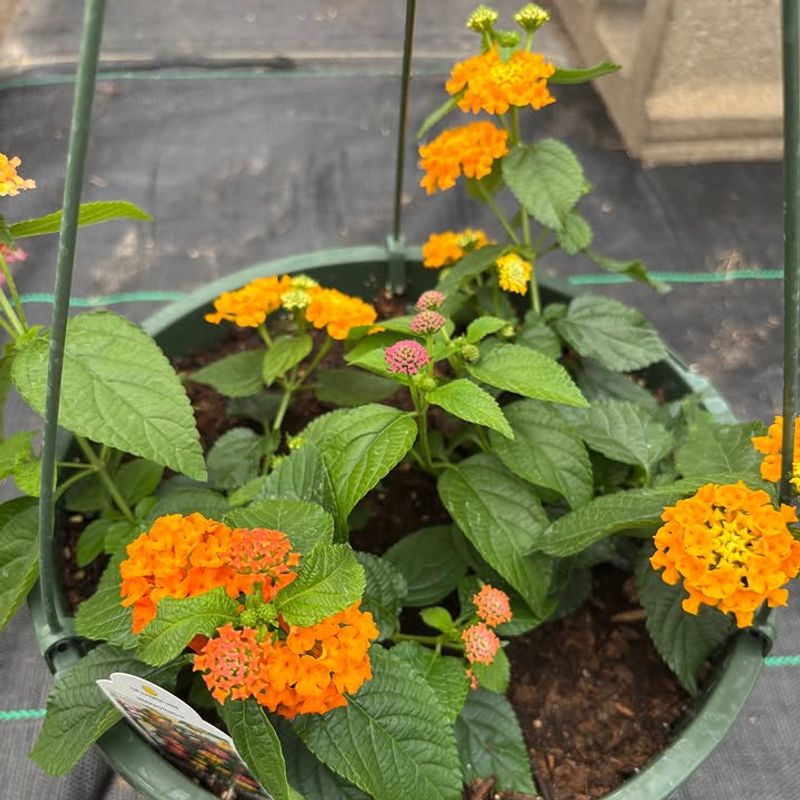
Forget babying this one. Lantana in a container does not need daily check-ins, special fertilizers, or complicated care routines to look good through a Georgia summer.
The biggest thing to get right is the potting mix. Use something with good drainage rather than heavy garden soil, which compacts in containers and holds too much moisture.
A standard potting mix with a little extra perlite mixed in keeps the roots breathing and prevents the soggy conditions that actually cause problems. After that, the plant takes care of most things on its own.
Watering frequency depends on pot size and how hot the week has been. A smaller pot in direct sun might need water every two to three days during peak summer.
A larger container holds moisture longer and stretches that schedule out. Stick a finger about an inch into the soil.
If it feels dry, water thoroughly. If it still feels damp, wait another day.
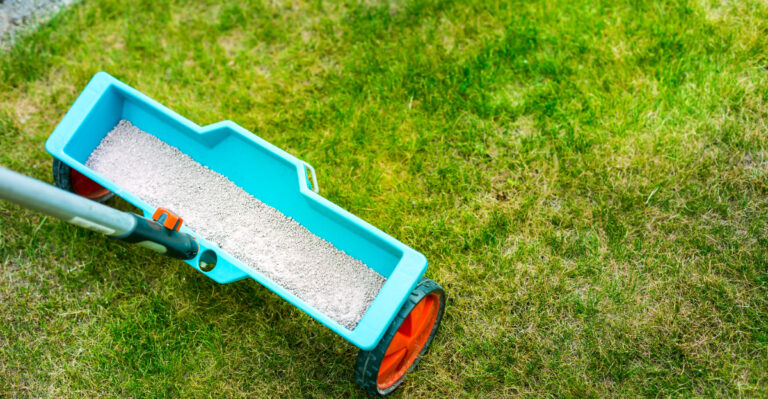
Fertilizing is optional but helpful. A slow-release granular fertilizer worked into the top inch of soil at planting time feeds the plant steadily without requiring repeated applications.
Liquid fertilizer every few weeks also works if you prefer that approach.
Across Georgia, from Gainesville down to Valdosta, lantana in containers performs reliably with minimal intervention. It does not punish you for missing a watering day here and there.
That kind of flexibility is genuinely hard to find in a flowering container plant that also looks this good.
3. Bright Clusters Of Flowers Keep Color Going For Months
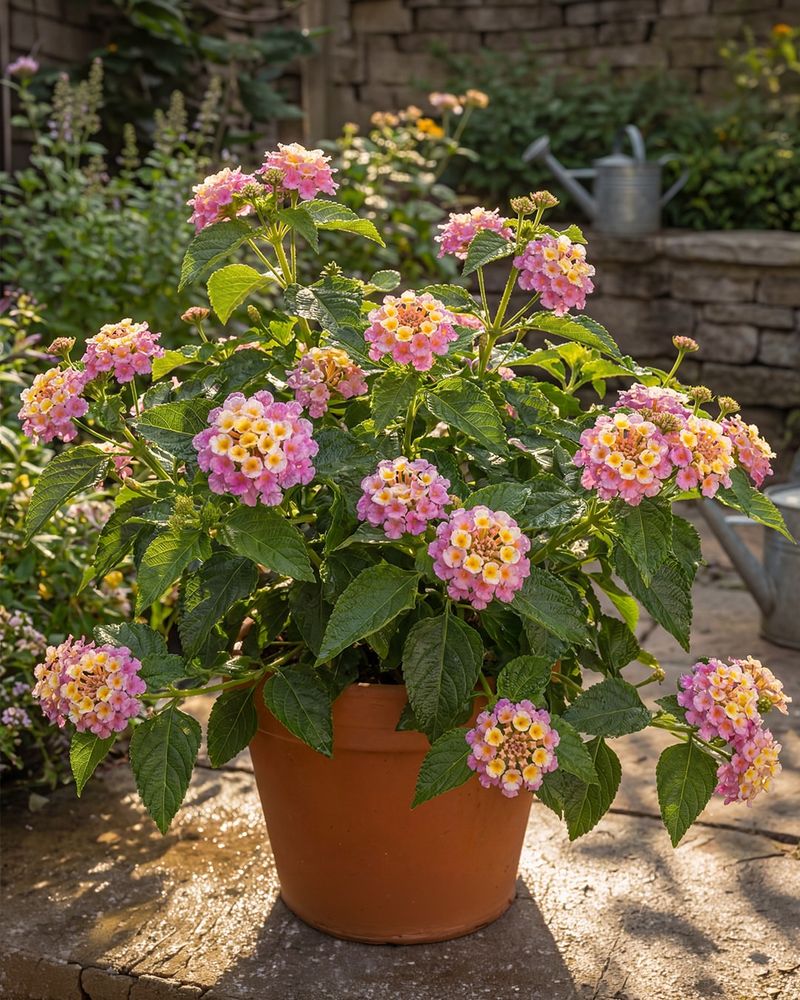
Few container plants deliver color over such a long stretch of the season. Lantana starts blooming in late spring and keeps going well into October across much of Georgia, giving you roughly five to six months of consistent flower production from a single plant.
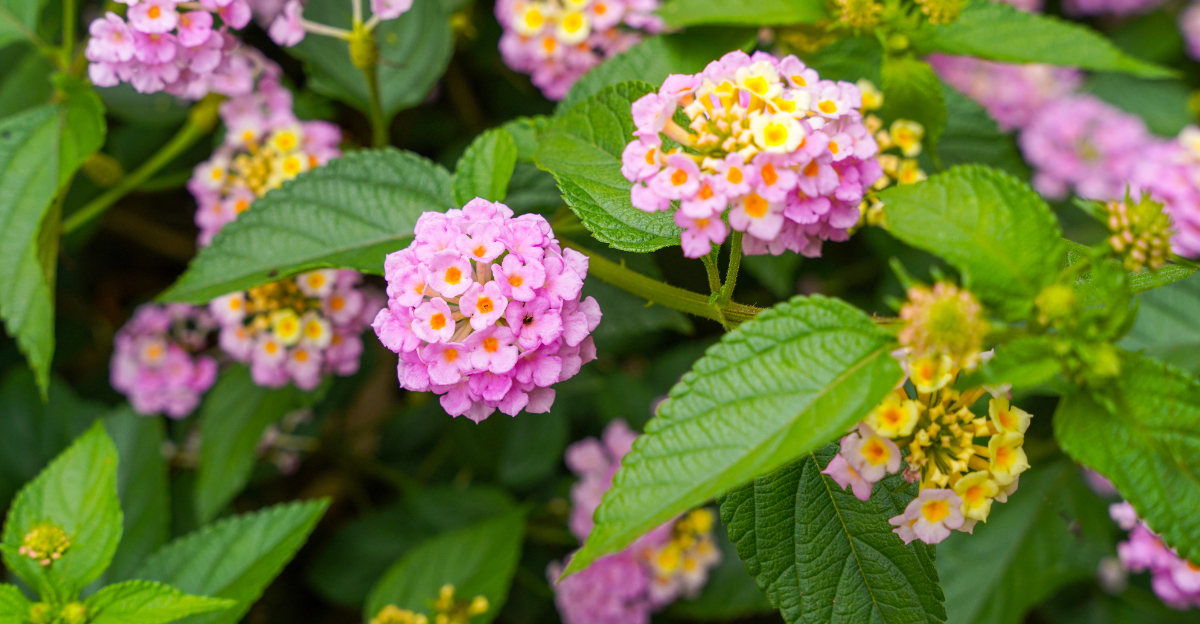
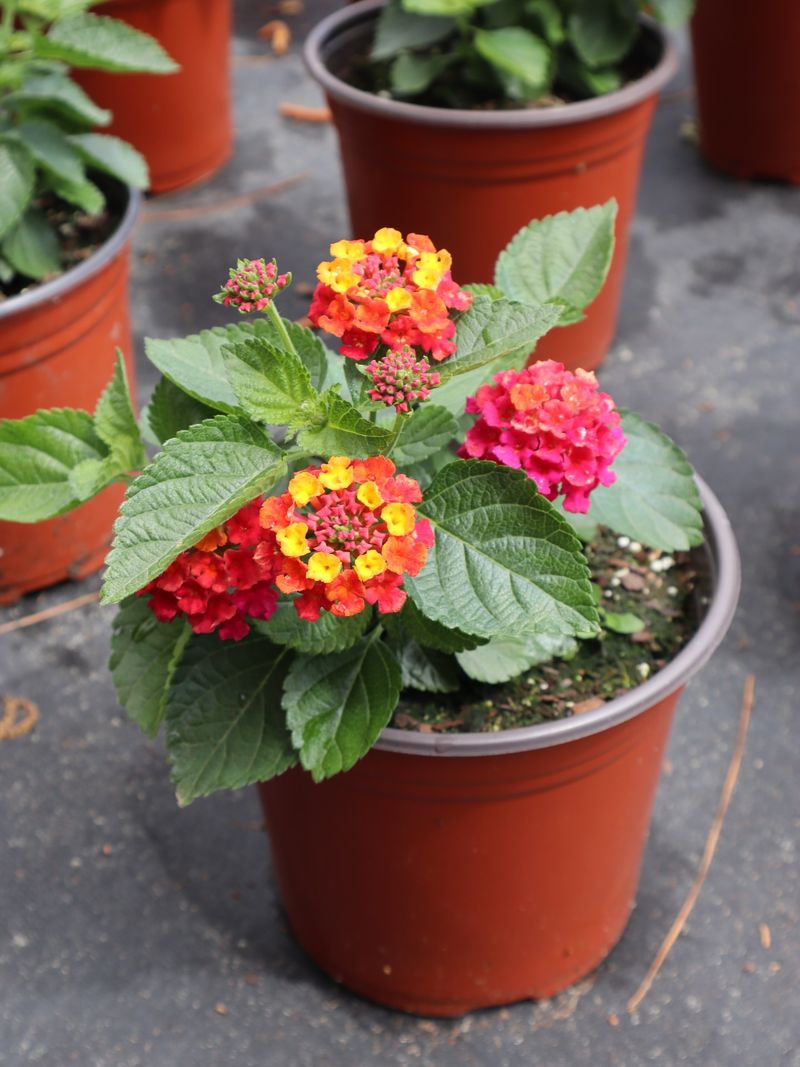
Each flower head is actually a cluster of tiny individual blooms packed tightly together. As the cluster ages, the individual flowers shift color, which means one cluster can show two or three different shades at the same time.
A single plant in a pot can look like it holds a bouquet rather than a single variety.
Color options are wide. You can find lantana in straight yellow, orange, red, pink, white, lavender, and multicolored combinations.
Trailing varieties tend to carry softer color mixes, while upright types often come in bolder, more saturated tones. Choosing based on your existing pot color and surrounding decor makes a real visual difference.
Removing spent flower heads, called deadheading, is not strictly required but it does speed up the next round of blooms. Snipping off the faded clusters every week or so keeps the plant looking tidy and signals it to redirect energy into producing new flowers rather than setting seed.
In Savannah and other coastal Georgia areas where the season runs slightly longer, lantana sometimes holds blooms past the first light frost. The plant slows down as temperatures drop but squeezes out flowers right up until conditions become genuinely cold.
4. Once Established It Handles Dry Soil Better Than Most Bloomers
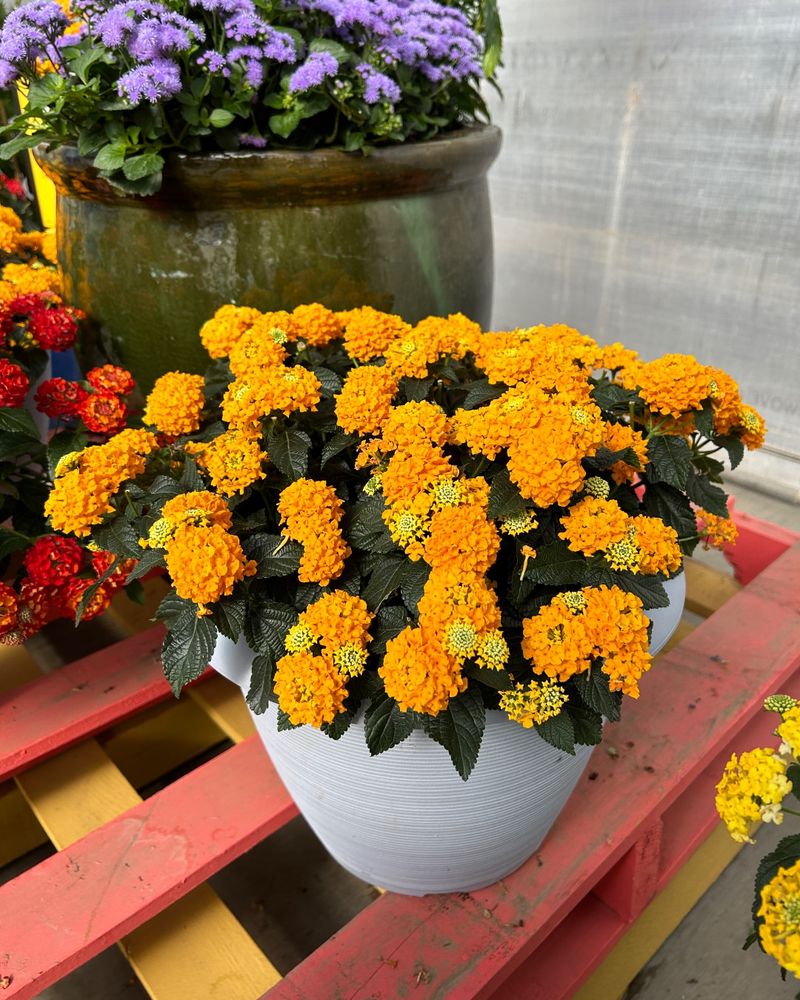
Dry spells hit Georgia hard in summer. A week without rain combined with relentless sun can turn a garden into a real test of which plants are worth keeping around.
Lantana has a root system that stores moisture and keeps the plant functioning even when the soil dries out between waterings.
After the plant has been growing in a pot for several weeks and developed a solid root structure, it handles short dry periods without dropping leaves or losing flowers.
That does not mean you should skip watering entirely, but missing a day or two will not send the plant into distress the way it would with impatiens or begonias.
The waxy coating on lantana leaves reduces water loss compared to plants with softer, more porous foliage. On a 98-degree afternoon in Macon, that difference is visible.
Soft-leaved plants droop and look scorched. Lantana sits upright and holds its color.
Container soil dries faster than ground soil because the pot absorbs heat from all sides. A darker pot in full sun can get surprisingly hot, which accelerates drying.
Grouping pots together slightly reduces heat exposure on individual containers and helps each plant hold moisture a bit longer between waterings.
Mulching the top of the pot with a thin layer of bark or gravel slows evaporation noticeably. It is a small step that makes a real difference during dry stretches, especially for gardeners who travel or cannot water on a strict schedule during Georgia’s unpredictable dry weeks.
5. Compact Varieties Stay Manageable In Containers
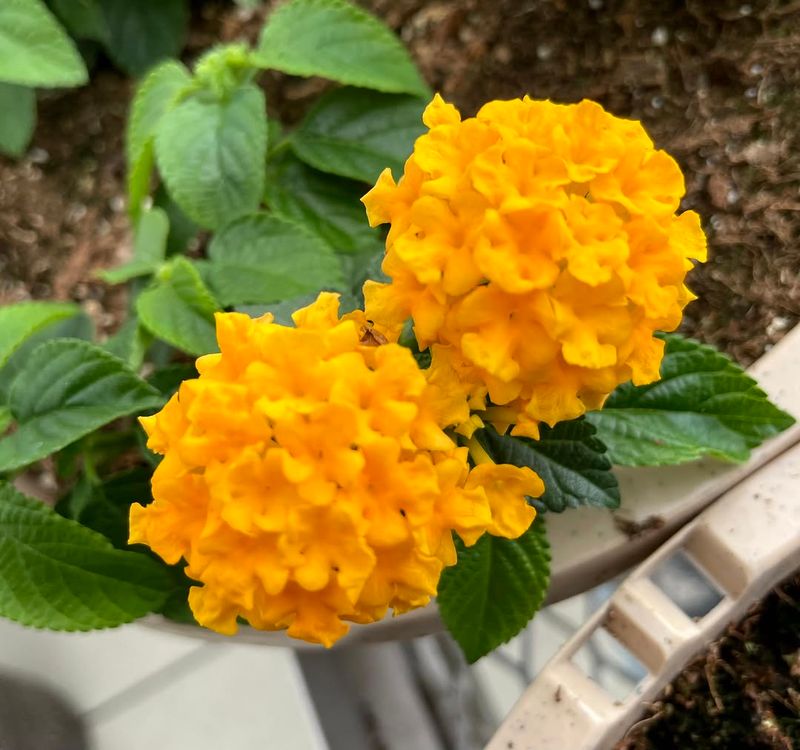
Not every lantana grows into a sprawling shrub. Compact and dwarf varieties were developed specifically to stay tidy in smaller spaces, and they work really well in pots on Georgia porches and patios.
Varieties like Landmark, Bandana, and Luscious series stay in the range of 18 to 24 inches tall and wide. That size fits comfortably in a standard 12 to 14-inch container without overwhelming the space or requiring constant trimming to keep things neat.
Trailing types like Trailing Lavender or Trailing White spill nicely over the edges of larger pots or window boxes.
Growth habit matters when you are choosing a container plant for a specific spot. An upright compact variety sits cleanly in a single pot by a front door.
A trailing type softens the edge of a raised planter or hanging basket. Mixing one upright lantana with a trailing variety in a larger container creates a fuller, more layered look without needing multiple plant species.
Pinching back the growing tips early in the season encourages branching and produces a fuller, more mounded shape. Do this a few times before midsummer and the plant fills out the pot more evenly.
After that, lantana tends to maintain its shape reasonably well on its own through the rest of the season.
Across Georgia, where porch and patio space is often limited, compact lantana varieties give you serious color output without taking over. You get a plant that fits the space rather than one you are constantly wrestling back into bounds.
6. It Keeps Producing Flowers Even As Summer Heat Builds
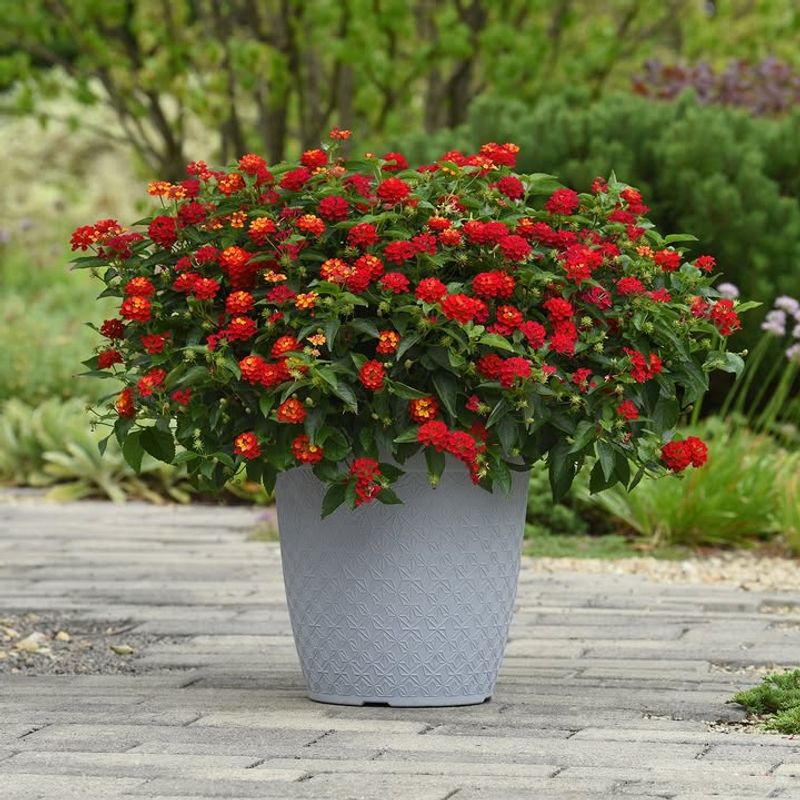
August in Georgia is when most flowering containers look exhausted. Petunias get leggy.
Marigolds fade. Zinnias start showing stress.
Lantana? Still blooming.
The reason comes down to how the plant responds to sustained heat. Rather than shutting down reproductive activity when temperatures stay high for weeks, lantana continues pushing out new flower buds as long as it gets enough water and sunlight.
It is not immune to stress, but its threshold for heat is genuinely higher than most common container flowers.
One thing worth knowing is that lantana can slow slightly during the very hottest two to three weeks of summer, typically late July into early August in central Georgia. Flower production does not stop, but the rate of new bud development can ease off.
Regular watering and a light feeding during this stretch helps keep the plant moving through that period without a noticeable gap in blooms.
Removing old flower clusters during this time is especially useful. It prevents the plant from putting energy into seed development and redirects it back into flower production.
A quick once-over with small pruning shears every ten days or so keeps the cycle moving.
Gardeners in Columbus, Albany, and other parts of southwest Georgia, where summer heat tends to be especially intense and prolonged, find lantana one of the most reliable container options available.
When other plants are clearly struggling, lantana continues doing what it does, which is covering itself in color through the long, hard stretch of a Deep South summer.
7. Butterflies Keep Coming Back To Its Long-Lasting Blooms
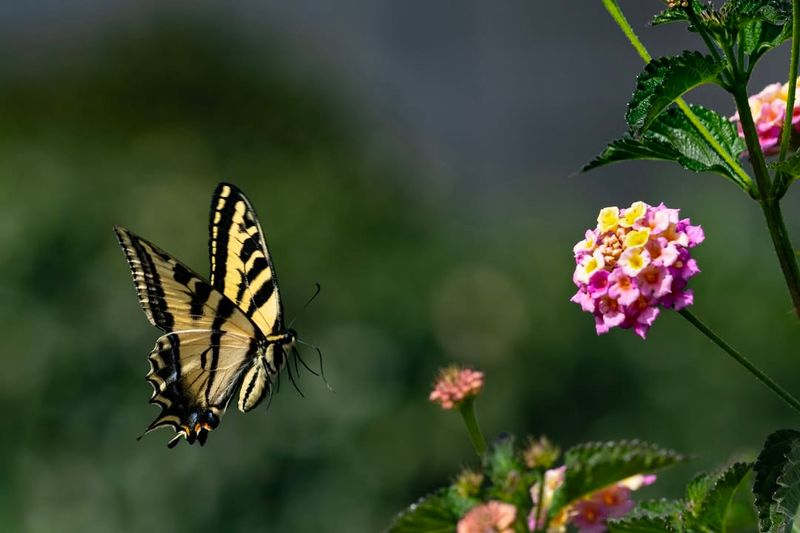
Plant one pot of lantana on your porch and you will notice the butterflies within days. Swallowtails, monarchs, skippers, and fritillaries all treat lantana like a reliable food source, returning repeatedly throughout the day as long as the flowers are fresh.
The nectar in lantana blooms is accessible to a wide range of pollinators because the flower clusters are dense and the individual blooms are small and open. Butterflies can feed without difficulty, which is why they keep choosing it over other nearby plants.
Hummingbirds occasionally visit as well, drawn by the same accessible nectar and the bright color range.
Having a pollinator-friendly container on a Georgia porch adds something genuinely enjoyable to the space.
Watching a giant swallowtail work its way across a cluster of flowers on a warm September afternoon is the kind of thing that makes you glad you chose the plant in the first place.
Lantana does produce berries after flowers fade, and those berries are attractive to some bird species. The berries are not safe for people or pets to consume, so placement matters if small children or animals regularly access the porch or patio area.
Keeping the pot in a spot that is visible but not easily reached by toddlers is a practical precaution.
Across Georgia, supporting butterfly populations has real ecological value. Habitat loss has reduced available nectar sources in many suburban and urban areas.
A single potted lantana on a Marietta or Augusta porch contributes more to local pollinators than most people realize, making it a genuinely useful plant beyond just its visual appeal.