The Welcoming Plant That Handles Ohio Weather (And Looks Good In Pots For Months)
Ohio weather loves to keep gardeners on their toes. A warm sunny stretch can fool you into thinking patio season has fully arrived, then a cold snap barges in like it pays the mortgage.
That is why the best container plants are not just pretty faces. They need staying power, good manners, and enough charm to keep a pot looking fresh long after the early spring excitement fades.
The right pick can soften an entryway, brighten a porch, and make the whole place feel more inviting without turning into a constant maintenance job. It should handle Ohio’s mood swings, play nicely with other plants, and still look polished for weeks on end.
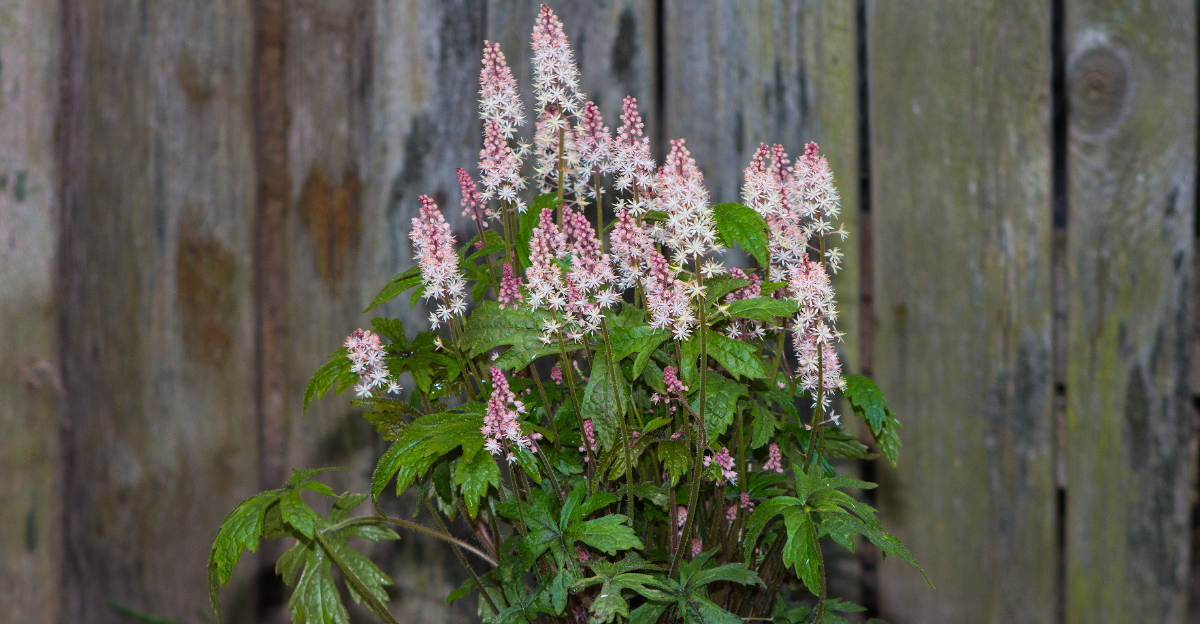
Plenty of flowers put on a quick show and fizzle out fast, but one plant earns its spot by bringing soft color, handsome foliage, and a calm, welcoming look that lasts. That quiet star at the end of the path is foamflower.
1. Foamflower Is The Porch Plant More Ohio Gardeners Should Know
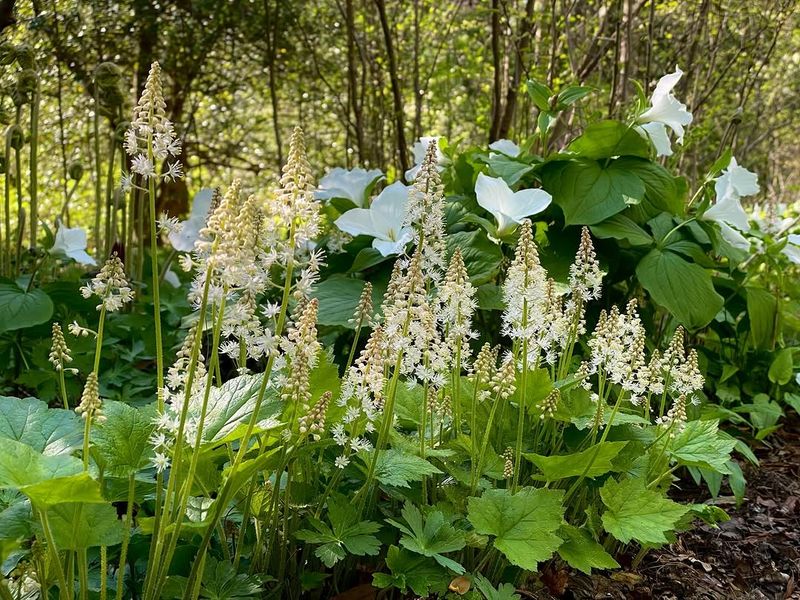
Walk through any Ohio woodland in late April or May and you might spot a low-growing plant with soft, star-shaped flowers rising above maple-like leaves. That plant is foamflower, known botanically as Tiarella cordifolia, and it is one of the most underused native perennials for container gardening in the state.
Ohio State University Extension recognizes foamflower as a native species well-suited to Ohio’s woodland ecosystems, and that native origin is exactly what makes it such a sensible choice for porch pots.
Foamflower typically grows six to twelve inches tall and spreads gently outward, making it a natural fit for medium to large containers near a shaded or part-shaded entry.
Unlike many showy annuals that look stiff or overly manicured, foamflower brings a relaxed, woodland charm that feels genuinely welcoming rather than performative.
The plant does not shout for attention. It earns it quietly, with texture, movement, and a softness that most porch plants simply do not offer.
Beyond its looks, foamflower is a plant that actually belongs in Ohio. It evolved here, which means it understands the climate in a way that tropical imports simply do not.
For gardeners who want a porch pot that feels rooted in the local landscape rather than airlifted from a big-box garden center, foamflower is a genuinely rewarding starting point.
It connects the front entry to the broader Ohio natural world in a way that feels subtle, grounded, and quietly beautiful.
2. Those Airy Blooms Make Any Entry Feel Softer
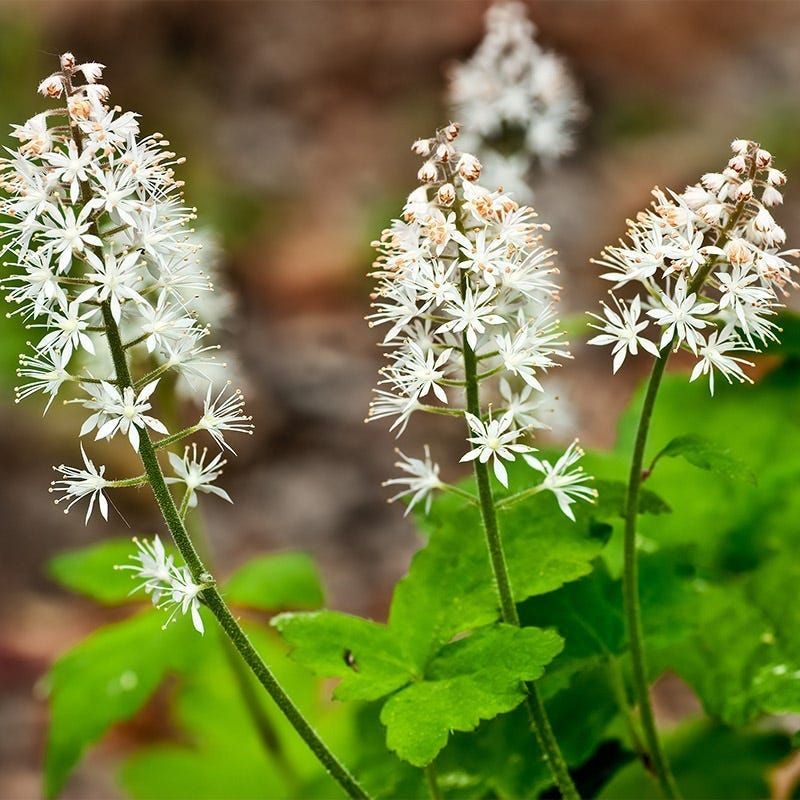
Foamflower earns its name the moment it blooms. The flowers rise on slender stalks above the foliage in a frothy cluster of tiny white to pale pink blossoms that look almost like sea foam caught on a stem.
They do not have the bold, punchy presence of a geranium or a calibrachoa. Instead, they create a soft visual haze that makes the space around them feel calmer and more inviting.
Near a front door, that softness matters more than people expect. A porch entry is the first thing guests notice, and heavy, high-contrast plantings can feel overwhelming in a small space.
Your Ohio Garden Changes Every Week. Your Plan Should Too.
Gardening in Ohio changes quickly throughout the season. Every Friday you’ll receive a simple weekly plan showing exactly what to plant, prune, fertilize, harvest, and protect so you never miss the right timing.
Foamflower’s bloom style works differently. The airy spikes draw the eye gently without demanding it, which makes the whole entry feel more composed.
Bloom time in Ohio typically falls in April through May, according to native plant references supported by OSU Extension resources, giving the front porch a moment of quiet elegance right when spring feels most welcome.
The flowers also have a slight fragrance that is noticeable up close without being overpowering, adding one more sensory layer to the experience of approaching your front door. They attract early pollinators too, including native bees that appreciate a reliable spring food source.
So while the blooms are doing their visual work for you, they are also doing something good for the yard. That combination of grace and function is part of what makes foamflower feel less like a decoration and more like a genuinely thoughtful planting choice.
3. The Leaves Keep The Pot Looking Good For Months
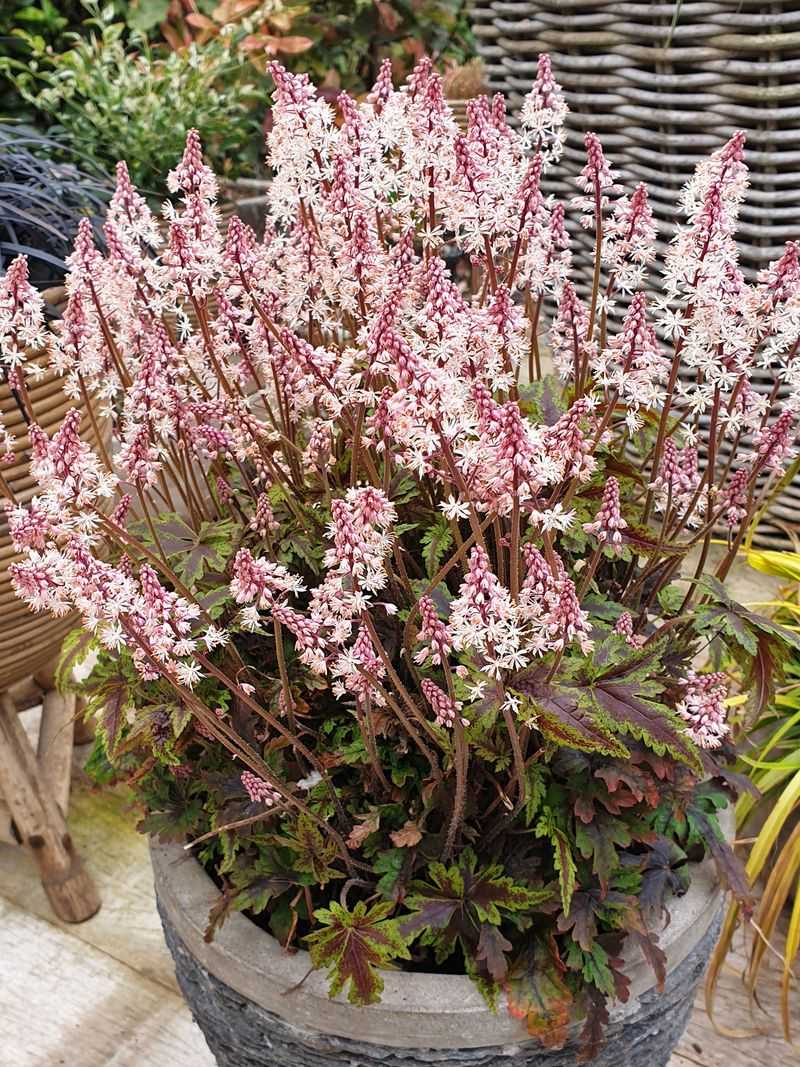
Bloom time for foamflower is relatively brief, lasting a few weeks in spring. What keeps the pot looking sharp for the rest of the season is the foliage, and foamflower’s leaves are genuinely worth talking about.
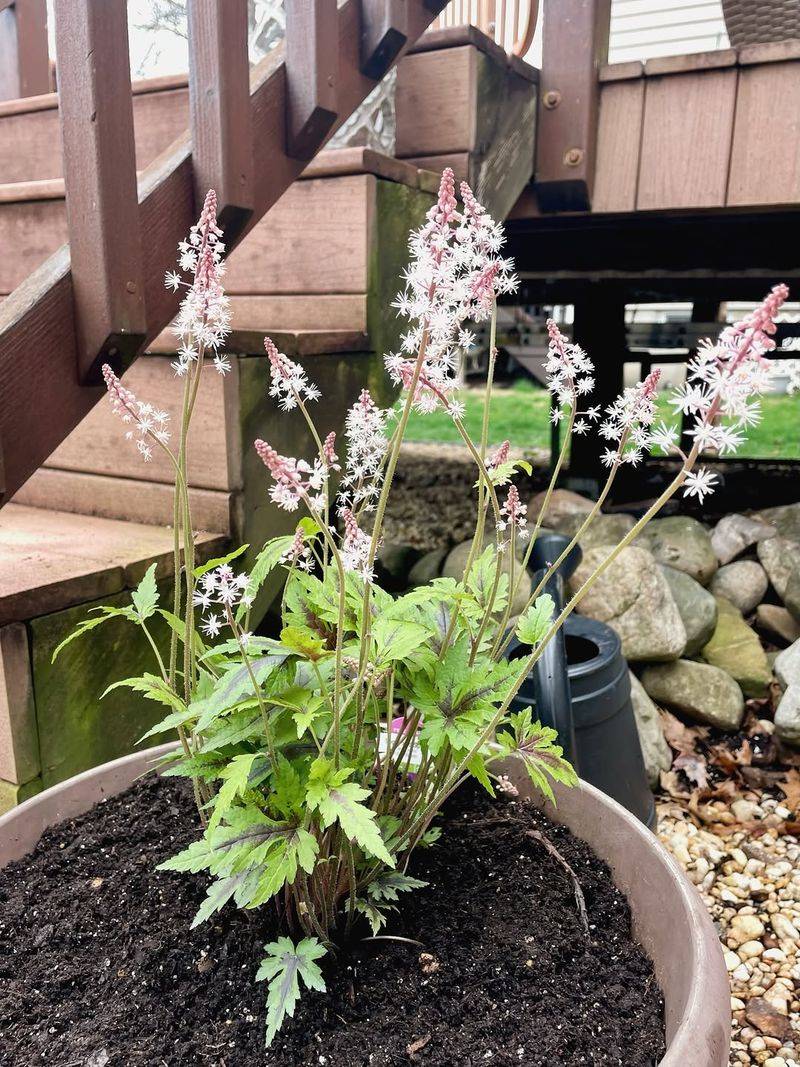
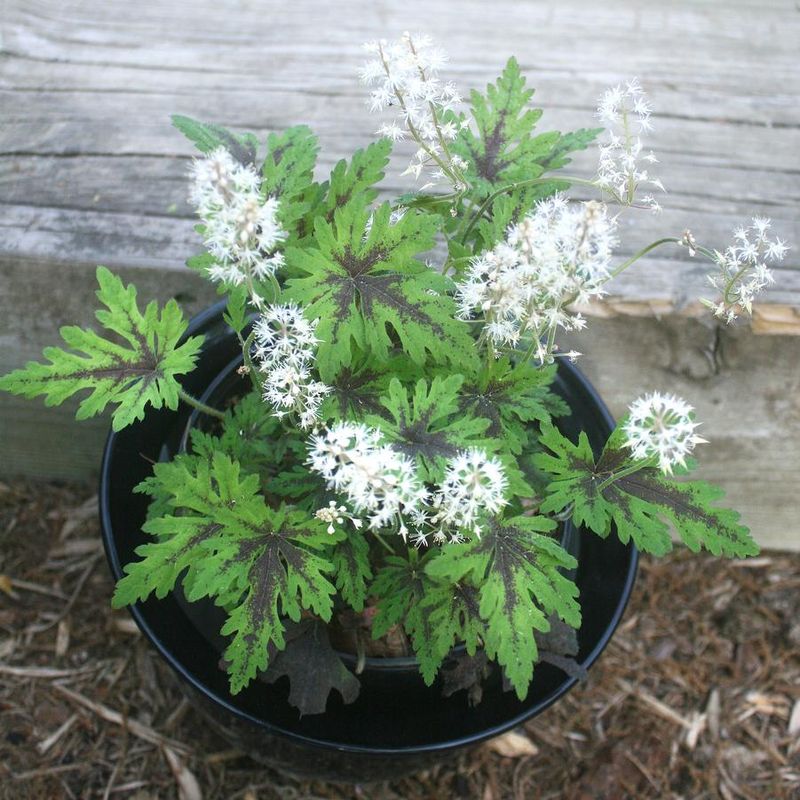
The leaves are lobed and slightly maple-shaped, with many cultivated varieties featuring deep burgundy or chocolate-colored markings along the central veins. That contrast between the green leaf surface and the darker patterning gives the plant a decorative quality that holds up long after the flowers are gone.
For container gardeners, this matters a great deal. Most people invest in a pot for the entry and then want it to look good from April through October, not just for three weeks in May.
Foamflower delivers on that expectation in a way that purely flower-focused plants often do not. The leaves stay full, textured, and attractive through the summer months as long as the pot is kept in appropriate light and the soil stays reasonably moist.
Some cultivars, such as ‘Iron Butterfly’ and ‘Running Tapestry,’ are particularly valued for their bold leaf markings and compact growth habits that suit container life well. OSU Extension and native plant nurseries in Ohio carry several of these improved varieties.
Choosing a cultivar with strong foliage interest is a smart move for anyone who wants a porch pot that stays visually relevant from spring through fall without constant replanting or swapping out spent plants.
The leaves do the long-term work so the blooms can be a bonus rather than the whole show.
4. It Handles Ohio Spring Swings With Ease
Ohio spring weather is not kind to sensitive plants. A warm week in late March can be followed by a hard freeze in April, and anyone who has lost an early planting to a late cold snap knows how frustrating that cycle gets.
Foamflower sidesteps most of that drama because it evolved in Ohio’s climate and is genuinely cold-hardy in the state’s USDA hardiness zones, which range from zone 5 to zone 6 across most of the state.
As a native woodland perennial, foamflower is accustomed to emerging in early spring when temperatures are still inconsistent. It does not panic when a cold night follows a warm afternoon.
The plant handles those swings without the wilting, browning, or setback that tender annuals and tropical plants often show when Ohio decides to remind everyone that it is still technically spring. That resilience is not accidental.
It is the result of thousands of years of adaptation to exactly this kind of unpredictable regional climate.
For container use specifically, cold hardiness is especially important because pots expose roots to more temperature fluctuation than in-ground plantings do. A plant that is rated cold-hardy in the ground may still struggle in a pot during a late freeze.
Foamflower’s deep-rooted toughness gives it an edge in that situation.
Placing the container near the house wall or under a covered porch overhang adds an extra buffer on the coldest nights, which is a simple and practical step that most Ohio gardeners already take instinctively with their spring containers.
5. Shady Porches Are Where It Really Shines
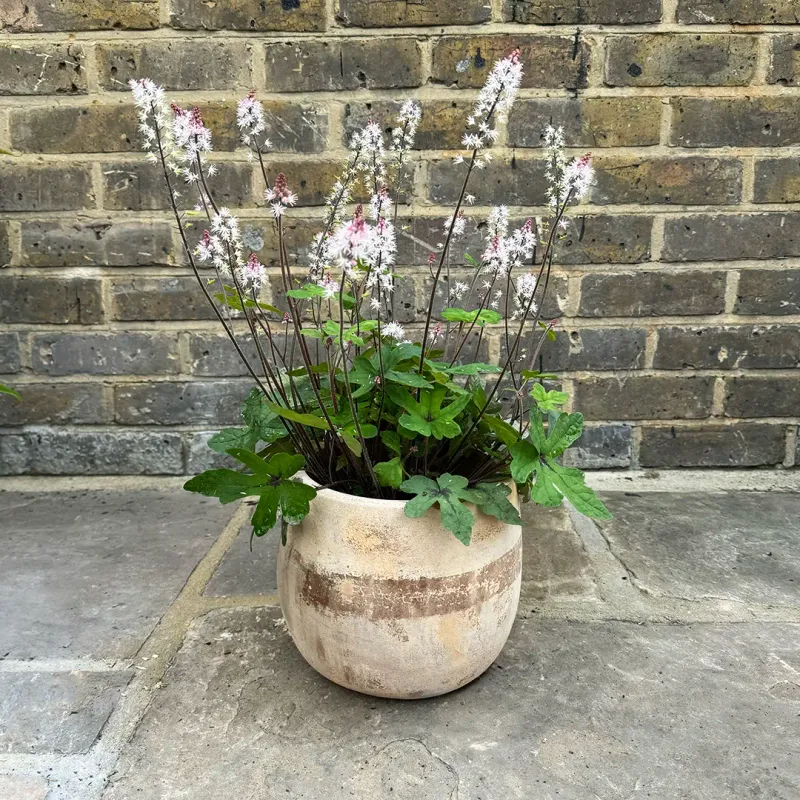
Covered front porches are one of the most common features of older Ohio homes, especially in neighborhoods built before the 1970s.
They are also one of the most challenging spots for container gardening because the roof blocks direct sunlight and the reflected light is often inconsistent.
Most sun-loving annuals struggle there. Foamflower, on the other hand, was practically designed for exactly that kind of light.
In its natural Ohio habitat, foamflower grows beneath a forest canopy where it receives filtered or dappled light, sometimes just a few hours of indirect sun per day. That preference translates directly to a covered or north-facing porch.
According to OSU Extension guidance on native shade plants, Tiarella performs best in partial to full shade, making it one of the most reliable options for low-light container situations that most other plants find inhospitable.
An east-facing porch that gets gentle morning sun and shade for the rest of the day is close to ideal. A north-facing entry with bright reflected light can also work well.
The one situation to avoid is a west-facing spot that gets intense afternoon sun, which can scorch the leaves and stress the plant through Ohio’s hot July and August afternoons.
Choosing the right spot on the porch is the single most important decision for keeping a potted foamflower looking its best.
Get the light right and most of the other care falls into place naturally. The plant rewards thoughtful placement more than almost anything else you can do for it.
6. It Stays Fresh Without Constant Fuss
Caring for a potted foamflower is straightforward, but it does require a few consistent habits. Moisture is the most important one.
Foamflower prefers consistently moist soil and does not do well when the container dries out completely between waterings. In a shaded spot, the soil holds moisture longer than it would in full sun, which works in your favor.
During Ohio’s warmer months, checking the pot every two to three days and watering when the top inch of soil feels dry is usually enough to keep the plant comfortable.
Drainage matters just as much as moisture. Foamflower does not like sitting in waterlogged soil, so the container needs good drainage holes and a well-aerated potting mix.
A mix designed for containers, possibly amended with a small amount of compost, gives the roots the right balance of moisture retention and airflow. Avoid heavy garden soil in pots, as it compacts quickly and can suffocate roots over time.
Grooming is minimal. After the blooms fade, you can trim the spent flower stalks at the base to keep the pot tidy, but the plant does not require deadheading to stay healthy.
The leaves rarely need much attention beyond removing any that yellow or look damaged over the course of the season. Fertilizing lightly once in spring with a balanced slow-release granular fertilizer is generally sufficient.
Foamflower is not a heavy feeder, and overfeeding can actually push leggy, less attractive growth at the expense of the compact, layered look that makes it so appealing in a container setting.
7. It Mixes Beautifully With Other Shade Plants
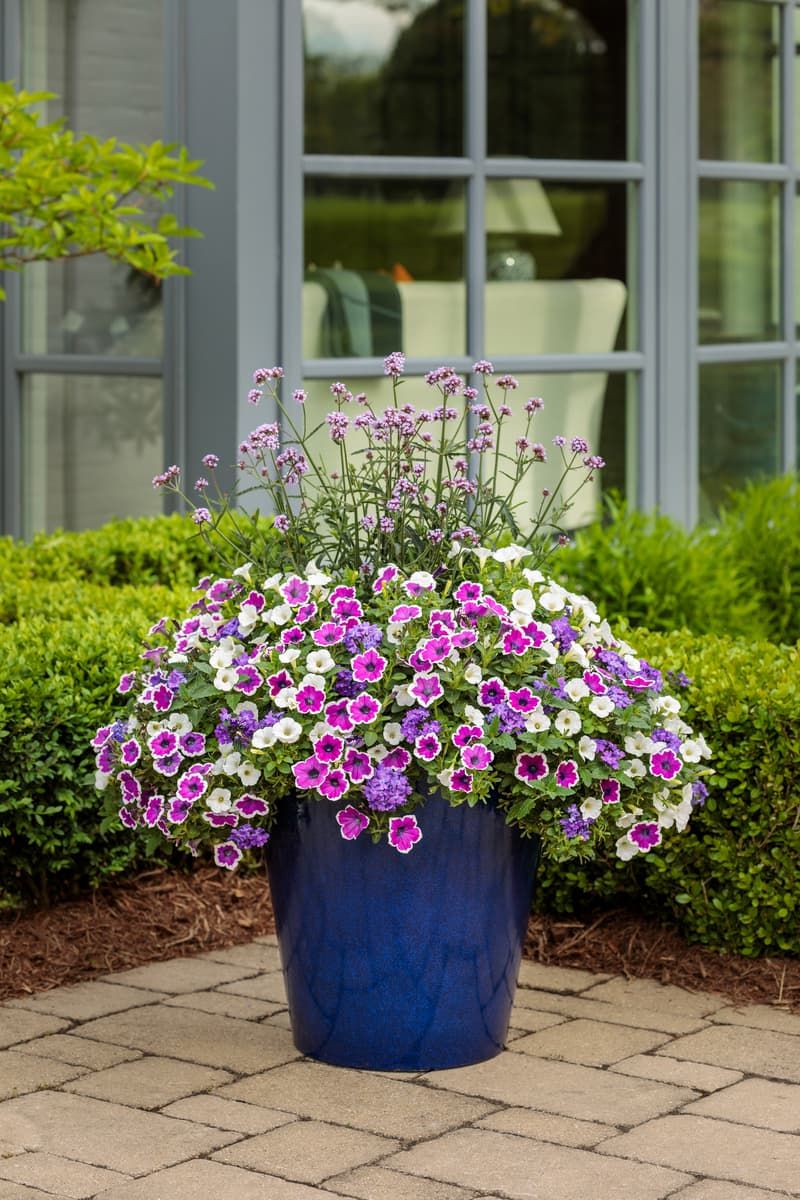
Foamflower is a natural team player in a container. Its medium-height, mounding habit and textured leaves make it a strong mid-layer plant that pairs well with both taller thriller plants and lower, trailing options.
For a shaded porch pot, the classic combination is foamflower alongside coral bells (Heuchera), which is another Ohio-native-friendly shade perennial with bold, colorful foliage.
The two plants share similar care needs and create a rich contrast in leaf shape and color that holds up beautifully all season.
For a vertical element, consider adding a compact shade-tolerant grass like Pennsylvania sedge (Carex pensylvanica), which is actually native to Ohio and grows naturally in woodland settings similar to where foamflower thrives.
The fine, arching texture of the sedge plays off the broader, lobed foamflower leaves in a way that feels layered and intentional without looking forced.
Adding a trailing plant like creeping Jenny (Lysimachia nummularia) along the pot’s edge softens the rim and adds a cascading element that ties the whole arrangement together.
Color contrast is worth thinking about carefully. Foamflower cultivars with dark burgundy leaf markings pair especially well with chartreuse or lime-colored companions, while plain green foamflower varieties look striking next to deep purple or bronze Heuchera.
Building the container around a two or three-color palette keeps the arrangement from feeling cluttered. The goal is a planting that looks like it grew together naturally, not a random collection of whatever was left at the garden center.
With foamflower as the anchor, that kind of cohesive, curated look is genuinely achievable.
8. One Good Pot Can Make The Whole Entry Feel Better
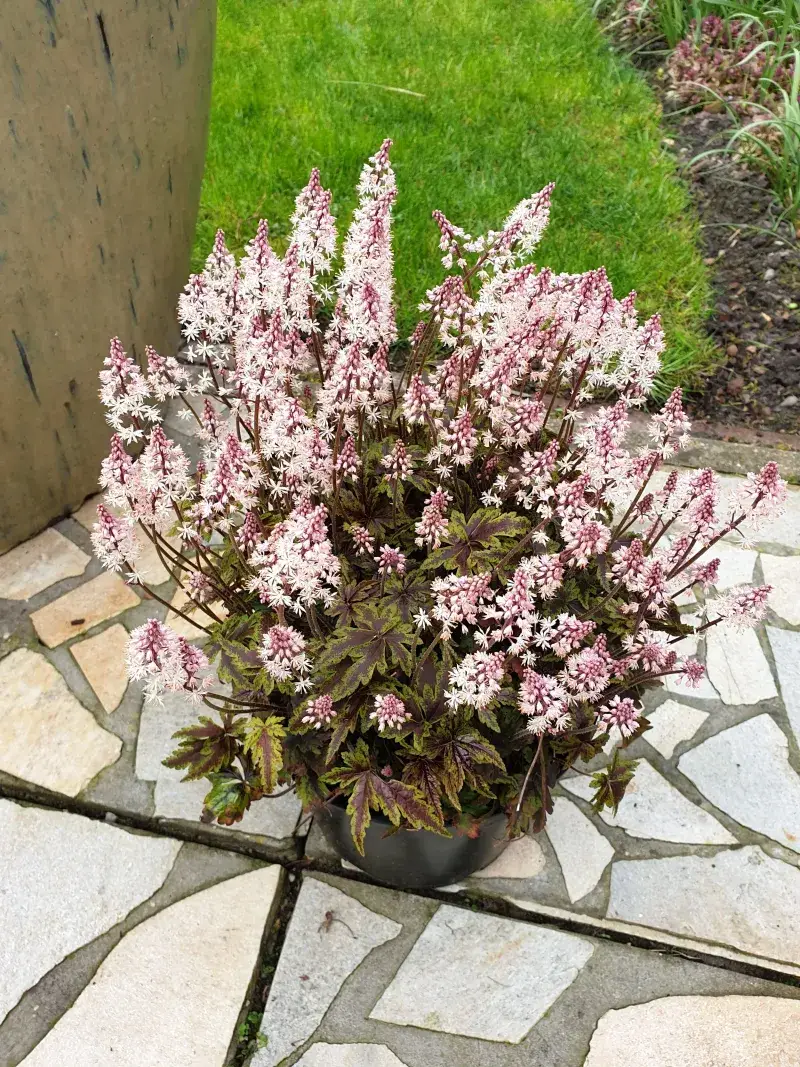
Porch styling does not have to be complicated to be effective. A single well-planted container near the front door can shift the entire mood of an entry, making it feel more cared for, more personal, and more genuinely welcoming to anyone who walks up.
Foamflower earns that kind of impact without asking for a lot of space or a complicated setup. The key is choosing the right container and placing it where it will have the most visual effect.
For a shaded porch, a medium to large container works best, ideally something in the twelve to sixteen inch diameter range or larger. Smaller pots dry out faster and give the roots less room to establish, which can stress the plant during Ohio’s warmer months.
Ceramic or glazed containers hold moisture better than unglazed terracotta, which is a practical advantage in a shaded spot where you want to stretch time between waterings.
Neutral container colors like charcoal, slate blue, or warm cream let the plant’s foliage do the visual work without competing for attention.
Placement near the door rather than at the edge of the porch steps usually creates a stronger welcome. Flanking the door with two matching pots is a classic approach that works especially well with foamflower’s symmetrical mounding habit.
If budget or space allows only one pot, positioning it to the side of the door where it catches the eye as guests approach is the next best option. A thoughtful container planting does not need to be elaborate to feel polished.
With foamflower, even a single pot handled with a little care can make your front entry feel like somewhere worth arriving.