The Wild Ocotillo Displays Lighting Up Arizona Landscapes This Winter
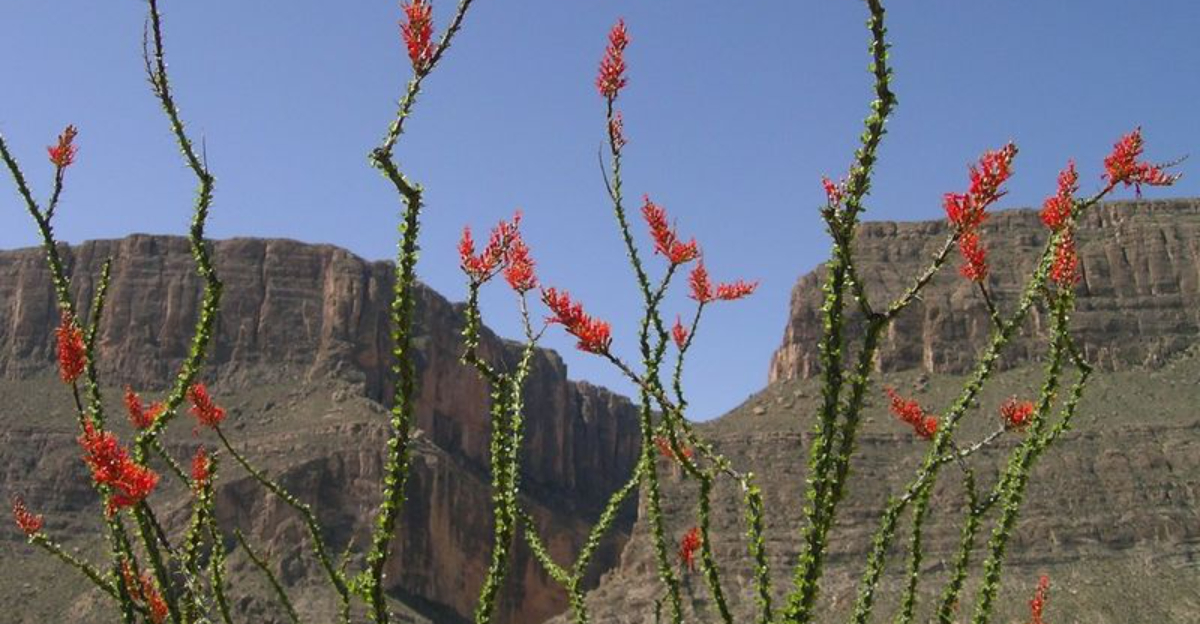
Arizona landscapes are glowing this winter as ocotillo plants burst into unexpected color.
Their tall, whip-like stems erupt with fiery blooms that seem to appear out of nowhere.
Ocotillo responds directly to rainfall and temperature cues, sometimes blooming outside its typical season.
These winter displays catch residents by surprise, turning dry landscapes into living fireworks.
For many Arizonans, ocotillo blooms are more than beautiful—they’re signals of changing conditions.
Each display tells a story about weather, water, and resilience in the desert.
Ocotillo Is Blooming Outside Its Typical Spring Window

Fouquieria splendens, better known as ocotillo, usually saves its spectacular crimson flower displays for March through May.
But this year, something different is happening across Arizona’s deserts.
Winter rains combined with unusually mild temperatures have coaxed these normally spring-blooming plants into early action.
When moisture levels rise and temperatures stay moderate, ocotillo can break from their typical schedule and bloom whenever conditions feel right.
This flexibility is actually a survival strategy that helps the plant take advantage of favorable weather whenever it arrives.
Southern Arizona residents from Tucson to Phoenix are witnessing hillsides dotted with brilliant red flower clusters where bare, thorny canes usually dominate the winter landscape.
The phenomenon isn’t a mistake or sign of climate chaos—it’s simply ocotillo doing what they do best: responding instantly to opportunity.
Recent rainfall patterns delivered just enough moisture to trigger the bloom response, while daytime temperatures remained warm enough for flower development.
Gardeners and desert enthusiasts alike are celebrating this unexpected gift, snapping photos and marveling at nature’s ability to surprise us.
The winter blooms prove that desert plants operate on their own unique timeline, one governed by moisture and temperature rather than calendar months.
Winter Rains Trigger Rapid Leafing And Flowering
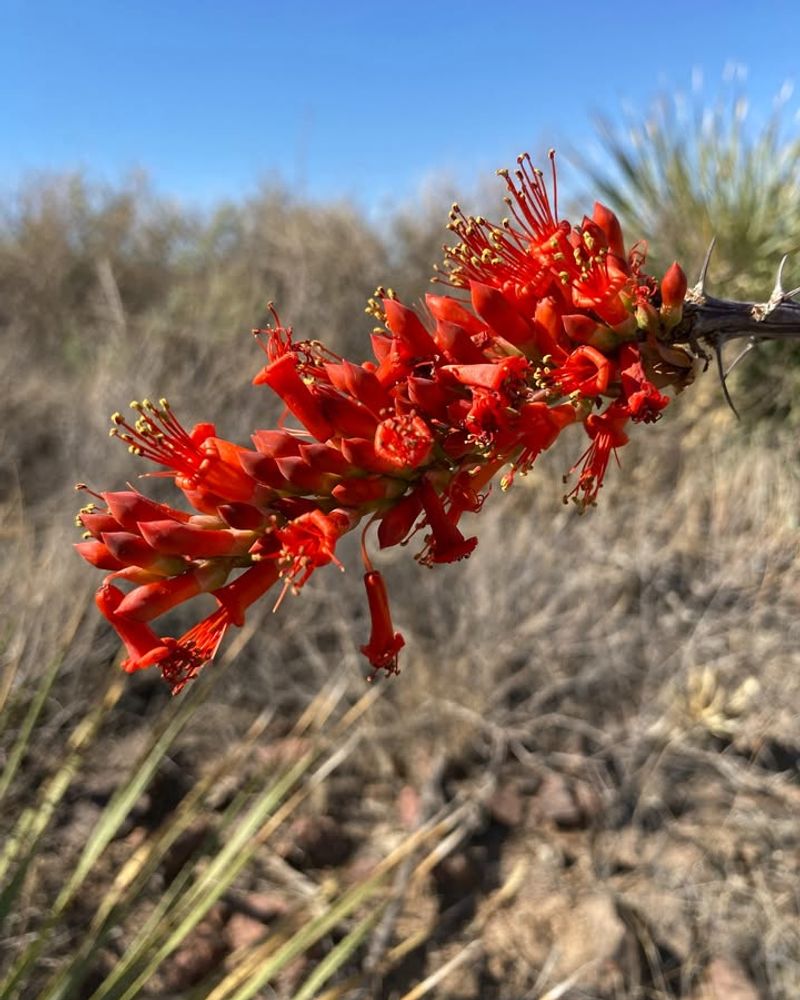
Ocotillo possess an incredible superpower: they can leaf out within days of receiving rain, no matter what month it happens to be.
Unlike most plants that follow rigid seasonal patterns, these desert survivors respond immediately to moisture availability.
When winter storms swept across Arizona this season, ocotillo didn’t wait for spring—they sprang into action right away.
Within 48 to 72 hours of substantial rainfall, tiny green leaves began emerging along the previously bare gray stems.
If moisture levels remain high enough, the plant continues its growth cycle and produces those stunning red flower spikes at the tips of its tallest canes.
This rapid response system allows ocotillo to photosynthesize and reproduce whenever conditions permit, maximizing their survival chances in an unpredictable environment.
The leaves themselves are small, oval-shaped, and bright green, creating a soft contrast against the plant’s spiny, architectural form.
During dry periods, ocotillo simply drop their leaves to conserve water, entering a dormant state until the next rain arrives.
This cycle can repeat multiple times throughout a single year, making ocotillo one of the desert’s most adaptable residents.
Watching this transformation happen in winter feels almost magical, reminding observers that desert ecosystems operate by different rules than temperate gardens.
Arizona’s Mild Winter Temperatures Enable Bloom Survival
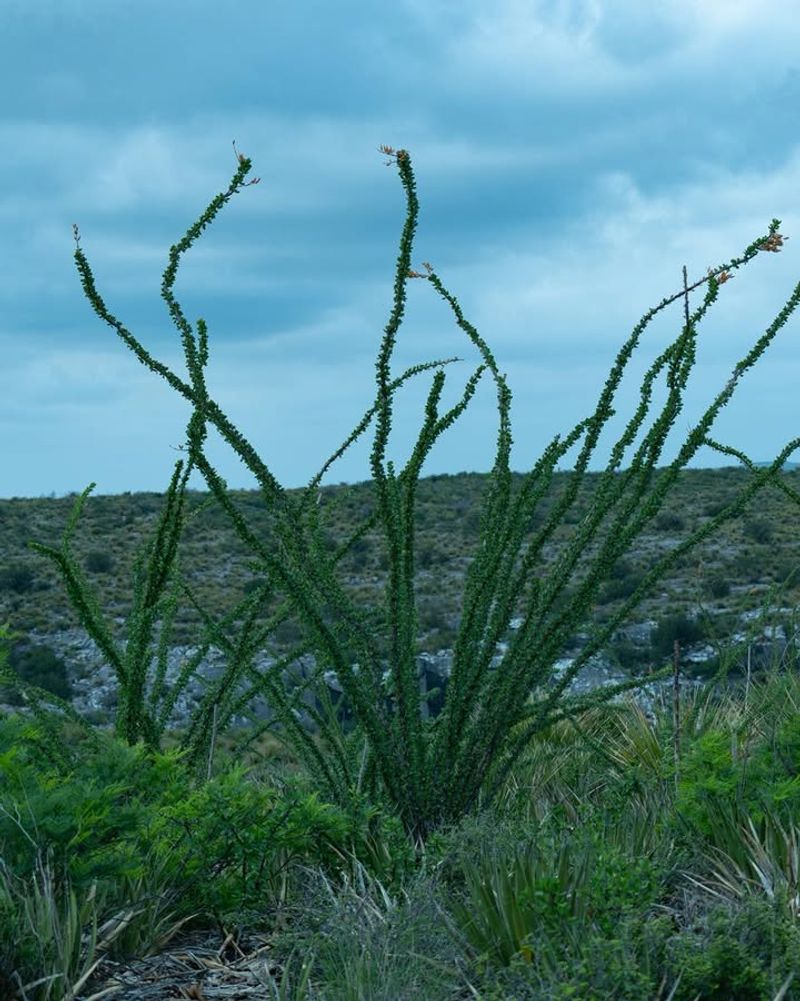
Frost can destroy delicate flower buds before they ever open, but Arizona’s southern and central regions often escape harsh freezes during winter months.
This year’s particularly mild temperatures created perfect conditions for ocotillo blooms to develop without risk of cold damage.
While northern Arizona experiences genuine winter weather, lower elevation areas around Phoenix, Tucson, and Casa Grande frequently enjoy daytime highs in the 60s and 70s even in January and February.
Nighttime temperatures in these regions typically stay above freezing or dip only briefly below 32 degrees, not long enough to harm developing flower tissue.
Ocotillo flower buds are surprisingly hardy, but extended hard freezes would prevent them from opening properly.
The combination of adequate rainfall and frost-free nights gave this winter’s blooms everything they needed to succeed.
Clear winter sunlight, less intense than summer’s blazing rays, bathes the red flower clusters in golden light that makes them appear even more vibrant.
Photographers have been taking advantage of this beautiful natural lighting, capturing images that showcase the blooms against brilliant blue winter skies.
Climate patterns that deliver moisture without severe cold create these rare winter flowering events, turning ordinary desert landscapes into unexpected showcases of color and life.
Blooms Appear First On The Tallest Canes
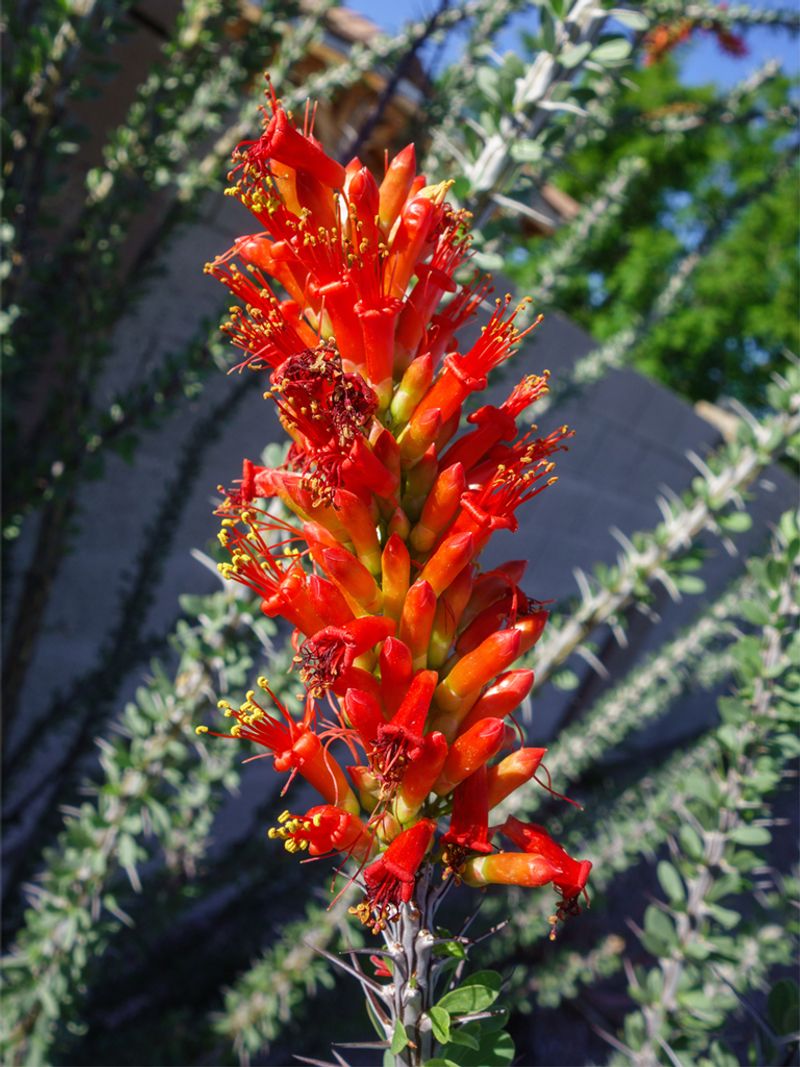
Ocotillo don’t bloom uniformly across all their stems—instead, they concentrate their energy on the tallest, most established canes first.
This creates a dramatic vertical emphasis, with brilliant red flower clusters held high above the desert floor like natural torches.
Each flower spike can reach four to twelve inches in length, packed with tubular red blossoms that seem to glow against the sky.
The tallest canes, sometimes reaching fifteen to twenty feet in mature specimens, provide the best vantage point for attracting pollinators and dispersing seeds.
By blooming at the tips, ocotillo maximize visibility to hummingbirds and insects that might otherwise overlook flowers hidden lower in the plant.
This strategy also helps explain why ocotillo displays are so visually striking across open landscapes—the blooms literally rise above competing vegetation.
Shorter, younger canes may produce smaller flower clusters or skip blooming entirely during a given cycle, conserving their resources for future growth.
When you observe a hillside covered in blooming ocotillo, what you’re really seeing is hundreds of individual flame-like tips creating a coordinated display.
The effect becomes even more spectacular when backlit by morning or evening sun, with light passing through the translucent red petals.
This architectural flowering pattern makes ocotillo one of the most recognizable and photographed desert plants during bloom season, winter or spring.
Hummingbirds Rely On Winter Ocotillo Blooms

When most desert wildflowers lie dormant during winter months, blooming ocotillo become a critical food source for hummingbirds traveling through or residing in Arizona.
Anna’s hummingbirds, which remain in the state year-round, depend heavily on these unexpected nectar sources when few other options exist.
The tubular shape of ocotillo flowers evolved specifically to accommodate hummingbird beaks and feeding behavior.
Each blossom produces rich nectar that provides essential calories, helping these tiny birds maintain their incredibly fast metabolisms even during cooler weather.
Costa’s hummingbirds, which begin their breeding season earlier than many other species, also benefit enormously from winter-blooming ocotillo.
Without these timely nectar sources, hummingbirds would struggle to find sufficient food during a season when insect activity decreases and most flowering plants remain dormant.
Observers report seeing multiple hummingbirds defending particularly productive ocotillo plants, diving and chattering as they establish feeding territories.
The relationship benefits both species: hummingbirds get nutrition, while ocotillo receive pollination services that lead to seed production.
Watching a tiny, iridescent hummingbird hover before bright red ocotillo flowers against a winter desert backdrop creates an unforgettable wildlife viewing experience.
For bird enthusiasts, winter ocotillo blooms offer rare opportunities to photograph and observe hummingbird behavior when competition from other flowering plants is minimal.
Desert Slopes And Roadways Amplify The Visual Impact

Ocotillo naturally colonize slopes, washes, and rocky hillsides where their deep root systems can access underground moisture.
When these plants bloom simultaneously across an entire hillside, the visual effect becomes truly breathtaking.
Drivers along Arizona highways this winter have been treated to sweeping displays of red that stretch across entire mountainsides and desert valleys.
The plants’ vertical growth habit means their blooms rise above surrounding vegetation, creating layers of color visible from remarkable distances.
Popular scenic routes like Highway 60 east of Phoenix and Interstate 10 near Tucson have become unintentional showcases for this winter’s ocotillo displays.
Natural washes and arroyos, where water concentrates during storms, often support dense ocotillo populations that bloom in coordinated waves.
The repetition of red-tipped plants marching up a slope creates rhythm and pattern that human eyes find naturally compelling.
Photographers position themselves at dawn and dusk to capture these landscapes, when angled light intensifies the red hues and creates dramatic shadows.
Even people who drive these routes regularly report being surprised by this winter’s displays, proving that familiar landscapes can still offer unexpected beauty.
The combination of natural plant distribution and strategic roadway placement means more people than ever can appreciate ocotillo blooms without leaving their vehicles.
Not All Ocotillo Bloom At The Same Time
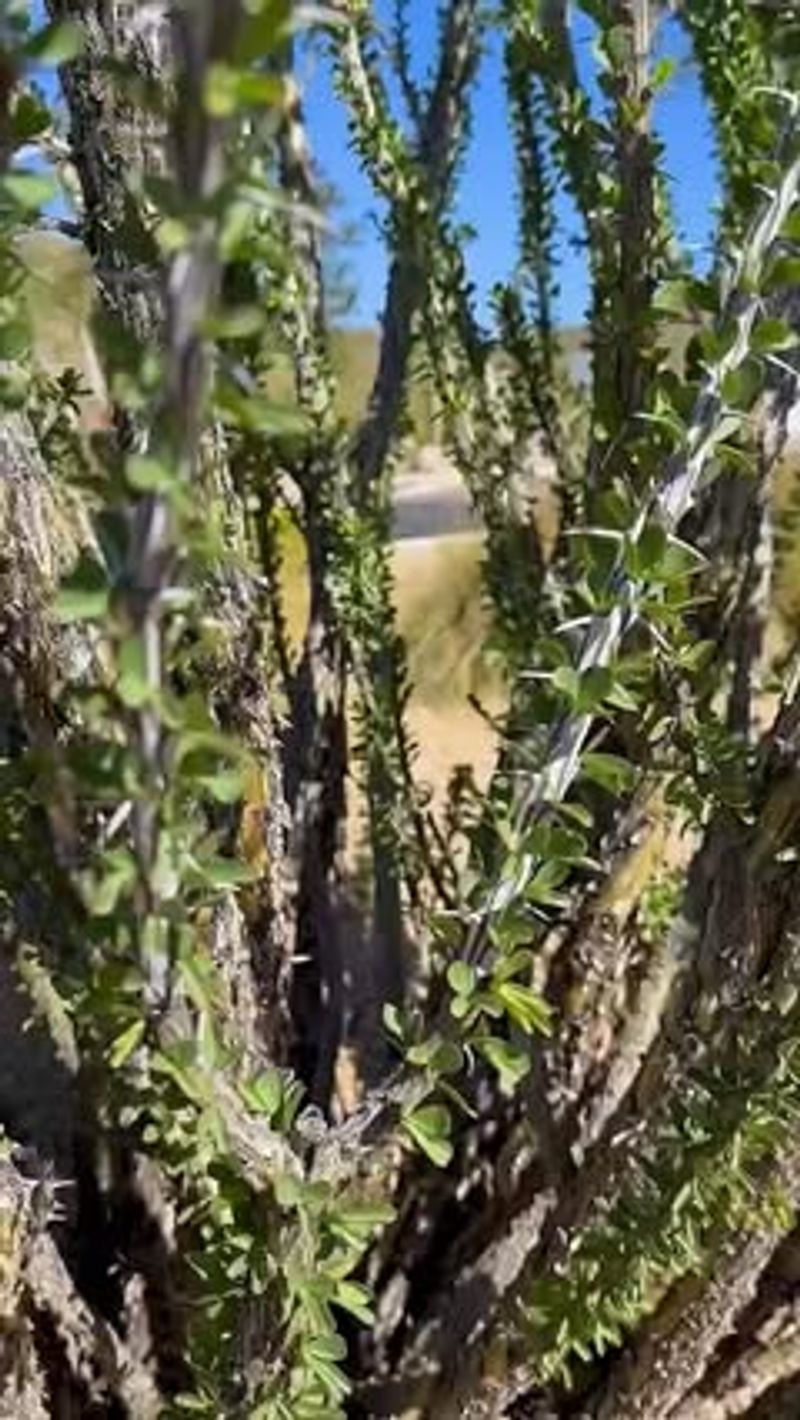
Walk through any ocotillo population during this winter bloom period and you’ll notice something interesting: not every plant is flowering.
Some display full, vibrant flower clusters while neighbors remain bare and dormant, creating a patchwork effect across the landscape.
This staggered blooming pattern results from microclimate variations, differences in soil moisture retention, and individual plant health.
An ocotillo growing in a slight depression where water collects may bloom weeks before another plant just twenty feet uphill on drier ground.
Slope aspect matters too—south-facing plants receive more direct sunlight and warmth, potentially triggering earlier bloom responses than those on cooler north-facing slopes.
Root depth and age also influence blooming: older plants with extensive root systems can access deeper moisture reserves that younger specimens cannot reach.
Recent transplants or stressed individuals may skip blooming entirely, conserving energy for basic survival rather than reproduction.
This natural variation actually extends the overall bloom period across a region, creating opportunities to see flowers over several weeks rather than all at once.
For gardeners and landscapers, this means patience—a newly planted ocotillo might not bloom for several years until its roots establish properly.
The variability reminds us that even within a single species, individual plants respond uniquely to their specific growing conditions and environmental cues.
Blooms Are Short-Lived But Can Repeat
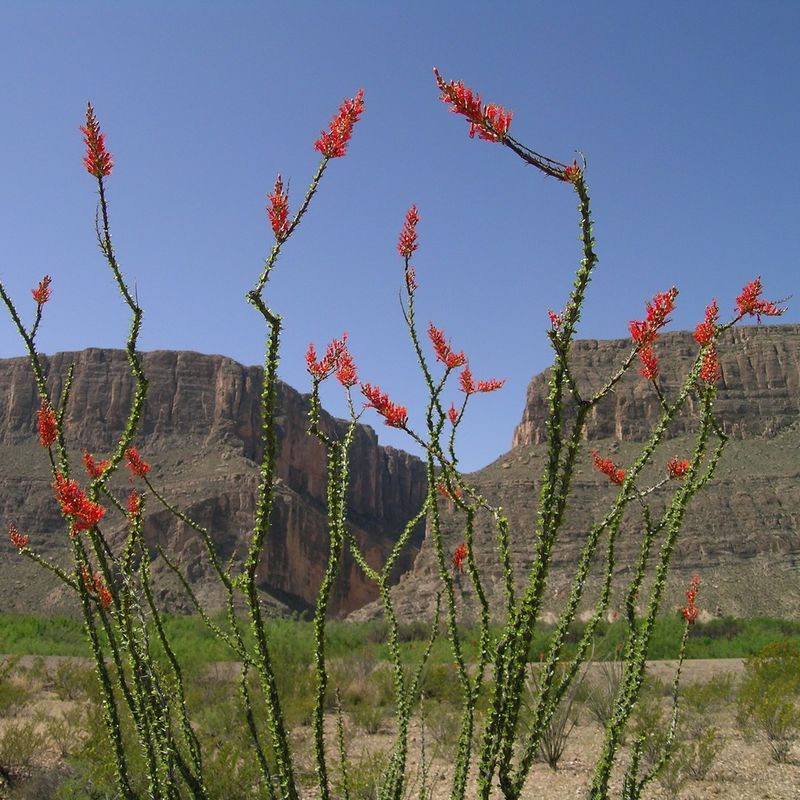
Ocotillo flowers put on a spectacular show, but individual bloom cycles typically last only two to four weeks before petals begin to fade and drop.
This relatively brief flowering window makes catching the display feel like witnessing something special and fleeting.
However, ocotillo possess a remarkable ability that compensates for their short bloom duration: they can flower multiple times in a single year if conditions permit.
After an initial winter bloom fades, the plant returns to its leafy or dormant state, waiting for the next significant rainfall.
If additional storms arrive in spring or even summer, the entire bloom cycle can repeat, producing fresh flower spikes alongside or after the previous ones have faded.
This adaptability means that in particularly wet years, ocotillo might bloom three or even four separate times, each triggered by a new moisture influx.
Observers who monitor the same plants throughout a season can witness this cycle firsthand, watching old flower remnants persist on upper stems while new buds form below.
The ephemeral nature of each bloom encourages people to appreciate the display while it lasts rather than assuming it will remain indefinitely.
For photographers and nature enthusiasts, this creates urgency—seeing the blooms means making time to visit desert areas promptly rather than postponing the experience.
The repeat-blooming capability also demonstrates ocotillo’s opportunistic strategy, taking advantage of favorable conditions whenever they occur throughout the year.
These Displays Signal A Responsive Desert Ecosystem
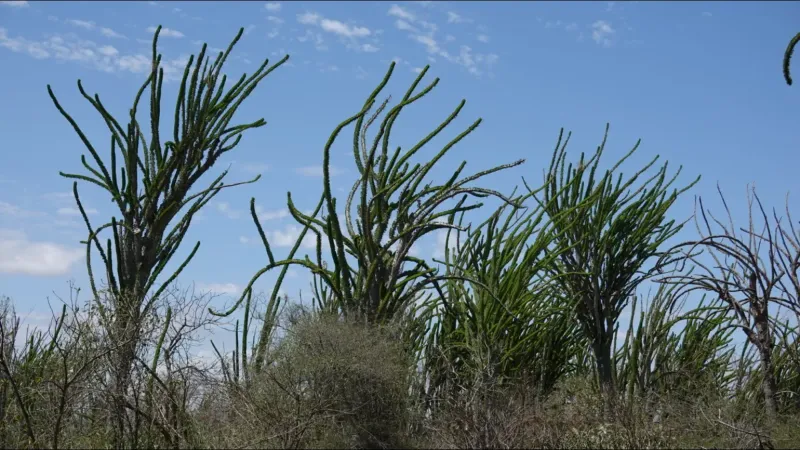
Some people worry that winter blooms indicate climate disruption or ecological imbalance, but the opposite is actually true.
Ocotillo flowering outside typical seasons demonstrates the desert ecosystem’s remarkable responsiveness and resilience.
Desert plants evolved to survive in environments where rainfall arrives unpredictably, so flexibility rather than rigid seasonal timing became their survival strategy.
When ocotillo bloom in winter, they’re simply responding to favorable conditions the same way they have for thousands of years.
Other desert plants exhibit similar opportunistic behavior—brittlebush, fairy duster, and various cacti can also bloom outside expected windows when moisture permits.
This winter’s ocotillo displays reflect a healthy ecosystem where plants remain capable of responding appropriately to environmental cues.
The blooms also trigger cascading ecological benefits: hummingbirds feed, insects pollinate, and eventually seeds develop to sustain future plant generations.
Rather than viewing winter blooms as abnormal, we should recognize them as evidence of the desert’s inherent adaptability.
Climate scientists note that while long-term weather patterns are shifting, individual blooming events like this winter’s display fall within natural variability.
Appreciating these unexpected natural events helps us understand that desert ecosystems operate by different rules than forests or grasslands, rules based on opportunism and rapid response rather than predictable seasonal cycles.
Human Landscaping Has Increased Visibility Of Winter Blooms
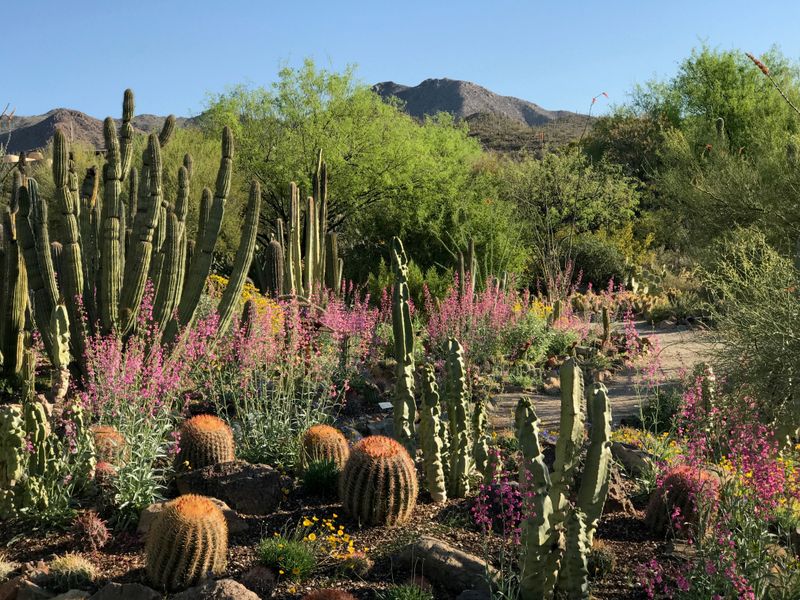
Decades ago, most Arizonans encountered blooming ocotillo only during desert hikes or drives through remote areas.
Today, xeriscaping trends and native plant landscaping have brought ocotillo into residential yards, commercial properties, and public spaces throughout Arizona cities.
This increased urban and suburban presence means that winter blooms are now visible to people who might never venture into natural desert areas.
Highway medians, shopping center landscapes, and neighborhood yards all feature ocotillo as architectural focal points that suddenly burst into color when conditions align.
The plants’ dramatic form and low water requirements make them popular choices for water-conscious landscaping projects throughout the Southwest.
Municipal restoration projects along urban washes and parks have also established new ocotillo populations in areas where people walk, jog, and gather daily.
When these cultivated plants bloom in winter, thousands of additional observers notice and share photos on social media, amplifying awareness of the phenomenon.
This visibility benefits desert conservation by helping urban residents connect with native plants and understand their unique characteristics.
Landscape designers report increased interest in ocotillo following dramatic bloom displays, as homeowners want to incorporate these living sculptures into their own yards.
The intersection of native plant landscaping and unusual weather patterns has created unprecedented opportunities for people to witness and appreciate desert plant behavior without leaving city limits.