These Are The Michigan Container Plants That Survive Being Forgotten For Two Weeks
Every gardener has walked out to their containers after a busy stretch and found something wilted, crispy, or well past saving. It happens, and it happens more often in Michigan than in cooler states because summer heat pulls moisture out of pots fast.
The solution is not a better watering schedule. It is choosing plants that are genuinely built to handle dry spells without falling apart.
Some container plants bounce back after two weeks of neglect looking almost exactly as they did before. Others are gone by day five.
Knowing which ones belong in which category changes how you plant your pots this season, especially if travel, work, or a busy summer schedule means your containers are occasionally on their own.
These Michigan container plants stay presentable through dry stretches, recover quickly when water returns, and keep producing color all season without demanding daily attention to do it.
1. Lantana Handles Dry Patio Conditions Better Than Most Annuals
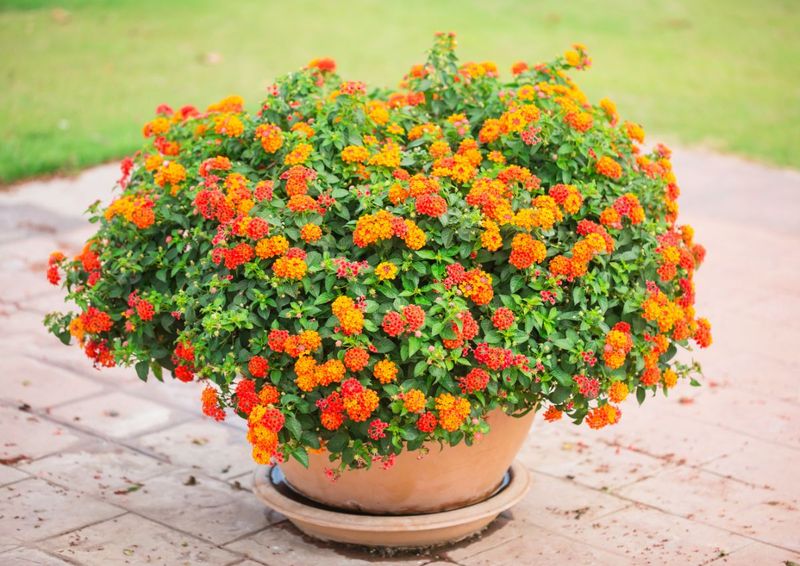
Few annuals match Lantana when it comes to shrugging off a missed watering day or two. Grown as an annual in Michigan, Lantana camara produces cheerful clusters of tiny blooms in shades of orange, yellow, pink, and red from early summer straight through to frost.
Its natural homeland is tropical and subtropical, which means it was practically built for scorching heat and occasional dry stretches.
Lantana needs at least six hours of direct sunlight daily to perform its best. On a south-facing deck or a sun-drenched patio, it will reward you with nonstop color.
When planted in containers, use a well-draining potting mix and make sure the pot has drainage holes, because sitting in soggy soil is the one thing Lantana genuinely dislikes.
Watering deeply once or twice a week during normal summer weather keeps it thriving. During a dry spell or when you are away for a week, Lantana will slow its bloom production slightly but recover quickly once watering resumes.
Feed it with a balanced slow-release fertilizer at planting time and a light liquid feed every three to four weeks after that. Avoid overfeeding with nitrogen-heavy fertilizer, which pushes leafy growth at the expense of flowers.
Lantana also attracts butterflies and hummingbirds, making it one of the most rewarding low-maintenance annuals you can grow on any Michigan patio.
2. Moss Rose Thrives In Hot Dry Containers
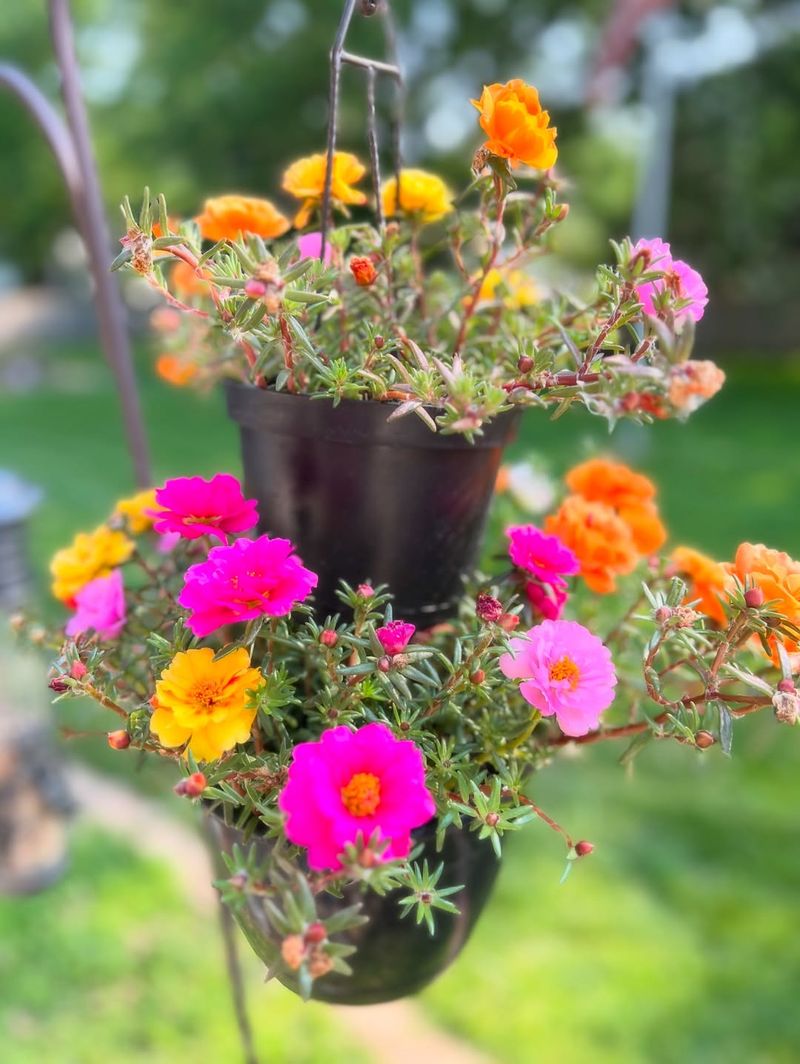
Moss Rose is practically the poster child for low-maintenance container gardening in Michigan.
Portulaca grandiflora has thick, succulent-like foliage that stores moisture right inside its leaves, giving it a natural reserve to draw from when the weather turns dry and the watering schedule falls apart.
It genuinely performs better when it dries out between waterings than when it stays constantly moist.
Overwatering is actually the bigger threat here. Soggy soil causes root rot quickly in Portulaca, so always choose containers with drainage holes and use a sandy, fast-draining potting mix.
A terracotta pot works beautifully because it naturally wicks away excess moisture. Full sun exposure, at least six to eight hours daily, is non-negotiable for the best bloom production.
Your Michigan Garden Changes Every Week. Your Plan Should Too.
Gardening in Michigan changes quickly throughout the season. Every Friday you’ll receive a simple weekly plan showing exactly what to plant, prune, fertilize, harvest, and protect so you never miss the right timing.
During Michigan’s hottest July and August days, Moss Rose practically thrives on neglect. Its blooms open wide in sunlight and close in the evening or on cloudy days, which is a quirky and charming trait that surprises first-time growers.
The flowers come in vivid shades of hot pink, orange, red, yellow, and white, often striped or ruffled. Fertilizing lightly once a month with a balanced formula is plenty.
Skip the heavy feeding because too many nutrients lead to more foliage than flowers. For hanging baskets or shallow containers in the sunniest spots on your porch, Moss Rose is the clear winner every single time.
3. Zonal Geraniums Recover Quickly After Dry Spells
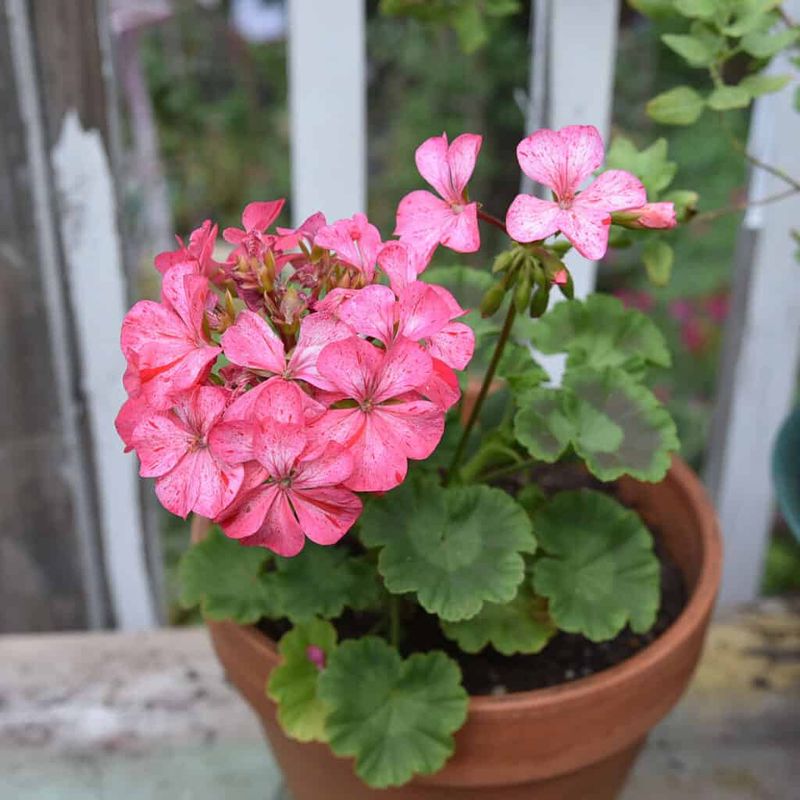
Zonal Geraniums have been a porch staple across Michigan for generations, and there is a very practical reason for that loyalty.
Pelargonium x hortorum stores moisture in its thick, fleshy stems and leaves, giving it a built-in buffer when watering gets skipped for a day or two longer than planned.
It is not a true succulent, but it handles temporary dry conditions far better than moisture-hungry annuals like impatiens or lobelia.
Sunny decks, windy balconies, and exposed porches are where Zonal Geraniums really shine. They need at least four to six hours of direct sun daily, though they can tolerate a bit of afternoon shade in the hottest Michigan summers.
Use a good quality, well-draining potting mix and containers with drainage holes. Avoid letting water pool in saucers for extended periods, especially during cooler stretches of the season.
Water deeply when the top inch of soil feels dry, then let it dry out slightly before watering again. This cycle actually encourages better blooming.
Deadheading spent flower clusters regularly keeps the plant tidy and pushes out fresh blooms all season. Feed every two to three weeks with a balanced liquid fertilizer to maintain strong color.
Zonal Geraniums also come in a stunning range of colors, from deep red and salmon to lavender and white, making them endlessly versatile for container arrangements across Michigan patios.
4. Narrowleaf Zinnia Outlasts Heat And Drought In Pots
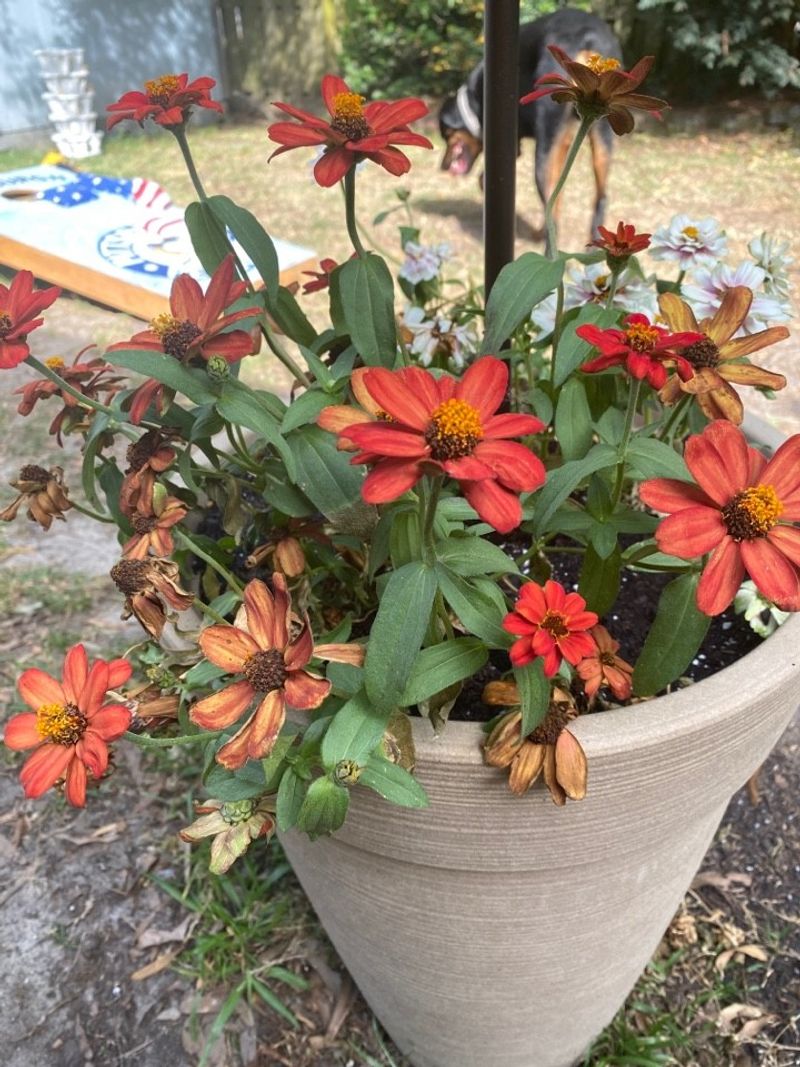
Most gardeners know the big, showy common zinnia, but Zinnia angustifolia, the Narrowleaf Zinnia, is the tougher, smarter sibling that deserves far more attention.
Unlike its larger cousin, this species handles drought, heat, and neglect with remarkable ease while staying carpeted in cheerful small blooms of orange, yellow, or white from early summer until hard frost.
It does not just survive tough conditions, it actually looks good through them.
Michigan summers bring both intense heat and unpredictable humidity, and that combination can cause powdery mildew to ravage common zinnias.
Narrowleaf Zinnias have much stronger natural resistance to mildew, which keeps them looking fresh and full even during muggy August stretches.
Their smaller, narrower leaves allow better airflow through the plant, which is a big part of why they stay so healthy.
For containers, use a well-draining potting mix and place pots in full sun, at least six hours daily. Water deeply but infrequently, allowing the soil to dry somewhat between waterings.
After two weeks of minimal care, these plants bounce back quickly once regular watering resumes. Fertilize lightly every three to four weeks with a balanced formula.
Deadheading is optional because Narrowleaf Zinnias are largely self-cleaning, dropping spent blooms on their own.
Their mounding, trailing habit fills container edges beautifully, and they pair well with taller thriller plants for a polished, low-effort patio display all season long.
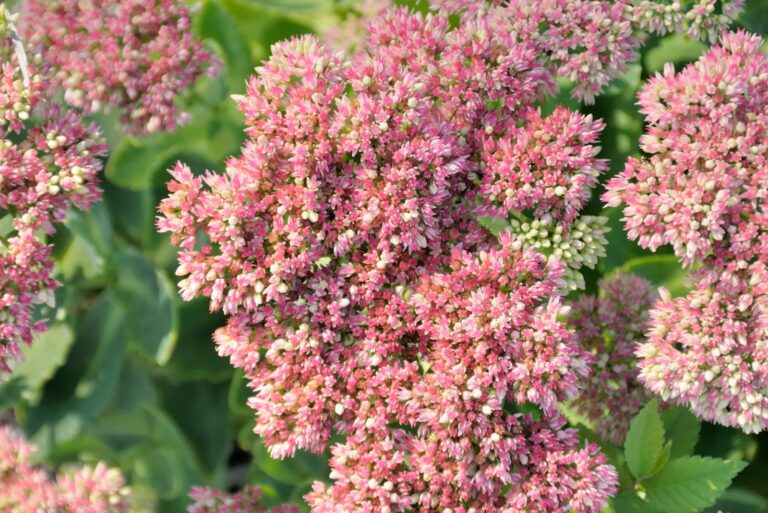
5. Upright Sedum Barely Notices Dry Michigan Weather
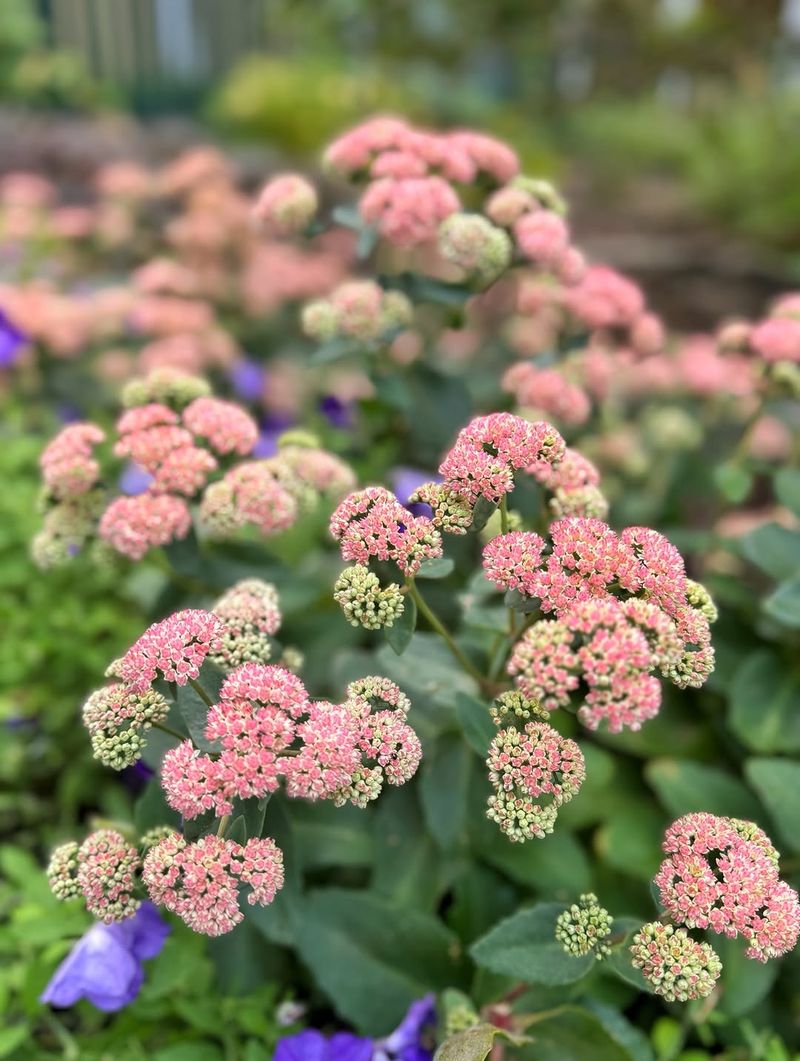
Upright Sedums like the beloved Autumn Joy are the rare container plants that practically laugh at dry weather.
As succulent perennials, Hylotelephium varieties store water directly in their thick, waxy leaves, giving them a natural drought buffer that few other container plants can match.
Even after two weeks without rain or watering, they hold their form, their color, and their dignity better than almost anything else in a pot.
Excellent drainage is the single most important factor for growing Sedum in containers. These plants absolutely cannot tolerate wet roots for extended periods, especially in Michigan’s cool spring and fall seasons.
Use a gritty, fast-draining potting mix and always choose containers with drainage holes. Raised off the ground slightly on pot feet helps prevent water from pooling around the base.
Full sun, at least six hours daily, brings out the best leaf color and supports strong stem growth. In partial shade, Sedums tend to flop and produce fewer flowers.
Water deeply but infrequently throughout summer, allowing the soil to dry out completely between waterings. Fertilizing once in early spring with a balanced slow-release formula is typically all they need for the season.
As hardy perennials, upright Sedums can sometimes overwinter in large containers if given extra insulation, though survival depends on pot size and placement.
Their flat flower heads also attract late-season pollinators, adding ecological value to your patio through early fall.
6. Dusty Miller Looks Fresh Long After Other Plants Fade
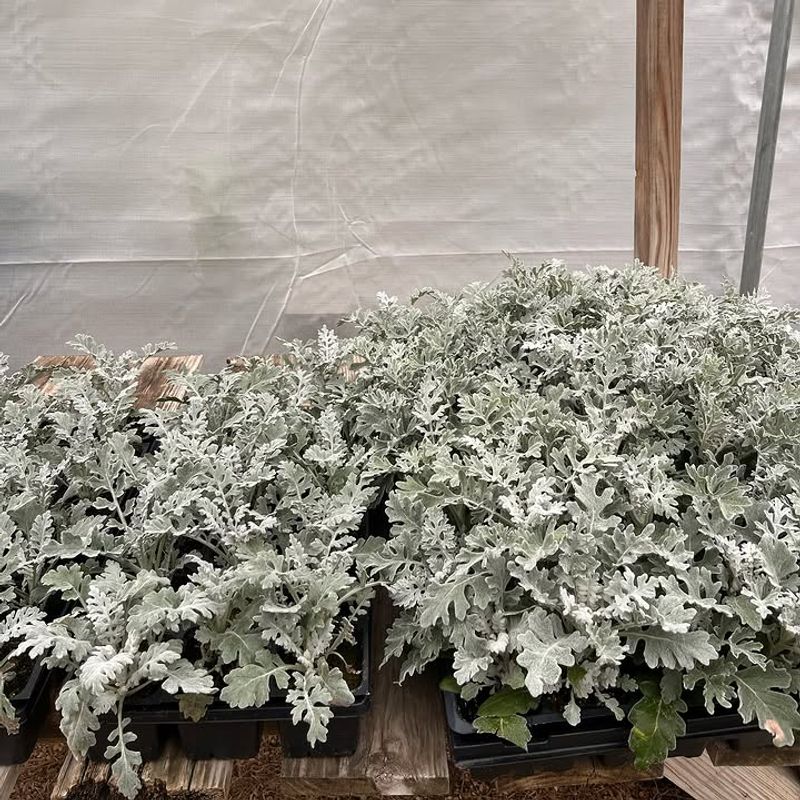
There is something almost magical about Dusty Miller on a hot afternoon when every other plant on the patio looks tired and wilted. Its silver, felted leaves reflect heat and light in a way that makes it look cool and crisp even in the middle of a Michigan heat wave.
That silvery coating is not just decorative either, it is a functional adaptation that reduces moisture loss and protects the plant from sun damage.
Jacobaea maritima handles dry conditions, reflected heat from pavement, and breezy exposed patios far better than almost any flowering annual you could put beside it. It thrives in full sun but tolerates partial shade reasonably well.
The key requirement is good drainage. Soggy soil turns the roots soft and the foliage yellow quickly, so always use a well-draining mix and containers with holes.
Watering once or twice a week during normal summer weather is plenty, and during drier stretches Dusty Miller barely skips a beat.
It rarely needs fertilizer beyond a light balanced feed at planting time, and too much nitrogen makes it leggy and floppy rather than compact and silvery.
Pinching back stem tips occasionally keeps growth dense and full. As a filler plant in mixed containers, nothing pairs more elegantly with bold purples, pinks, or reds.
Michigan gardeners who want reliable, low-fuss foliage color from May through October will find Dusty Miller nearly impossible to replace in a container lineup.
7. Mealycup Sage Stands Tall Through Summer Neglect
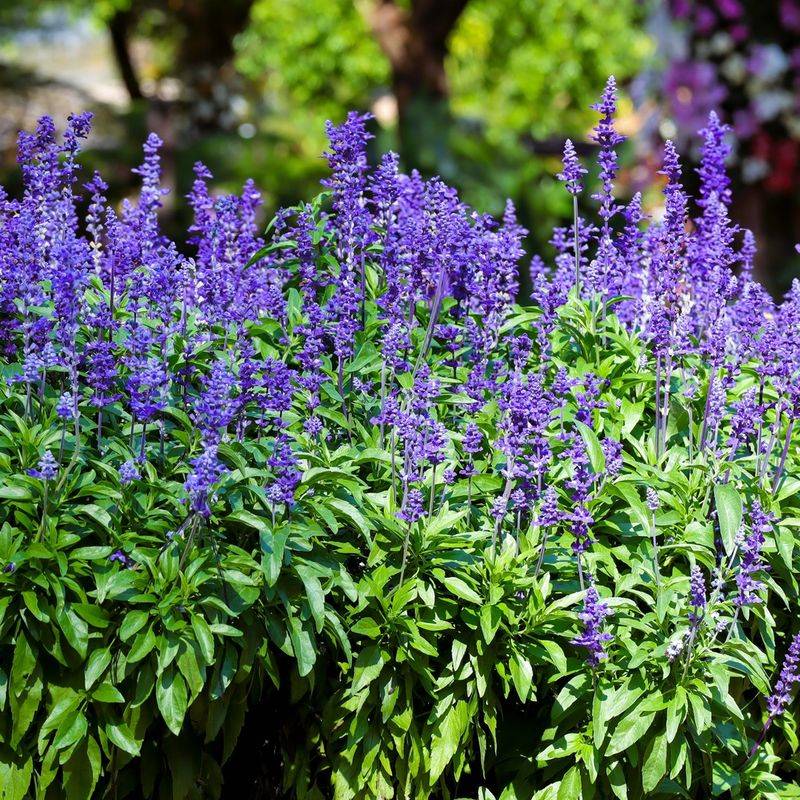
Tall, elegant, and strikingly blue, Mealycup Sage earns its spot in containers through sheer toughness dressed up as beauty.
Salvia farinacea, especially the popular Victoria Blue variety, produces upright spikes of vivid blue-purple flowers that provide vertical drama in any container arrangement.
What makes it really stand out, though, is how little water it actually needs compared to most annuals doing similar visual work.
Native to dry grasslands in Texas and Mexico, Mealycup Sage has deep roots in drought adaptation. Its narrow leaves and woody base help it conserve moisture during hot, dry stretches, which happen regularly across Michigan in July and August.
While petunias and calibrachoa start to droop and drop flowers after a week without water, Mealycup Sage keeps its spikes upright and its color strong.
Plant it in full sun with at least six hours of direct light daily for the tallest, most floriferous performance. Well-draining potting mix is essential because Salvia farinacea dislikes sitting in wet soil between waterings.
Water deeply when the top inch or two of soil feels dry and fertilize every three to four weeks with a balanced liquid formula.
Pollinators, especially bumblebees and hummingbirds, absolutely swarm the flower spikes throughout the season, making this plant as ecologically generous as it is beautiful.
For mixed containers needing height, color, and genuine drought toughness, Mealycup Sage rarely disappoints Michigan gardeners.
8. Ornamental Oregano Keeps Looking Good In Dry Pots
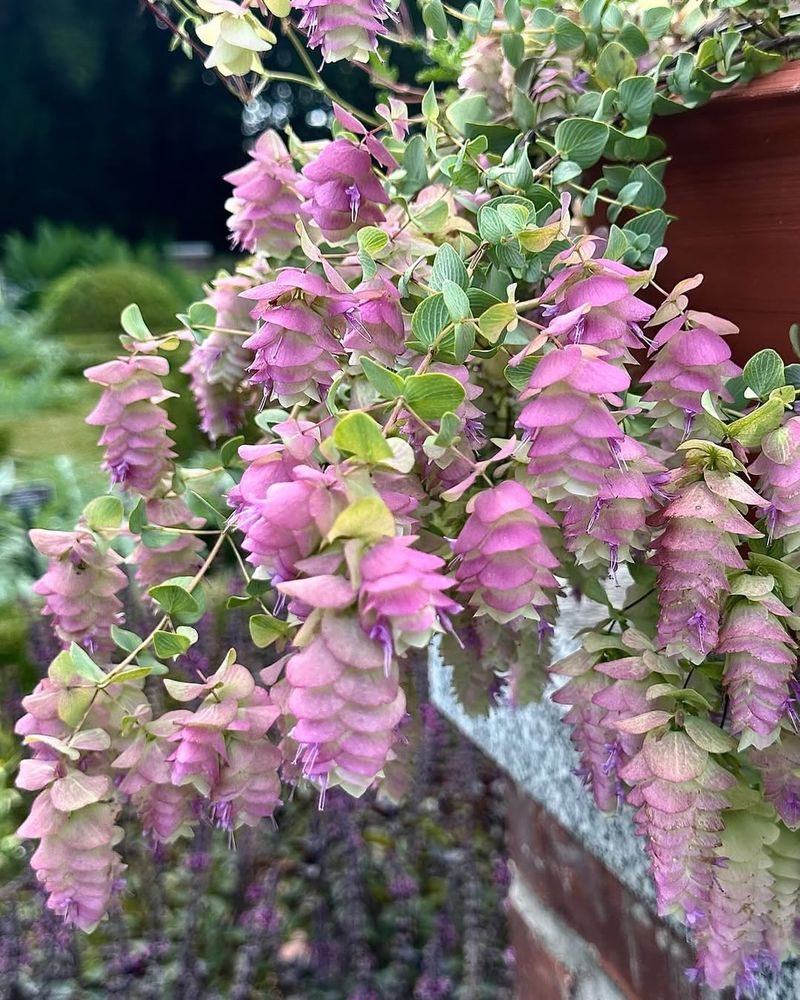
Ornamental Oregano is one of those plants that makes people stop mid-stride and ask, what is that?
Varieties like Kent Beauty and Kirigami produce cascading stems adorned with papery, hop-like bracts in shades of soft pink, green, and rose that look almost architectural.
Beyond the striking appearance, these plants come from Mediterranean hillsides where thin, rocky soil and dry summers are simply normal life, which makes them incredibly well-suited for Michigan gardeners who sometimes forget to water.
Sharp drainage is the foundation of success with ornamental oregano. Use a gritty, fast-draining potting mix and always choose containers with drainage holes.
These plants genuinely struggle in heavy, moisture-retentive soil, and overwatering is a far more common problem than underwatering. Terracotta pots are an excellent choice because they help wick away excess moisture naturally.
Full sun, at least six hours daily, produces the most colorful and compact growth. In shadier spots, the trailing stems elongate and the bract color fades noticeably.
Water only when the soil has dried out completely, and during dry spells or vacation stretches of a week or two, ornamental oregano handles the wait without complaint.
Fertilize very lightly, no more than once a month with a diluted balanced formula, because rich feeding causes floppy, weak growth.
The trailing habit makes it a stunning thriller-spiller in mixed containers, draping beautifully over pot edges while the bracts develop richer color as summer progresses into fall.
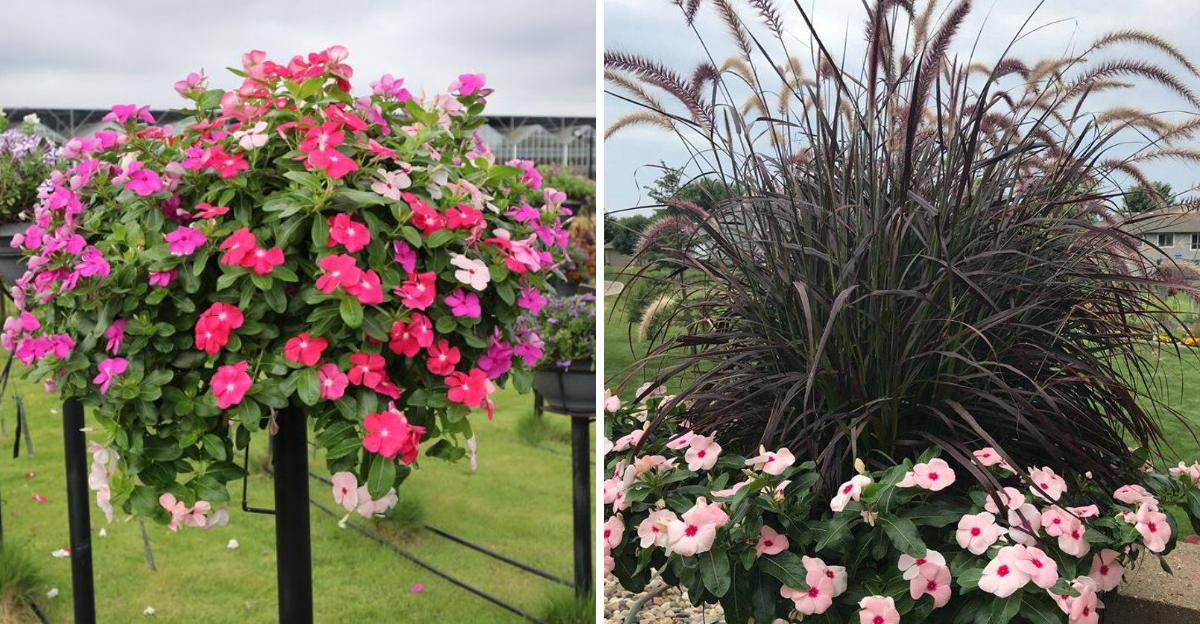
9. Vinca Is The Heat-Loving Champion For Sunny Michigan Decks
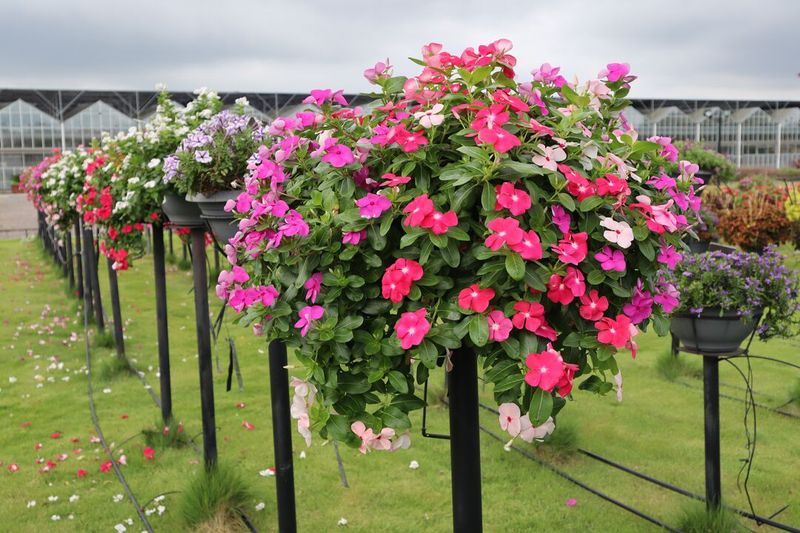
Vinca gets mistaken for impatiens constantly, and that comparison does it a real disservice.
While impatiens need consistent moisture and partial shade to thrive, Catharanthus roseus wants full sun, handles heat without flinching, and keeps blooming through dry stretches that would leave impatiens looking miserable.
On a scorching Michigan July afternoon, Vinca is the plant still looking polished on the south-facing deck.
The glossy, deep green leaves are part of what makes Vinca so visually appealing even between bloom cycles.
Flowers come in rich pink, red, white, lavender, and bicolor combinations, and they are largely self-cleaning, which means you do not have to deadhead constantly to keep things looking tidy.
That combination of low maintenance and continuous color is rare in the annual world.
Plant Vinca in full sun with well-draining potting mix and containers with drainage holes. Water deeply when the top inch of soil dries out, and during hot dry spells it handles reduced watering better than most annuals.
Avoid overhead watering when possible since wet foliage in humid Michigan weather can invite fungal issues. Feed every two to three weeks with a balanced liquid fertilizer to keep the blooms coming strong through summer.
Vinca is also remarkably wind-tolerant, making it a smart pick for elevated decks or exposed patio corners where other plants struggle. For gardeners who want color with minimal fuss, this plant delivers consistently all season long.
10. Purple Fountain Grass Stays Attractive Even During Dry Spells
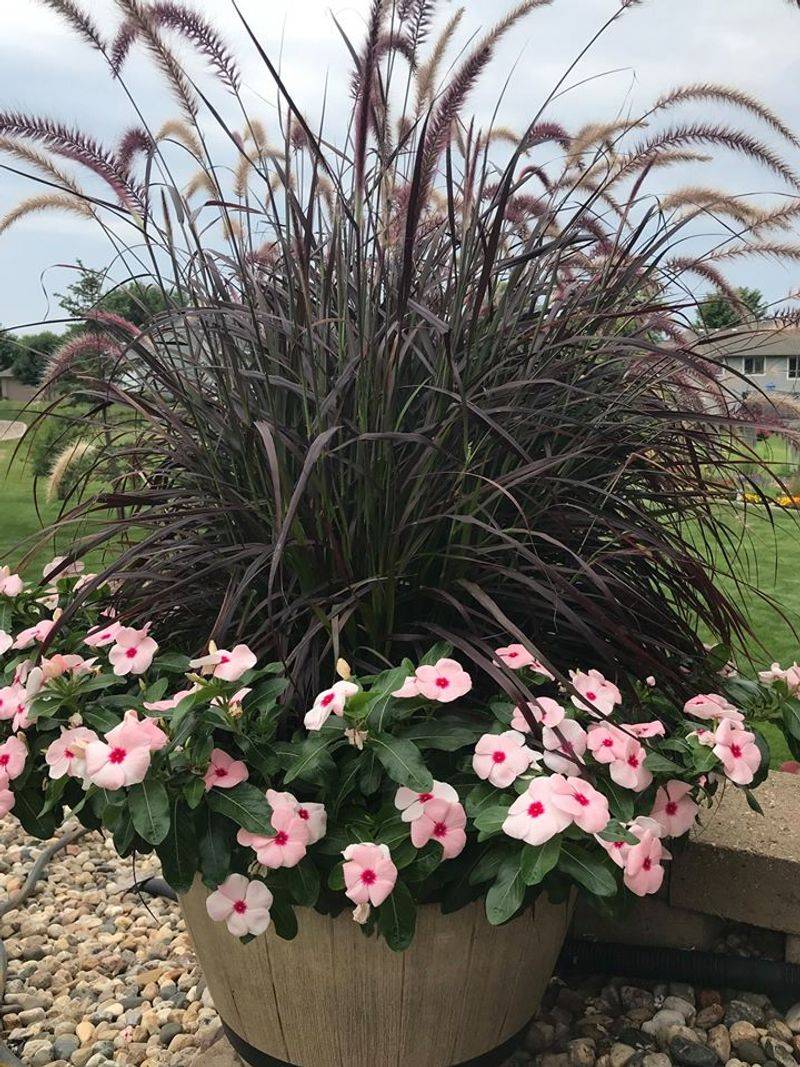
When a container arrangement needs height, movement, and drama, Purple Fountain Grass delivers all three without asking for much in return.
Cenchrus setaceus Rubrum produces graceful, arching burgundy-purple foliage topped with soft, feathery plumes that sway in the breeze and catch afternoon light in the most beautiful way.
Few ornamental grasses used in containers match its combination of visual impact and easy-care attitude.
Wind is not a problem for Purple Fountain Grass, it actually shows off better when there is a breeze moving through the plumes.
Heat, too, is something it handles without complaint, drawing on its origins in warm, semi-arid regions of Africa to stay strong when Michigan summers turn relentlessly hot and dry.
After a week or two of minimal watering, the foliage may show slight stress at the tips, but it recovers quickly once water returns.
Plant it in full sun in a large, heavy container with well-draining potting mix. Larger pots, at least twelve to fourteen inches across, provide enough root space for strong growth and better moisture retention between waterings.
Water deeply once or twice a week during normal summer conditions and fertilize monthly with a balanced formula. In Michigan, Purple Fountain Grass is grown as an annual since it is not cold-hardy in the region.
Use it as a tall thriller in mixed containers surrounded by lower-growing spillers and fillers for a patio display that looks professionally designed from spring through fall.