These Are The 8 Native Ohio Plants To Grow Instead Of Hostas
Tired of the same old hostas crowding your garden? Ohio offers a vibrant lineup of native plants that bring color, texture, and wildlife-friendly benefits without blending into the background.
From bold blooms to lush foliage, these eight native favorites thrive in local soil and climate, giving your yard personality that hostas can’t match.
You’ll discover options that attract pollinators, resist pests, and turn every garden corner into a show-stopping scene.
If you’re looking for shade-loving beauty or a splash of color in the sun, these native plants prove that Ohio gardens don’t have to play it safe. It’s time to swap predictable greenery for species that are naturally stunning and perfectly suited to your backyard.
1. Wild Ginger Forms A Lush Native Ground Cover
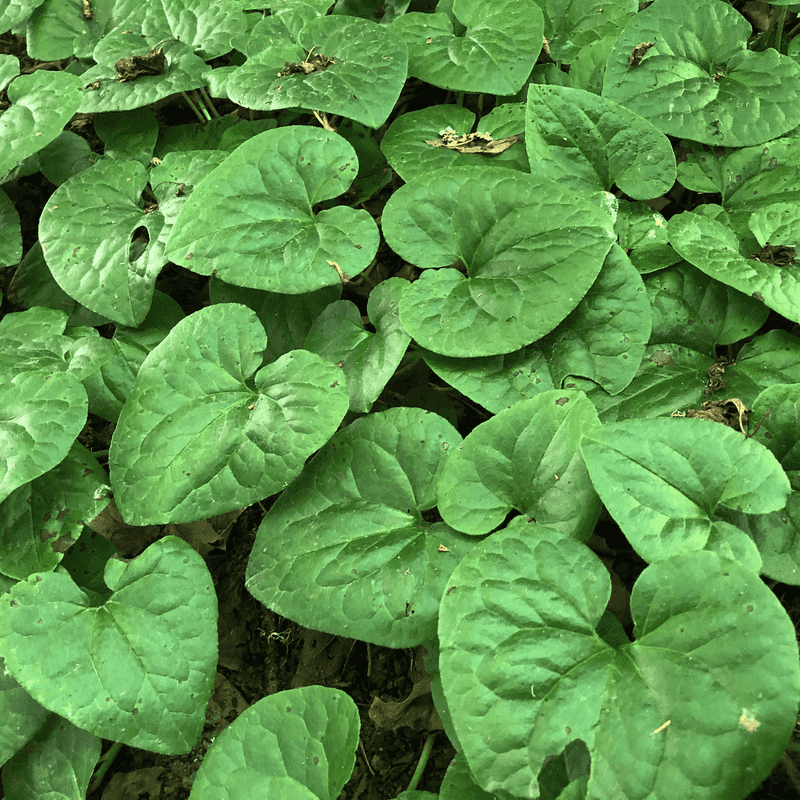
Few plants create that seamless, carpet-like look in a shady Ohio garden the way wild ginger does. Native to woodland floors across the eastern United States, Asarum canadense spreads slowly but steadily to form a dense, low mat of large heart-shaped leaves that look remarkably similar to a hosta bed at first glance.
The foliage stays rich and green throughout the growing season, making it a reliable visual anchor in shaded borders and woodland gardens.
Unlike hostas, wild ginger is a true Ohio native that supports local wildlife right in your backyard. Its small, hidden flowers appear near the soil in spring and attract ground-level pollinators.
The plant also provides cover for beneficial insects and small woodland creatures throughout the season.
Ohio State University Extension notes that wild ginger thrives in moist, well-drained soils with plenty of organic matter, conditions that are common under mature shade trees in Ohio landscapes. It handles deep shade better than many other groundcovers, making it perfect for those tricky dark spots where little else grows.
Plant it in groups of three or more to help it spread naturally and fill in over time without becoming invasive.
2. Foamflower Adds Delicate Spring Blooms In Shade
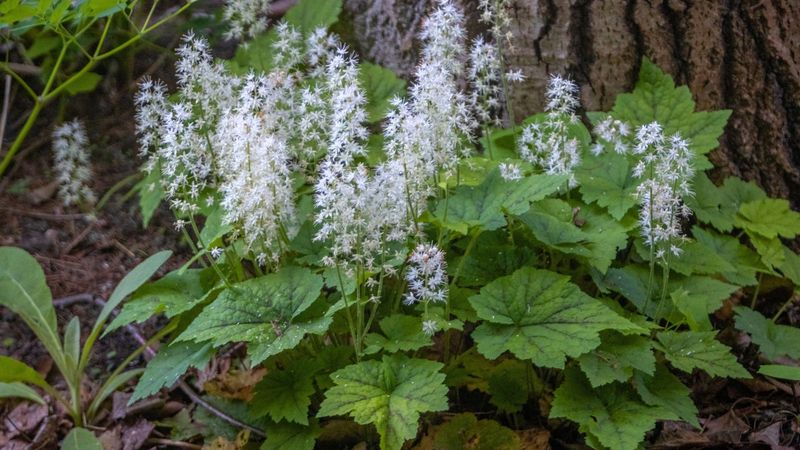
Tucked beneath the canopy of a mature Ohio woodland garden, foamflower has a way of stopping people in their tracks when it blooms in spring. Tiarella cordifolia produces frothy spikes of tiny white to pale pink flowers that float above its attractive lobed foliage from April through May, creating a soft, airy effect that hostas simply cannot match during that season.
The foliage itself often features deep green leaves with burgundy or bronze markings along the veins, adding visual interest even after the blooms fade.
As a native perennial of Ohio’s woodland edges, foamflower adapts beautifully to the same shaded, moist conditions where hostas traditionally thrive. It spreads gradually through runners to fill in bare shady patches without becoming aggressive, making it a well-behaved addition to any shade garden.
Bees and small native pollinators are attracted to the spring flowers, giving your garden an ecological boost right when pollinators need it most.
According to university horticulture sources, foamflower performs best in consistently moist, humus-rich soil with good drainage. Planting it alongside ferns or Solomon’s seal creates a layered woodland look that feels natural and polished at the same time.
It is a low-maintenance choice for Ohio gardeners wanting beauty and biodiversity together.
3. Solomon’s Seal Brings Graceful Arching Stems
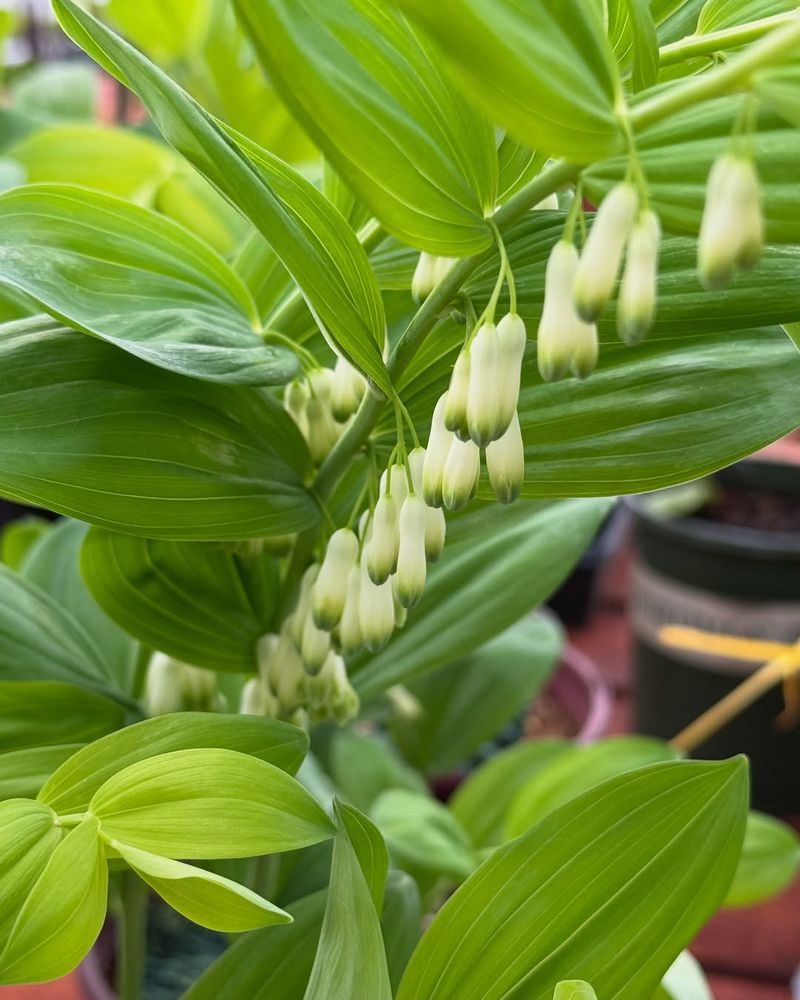
There is something almost architectural about Solomon’s seal growing in a shaded Ohio garden. The long, gracefully arching stems of Polygonatum biflorum rise from the ground each spring and curve outward in a way that adds a sculptural quality no hosta can replicate.
Pairs of small, creamy white bell-shaped flowers dangle beneath the stems in late spring, followed by dark blue-black berries that birds eagerly seek out in late summer and fall.
Solomon’s seal is a native Ohio woodland plant that feels completely at home under the canopy of oaks, maples, and other large shade trees. It tolerates dry shade better than many native alternatives, which makes it especially useful in spots where tree roots compete with other plants for moisture.
The foliage turns a warm golden yellow in autumn before the plant goes dormant, providing one final seasonal display before winter arrives.
Ohio State University Extension recommends Solomon’s seal for naturalized shade areas and woodland garden edges. It spreads slowly by rhizomes to form expanding colonies over several years, gradually filling in shaded areas with its elegant foliage.
For best results, plant it in well-drained soil enriched with compost, and water regularly during the first growing season to help it establish strong roots in your Ohio landscape.
4. Green And Gold Brightens Shady Garden Corners
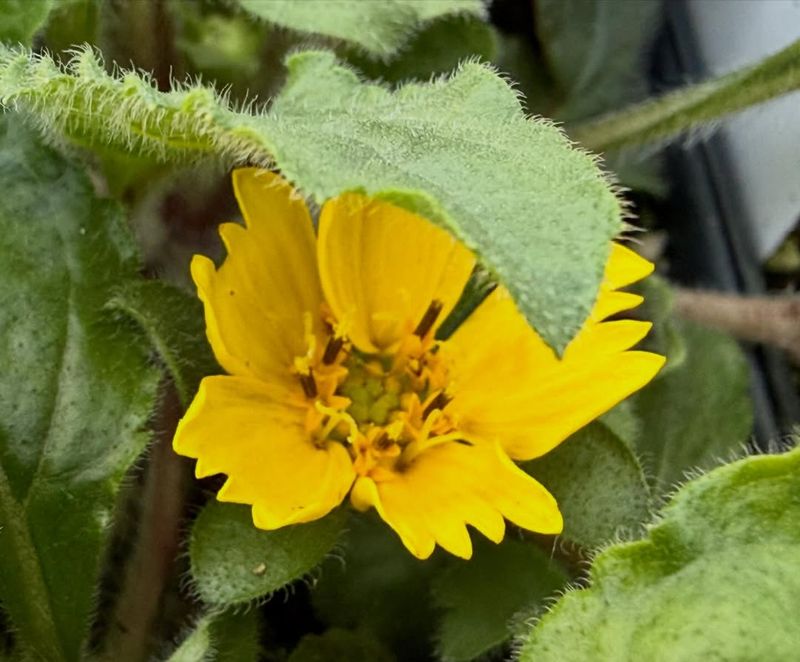
Walk into a shady corner of an Ohio garden planted with green and gold, and you will immediately notice how cheerful it looks. Chrysogonum virginianum is one of those native plants that punches well above its weight in terms of visual impact.
The bright yellow, star-shaped flowers bloom heavily in spring and then continue to pop up sporadically throughout the growing season, giving shaded areas a cheerful, sun-kissed glow even in spots that receive very little direct light.
As a low-growing groundcover, green and gold stays under six inches tall and spreads steadily to fill in shaded beds much like a hosta skirt does at ground level. The dark green foliage provides a tidy backdrop for the golden flowers and remains attractive throughout the season.
Native bees and small pollinators visit the blooms regularly, adding quiet ecological activity to the garden.
This plant is native to the eastern United States and adapts well to Ohio’s climate and soil conditions. It thrives in partial to full shade and prefers well-drained, moderately moist soil with good organic content.
University horticulture sources suggest using green and gold as an edging plant along shaded pathways or as a filler between larger native perennials in Ohio woodland gardens. Once established, it requires very little care beyond occasional watering during dry spells.
5. Jacob’s Ladder Adds Soft Blue Spring Flowers
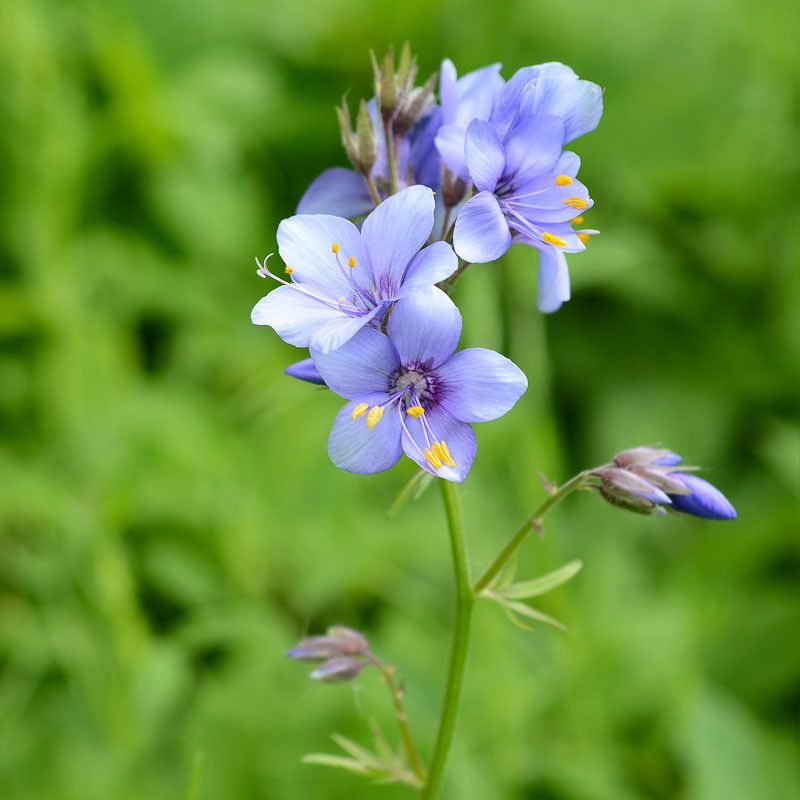
Some native plants earn their place in the garden through flashy blooms, and Jacob’s ladder is definitely one of them. Polemonium reptans produces clusters of soft, sky-blue bell-shaped flowers in April and May that are genuinely stunning against the plant’s finely divided, ladder-like foliage.
The name comes from the way the leaflets are arranged in pairs along each stem, resembling the rungs of a ladder, which gives the plant a delicate, lacy texture that reads beautifully in shaded beds.
Jacob’s ladder is a native Ohio woodland wildflower that grows naturally along stream banks and in moist, shaded forest understories throughout the state. It thrives in the same cool, moist, humus-rich soil conditions that hostas favor, making the transition from one to the other straightforward for most Ohio gardeners.
Early-season pollinators, including native bees and bumblebees, are strongly attracted to the blue flowers right when they need early food sources after winter.
The plant typically grows twelve to eighteen inches tall and forms tidy clumps that work well in the front or middle of a shaded border. After blooming, the attractive foliage remains as a fine-textured green backdrop for other shade plants throughout summer.
According to native plant organizations, Jacob’s ladder self-seeds lightly in favorable conditions, gradually naturalizing in Ohio woodland gardens without becoming a problem.
6. Virginia Bluebells Create A Colorful Spring Display
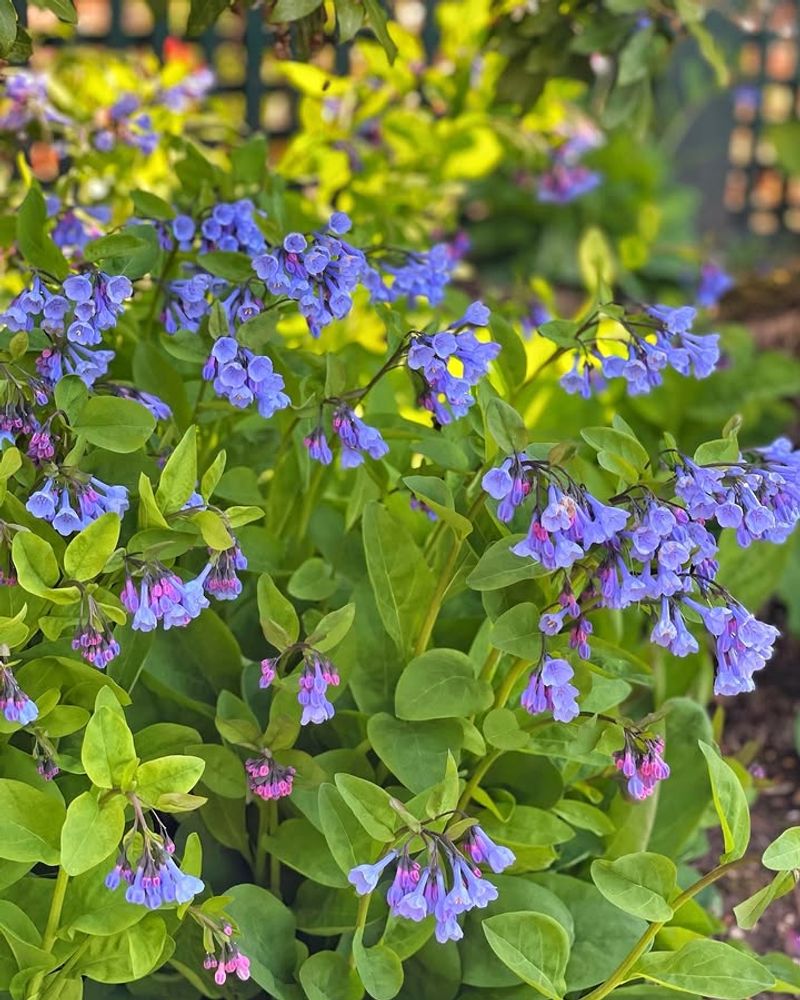
Every spring, Ohio woodland gardens that include Virginia bluebells put on one of the most breathtaking wildflower shows in the native plant world. Mertensia virginica produces nodding clusters of soft pink buds that open into the most vivid sky-blue tubular flowers you will find in any shade garden from March through May.
The blooms appear before most other shade plants have fully leafed out, filling that early-season gap when shaded beds can look bare and uninspiring.
Virginia bluebells are a classic Ohio native wildflower that grows naturally along floodplains, stream banks, and moist woodland edges across the state. The soft blue-green foliage is attractive in its own right, and hummingbirds along with native bees seek out the tubular flowers as a valuable early nectar source.
The plant goes dormant by early summer, which means pairing it with later-emerging natives like ferns or Solomon’s seal helps fill in the space it leaves behind.
Plant Virginia bluebells in groups for the most dramatic spring display. They prefer moist, rich soil in partial to full shade and naturalize well under deciduous trees in Ohio landscapes.
According to Ohio native plant organizations, they spread gradually by seed and rhizomes to form expanding colonies over several years, creating a more impressive display with each passing spring season.
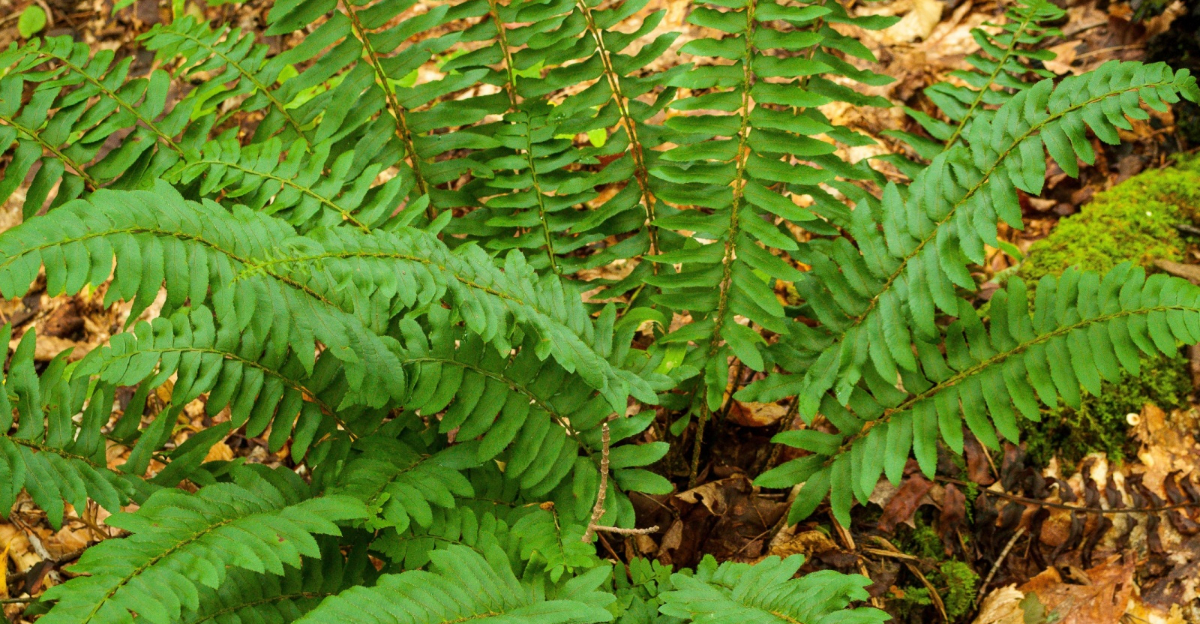
7. Christmas Fern Provides Evergreen Shade Texture
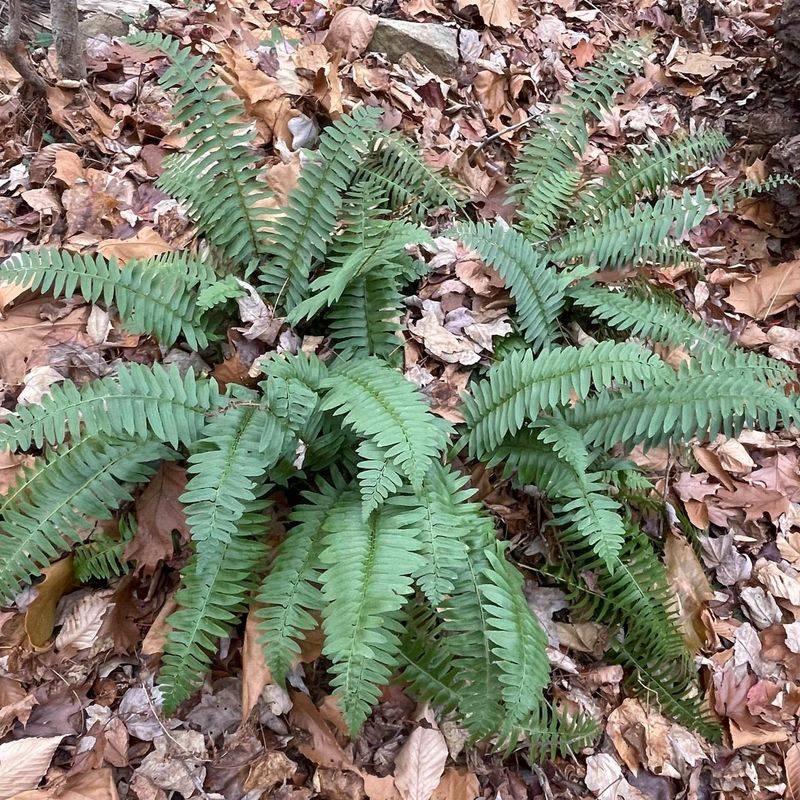
One of the most practical arguments for planting Christmas fern in an Ohio shade garden is the word evergreen. While hostas go completely dormant and leave bare soil exposed from fall through spring, Polystichum acrostichoides keeps its glossy dark green fronds throughout the entire winter, providing structure and color in the garden even on the coldest Ohio days.
The common name reportedly comes from the fact that the fronds stay fresh and green through the Christmas holiday season, a trait that sets it apart from most other native ferns.
Christmas fern is one of Ohio’s most adaptable native ferns, growing naturally on wooded slopes, rocky hillsides, and shaded stream banks across the state. It tolerates drought better than many ferns once established and handles a wide range of soil types, from clay-heavy Ohio soils to well-drained sandy loams.
The fronds arch gracefully outward from a central crown, creating a vase-shaped form that adds elegant texture to shaded borders and woodland garden paths.
Wildlife benefits are real with this plant too. The dense clumps provide nesting cover and shelter for small birds and beneficial insects throughout the year.
Ohio State University Extension recommends Christmas fern as one of the most reliable native groundcovers for challenging shaded spots, including steep slopes where erosion control is needed alongside ornamental value in Ohio landscapes.
8. Heuchera Adds Colorful Leaves To Woodland Gardens
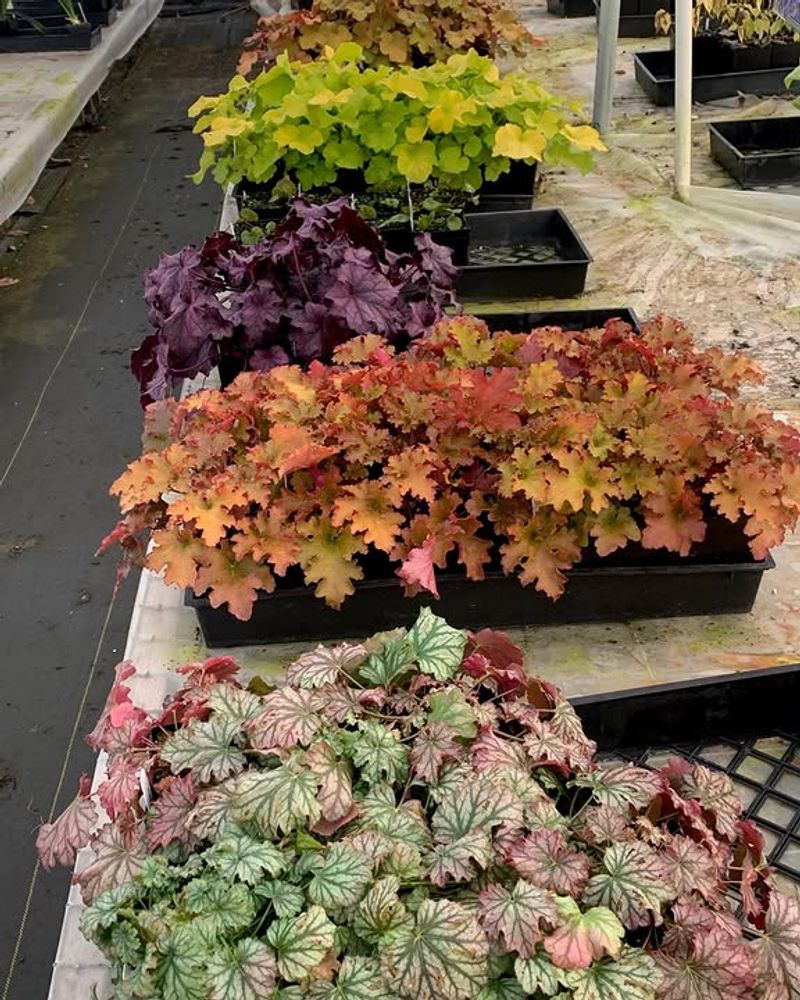
Bold foliage color in a shady spot is exactly what many Ohio gardeners miss when they move away from hostas, and native coral bells deliver that color in a genuinely exciting way. Heuchera americana, the native species found naturally in Ohio’s woodland edges and rocky slopes, produces mounded clumps of lobed, rounded leaves that shift through shades of green, bronze, burgundy, and silver depending on the season and light conditions.
The foliage alone earns it a place in any shade garden design.
Beyond its visual appeal, native Heuchera is a powerhouse for pollinators. The slender flower stalks rise twelve to twenty-four inches above the foliage in late spring and early summer, producing small airy flowers that hummingbirds and native bees find irresistible.
Ruby-throated hummingbirds in particular are known to visit coral bells regularly during their Ohio migration and breeding season, adding lively movement to quiet shaded corners.
Native Heuchera grows well in partial to full shade and adapts to a range of Ohio soil types, though it performs best in well-drained, humus-rich soil. University horticulture sources recommend dividing clumps every three to four years to keep them vigorous and prevent the crown from heaving out of the soil over winter.
Plant it at the front of shaded borders where the colorful foliage can be appreciated up close throughout the growing season.