These Are The 10 Plants That Stay Tidy Near Ohio Entryways
The area around your front door sets the tone for everything else, and messy plants can ruin that look fast. Near an Ohio entryway, the best choices stay neat, hold their shape, and do not spill into walkways or drop constant debris where it shows right away.
That matters in a space people see up close every day. A plant may look great in the garden center, then turn leggy, overgrown, or high maintenance once it settles in.
The right pick keeps your entrance polished without asking for nonstop trimming or cleanup. It adds structure, softens the space, and helps your home look cared for in every season.
For an area that needs to feel welcoming instead of crowded, tidy growth makes a bigger difference than most homeowners expect.
1. Inkberry Holly Keeps The Front Door Looking Sharp
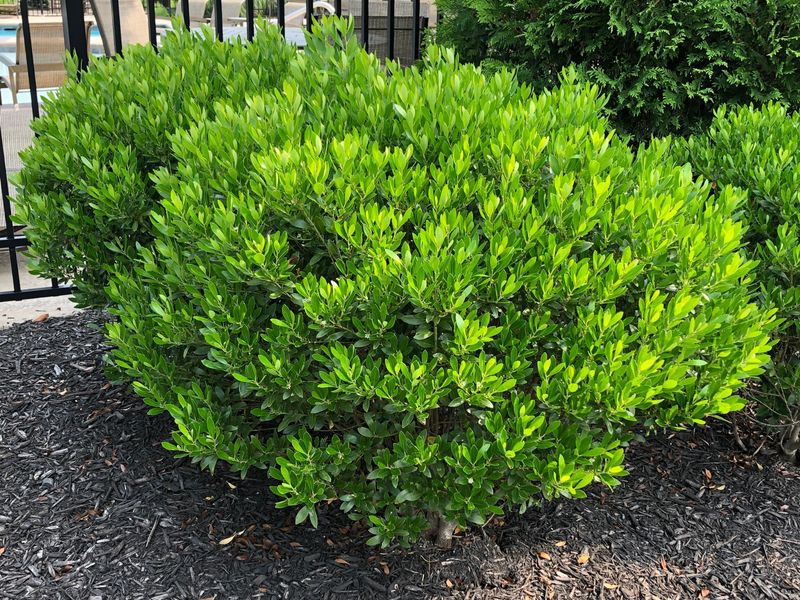
A well-groomed front entry starts with plants that hold their shape without a lot of help, and inkberry holly does exactly that. Native to eastern North America and perfectly suited to Ohio conditions, Ilex glabra is an evergreen shrub that keeps a naturally rounded, compact form through all four seasons.
You get a polished look without fighting the plant every few weeks.
Compact cultivars like ‘Compacta’ and ‘Shamrock’ stay in the three to four foot range, making them easy to manage near foundation walls and front walks. Their dark green leaves stay glossy through Ohio winters, giving your entry a clean, finished appearance even when everything else has gone dormant.
Small black berries add quiet visual interest in fall and winter without creating a messy drop problem on walkways.
Inkberry tolerates moist soils that sometimes collect near downspouts and foundation edges, which is a real advantage in Ohio’s variable spring conditions. It also handles part shade well, so north or east-facing entries are no problem.
Ohio State University Extension recognizes native hollies as reliable low-maintenance options for foundation plantings, making this shrub a smart, tidy choice for homeowners who want structure with minimal fuss.
2. Dwarf Arborvitae Brings Year Round Order
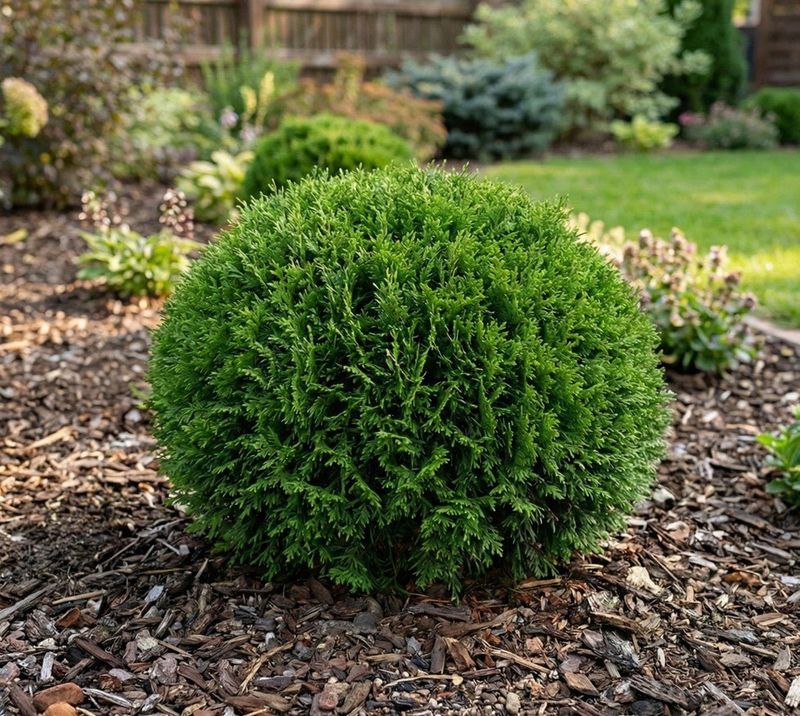
Few plants frame a front door as crisply as a well-placed dwarf arborvitae. The naturally globe-shaped ‘Danica’ and ‘Little Giant’ cultivars grow slowly into tight, rounded forms that rarely need shaping to look intentional.
Planted on either side of a front walk or door, they create an instant sense of visual order that makes the whole entry feel more put-together.
Dwarf arborvitae varieties suited to Ohio typically stay between two and four feet tall and wide, depending on the cultivar. Their soft, scale-like foliage stays green through winter, which matters in Ohio where bare-looking entry beds can make a home feel neglected from November through March.
The upright or globose forms hold their structure without frequent pruning, which saves time and keeps the area looking sharp year round.
These plants prefer full sun to light shade and well-drained soil, conditions that most Ohio entryways can provide. They are cold-hardy through USDA Zone 4, so Ohio winters pose no real threat.
Spacing them correctly from the start is key since planting too close to the foundation can cramp their form over time. Give them room to breathe and they will reward you with years of clean, dependable structure near your front door.
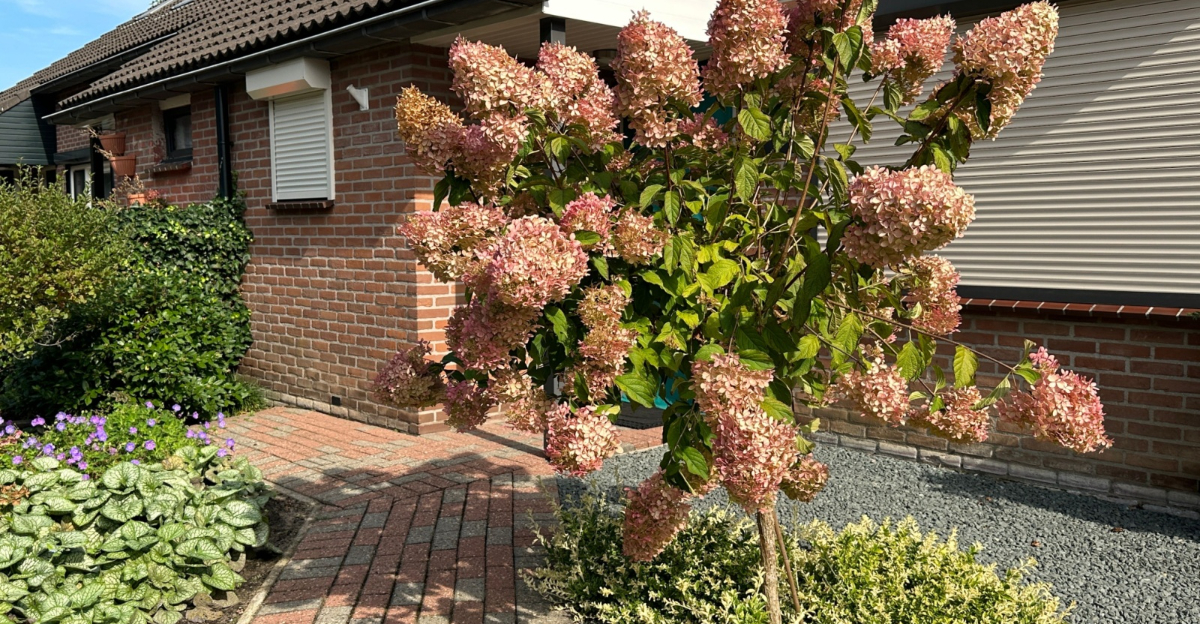
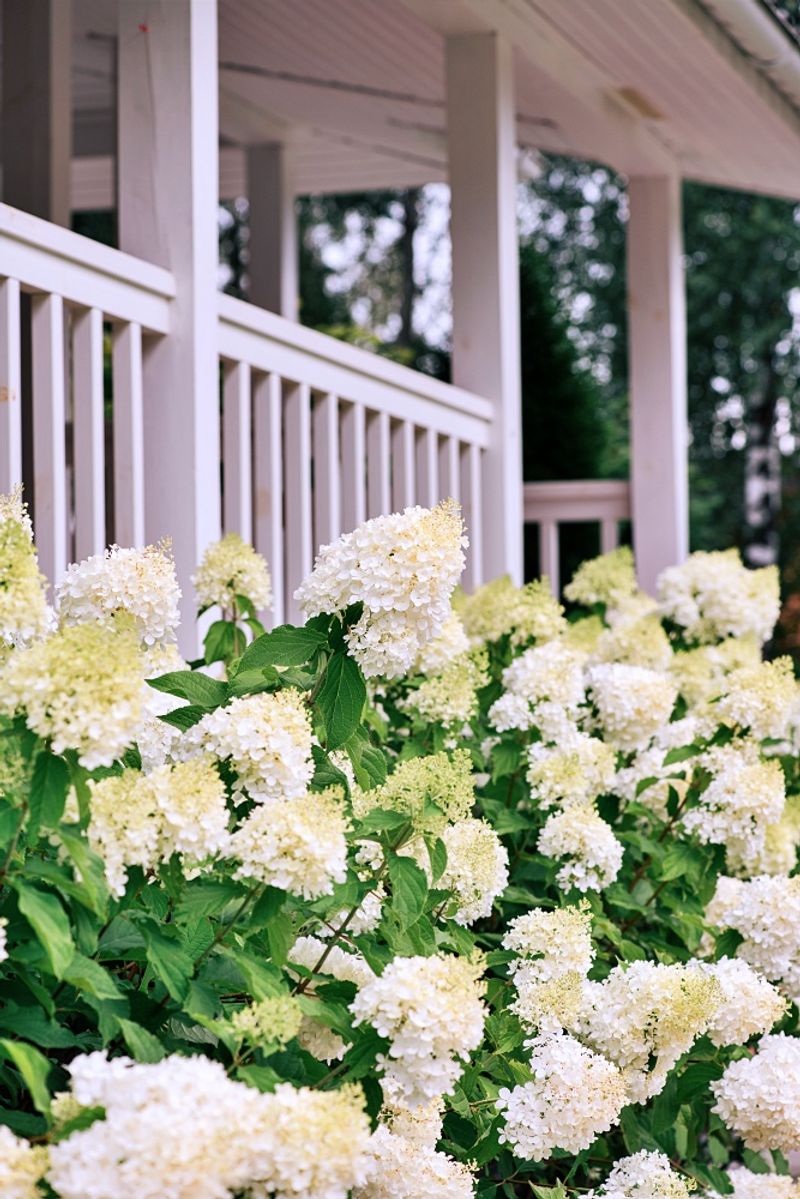
3. Panicle Hydrangea Adds Big Beauty Without The Sprawl
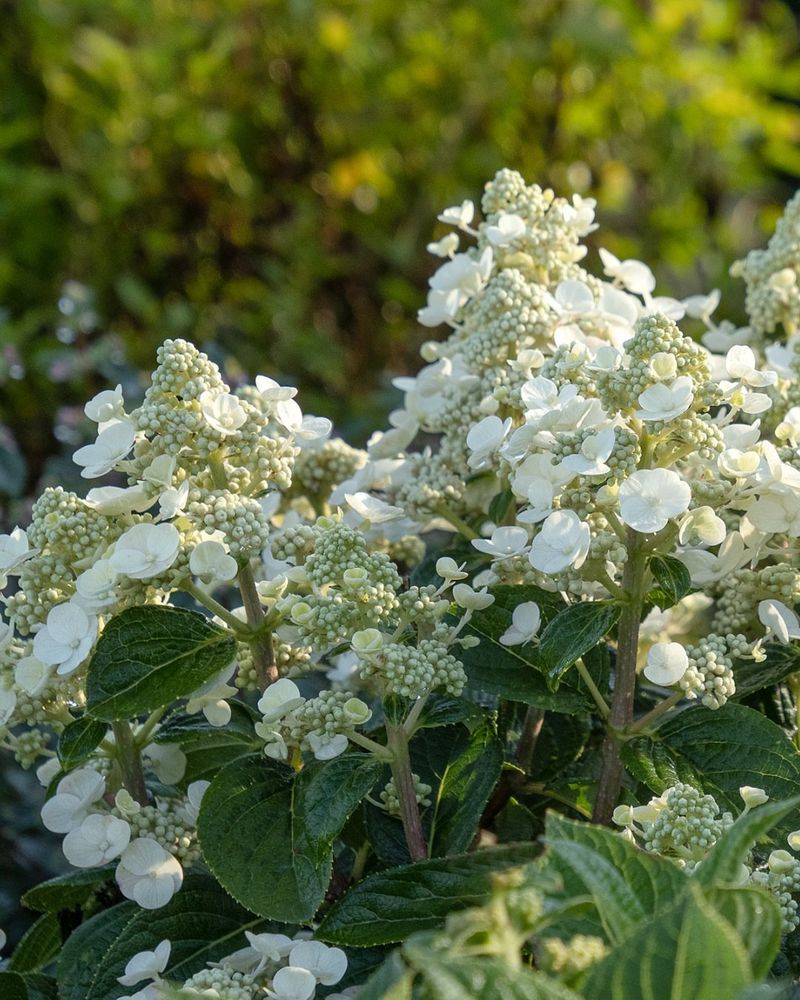
Most people think of hydrangeas as beautiful but a little unruly, and that reputation is fair for some varieties. Panicle hydrangeas, though, are a different story.
Unlike their bigleaf cousins that can flop and spread unpredictably, panicle hydrangeas such as ‘Bobo,’ ‘Little Lime,’ and ‘Incrediball Blush’ grow with a naturally upright, sturdy habit that keeps the entry bed looking organized even at peak bloom.
Compact panicle types stay in the three to five foot range, blooming in mid to late summer with large cone-shaped flower clusters that age gracefully from white to pink to parchment. That color transition means you get visual interest from July well into fall without the plant looking spent or tired.
The dried flower heads also hold up through early Ohio winters, giving the entry a structured look even after the growing season ends.
Panicle hydrangeas bloom on new wood, so any light tidying done in early spring does not interfere with the season’s flowers. They handle Ohio summers well and tolerate a range of soil types as long as drainage is reasonable.
For homeowners who want a showier shrub near the front door without sacrificing neatness, this is one of the most rewarding choices available in Ohio landscapes.
4. Oakleaf Hydrangea Delivers Structure In Every Season
Bold, architectural, and surprisingly self-sufficient, oakleaf hydrangea earns a spot near Ohio entryways for reasons that go well beyond its flowers. The large, deeply lobed leaves that give this plant its name create a strong visual presence from spring through fall, and the peeling, cinnamon-toned bark adds genuine character during Ohio’s bare winter months when most plants offer nothing interesting to look at.
Hydrangea quercifolia blooms in early summer with upright white flower clusters that age to parchment and hold their shape for weeks. Compact cultivars like ‘Pee Wee’ and ‘Ruby Slippers’ stay in the four to five foot range, which makes them manageable near entry beds without constant cutting back.
Fall foliage shifts to burgundy and orange, giving the entry a seasonal warmth that many evergreen-only plantings cannot match.
Native to the southeastern United States, oakleaf hydrangea adapts well to Ohio’s conditions and is recognized by Ohio State University Extension as a reliable landscape shrub. It handles part shade gracefully, making it a solid pick for entries that do not get full sun all day.
Soil should drain reasonably well, but this plant is more forgiving of Ohio clay than many ornamental shrubs, which makes it both beautiful and practical near the front door.
5. Virginia Sweetspire Stays Graceful Without Taking Over
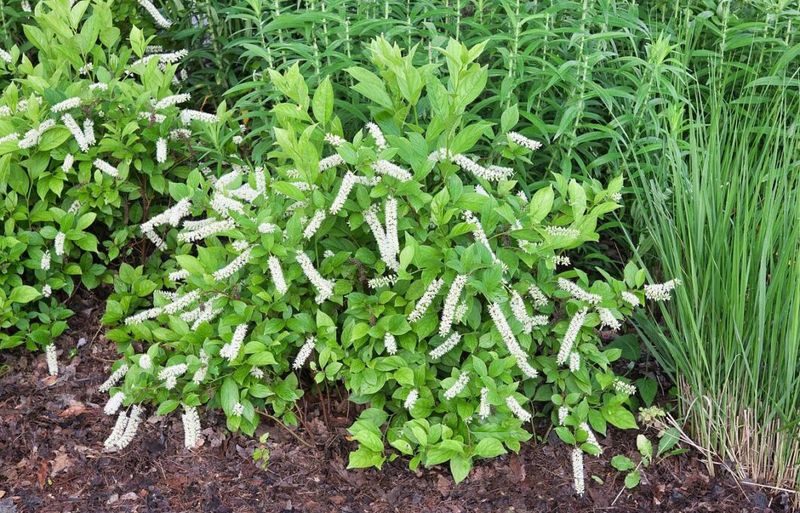
There is a certain elegance to plants that look effortless, and Virginia sweetspire pulls that off better than most. Itea virginica is a native shrub with a gentle arching habit that softens hard foundation edges without ever looking sloppy.
The stems curve slightly outward, giving the plant a relaxed, flowing silhouette that works beautifully near front walks and porch steps in Ohio.
Compact selections like ‘Little Henry’ stay in the two to three foot range, making them easy to tuck into smaller entry beds where a larger shrub would quickly feel overwhelming. In late spring and early summer, fragrant white flower spikes appear along the arching branches, adding a delicate, sweet-smelling detail that makes arriving home feel a little more special.
Fall color is a genuine highlight, with leaves turning shades of red, orange, and burgundy that rival many dedicated fall-color plants.
Virginia sweetspire handles both moist and moderately dry soils, which suits the variable drainage conditions often found near Ohio foundations. It grows well in part shade to full sun and is native to the eastern United States, meaning Ohio’s climate feels right at home to it.
For homeowners who want a softer, more natural look near the entry that still behaves itself, this is one of the most reliable and underused options available.
6. Ninebark Brings Color With A Clean Habit
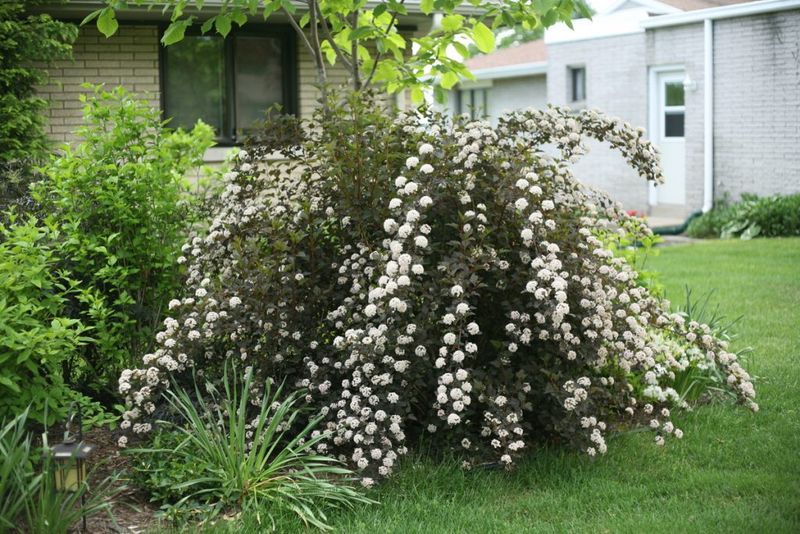
Walk past a front entry planted with dwarf ninebark and the deep burgundy or gold foliage stops you in your tracks. Physocarpus opulifolius cultivars like ‘Tiny Wine,’ ‘Little Devil,’ and ‘Coppertina’ pack serious color into a compact, well-behaved package that suits Ohio foundation beds without turning into a maintenance headache.
The foliage holds its rich color from spring through fall, giving the entry a polished, designed look across the entire growing season.
Compact ninebark varieties typically reach three to four feet tall and wide, which keeps them proportional near most entry spaces. Small clusters of white or pale pink flowers appear in late spring, followed by reddish seedpods that add texture without creating a litter problem on walkways.
The exfoliating bark, which peels in thin layers to reveal cinnamon and tan tones beneath, becomes a quiet winter feature that most visitors notice up close.
Ninebark is adaptable to a wide range of Ohio soil types, including clay, and tolerates both full sun and part shade. It is cold-hardy well into USDA Zone 3, meaning Ohio winters present no real challenge.
Minimal pruning after flowering keeps the form tidy if needed, but many compact cultivars hold a naturally rounded shape without much intervention at all.
7. Catmint Keeps Entry Beds Soft But Controlled
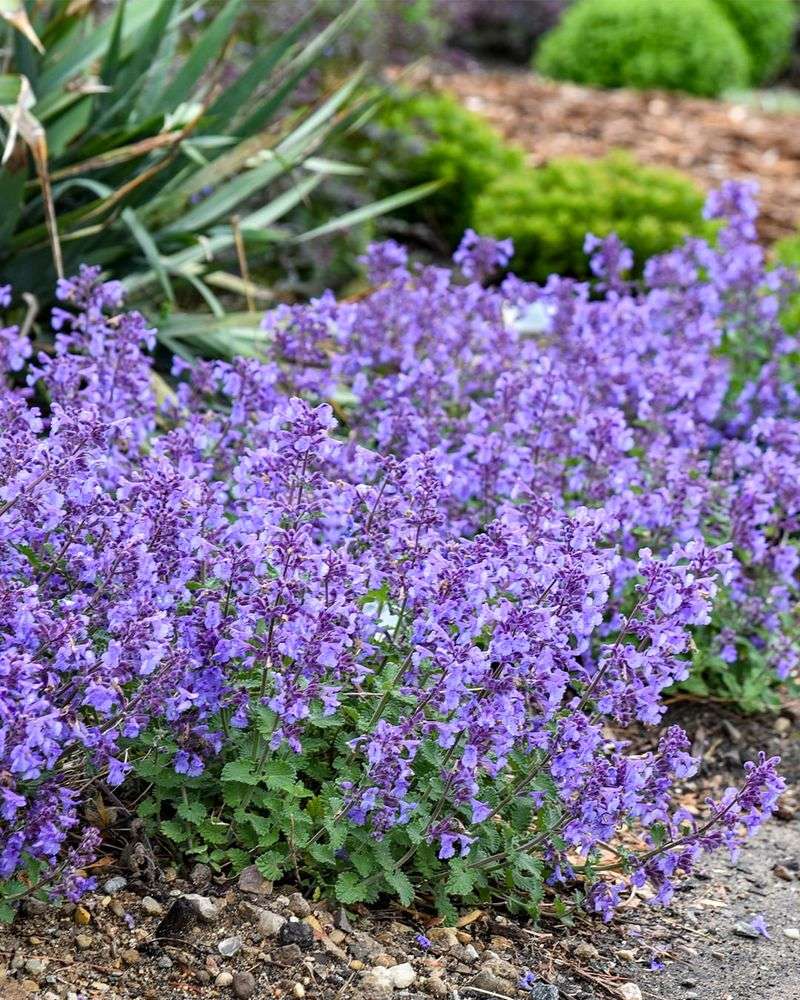
Not every entryway needs a shrub to look complete. Sometimes a low, billowy perennial does more for the overall feel of a front bed than anything taller.
Catmint, or Nepeta, brings soft lavender-blue flower spikes and silver-green foliage to Ohio entry beds from late spring well into summer, and its mounding habit stays low enough that it never blocks sightlines or crowds a walkway.
Varieties like ‘Walker’s Low’ and ‘Cat’s Meow’ grow to about eighteen to twenty-four inches tall and wide, forming a tidy, restrained clump that edges a front walk beautifully. After the first flush of bloom fades, a light shearing encourages a second round of flowers in late summer, refreshing the look without requiring much effort.
The silvery foliage stays attractive between bloom cycles, so the bed never looks bare or neglected during the gaps.
Catmint thrives in full sun and well-drained soil, conditions that most Ohio front beds can offer, especially those facing south or west. It handles Ohio summers with reasonable drought tolerance once established, and its aromatic foliage tends to discourage deer browsing, which matters in suburban and semi-rural Ohio neighborhoods.
For a soft, cottage-style look that still feels intentional and controlled near the front door, catmint is a reliable and rewarding perennial choice.
8. Lavender Makes The Walkway Feel Crisp And Fresh
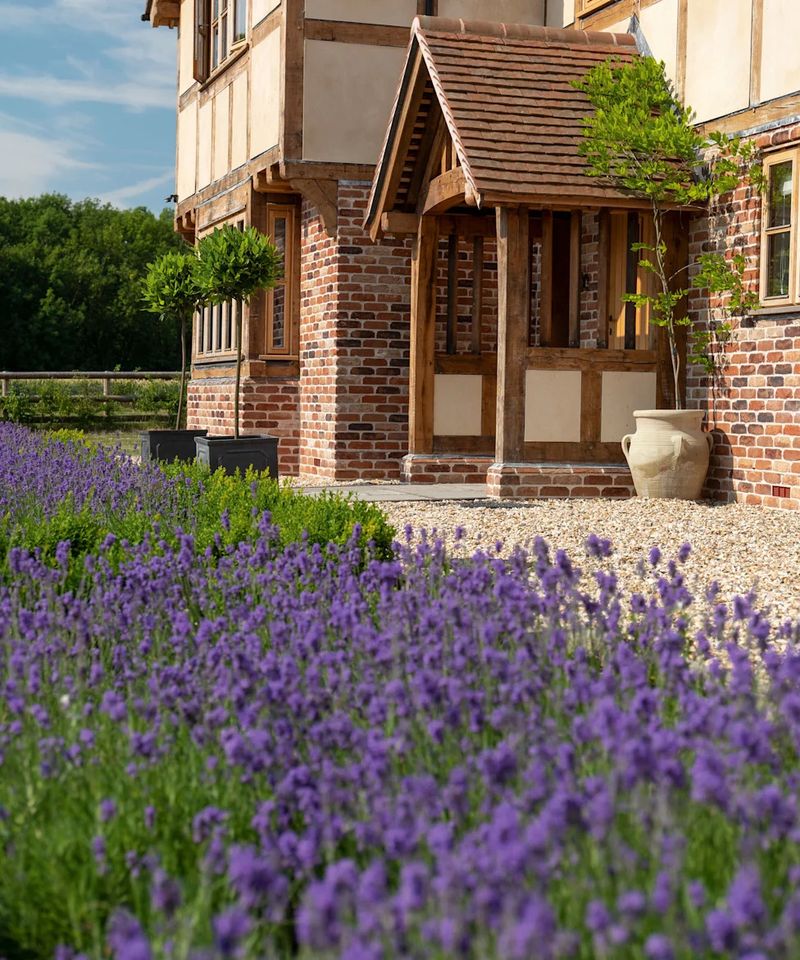
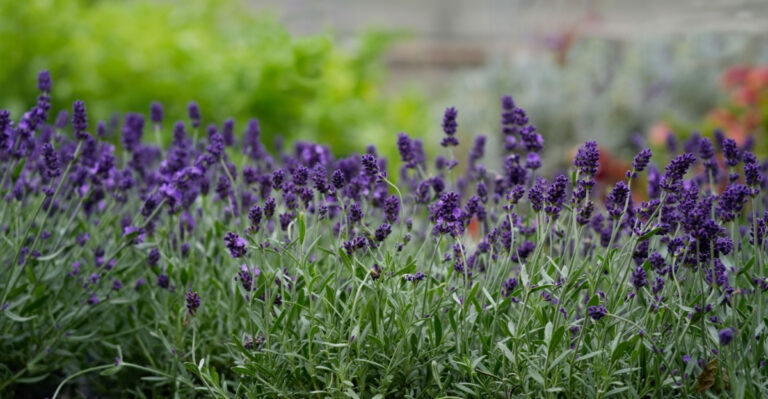
Few plants make a walkway feel as clean and inviting as lavender. The combination of silver-green foliage, upright purple flower spikes, and unmistakable fragrance creates a sensory experience that makes arriving home genuinely pleasant.
Near a front door or along a sunny entry path, even a small grouping of lavender adds a tailored, intentional quality that elevates the whole planting scheme.
In Ohio, lavender performs best in full sun with well-drained soil, conditions that are essential for keeping the plants healthy and compact. Varieties like ‘Hidcote’ and ‘Munstead’ are among the most cold-hardy options available, tolerating Ohio winters in USDA Zones 5 and 6 when planted in a sheltered, south-facing spot with excellent drainage.
Raised beds or slopes near entry walks are ideal since they naturally shed the excess moisture that can cause lavender to struggle during Ohio’s wet springs.
The compact form of these varieties stays in the twelve to eighteen inch range, making them proportional for smaller entry beds and container plantings near front steps. After flowering, light shearing keeps the plants tidy and prevents the woody, open center that develops when lavender goes unpruned for too long.
For Ohio homeowners who want a Mediterranean feel with a neat, fragrant presence near the front door, lavender delivers a distinctive and polished result.
9. Coral Bells Add Color Without Creating Clutter
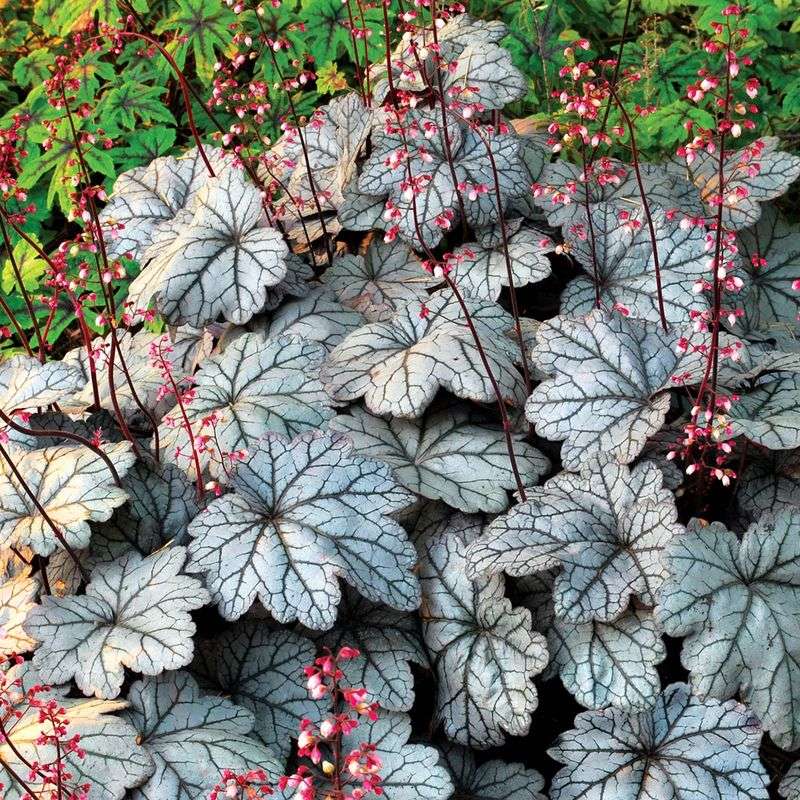
Color near a front entry does not have to come from flowers alone. Coral bells, known botanically as Heuchera, offer some of the most striking foliage available for Ohio shade and part-shade gardens, with leaf colors ranging from deep burgundy and chocolate to lime green, caramel, and silvery pewter.
A single well-placed clump brightens a shaded entry bed in a way that feels both refined and effortless.
The compact clumping habit is one of coral bells’ greatest strengths near entryways. Plants typically stay in the twelve to eighteen inch range and spread slowly, never crowding neighboring plants or pushing out beyond their intended space.
Slender flower stalks rise above the foliage in late spring and early summer, adding a delicate vertical element without creating any real litter or mess on nearby walks and steps.
Coral bells perform well in part shade to full shade, making them an excellent solution for north or east-facing Ohio entries where sun-loving plants struggle. They appreciate well-drained soil with consistent moisture and benefit from a light layer of mulch to protect the shallow crown during Ohio winters.
Popular varieties like ‘Palace Purple,’ ‘Caramel,’ and ‘Obsidian’ are widely available at Ohio nurseries and hold their foliage color reliably through the growing season, making them a dependable, low-fuss choice for any entry bed.
10. Hellebore Brings Early Charm To Neat Ohio Entryways
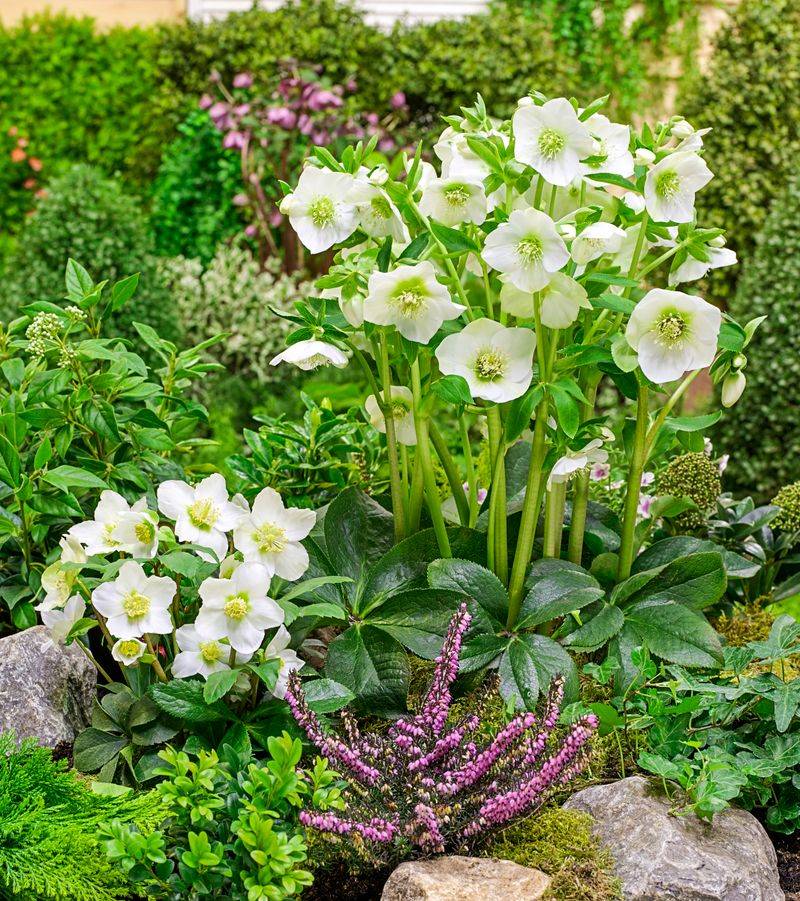
By late February and early March, most Ohio entryways are still looking tired from winter. Hellebore changes that.
Also called Lenten rose, Helleborus orientalis begins blooming while snow is still possible, producing nodding flowers in shades of white, blush, plum, and deep burgundy that bring quiet elegance to a front entry long before other plants have stirred. It is genuinely one of the most welcome sights of the Ohio gardening year.
Beyond the early flowers, hellebore offers semi-evergreen to evergreen leathery foliage that stays presentable through most of Ohio’s winter. The bold, deeply cut leaves hold their dark green color and create a refined, low-growing clump that rarely exceeds eighteen inches in height.
Old flower stems and tired leaves can be removed in late winter just before new growth emerges, which keeps the planting looking fresh with very little effort.
Hellebore thrives in part to full shade, which makes it ideal for north-facing entries or spots under porch overhangs where other plants struggle to perform. It prefers well-drained, humus-rich soil and, once established, requires surprisingly little attention.
Ohio State University Extension notes that hellebore is a reliable perennial for challenging shaded sites. For a front entry that needs early-season interest, year-round structure, and a genuinely elegant presence, hellebore is hard to beat.