These Are The 8 Trees Michigan Homeowners Regret Planting
Planting a tree often feels like a lasting upgrade, adding shade, structure, and a sense of maturity to your yard. In Michigan, though, not every tree settles in as smoothly as expected.
Ice storms, shifting soils, and strong seasonal swings can reveal problems that are easy to miss at the nursery.
Some fast-growing favorites bring along weak branches, aggressive roots, or constant cleanup that builds up over time.
It’s something many homeowners across the state come to recognize after a few seasons.
Choosing carefully from the start can help you avoid those frustrations and create a landscape that holds up well in Michigan conditions.
1. Callery Pear Breaks Easily And Spreads Beyond The Yard
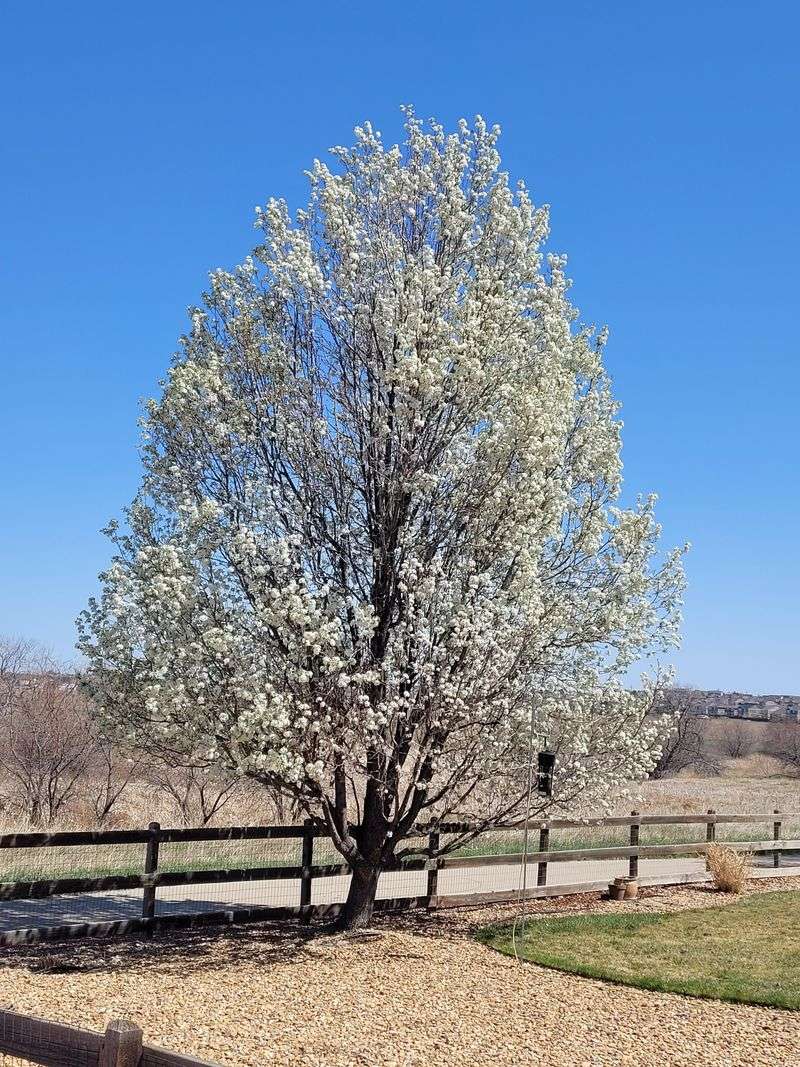
Few trees look as promising in early spring as the Callery pear, loaded with bright white blossoms and a tidy, symmetrical shape.
Michigan homeowners often plant them for quick curb appeal, only to realize a few years later that the tree’s structure is fundamentally flawed.
The tight, upright branch angles create weak attachment points that split under heavy snow loads or during Michigan’s fierce spring storms.
Once a mature Callery pear splits, the damage is often severe enough to require complete removal. The cleanup alone can be significant, and the structural failures tend to happen suddenly, sometimes damaging fences, vehicles, or nearby structures.
Homeowners who have experienced a mid-storm split describe it as both startling and costly.
Beyond the breakage issue, Callery pear has become a serious ecological concern across Michigan.
Birds eat the small fruits and spread seeds widely, causing wild seedlings to pop up in fields, roadsides, and neighboring yards.
These escaped seedlings develop thorns and outcompete native plants. Unlike the cultivated parent tree, wild offspring are difficult to control once established.
Michigan’s open landscapes provide ideal conditions for this spread, making Callery pear one of the more environmentally problematic ornamental trees a homeowner can choose. Many conservation groups now actively discourage planting it.
2. Tree Of Heaven Spreads Fast And Crowds Out Native Plants
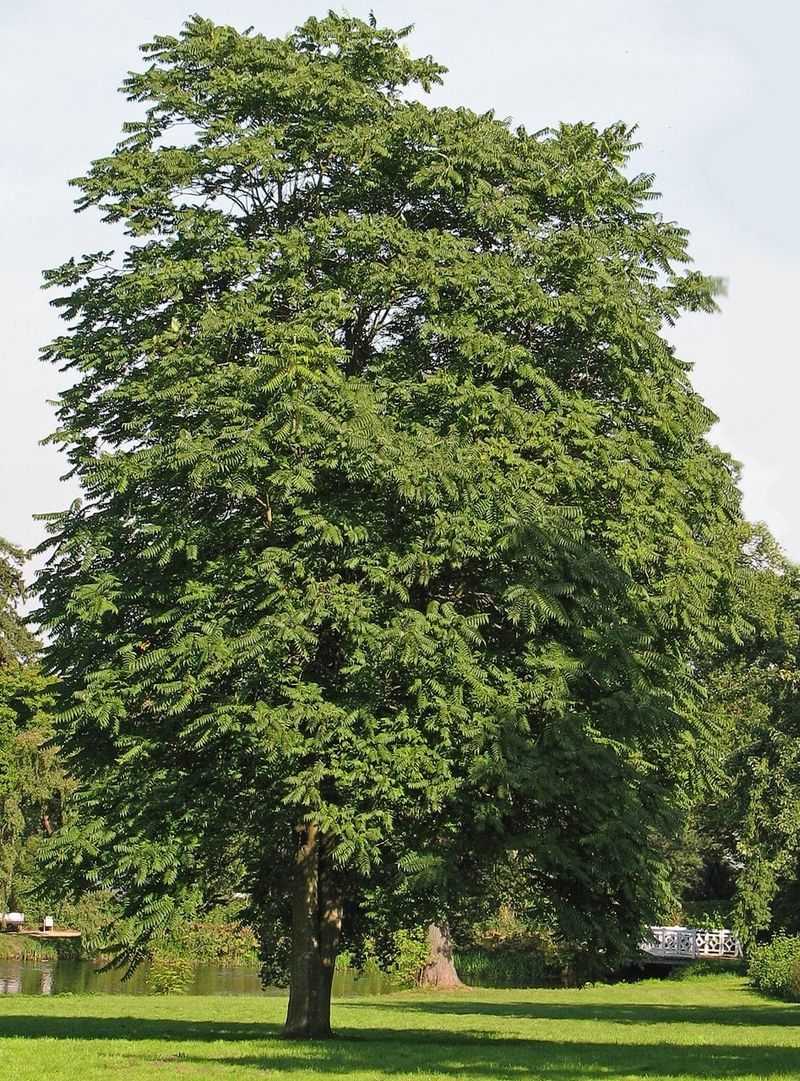
Walk along almost any Michigan roadside or abandoned lot and you will likely spot Tree of Heaven without even knowing it.
Ailanthus altissima has a deceptively pleasant name, but experienced landscapers and homeowners who have dealt with it firsthand tend to describe it in far less flattering terms.
It grows at a remarkable pace, sometimes adding several feet of height in a single season.
The real problem starts when a single tree becomes dozens. Tree of Heaven spreads through prolific seed production and an aggressive root system that sends up suckers in every direction.
Cutting it down often makes things worse, as the stump responds by pushing out multiple new stems with even more energy than before.
The roots also release chemicals into the soil that can suppress the growth of surrounding plants, giving it an unfair advantage over native Michigan species.
In Michigan yards, this tree tends to colonize quickly along fences, driveways, and garden beds. The leaves have an unpleasant odor when crushed, and the tree hosts the spotted lanternfly, an invasive pest that is a growing concern in the region.
Removing an established Tree of Heaven typically requires repeated treatment over multiple seasons, and even then, regrowth is common.
Most homeowners who have dealt with it wish they had spotted it early and pulled it as a seedling before it ever had a chance to establish.
3. Black Locust Sends Up Suckers That Take Over Space
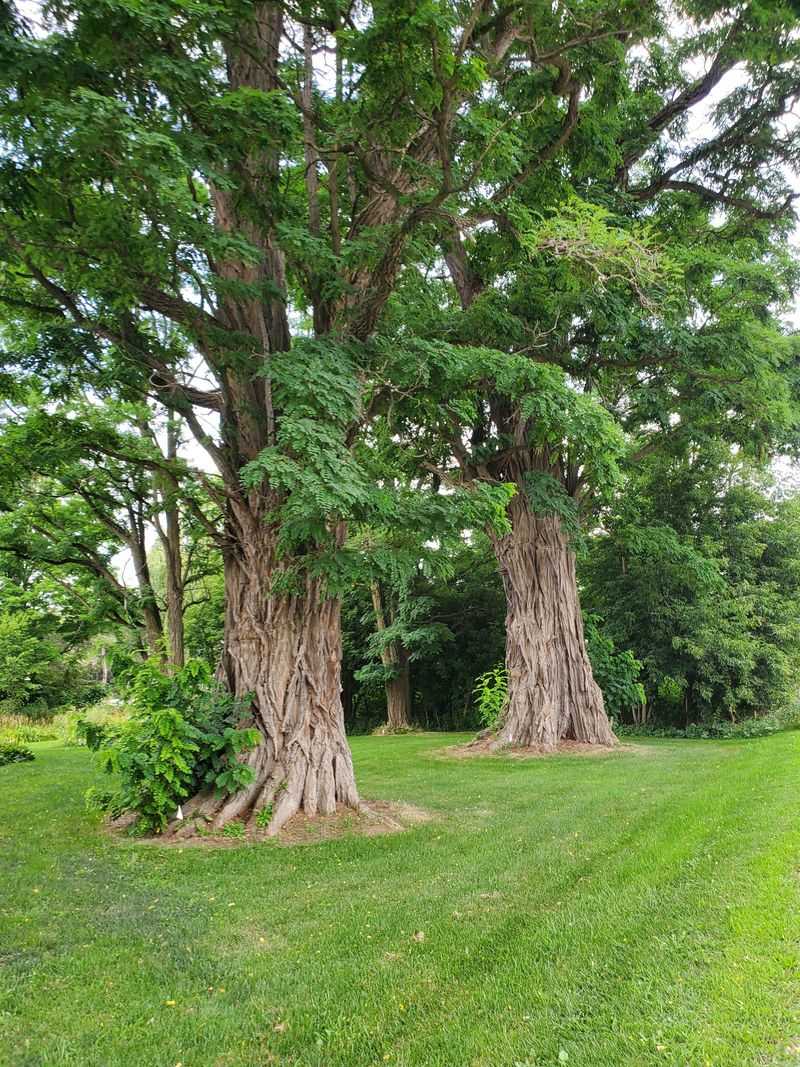
Thorny, relentless, and surprisingly hard to remove – black locust has a way of overstaying its welcome in Michigan residential yards. The tree itself can be attractive, with fragrant white flower clusters in late spring and a rugged, textured bark.
But once it settles into your soil, the real personality of this tree starts to show up in the form of root suckers that push through lawns, garden beds, and even cracks in pavement.
A single black locust can generate dozens of suckers each season, and each one has the potential to become a new tree if left unchecked.
Mowing them down just encourages more sprouting, and the thorns on young shoots make weeding around them an unpleasant task.
In Michigan’s loamy or sandy soils, the root system can travel surprisingly far from the original trunk, meaning suckers may appear well into a neighboring planting area or even beyond your property line.
The wood of black locust is extremely hard and durable, which sounds like a positive trait until you need to remove the tree. Cutting it down without treating the stump almost guarantees a regrowth response.
Homeowners in Michigan who have tried to reclaim a yard overtaken by black locust often describe it as one of the most labor-intensive tree removal projects they have ever faced.
The combination of thorns, suckers, and stubborn regrowth makes this one a tree to carefully consider before planting.
4. Boxelder Brings Mess And Persistent Bug Issues
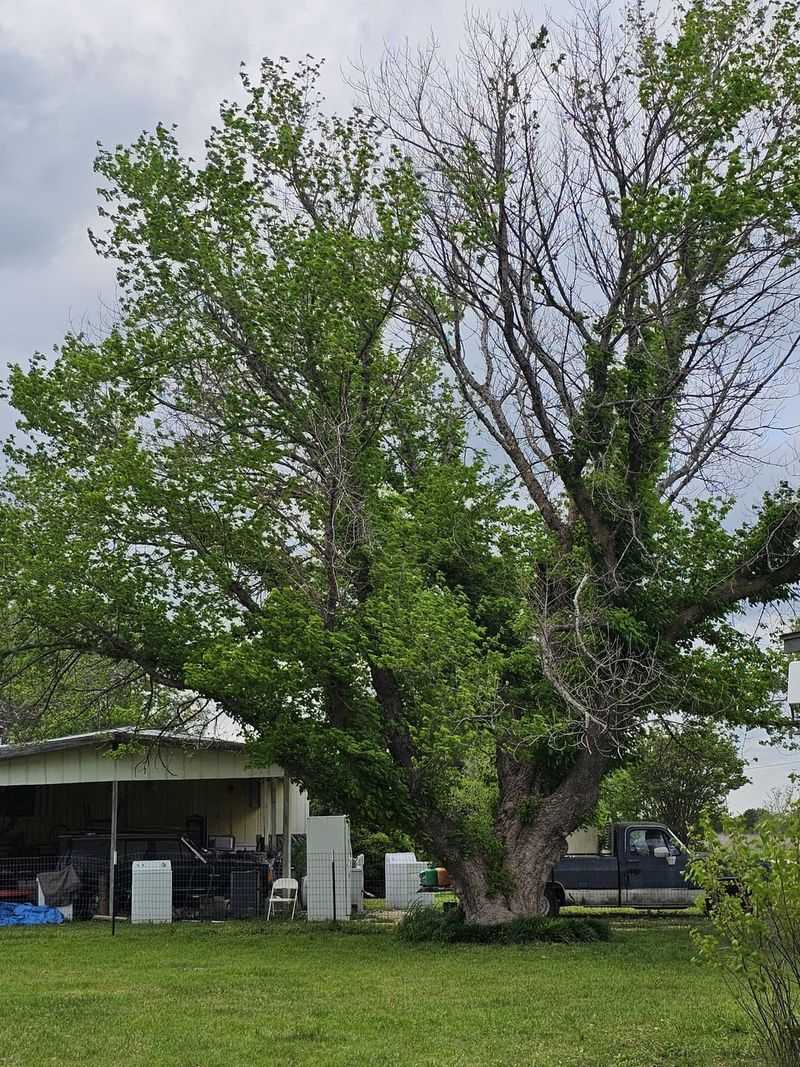
Boxelder is one of those trees that tends to show up uninvited rather than being deliberately planted, but some Michigan homeowners do choose it for its fast growth and tolerance of tough conditions.
The regret usually sets in come fall, when the tree’s relationship with boxelder bugs becomes impossible to ignore.
These red and black insects gather in enormous numbers on the sunny sides of homes, fences, and tree trunks as temperatures drop.
Boxelder bugs do not bite or cause structural damage, but they are a genuine nuisance. They squeeze through window screens, gaps in siding, and door frames to overwinter inside homes.
A large boxelder tree close to the house can generate infestations that feel nearly impossible to manage without professional pest control.
Michigan’s cold winters push the bugs to seek warmth aggressively, making proximity to a boxelder tree a real seasonal headache for homeowners.
Beyond the bug issue, boxelder produces messy clusters of winged seeds that blow across yards and germinate readily in garden beds, lawn edges, and gutters.
The tree also tends to develop weak branch structure over time, making it prone to breakage during Michigan’s ice storms and heavy snow events.
Female boxelder trees are the primary host for the bugs, so identifying and removing them is sometimes recommended as part of pest management.
For most Michigan homeowners, the combination of insects and structural weakness makes boxelder a tree worth removing rather than keeping.
5. Silver Maple Drops Limbs And Lifts Sidewalks
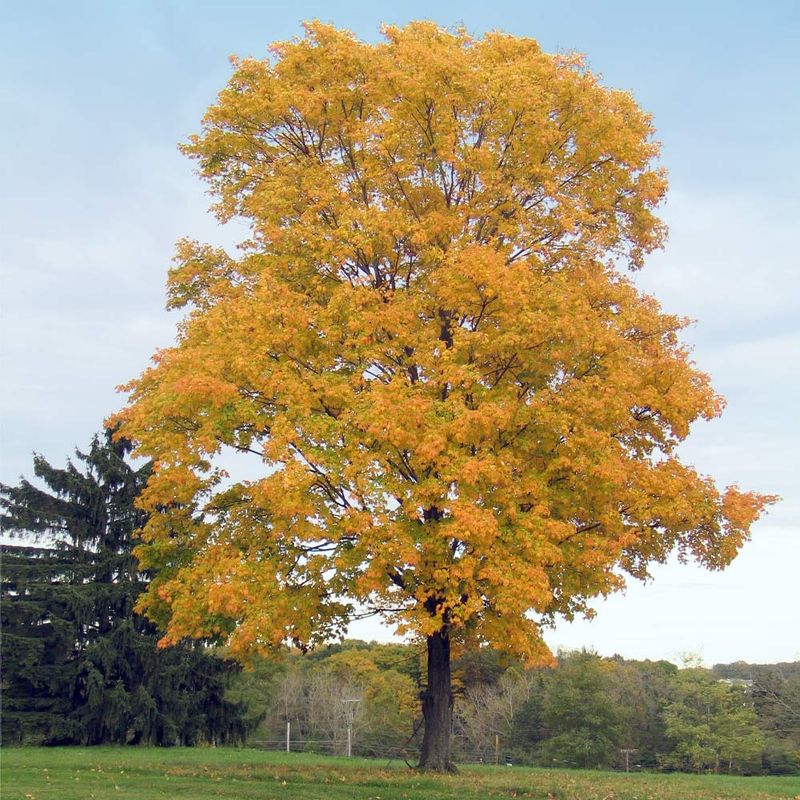
Speed is silver maple’s most appealing quality and also the root of most of its problems.
Michigan homeowners looking for fast shade often reach for silver maple, and the tree delivers, sometimes growing three feet or more in a single year.
But rapid growth comes with a trade-off in wood density, and silver maple develops some of the weakest branch structure of any common landscape tree in the region.
During Michigan’s frequent ice storms and heavy spring thunderstorms, silver maple limbs come down with alarming regularity. Large sections can fail without much warning, landing on roofs, cars, and fences.
Homeowners with mature silver maples near their homes often spend considerable money on annual pruning just to reduce the risk of storm damage.
Even with regular maintenance, the tree’s natural tendency toward weak crotch angles makes complete risk elimination unlikely.
Below ground, silver maple is equally aggressive. The shallow, spreading root system is notorious for lifting sidewalks, cracking driveways, and invading sewer and water lines.
In Michigan yards where clay soil limits deep root penetration, the roots spread even more broadly along the surface.
Homeowners who have replaced sidewalks or dealt with root-related plumbing repairs near a silver maple often describe the experience as expensive and recurring.
The tree can live for many decades, meaning the root issues tend to get worse over time rather than stabilizing. Planting silver maple close to any hardscape is widely considered a landscaping mistake in Michigan.
6. Siberian Elm Self Seeds And Grows Unpredictably
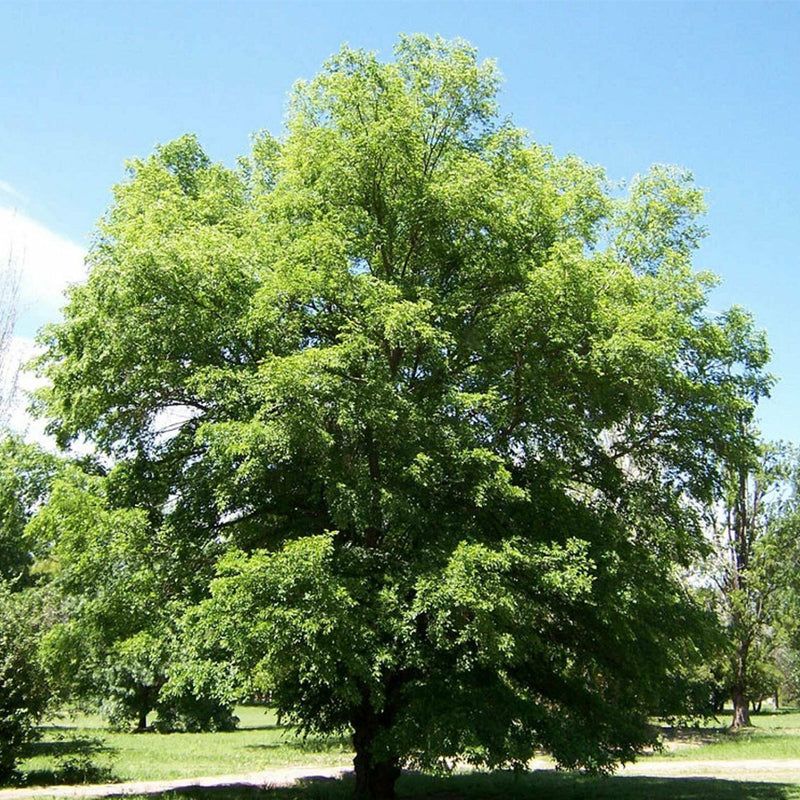
Siberian elm was once promoted as a tough, fast-growing windbreak tree for harsh conditions, and in those terms it does perform well.
Michigan homeowners sometimes plant it thinking they are getting a low-maintenance shade tree, only to discover that the tree’s most notable trait is its willingness to reproduce almost anywhere.
Siberian elm produces enormous quantities of small, papery seeds that travel far on the wind and germinate in a wide range of soil conditions.
Within a few seasons, a single Siberian elm can generate seedlings throughout your yard, in neighboring properties, in gutters, in garden beds, and along fence lines.
The seedlings grow quickly and develop woody stems fast, making early removal important.
Homeowners who let them go for even one season often return to find small trees that require tools rather than hand-pulling to remove. Michigan’s open suburban landscapes give the seeds plenty of places to land and take hold.
The mature tree itself also has a reputation for messy, irregular growth. Without consistent pruning, Siberian elm develops a scraggly, uneven canopy with branches that cross and rub against each other.
The wood is moderately brittle, making it susceptible to breakage during Michigan’s winter storms. Branches that fail tend to leave ragged wounds rather than clean breaks, which can invite disease.
For homeowners who want a tidy, predictable landscape, Siberian elm consistently disappoints.
The combination of aggressive self-seeding and unpredictable structure makes it a tree most landscaping professionals advise against planting in residential Michigan settings.
7. Norway Maple Creates Dense Shade That Limits Growth Below
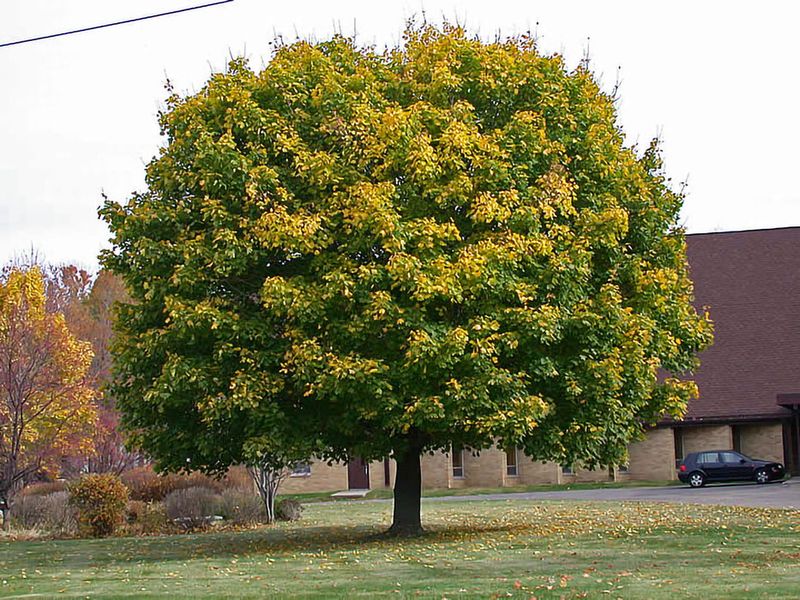
At first glance, Norway maple seems like an ideal street tree – sturdy, tolerant of urban conditions, and capable of producing a full, rounded canopy.
Michigan municipalities planted them widely for decades, and many homeowners followed suit in their own yards.
The problem becomes clear once the tree matures and its dense canopy begins to dominate the landscape in ways that are difficult to reverse.
Norway maple leafs out earlier than most native trees and holds its leaves later into fall, creating an extended period of deep shade that few lawn grasses or garden plants can survive.
The shallow, fibrous root system also competes aggressively with anything planted nearby, pulling moisture and nutrients away from surrounding plants.
Homeowners often describe the area beneath a mature Norway maple as a bare, compacted zone where almost nothing will grow, no matter how much effort is put into planting attempts.
Beyond the shade issue, Norway maple has been identified as an invasive species in many parts of the upper Midwest, including Michigan.
It produces abundant winged seeds that self-sow readily in forest edges and natural areas, where it can displace native understory plants.
Unlike native maples, Norway maple does not support the same range of wildlife or insects, reducing its ecological value significantly.
Michigan homeowners who have removed a large Norway maple often describe the process as expensive but worth it, noting that their yard’s diversity and usability improved noticeably once the tree was gone.
8. Weeping Willow Develops Aggressive Roots Near Water Lines
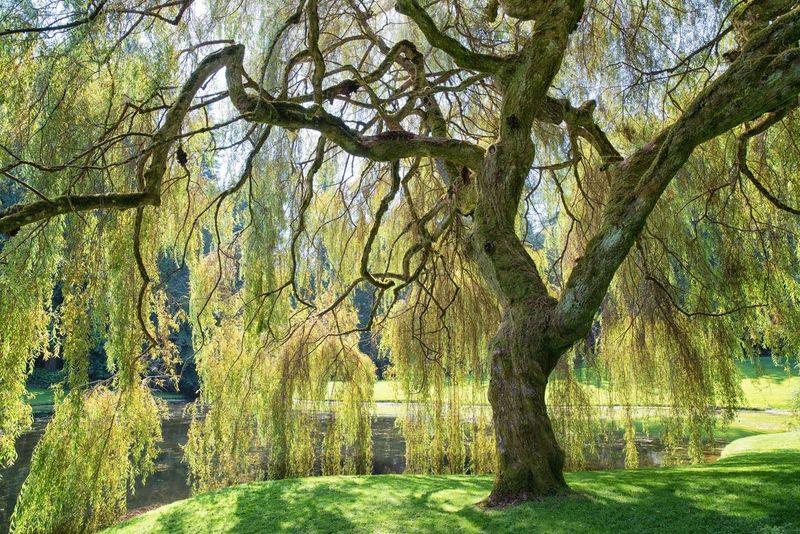
Few trees stir up as much romantic appeal as the weeping willow, with its long, sweeping branches and graceful silhouette near water.
Michigan homeowners near lakes, ponds, or streams sometimes plant them for that picturesque effect, and for a few years the tree delivers exactly what was imagined.
The trouble tends to arrive quietly, underground, long before most homeowners realize what is happening.
Weeping willow roots are relentlessly drawn toward moisture, and they are remarkably good at finding it.
Sewer lines, water supply pipes, and drainage tiles all carry enough moisture to attract willow roots, which can infiltrate small cracks and joints and expand inside the pipe over time.
In Michigan, where older homes may have clay tile sewer lines or aging water connections, a nearby weeping willow can cause serious plumbing damage that runs into thousands of dollars to repair.
The roots have also been known to interfere with septic systems, which are common in Michigan’s rural and semi-rural areas.
Above ground, weeping willow grows fast and large, often reaching 40 feet or more in height and spread. The branches are flexible but the wood is not especially strong, making the tree prone to storm breakage.
Michigan’s frequent spring and summer thunderstorms regularly strip branches from weeping willows, leaving debris across large areas of yard.
The tree also has a relatively short lifespan compared to other landscape trees, meaning homeowners may invest years of maintenance into a tree that declines faster than expected.