These Backyard Birds In Georgia Appear Right Before Spring
Late winter in Georgia rarely looks dramatic, yet something shifts in the yard before the calendar ever flips to spring. The air feels slightly busier.
Familiar calls return to the trees. Certain backyard birds begin showing up more often, moving with purpose instead of passing through.
These appearances are not random. Changes in daylight and temperature trigger feeding patterns, territorial behavior, and early nesting activity that signal a seasonal transition already underway.
Long before flowers fully open or lawns turn green, bird movement reveals that winter is losing its grip.
When these backyard birds become regular visitors again, spring is no longer a distant idea. It is quietly settling into your Georgia yard.
1. American Robins Start Filling Lawns Before The Season Shifts
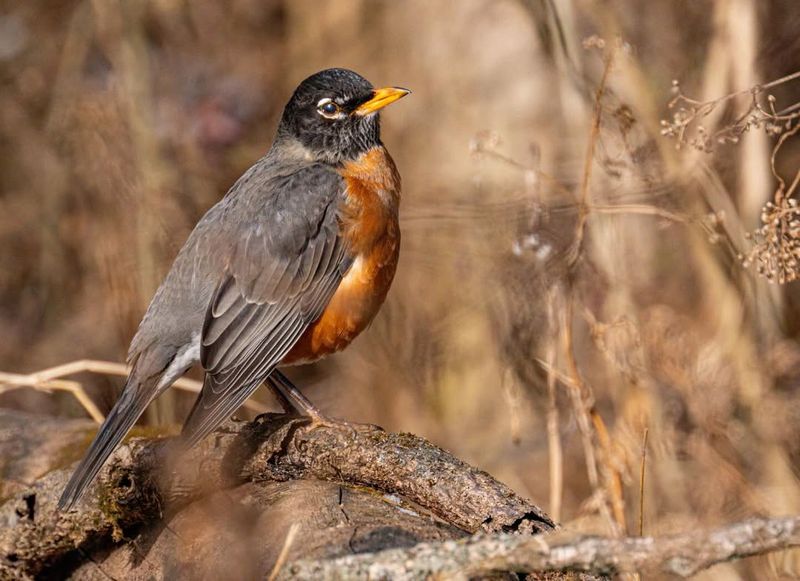
Spotting that first robin hopping across your lawn feels like getting a personal message that spring is coming. These chunky birds with rust-colored chests show up in Georgia yards when most people still need jackets in the morning.
They arrive in waves, sometimes dozens at a time, spreading across lawns and parks like they own the place.
Robins hunt by sight rather than sound, tilting their heads to spot earthworms moving under the soil. You’ll see them take a few hops, pause with that classic head tilt, then suddenly stab their yellow beaks into the ground.
Early mornings after rain bring the best worm-hunting conditions, so that’s when you’ll notice the most activity in your Georgia backyard.
Male robins arrive before females and immediately start singing from high perches to claim their breeding territory. Their cheerful carol sounds like “cheerily, cheer-up, cheerio,” repeated over and over at dawn.
Listen for these songs in late February across Georgia, especially in neighborhoods with mature trees and open grass areas where they can easily find food and nesting spots.
Soon after, females begin arriving and pairing with the males that secured the best territories. Nests are built in trees, sturdy shrubs, and sometimes on porch ledges around Georgia homes.
The female shapes the nest with mud and grass before laying her signature pale blue eggs. Within weeks, hungry nestlings fill the yard with soft calls as spring fully settles in.
2. Northern Cardinals Turn Up The Volume As Days Get Longer
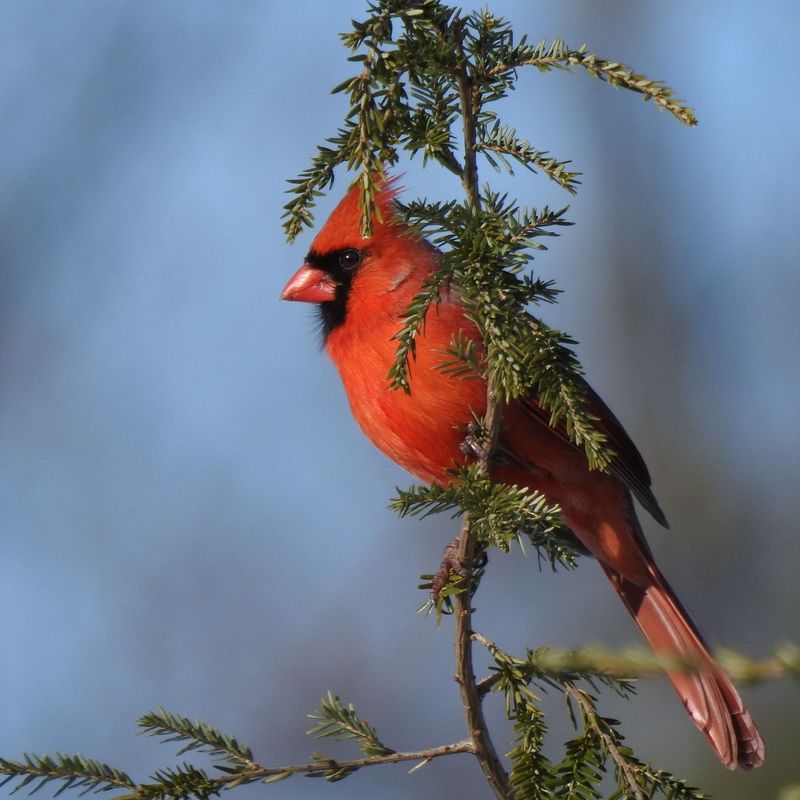
Cardinals live in Georgia all year, but something changes in them when late winter arrives. Males that barely made a peep during December suddenly can’t stop singing.
Their sharp whistles cut through morning air like natural alarms, announcing territories and attracting mates with persistent enthusiasm.
The classic “birdy-birdy-birdy” whistle gets repeated from the same high perch day after day. Males choose exposed branches on tall shrubs or trees where their brilliant red feathers catch early sunlight.
Females, dressed in softer tan with red highlights, respond with their own whistled phrases, creating duets that echo through Georgia neighborhoods.
Both sexes sing, which makes cardinals unusual among North American birds. Females use song to communicate with their mates about nest locations and potential dangers.
Watch your feeders in late February and March as pairs start showing up together, with males often passing sunflower seeds directly to females in a charming courtship feeding behavior.
Georgia backyards with dense shrubs and evergreens become cardinal headquarters during this pre-spring period.
As daylight stretches a little longer, their activity ramps up across yards and wooded edges. Short chases between rival males become more common as boundaries are tested.
The steady back-and-forth calls at sunrise leave little doubt that breeding season is close at hand.
3. Eastern Bluebirds Scout Nest Boxes Across Georgia Yards
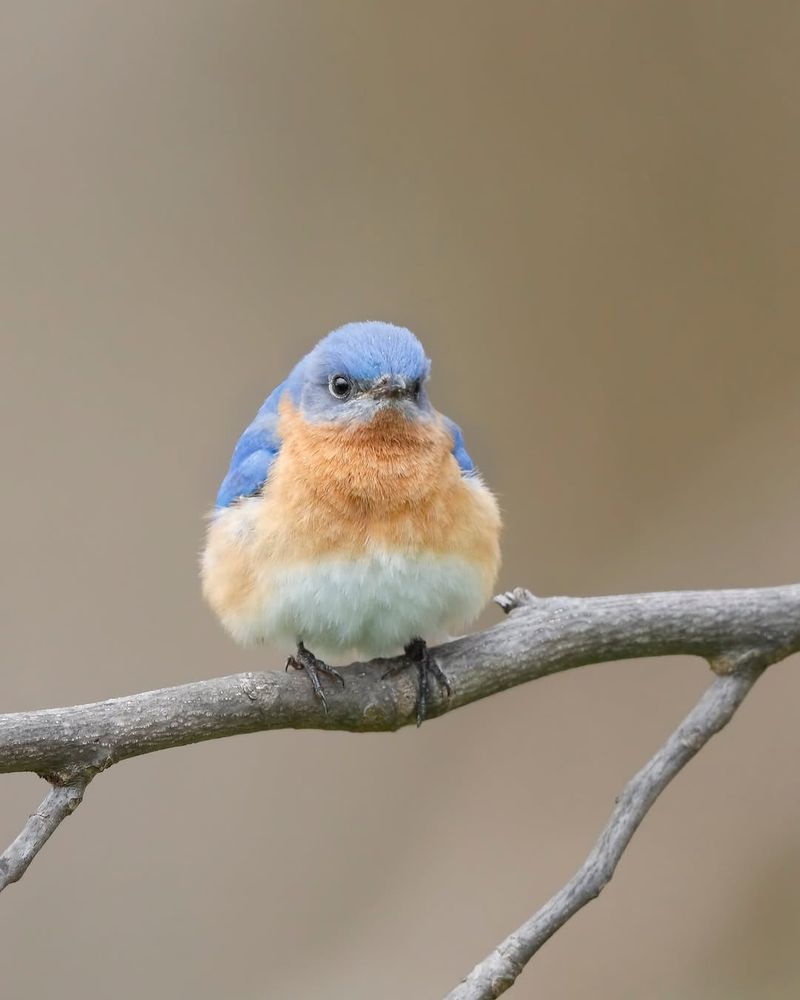
Few sights match the pure blue of a male bluebird inspecting a nest box on a sunny February afternoon. Georgia’s bluebird population stays active through winter, but breeding season preparation brings new urgency to their movements.
Males scout potential nest sites weeks before actual egg-laying begins, checking out every available cavity and box.
Bluebirds prefer open areas with short grass where they can spot insects from perches. Your Georgia yard becomes prime real estate if you’ve installed nest boxes facing away from prevailing winds.
Males land on box roofs, peek inside entrances, and perform wing-waving displays to attract females to promising sites.
Competition for good nest boxes can get intense in late winter. Native bluebirds face challenges from invasive house sparrows and European starlings that also want those cozy cavities.
Setting up multiple boxes spaced at least 100 yards apart gives bluebird pairs better chances.
Watch for males bringing nesting material like pine needles and grass to boxes they’ve chosen, signaling that Georgia’s bluebird breeding season has officially kicked off.
Females carefully inspect each cavity before accepting a site, often entering and exiting several times before deciding. Once a pair bonds, they defend the area from other bluebirds and aggressive competitors.
Eggs typically appear by early March in many parts of Georgia, depending on weather patterns. From that point on, activity around the nest box becomes steady and purposeful.
4. Carolina Wrens Sing Boldly From Porches And Shrubs
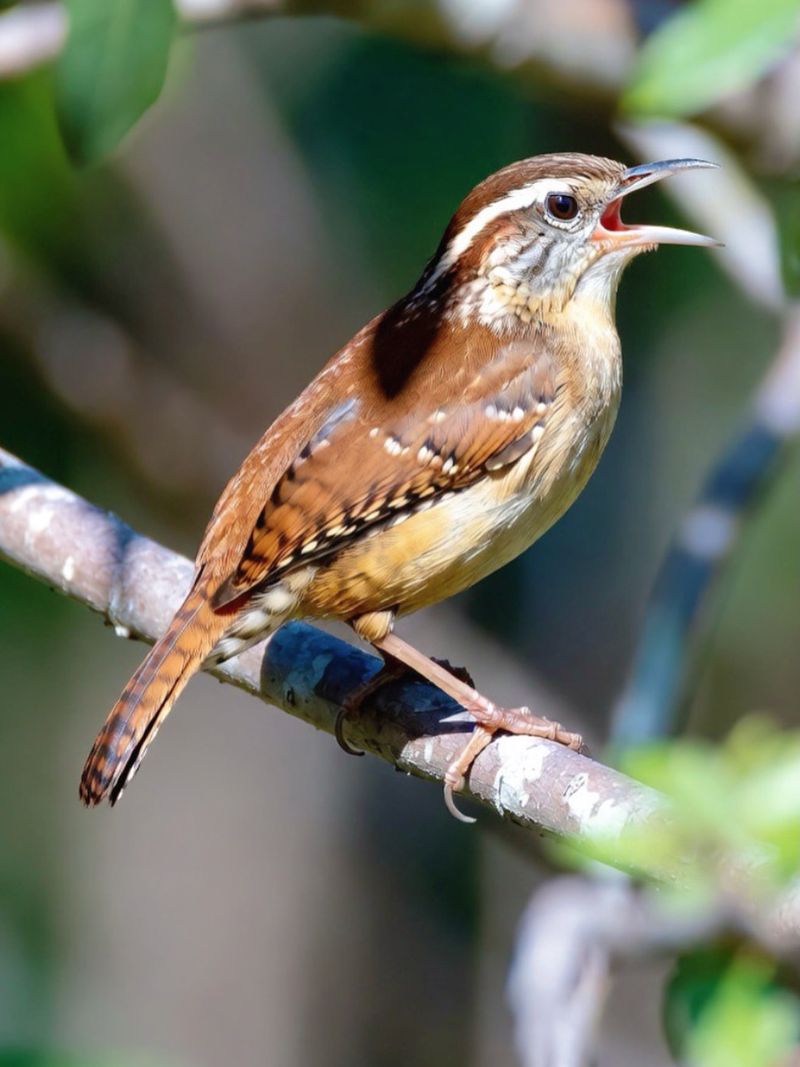
Volume doesn’t match size when it comes to Carolina wrens. These pint-sized birds pack incredible vocal power into bodies barely bigger than your thumb.
Georgia residents know them as the loud neighbors who never learned indoor voices, belting out “teakettle-teakettle-teakettle” from dawn until dusk during late winter.
Wrens explore every nook around Georgia homes, investigating flowerpots, mailboxes, and porch corners for potential nest sites.
They’re bold enough to build nests in hanging baskets still attached to hooks, seemingly unbothered by human activity nearby.
Their curiosity and fearlessness make them entertaining backyard characters.
Pairs stay together year-round, but singing intensity increases dramatically as breeding season approaches. Males perform with tails held straight up, white eyebrow stripes flashing as they turn their heads.
Listen for their songs coming from thick shrubs, woodpiles, or under deck railings across Georgia. These wrens don’t migrate, so the ones singing in your yard now will likely raise multiple broods in the same territory throughout spring and summer.
Courtship often includes the male showing off several possible nest spots before the female makes her final choice. Once she approves a site, both birds stay busy bringing in twigs, moss, and feathers to build a domed nest tucked safely out of sight.
5. Red-Winged Blackbirds Return To Open Fields And Wet Areas
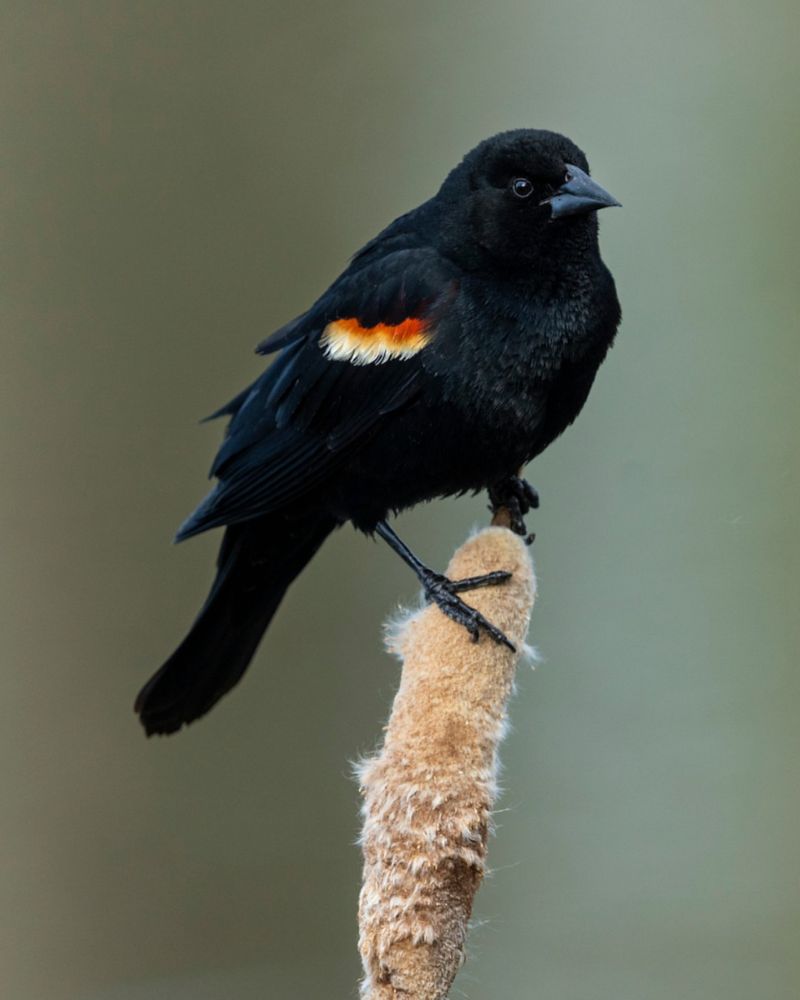
Nothing announces spring’s approach quite like the raspy “conk-la-ree” of red-winged blackbirds reclaiming Georgia marshes and wet fields. Males arrive first in late February, flashing their brilliant red and yellow shoulder badges while claiming the best territories.
They spread those colorful patches wide during displays, transforming from plain black birds into flashy showoffs.
Marshes, pond edges, and drainage ditches across Georgia suddenly fill with these territorial males. Each one perches on tall vegetation, singing and chasing away rivals that dare enter his claimed space.
The shoulder patches, called epaulets, can be hidden or displayed depending on the bird’s mood and intentions.
Females arrive about two weeks after males, dressed in heavily streaked brown that provides perfect camouflage among marsh grasses. Males court them with dramatic flight displays, rising up and gliding down with wings and tail spread.
Georgia’s wetlands and agricultural areas with standing water become blackbird headquarters during this pre-breeding rush, with dozens or even hundreds gathering in prime habitat.
Their loud chorus at sunrise carries across open water and fields, making it one of the clearest natural signals that winter is on its way out in Georgia.
6. Brown Thrashers Belt Out Songs From Backyard Fences
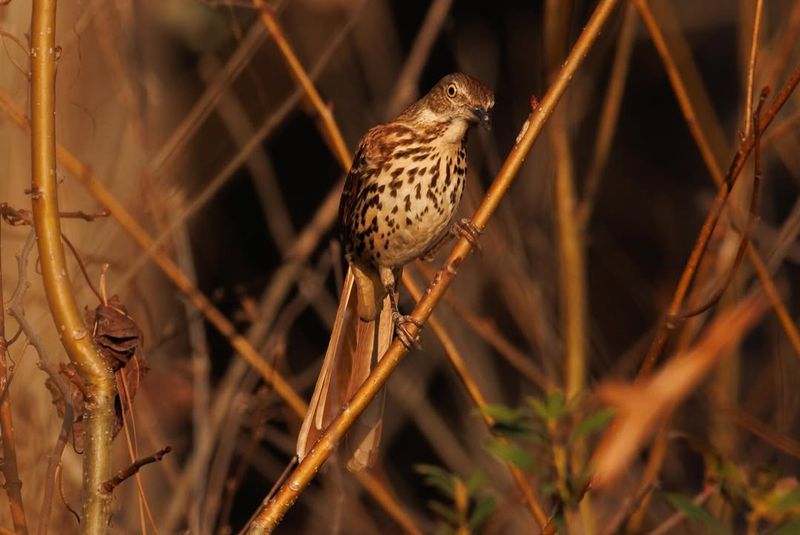
Georgia’s state bird doesn’t whisper. Brown thrashers deliver some of the most complex and loud songs in North American bird repertoires, with each male knowing thousands of different phrases.
Late winter brings these rust-colored singers out of their quiet season and into full performance mode from fence posts and high shrubs.
Their song style involves singing each phrase twice before moving to the next one. “Hello-hello, how are you-how are you, very well-very well” captures the rhythm, though actual songs contain musical whistles, clicks, and mimicked sounds from other birds.
Males sing from exposed perches across Georgia, often choosing the same favorite spots day after day.
These large thrashers spend most of their time on the ground, using their long curved beaks to flip leaves and dig through mulch hunting insects.
Watch Georgia flower beds and under shrubs for their distinctive double-scratching technique, where they jump forward and kick both feet back simultaneously.
Their combination of ground-feeding habits and spectacular singing makes them easy to identify once you know what to look for during the late winter breeding preparation period.
Territory boundaries become clear as males chase off intruders with sudden bursts of wingbeats and sharp calls. Dense hedges and tangled shrubs often hide their bulky nests once construction begins.
By early spring across Georgia, their varied performances can last for minutes at a time without repeating the same sequence.
7. Eastern Phoebes Reappear Around Homes And Garden Edges
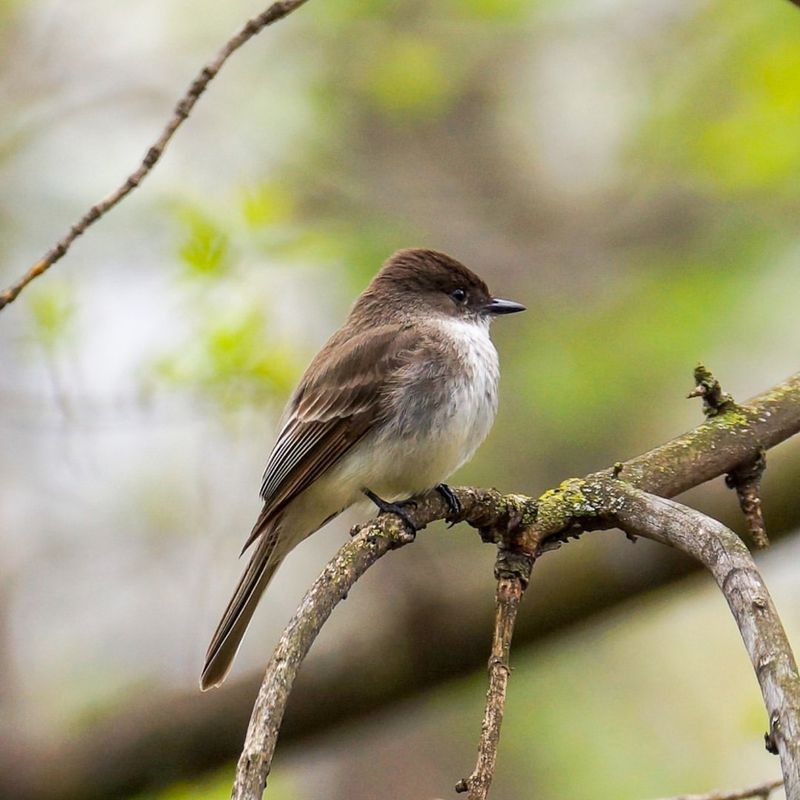
Tail-bobbing gives phoebes away before you even hear their raspy “fee-bee” call. These small flycatchers return to Georgia in late February, immediately reclaiming territories around buildings, bridges, and sheltered structures.
They perch upright on branches or railings, constantly pumping their tails up and down while scanning for flying insects.
Phoebes build mud-based nests on protected ledges under eaves, inside garages, or on porch beams. Georgia homeowners often find the same pair returning to the exact same nest site year after year, adding new material to old foundations.
Their tolerance for human activity makes them easy to observe and welcome backyard residents.
Unlike many birds that need dense vegetation, phoebes prefer open areas near buildings where they can spot and catch insects in mid-air. Watch them launch from perches in quick sallies, snapping up flies and small beetles before returning to the same spot.
Georgia yards with open lawn areas, nearby water, and structures offering nest sites become phoebe magnets during late winter. Their simple two-note song lacks the musical quality of many spring singers but announces their return just as clearly.
Courtship happens quickly once territories are reestablished, with males chasing intruders away from favored ledges. Eggs often appear by early March in much of Georgia if temperatures stay mild.
Both parents share feeding duties once the chicks hatch, making constant trips with insects tucked in their bills.
8. Mourning Doves Begin Nesting Earlier Than Most Expect
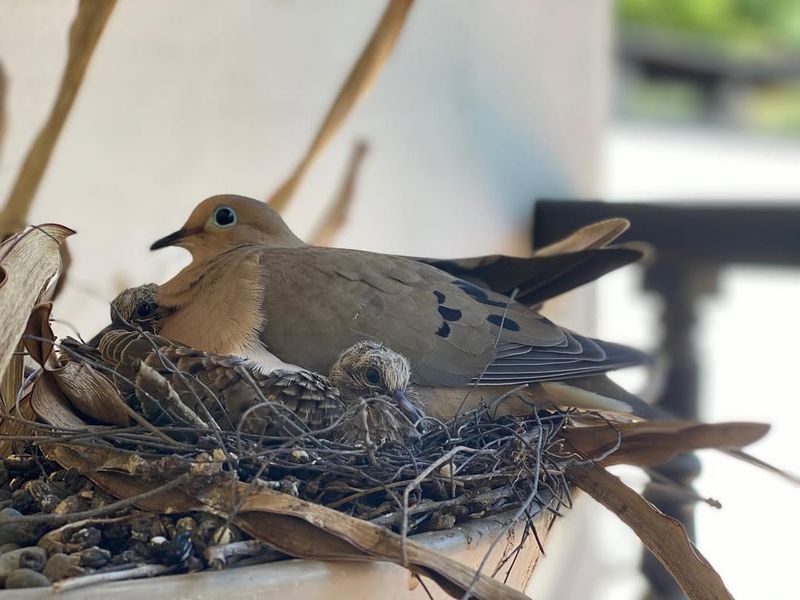
While other birds are just starting to sing, mourning doves in Georgia are already sitting on eggs. These abundant birds nest earlier than almost any other species, sometimes beginning in late February when frost still covers morning grass.
Doves build surprisingly flimsy nests, often just loose platforms of twigs that seem barely capable of holding eggs.
Georgia yards with evergreen trees or dense shrubs host many dove nests, sometimes placed so carelessly that you can see eggs through the bottom.
Despite this seemingly poor construction, doves successfully raise multiple broods throughout the breeding season.
Both parents share incubation duties, with males typically sitting during midday hours.
Watch for doves visiting feeders in pairs during late winter across Georgia, with males performing courtship flights that involve steep climbs followed by gliding descents with wings held in a V-shape.
Their early nesting strategy means baby doves appear in Georgia backyards while many other species are still building nests or even just arriving from migration.
Soft wing whistles often give them away when they flush from the ground. Nestlings grow quickly on a rich diet of crop milk produced by both parents.
Within a short time, nearly full-sized young perch nearby, still begging for food.
9. American Goldfinches Begin Changing Into Brighter Breeding Colors
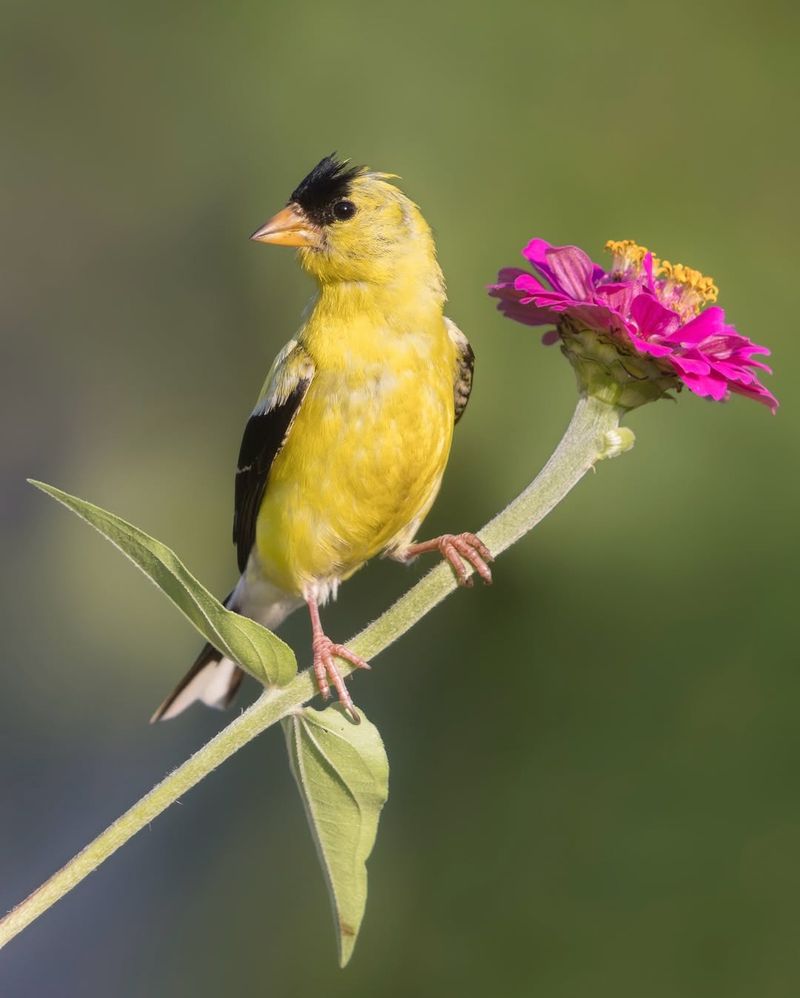
Goldfinches spend winter in Georgia looking drab and olive-colored, barely recognizable compared to their summer brilliance. Late February and March bring a remarkable transformation as males molt into breeding plumage.
Watch your feeders for birds showing patches of bright yellow feathers emerging among the dull winter browns.
This molt happens gradually over several weeks, creating goldfinches that look painted halfway between seasons. Males complete the change first, developing brilliant yellow bodies with jet-black caps and wings.
Females brighten too but retain more subdued yellow-green tones. Georgia thistle feeders become beauty parlors where you can watch this transformation happen right before your eyes.
Unlike most songbirds that nest in spring, goldfinches wait until summer when thistle and other seed plants produce the fluffy material they need for nests. Their late winter color change prepares them for the long courtship period ahead.
Listen for their roller-coaster flight calls, “per-chick-o-ree,” as small flocks bounce through Georgia skies.
Nyjer seed feeders attract the most goldfinches during this colorful transition period, offering perfect viewing opportunities for one of nature’s most dramatic seasonal makeovers.
As daylight increases, males begin singing more frequently while chasing rivals away from feeders. By mid to late spring in Georgia, their bright plumage stands out sharply against fresh green foliage.