These Beautiful Trumpet-Shaped Flowers In Georgia Yards Come With A Serious Warning
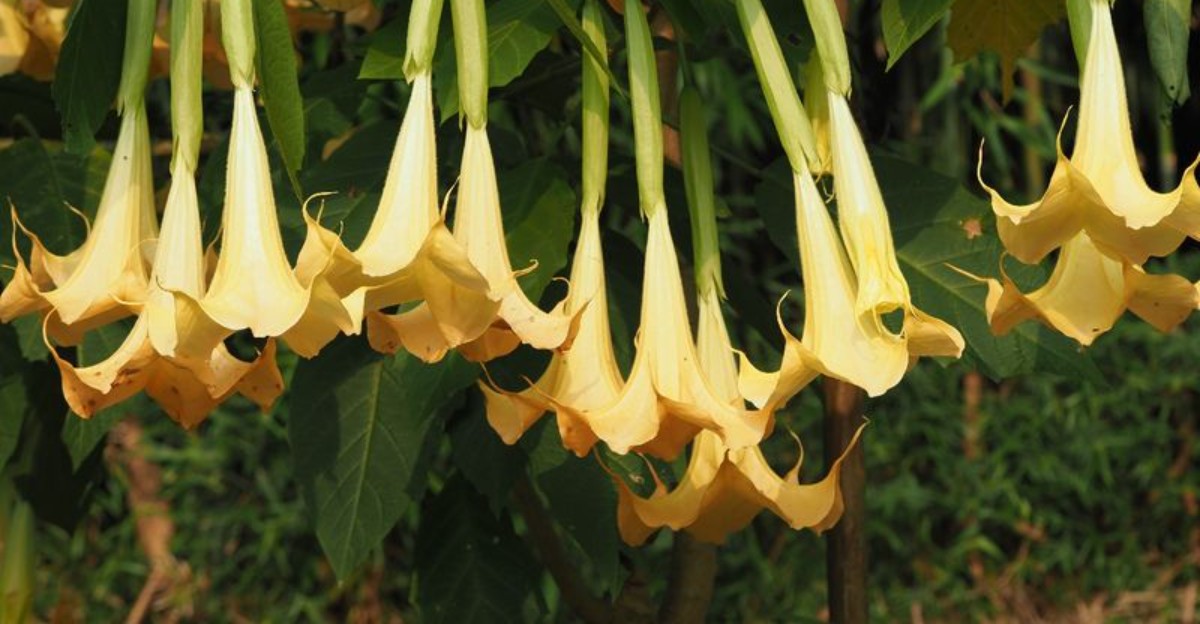
Beautiful flowers can sometimes be the ones you need to approach with the most caution, especially when their appearance hides a potential danger.
Large trumpet-shaped blooms bring striking color to gardens, yet certain plants producing them contain toxic compounds. Their attractive flowers can make them particularly tempting to curious children and pets.
Appearance alone is never a reliable guide to plant safety.
Some Georgia homeowners grow these ornamentals without realizing that multiple parts of the plant may be poisonous if swallowed. Knowing exactly what is growing near walkways and play areas is important.
Take a closer look before handling unfamiliar flowers or collecting their seeds.
You can appreciate dramatic garden blooms without treating every attractive plant as harmless. Recognizing the warning signs and understanding the risks can help you make safer decisions about what belongs in your yard.
1. Huge Dangling Blossoms Peak In Late Summer And Fall
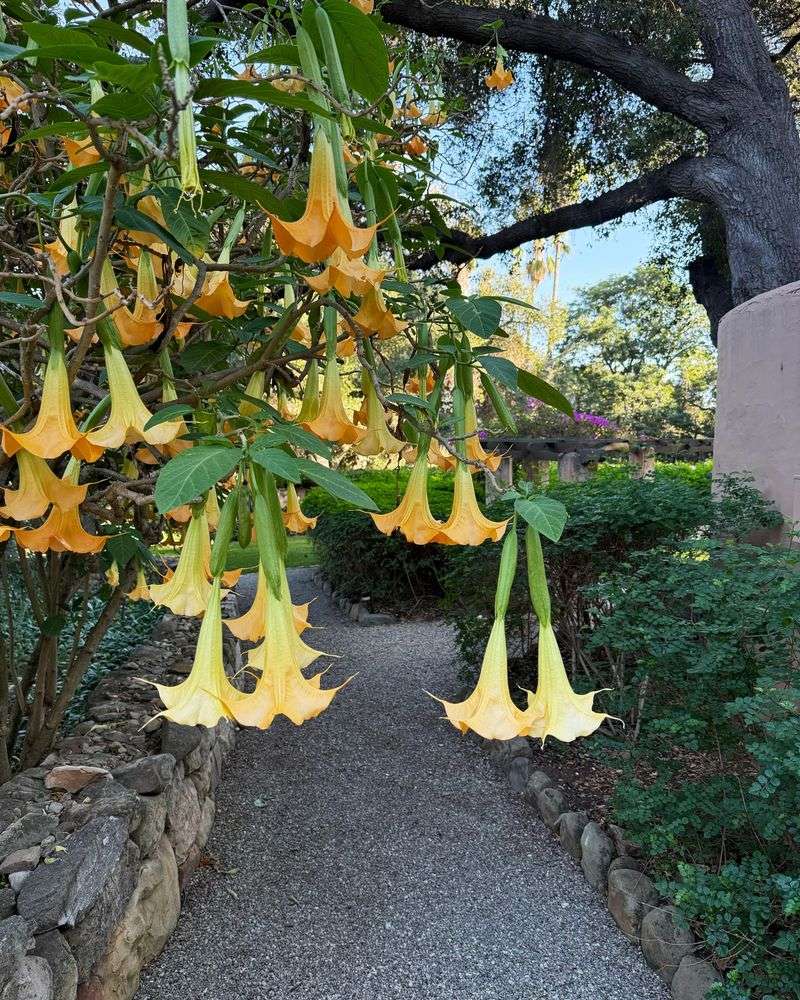
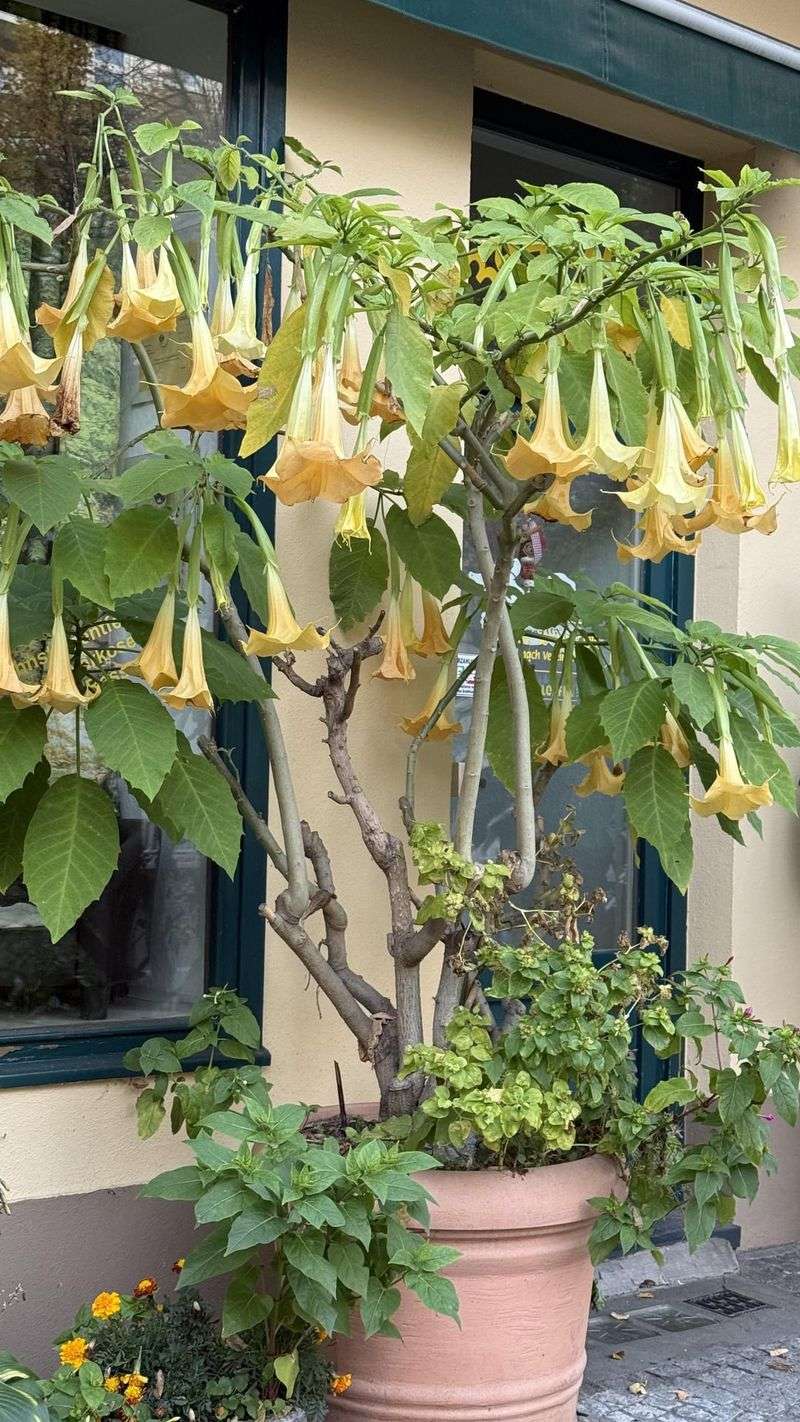
Picture a shrub covered in flowers as long as your forearm, all hanging down like lanterns. That is the sight that makes people slow their cars on Georgia streets in late summer.
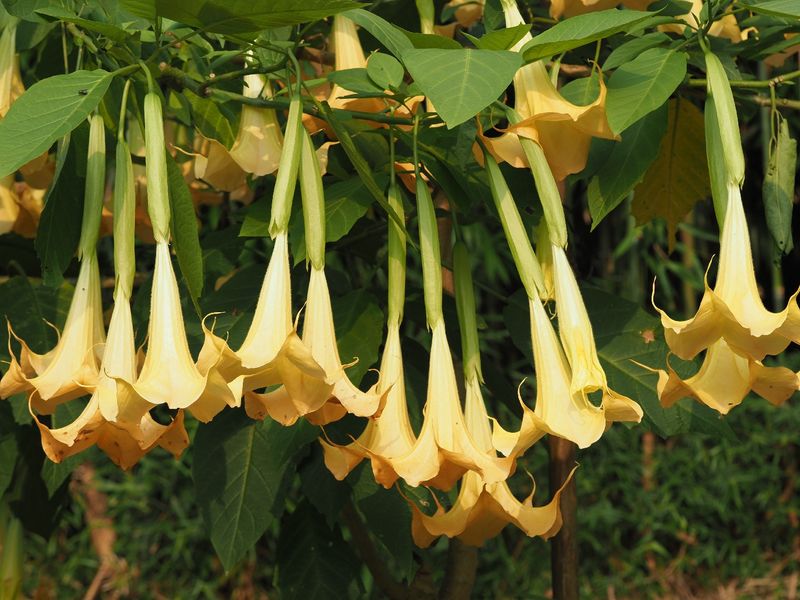
The plant behind the show is angel’s trumpet, known to botanists as Brugmansia.
Blooms often measure somewhere around six to twelve inches long, depending on the variety and how well the plant is fed.
Flowering can start earlier in the warm season, but heavy flushes tend to show up as summer winds down. In many yards, the plant keeps blooming in waves until cool weather slows it.
Each flower lasts only a few days before it fades and drops.
New buds keep forming as long as the plant stays healthy, watered, and actively growing. A shrub that struggles in dry soil or deep shade usually puts out fewer blooms.
Gardeners who want a strong display often give their plants steady moisture through hot spells. Regular feeding during the growing season can also help, since Brugmansia is known as a hungry plant.
Morning sun with some afternoon shade works well in hotter parts of the South.
Results vary from yard to yard, so do not worry if your plant blooms on a slightly different schedule. Soil, weather, and plant age all play a role in timing and flower count.
2. Blooms Come In White, Yellow, Peach, And Pink
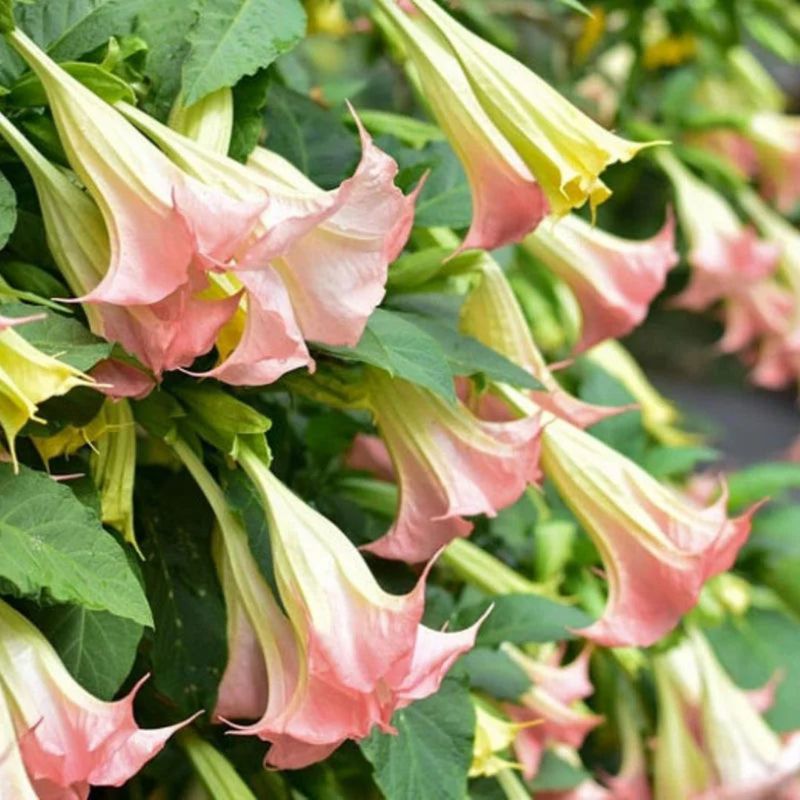
White might be the classic look, but angel’s trumpet comes in a surprising range of soft colors. Yellow, peach, and pink varieties show up in garden centers and plant swaps around Georgia.
Some flowers even shift color as they open and age over a couple of days.
A bloom might start pale and deepen into a warmer shade before it drops. Temperature and plant health can affect how strong the color looks, so the same variety may vary a bit from one season to the next.
Single, double, and even triple blooms are available.
Doubles have extra layers of petals tucked inside each trumpet, giving a ruffled look. Collectors often trade cuttings to get unusual forms that are hard to find in stores.
Your Georgia Garden Changes Every Week. Your Plan Should Too.
Gardening in Georgia changes quickly throughout the season. Every Friday you’ll receive a simple weekly plan showing exactly what to plant, prune, fertilize, harvest, and protect so you never miss the right timing.
Choosing a color comes down to your yard and taste.
White and pale yellow flowers stand out at dusk, which makes them nice near a porch or patio. Peach and pink blend nicely with warm-toned brick and other summer flowers.
Keep the warning in mind no matter which shade you pick. Every color carries the same toxins, so a pretty pink bloom is just as risky as a white one.
Labels on nursery plants sometimes list only the color, not the full variety name, so ask questions when buying.
3. Large, Soft Leaves And Woody Stems Give It A Shrubby Form
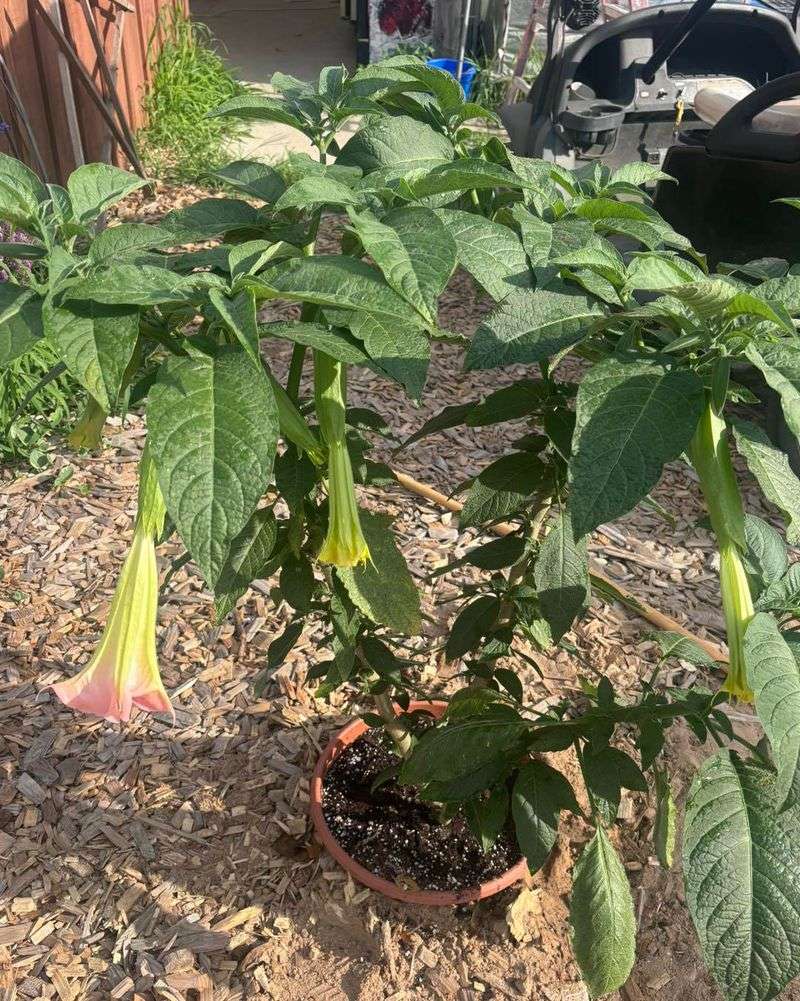
Without flowers, angel’s trumpet could pass for a big leafy shrub or even a small tree. Its leaves are large, soft, and often slightly fuzzy to the touch.
Older stems turn woody and branch out into a Y shape where blooms tend to form.
Gardeners who prune should know about that branching habit. Cutting below the Y can delay flowering, since the plant needs time to regrow that mature section.
In a good season, a well-rooted plant can grow several feet tall.
Size depends heavily on climate, care, and whether frost cuts it back each year. In warmer parts of Georgia, older plants can grow quite large, while potted ones stay more compact.
Those big leaves lose water fast on hot afternoons.
Wilting at midday is common and does not always mean trouble, because leaves often perk back up by evening. If they stay droopy into the next morning, check the soil for dryness.
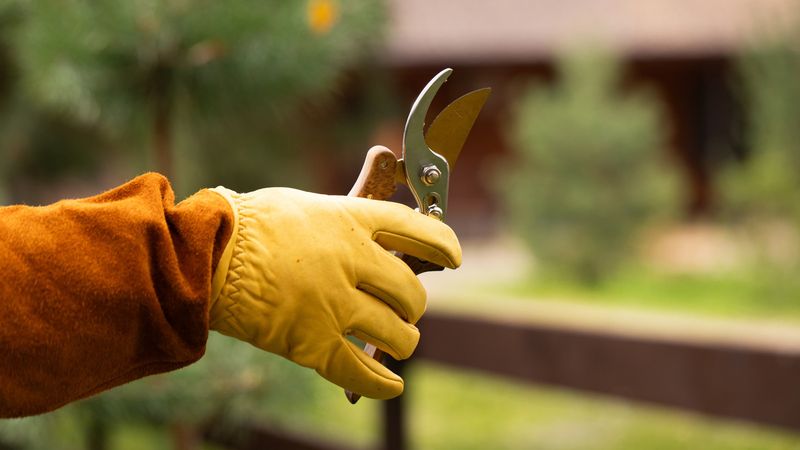
Wear gloves when trimming or handling the plant. Sap and leaf contact are a concern, and washing your hands afterward is a smart habit, especially before touching your face or eyes.
Give it room to spread so it does not crowd walkways where kids or pets pass by often.
4. Sweet Fragrance Often Grows Stronger In The Evening
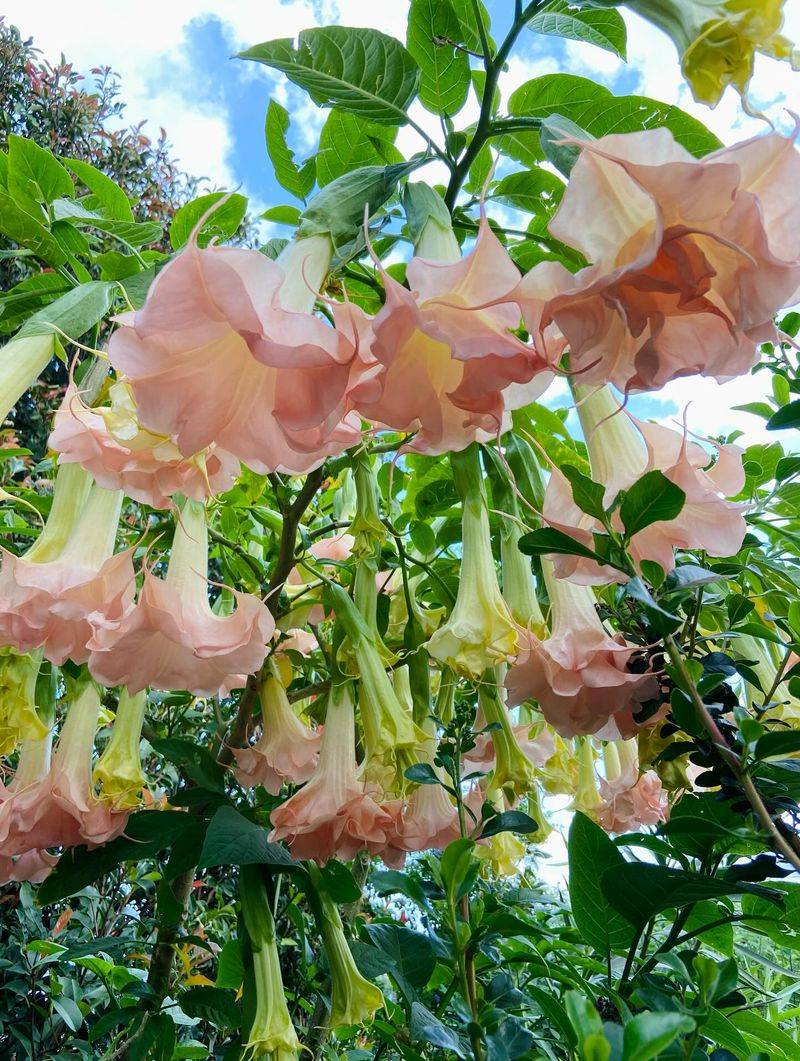
Step outside on a warm night, and you might smell angel’s trumpet before you see it. Many varieties release a sweet scent that often gets stronger after sunset.
Night-flying moths are thought to be important visitors for these flowers.
That evening scent is one reason gardeners plant them near porches, decks, and windows. On a still summer night in Georgia, the perfume can drift across a good part of the yard.
Not every variety smells the same.
Some have a heavy, rich fragrance, while others are much lighter or barely noticeable. Temperature, humidity, and the age of each bloom can all change how strong the smell seems.
A few people find the scent too intense in closed spaces. If you bring cut flowers inside, keep them out of reach of children and pets, and use good judgment about strong fragrances near sleeping areas.
Smelling the flowers outdoors is generally not the main danger, since eating plant parts is the real risk.
Planting near a seating area lets you enjoy the fragrance without anyone needing to touch the blooms. Just keep the shrub back far enough that curious hands cannot easily grab a flower.
A spot near a window can share the scent while keeping the plant safely outdoors.
5. Every Part Of The Plant Contains Powerful Toxins
Beauty and danger share the same stems here. Leaves, flowers, seeds, stems, and roots of angel’s trumpet all contain toxic compounds called tropane alkaloids.
Eating even small amounts can cause serious poisoning in people and animals.
Symptoms may include confusion, a racing heart, dilated pupils, dry mouth, and hallucinations. Some people have needed emergency hospital care after eating or brewing parts of the plant.
Children are especially at risk because the flowers look like something fun to play with.
Dogs, cats, and livestock can also be poisoned, though animals often avoid the bitter taste. Even so, it is safer not to plant it where pets chew on everything.
Simple habits lower the risk a lot.
Wear gloves when pruning, wash your hands afterward, and avoid rubbing your eyes while working. Sap in the eyes has been linked to blurred vision and enlarged pupils.
Pick up fallen flowers so toddlers and pets cannot reach them. Teach older kids that this plant is look-only.
If you suspect someone has eaten any part of it, call Poison Control at 1-800-222-1222 right away. Georgia residents reach the Georgia Poison Center through that same number, and it is open around the clock.
For pets, contact your veterinarian or an animal poison hotline quickly.
6. Upward-Facing Blooms Belong To Its Weedy Cousin Datura
Look at which way the flower points. Angel’s trumpet blooms hang down, but its close relative Datura holds its trumpets upright or facing outward.
Datura is often called jimsonweed or thorn apple, and it pops up along roadsides, fields, and disturbed soil.
Its flowers are usually white or pale purple and tend to be smaller than Brugmansia blooms. Many open in the evening and fade the next day, especially in hot weather.
Seed pods give Datura away fast.
They are round and covered in spikes, while Brugmansia pods are smooth when they form. Datura also grows as a lower, bushier plant that is usually treated as an annual.
Both plants carry similar toxins, so neither one is safe to eat or handle carelessly. Datura seeds are a special concern because the pods split open and drop them on the ground.
Spotting it in a Georgia garden bed or pasture is not unusual in summer.
Pulling young plants with gloves before seeds mature can help reduce new ones next year. Seeds can stay in the soil for a long time, so expect a few volunteers to return.
Bag the pulled plants rather than tossing them where animals graze.
7. Frost Knocks It Back, But Roots Often Return In Milder Areas
One hard freeze can turn a lush angel’s trumpet into a mess of limp, blackened leaves. Brugmansia comes from tropical regions and does not handle cold well.
What happens next depends a lot on where you live.
South and coastal Georgia have milder winters, and roots there often survive to sprout again in spring. In the colder north and mountain areas, plants are less likely to return without extra protection.
A thick layer of mulch over the root zone in late fall can offer some insulation.
Results still vary with how cold and long the winter gets. Wet, poorly drained soil can also cause roots to rot, even where temperatures stay fairly mild.
Potted plants give you more control.
Many gardeners move containers into a garage or shed before the first frost. The plant may drop leaves and go mostly dormant, needing only occasional water until spring.
Wait until frost danger has passed before trimming away damaged growth. Spring is a good time to cut back to healthy wood, using gloves as always.
Patience helps, because returning plants may not bloom heavily until later in summer. A slow start is normal after a rough winter, so give it time before deciding it is gone.