These 9 Blooms Will Make Your Pennsylvania Garden Buzzing With Bees
Want to turn your Pennsylvania garden into a buzzing, blooming paradise? Planting flowers that attract bees is one of the easiest and most rewarding ways to bring life to your outdoor space.
These helpful pollinators aren’t just charming to watch and they’re essential for a healthy garden. The right blooms can draw them in by the dozens, supporting local ecosystems while helping your plants thrive.
Many bee friendly flowers are naturally low maintenance, long blooming, and well suited to Pennsylvania’s climate. They add bright pops of color and sweet fragrance, while creating a space that feels alive and full of movement.
Whether you’ve got a sprawling yard or a cozy flower bed, these blooms can keep the bees happy all season long, and give you a garden that’s just as full of charm as it is of purpose.
1. Calamint
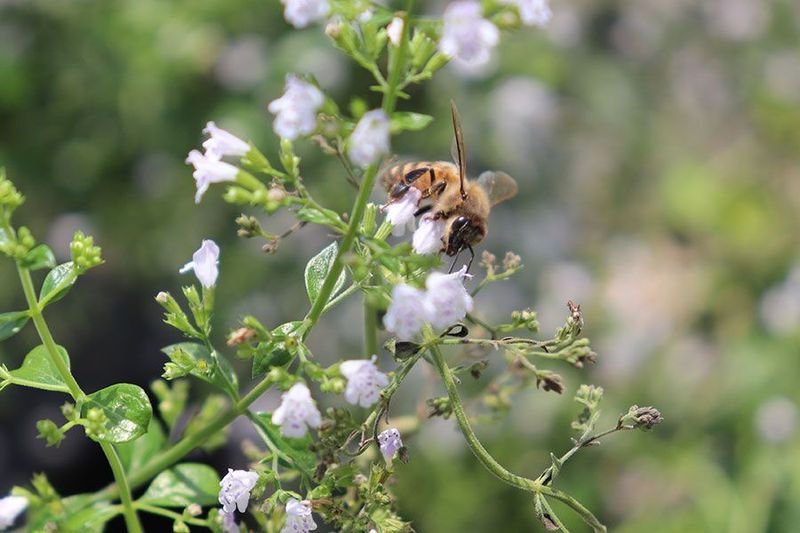
Calamint brings a delicate beauty to Pennsylvania gardens while keeping bees happy from midsummer through fall. The tiny tubular flowers bloom in clouds of soft pink or lavender, creating a misty appearance that adds charm to any garden bed.
Bees find these small blossoms irresistible and will visit them repeatedly throughout the day.
This plant grows about 12 to 18 inches tall and spreads nicely without taking over your garden. The leaves give off a minty fragrance when you brush against them, making it pleasant to walk past.
Pennsylvania’s summers provide perfect conditions for calamint to flourish and produce abundant flowers.
Calamint tolerates dry soil once established, which makes it a smart choice for gardeners who want low-maintenance plants.
It grows well in full sun to partial shade, giving you flexibility in placement. The plant stays attractive even after flowering, with neat foliage that looks good all season.
Bees especially love calamint because the flowers produce nectar over many weeks. Native bees, honeybees, and bumblebees all visit these blooms regularly.
Plant calamint near your vegetable garden to attract pollinators that will help your crops produce better yields throughout the Pennsylvania growing season.
2. Scabiosa
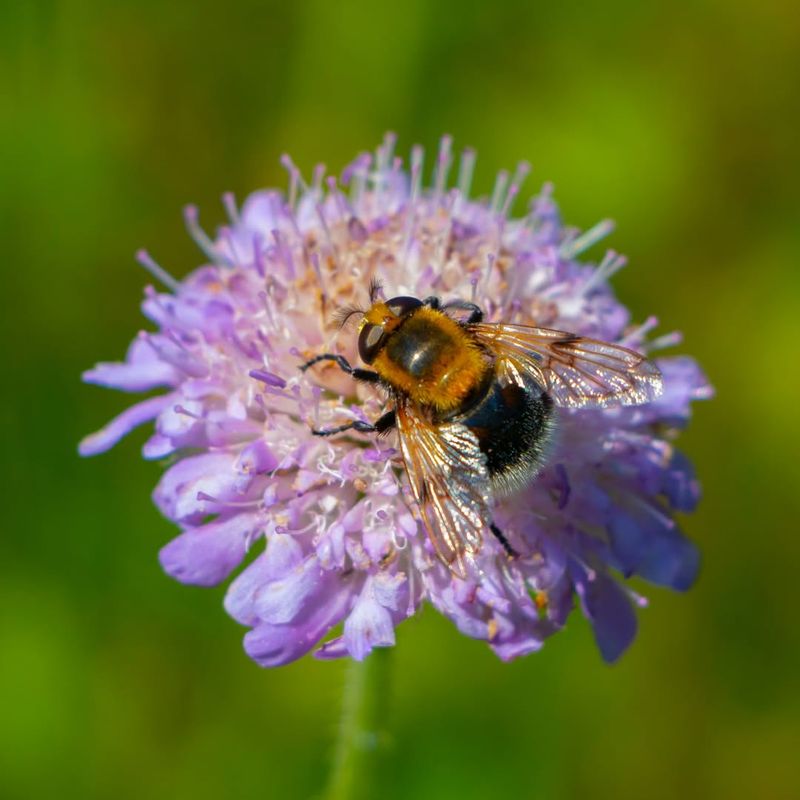
Pincushion flowers earn their common name from the way their stamens stick out like pins from a cushion.
Scabiosa produces round, frilly blooms in shades of purple, blue, pink, or white that seem to float above the foliage on long stems. These unique flowers catch your eye and draw bees from across your Pennsylvania yard.
The blooming period lasts from late spring through the first frost if you keep removing spent flowers. This long season makes scabiosa incredibly valuable for feeding bees when other plants have finished flowering.
Each blossom offers an easy landing pad where bees can work efficiently to gather pollen and nectar.
Scabiosa grows best in full sun and well-drained soil, conditions that match many Pennsylvania gardens perfectly. The plants reach about 18 to 24 inches tall and work beautifully in borders or cutting gardens.
You can bring some blooms indoors without feeling guilty since the plant produces so many flowers.
Butterflies also visit scabiosa regularly, adding even more movement and color to your garden. The flowers have a light, sweet fragrance that humans enjoy too.
Pennsylvania gardeners appreciate how tough and reliable this plant is once established in the right spot.
3. Joe-Pye Weed
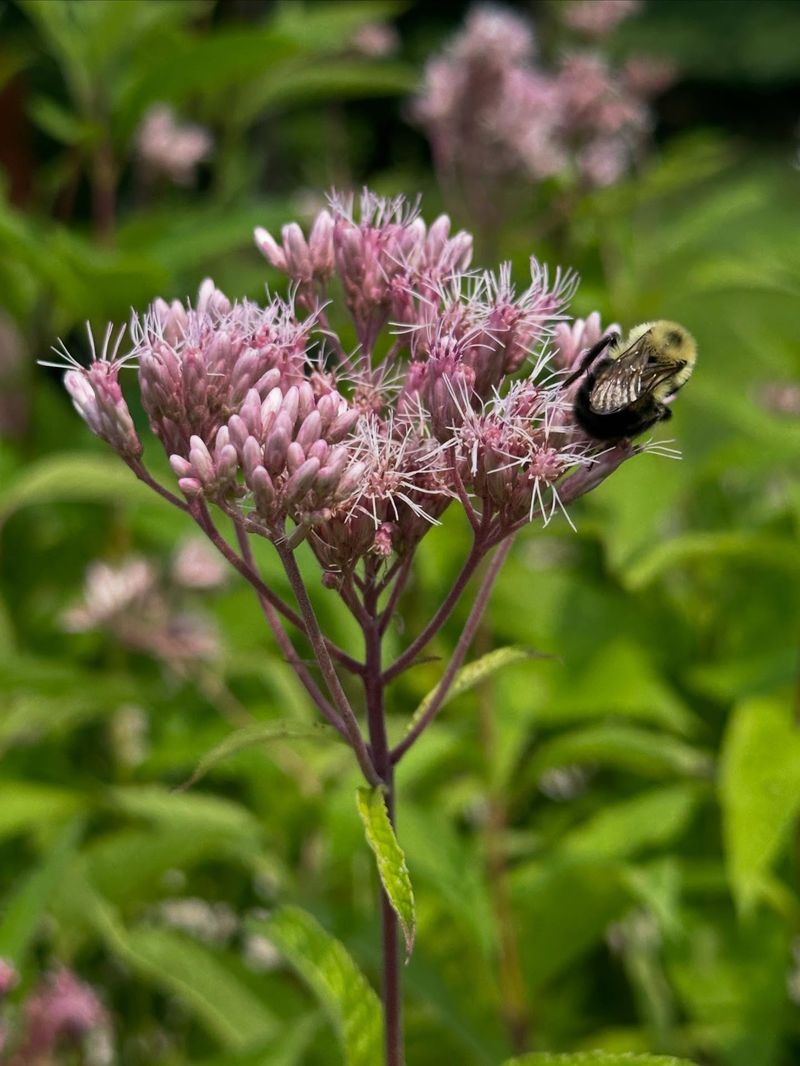
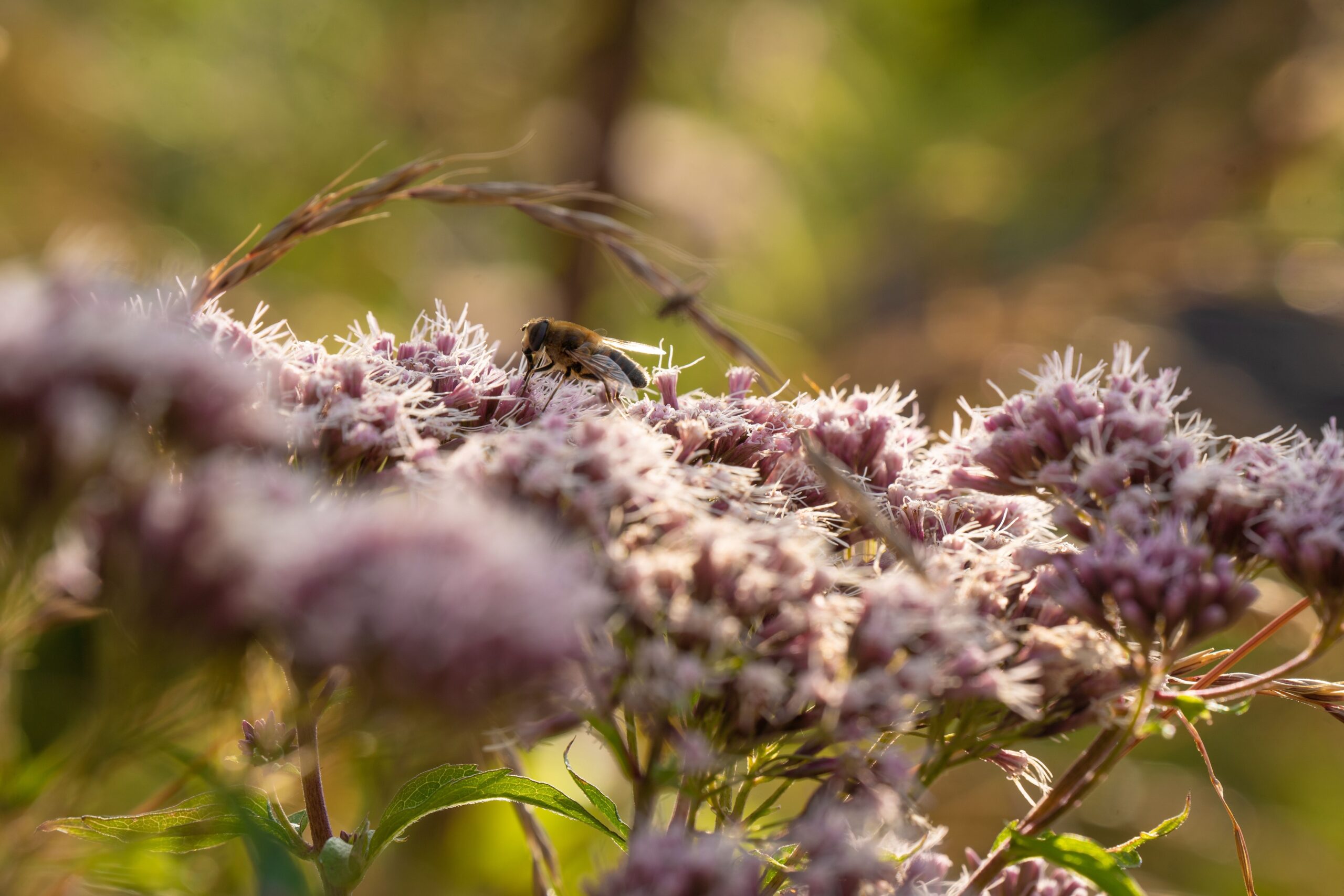
Towering above many other garden plants, Joe-Pye weed makes a bold statement in Pennsylvania landscapes. The massive flower heads bloom in dusty pink or mauve shades during late summer and early fall.
These giant clusters contain hundreds of tiny individual flowers, each one a potential meal for hungry bees.
This native plant can reach five to seven feet tall, creating a dramatic backdrop in your garden. The sturdy stems support the heavy flower clusters without staking, even during Pennsylvania’s summer thunderstorms.
The vanilla-scented blooms attract not just bees but also butterflies and other beneficial insects.
Joe-Pye weed thrives in moist soil and full sun to partial shade, making it perfect for areas that stay damp. Pennsylvania gardeners with rain gardens or low spots find this plant especially useful.
The flowers bloom when many other plants are winding down, providing crucial late-season food for bees preparing for winter.
Native bees seem particularly drawn to Joe-Pye weed, often covering the flower heads in a buzzing blanket. The plant’s size means it produces enormous amounts of nectar and pollen.
One mature clump can feed dozens of bees simultaneously, making it an exceptional choice for supporting Pennsylvania’s pollinator populations.
4. Culver’s Root
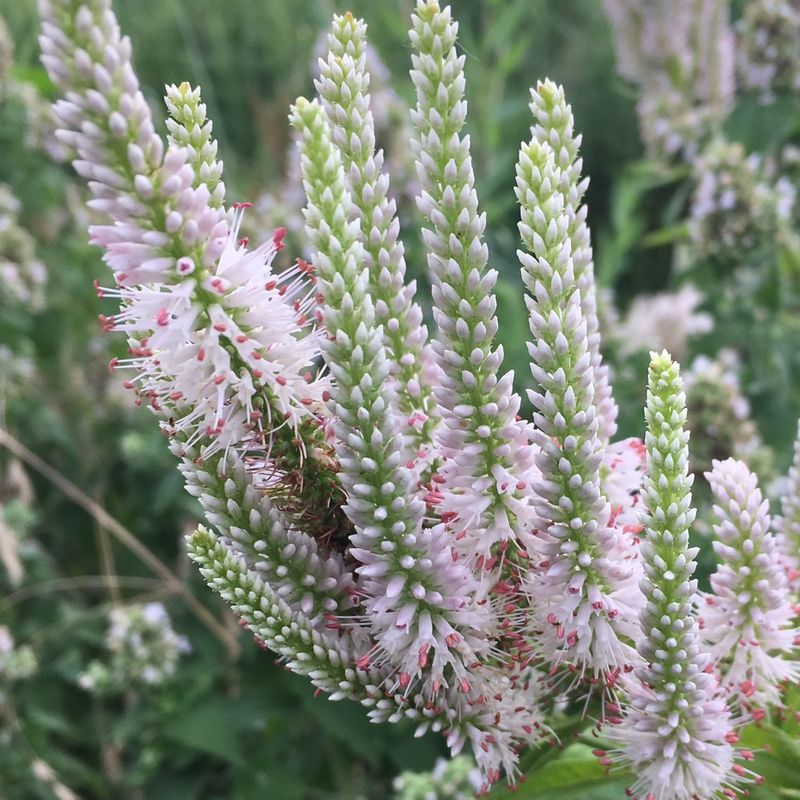
Elegant white flower spikes rise like candles from Culver’s root plants during midsummer. The tall, narrow flower clusters can reach four to six feet high, creating vertical interest in Pennsylvania gardens.
Bees crawl up and down these spires, working methodically to visit each tiny flower. The whorled leaves arranged around the stem give this plant an interesting texture even before it blooms. Once flowering begins, the show lasts for several weeks.
Pennsylvania’s native plant enthusiasts particularly value Culver’s root for its historical significance and ecological benefits. This plant prefers moist, rich soil and tolerates both full sun and partial shade.
It grows naturally in Pennsylvania meadows and woodland edges, so it feels right at home in backyard gardens. The sturdy stems rarely need support despite their impressive height.
Bumblebees especially love Culver’s root, often spending long periods working the flower spikes from bottom to top. The blooms produce abundant nectar that keeps bees coming back repeatedly.
After flowering, the seed heads add winter interest and provide food for birds, giving your Pennsylvania garden year-round appeal while supporting multiple types of wildlife.
5. Bluebeard
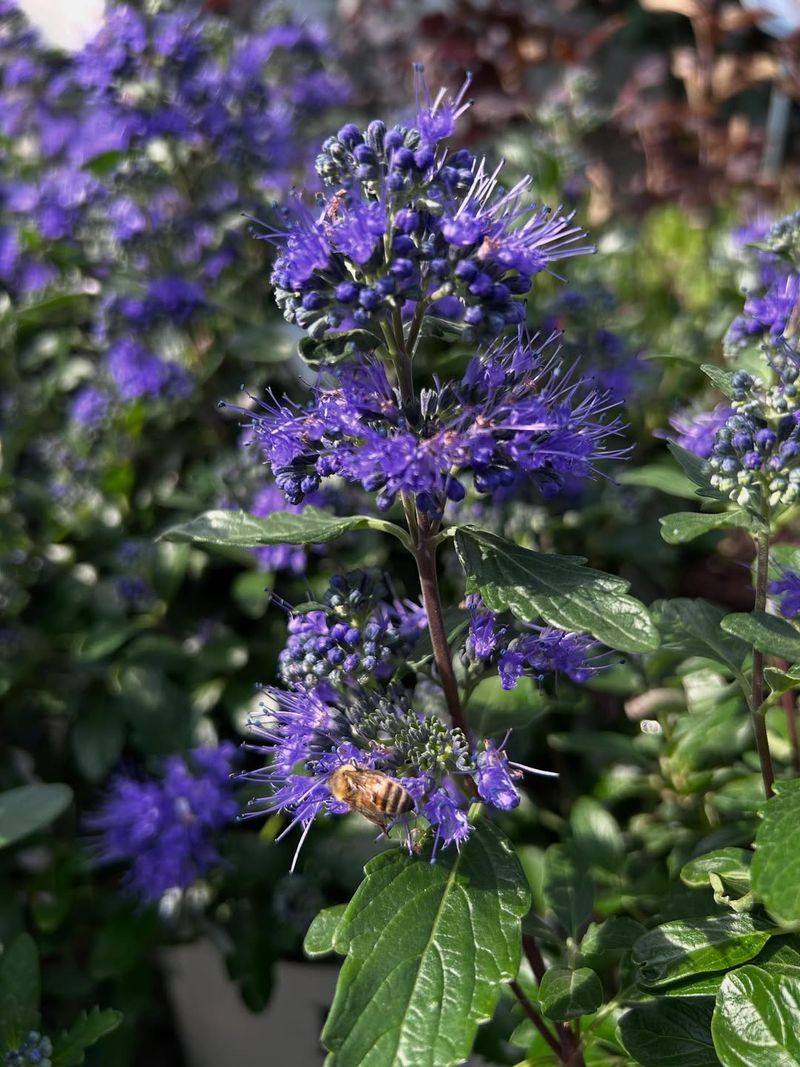
Bright blue flowers are rare in the plant world, making bluebeard a standout addition to Pennsylvania gardens.
The fuzzy, fringed blooms appear in late summer and continue until frost, arriving when bees need food most. These vibrant blue clusters seem to glow against the gray-green foliage.
Bluebeard grows as a small shrub, typically reaching two to three feet tall and wide. Pennsylvania winters often cut it back, but it reliably returns each spring and blooms on new growth. The compact size makes it suitable for smaller gardens or container planting.
Full sun and well-drained soil keep bluebeard happy and flowering abundantly. The plant tolerates heat and drought once established, making it perfect for sunny Pennsylvania borders.
Deer usually leave it alone, which is a bonus for many gardeners dealing with browsing wildlife.
Bees absolutely swarm bluebeard when it blooms, sometimes covering the plant so completely you can barely see the flowers. Honeybees, bumblebees, and native bees all visit enthusiastically.
The long blooming period means your Pennsylvania garden will buzz with activity for months, providing essential late-season nutrition when many other flowers have finished for the year.
6. Globemallow
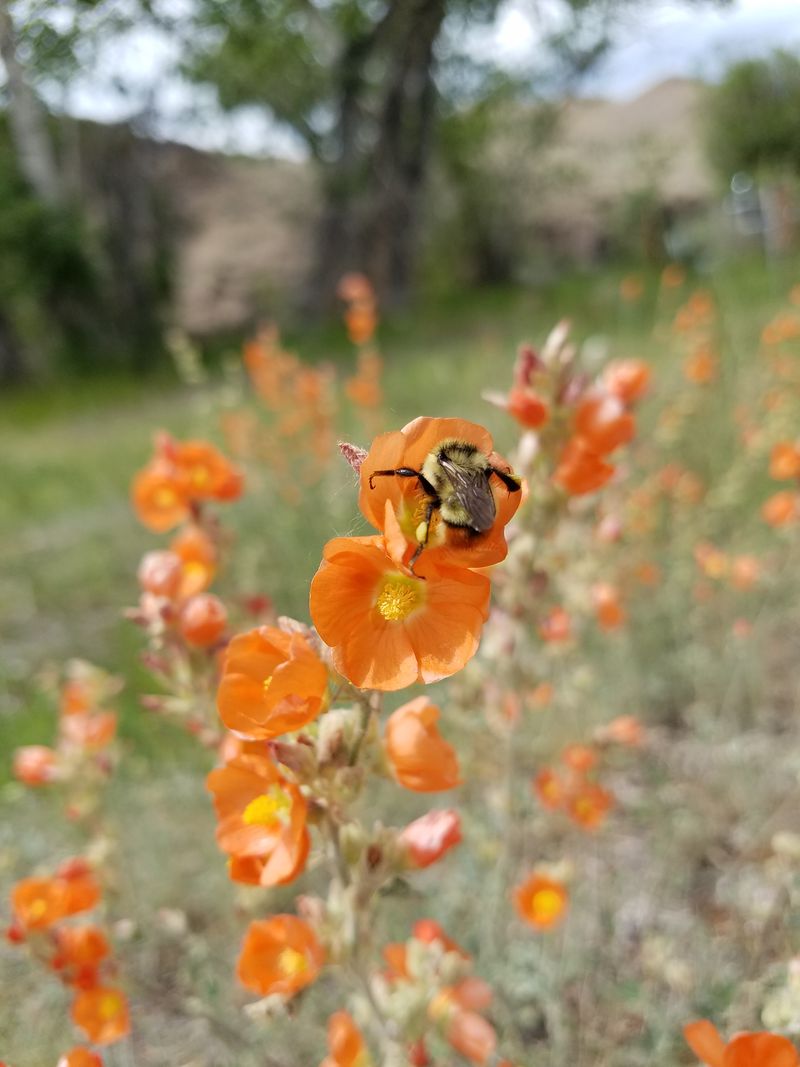
Cheerful orange or coral-colored blooms make globemallow impossible to ignore in Pennsylvania gardens.
The cup-shaped flowers open along tall stems that rise above fuzzy, gray-green leaves. Each blossom looks like a tiny hollyhock, and bees treat them with the same enthusiasm.
This drought-tolerant plant thrives in sunny, well-drained spots where other flowers might struggle. The silvery foliage reflects light beautifully and provides textural contrast to darker green plants nearby.
Globemallow blooms from early summer through fall, offering consistent color and bee food.
Native bees particularly appreciate globemallow, often sleeping inside the flowers overnight.
The plants grow one to three feet tall depending on the variety and growing conditions. Pennsylvania gardeners find them especially useful in rock gardens or areas with lean soil.
The flowers produce both nectar and abundant pollen, making them a complete food source for bees. Small native bees often emerge from globemallow blossoms covered head to toe in orange pollen.
The plant self-seeds gently, gradually expanding your bee-friendly Pennsylvania garden without becoming weedy or invasive, ensuring future generations of pollinators will have food sources available.
7. Mountain Mint
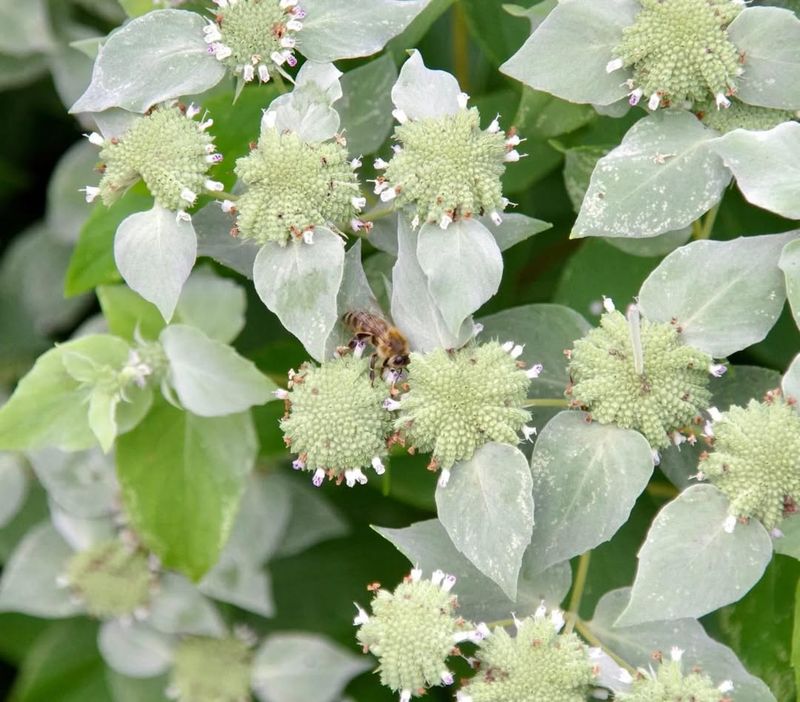
Few plants attract as many bee species as mountain mint does in Pennsylvania gardens. The small white flowers cluster at the stem tips, surrounded by silvery bracts that look almost frosted.
When in full bloom, a mountain mint plant can host dozens of bees simultaneously, creating an impressive buzzing sound.
The aromatic foliage releases a strong minty scent when touched or crushed. This native plant grows two to three feet tall and spreads steadily to form attractive clumps.
Pennsylvania’s native bee populations have evolved alongside mountain mint, making it an especially important food source.
Mountain mint tolerates a wide range of soil conditions and grows well in full sun to partial shade.
It blooms from midsummer into early fall, bridging the gap between spring and late-season flowers. The plant needs little care once established and rarely suffers from pests or diseases.
Researchers have documented over 100 different bee species visiting mountain mint, including many rare and specialized natives. The flowers produce copious nectar that bees can access easily.
Pennsylvania gardeners who want to support the greatest diversity of bee species should definitely include mountain mint in their planting plans for maximum ecological benefit.
8. Purple Toadflax
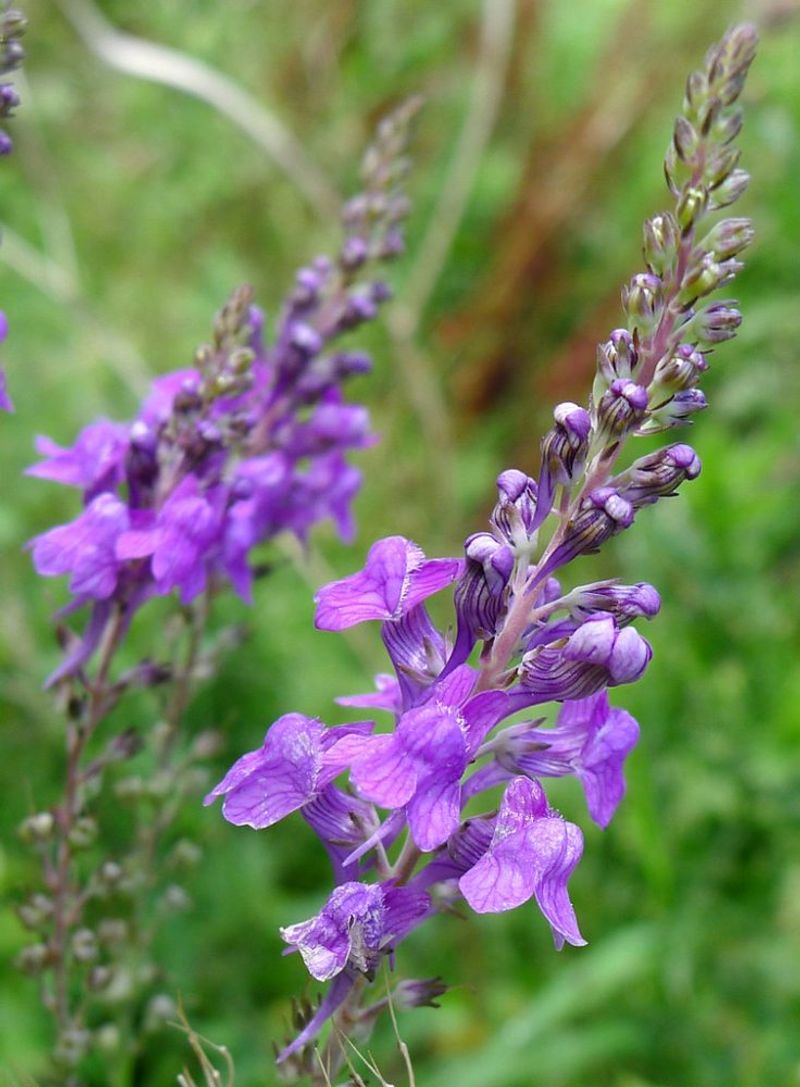
Delicate purple flowers resembling tiny snapdragons dance on thin stems above narrow foliage.
Purple toadflax brings an airy, cottage garden feel to Pennsylvania landscapes while providing excellent bee habitat. The tubular flowers have landing platforms perfect for bees to perch on while they work.
This plant blooms reliably from late spring through summer, with occasional rebloom in fall. It grows 12 to 24 inches tall and spreads gradually to form loose colonies.
Pennsylvania gardeners appreciate how purple toadflax fills gaps between larger plants and softens hard edges.
Full sun to partial shade suits purple toadflax well, and it tolerates average to dry soil conditions. The plant self-seeds modestly, appearing in unexpected spots that often turn out to be perfect. It naturalizes beautifully in meadow gardens or informal borders.
Bumblebees particularly favor purple toadflax because their size and strength allow them to access the nectar inside the tubular flowers easily. Smaller bees sometimes steal nectar through holes bitten by bumblebees, creating a cooperative feeding system.
The extended blooming period makes this plant valuable for maintaining consistent food sources throughout the Pennsylvania growing season when bees need reliable nutrition.
9. Meadow Cranesbill
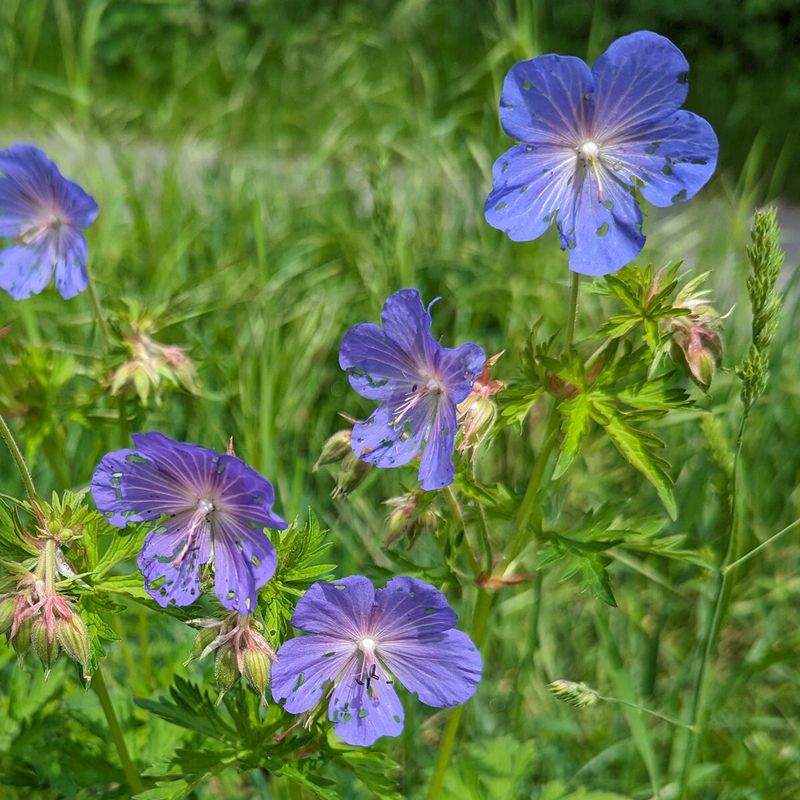
Blue-violet flowers with delicate veining cover meadow cranesbill throughout the growing season.
This hardy geranium produces blooms generously from late spring until frost, especially if you shear it back after the first flush. The five-petaled flowers open flat, giving bees easy access to pollen and nectar.
The deeply lobed foliage forms attractive mounds about 12 to 18 inches tall and spreads wider over time.
Pennsylvania gardeners value meadow cranesbill as a reliable groundcover that suppresses weeds while feeding pollinators. The leaves sometimes develop reddish tints in fall, adding seasonal interest.
This plant grows well in full sun to partial shade and tolerates various soil types. It handles Pennsylvania’s summer heat better than many other geraniums. The plant rarely needs dividing and increases steadily without becoming aggressive.
Bees visit meadow cranesbill constantly throughout the day, working the flowers systematically. The abundant pollen sticks to their bodies, making them look dusty as they move from bloom to bloom.
Pennsylvania gardeners who plant meadow cranesbill in groups create feeding stations that support multiple bees at once, helping entire colonies thrive and ensuring your garden contributes meaningfully to local pollinator conservation efforts.