The 9 Citrus Pests Still Affecting California Trees Right Now
Citrus season never really gets a quiet moment in California. Even now, while growth slows and trees seem calm, a handful of persistent pests are still lurking on leaves, stems, and fruit.
Some suck sap, some scar fruit, and others quietly weaken trees over time without obvious signs at first. The tricky part is many stay active in mild winter weather, building up just enough to cause bigger problems when spring growth begins.
Spotting them early makes all the difference. A quick check now can save your leaves, protect your fruit, and keep your trees strong before the next flush of growth kicks in.
These are the citrus troublemakers California gardeners are still dealing with right now, and the ones worth watching closely.
1. Asian Citrus Psyllid
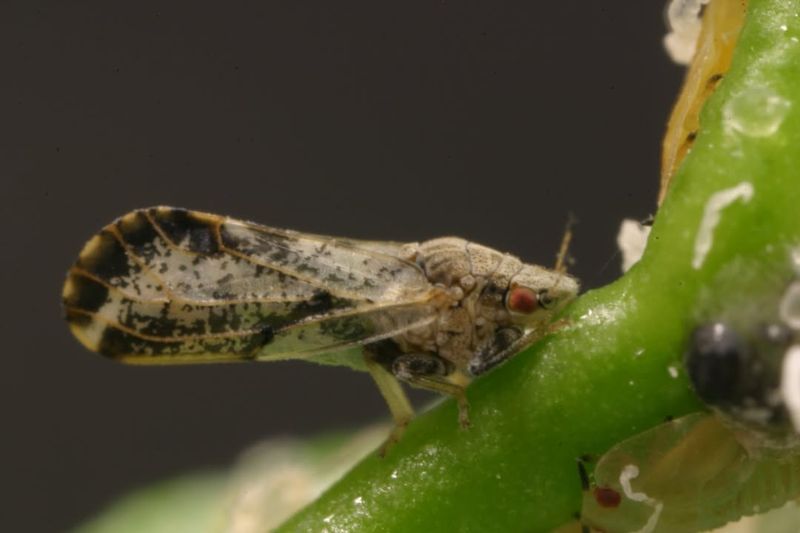
When you notice twisted, yellowing leaves on your citrus tree, this tiny pest might be the culprit. The Asian Citrus Psyllid arrived in California in 2008 and quickly became one of the most serious threats to citrus health statewide.
What makes this insect particularly dangerous isn’t just the feeding damage it causes. It carries a bacteria that causes Huanglongbing, also known as citrus greening disease, which has devastated citrus industries worldwide.
Once a tree contracts this disease, there’s no cure, and the tree eventually dies.
These psyllids are incredibly small, about the size of an aphid, with brown mottled wings they hold at an angle like a tent. They prefer feeding on new growth, so you’ll often spot them on tender young leaves and shoots.
The nymphs produce white waxy tubules that look like tiny threads.
Many gardeners mistake early symptoms for nutrient deficiency, delaying proper action. Regular monitoring matters more than anything else with this pest.
Check new growth weekly during warm months when psyllids are most active.
If you spot them, contact your local agricultural commissioner immediately. California has strict quarantine and treatment programs in place.
Systemic treatments work best, but timing and proper application are critical for protecting your trees long-term.
2. Citrus Leafminer
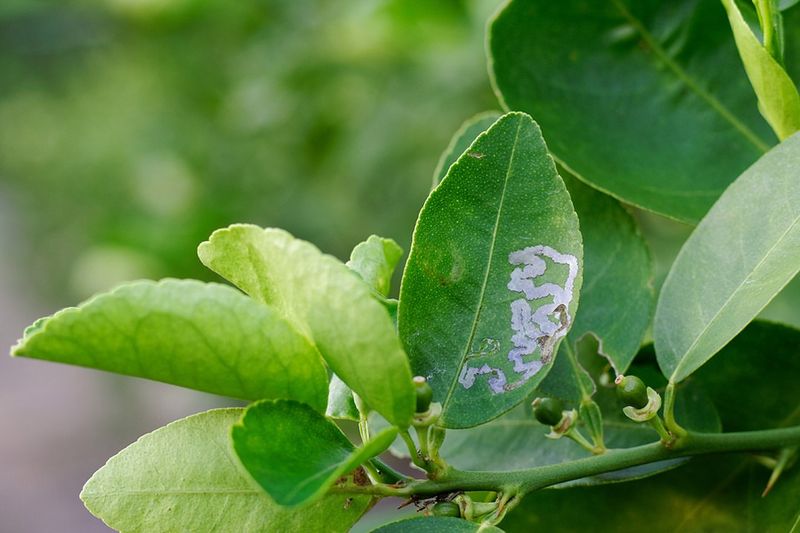
Those silvery squiggly lines winding across your citrus leaves aren’t decorative, they’re the work of leafminer larvae tunneling just beneath the surface.
During California’s warm months, especially late summer and fall, leafminer populations explode on citrus trees throughout the state.
The adult moths are tiny and rarely noticed, but their larvae cause distinctive damage that’s impossible to miss. As the larvae feed between the upper and lower leaf surfaces, they create winding tunnels that look like someone drew random trails with a silver marker.
Heavily infested leaves curl, distort, and may drop prematurely.
Young trees suffer most from leafminer damage because they rely heavily on new foliage for growth and energy. Mature trees usually tolerate infestations better, though repeated heavy attacks can weaken them over time.
The real concern is that damaged leaves become entry points for diseases.
Many gardeners panic and spray immediately, but that’s often unnecessary. Natural predators like parasitic wasps control leafminers quite effectively when given the chance.
Broad-spectrum insecticides actually make problems worse by killing these helpful insects.
Focus your energy on protecting new growth during peak leafminer season. Horticultural oil sprays applied when you see moths flying around your trees can reduce egg-laying.
For young trees, consider covering new growth with lightweight row cover fabric during vulnerable periods.
3. California Red Scale
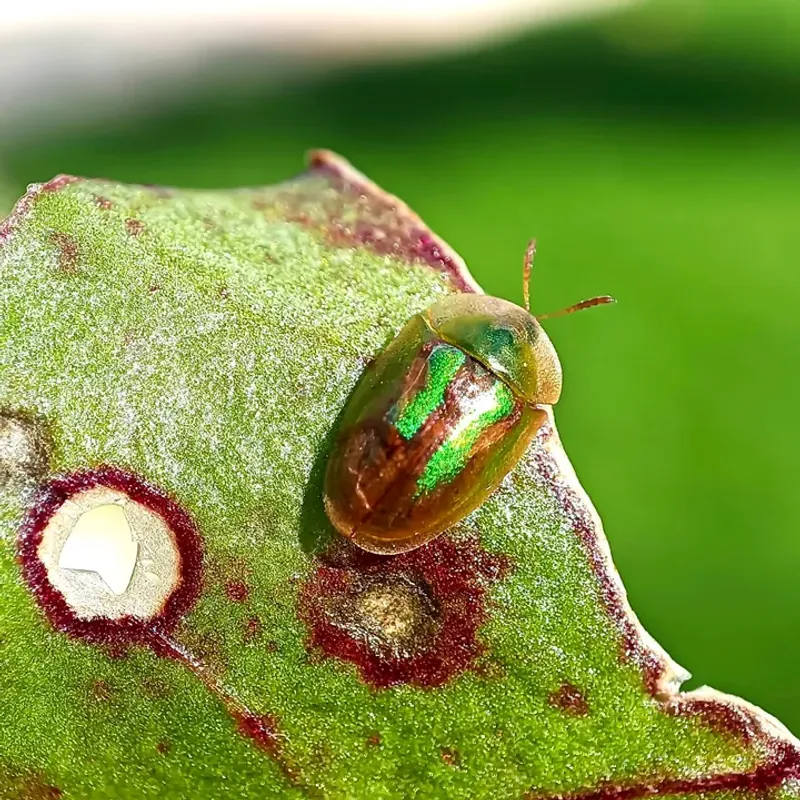
Small reddish-brown bumps covering your citrus fruit and branches signal a scale infestation that’s been building quietly for weeks.
California Red Scale has been plaguing citrus growers in the state for over a century, and it remains a persistent problem in backyard orchards today.
Unlike soft-bodied pests, these scales develop a hard protective covering that makes them look more like part of the bark than living insects. They attach themselves firmly to leaves, branches, and fruit, sucking sap continuously.
Heavy infestations weaken trees significantly and ruin fruit quality.
What confuses many gardeners is that the scales don’t move once they settle. You might assume those bumps are just part of the tree, especially on older wood where they blend in remarkably well.
By the time fruit shows obvious damage, yellow halos around feeding sites, the population is already substantial.
Scale insects have natural enemies, including tiny parasitic wasps and predatory beetles, but these beneficial insects need time to build up effective populations.
Ants protect scales from predators in exchange for honeydew, so controlling ants around your citrus trees helps natural enemies do their work.
Horticultural oil sprays work well against scales, but timing matters enormously. Apply when crawlers, the mobile young stage, are active, typically late spring through summer.
Spraying dormant scales wastes time and product since the oil can’t penetrate their armor effectively.
4. Soft Brown Scale
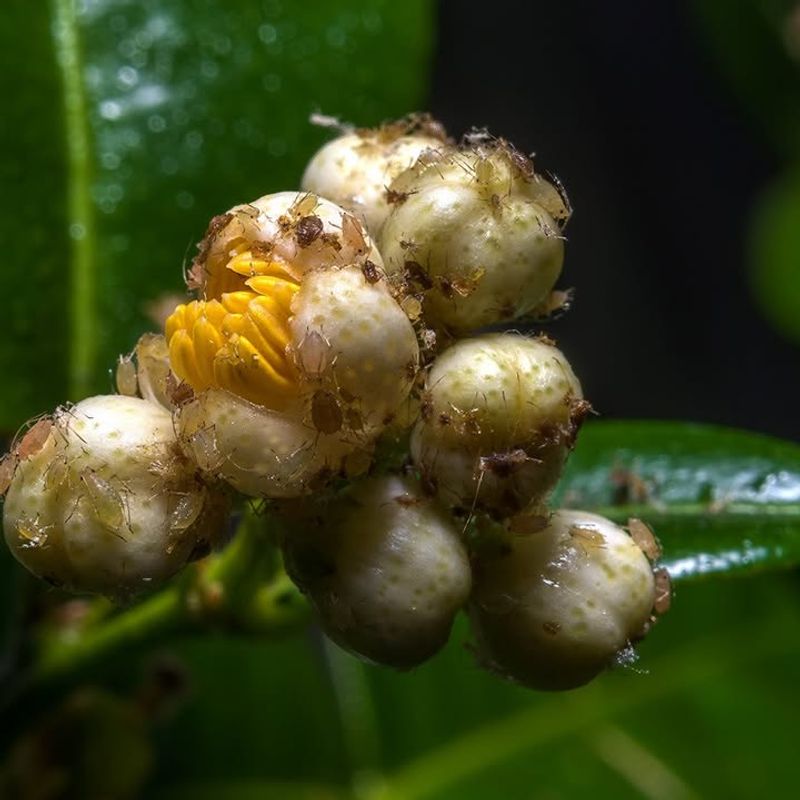
Sticky honeydew dripping from your citrus branches and black sooty mold coating the leaves often point to soft brown scale hiding in plain sight.
These oval, brownish scales cluster along stems and leaf undersides, quietly draining your tree’s energy while creating a mess below.
Unlike their armored cousins, soft scales have a softer outer covering and produce copious amounts of sweet honeydew as they feed. This sticky substance attracts ants, wasps, and flies, and provides the perfect growing medium for sooty mold fungus.
The mold itself doesn’t harm the tree directly, but it blocks sunlight and makes leaves less efficient.
Soft brown scale thrives in California’s mild climate, producing multiple generations per year. They prefer sheltered spots—inner branches, leaf undersides, and areas with dense foliage.
Trees that haven’t been pruned properly often harbor larger populations because the scales love the protected environment.
Many gardeners focus only on the mold, trying to wash it off without addressing the underlying scale problem. The mold will return as long as scales continue producing honeydew.
You need to control the scales first, then the mold gradually disappears on its own.
Natural enemies help keep populations in check, but heavy infestations need intervention. Horticultural oil or insecticidal soap sprays work effectively on soft scales because their covering is more permeable.
Spray thoroughly, reaching inner branches where scales hide, and repeat applications as needed through the growing season.
5. Citrus Aphids
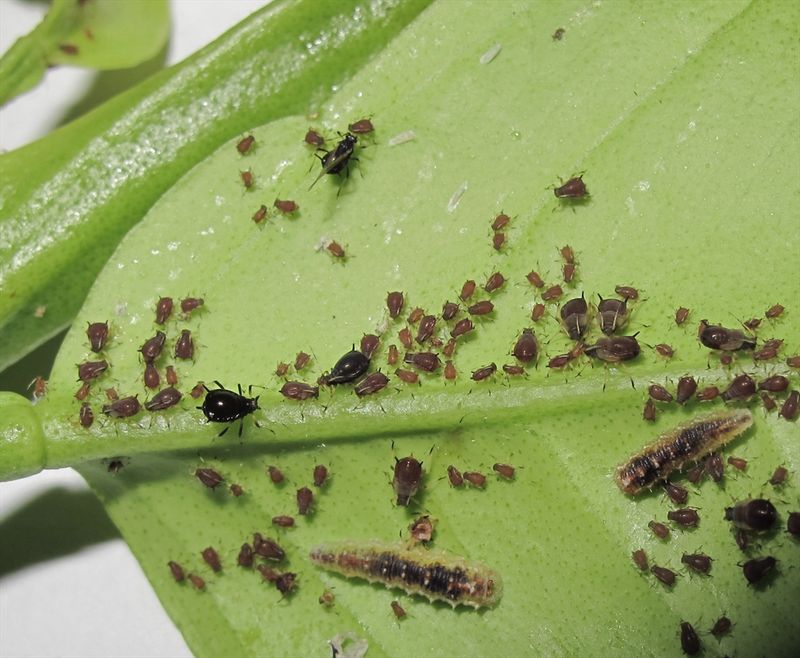
Curled, distorted new growth at the tips of your citrus branches usually means aphids have moved in. These soft-bodied insects appear suddenly in spring when tender new shoots emerge, clustering on the youngest, most succulent growth they can find.
Citrus trees host several aphid species, including green, black, and brown varieties. They all feed the same way, inserting their needle-like mouthparts into plant tissue and sucking out sap.
As they feed, they inject saliva that distorts growth, causing leaves to curl and twist. Like soft scales, aphids produce honeydew that attracts ants and encourages sooty mold.
What surprises many gardeners is how quickly aphid populations explode. Females give birth to live young without mating, and under ideal conditions, a single aphid can produce dozens of offspring in just days.
A small cluster can become a major infestation within two weeks.
The good news is that aphids have numerous natural enemies in California gardens. Ladybugs, lacewings, syrphid fly larvae, and parasitic wasps all feed on aphids eagerly.
If you spray broad-spectrum insecticides, you’ll kill these helpers and make your aphid problem worse in the long run.
For light infestations, a strong spray of water from the hose knocks aphids off effectively. They can’t climb back up and usually die on the ground.
For heavier problems, insecticidal soap or neem oil works well without harming beneficial insects significantly. Focus on new growth where aphids concentrate their feeding.
6. Spider Mites
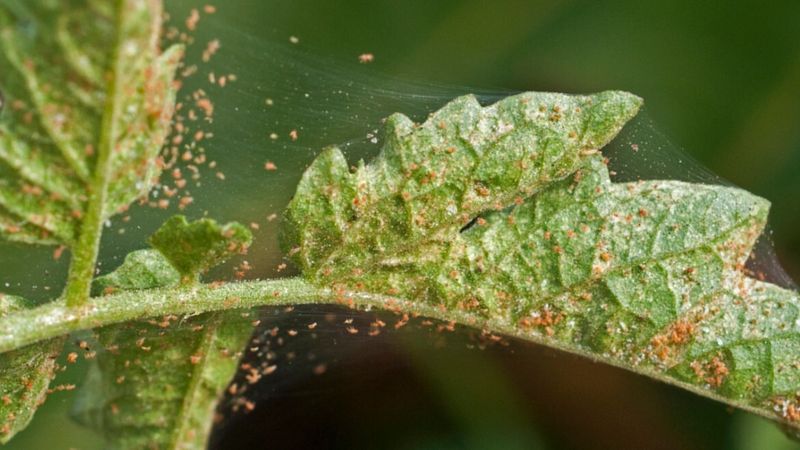
Fine webbing between leaves and a dusty, stippled appearance on foliage signal spider mites at work. During California’s hot, dry summers, these microscopic pests thrive on citrus trees, especially when humidity drops and temperatures climb into the nineties.
Spider mites aren’t actually insects, they’re related to spiders and ticks. They’re so small you need a magnifying glass to see them clearly, but their damage is obvious.
They pierce leaf cells and suck out the contents, leaving behind tiny yellow or bronze dots. Severe infestations turn entire leaves pale, then brown, and eventually they drop.
Dusty conditions favor spider mites tremendously. Trees near driveways, patios, or unpaved areas often suffer worse infestations because dust coating the leaves provides perfect cover for mites while interfering with natural predators.
Stressed trees, those underwatered or growing in poor soil, also attract more mites.
Many gardeners reach for miticides immediately, but that’s often counterproductive. Spider mites develop resistance quickly, and harsh chemicals kill predatory mites that naturally control pest mites.
You end up on a spray treadmill, applying stronger products more frequently with diminishing results.
Regular hosing down of foliage, especially leaf undersides, disrupts mite populations effectively. Water also raises humidity around leaves, which mites dislike.
For persistent problems, horticultural oil or insecticidal soap works better than harsh miticides. Encourage predatory mites by avoiding broad-spectrum sprays and maintaining plant health through proper watering and nutrition.
7. Mealybugs
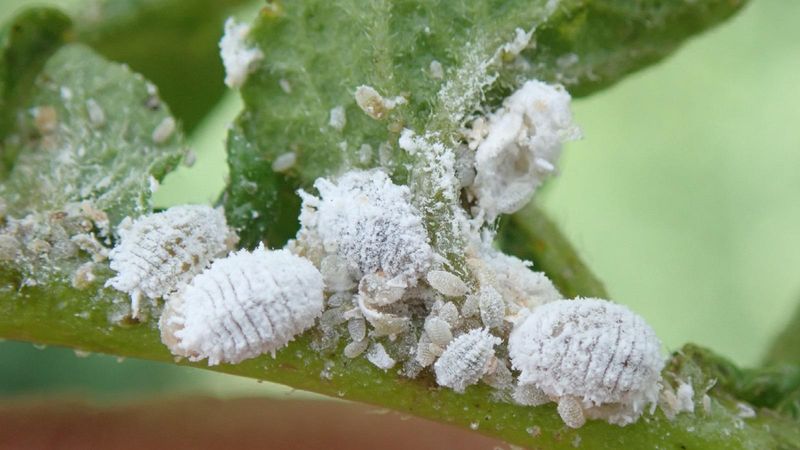
White cottony clusters tucked into leaf axils and along stems indicate mealybugs have found a comfortable home on your citrus tree. These soft-bodied insects cover themselves with a white waxy coating that makes them look like tiny bits of cotton stuck to your tree.
Mealybugs move slowly, if at all, and prefer protected spots where branches meet the trunk or where leaves attach to stems. They feed on plant sap, weakening the tree gradually while producing honeydew that leads to sooty mold.
Heavy infestations cause leaf yellowing, stunted growth, and premature fruit drop.
What makes mealybugs particularly frustrating is their waxy coating, which repels water and protects them from many sprays. They also tend to hide in hard-to-reach crevices where spray coverage is poor.
Ants farming them for honeydew make control even more challenging by protecting them from natural predators.
Several beneficial insects attack mealybugs naturally, including parasitic wasps, lacewings, and mealybug destroyers, a type of ladybug that specializes in eating mealybugs. Creating a garden environment that supports these predators provides long-term control better than repeated spraying.
For immediate control, rubbing alcohol on a cotton swab kills mealybugs on contact and dissolves their waxy coating. This works well for small infestations or spot treatment.
Horticultural oil or insecticidal soap sprays penetrate the wax coating better than most insecticides. Control ants first by applying sticky barriers or bait stations around the trunk, then address the mealybugs themselves.
8. Whiteflies
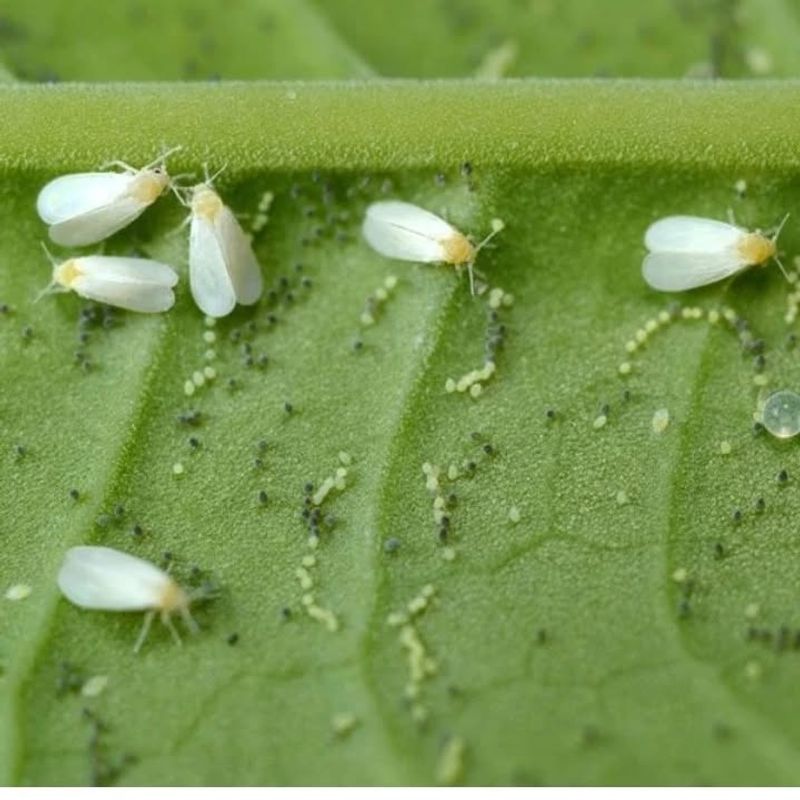
Touch a branch and suddenly dozens of tiny white moth-like insects take flight, that’s the classic sign of whitefly infestation.
These pests congregate on leaf undersides, feeding on sap and producing honeydew that creates the familiar sticky, sooty mess on leaves and anything beneath the tree.
Whiteflies aren’t actually flies; they’re more closely related to aphids and scales. Adults are small with white powdery wings, while immature stages look like tiny translucent scales attached to leaf undersides.
Both adults and nymphs feed on plant sap, weakening the tree and transmitting plant viruses in some cases.
California’s mild winters allow whiteflies to reproduce year-round, though populations peak during warm weather.
They prefer sheltered locations with minimal air movement, so citrus trees planted near walls or in protected courtyards often suffer worse infestations than those in open, breezy areas.
The tendency to spray at the first sign of whiteflies often backfires spectacularly.
Whiteflies develop insecticide resistance quickly, and broad-spectrum sprays eliminate the parasitic wasps and predatory beetles that naturally keep whitefly populations manageable. You end up creating a worse problem than you started with.
Yellow sticky traps help monitor and reduce adult populations. Horticultural oil or insecticidal soap sprays target both adults and immature stages effectively when applied thoroughly to leaf undersides.
Multiple applications spaced a week apart work better than a single heavy spray. Encourage natural enemies by planting nectar-rich flowers nearby and avoiding harsh chemical treatments.
9. Citrus Thrips
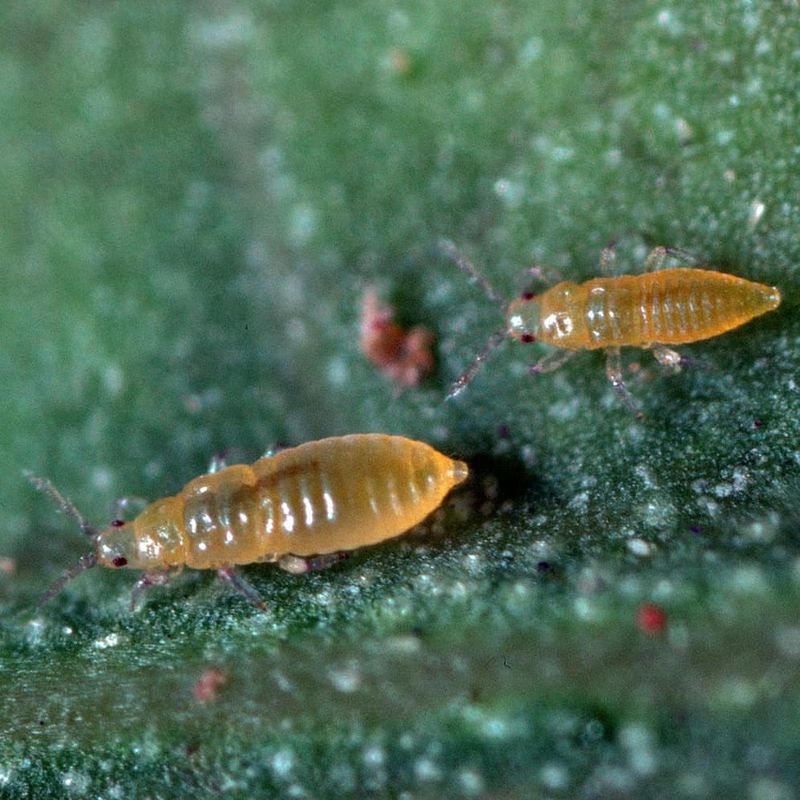
Silvery scarring and distorted rind on developing fruit point to citrus thrips feeding during the critical early growth stage.
These slender, barely visible insects rasp away at tender fruit surfaces, creating cosmetic damage that, while not affecting the inside fruit quality, makes your harvest look distinctly unappetizing.
Citrus thrips are most active during spring when citrus trees bloom and young fruit begins developing. They feed on flower petals, young leaves, and especially on tiny developing fruit.
Their feeding creates distinctive silvery-gray scars that become more pronounced as fruit grows. Severely damaged fruit may become misshapen or cracked.
The damage occurs early, usually within the first few weeks after petal fall, but becomes visible only as fruit enlarges. By the time you notice the scarring, the thrips have often moved on or completed their life cycle.
This timing confuses many gardeners who spray mature fruit, wondering why it doesn’t help.
Thrips have natural predators including minute pirate bugs, lacewings, and predatory mites. These beneficial insects provide significant control when allowed to thrive.
Creating habitat for them through diverse plantings and avoiding broad-spectrum pesticides improves natural thrips management considerably.
If thrips have been a problem in previous years, monitor your trees closely during bloom and early fruit set. Spinosad-based sprays timed carefully during the critical period after petal fall can prevent damage while being relatively gentle on beneficial insects.
Once fruit is larger than a marble, spraying for thrips is pointless, the damage window has closed.