These Climbing Vegetables Help Each Other Grow Better In Georgia
Most gardeners think of climbing vegetables as space savers, but in a Georgia garden, they can actually act like quiet partners. One vine can shield another from harsh afternoon sun, while tangled stems create a living canopy that keeps soil cooler below.
Growth becomes more stable when plants are not fighting for position.
Certain climbers naturally balance each other’s speed and structure, preventing overcrowding while improving airflow through humid summer months. That kind of pairing can reduce stress and support stronger harvests without adding extra work.
Instead of growing upward just for height, these vegetables build a system that supports itself. In Georgia’s long season, that cooperation can make the difference between average growth and a noticeably healthier, more productive garden.
1. Pole Beans Climb Corn Stalks For A Strong Summer Setup
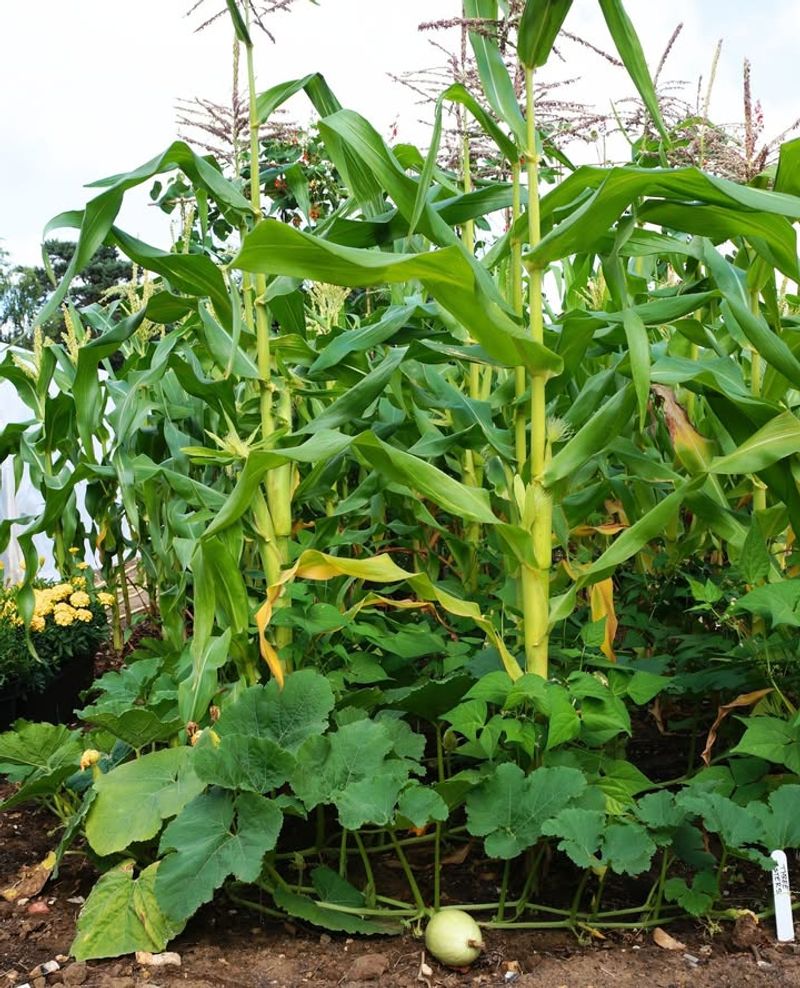
Corn and pole beans have been planted together for centuries, and this classic combination works beautifully in Georgia gardens from late spring through summer.
Corn grows tall and sturdy, providing natural support for bean vines that wrap around the stalks as they reach toward the sky.
The beans add nitrogen to the soil, which corn needs in large amounts to produce full ears.
Plant your corn first and let it get about six inches tall before adding bean seeds around the base of each stalk. This gives the corn a head start so it can support the beans as they grow.
Space your corn in blocks rather than single rows so the plants can pollinate each other properly.
In Georgia, you can start this pairing in mid-April through early June, depending on your location in the state. The coastal areas warm up faster than the mountains, so adjust your timing based on your last frost date.
Both crops love warm soil and plenty of sunshine.
The bean vines will spiral up the corn stalks without any extra work from you. By midsummer, you’ll have beans hanging down for easy picking while the corn continues growing above.
This setup saves space and eliminates the need for stakes or trellises, making it perfect for gardeners who want a simple, productive system.
2. Cucumbers And Pole Beans Grow Up One Trellis Without Crowding
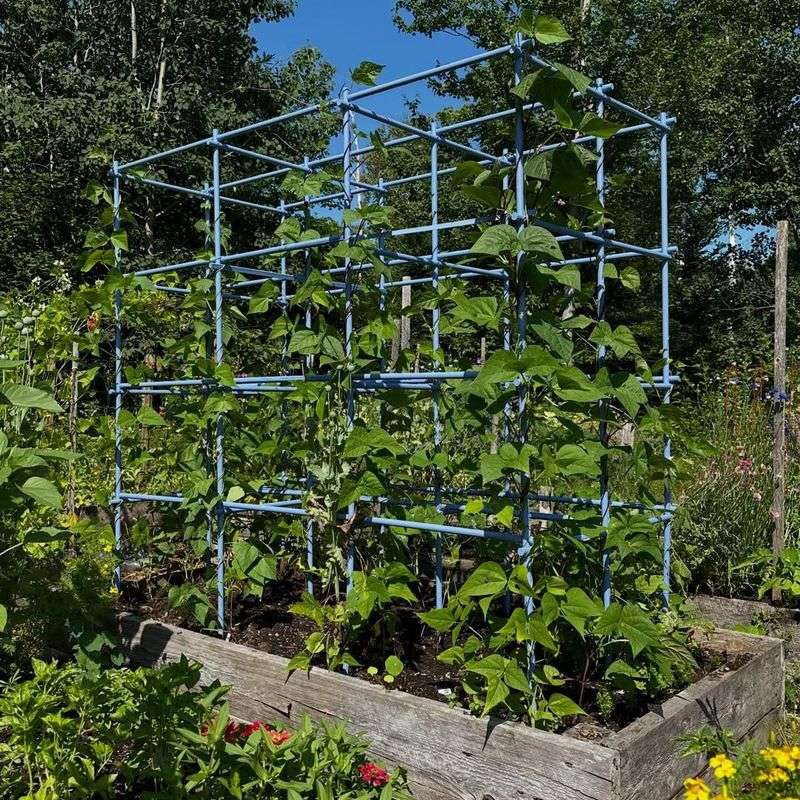
Sharing a trellis between cucumbers and pole beans might sound crowded, but these two climbers actually work well together when given enough space along the base. Both plants send vines upward and produce heavy crops without competing too much for sunlight.
Cucumbers tend to spread their leaves wider while beans grow more vertically, creating natural layers on the trellis.
Set up a sturdy trellis at least six feet tall and plant beans on one side and cucumbers on the other, spacing them about eight inches apart. You can also alternate the plants along the base of the trellis.
As they grow, guide the vines gently to keep them moving upward rather than tangling at the bottom.
Georgia summers get hot and humid, which both crops enjoy, but cucumbers need consistent water to keep producing crisp fruits. Beans are slightly more drought-tolerant once established.
Mulch heavily around the base to keep soil moist and reduce weeds.
Harvest beans regularly to encourage more production, and pick cucumbers when they reach the right size for your variety. The combination keeps your trellis productive all summer long.
Both crops appreciate afternoon shade in the hottest parts of Georgia, so consider placing your trellis where it gets morning sun and some relief during the peak heat of the day.
3. Peas And Spinach Fill Georgia Beds Before The Heat Arrives
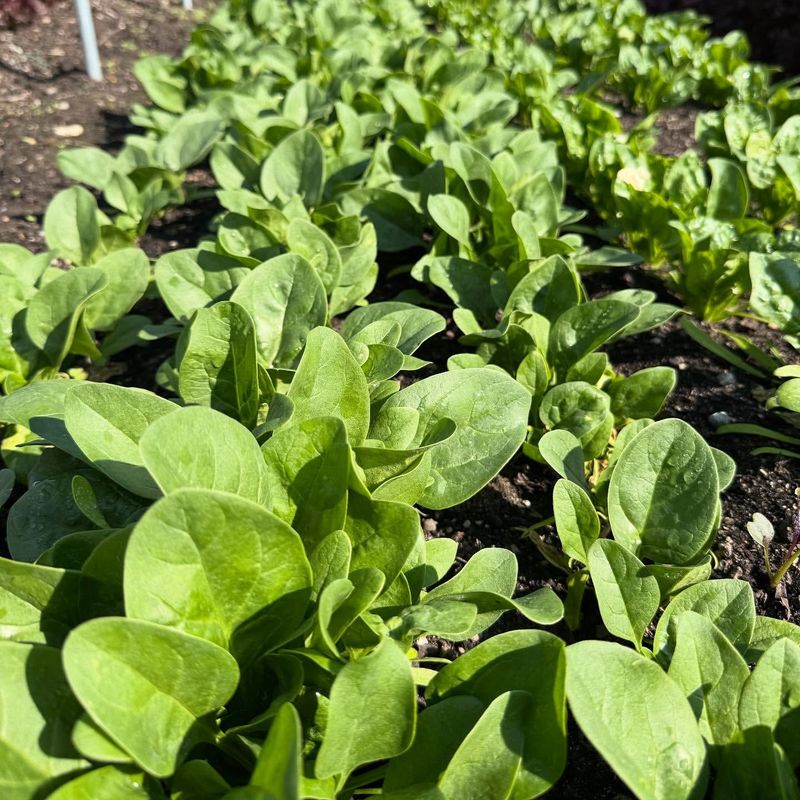
Spring comes early in Georgia, and cool-season crops like peas and spinach can fill your garden beds before summer heat takes over.
Peas climb upward on trellises or fences while spinach grows low to the ground, making them perfect companions that use different layers of garden space.
Both crops prefer cooler temperatures and will finish producing before you need the space for summer vegetables.
Plant peas and spinach together in February or early March in southern Georgia, or wait until mid-March in northern areas. Peas need something to climb, so set up a simple trellis or fence before planting.
Sow pea seeds at the base of the support and scatter spinach seeds in front, leaving about six inches between the pea row and the spinach.
The pea vines will shade the spinach slightly as they grow, which helps the spinach stay productive a bit longer before warm weather causes it to bolt. Both crops add nutrients to the soil, with peas fixing nitrogen that benefits surrounding plants.
Harvest spinach leaves when they’re young and tender, and pick pea pods regularly to keep the plants producing. By late May or early June, both crops will finish, and you can pull them out to make room for heat-loving summer vegetables.
This early pairing gives you fresh produce when many other crops are just getting started.
4. Tall Tomatoes And Pole Beans Share Space When Given Room
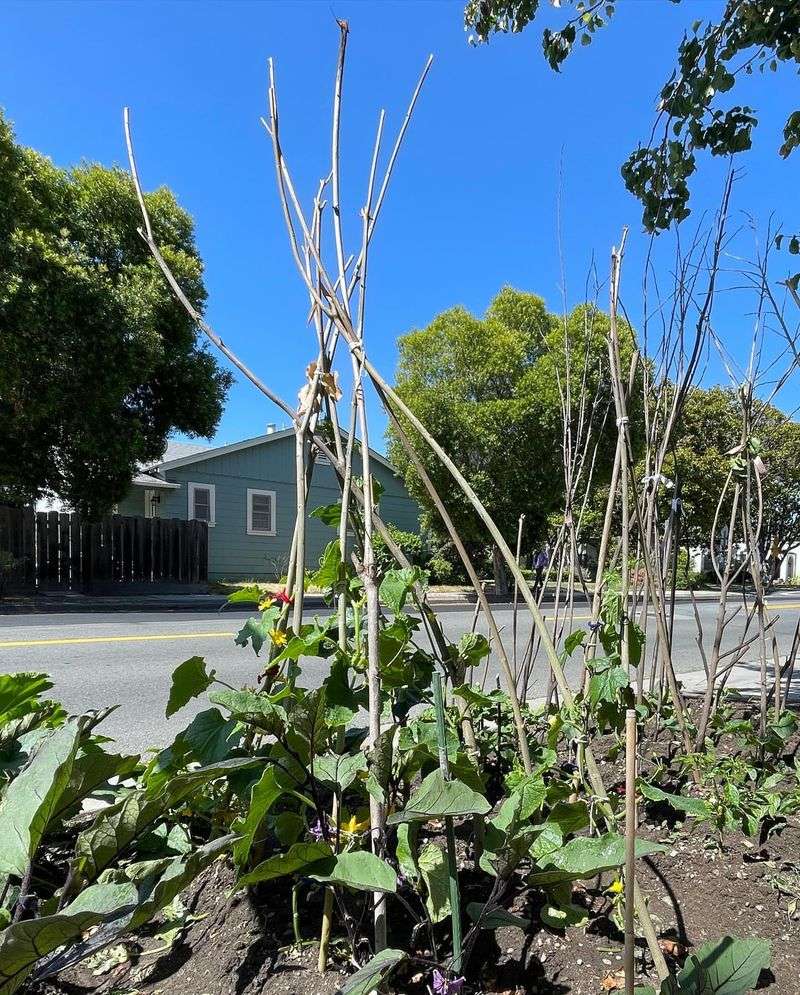
Tomatoes and pole beans can share garden space successfully when you give each plant enough room to grow without overshadowing the other. Both are warm-season crops that thrive in Georgia’s long, hot summers.
Tomatoes grow tall and bushy while beans send up thinner vines, so they can coexist if you plan your spacing carefully.
Choose indeterminate tomato varieties that grow tall on a single main stem, and stake them firmly. Plant pole beans about two feet away from the tomato stakes, giving them their own support structure.
This spacing prevents the bean vines from wrapping around your tomato plants while still allowing both crops to share the same bed.
Tomatoes are heavy feeders that need rich soil and regular fertilizing, while beans actually add nitrogen to the soil. This makes them helpful neighbors.
The beans can benefit from the extra nutrients you add for the tomatoes, and the tomatoes appreciate the nitrogen the beans provide.
Water both crops deeply and consistently, especially during Georgia’s dry spells in July and August. Mulch around the base of both plants to keep soil temperatures stable and retain moisture.
The key to success with this pairing is giving each plant adequate space and support so they don’t compete for light or become tangled together as they grow throughout the summer months.
5. Malabar Spinach And Yardlong Beans Keep Producing In Georgia Heat
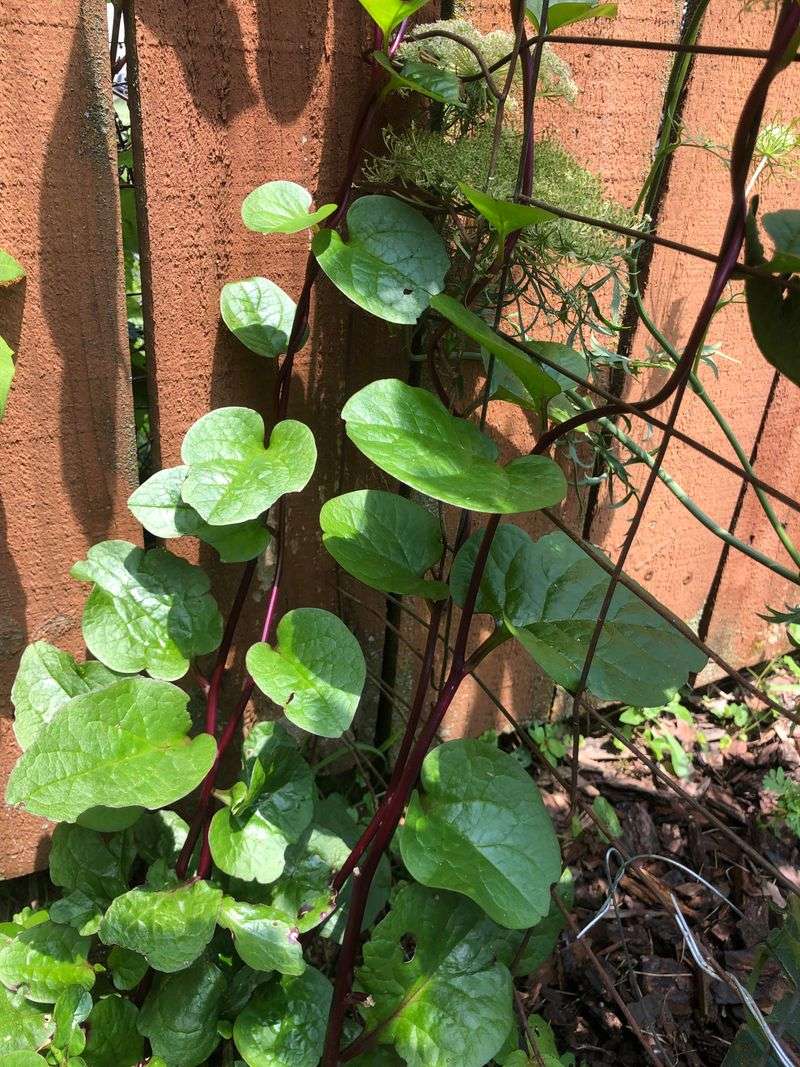
When most vegetables slow down in Georgia’s brutal summer heat, Malabar spinach and yardlong beans keep right on growing and producing. Both are heat-loving vining plants that actually prefer hot, humid weather.
Malabar spinach isn’t a true spinach but produces thick, glossy leaves that taste similar and work great in cooked dishes. Yardlong beans, also called asparagus beans, produce incredibly long pods that stay tender even in high temperatures.
Plant both crops in late May or early June when the soil is thoroughly warm and nighttime temperatures stay above 60 degrees. Give them a strong trellis or fence to climb because both plants grow vigorously once the heat arrives.
Space plants about 12 inches apart and mix them along the base of your support structure.
Malabar spinach produces beautiful vines with red or green stems and can grow over ten feet tall by the end of summer. The yardlong beans will twine around the same trellis, creating a lush green wall that produces food continuously.
Both plants need consistent water during the hottest months but handle Georgia’s humidity without the fungal problems that plague other crops.
Harvest Malabar spinach leaves regularly to encourage more growth, and pick yardlong beans when they’re about 12 to 18 inches long. This pairing ensures you have fresh vegetables even during the dog days of summer when other crops struggle.
6. Tromboncino Squash Climbs High While Pole Beans Keep Reaching
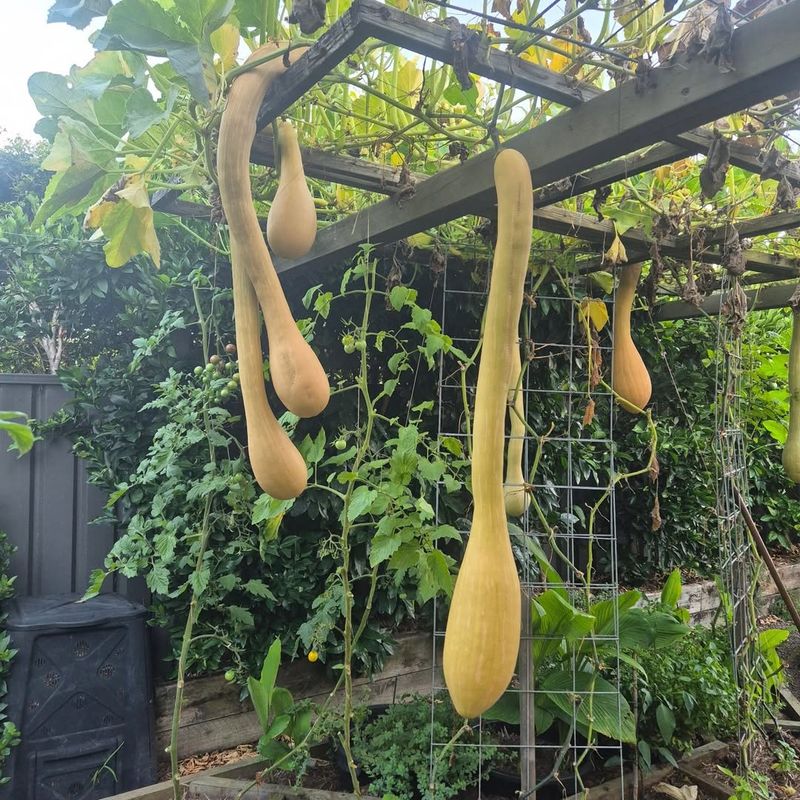
Tromboncino squash is an Italian heirloom that climbs like a vine rather than spreading across the ground like most squash varieties.
Pairing it with pole beans creates a productive vertical garden that saves space and produces two different crops from the same trellis area.
The squash produces long, curved fruits that hang down beautifully while beans fill in the spaces between.
Build a very sturdy trellis for this pairing because tromboncino squash produces heavy fruits that can weigh several pounds each. Plant squash seeds at one end and beans at the other, or alternate them along the base with about 18 inches between plants.
Both crops need warm soil, so wait until mid-May in most of Georgia before planting.
The squash vines grow aggressively and can reach 10 to 15 feet in length, so give them plenty of vertical space. Beans will fill in around the squash leaves without much competition.
Both plants benefit from regular watering and rich soil with plenty of compost worked in before planting.
Tromboncino squash resists squash vine borers better than other varieties, making it more reliable in Georgia gardens. Harvest the fruits when they’re 12 to 18 inches long for the best flavor and texture.
The beans will produce continuously if you pick them every few days. This combination creates an impressive vertical garden that produces heavily all summer long.
7. Cucamelons Climb Up As Peppers Stay Steady Below
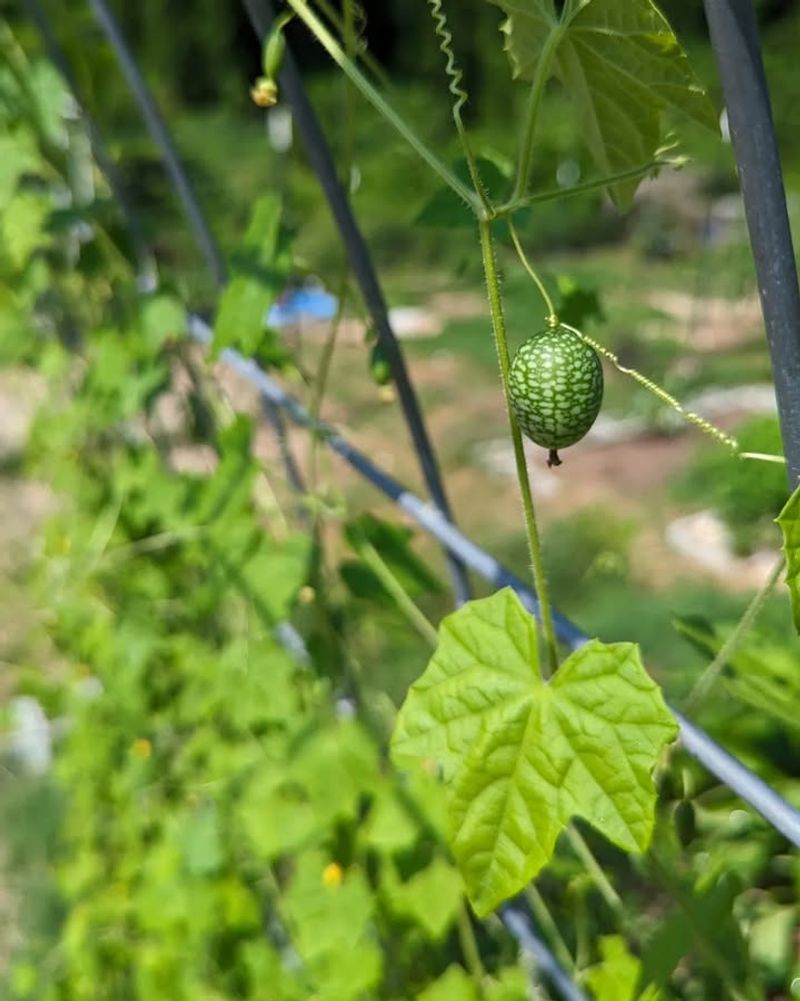
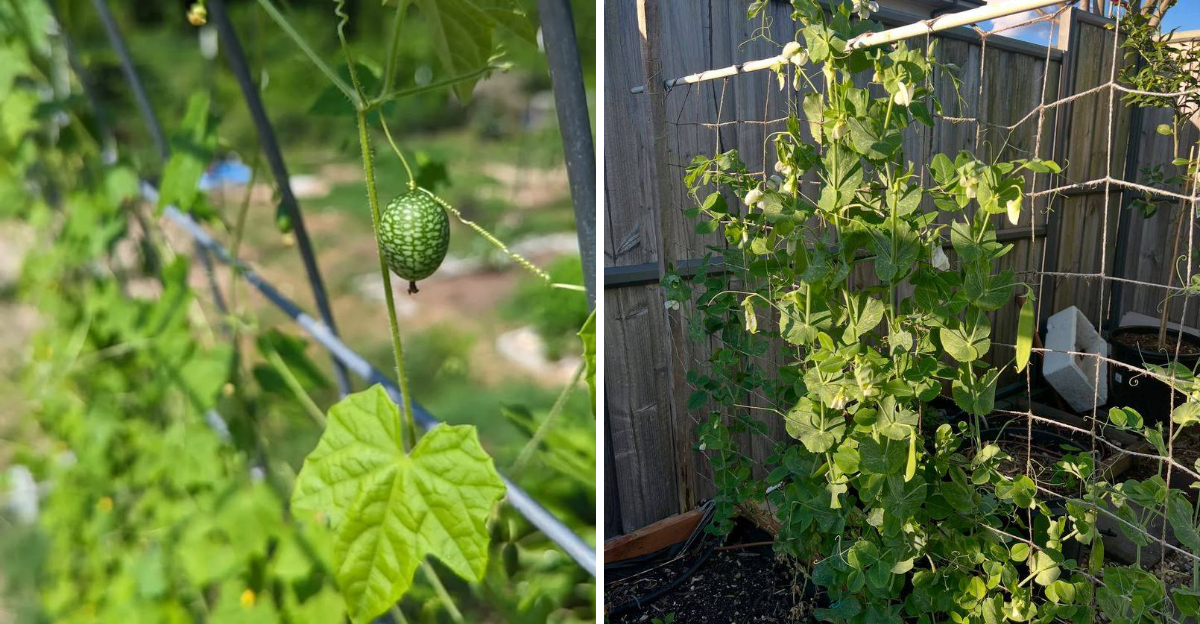
Cucamelons look like tiny watermelons but taste like cucumbers with a hint of lime. These adorable little fruits grow on delicate vines that climb readily up trellises or fences.
Pairing them with peppers creates an interesting combination where the cucamelons grow upward while peppers stay bushy and productive below, using different layers of garden space efficiently.
Plant pepper transplants in your garden first, spacing them about 18 inches apart. Then add cucamelon seeds or transplants between the peppers, positioning them closer to your trellis or support structure.
The cucamelon vines are thin and light, so they won’t shade out the peppers too much as they climb upward.
Peppers love Georgia’s heat but appreciate some afternoon shade during the hottest months. The cucamelon vines can provide just enough filtered shade to help peppers stay productive through July and August.
Both crops need consistent watering, especially when fruits are developing.
Cucamelons are incredibly productive once they start bearing, producing hundreds of tiny fruits throughout the summer. Pick them when they’re about the size of large grapes.
Peppers will continue producing from early summer through fall if you harvest regularly and keep plants well-watered. This pairing works especially well in smaller gardens where vertical space is easier to find than horizontal space.
The combination looks beautiful and produces two very different crops from the same garden bed.
8. Snow Peas And Lettuce Make The Most Of Early Spring
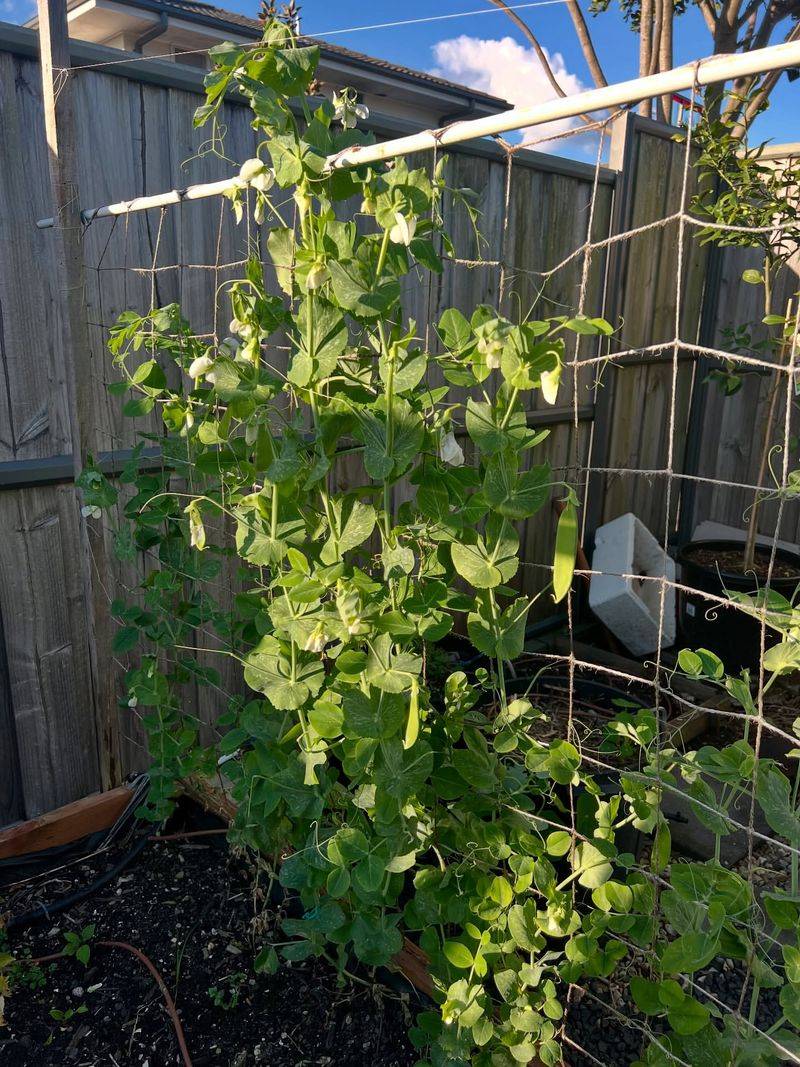
Before Georgia’s heat arrives, snow peas and lettuce team up to create a productive spring garden that makes the most of cool weather.
Snow peas climb upward on short trellises while lettuce grows in neat rows below, both crops thriving in the mild temperatures of March and April.
This pairing lets you harvest two crops from the same space before summer vegetables take over.
Start planting in late February in southern Georgia or early March in northern areas. Set up a trellis about four feet tall for the snow peas, then plant lettuce seeds in the space in front of the trellis.
Space lettuce rows about six inches apart and sow snow peas every two inches along the base of the support.
Snow peas grow quickly in cool weather and will start producing edible pods within 60 days of planting. The lettuce will be ready even sooner, giving you fresh salad greens while you wait for the peas.
Both crops prefer consistent moisture and will benefit from a light layer of mulch to keep soil cool.
As spring progresses and temperatures climb, the pea vines will provide some shade for the lettuce, helping it produce a bit longer before warm weather causes it to bolt.
Harvest snow peas by snipping the pods off gently, and cut lettuce leaves from the outside of the plants to encourage continued growth.
Both crops will finish by late May, leaving your bed ready for summer planting.
9. Hyacinth Beans And Okra Thrive Through Georgia’s Long Hot Summer
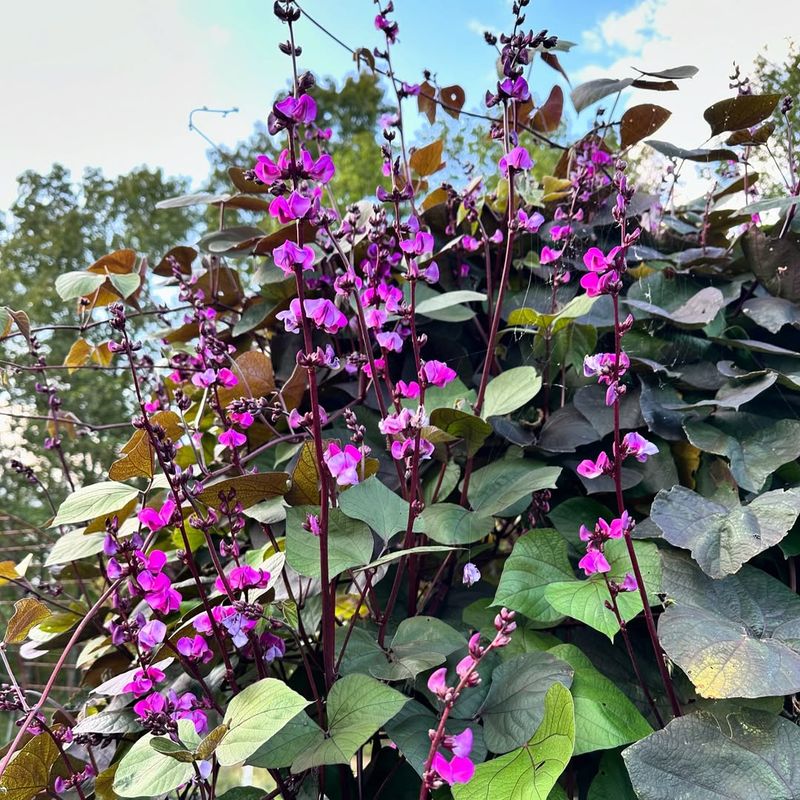
Hyacinth beans and okra are both heat-lovers that thrive in Georgia’s long, hot summers when many other vegetables struggle.
Hyacinth beans produce gorgeous purple flowers and edible pods while climbing upward, and okra grows tall and sturdy with large leaves that can provide some afternoon shade.
Together they create a beautiful and productive garden combination that handles heat and humidity without complaint.
Plant both crops in late May or early June when soil temperatures are warm and settled. Okra grows quickly from seed sown directly in the garden, while hyacinth beans can be started from seed or transplants.
Space okra plants about 18 inches apart and plant hyacinth beans nearby with a trellis for support.
Hyacinth beans produce stunning purple or white flowers that attract pollinators, which also helps your okra set more pods. The beans grow vigorously and can reach eight to ten feet tall by the end of summer.
Okra will grow four to six feet tall, creating a lush green backdrop for the colorful bean vines.
Both crops need full sun and consistent water but handle Georgia’s summer heat better than almost any other vegetables. Harvest okra pods when they’re three to four inches long, and pick hyacinth bean pods when they’re young and tender.
This pairing keeps producing right through September and into October, giving you fresh vegetables long after other summer crops have finished.