These Drought-Resistant Flowers Thrive In Arizona Patio Pots
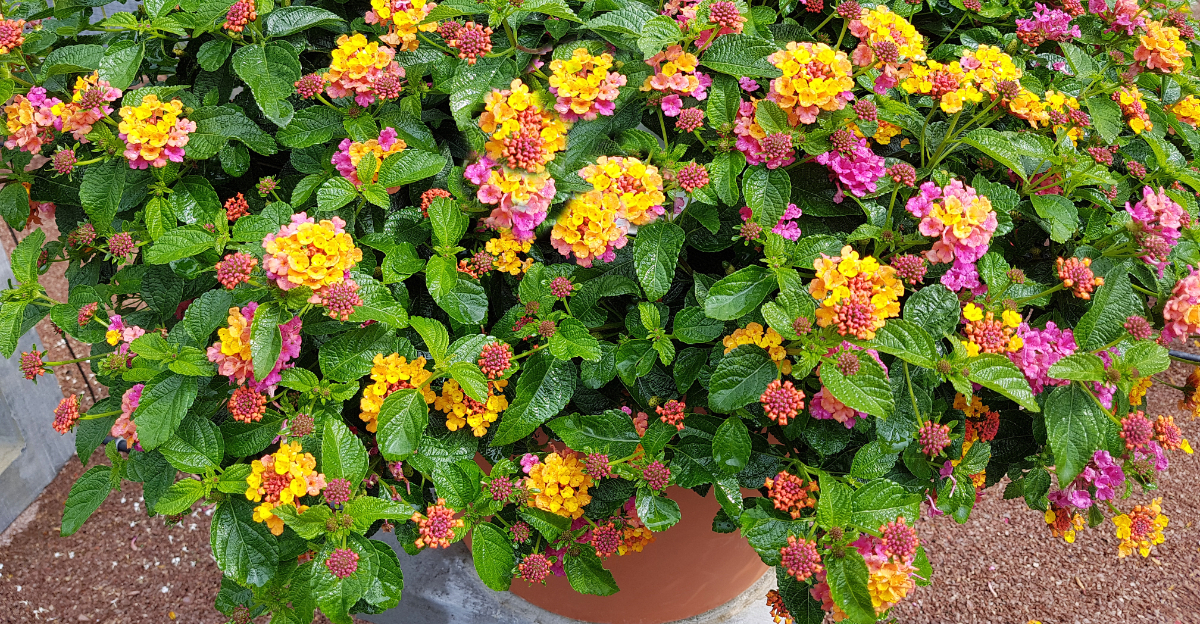
Arizona patio pots can look full and colorful at first, then lose that strong appearance once heat settles in and moisture drops fast. Soil dries out quickly, and many flowers start to fade or lose shape even when care stays consistent.
That pattern shows up often and usually comes down to plant choice more than effort.
Some flowers hold up far better in containers under these conditions and keep a steady look without constant attention.
They stay more reliable through high temperatures and do not require the same level of upkeep to stay presentable.
Choosing the right types early can change how those pots perform through the entire season. It helps avoid repeated decline and keeps containers in better condition when heat becomes constant.
1. Lantana Handles Intense Heat And Keeps Blooming In Containers
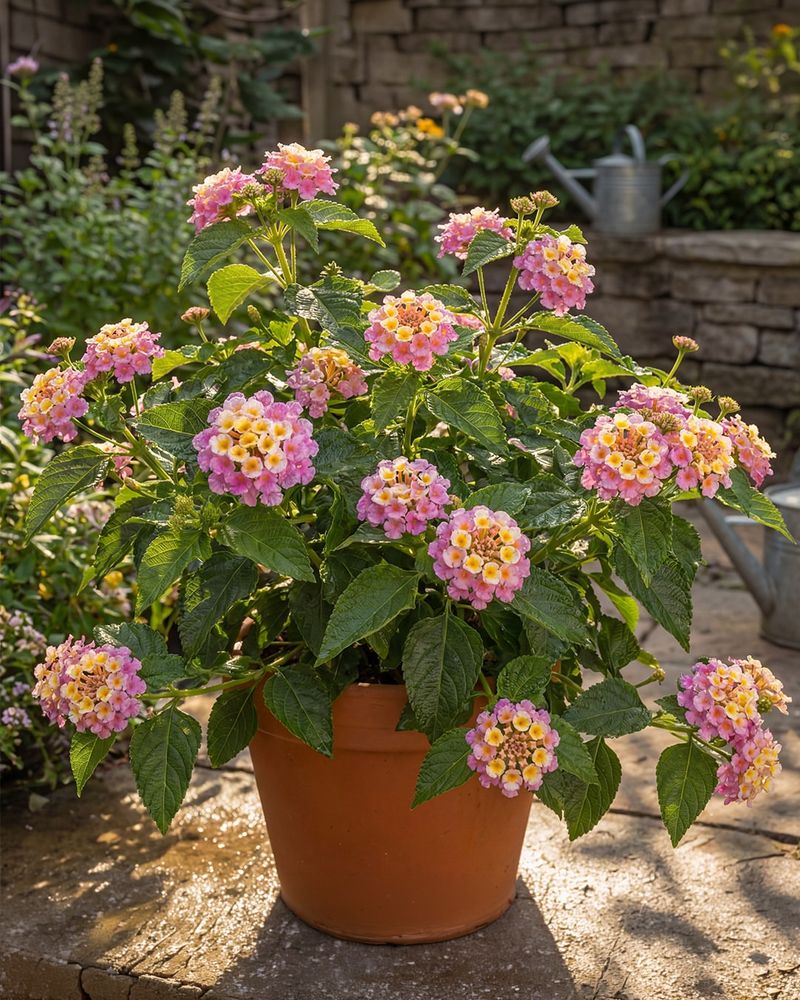
Few flowering plants shrug off Arizona summer heat as reliably as lantana. You can set a pot of it on a west-facing patio in Phoenix, forget to water it for several days, and come back to find it still covered in clusters of tiny orange, yellow, and red blooms.
It genuinely tolerates the kind of heat that wilts most other flowers fast.
Lantana grows quickly in containers, so choose a pot that’s at least 12 to 14 inches wide to give the roots room.
A cactus mix or a well-draining potting blend works better than standard garden soil, which tends to hold too much moisture and can lead to root problems in Arizona’s intense heat.
Watering once or twice a week during peak summer is usually enough, though you should always check the top inch of soil before adding more water. If it still feels damp, wait another day.
Lantana also responds well to light trimming when stems get leggy, which can encourage a fresh round of blooms.
One thing worth knowing: lantana berries are toxic if eaten, so keep that in mind if you have pets or small children around your patio. Beyond that, it’s one of the most dependable bloomers you can grow in an Arizona container garden through the hottest months.
2. Portulaca Thrives In Full Sun With Minimal Water Needs
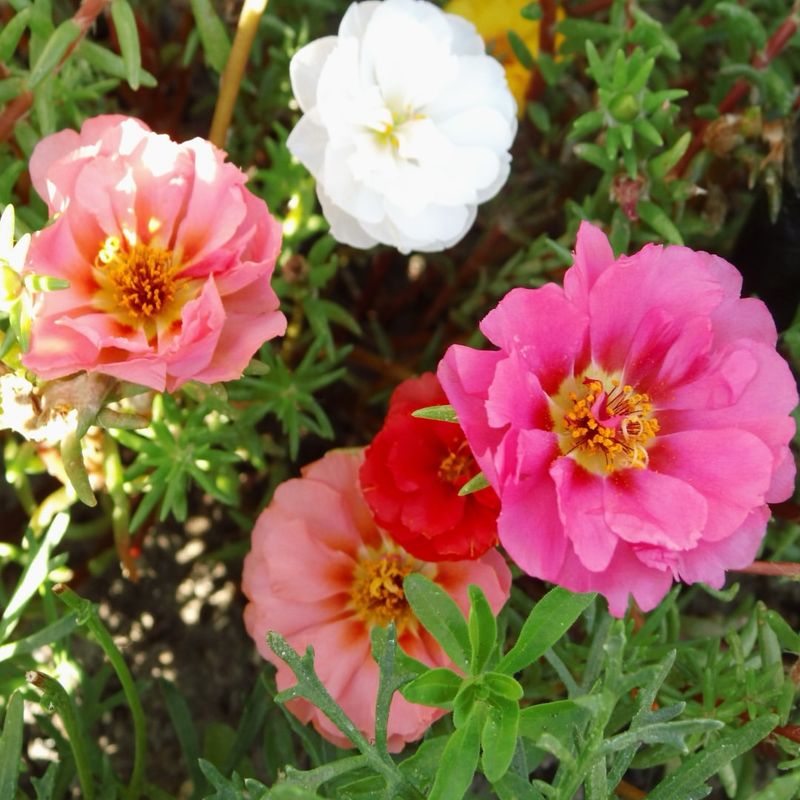
Portulaca almost seems built for Arizona. Its thick, succulent-like leaves store moisture, and it opens its bright flowers only when the sun is shining, which means it’s putting on a show exactly when your patio looks its best.
Colors range from hot pink and magenta to yellow, orange, and cream, often on the same plant.
Shallow containers work well for portulaca since its roots don’t run deep. A pot about 6 to 8 inches deep with drainage holes at the bottom is usually plenty.
Skip the moisture-retaining potting mixes sold for tropical plants — portulaca needs soil that dries out quickly between waterings, not one that stays wet.
In Tucson and the Phoenix metro area, portulaca tends to perform from late spring through early fall. Watering two or three times a week during the hottest stretch is typically enough, and you can back off even more once the plant gets settled into its pot.
Overwatering is actually a more common problem with portulaca than underwatering.
One small drawback: the flowers close up on cloudy days and at night, so if you’re hosting an evening patio gathering, portulaca won’t be the star of the show. But on a bright Arizona afternoon, it delivers a dense carpet of color that’s hard to beat in a container garden.
3. Vinca Tolerates Dry Soil And Continues Flowering In Heat
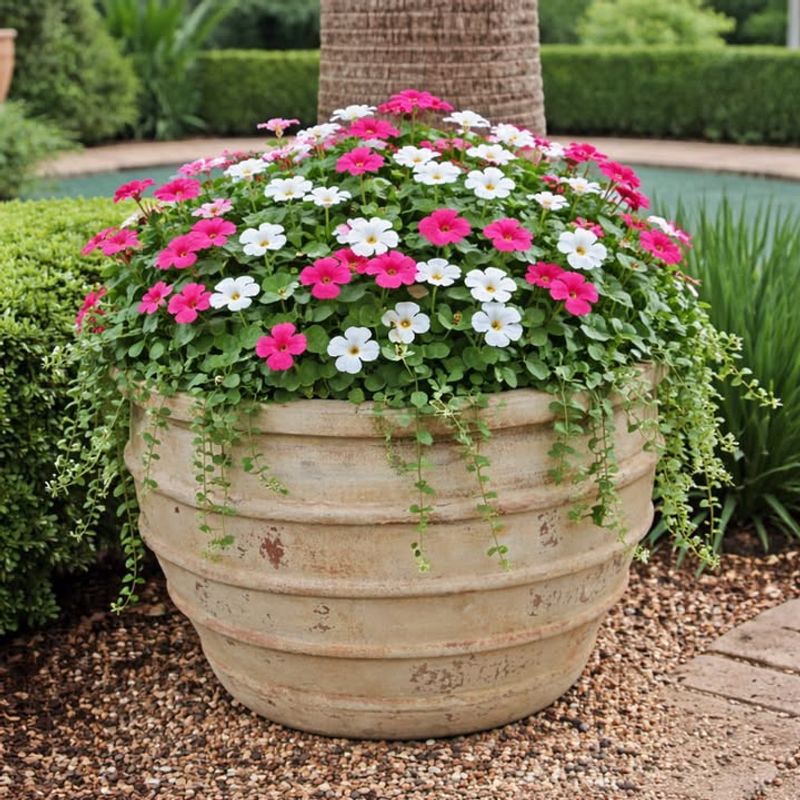
Vinca keeps blooming when other flowers have basically given up. Walk through any neighborhood in Mesa or Scottsdale during July, and you’ll likely spot vinca holding its color in containers that look like they’ve been baking in the sun all day — because they have.
It’s one of the few annuals that genuinely handles Arizona’s low-desert summers without significant shade protection.
Container vinca does best in a pot with good drainage and a standard potting mix that doesn’t retain too much water. Plants can get root rot surprisingly fast in soggy soil, especially when nighttime temperatures stay above 80 degrees.
Spacing matters too — don’t crowd multiple plants into a small pot if you want good airflow around the stems.
Watering every two to three days during peak heat works for most setups, but always let the top layer of soil dry slightly before watering again.
Vinca doesn’t need fertilizer every week, but a light feeding once or twice a month during the growing season can keep the blooms coming consistently.
Colors include white, pink, red, lavender, and coral, so mixing varieties in a larger container gives you a nice range without much extra effort.
Vinca rarely needs deadheading, which makes it genuinely low-effort once it’s settled into a pot on your Arizona patio and putting out regular blooms.
4. Angelonia Performs Well In Pots With Strong Sun Exposure
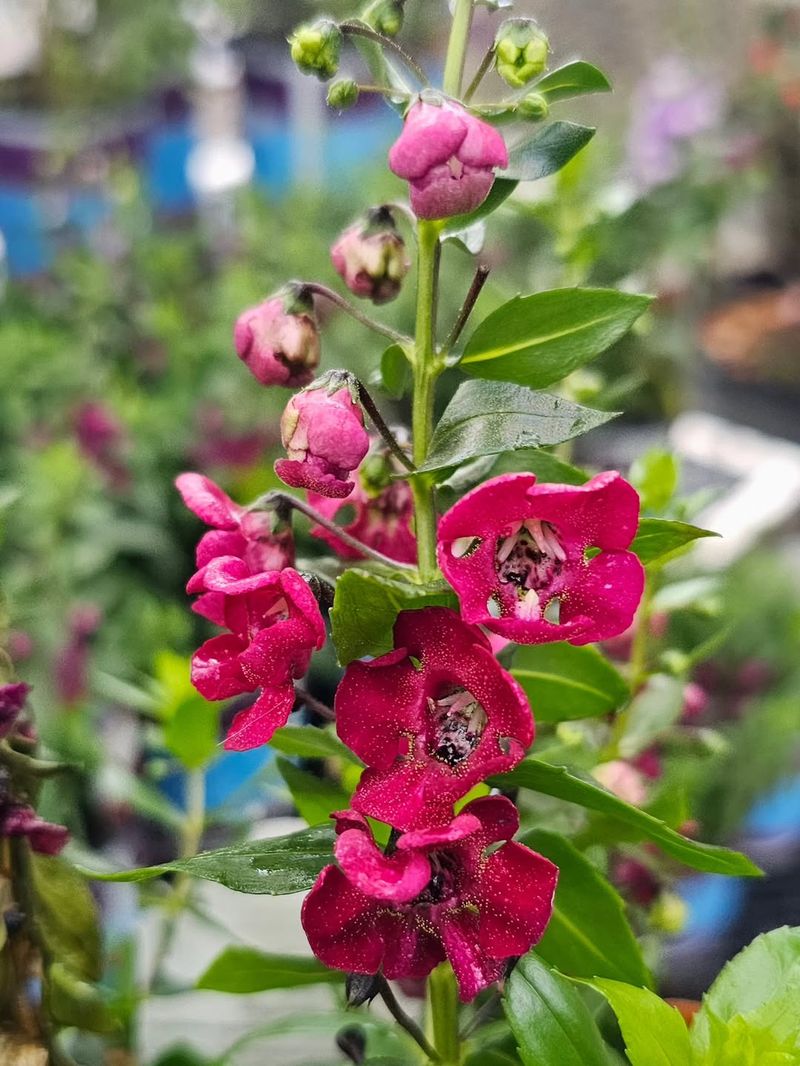
Angelonia doesn’t get nearly enough credit in Arizona patio gardens. Most people walk right past it at the nursery, but once you grow it in a container through a Phoenix summer, you start to understand why serious desert gardeners keep coming back to it.
The upright flower spikes in purple, pink, or white hold up in full sun without fading or flopping over.
Plant angelonia in a container that’s at least 10 inches deep, since it develops a fairly strong root system compared to other annuals. A well-draining potting mix is important — standing water around the roots in summer heat creates problems quickly.
If your patio pot doesn’t have drainage holes, drill some before planting rather than adding a layer of gravel, which doesn’t help drainage the way most people assume.
Watering two to three times a week during the hottest part of summer usually keeps angelonia healthy without overdoing it. Pinching back the top inch or two of each stem after the first big flush of flowers encourages branching and more blooms over the following weeks.
Angelonia has a faint, pleasant scent that’s more noticeable up close than from a distance. It attracts butterflies and bees throughout the blooming season, which adds some life to an Arizona patio beyond just the visual color.
For tall, upright structure in a container, it’s a dependable choice through the warmer months.
5. Gaillardia Blooms Reliably Even In Hot And Dry Conditions
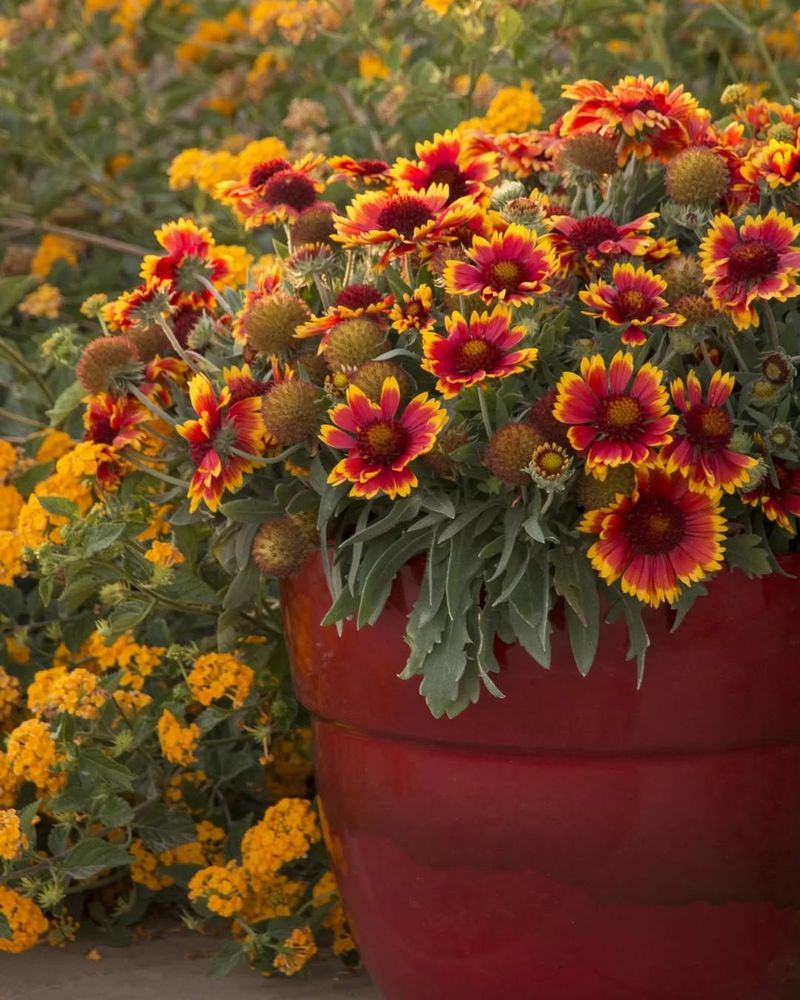
Gaillardia looks like it was designed specifically for hot, dry places. The bold red and yellow flowers resemble a sunset, and they keep appearing throughout the season even when rainfall is minimal and temperatures are punishing.
In Arizona, that combination of heat tolerance and drought resistance makes it a genuinely practical choice for container gardening.
Use a container with solid drainage and fill it with a sandy or cactus-style potting mix. Gaillardia does not do well with wet feet — if water pools at the bottom of the pot or the soil stays damp for more than a day or two after watering, root health will decline.
A pot with multiple drainage holes helps avoid that situation entirely.
Watering once or twice a week during the summer months is usually enough in most Arizona locations. Gaillardia is more likely to struggle from overwatering than from getting too dry, so when in doubt, wait an extra day before watering again.
Removing spent flower heads encourages the plant to produce new buds rather than putting energy into seed production.
In Tucson and the lower desert regions, gaillardia often performs best from spring through early summer and then again in early fall when temperatures drop slightly.
The intense midsummer heat can slow blooming temporarily, but the plant typically rebounds as conditions ease, making it a dependable long-season option for Arizona pots.
6. Zinnia Grows Easily In Containers With Good Drainage
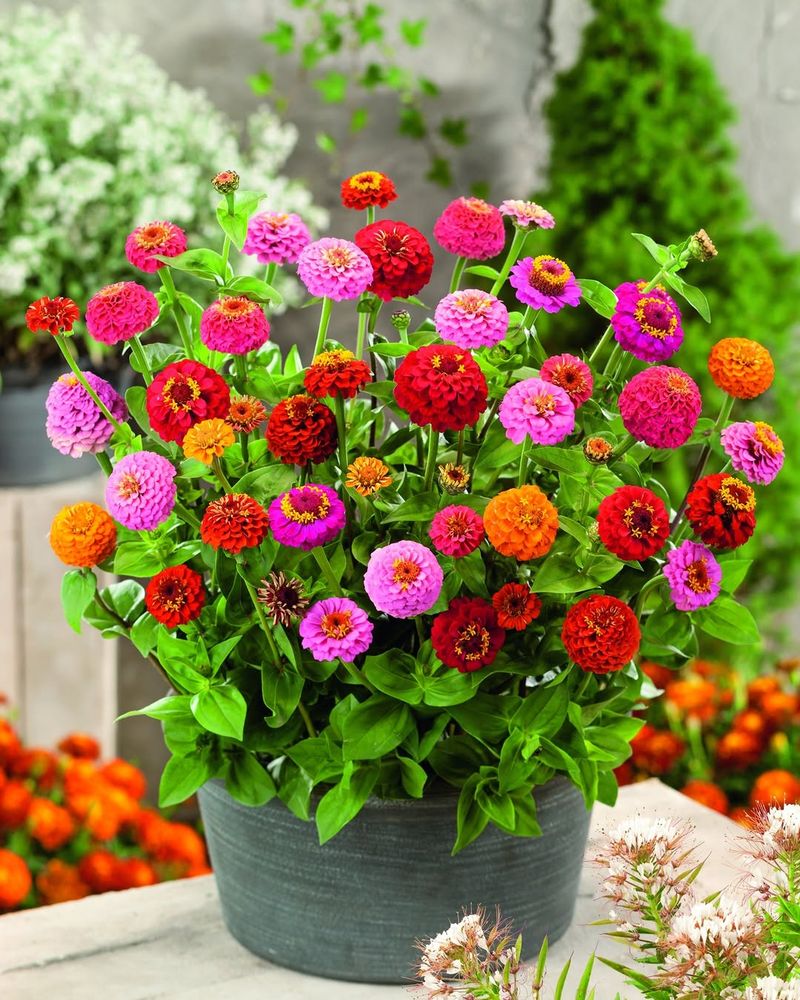
Zinnias are probably the most rewarding flower you can grow in an Arizona container if you start them at the right time. Sow seeds or transplant starts in late March through April, and by May you can have a pot full of color that keeps going well into the fall.
Timing matters more with zinnias than with most other flowers on this list.
Choose a pot that’s at least 12 inches wide and deep for standard zinnia varieties. Dwarf types work fine in smaller containers, but they tend to bloom with less abundance.
Fill the pot with a well-draining mix and avoid anything marketed for moisture retention — zinnias prefer soil that breathes and dries out between waterings rather than staying consistently moist.
Watering at the base of the plant rather than overhead helps reduce the risk of powdery mildew, which can show up on zinnia leaves during humid stretches, including Arizona’s summer monsoon season.
Good airflow around the pot also helps keep the foliage cleaner through those wetter weeks in July and August.
Deadheading spent blooms every week or so keeps zinnia producing new flowers steadily. Pinching back young plants when they’re about 6 inches tall encourages a bushier shape with more flowering stems.
With consistent care, a single large pot of zinnias can look impressive on an Arizona patio for several months straight.
7. Verbena Produces Continuous Blooms With Moderate Watering
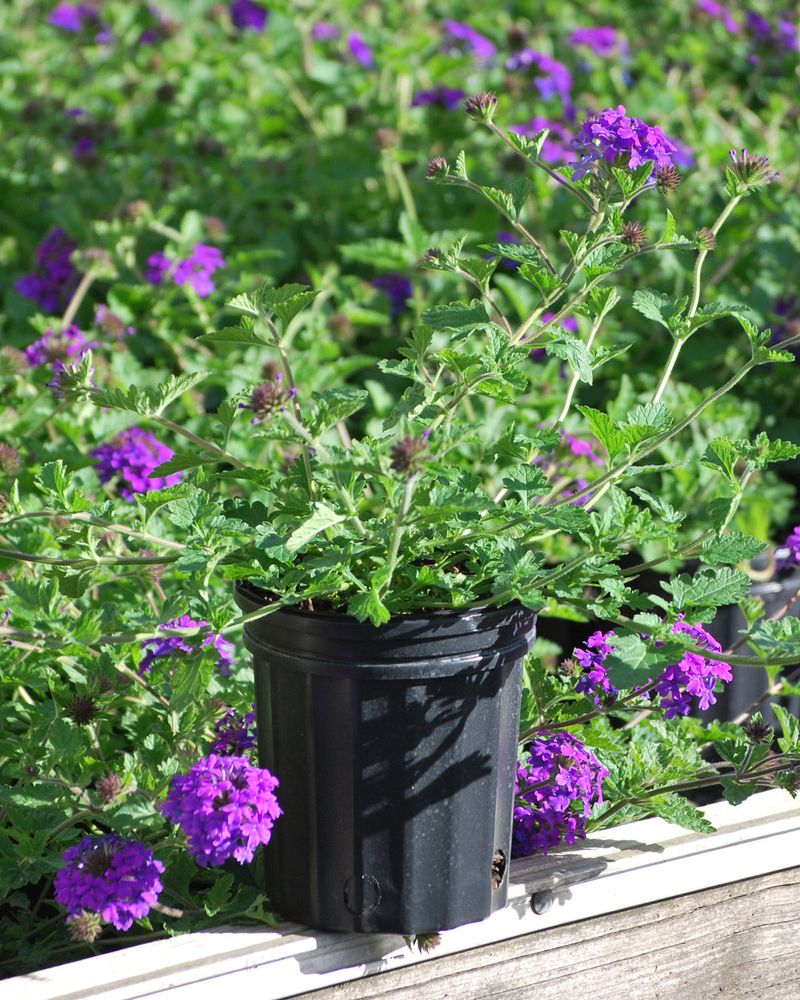
Verbena has a trailing habit that makes it especially useful in containers where you want something to spill over the edge and soften the look of a pot.
Purple, pink, red, and white varieties are all common at Arizona nurseries, and most of them hold their color well through periods of heat as long as watering stays somewhat consistent.
A 10 to 12-inch pot works well for a single verbena plant, and a slightly larger container can hold two plants if you want fuller coverage faster. Use a well-draining mix and make sure the pot has drainage holes.
Verbena doesn’t handle sitting in water, particularly during the warm overnight temperatures that come with Arizona summers.
Watering every two to three days during peak heat is a reasonable starting point, but the actual frequency depends on your pot size, sun exposure, and how quickly your specific soil mix dries out.
Smaller pots in full sun will need water more often than larger ones in partial shade.
Checking the soil rather than following a fixed schedule gives better results.
Trimming verbena back by about a third when blooming slows down can trigger a fresh burst of flowers over the following weeks. Fertilizing lightly once a month during the growing season supports steady blooming.
On an Arizona patio, verbena tends to look its best in spring and early fall rather than through the absolute peak of summer heat.
8. Gazania Opens In Sun And Tolerates Dry Container Soil
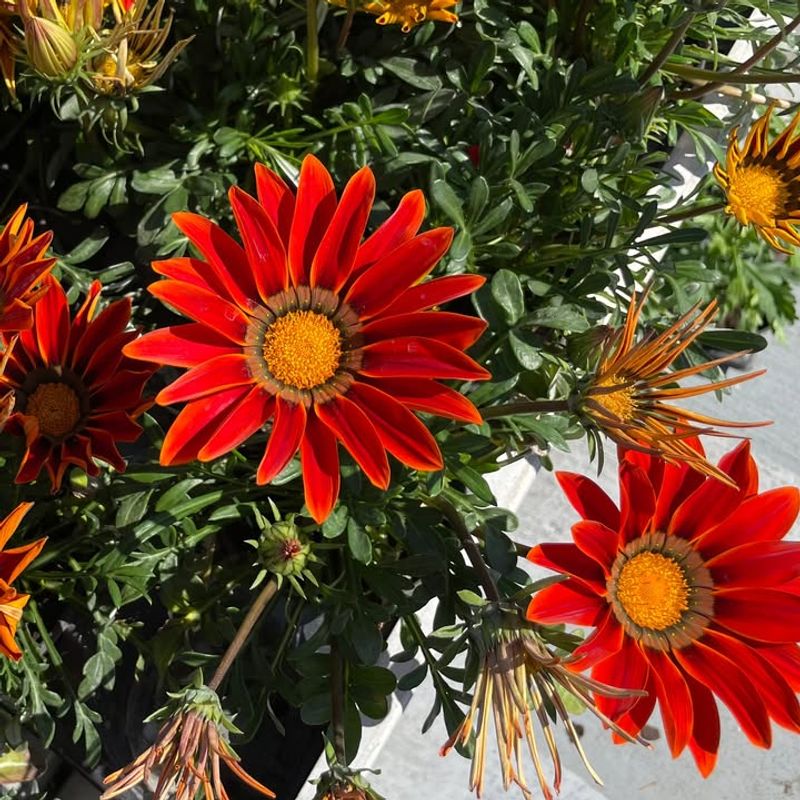
Gazania has one quirk that surprises new growers: the flowers close at night and on overcast days, opening only when the sun comes out.
In Arizona, where sunny days are the norm rather than the exception, that means gazania is putting on a full display most of the time.
The daisy-like blooms in orange, yellow, red, and bronze are vivid enough to catch attention from across a patio.
Sandy or gritty potting mixes suit gazania well since they drain fast and don’t hold moisture around the roots. Standard potting soil can work if you mix in some perlite to improve drainage.
A pot that’s 8 to 10 inches deep is usually adequate, and placing it in a spot with at least six hours of direct sun daily helps the plant bloom consistently.
Watering once or twice a week during summer is typically enough for gazania in containers. It handles short dry spells better than most annuals, though extended periods without water during extreme heat can stress the plant and reduce flowering.
A thin layer of gravel on top of the soil can help slow moisture loss from the pot surface.
Gazania tends to bloom heavily in spring and again in fall in Arizona’s low desert, with a slower period through the most intense midsummer heat. Removing old flower stems as they finish encourages new ones to develop.
For a pot that looks sharp on a sunny Tucson or Phoenix patio, gazania is a straightforward and reliable choice.