These 8 Evergreen Shrubs Keep Arizona Yards Colorful All Year
If your Arizona yard looks bright for a few weeks and then slips into a long stretch of dull green or bare soil, the problem is not the sun, it is the plant choice.
You do not need constant blooms to keep your landscape interesting when evergreen shrubs can hold bold color, texture, and shape through scorching summers and mild winters.
In Arizona heat, the right shrubs stay vibrant while everything else struggles, giving your yard a steady, confident look every single month. A yard that stays colorful all year does not happen by accident, it starts with shrubs that refuse to fade.
When you plant with purpose, your landscape keeps its personality long after flowers come and go. If you want dependable color that handles desert extremes without drama, these evergreen shrubs are the foundation.
1. Texas Sage Brings Silver Foliage And Sudden Purple Blooms After Humidity
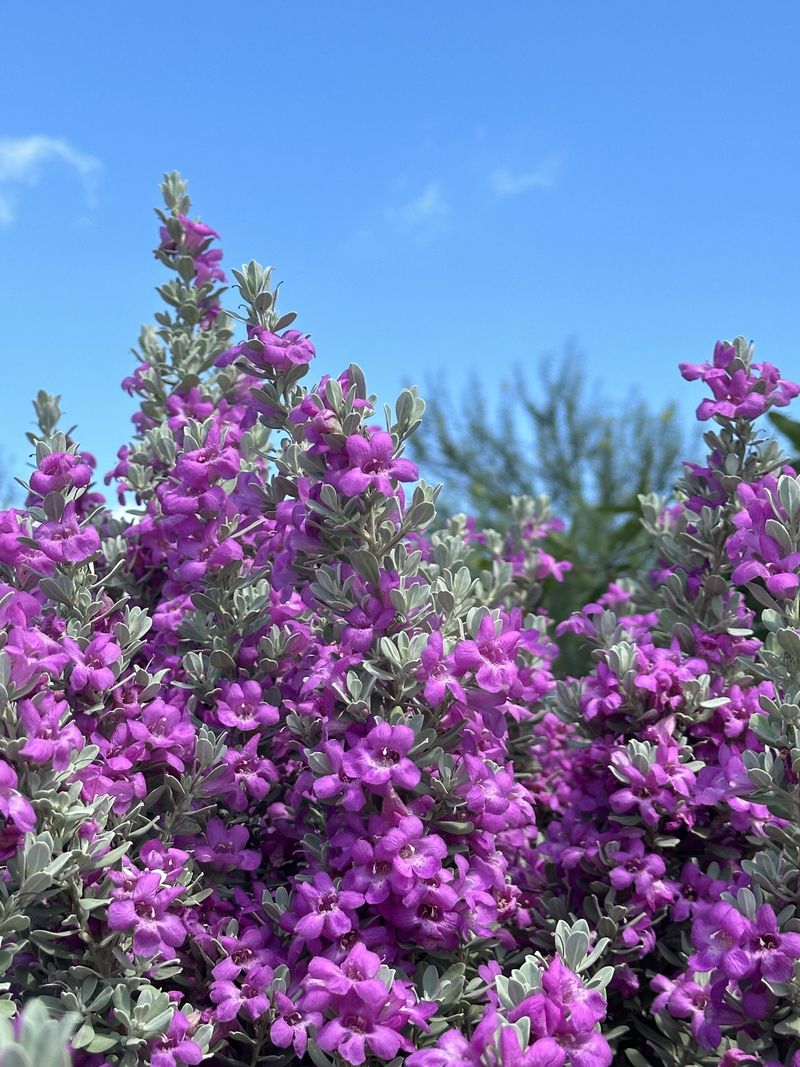
Silver leaves shimmer in Arizona sunlight, making Texas sage one of the most striking shrubs you can plant in a desert yard. This tough plant handles extreme heat without complaint and needs very little water once its roots get established.
Gardeners love how the fuzzy, gray-green foliage creates a soft backdrop that makes other plants pop with color.
What really surprises people is how Texas sage responds to humidity changes in the air. When monsoon moisture rolls into Arizona during summer, this shrub suddenly covers itself in tubular purple flowers that last for days.
The blooms appear so quickly after humid weather that some folks call it the barometer bush because it seems to predict rain.
Placement matters when you’re working with this evergreen beauty. It grows into a rounded shape that can reach five feet tall and equally wide, so give it plenty of room to spread.
Texas sage works perfectly as a border plant or grouped in clusters for maximum visual impact.
Maintenance stays simple throughout the year since this shrub rarely needs pruning or special attention. Arizona’s intense sun actually helps the foliage develop its most attractive silver tone.
Just avoid overwatering, which can cause root problems and make the leaves look less vibrant than they should.
2. Hop Bush Adds Deep Green Or Rich Purple Color In Every Season
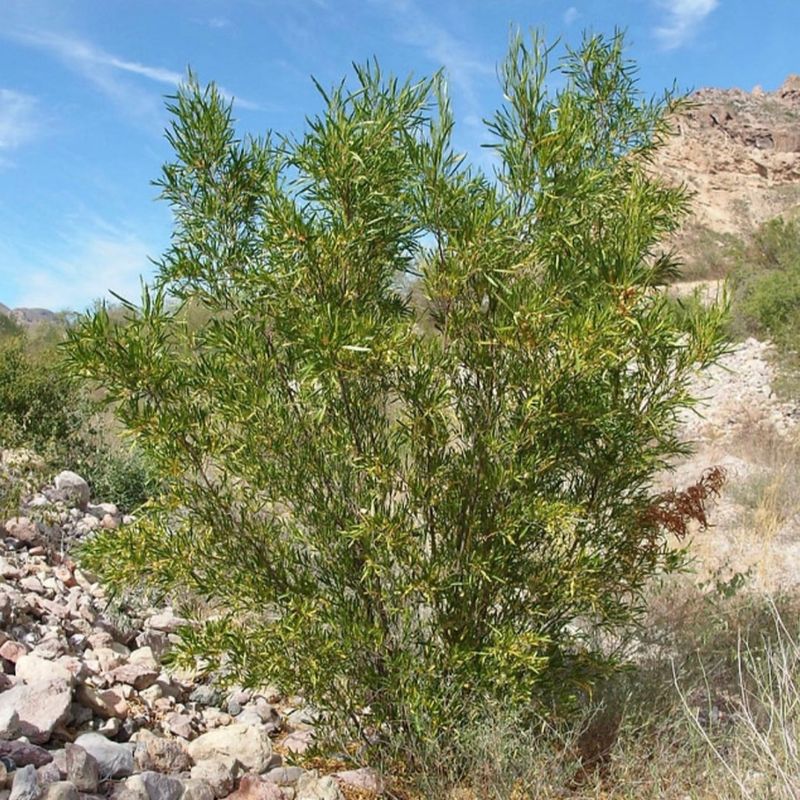
Purple or green? That’s the fun decision you get to make when planting hop bush in your Arizona landscape.
This versatile evergreen comes in varieties that display either deep emerald leaves or stunning purple-bronze foliage that intensifies in cooler weather. Both types keep their color year-round, creating constant visual interest without any seasonal gaps.
Fast growth makes hop bush a favorite for homeowners who want quick privacy screening or wind protection. It shoots up rapidly in Arizona’s climate and can easily reach twelve feet tall if left unpruned.
The narrow, willowy leaves create a soft texture that moves gracefully in desert breezes.
Adaptability is where this shrub really shines compared to fussier plants. Hop bush tolerates poor soil, reflected heat from walls and pavement, and irregular watering schedules that would stress other species.
It even handles light frost during Arizona’s occasional cold snaps without losing leaves or looking damaged.
Shaping hop bush into hedges or keeping it as a natural specimen both work beautifully in desert yards. The plant responds well to trimming and can be maintained at almost any height you prefer.
Arizona gardeners often use the purple variety as an accent that contrasts with lighter-colored plants, while the green form blends into more traditional landscape designs.
In full sun, the foliage color stays strongest and growth remains dense from top to bottom. Once established, hop bush needs very little care, making it one of the most reliable evergreen choices for Arizona landscapes.
3. Natal Plum Keeps Glossy Leaves And Bright Red Fruit On Display
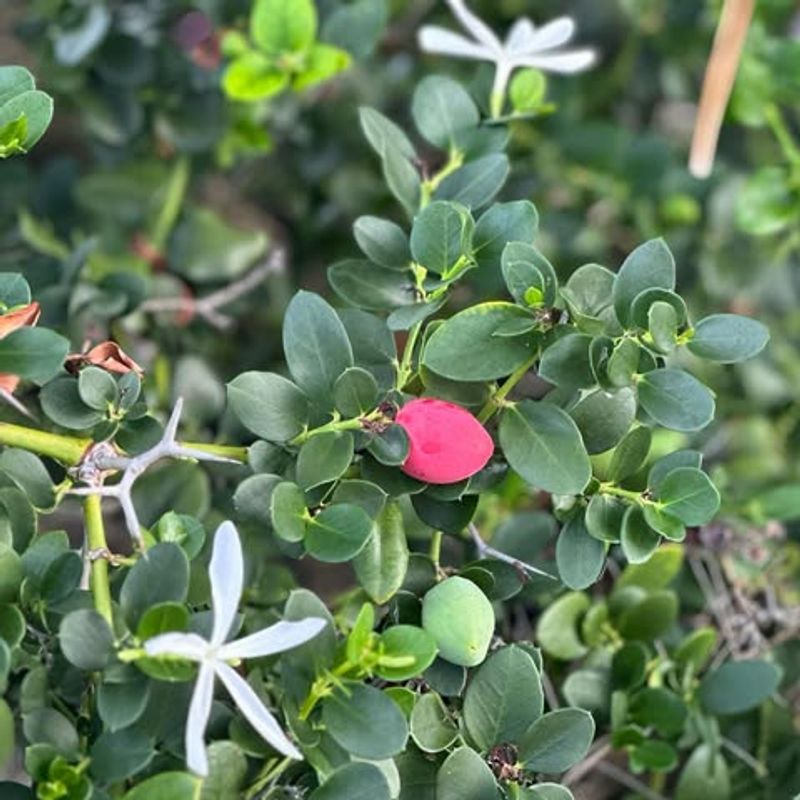
Shiny leaves catch light like polished leather, giving natal plum a formal appearance that elevates any Arizona landscape.
This compact evergreen stays dense and full throughout the year, with dark green foliage that always looks healthy and well-maintained.
White flowers shaped like tiny stars appear sporadically, adding delicate beauty to the sturdy plant.
Bright red fruits develop after flowering and create an unexpected pop of color against the dark leaves.
These oval plums look decorative enough that many people assume they’re just for show, but they’re actually edible with a sweet-tart flavor.
Birds appreciate the fruit as much as humans do, making this shrub a wildlife-friendly choice for Arizona yards.
Size flexibility gives you options for different landscape needs. Natal plum naturally grows into a rounded mound about five feet tall, but it tolerates pruning well if you want to keep it smaller.
Some gardeners shape it into low hedges, while others let it grow more freely as a foundation plant near homes.
Heat tolerance makes this shrub ideal for Arizona’s toughest growing conditions. It handles full sun exposure without wilting or developing burned leaf edges like more delicate species.
The plant also resists most pests and diseases, which means less work and fewer chemical treatments needed to keep it looking attractive throughout every season.
4. Oleander Stays Lush And Blooms Through Arizona’s Long Warm Months
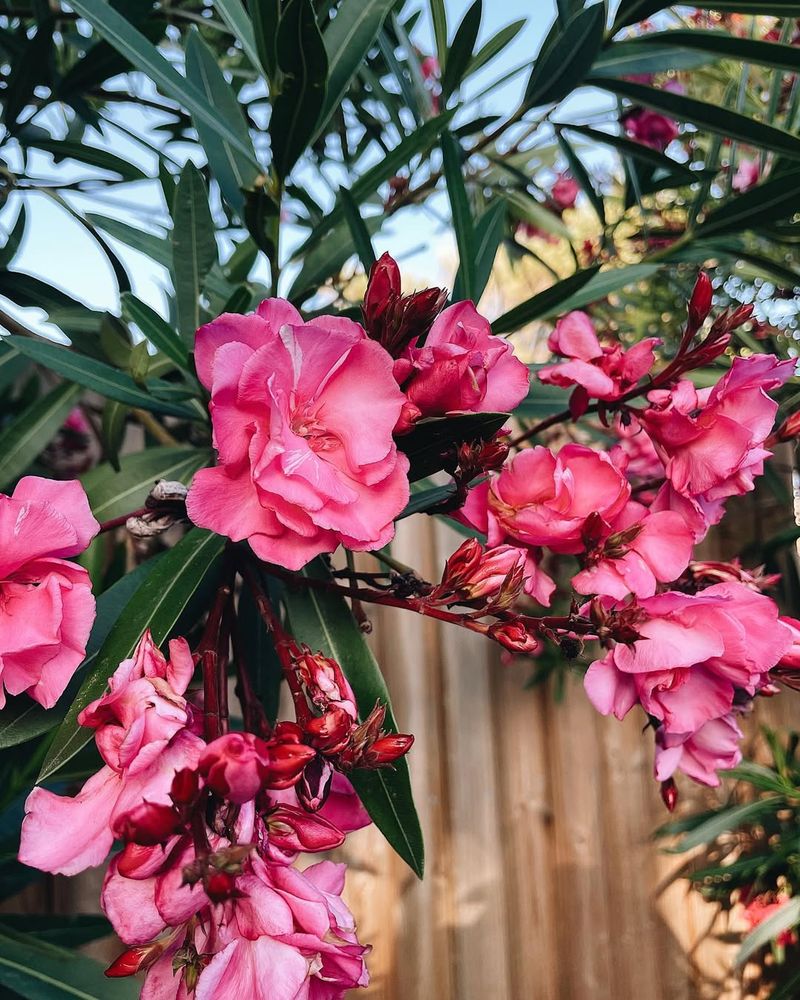
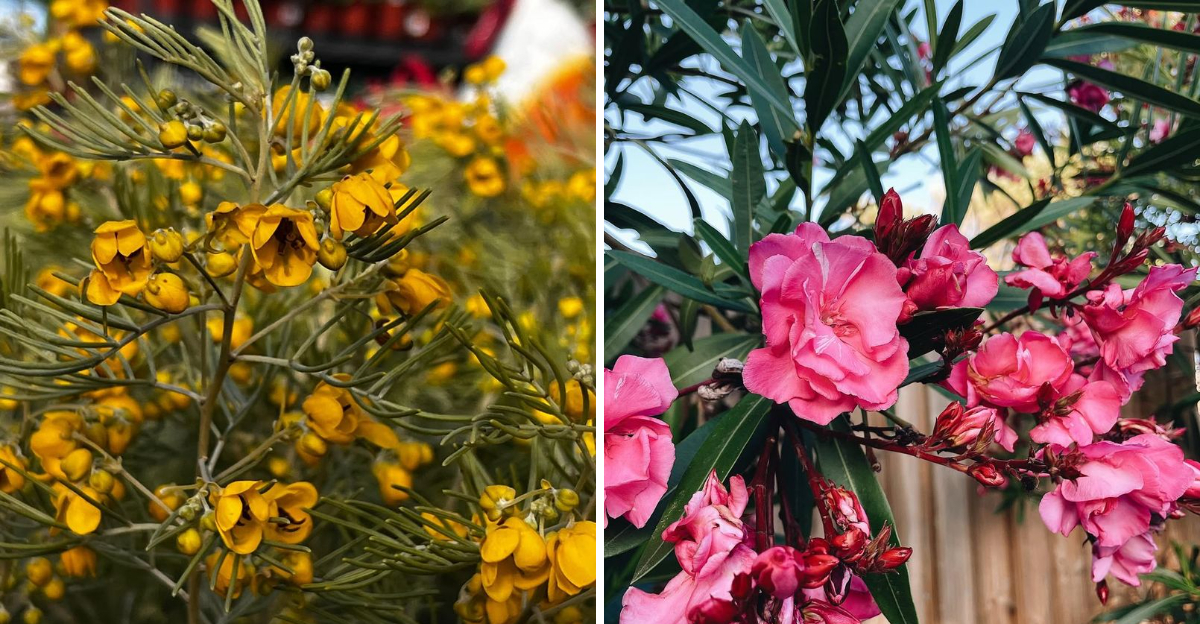
Clusters of flowers keep appearing from spring through fall, making oleander one of the longest-blooming shrubs you can grow in Arizona. Pink, white, red, or salmon blossoms cover the plant in waves, creating a show that lasts for months instead of weeks.
Each flower cluster sits above narrow, leathery leaves that stay green and attractive even when temperatures soar past 110 degrees.
Toughness defines this evergreen’s reputation among desert gardeners. Oleander handles drought, poor soil, and blazing sun without showing stress or requiring constant care.
It grows quickly into a large shrub or small tree that can reach fifteen feet tall, making it useful for privacy screens or background plantings in Arizona yards.
Color variety lets you customize your landscape design with different oleander cultivars. Dwarf varieties stay compact at three to six feet, while standard types create substantial visual barriers.
Mixing different flower colors creates a cottage-garden effect that softens the harsh desert environment.
Safety awareness is important because all parts of this plant contain compounds that can cause problems if eaten. Keep oleander away from areas where children play or pets roam freely.
Despite this consideration, millions of Arizona homeowners successfully grow this shrub because its beauty and durability outweigh the need for simple precautions. Proper placement ensures you enjoy the benefits without worry.
Regular pruning after heavy bloom cycles keeps the plant full and encourages even more flowers the following season. In Arizona heat, deep but infrequent watering helps oleander develop strong roots that handle extreme summer temperatures with ease.
5. Yellow Bells Delivers Bright Flowers For Most Of The Year
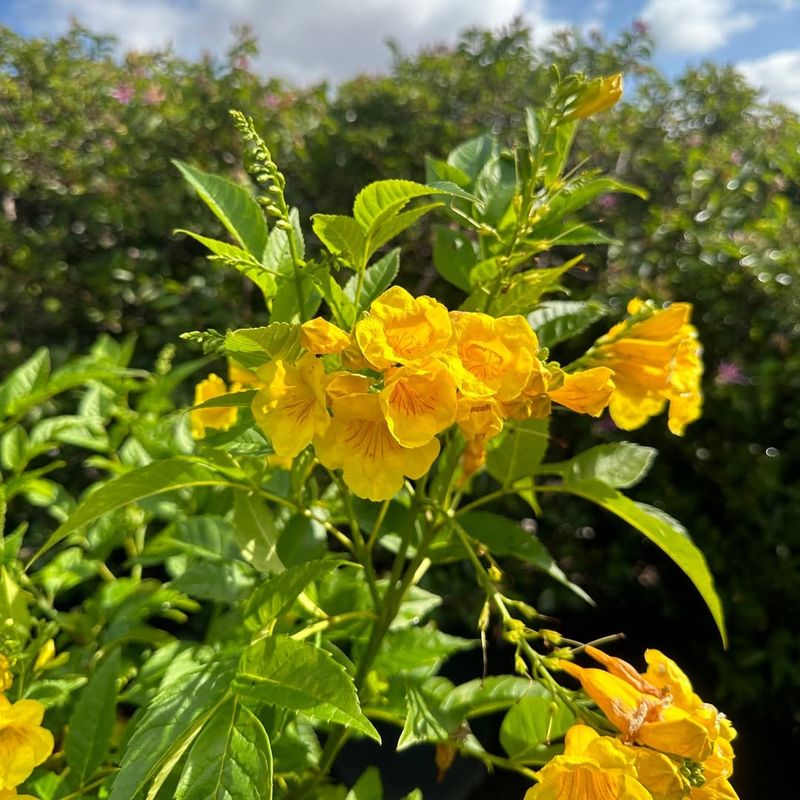
Golden trumpets dangle from arching branches almost constantly, giving yellow bells its reputation as Arizona’s most reliable blooming shrub.
Bright yellow flowers appear in such abundance that they nearly hide the green leaves beneath them during peak seasons.
This cheerful plant brings sunshine into your yard even on cloudy days.
Hummingbirds flock to yellow bells like it’s the neighborhood hotspot for nectar. You’ll see these tiny birds hovering around the tubular flowers throughout warm months, adding movement and life to your landscape.
Butterflies also visit regularly, making this shrub a magnet for pollinators that benefit your entire garden.
Growth happens quickly once yellow bells settles into Arizona soil. It can reach eight feet tall and spread just as wide, creating a fountain-like shape that looks natural and unforced.
The plant works beautifully as a standalone specimen or grouped with other shrubs for a layered effect.
Cold sensitivity means yellow bells may lose some leaves during Arizona’s brief winter freezes, but it bounces back fast when warm weather returns.
Deep but infrequent watering helps it develop strong roots that handle extreme summer heat without stress. Full sun keeps flowering at its peak, while too much shade reduces the number of blooms.
With minimal pruning and very little fuss, yellow bells continues delivering bold color long after many other shrubs slow down.
6. Orange Jubilee Keeps Producing Bold Color In Intense Desert Sun
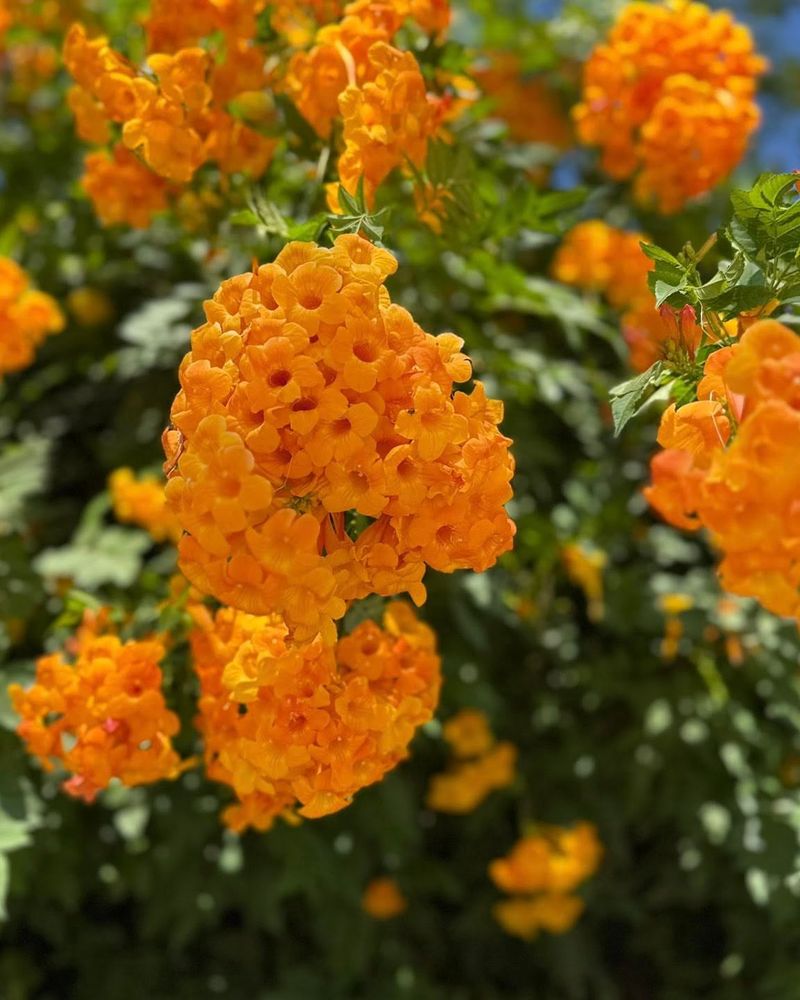
Fiery orange flowers blaze against Arizona’s blue sky like flames frozen in time. Orange jubilee produces these stunning trumpet-shaped blooms from spring through fall, creating one of the most eye-catching displays in desert landscaping.
The vibrant color doesn’t fade or bleach out even under the most intense summer sun that would wash out paler flowers.
Heat actually makes this shrub perform better rather than causing stress. While other plants wilt and struggle during Arizona’s hottest months, orange jubilee seems to thrive and produce even more flowers.
The bright green foliage stays fresh-looking and provides the perfect backdrop for those bold orange blooms.
Pollinators treat this plant like an all-you-can-eat buffet. Hummingbirds, butterflies, and native bees visit constantly, drawn by the nectar-rich flowers that keep opening in succession.
Watching wildlife interact with your landscape adds an extra dimension of enjoyment beyond just visual appeal.
Structure stays upright and manageable with minimal intervention from gardeners. Orange jubilee grows into a rounded shape about six to eight feet tall and wide.
Light pruning after the main blooming season helps maintain a neat appearance, but the plant looks attractive even without much shaping.
Arizona homeowners appreciate how this shrub delivers maximum color impact with minimum effort, making it perfect for busy people who still want a spectacular yard.
7. Dwarf Myrtle Keeps A Clean Deep Green Look In Every Season
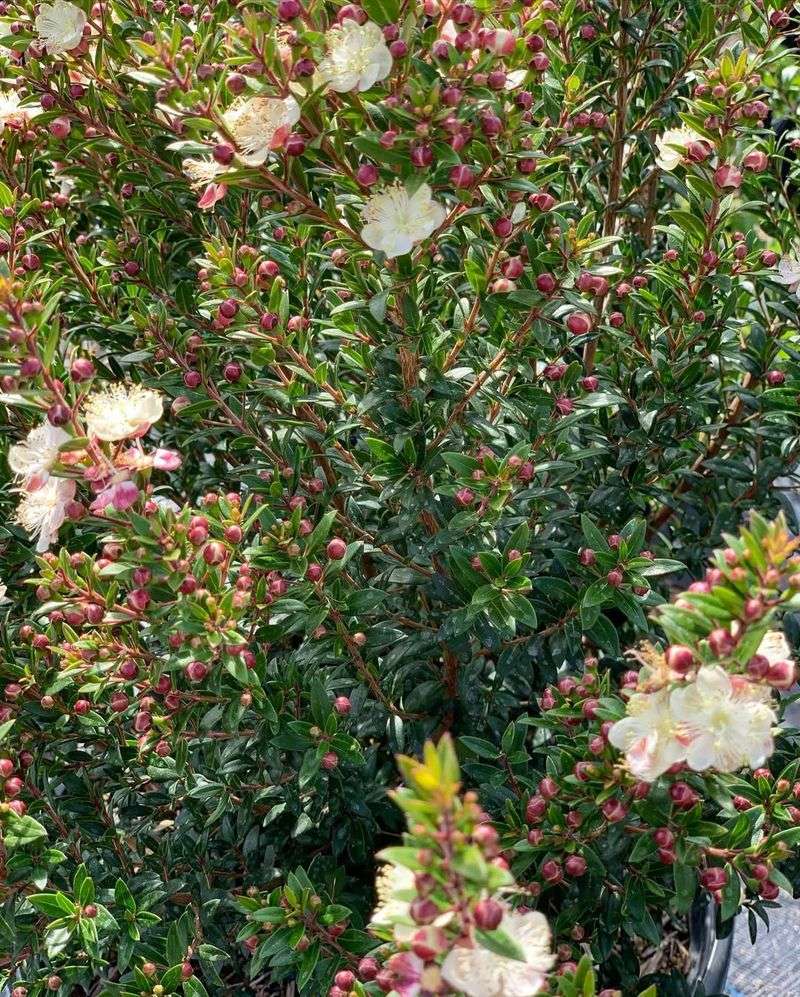
Dense, glossy foliage gives dwarf myrtle a polished look that stays consistent through every season in Arizona landscapes.
The small, dark green leaves hold their color in summer heat and remain intact during mild winter dips, keeping beds and borders from ever looking sparse.
This shrub naturally forms a tight, rounded shape that feels structured without constant shaping.
In spring, clusters of white flowers open across the branches, each bloom filled with fine, delicate stamens that stand out against the deep green leaves. The buds appear rosy before opening, adding another subtle layer of color.
Even after flowering ends, the foliage continues to carry the design.
Dwarf myrtle works especially well for low hedges, foundation plantings, and defined borders where a clean edge matters. It responds well to light trimming, but it rarely looks unruly if left alone.
That balance between structure and ease makes it useful in both modern and traditional Arizona yards.
While not as drought-tough as native desert shrubs, dwarf myrtle handles full sun in low desert climates when planted in well-drained soil and given consistent, moderate irrigation.
Once established, it stays dependable and tidy without dramatic seasonal shifts.
If your landscape needs year-round green depth instead of brief bursts of bloom, dwarf myrtle provides steady color, compact growth, and refined texture that holds everything together.
8. Feathery Cassia Adds Soft Gray Texture And Winter Yellow Flowers
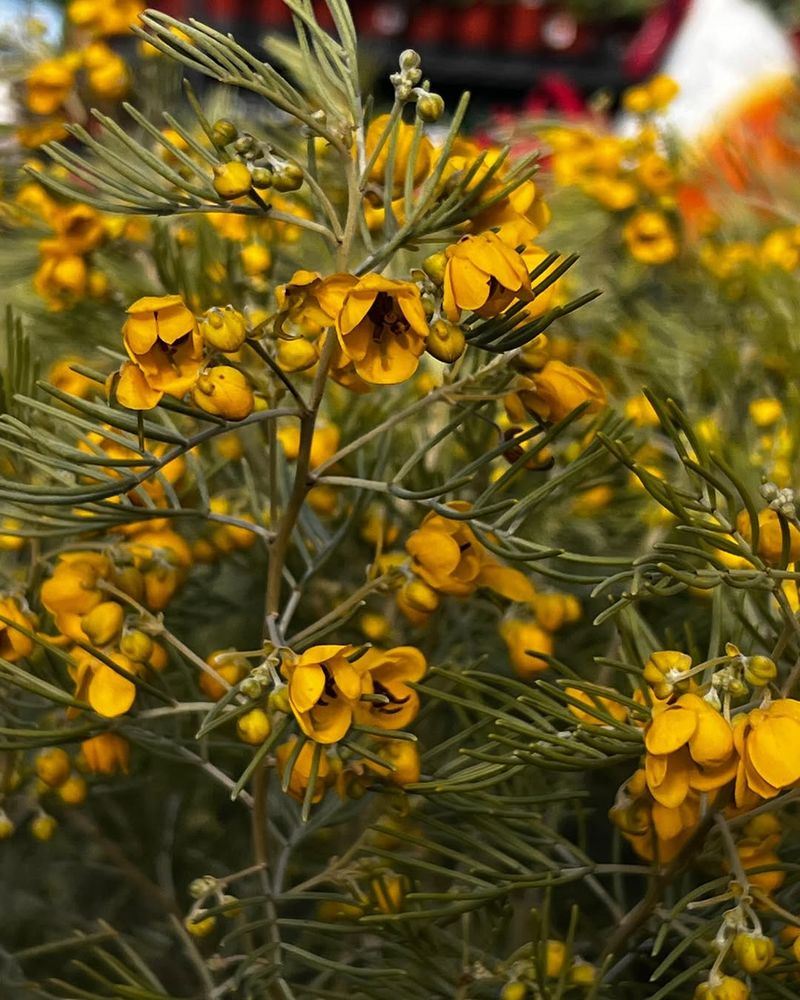
Delicate leaves create a misty, ethereal effect that softens harsh desert landscapes. Feathery cassia displays fine, compound foliage in a beautiful silver-gray color that looks almost like smoke from a distance.
This soft texture provides welcome relief from the bold, architectural plants that dominate many Arizona yards.
Winter blooming sets this shrub apart from most other desert species. When many plants look dormant and dull during Arizona’s cooler months, feathery cassia suddenly covers itself in clusters of bright yellow flowers.
These cheerful blooms appear when you need color most, bringing life to the landscape during the season when gardens typically look least interesting.
Airy growth keeps the plant from looking heavy or overwhelming in smaller spaces. The open branching pattern allows light to filter through, and the fine foliage never appears dense or bulky.
This quality makes feathery cassia perfect for layering with other plants or using in spots where a lighter touch is needed.
Cold hardiness surprises many Arizona gardeners who assume delicate-looking plants can’t handle temperature drops.
This shrub actually tolerates light freezes better than many desert species, maintaining its foliage through winter and bouncing back quickly if any frost damage occurs.
It grows to about six feet tall and wide, creating a substantial presence without requiring excessive space.
The combination of unique texture, off-season blooms, and reliable evergreen foliage makes this cassia a smart choice for Arizona landscapes that need year-round interest.