These Flowering Vines Bring A Colorful Cascade To Arizona Gardens
In many Arizona gardens, the focus often stays on cacti, agave, and desert shrubs, but flowering vines can bring a completely different kind of beauty to the landscape.
When trained over a trellis, fence, or arbor, these climbers create a soft curtain of color that instantly draws the eye and adds movement to the garden.
What makes them even more appealing is how well certain vines handle Arizona’s intense sun and dry conditions once they are established.
With the right support and a little space to climb, they can quickly cover bare walls, frame patios, or turn simple garden structures into vibrant focal points.
The result is a garden that feels more layered and alive, with flowers spilling downward in bright waves of color. Choose the right varieties, and these flowering vines can thrive in Arizona while transforming ordinary garden corners into something far more striking.
1. Merremia Aurea Twists Up Trellises With Tropical Style
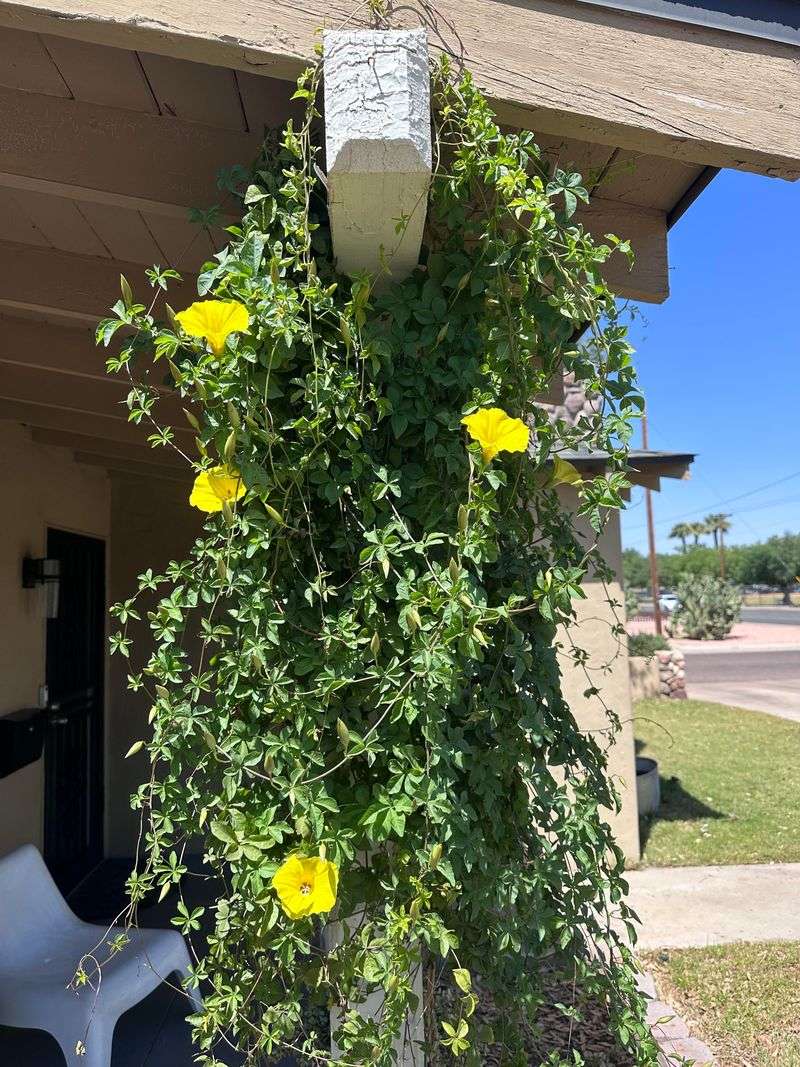
Few vines handle Arizona heat quite like Merremia aurea. This fast-growing climber quickly twines up trellises, fences, and garden structures, producing soft yellow funnel-shaped flowers that resemble classic morning glory blooms.
In Arizona, it handles brutal summer heat without skipping a beat. Full sun is where it belongs, and sandy or rocky soil suits it just fine.
Overwatering is the one thing to avoid since soggy roots cause real problems fast in this climate.
Tucson gardeners especially love it because it adds height and structure without needing constant fussing. Give it room to grow vertically and it rewards you with bold, tropical-looking color that doesn’t feel out of place even in a xeriscape.
Lightly trim the vine after flowering to keep it tidy and encourage fresh growth.
2. Sweet Peas Climb Quickly With Bright Spring Blooms
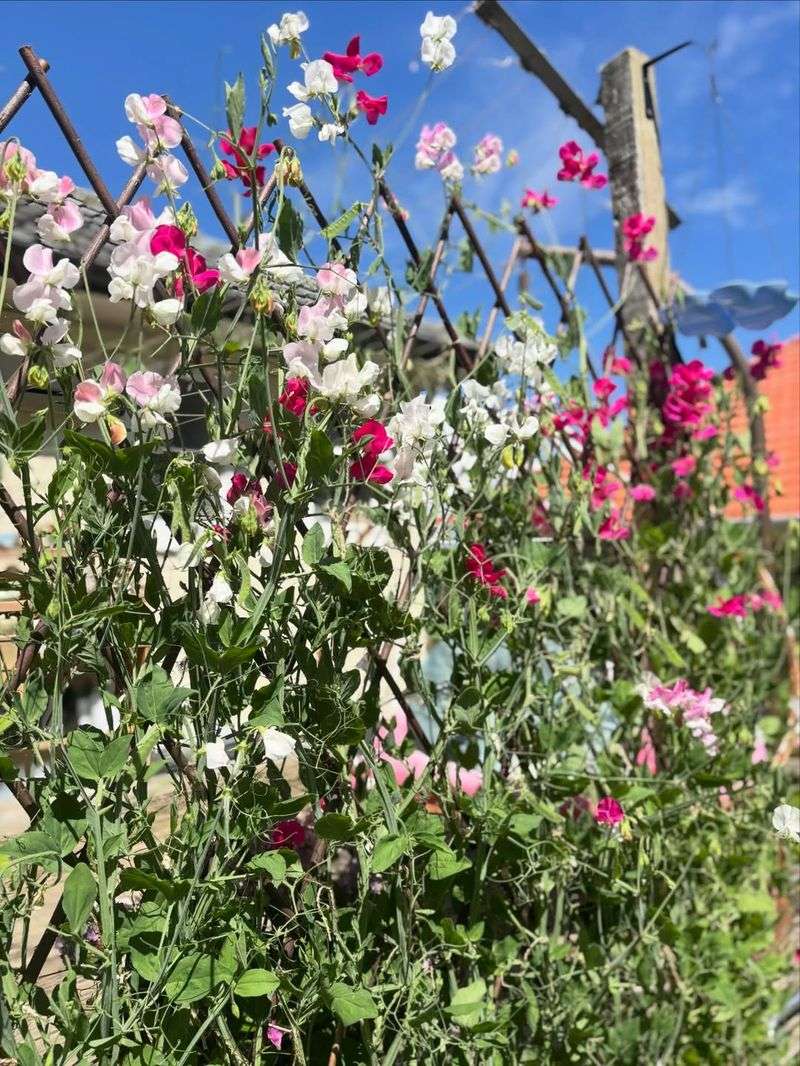
Sweet peas are the kind of plant that makes you stop walking and just stare for a moment. Ruffled blooms in shades of pink, purple, lavender, and white stack up along slender climbing stems with a delicate charm that feels almost old-fashioned.
Plant them in late fall in Arizona, and by February and March, the show is already starting.
Arizona’s mild winters are actually a sweet spot for these cool-season climbers. They need well-draining soil, consistent moisture, and a trellis or wire mesh to grip onto as they grow.
Morning sun with some afternoon protection keeps the flowers lasting longer before the desert heat arrives.
Once temperatures push past 85 degrees, sweet peas start winding down for the year. That’s completely normal here.
The trick is to enjoy them during their peak window and pull them out before they struggle. Collect the dried seed pods at the end of the season and store them for next fall’s planting.
Arizona gardeners who plant sweet peas annually say the fragrance alone is worth every bit of effort involved.
3. Lady Banks Rose Covers Structures With Spring Flowers
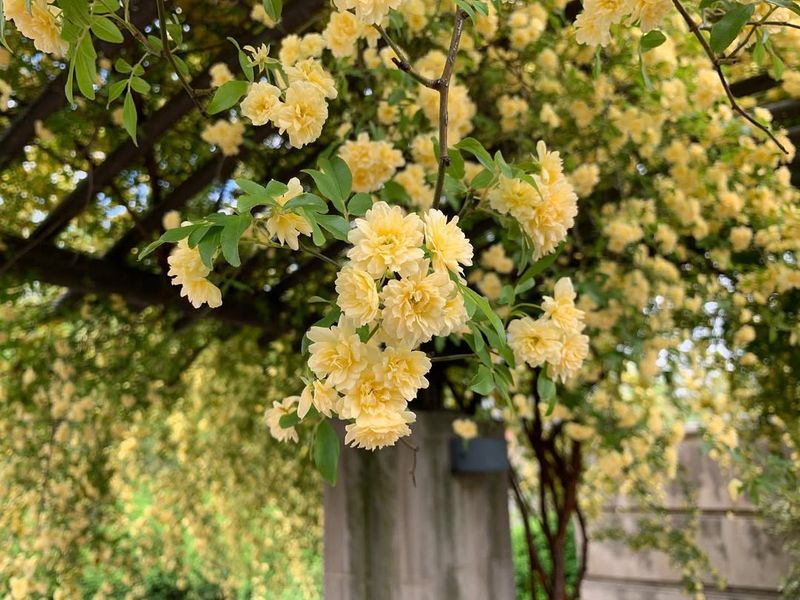
Lady Banks Rose is one of those vines that makes people ask, what is that, every single spring. Cascading clusters of tiny yellow or white flowers completely smother the canes in a way that looks almost unreal.
A mature plant covering a pergola or archway becomes a full-on spectacle that lasts for weeks.
Thornless canes make it much easier to handle than most roses, and it grows fast enough to cover a large structure within just a couple of seasons.
In Arizona, it blooms in early spring before the heat arrives, which makes it one of the earliest and most reliable color shows in the garden.
It holds its foliage through most of the year, offering structure even when it’s not in bloom.
Plant it in full sun with decent drainage and give it deep, infrequent watering during the hottest months. Pruning right after bloom is the best approach since it sets next year’s flower buds on old wood.
Cut too late into summer and you’ll reduce next spring’s display. Phoenix and Scottsdale gardeners with large walls or pergolas find this vine absolutely worth the space it takes up.
4. Cat’s Claw Vine Adds Strong Support And Dense Foliage
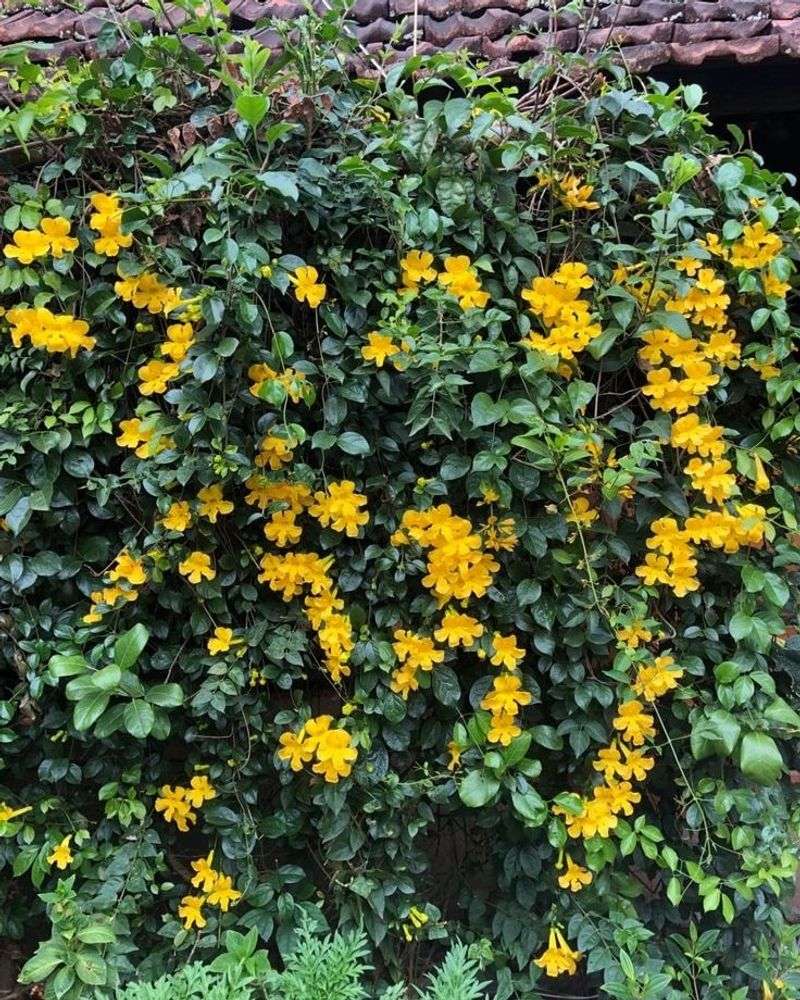
Cat’s Claw Vine earns its name honestly. Tiny hook-like tendrils grip onto almost any surface with a firm hold that lets it scale walls, fences, and rough masonry without any help from wires or supports.
In spring, it bursts out in cheerful yellow trumpet-shaped flowers that brighten up the whole structure it’s climbing.
Arizona gardeners use it frequently on concrete block walls that need softening. It’s one of the few vines that handles both full desert sun and partial shade without losing its vigor.
During summer, the dense green foliage actually helps shade walls and reduce heat absorption, which is a real bonus in places like Mesa or Chandler where afternoon temperatures are brutal.
It does spread aggressively, so planting it where you want full coverage rather than a contained spot makes the most sense. Keep an eye on it near rooflines or window frames since the tendrils can work their way into gaps over time.
Trim it back hard in late winter before new growth pushes out, and it responds well with fresh, vigorous stems. It’s reliable, tough, and genuinely useful in the Arizona landscape.
5. Passion Vine Blooms Colorfully Through Summer
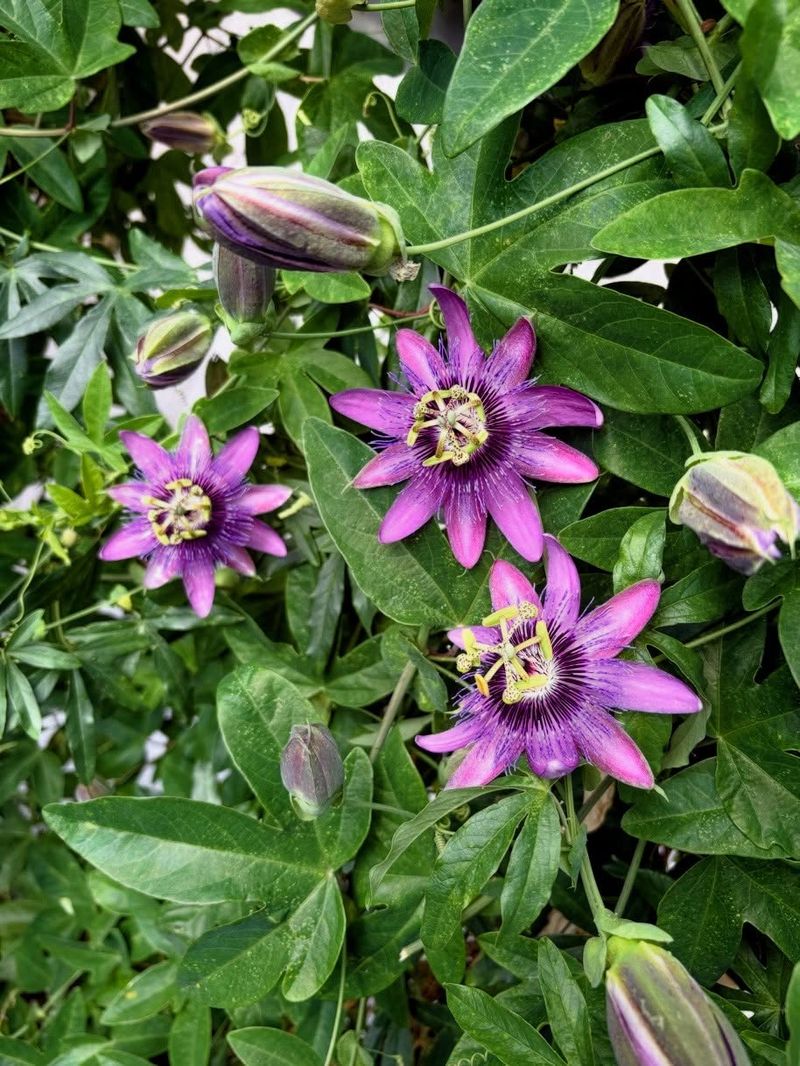
Passion Vine blooms look like something a botanical illustrator dreamed up. Intricate layers of purple, white, and lavender petals fan out around a central structure that’s genuinely unlike anything else in the garden.
Watching one open up for the first time is a bit of a surprise even for experienced Arizona gardeners.
Summer heat doesn’t slow it down at all. In fact, Passion Vine hits its stride right when most other flowering plants are struggling to survive.
It climbs quickly up fences, railings, and lattice panels and keeps pushing out new blooms from late spring well into fall. Arizona’s long warm season gives it plenty of time to show off.
Water it deeply but let the soil dry out a bit between sessions. Fertilizing lightly in spring gives it a strong start, but avoid heavy feeding since too much nitrogen pushes leafy growth at the expense of flowers.
It also attracts Gulf Fritillary butterflies, which lay their eggs on the foliage. Watching those caterpillars and butterflies cycle through your yard adds a whole other layer of enjoyment to growing this vine in any Arizona garden setting.
6. Coral Vine Cascades With Summer To Fall Blooms
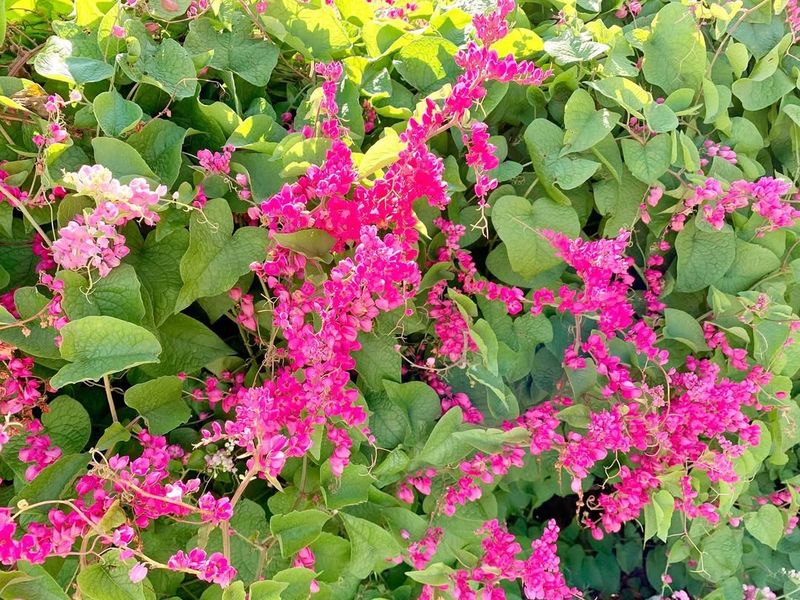
Coral Vine has a way of making even plain block walls look like they belong in a magazine.
Long, pendulous chains of small pink to rose-colored flowers hang down in clusters that sway in the breeze, creating a cascading effect that’s genuinely hard to replicate with any other vine.
It’s dramatic without being over the top.
Blooming from mid-summer through fall, it fills the gap when many other flowering plants have already wrapped up their season.
Arizona’s monsoon season actually seems to energize it, and you’ll often see a fresh flush of blooms right after summer rains move through the Valley.
Plant it where you want vertical color from August through October and it delivers consistently.
It fades back in winter in colder areas of Arizona but returns reliably from the roots each spring. In warmer low-desert zones like Yuma or the Phoenix metro, it may hold some foliage through winter.
Give it a sunny spot, a sturdy structure to climb, and regular deep watering through the hottest months. Pruning in early spring before new growth starts keeps it from getting too woody at the base and helps it produce more flowering stems throughout the season.
7. Honeysuckle Spreads Fragrant Flowers Across Trellises
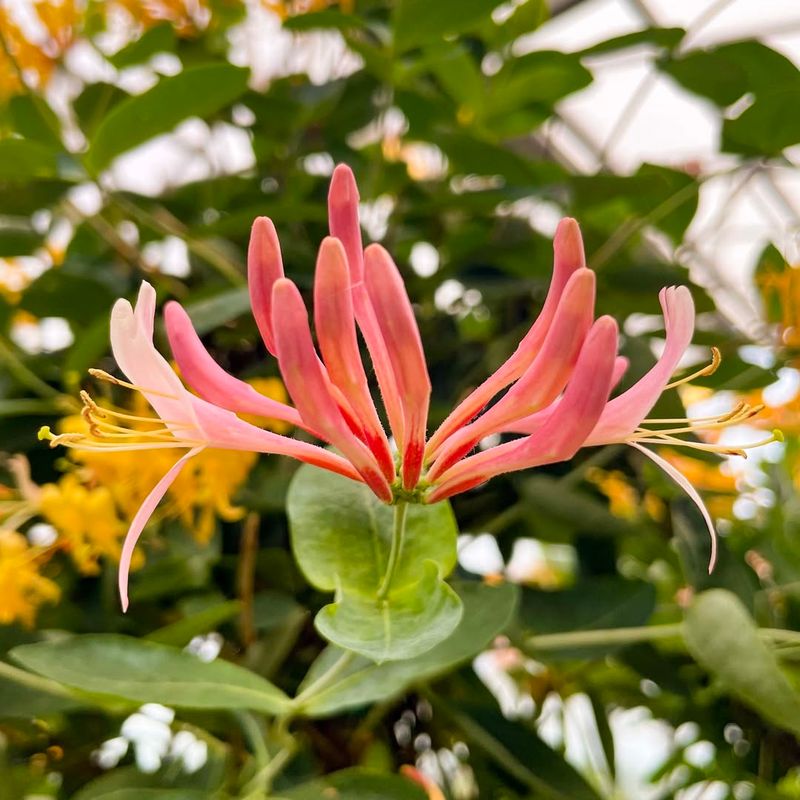
Walk past a blooming Honeysuckle on a warm Arizona evening and the fragrance stops you cold. Sweet, unmistakable, and somehow nostalgic all at once, it’s the kind of scent that pulls people back to childhood memories of summer evenings.
That alone makes it worth planting near a patio, gate, or garden entrance where you’ll actually catch it.
Coral Honeysuckle handles the heat better than the common Japanese variety and is a smarter choice for most Arizona gardens.
Tubular orange-red flowers attract hummingbirds throughout the warmer months, adding movement and life to whatever structure it’s climbing.
It grows vigorously on trellises, fences, and pergola posts with minimal encouragement.
Water it consistently during its first growing season to help it establish a strong root system, then back off gradually as it matures. Full sun is ideal, though afternoon shade in the hottest parts of the Phoenix area can extend its bloom season.
Prune lightly after the main bloom flush to keep the growth tidy and encourage branching. Avoid cutting it back too hard since Honeysuckle blooms best on established wood.
A well-placed Honeysuckle vine rewards Arizona gardeners with both beauty and wildlife activity season after season.
8. Primrose Jasmine Brightens Gardens With Winter Blooms
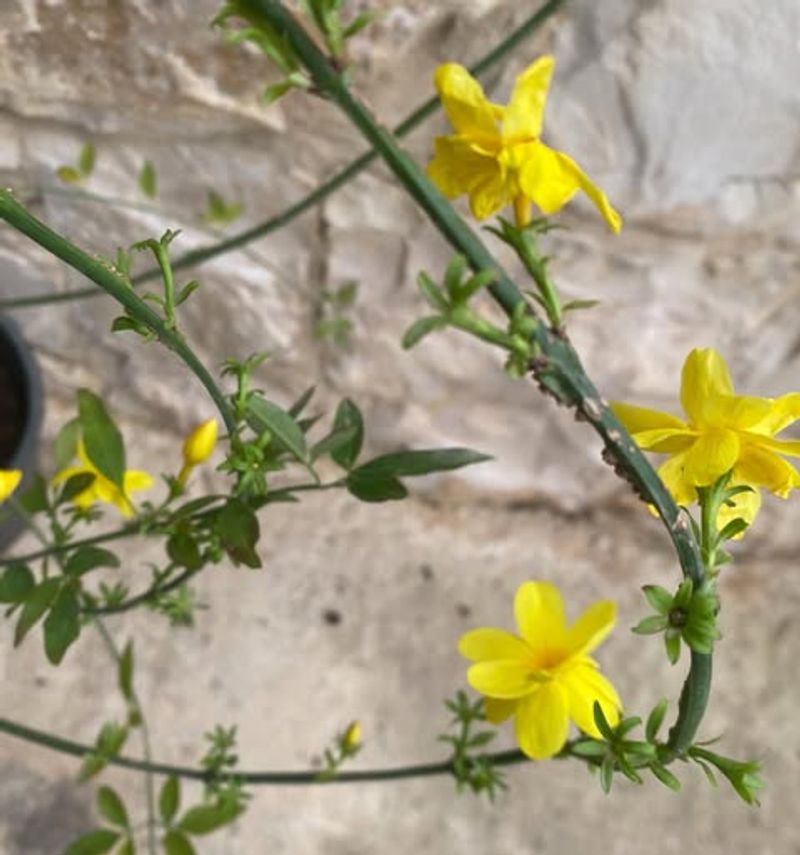
Color in an Arizona garden during January feels like a small miracle, and Primrose Jasmine delivers it reliably every year.
Bright yellow, star-shaped flowers cover the long arching stems from late fall through early spring, which is exactly when most other plants are sitting quietly and doing nothing.
It’s the kind of plant that earns genuine appreciation from neighbors.
Unlike true jasmine, Primrose Jasmine doesn’t climb by twining. Its long canes arch outward and drape naturally, which means it works beautifully trained against a wall or spilling over a fence with some loose support.
In Arizona gardens, it’s often used as a sprawling shrub-vine hybrid that covers large areas with dense green foliage and seasonal color.
Plant it in full sun for the most prolific flowering, though it tolerates partial shade with slightly fewer blooms.
Watering deeply every week or two during the warm season and cutting back to once or twice a month in cooler months keeps it healthy without encouraging weak, floppy growth.
After flowering finishes in spring, trim the longest canes back by about a third to keep the shape manageable. Tucson and Scottsdale gardeners frequently rely on it to carry color through the otherwise quiet winter months.
9. Cape Honeysuckle Brings Bold Tubular Flowers
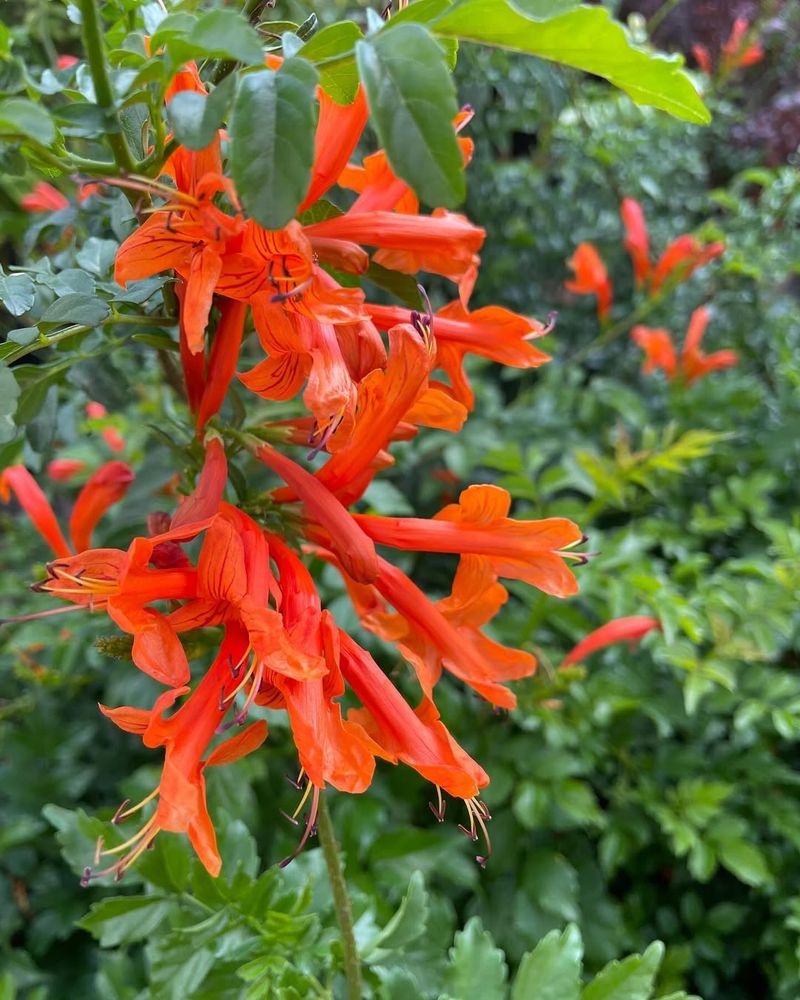
Cape Honeysuckle doesn’t whisper, it announces itself. Large, vivid orange-red tubular flowers cluster at the tips of fast-growing canes and practically glow against a blue Arizona sky.
Hummingbirds find it irresistible, and during peak bloom, watching multiple birds compete for the flowers becomes a daily backyard highlight.
It handles Arizona summers with no complaint whatsoever. Full sun, reflected heat from walls, rocky soil, it takes all of it in stride and keeps flowering through the hottest stretch of the year.
Established plants are surprisingly drought-tolerant, though deep watering every couple of weeks during summer produces noticeably better flower production than letting it go completely dry.
Give it a very sturdy structure to climb because mature Cape Honeysuckle vines get heavy. Lightweight trellises won’t hold up over time.
It also sends out suckers from the root zone, so pulling those promptly keeps it from spreading beyond where you want it. Prune aggressively in late winter before new growth begins to keep it from becoming a tangled mass.
Arizona gardeners who give it the right structure and a little annual discipline are rewarded with one of the most visually striking vines available in the entire desert Southwest.
10. Bougainvillea Paints Arizona Walls With Vivid Color
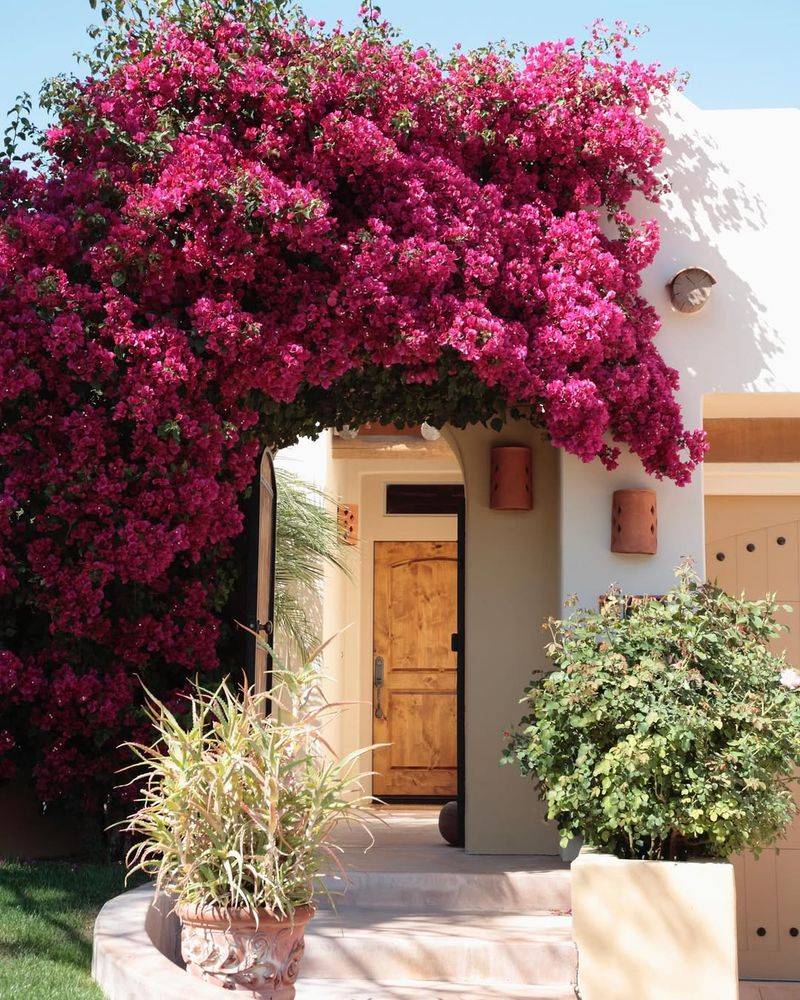
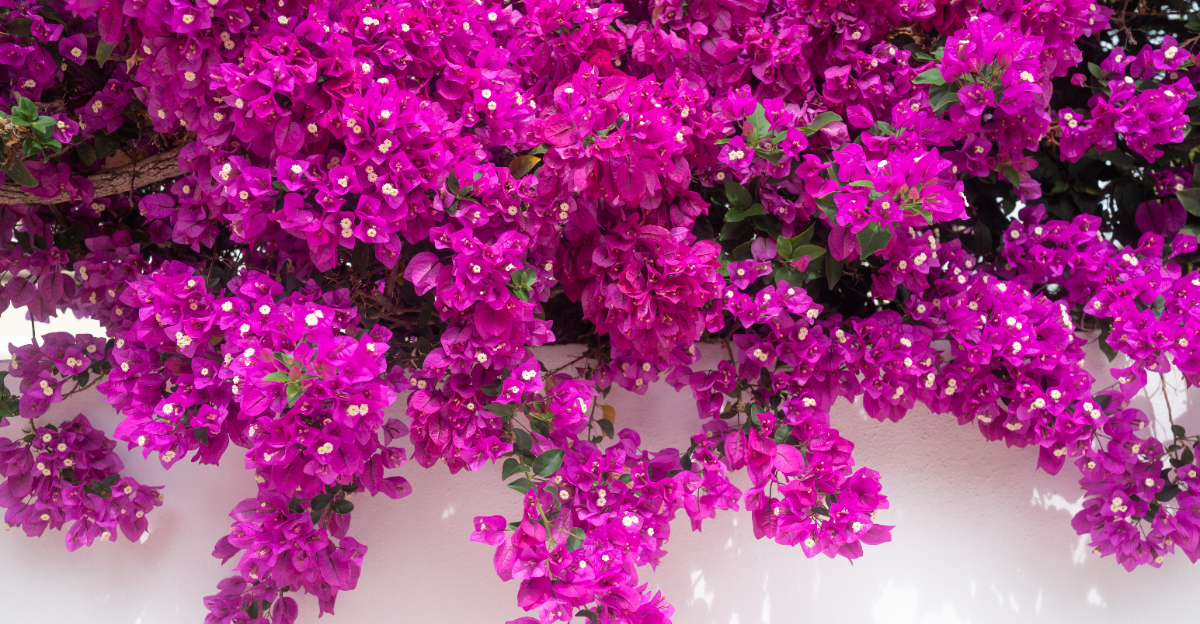
No vine is more synonymous with Arizona color than Bougainvillea. Brilliant magenta, orange, red, and purple bracts smother the canes for months at a time, turning plain stucco walls and chain-link fences into something genuinely spectacular.
It’s a plant that photographs well from across the street.
Drought stress actually triggers heavier blooming, which makes Bougainvillea a perfect match for Arizona’s dry climate. Cutting back on water for a few weeks before you want a big bloom flush is a trick experienced local gardeners use regularly.
Too much irrigation and the plant pushes leafy green growth instead of those showy bracts everyone plants it for.
Plant it in the hottest, sunniest spot in the yard. South or west-facing walls with reflected heat are ideal, not a problem.
In colder parts of Arizona like Flagstaff, frost protection is necessary since extended freezes cause serious damage. In the low desert, it’s essentially a year-round performer.
Prune after each bloom cycle to encourage the next flush and wear thick gloves since the thorns are sharp and unforgiving. For sheer color impact and reliability across Arizona’s diverse landscape, Bougainvillea remains in a category by itself.