These 14 Garden Plants In North Carolina Are Illegal Or Could Be Banned Soon
Not all garden plants are welcome in North Carolina yards. Some species are classified as invasive, hazardous, or restricted, and planting them can lead to fines, forced removal, or legal issues.
Gardeners need to stay informed to avoid surprises. Your favorite plant could be on a prohibited list without you realizing it.
These fourteen plants include species that spread aggressively, harm local ecosystems, or pose safety risks. Municipalities are increasingly enforcing regulations to protect native flora and maintain public safety.
Knowing which plants are illegal or at risk of being banned helps gardeners plan responsibly and maintain compliant landscapes. Plant smart and avoid costly mistakes or legal trouble.
North Carolina homeowners who follow these guidelines can enjoy vibrant gardens while staying on the right side of the law. Stay informed and keep your yard beautiful and legal.
1. Japanese Honeysuckle (Lonicera Japonica)
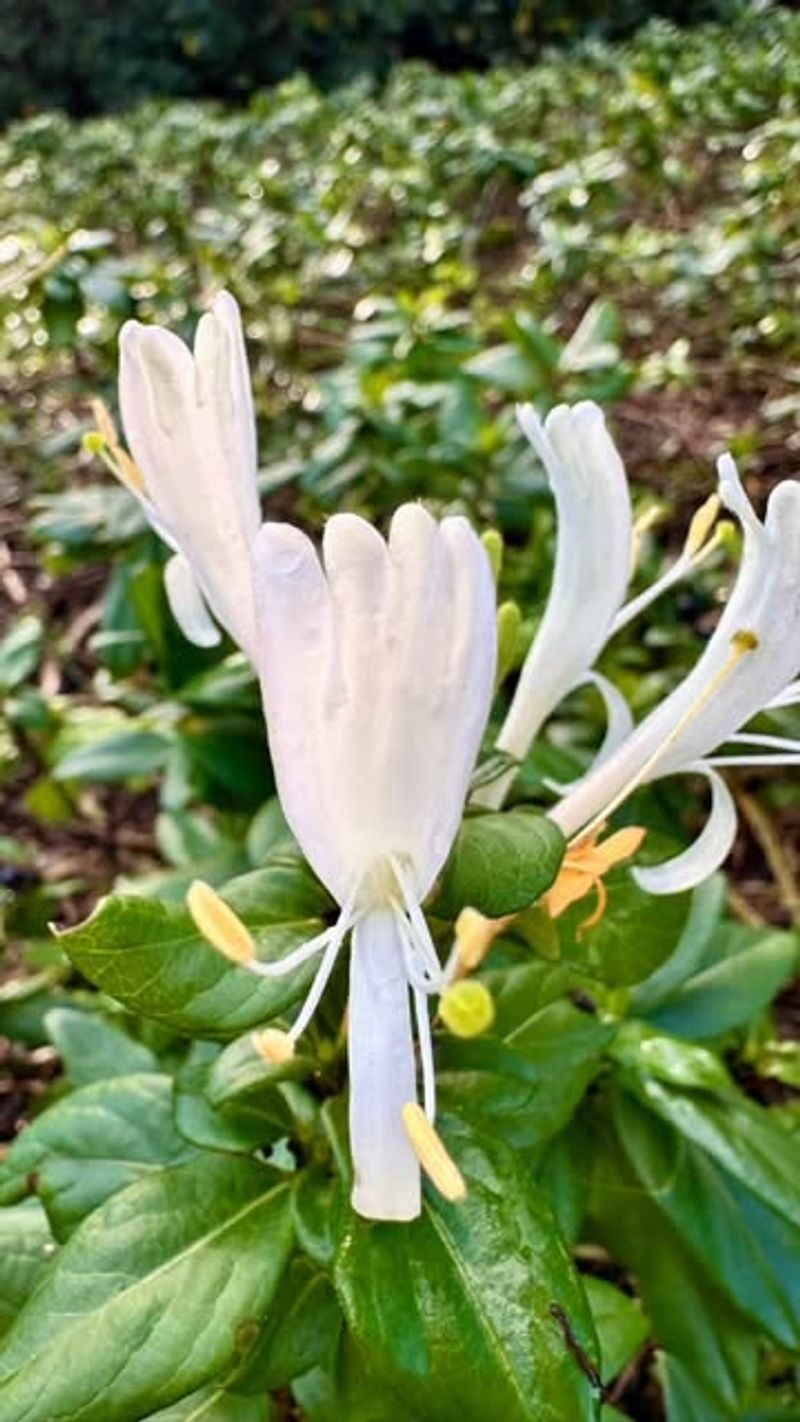
Sweet fragrance and delicate white-yellow flowers make Japanese honeysuckle seem like a dream addition to any garden fence or trellis.
However, this vine has earned a notorious reputation across North Carolina for its relentless ability to smother everything in its path.
Once established, it climbs over shrubs, trees, and even buildings, blocking sunlight from native plants that desperately need it to survive.
Many counties have enacted regulations limiting or outright banning new plantings of Japanese honeysuckle because it outcompetes local flora so effectively. Birds love the berries and spread seeds far and wide, creating new infestations in forests and parks.
Homeowners who plant it often discover too late that removal requires years of persistent effort, including cutting vines at the base and treating stumps with herbicide.
Gardeners seeking fragrant climbers should consider native alternatives like coral honeysuckle, which offers beautiful tubular flowers without the invasive tendencies.
Coral honeysuckle attracts hummingbirds and butterflies while respecting the balance of your local ecosystem.
If you already have Japanese honeysuckle on your property, check with your county extension office about removal programs and best practices for eradication before it spreads further into natural areas.
2. Kudzu (Pueraria Montana)
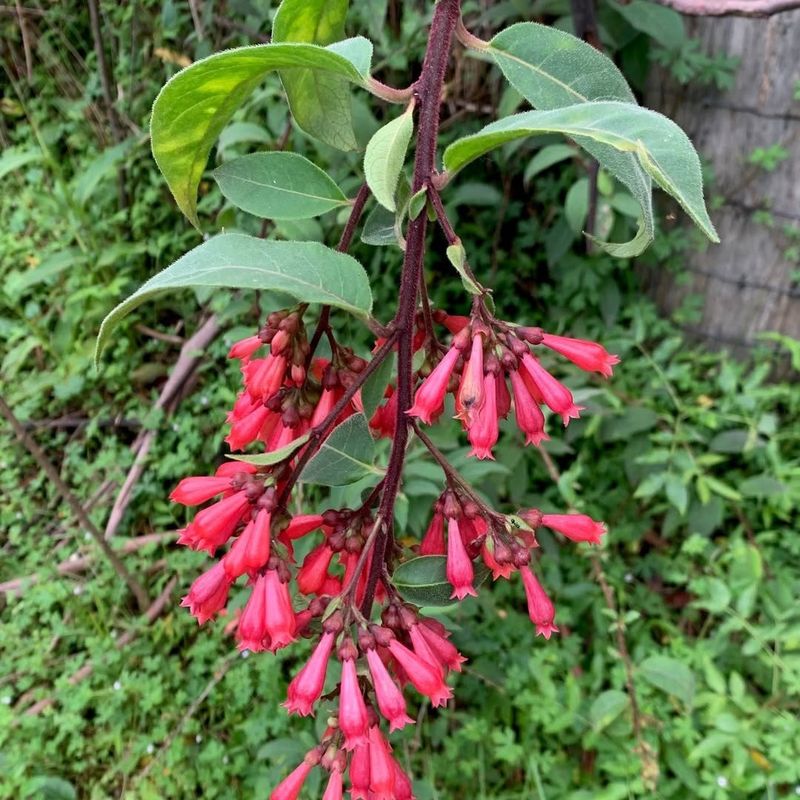
Nicknamed “the vine that ate the South,” kudzu has become an infamous symbol of invasive species gone wild.
This aggressive climber can grow up to a foot per day during peak summer months, blanketing entire hillsides, forests, and abandoned buildings in a thick green carpet.
What started as an erosion control solution in the early 1900s quickly turned into an ecological nightmare that costs millions of dollars annually in control efforts.
North Carolina officially lists kudzu as a noxious weed, meaning landowners may be required to manage or remove it from their properties.
The vine produces massive root systems that can weigh hundreds of pounds, making eradication extremely challenging. Kudzu smothers native trees and plants by blocking sunlight, and its weight can even topple mature trees during storms.
If you spot kudzu creeping onto your property from neighboring land, act immediately before it gains a foothold.
Repeated cutting combined with targeted herbicide application offers the best chance for control, though complete removal often takes several growing seasons.
Never intentionally plant kudzu, no matter how tempting it might seem for quick shade or erosion control, as you’ll be creating a problem that could haunt your property and community for decades.
3. Chinese Privet (Ligustrum Sinense)
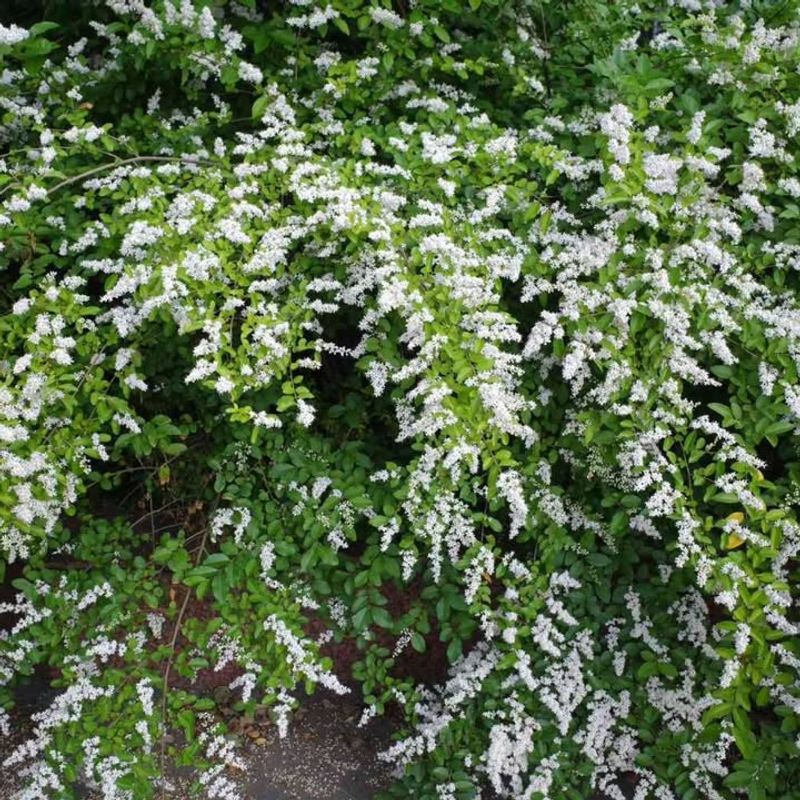
Walk through any North Carolina forest edge and you’ll likely encounter dense thickets of Chinese privet choking out native understory plants.
This seemingly innocent shrub produces clusters of white flowers in spring, followed by dark berries that birds eagerly consume and disperse across the landscape.
Before you know it, a single planted shrub can spawn hundreds of offspring throughout nearby woods and wetlands.
Chinese privet forms such dense stands that it prevents native wildflowers, tree seedlings, and beneficial shrubs from establishing themselves.
Many municipalities and counties now prohibit planting Chinese privet on both public and private lands, with some requiring property owners to remove existing stands.
The shrub’s allelopathic properties mean it actually releases chemicals that inhibit the growth of competing plants, giving it an unfair advantage over native species.
Removing established Chinese privet requires cutting stems close to the ground and treating stumps with appropriate herbicide to prevent resprouting.
For hedges and privacy screens, consider native alternatives like American beautyberry, inkberry holly, or Carolina allspice, which provide similar structure without the invasive behavior.
These native options also offer better habitat and food sources for local wildlife, supporting the natural ecosystem rather than undermining it.
4. Bamboo (Running Varieties)
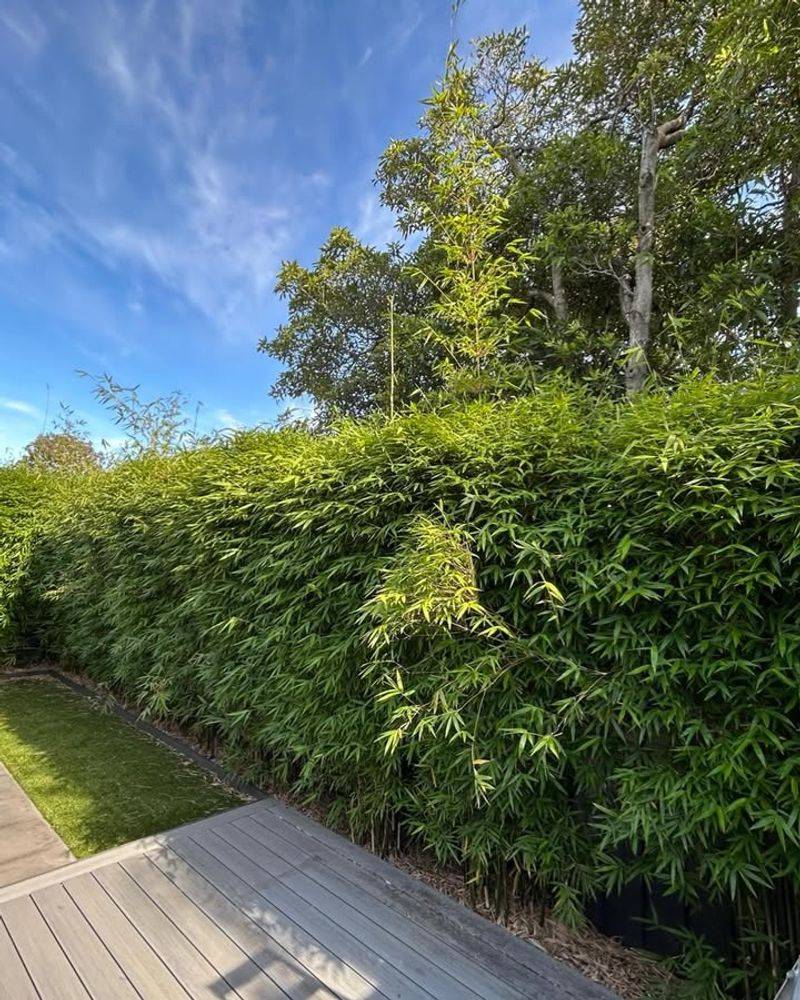
Bamboo’s exotic appearance and fast growth make it tempting for gardeners seeking instant privacy screens or Asian-inspired landscapes.
Running bamboo varieties send underground rhizomes spreading in all directions, popping up yards away from the original planting site.
These aggressive spreaders can invade neighboring properties, crack foundations, and damage underground utilities, leading to expensive repairs and neighborhood disputes.
Several North Carolina municipalities have enacted strict regulations on running bamboo, with some requiring permits or outright banning new plantings.
The rhizomes can travel 20 feet or more from the parent plant, making containment nearly impossible without professional-grade barriers buried at least 30 inches deep.
Even then, vigilant monitoring is essential because rhizomes can find the smallest gaps and escape confinement. Homeowners who inherit bamboo problems often spend thousands of dollars on removal efforts that can take years to complete.
Digging out the entire root system is the only truly effective method, though repeated cutting and herbicide treatment can eventually exhaust the plant’s energy reserves.
If you love bamboo’s look, choose clumping varieties instead, which grow in tight clusters without sending out invasive runners, or consider ornamental grasses like maiden grass that offer similar vertical interest without the headache.
5. Tree Of Heaven (Ailanthus Altissima)
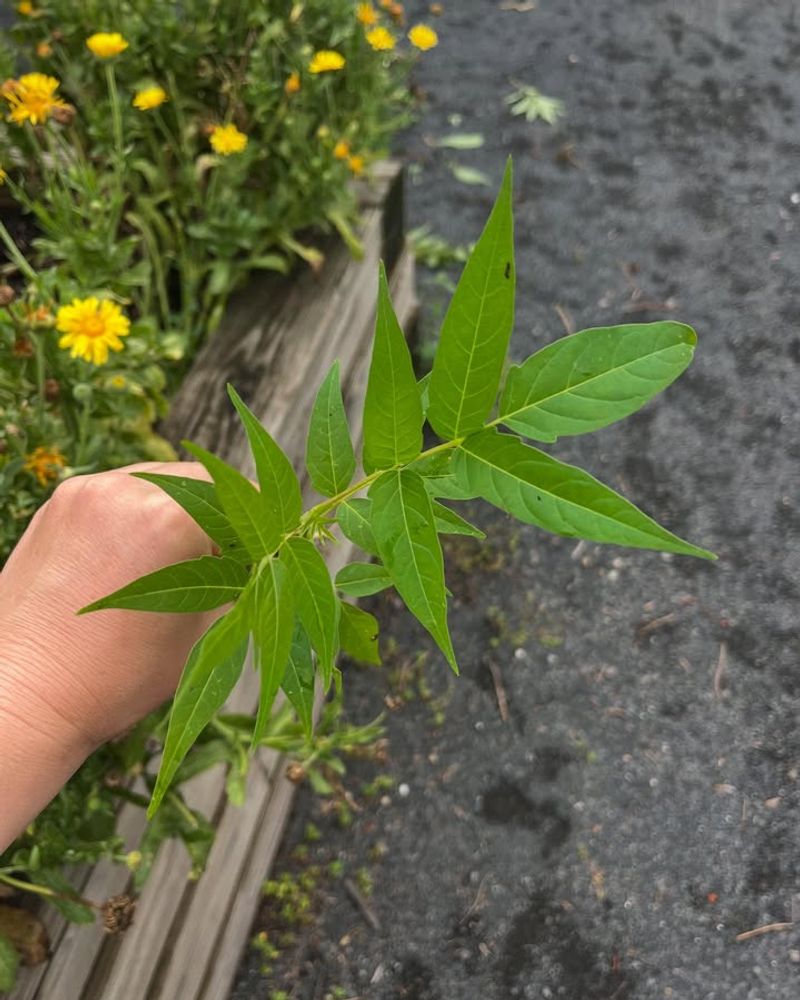
Don’t let the heavenly name fool you—this fast-growing tree is anything but a blessing for North Carolina ecosystems.
Tree of Heaven produces chemicals called ailanthones that leach into the soil, poisoning nearby plants and preventing them from thriving.
A single mature tree can produce thousands of seeds annually, and broken roots readily sprout new trees, making it incredibly difficult to control once established.
The tree’s rapid growth rate means it quickly overtops native species, stealing sunlight and resources. Its shallow root system makes it prone to toppling during storms, potentially damaging homes and vehicles.
Tree of Heaven also serves as the preferred host for spotted lanternfly, an invasive insect pest that threatens agriculture and forestry throughout the eastern United States.
North Carolina forestry officials strongly discourage planting Tree of Heaven and encourage removal wherever possible.
Cutting alone stimulates even more vigorous sprouting, so proper removal requires cutting followed by immediate herbicide application to stumps and root flares.
Wearing gloves is essential because the tree’s leaves and bark can cause skin irritation in sensitive individuals.
For fast-growing shade, consider native alternatives like tulip poplar or sweetgum, which grow quickly while supporting local wildlife and respecting neighboring plants.
6. English Ivy (Hedera Helix)
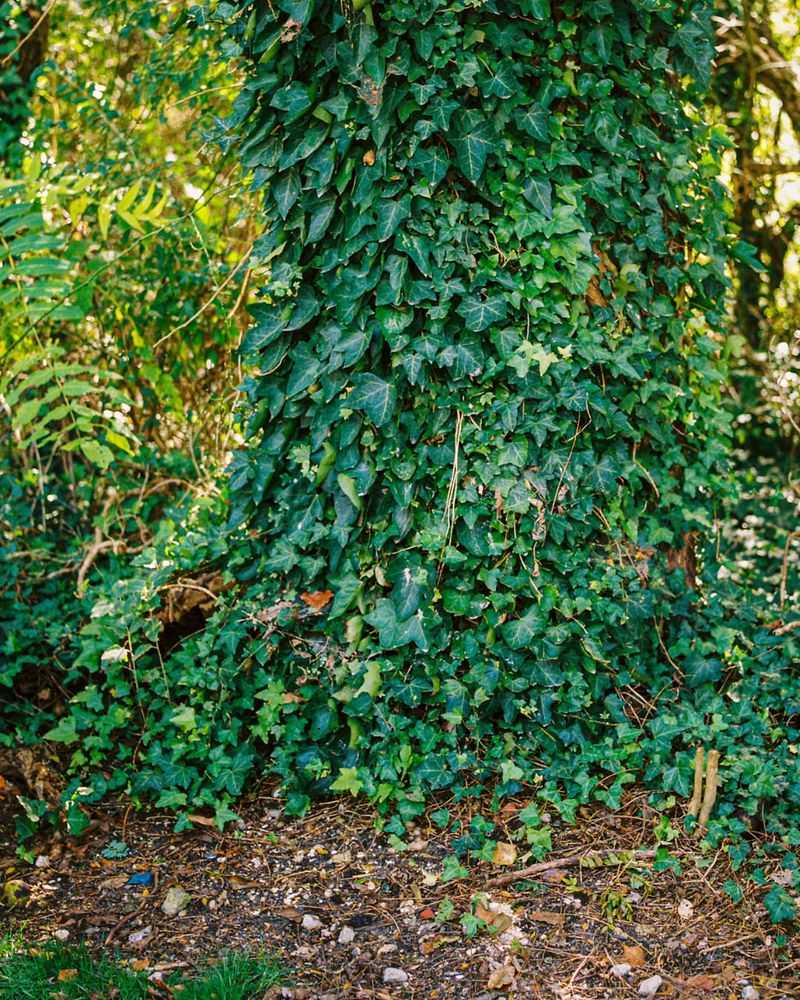
English ivy’s lush evergreen foliage has made it a landscaping staple for decades, often used as ground cover or to create that romantic, old-world look on brick walls.
What many gardeners don’t realize is that this seemingly well-behaved vine transforms into a tree-smothering monster when it matures.
Climbing forms develop different leaf shapes and produce berries that birds spread throughout forests and natural areas.
When English ivy climbs trees, it adds significant weight to branches and creates sail-like surfaces that catch wind, increasing the likelihood of limb breakage during storms.
The dense foliage prevents sunlight from reaching tree leaves, weakening the host tree over time. Ground-covering ivy creates such thick mats that native wildflowers and tree seedlings cannot establish themselves, reducing biodiversity.
Some North Carolina municipalities restrict or prohibit English ivy plantings, particularly near natural areas and parks.
Removal involves carefully pulling vines from trees without damaging bark, then cutting stems at ground level and treating stumps.
Ground ivy requires persistent effort, including smothering with cardboard or repeated cutting and herbicide treatment.
Native alternatives like wild ginger, green-and-gold, or foamflower provide beautiful evergreen or semi-evergreen ground cover without the invasive tendencies, while supporting beneficial insects and wildlife.
7. Autumn Olive (Elaeagnus Umbellata)
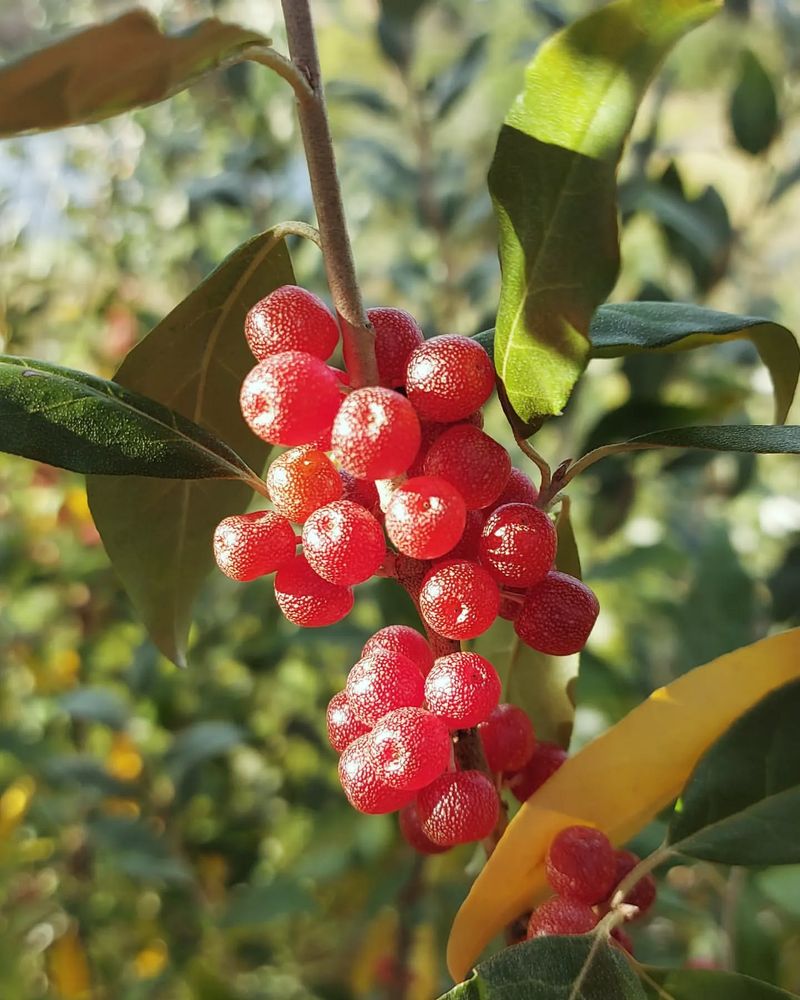
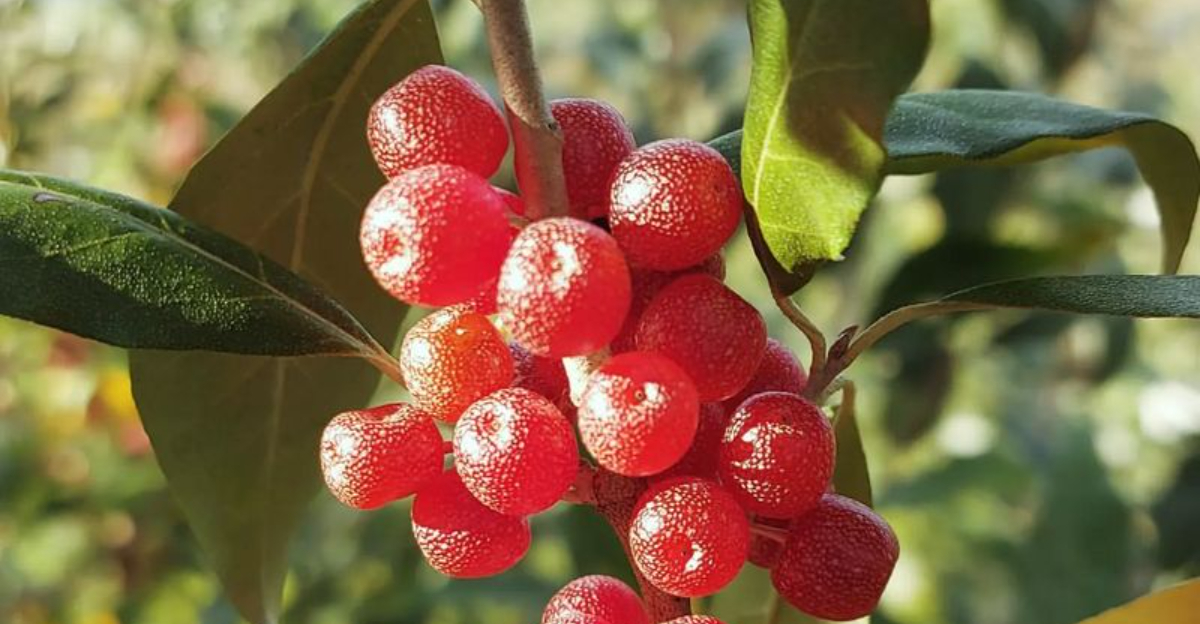
Autumn olive arrived in North America with good intentions, planted along highways and reclaimed mining sites for erosion control and wildlife food.
The silvery-green leaves and abundant red berries seemed like perfect features for challenging sites where few other plants would grow.
Unfortunately, this adaptable shrub proved too successful, spreading aggressively into forests, fields, and natural areas throughout North Carolina.
Birds eagerly consume the tart berries and deposit seeds everywhere they fly, creating new infestations far from the original plantings.
Autumn olive tolerates poor soils, drought, and full sun to partial shade, giving it an advantage over native shrubs in almost any situation.
Several counties now list it as invasive and restrict new plantings, particularly near conservation lands and wildlife management areas.
The shrub’s nitrogen-fixing ability actually changes soil chemistry, potentially favoring other invasive species over natives adapted to nutrient-poor conditions.
Removing autumn olive requires cutting stems close to the ground and treating stumps with herbicide, as the vigorous root system readily resprouts.
For erosion control and wildlife food, consider native alternatives like American beautyberry, elderberry, or serviceberry, which provide similar benefits while supporting a wider variety of native insects and birds that depend on native plant relationships.
8. Burning Bush (Euonymus Alatus)
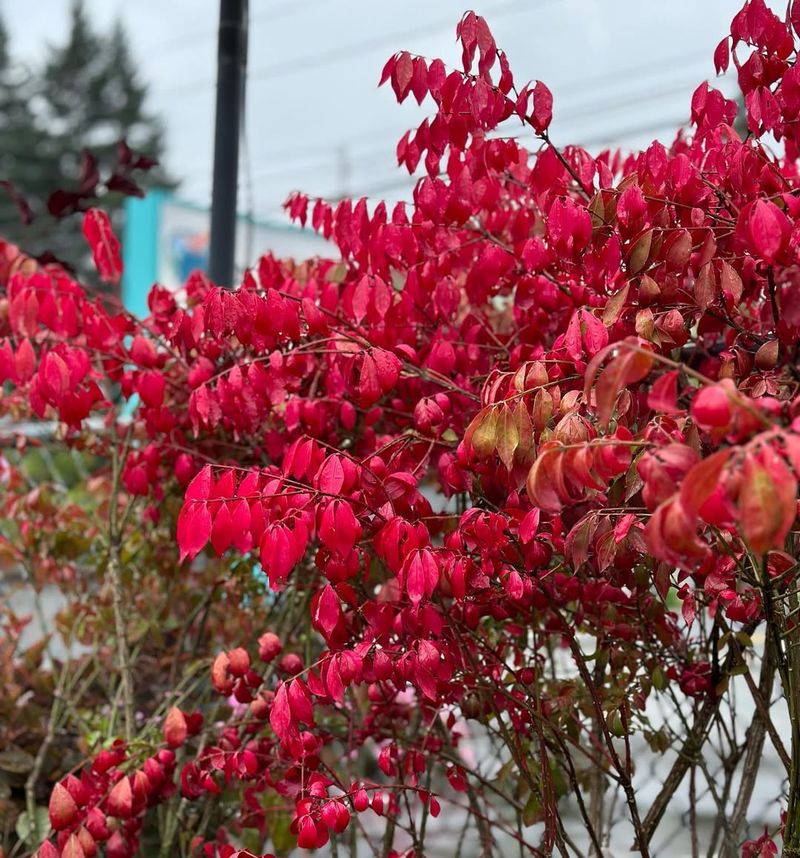
Few shrubs match burning bush’s spectacular fall display, when leaves transform into brilliant shades of crimson and scarlet that seem to glow in autumn sunlight.
This stunning feature made it a landscaping favorite for decades, planted in foundation beds and hedgerows across residential neighborhoods.
However, birds discovered the small fruits and began spreading seeds into nearby forests and natural areas, where the shrub now threatens native plant communities.
Burning bush tolerates a wide range of soil conditions and light levels, allowing it to invade both sunny field edges and shaded forest understories.
Once established in natural areas, it forms dense thickets that crowd out native shrubs and wildflowers that wildlife depends on for food and shelter. Some North Carolina counties restrict planting burning bush near conservation lands, parks, and natural areas.
The shrub’s shallow root system makes physical removal relatively straightforward compared to some invasive species, though treating stumps with herbicide prevents resprouting.
For spectacular fall color without invasive tendencies, consider native alternatives like Virginia sweetspire, oakleaf hydrangea, or sumac species, which offer equally impressive autumn displays.
These natives also provide superior habitat for beneficial insects and songbirds, supporting the interconnected web of life that makes North Carolina’s ecosystems so special and worth protecting.
9. Norway Maple (Acer Platanoides)
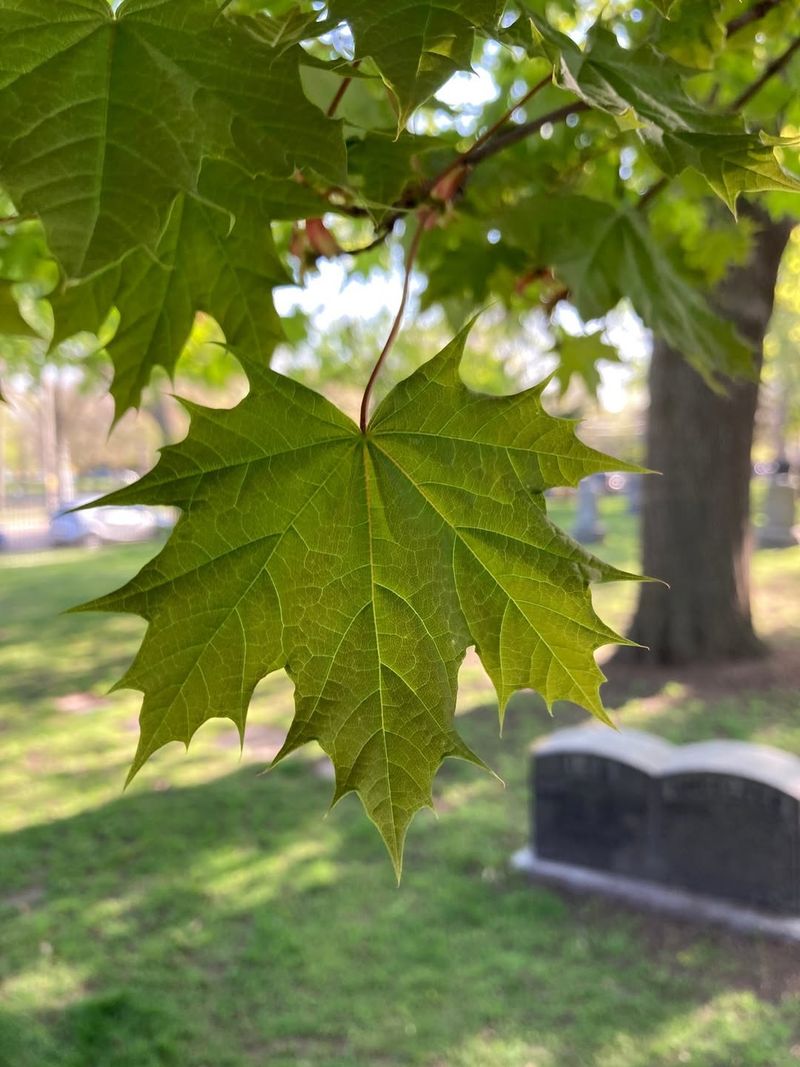
Norway maple’s dense shade and tolerance for urban conditions made it a popular street tree throughout the 20th century, lining countless North Carolina neighborhoods with its broad canopy.
The tree produces thousands of winged seeds that spin like helicopters as they fall, landing in gardens, parks, and forests where they germinate with alarming success.
Seedlings tolerate deep shade better than native maples, giving them an unfair competitive advantage. The tree’s dense canopy and shallow root system create challenging conditions for other plants, including lawn grasses that struggle beneath its heavy shade.
Norway maple’s leaf litter decomposes slowly and may suppress growth of native wildflowers and tree seedlings. Several municipalities now discourage or restrict planting Norway maple in public spaces and require removal when redevelopment occurs.
Distinguishing Norway maple from native sugar maple is easy once you know the trick—break a leaf stem and look for milky sap, which appears only in Norway maple.
For beautiful shade without invasive tendencies, choose native alternatives like red maple, sugar maple, or tulip poplar, which grow just as quickly while supporting hundreds of native insect species.
These insects form the foundation of the food web, feeding birds, amphibians, and other wildlife that make your yard feel alive and connected to the natural world.
10. Callery Pear (Pyrus Calleryana)
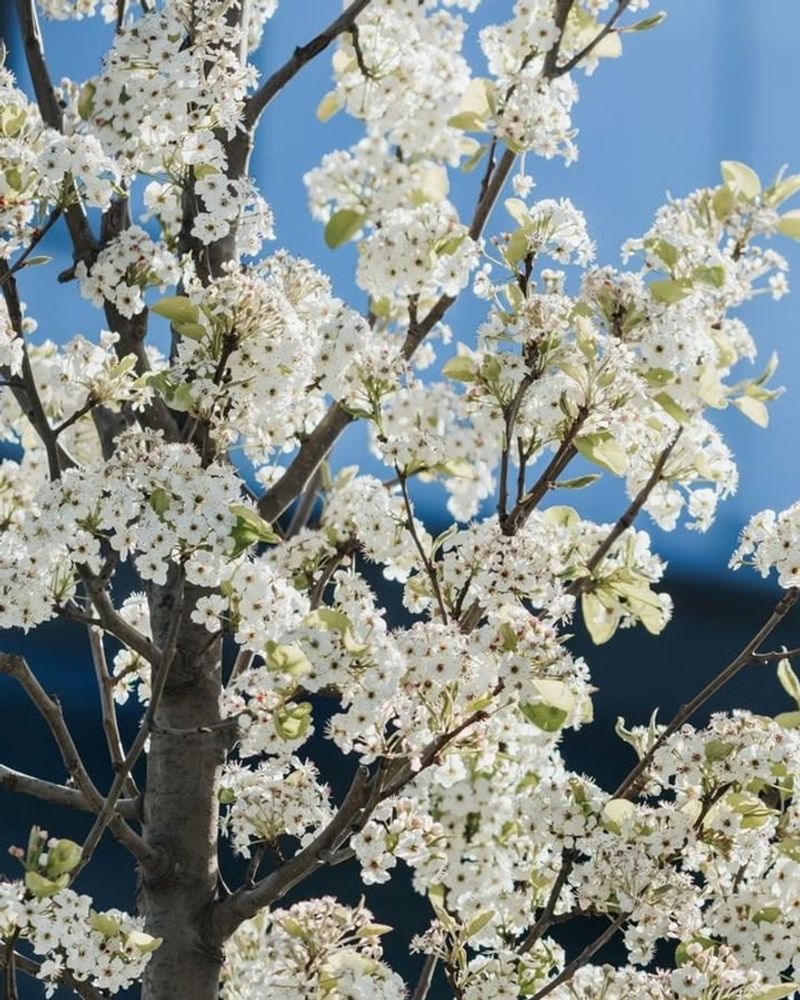
Bradford pear trees once dominated suburban landscapes with their showy white spring blooms and symmetrical shape, seemingly perfect for small yards and street plantings.
What seemed like an ideal ornamental tree has revealed itself as an ecological disaster, with cultivars cross-pollinating to produce fertile seeds that sprout aggressively in fields, forests, and roadsides.
The resulting wild seedlings bear thorns up to four inches long and spread so densely they create impenetrable thickets.
Callery pear’s weak branch structure means mature trees frequently lose large limbs during storms or even split completely apart, creating hazards and expensive cleanup.
The flowers’ unpleasant odor, often compared to rotting fish, makes spring blooms less appealing once you notice the smell.
Several states have banned sales of Bradford pear and related cultivars, with North Carolina municipalities increasingly restricting new plantings and encouraging removal.
Removing established Callery pear requires cutting trees and treating stumps to prevent resprouting, as the vigorous root system readily sends up new shoots.
For spring flowering trees without invasive tendencies, consider native alternatives like serviceberry, flowering dogwood, or redbud, which offer beautiful blooms that actually smell pleasant.
These natives also support native pollinators and songbirds far better than Callery pear, creating gardens that contribute positively to local ecosystems rather than undermining them.
11. Privet Hedge (Ligustrum Obtusifolium)
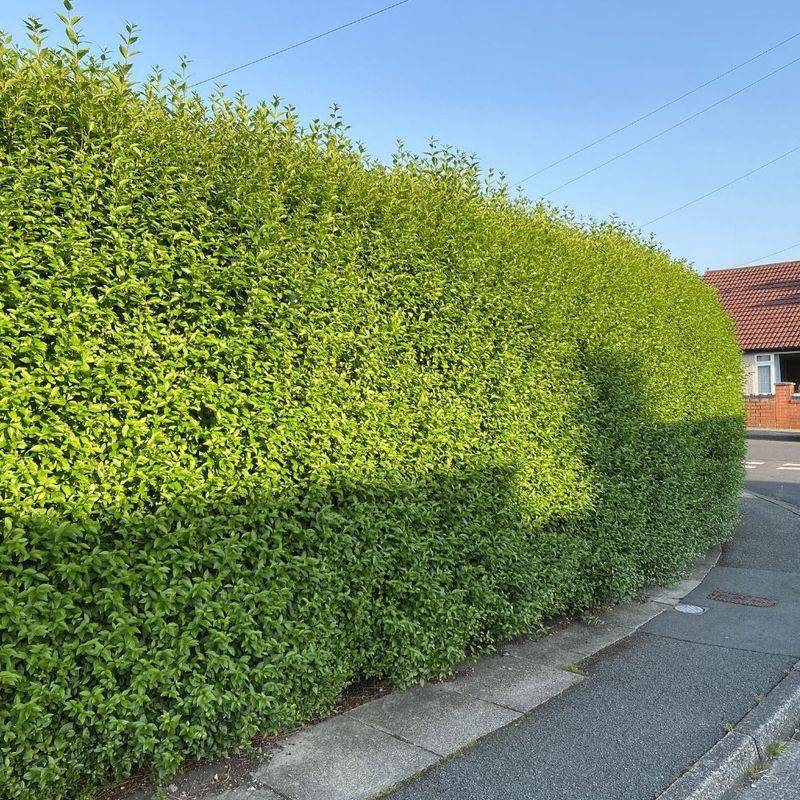
Privet hedges have defined property boundaries and created formal garden rooms for generations, offering dense evergreen or semi-evergreen foliage that responds well to shearing.
Border privet and other Ligustrum species produce small white flowers followed by dark berries that birds find irresistible, leading to widespread naturalization in forests and natural areas.
What starts as a tidy hedge often ends up as unwanted seedlings scattered throughout the landscape. Like their Chinese privet cousin, these hedge varieties form dense thickets in natural areas that exclude native shrubs and wildflowers.
Some privet species remain evergreen in mild North Carolina winters, giving them a competitive advantage over native deciduous shrubs. Certain counties regulate privet plantings to prevent further spread into conservation lands and wildlife habitats.
Removing established privet requires cutting stems and treating stumps, as the root systems readily resprout from any remaining fragments.
For formal hedges and privacy screens, consider native alternatives like American holly, yaupon holly, or wax myrtle, which provide similar structure and year-round interest.
These natives also offer far superior wildlife value, supporting native insects that feed songbirds and other beneficial creatures.
Shaping native hedges may require slightly different techniques than traditional privet, but the ecological benefits and freedom from invasive concerns make the effort worthwhile for environmentally conscious gardeners.
12. Silver Poplar (Populus Alba)
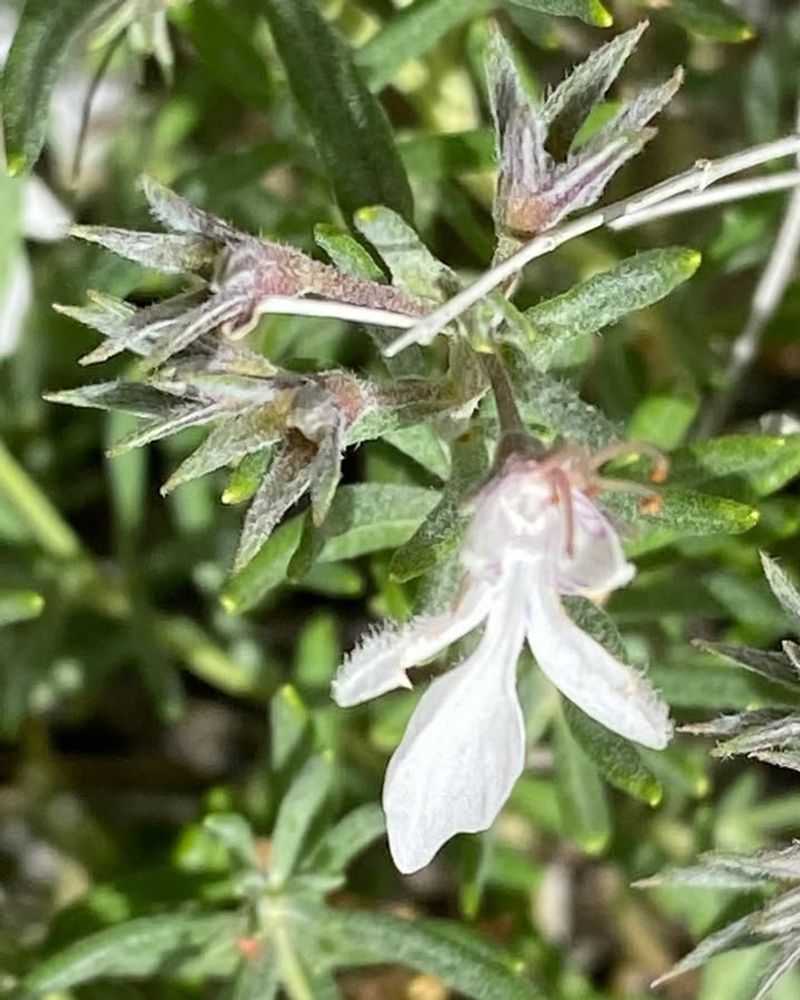
Silver poplar’s distinctive two-toned leaves—dark green above and silvery-white beneath—create a shimmering effect when breezes rustle through the canopy.
This fast-growing tree seemed ideal for quick shade and windbreaks, particularly in challenging sites where other trees struggled.
However, silver poplar’s aggressive root system produces suckers that pop up dozens of feet from the parent tree, creating unwanted saplings throughout lawns, gardens, and neighboring properties.
The tree’s spreading roots can damage sidewalks, driveways, and underground utilities, while invading septic systems and drainage fields.
Silver poplar naturalizes readily along waterways, where its dense colonies crowd out native willows, sycamores, and other riparian species that provide better wildlife habitat and streambank stabilization.
Some North Carolina counties restrict planting silver poplar near waterways and wetlands to protect these sensitive ecosystems.
Removing established silver poplar proves challenging because cutting the main tree stimulates even more vigorous suckering from the extensive root system.
Complete removal requires excavating major roots and treating any remaining fragments with herbicide.
For fast-growing shade near water features, consider native alternatives like river birch, sycamore, or black willow, which grow quickly while supporting native wildlife.
These natives also provide better streambank stabilization without the aggressive suckering that makes silver poplar such a maintenance headache for property owners.
13. Japanese Barberry (Berberis Thunbergii)
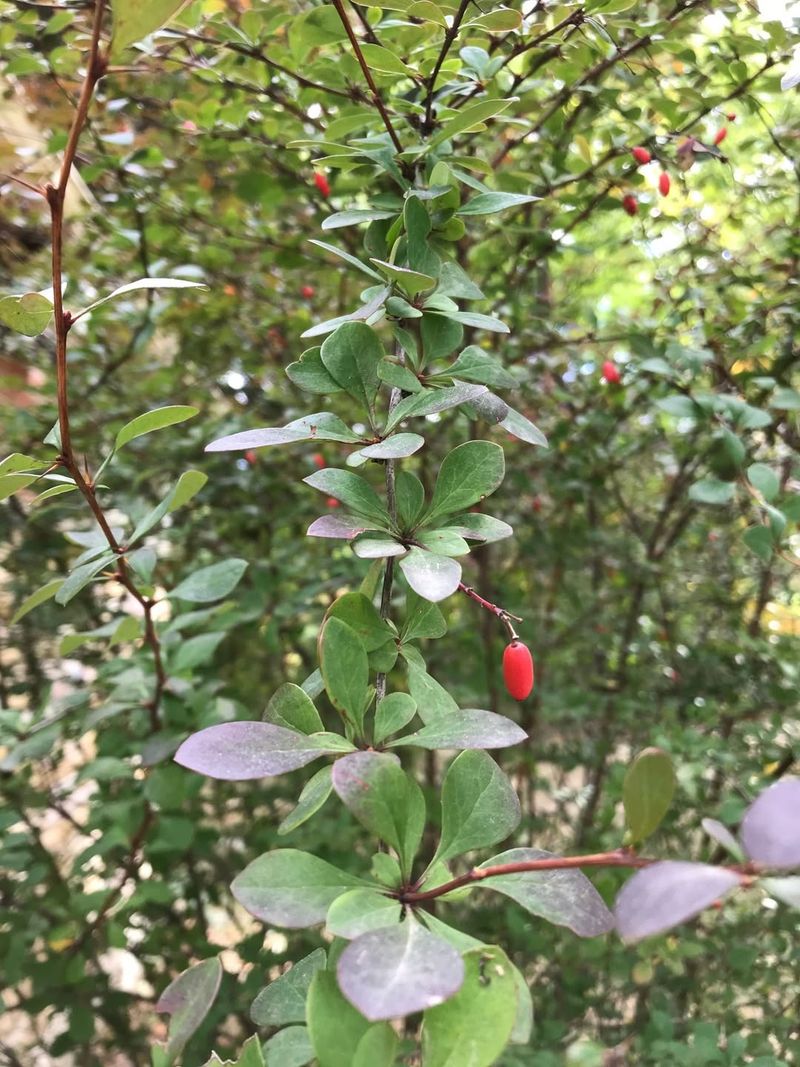
Japanese barberry’s compact size, colorful foliage, and thorny stems made it a go-to choice for foundation plantings and low hedges, particularly in deer-prone areas where few other shrubs survive browsing pressure.
The shrub’s berries ripen to bright red in fall, creating ornamental interest that unfortunately attracts birds who spread seeds throughout forests and natural areas.
Seedlings establish readily in shaded understories, forming dense thickets that alter forest ecology. Research has revealed an alarming connection between Japanese barberry thickets and increased tick populations, including those carrying Lyme disease.
The dense branching creates ideal humid microclimates where ticks thrive, while deterring tick-eating birds and small mammals with its thorny structure.
Several North Carolina counties have added Japanese barberry to invasive species watch lists, with some restricting new plantings near natural areas. Removing Japanese barberry requires thick gloves and patience, as the sharp thorns make handling unpleasant.
Digging out entire root systems prevents resprouting, though treating stumps with herbicide offers an alternative approach.
For compact, deer-resistant shrubs, consider native alternatives like inkberry holly, dwarf fothergilla, or Virginia sweetspire, which provide similar structure and seasonal interest.
These natives support beneficial insects and birds while avoiding the ecological problems and tick-harboring tendencies that make Japanese barberry increasingly unwelcome in North Carolina landscapes.
14. Chinese Wisteria (Wisteria Sinensis)
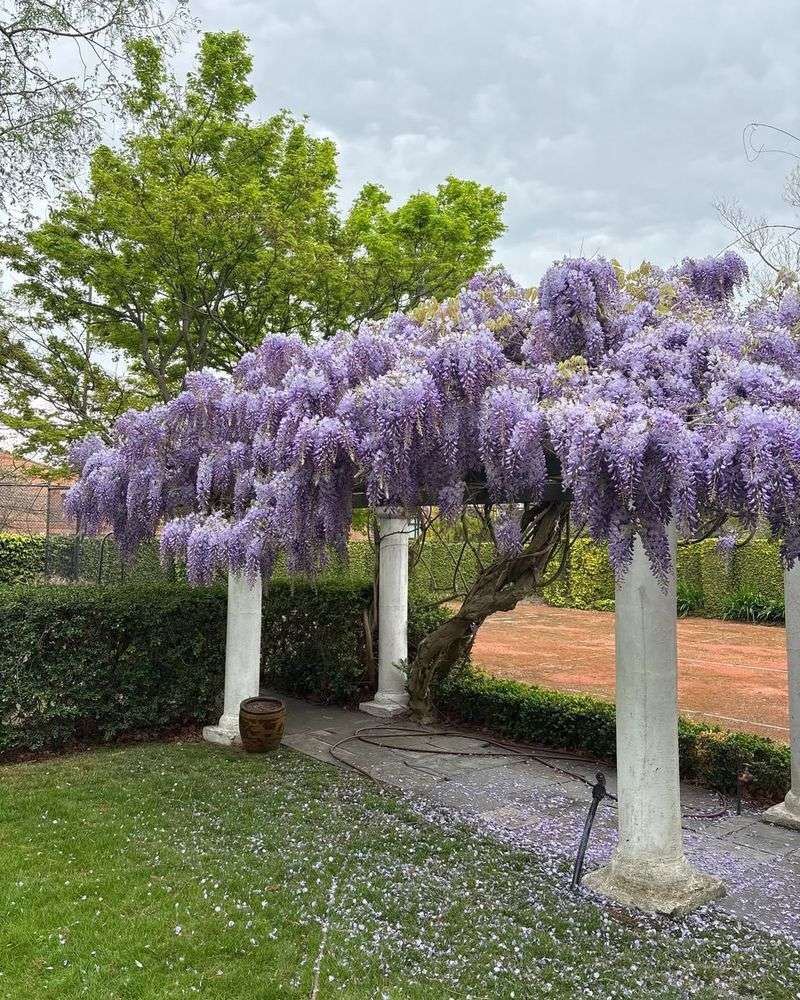
Few flowering vines match Chinese wisteria’s spectacular spring display, when cascading clusters of fragrant purple or white blooms drape arbors and pergolas in breathtaking beauty.
This vigorous vine has enchanted gardeners for generations, appearing in countless Southern garden photographs and paintings.
However, birds love the seeds and spread them into nearby forests, where escaped wisteria climbs high into tree canopies and eventually strangles its hosts.
Chinese wisteria’s powerful twining stems can girdle tree trunks and large branches, restricting nutrient flow and weakening structural integrity. The vine’s weight combined with its dense foliage catches wind like a sail, toppling trees during storms.
Wisteria vines that escape cultivation form such dense tangles in forest canopies that they prevent native trees from reaching sunlight, fundamentally altering forest structure and composition.
Many natural areas and parks in North Carolina discourage or prohibit Chinese wisteria, recognizing its threat to native plant communities.
For spectacular flowering vines without invasive tendencies, choose native American wisteria or crossvine, both of which offer beautiful blooms while supporting native pollinators.
American wisteria grows less aggressively than its Asian cousin and produces slightly smaller but equally lovely flower clusters.
These native alternatives allow you to enjoy wisteria’s romantic beauty without contributing to the ecological problems that increasingly concern conservation professionals and environmentally conscious gardeners throughout the state.