These 8 Georgia Groundcovers Choke Out Weeds Naturally
These groundcovers don’t just fill empty spots, they take over in the best way possible. In Georgia gardens, weeds don’t stand much of a chance when the right plants spread in and hold their ground.
Instead of constantly pulling weeds or relying on mulch that breaks down too fast, these plants create a living layer that blocks sunlight and crowds out unwanted growth.
Once they settle in, they do most of the work on their own, which makes them a go-to for low effort, clean looking yards.
Some stay low and tight, others spread quickly and cover larger areas, but all of them help keep weeds under control without extra hassle.
With the right pick, bare soil disappears, maintenance drops, and the garden starts to look fuller and more put together without constant upkeep.
1. Creeping Phlox Spreads Fast And Blocks Light To Weeds
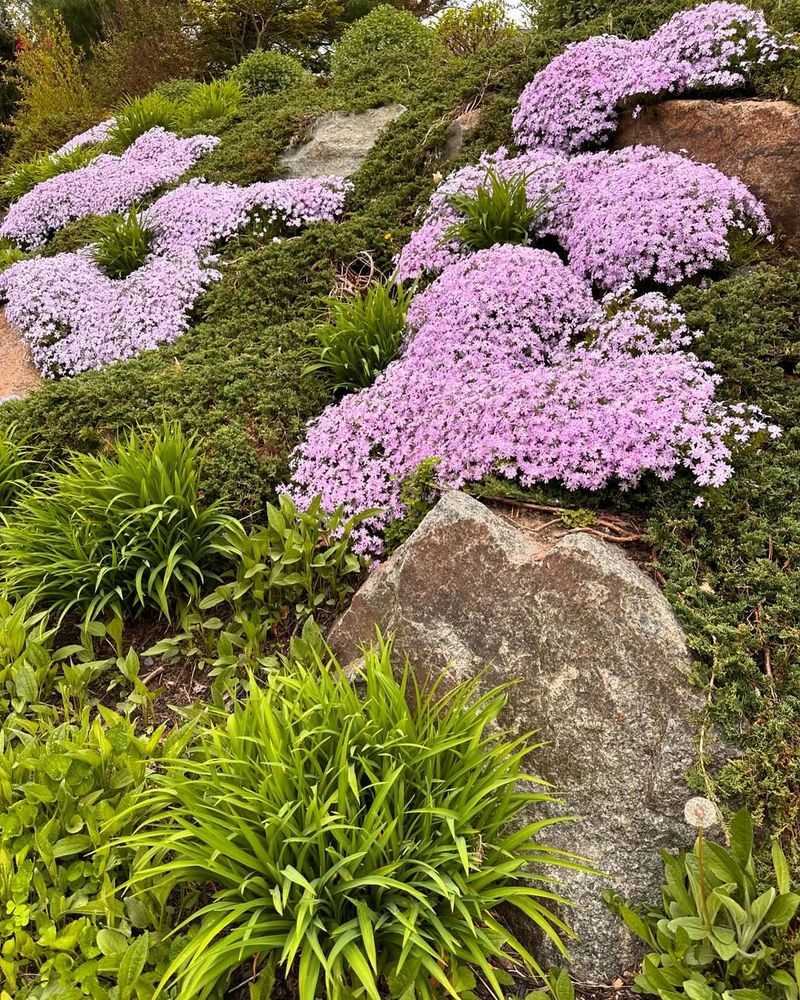
Few things in a Georgia spring garden stop people in their tracks like a hillside covered in blooming creeping phlox.
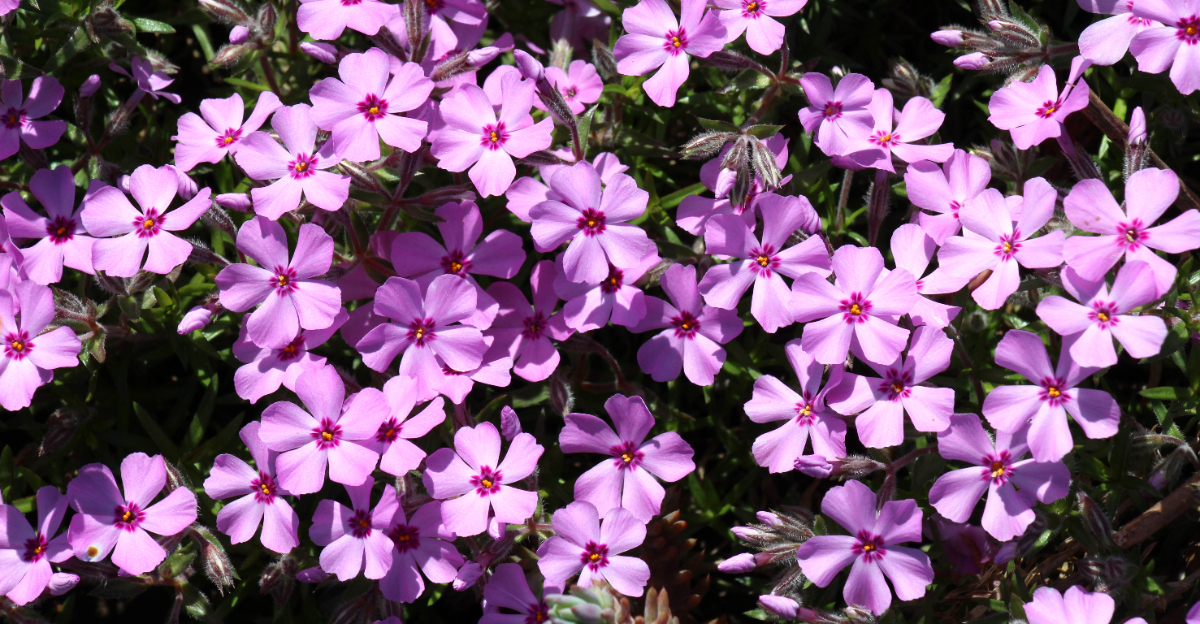
It erupts in pink, white, and lavender flowers every March and April, and even when it is not blooming, the dense needle-like foliage stays tight to the ground and keeps weed seeds from ever finding soil.
Creeping phlox works especially well on sunny slopes and raised beds where erosion is a problem. Plant it at the top of a bank, and it will slowly cascade downward, filling every gap as it goes.
Roots anchor into the soil firmly, so rain does not wash it away like mulch does.
Full sun is where it performs best in Georgia. Sandy or loamy, well-drained soil suits it well, and it handles Georgia’s dry spells without much fuss once the roots have settled in.
Avoid planting it in soggy spots or heavy clay without amending the soil first.
Spacing plants about 12 to 18 inches apart gives each one room to spread without competing against itself. Within two seasons, patches will knit together into a solid mat.
Shear it lightly after flowering to keep it tidy and encourage thicker growth the following year.
Growth stays low and dense, which helps block out weeds before they even get started.
Over time, stems can become woody in the center, so occasional trimming keeps the patch looking fresh and full.
2. Mondo Grass Forms A Thick Weed Resistant Carpet
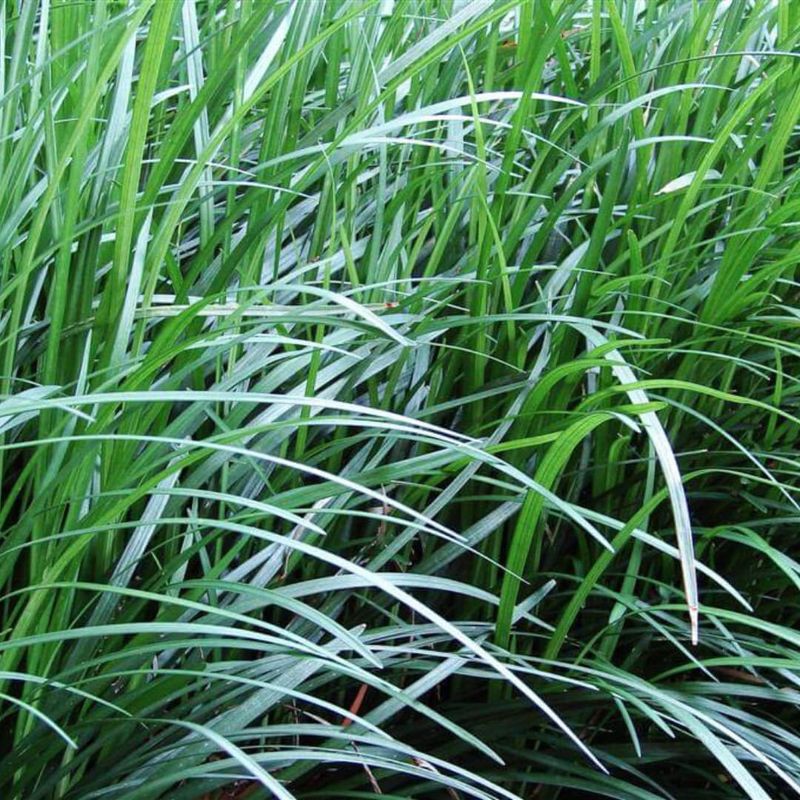
Mondo grass is quietly one of the hardest-working plants in Georgia landscaping. It does not shout for attention, but give it a season or two and it builds a dense, dark green carpet that weeds simply cannot push through.
Runners spread slowly underground, gradually filling every bare patch of soil.
It handles shade better than most groundcovers, which makes it valuable under oak trees, along north-facing fences, and in those dark corners where grass refuses to grow. Georgia summers can be brutal under a full canopy, but mondo grass keeps its composure without skipping a beat.
Plant it in clusters about 6 to 8 inches apart for faster coverage. Closer spacing fills in quicker, and in Georgia’s climate, plants typically start spreading noticeably within the first year.
Consistent moisture during the first summer helps roots establish, but after that it is surprisingly drought-tolerant.
Mondo grass rarely needs fertilizing, and it does not require mowing or trimming. It stays naturally low, usually under 6 inches tall, which keeps it looking intentional rather than wild.
Use it between stepping stones, along path edges, or as a border plant where a clean, defined look matters. Deer tend to avoid it, which is a genuine bonus in suburban Georgia neighborhoods.
Division is easy in early spring, so expanding coverage or filling gaps can be done without buying more plants.
Good drainage still matters, since constantly wet soil can lead to root issues and thin patches over time.
3. Ajuga Quickly Covers Bare Soil And Crowds Out Weeds
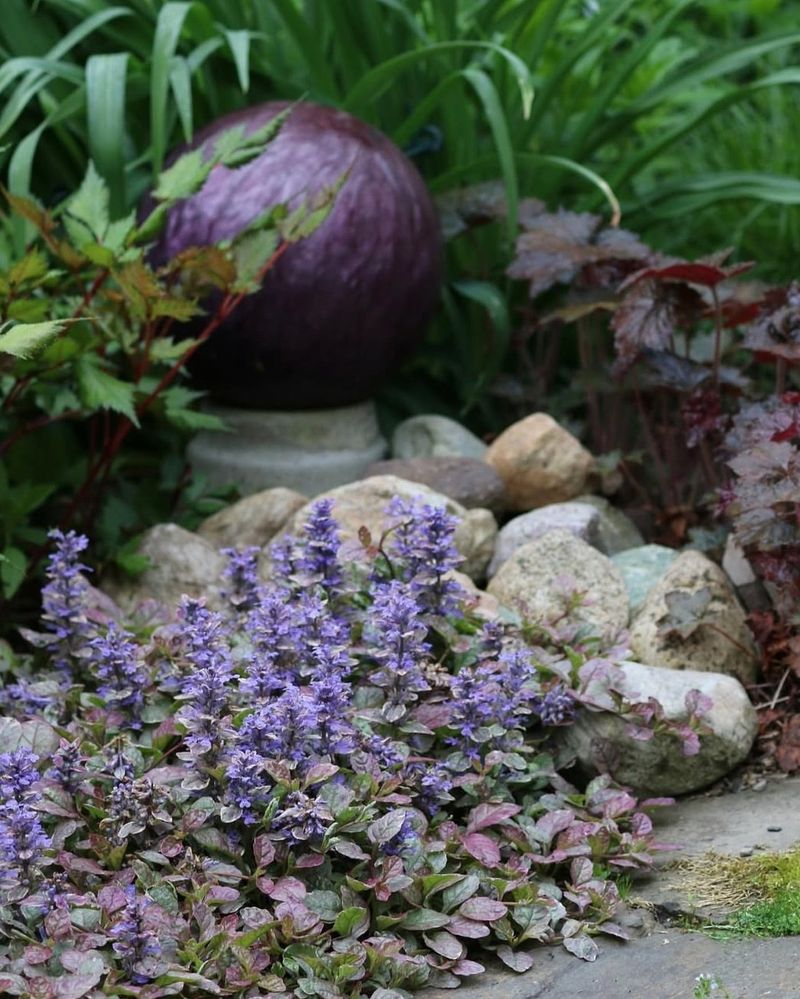
Ajuga moves fast. Plant a few starts in spring and by fall you will have a solid patch of colorful, low-growing foliage that has quietly crowded out everything around it.
Georgia’s warm springs and mild falls give it plenty of time to spread, and it takes full advantage of both seasons.
Bronze Beauty and Black Scallop are two varieties that do particularly well in Georgia. Their dark, almost purple foliage contrasts beautifully against lighter-colored mulch or stone paths, and in late spring they send up short spikes of vivid blue flowers that pollinators absolutely visit.
It is both functional and visually interesting.
Ajuga tolerates partial shade to full shade, making it a solid choice under deciduous trees where summer canopy blocks sunlight. It also handles morning sun with afternoon shade, which describes a lot of Georgia backyard beds.
Avoid baking it in all-day direct sun during July and August, as that tends to scorch the leaves.
Spacing plants 9 to 12 inches apart gives runners enough room to move without overcrowding. Water regularly during the first season, especially during dry Georgia summers.
Ajuga spreads by surface runners called stolons, so it fills gaps quickly and naturally. Divide clumps every few years to keep growth vigorous and prevent any center sections from thinning out.
4. Liriope Grows Dense And Handles Sun Or Shade
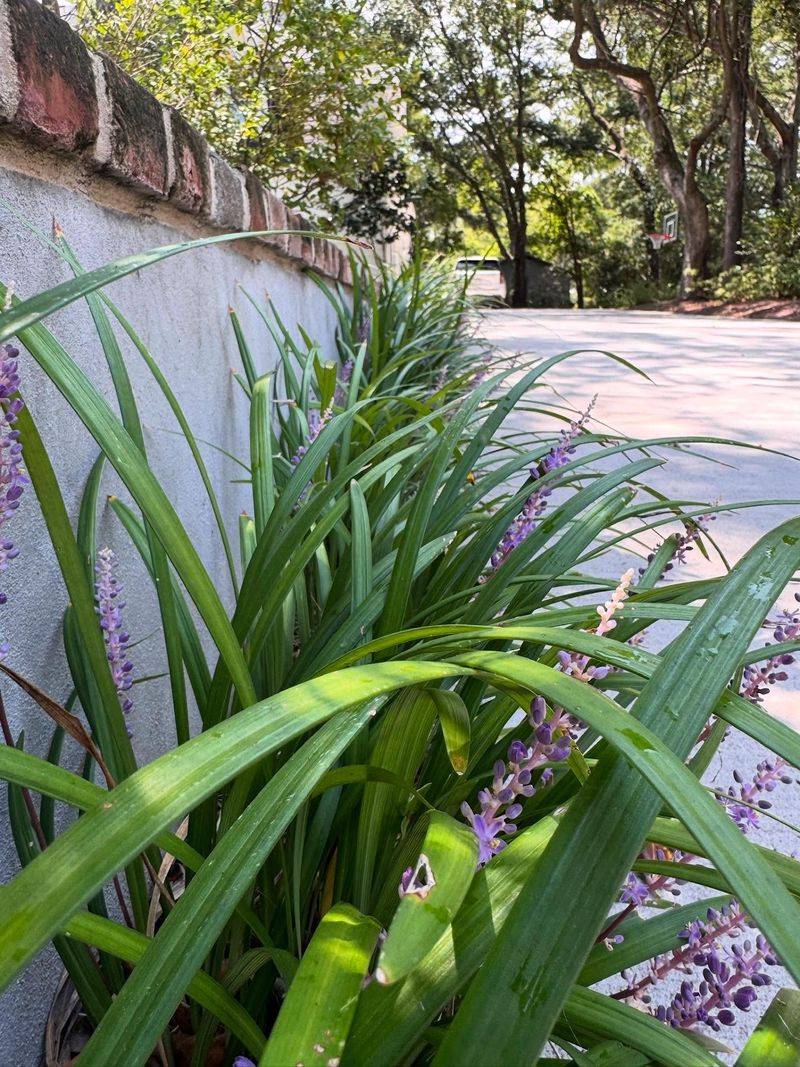
Ask any Georgia landscaper what groundcover they rely on most, and liriope will come up almost every time. It grows in full sun, deep shade, and everything between, which is a genuinely rare quality.
Dense clumps push outward season after season, leaving no open soil for weeds to claim.
Big Blue is the most common variety planted across Georgia, and for good reason. Clumps reach about 12 to 18 inches tall, producing spikes of purple flowers in late summer that stand above the foliage like little torches.
After the flowers fade, dark berries appear that birds actually eat during fall migration.
Liriope handles Georgia clay soil better than most groundcovers, though it appreciates decent drainage. Planting it on a slight grade or in amended beds helps prevent root problems during the wet season.
Space clumps 12 to 18 inches apart and they will fill in steadily without any complicated care routine.
Cutting liriope back to about 3 inches in late February before new growth emerges keeps it looking fresh each spring. Skip that step and old foliage builds up, making the bed look ragged.
Beyond that one annual trim, liriope mostly takes care of itself across Georgia’s variable climate, from the mountains in the north down to the coastal plains near Savannah.
5. Creeping Jenny Fills Gaps And Smothers Weed Growth
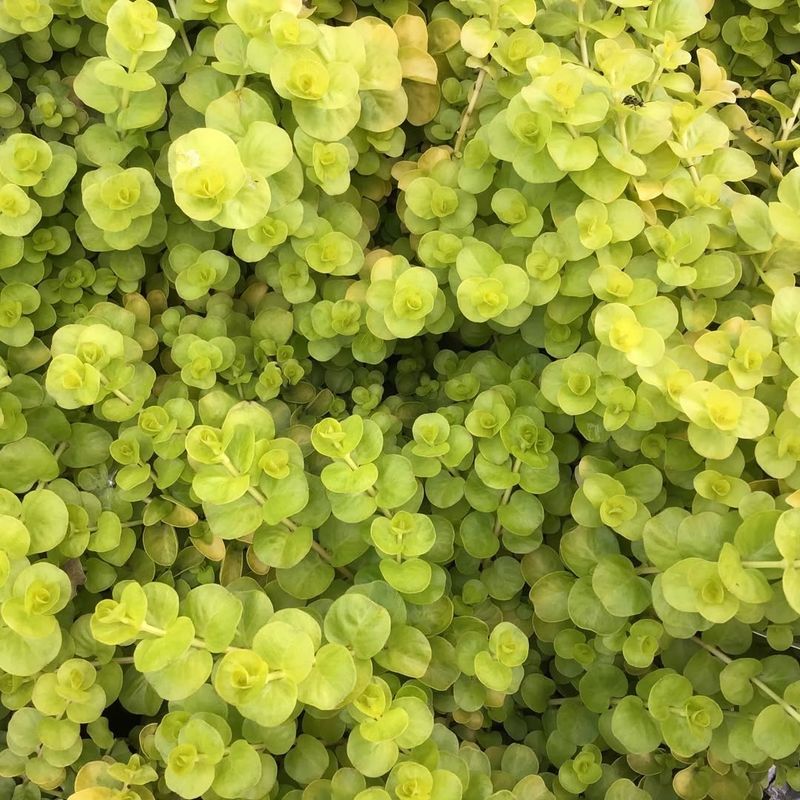
Bright chartreuse leaves, almost neon in good light, make creeping Jenny one of the most visually striking groundcovers you can plant in a Georgia garden.
Beyond the color, it spreads with real purpose, threading through gaps between other plants and covering bare soil before weeds get a foothold.
Moist spots are where creeping Jenny truly shines. Along pond edges, in low-lying areas that stay damp after rain, or beside a downspout where water collects, it fills in thick and fast.
Georgia gets plenty of summer thunderstorms, and those wet stretches give creeping Jenny exactly what it wants.
The golden variety, Lysimachia nummularia Aurea, holds its bright color best in partial shade. Full sun tends to wash out the leaves to a pale yellow-green, especially during Georgia’s intense July heat.
A few hours of afternoon shade keeps the color vivid and the foliage looking healthy through summer.
Stems root wherever they touch soil, so coverage happens quickly and naturally. Tuck it between stepping stones, along the edges of raised beds, or at the base of container plantings that overflow onto the ground.
It is not aggressive to the point of being a problem, but it does move, so plant it where spreading is welcome rather than where you need sharp, contained edges. Trim edges occasionally to keep it tidy.
6. Sweet Woodruff Thrives In Shade And Suppresses Weeds
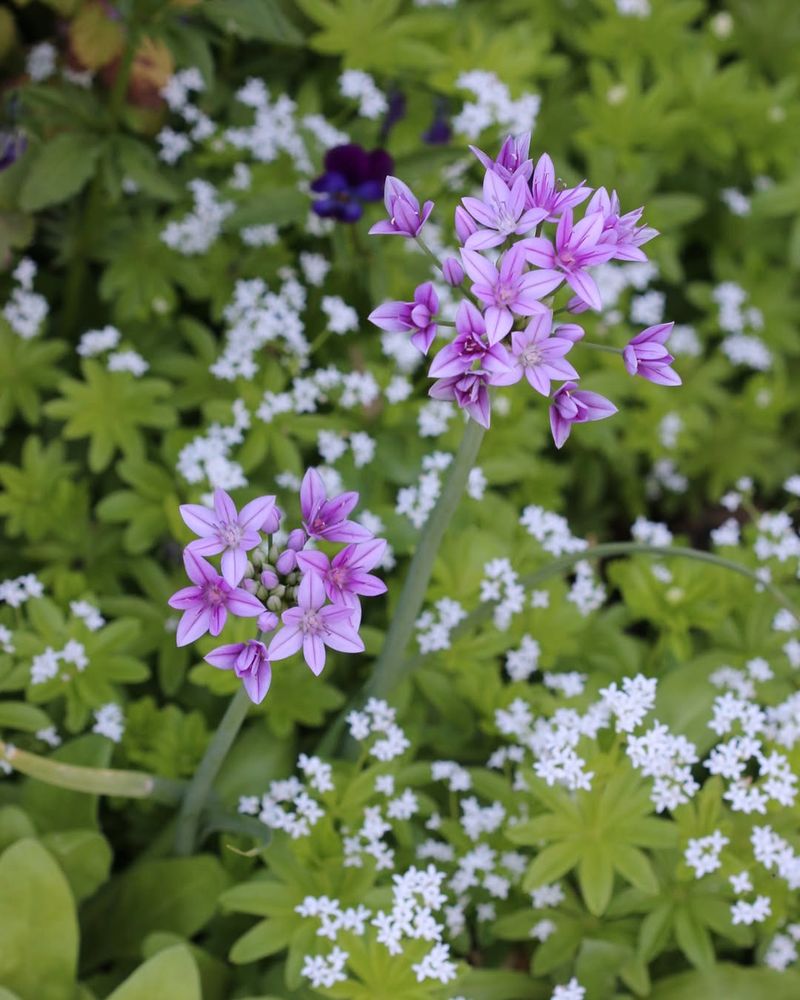
Under a canopy of old Georgia hardwoods, most groundcovers struggle. Sweet woodruff does not.
It actually prefers those conditions, spreading its whorled, star-shaped leaves across the forest floor with quiet confidence and leaving very little room for weeds to establish.
Small white flowers appear in spring, usually around April in Georgia, and they carry a faint sweet scent that intensifies when the leaves are crushed or dried.
Historically, sweet woodruff was used to scent linens and flavor wines, so it brings a bit of old-world character to a modern Georgia garden.
Rich, slightly acidic soil with consistent moisture suits it well, which describes a lot of shaded spots beneath Georgia pines and oaks. Leaf litter actually helps it along, so there is no need to rake the area clean before planting.
Work in some compost, set plants about 12 inches apart, and water them through the first dry spell.
Sweet woodruff spreads by rhizomes underground, gradually expanding outward each season. It stays low, usually around 6 to 8 inches tall, and never gets leggy or floppy.
It does not handle Georgia’s full afternoon sun, so keep it in shaded beds only. In the right spot, it builds a dense, weed-blocking carpet that looks intentional and needs almost no intervention once it gets going across the bed.
7. Blue Star Creeper Forms A Tight Low Growing Mat
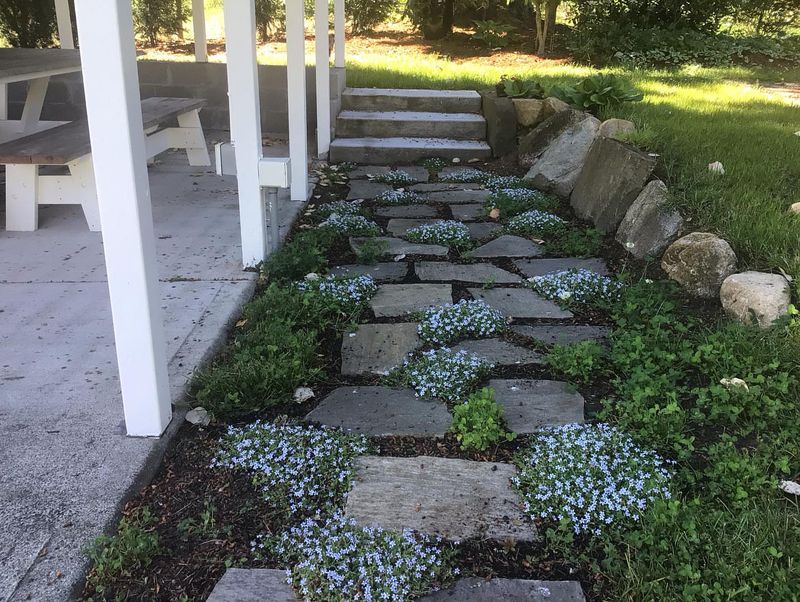
Tiny star-shaped blue flowers scattered across a dense green mat, blue star creeper looks almost like a living mosaic between stepping stones.
It hugs the ground so tightly that weeds barely stand a chance, and in Georgia it stays green through most of the year except during hard freezes in the northern part of the state.
Isotoma fluviatilis, its botanical name, spreads by creeping stems that root as they move across the soil. It is not aggressive in a problematic way, but it does cover ground steadily throughout the growing season.
Plant it where foot traffic is light to moderate, as it tolerates occasional stepping but not constant heavy use.
Partial shade to full sun both work in Georgia, though afternoon shade during peak summer heat keeps the foliage looking better. Consistent moisture during establishment matters, especially in Georgia’s red clay regions where soil can dry and crack during July and August.
Amend heavy clay with compost before planting to give roots a better start.
Space transplants about 6 to 8 inches apart for reasonably fast coverage. Blue star creeper typically blooms in spring and again in fall in Georgia, giving you two rounds of those cheerful little flowers per year.
Use it along path edges, between pavers in a patio, or as a low border in front of taller shrubs where a clean, compact groundcover is needed.
8. Dwarf Monkey Grass Creates A Dense Barrier Against Weeds
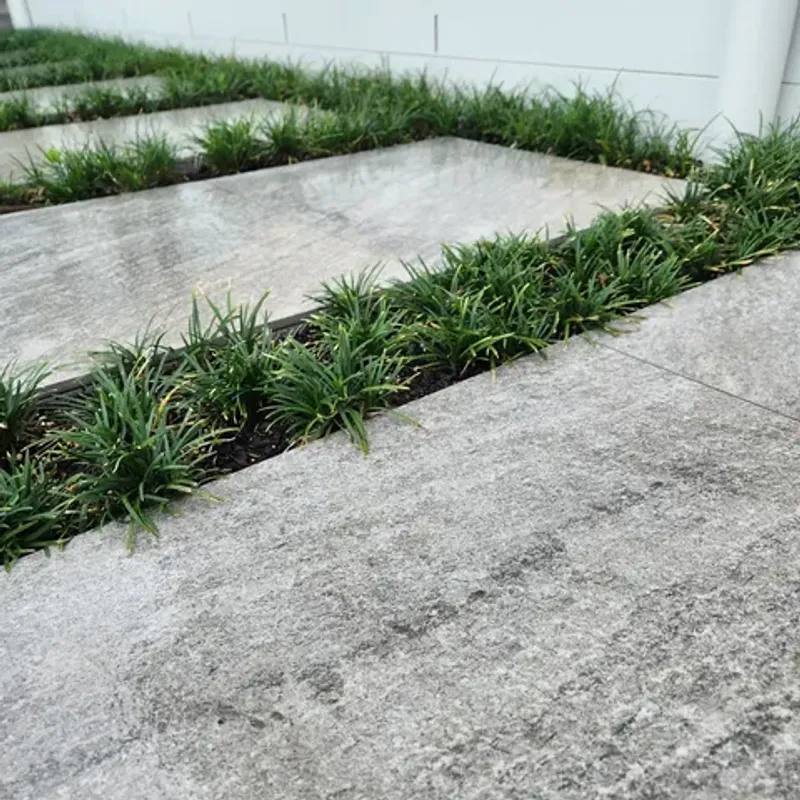
Standard mondo grass is impressive, but its dwarf version takes things even further. Dwarf monkey grass stays under 4 inches tall, creating a carpet so dense and uniform that it looks almost sculpted.
Weeds cannot push through it, and the look holds up through Georgia’s long, hot summers without complaint.
Ophiopogon japonicus Nana, the dwarf form, spreads slowly compared to its full-size cousin, so patience pays off here. Plant plugs about 4 to 6 inches apart if you want coverage within a couple of seasons.
Closer spacing is worth the extra cost upfront because thin coverage invites weeds to move in during the early years.
Shade is where it truly earns its place in Georgia gardens. Deep shade under magnolias, along north-facing foundations, or beneath decks where nothing else survives, dwarf monkey grass holds its ground.
It also handles moderate sun in northern Georgia, though it appreciates some relief from the harshest afternoon heat in the southern half of the state.
No mowing required, which is a real advantage in tight spaces. It does not produce seed heads that need cutting back, and it rarely needs fertilizer.
Occasional dividing every few years refreshes older plantings and gives you extra starts to fill new areas. Pair it with stepping stones or use it to define clean edges along walkways throughout your Georgia yard for a polished, structured look.