These 9 Native Flowering Plants Thrive In Arizona Front Yards When Planted In Early Spring
Early spring in Arizona feels like the desert finally giving you a green light. One day the air is crisp, and the next, your front yard looks perfectly primed for a burst of color.
This brief window is the ultimate sweet spot for planting native flowering species – allowing roots to dive deep and establish themselves before the intense summer heat begins to bake the soil.
While spring winds can quickly dry out new transplants, planting early helps these rugged beauties handle gusty days with far less stress.
Whether you are in the low deserts of Phoenix or the higher elevations of Flagstaff, the goal stays the same: plant while conditions are mild enough for strong root growth.
By working with Arizona’s natural timing, you can create a landscape full of vibrant texture without turning your yard into a high-water project.
1. Desert Marigold Brings Sunny Yellow Blooms With Very Low Water
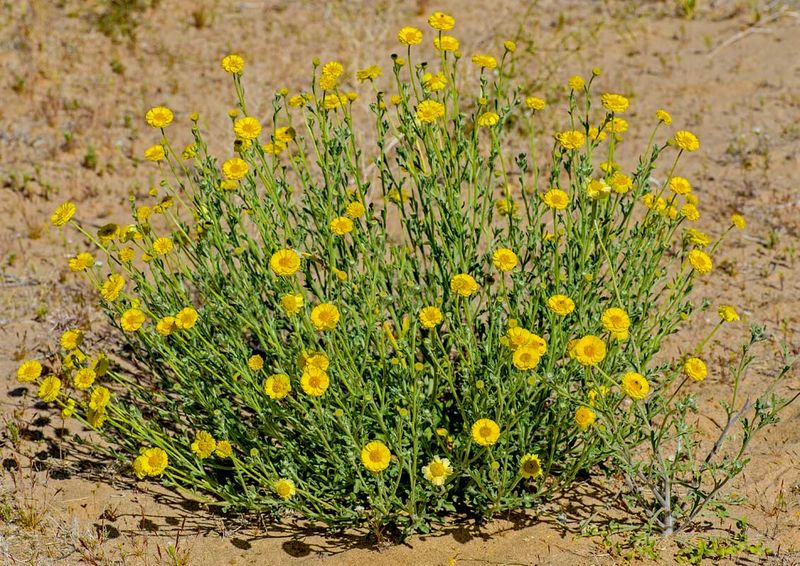
Few sights in an Arizona front yard hit quite like a mass of cheerful yellow flowers blazing against a gravel bed in early spring.
Desert Marigold, known botanically as Baileya multiradiata, is a tough little perennial that earns its place by blooming generously from spring all the way into fall.
It grows roughly one to two feet tall and wide, making it a natural fit for borders, low-water medians, and the sunny strip between a sidewalk and a block wall.
In the low desert regions of Arizona, including the Phoenix metro and Tucson areas, Desert Marigold performs especially well when planted in full sun with excellent drainage. Avoid heavy clay soils or spots where water pools after rain.
Sandy or gravelly native soil suits it just fine, and it actually tends to bloom more when it is not over-fertilized.
During establishment in early spring, water new transplants every few days for the first few weeks, then gradually back off as roots settle in. A good sign after planting is fresh silver-green foliage pushing out steadily.
A trouble sign is yellowing lower leaves combined with soggy soil, which usually points to overwatering rather than underwatering.
2. Globe Mallow Adds Soft Orange Flowers And A Wild Desert Look
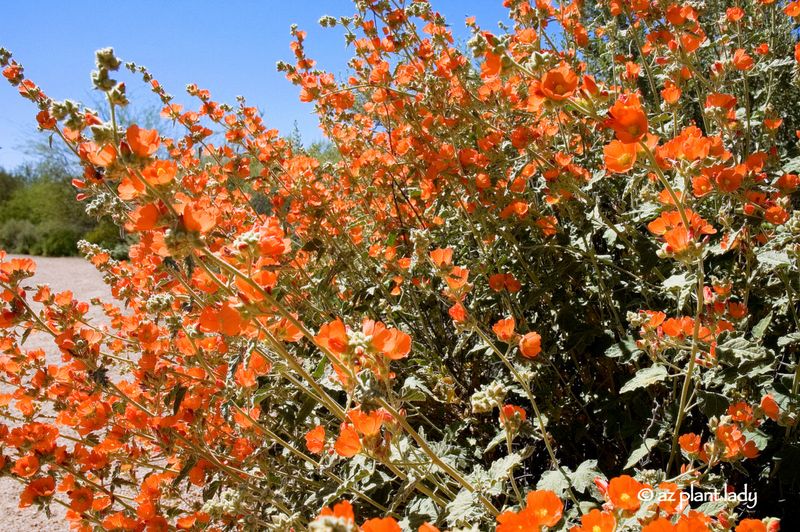
Planting Globe Mallow near a sun-baked block wall in an Arizona front yard is one of those moves that looks effortless once it takes off.
Sphaeralcea ambigua, commonly called Desert Globe Mallow, produces clusters of cup-shaped blooms in shades ranging from soft apricot orange to deeper coral, giving a front yard a relaxed, wild desert character that feels genuinely authentic rather than overdone.
This perennial shrub is a strong fit for low-desert Arizona and other warmer, lower-elevation sites where sun and fast drainage come standard.
In much of Arizona it’s most commonly associated with desert scrub settings below roughly 3,500 feet, and bloom timing can shift with elevation and spring temperatures.
It needs full sun and quick-draining soil to look its best.
One mistake people make is planting Globe Mallow too deep, which can hold moisture against the crown and cause problems. Set it at the same depth it was growing in the nursery container.
Water new plants every three to four days during the first few weeks after planting in early spring, then taper off as roots settle and the weather warms. Bees are particularly drawn to the flowers, so expect consistent pollinator activity.
New green growth pushing up from the base is a healthy sign, while a limp, drooping stem with wet soil at the base suggests too much water too soon.
3. Parry’s Penstemon Sends Up Pink Spikes That Hummingbirds Notice
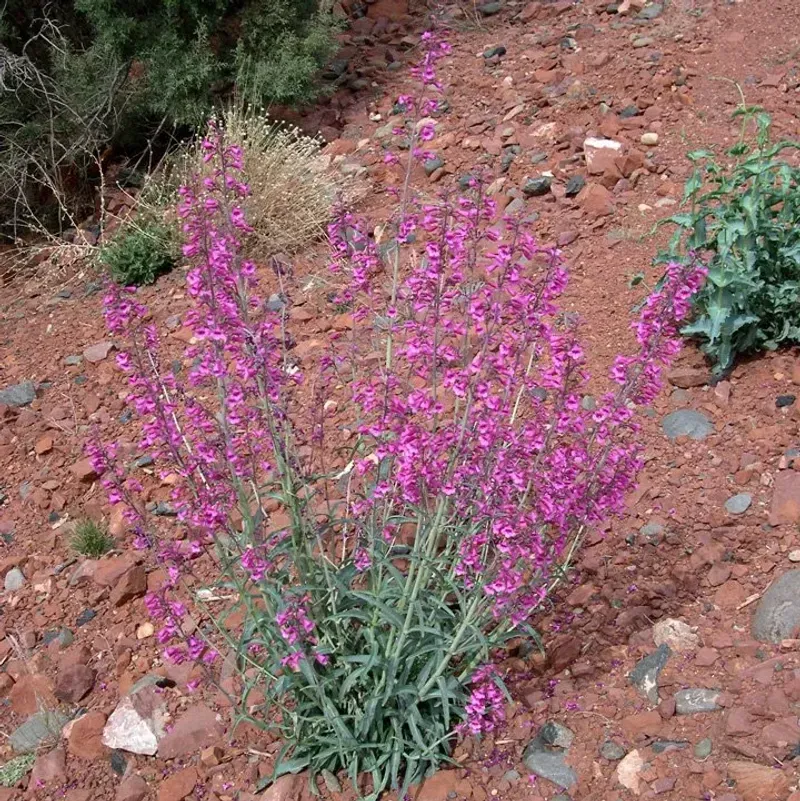
Watch your front yard long enough in early spring and you will start to notice the first hummingbirds scouting for reliable food sources. Parry’s Penstemon, or Penstemon parryi, is one of the best native plants you can offer them.
Tall, elegant spikes loaded with tubular pink flowers can reach about four feet in good conditions, creating a vertical accent that works beautifully against low walls, near entryways, or grouped in a naturalistic drift along a driveway border.
This penstemon is a natural fit for warm-desert and mid-elevation Arizona settings, and it’s commonly documented in the roughly 1,500 to 5,000-foot range. It prefers full sun and well-drained, rocky or sandy soil.
One common planting mistake is watering it like a lawn plant. Penstemon roots want to breathe between waterings, especially as spring temperatures climb.
After planting in early spring, water deeply every four to five days for the first month, then reduce frequency as the plant shows new growth. The pink flower spikes emerging in spring signal the plant is settling in.
If lower leaves turn yellow and the soil stays damp, ease back on watering and check that the planting spot drains freely after rain.
4. Pink Fairy Duster Adds Fuzzy Pink Flowers And Light Texture
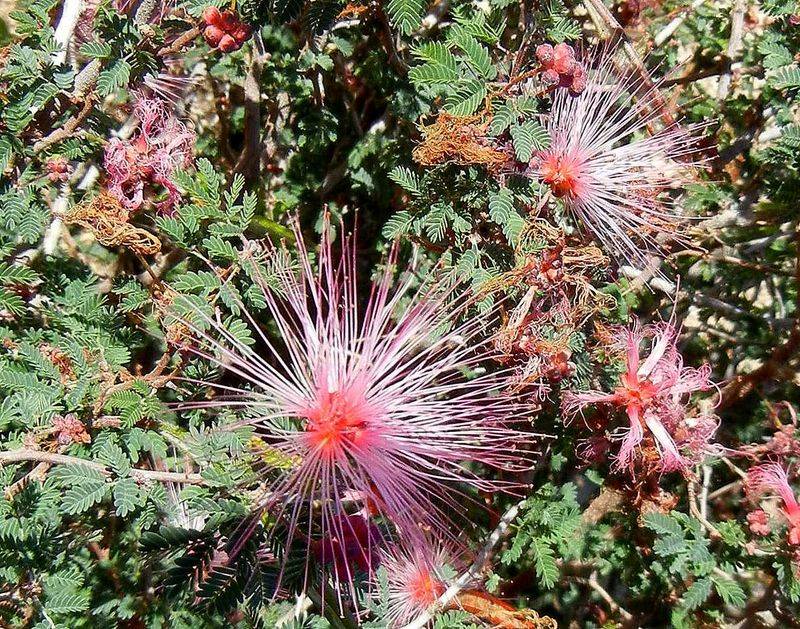
There is something almost playful about Pink Fairy Duster that makes it hard to overlook in an Arizona front yard.
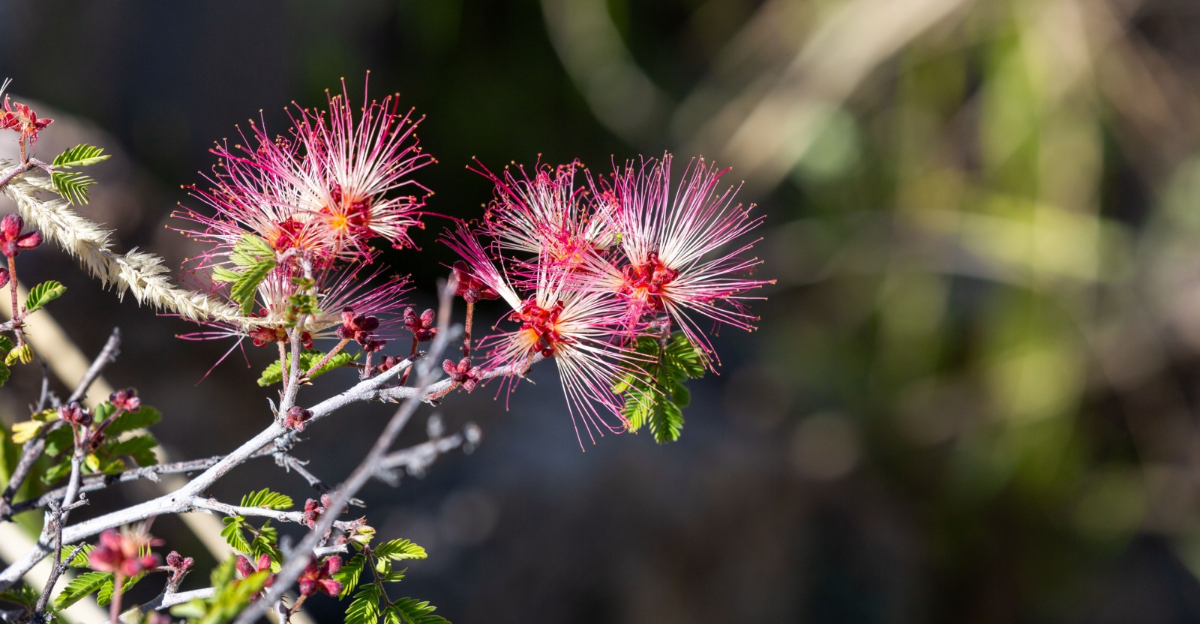
Calliandra eriophylla produces clusters of feathery, puffball-like pink flowers that look almost hand-painted against the plant’s fine, ferny foliage.
The overall texture is light and airy, which makes it an excellent companion for chunkier desert plants like agave or prickly pear without competing visually.
Native to the Sonoran and Chihuahuan Desert regions, Pink Fairy Duster grows well across much of southern and central Arizona at elevations below roughly 5,000 feet.
It is a low-growing shrub, typically reaching two to three feet tall and wide, which suits it perfectly for foreground plantings, courtyard corners, and low borders along walkways.
Full sun is ideal, though it can handle some afternoon shade in the hottest exposures.
Early spring planting gives roots a head start before summer heat arrives. Water new transplants every three to four days for the first month, then shift to a deeper, less frequent schedule.
Hummingbirds and native bees both visit the flowers regularly, so activity around the plant is a very encouraging sign. Wilting combined with dry, powdery soil usually means it needs a deeper drink rather than more frequent light sprinkles.
5. Brittlebush Brings Silver Leaves And Bright Spring Color
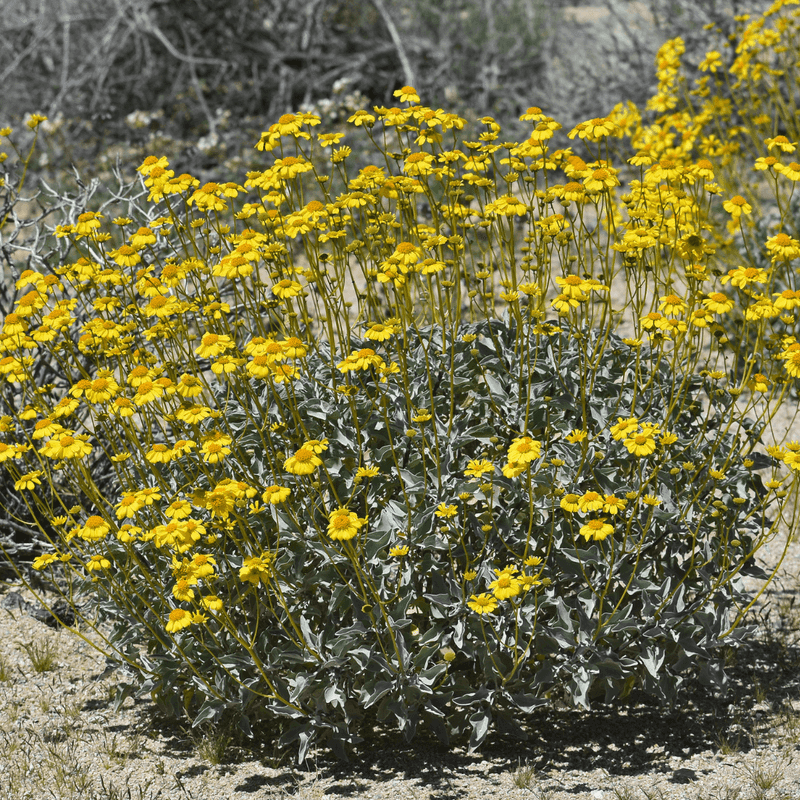
Drive almost anywhere across the low desert of Arizona in late winter or early spring and you will spot Brittlebush putting on a show along roadsides, hillsides, and medians.
Encelia farinosa earns its front yard reputation by being one of the most reliable spring bloomers in the Sonoran Desert.
Bright yellow flowers rise on tall, wiry stems above a mound of silvery-gray leaves, creating a two-toned effect that looks striking against dark gravel or reddish decomposed granite.
Brittlebush is well-suited to the low desert regions of Arizona, particularly below 3,500 feet in elevation. It needs full sun and excellent drainage.
Planting it in a spot that catches reflected heat from a wall or driveway can actually encourage more blooms. Avoid rich or amended soil, since Brittlebush tends to grow lush and floppy without much structure when given too many nutrients.
Water new transplants every three to four days during the first few weeks of early spring planting, gradually extending the interval as the plant establishes.
The silver leaf color is a built-in heat-reflection strategy, so it is completely normal for leaves to look pale or grayish.
A trouble sign is blackened stem tips combined with consistently wet soil, which can indicate a drainage problem rather than a pest issue.
6. Chuparosa Offers Red Tubes That Pull In Hummingbirds
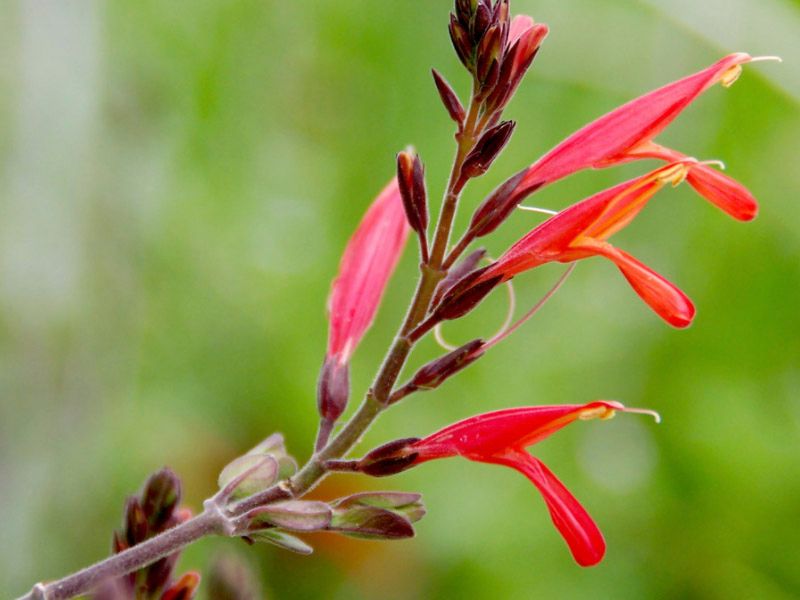
If hummingbirds are anywhere near your neighborhood in Arizona, Chuparosa will find a way to get their attention.
Justicia californica is a loosely arching shrub covered in slender red or occasionally orange-red tubular flowers that hummingbirds seem to recognize almost instantly.
It often blooms heavily in late winter and again through spring, making early spring planting a smart move to catch at least part of that first bloom cycle before summer sets in.
Chuparosa is native to the Sonoran Desert and performs best in the lower elevations of Arizona, typically below 2,500 feet, where winters stay relatively mild.
It handles full sun well and tolerates partial shade, which makes it flexible for spots near larger shrubs or along east-facing walls that see afternoon shadow.
Sandy or gravelly, fast-draining soil is important since standing water around the roots can cause trouble.
After planting in early spring, water every three to four days for the first month, then move to a deeper but less frequent schedule. The plant may drop some leaves during dry periods, which is normal behavior rather than a distress signal.
Consistent hummingbird visits and new stem growth are both very encouraging signs. Soft, mushy stems at the base, however, are worth investigating for drainage issues.
7. Desert Willow Adds Airy Shade And Orchid Like Flowers
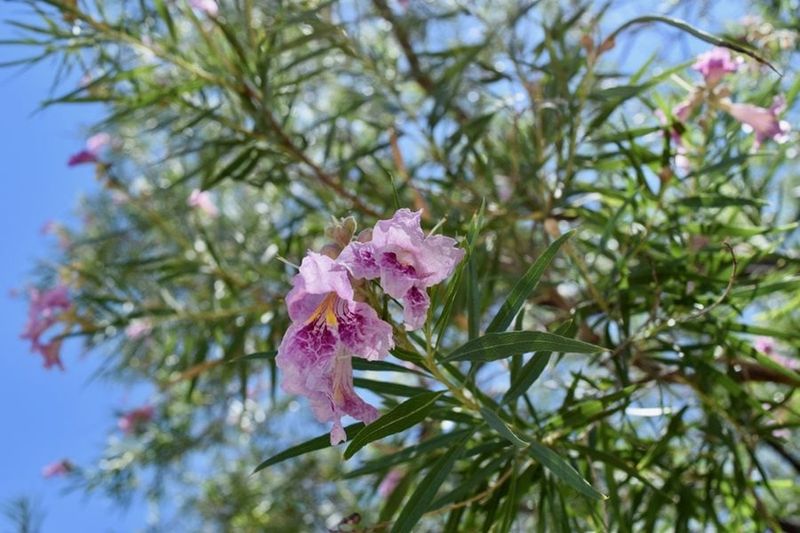
Somewhere between a large shrub and a small tree, Desert Willow occupies a unique and genuinely useful spot in Arizona front yard design.
Chilopsis linearis produces trumpet-shaped flowers in shades of lavender, pink, white, and deep magenta that look surprisingly tropical against the plant’s long, narrow, willow-like leaves.
The overall effect is soft and airy rather than heavy, which suits front yards where you want filtered shade without blocking views or overwhelming smaller plants nearby.
Desert Willow grows across a wide elevation range in Arizona, from low desert valleys up to around 5,000 feet, though bloom timing and cold hardiness vary by specific variety and site. It prefers full sun and well-drained soil.
Planting it near a wash, a dry streambed feature, or a low point in the yard can work well since it naturally grows along desert washes in the wild.
Water new transplants deeply every four to five days during the first spring after planting. Once established, Desert Willow is quite drought-adapted and needs far less water than most ornamental trees.
Leafing out with vigorous new growth in spring is a very promising sign. If leaves curl tightly and soil is bone dry, give it a deep slow soak rather than frequent shallow sprinkles.
8. Desert Lavender Brings Purple Blooms And Silvery Foliage
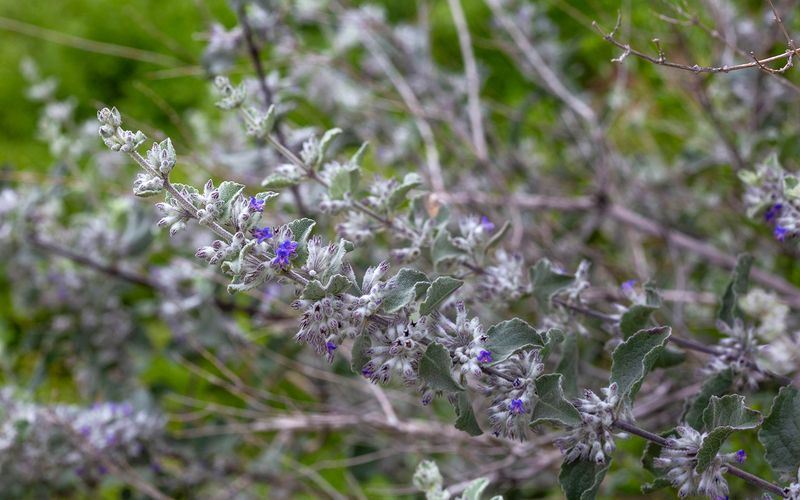
Running your hand across Desert Lavender releases a soft, herbal fragrance that makes it one of the most sensory-rich native plants you can add to an Arizona front yard.
Hyptis emoryi, often sold as Condea emoryi, is a large, rounded shrub with silvery-gray leaves and small purple flower spikes that draw in bees, butterflies, and other pollinators through the warm season.
This shrub is native to desert regions of the Southwest, and Arizona references commonly place it in mid-desert elevations around 3,000 to 5,000 feet in its natural history.
In landscapes, it can still be used outside that band in some areas when drainage is excellent and watering is handled with a light touch.
It grows quite large over time, often reaching around eight to ten feet tall with a broad spread, so giving it room from the start saves effort later. Full sun and excellent drainage are both important.
Avoid planting it in low spots where rainwater collects, especially during summer monsoon season.
Early spring planting gives Desert Lavender time to establish roots before the intense heat of June and July arrives. Water new transplants every four to five days during the first month, then gradually reduce frequency.
Silvery foliage is completely normal and helps reflect heat. If leaves turn yellow and the soil stays wet between waterings, reduce irrigation frequency and check that the planting area drains properly.
9. Ocotillo Lights Up With Red Flowers In Spring Sun
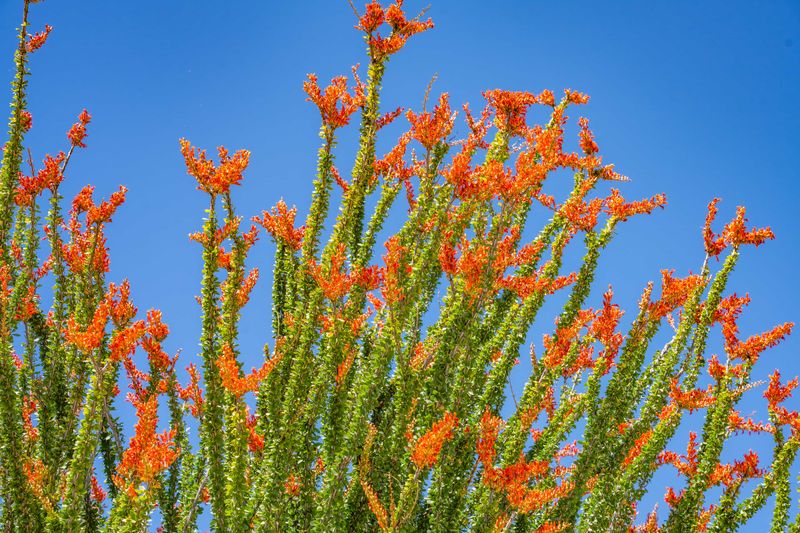
Nothing signals spring in the Sonoran Desert quite like an Ocotillo erupting in flame-tipped red at the top of every cane.
Fouquieria splendens is one of the most iconic native plants in Arizona, and while it looks dramatic and architectural year-round with its tall, spiny canes, the spring bloom is something genuinely memorable.
Hummingbirds are frequent visitors to those red flower clusters, and the plant pulls double duty as a living fence or bold accent near entryways.
Ocotillo grows across a wide range of southern and central Arizona and is often associated with sites up to around 5,000 feet in the right microclimate. It needs full sun and very well-drained soil.
One important planting note is that Ocotillo can be slow to show obvious “settled in” growth after transplanting.
Being leafless for weeks, and sometimes longer, can still be normal, and regular leafing out and flowering may take months as the plant reestablishes.
After planting in early spring, water on a careful schedule.
University guidance cautions that too much irrigation after transplanting can cause problems, and it notes weekly irrigation during summer and about twice per month in winter during establishment as a common starting point.
Leaves emerging after watering or rainfall are a reliable sign the plant is responding.
If canes stay stiff, brittle, and show no green under the surface over time, the planting depth, orientation, or drainage may need to be reconsidered.